


Upgrading Floor Care with Rotary Scrubbing Power
Tackling dried kitchen splatters, muddy paw prints, and fine dust on hard surfaces often demands more muscle than standard flat dragging pads can deliver. The best robot vacuums with spinning mop pads solve this chore by pairing dual rotating discs with continuous downward pressure to break down stubborn residue. Contemporary models combine suction reaching up to 20,000 Pa with rotary scrubbing action to collect debris while polishing sealed hardwood and tile floors. For busy households, these hybrid appliances provide a dependable solution for everyday hard floor maintenance.
Selecting the right model involves comparing suction ratings, docking capabilities, and carpet safety features. Many advanced units include automatic mop lifting to protect low-pile rugs, while all-in-one stations empty dust, wash mop pads, and circulate warm air. This comparison evaluates manufacturer specifications and listed features across brands like roborock, iRobot, and Lefant. Pairing scrubbing discs with reliable self-emptying robot vacuums ensures both dry grit and floor washing are handled with minimal intervention.

Pros
- Self-maintaining dock automates dust bin emptying, 167°F hot-water mop washing, and heated air drying
- Strong 18,500 Pa suction easily handles fine dust, pet hair, and coarse debris like cat litter
- Automatic 10 mm mop lifting keeps carpets and rugs dry during combined vacuum and mopping runs
- All-rubber roller and specialized side brush noticeably reduce routine hair tangle removal
Cons
- Only connects to 2.4 GHz Wi-Fi networks and does not support 5 GHz frequencies
- All-in-one docking station requires dedicated physical floor space and clearance near an outlet
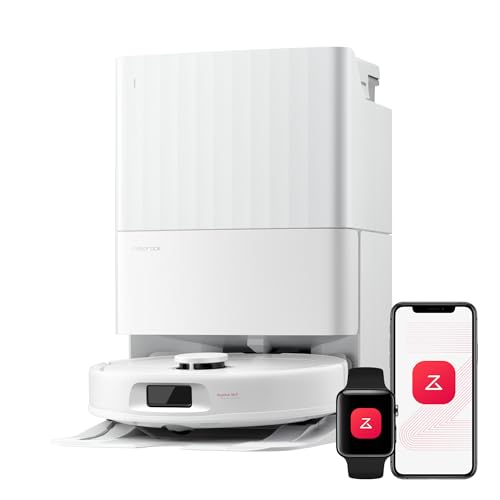
The Roborock Qrevo S Pro is an automated floor-care system engineered for busy households, parents, and pet owners who need consistent vacuuming and mopping across mixed flooring. Combining dry vacuuming with dual rotating mopping pads, this robot cleaner targets routine messes such as tracked-in dust, pet dander, and food crumbs. Its primary appeal lies in its high degree of automation, allowing users to offload daily floor maintenance to a machine that manages its own dust disposal and mop pad maintenance.
Cleaning capability is centered around a manufacturer-specified 18,500 Pa suction motor that pulls debris from hard floor seams, edges, and carpet pile. When transitioning to carpeted areas, the robot applies an automatic carpet strategy that boosts suction for embedded grit while lifting the mopping assembly 10 mm above the floor surface to protect fibers from moisture. For hard floor areas, the dual spinning mops maintain steady contact to wipe down kitchen spills, dried paw prints, and light surface stains using adjustable water flow rates.
Brush maintenance is often a pain point in pet-friendly homes, but the Qrevo S Pro addresses this with a specialized anti-tangle architecture. It features an all-rubber main brush roll, a zero-tangle side brush, and a guarded omnidirectional wheel, all designed to channel hair directly into the suction inlet rather than wrapping tightly around spinning components. At the all-in-one docking base, collected debris is automatically transferred into a sealed 2.7L dust bag capable of storing between 7 and 9 weeks of dry material under typical household conditions.
Navigation and spatial awareness are powered by smart obstacle detection that helps the vacuum identify and steer clear of everyday floor hazards such as shoes, power cords, toys, and chair legs. Measuring 3.8 inches in height, the low-profile robot slides under raised couches, dressers, and beds where dust clusters tend to hide. The integrated Roborock SmartPlan 2.0 AI adjusts cleaning power and route selection according to the specific floor layout and past cleaning history, maintaining an unobtrusive sound profile of approximately 55 dB during standard operation.
Initial setup is straightforward through the companion app, though it strictly requires a 2.4 GHz Wi-Fi network connection. While the dock manages self-emptying, 167°F mop pad washing, and 113°F warm air drying, owners must still periodically handle basic dock upkeep, such as replacing the 2.7L dust bag, filling clean water, and emptying dirty wastewater containers. The physical size of the docking station also demands thoughtful placement with sufficient wall and clearance space in a central room or laundry area.
For homeowners and renters looking to maintain spotless hard floors and fresh carpets without daily intervention, the Roborock Qrevo S Pro represents a dependable, high-convenience investment. Its strong suction, intelligent mop lifting, and self-cleaning dock features provide practical, time-saving value for busy multi-surface homes managing the steady mess of kids and pets.
The all-in-one docking station on the Roborock Qrevo S Pro acts as a comprehensive base designed to reduce manual floor-care chores. Following each cleaning cycle, the dock automatically pulls debris from the robot dustbin into an internal 2.7L sealed bag. This bag design locks in dust and debris while offering enough storage volume to last between 7 and 9 weeks under normal cleaning frequencies, minimizing contact with loose dirt.
Beyond debris containment, the dock actively manages mop hygiene through heated self-cleaning. It washes the dual rotating pads with 167°F hot water to loosen sticky spills and grime gathered from hard floors, followed by 113°F warm air drying. This controlled drying phase prevents persistent dampness and helps eliminate stale odors, ensuring the cleaning pads are dry, fresh, and ready for the next scheduled floor run.
Managing mixed flooring is straightforward thanks to the adaptive carpet handling built into the Roborock Qrevo S Pro. When sensors detect area rugs or wall-to-wall carpeting, the robot automatically engages a 10 mm mop lifting mechanism. This lifts the damp pads clear of low- to medium-pile carpet surfaces, preventing accidental water transfer while simultaneously ramping up suction to extract embedded particles and pet hair from deep within the fibers.
On hard surfaces, the dual spinning mop system works in tandem with the vacuum function to deliver thorough daily maintenance. By distributing a controlled, adjustable flow of water, the pads provide steady friction to tackle dried beverage splashes, pet footprints, and grease near cooking areas. This dual-action approach allows the robot to leave floors refreshed in a single cleaning pass without requiring manual tool swaps.



Frequently Asked Questions
How do spinning mop pads differ from standard flat pads?
Spinning mop pads utilize dual motorized discs rotating at speeds up to 200 RPM to actively scrub surfaces instead of dragging a flat cloth. Supported specifications for units like the Lefant M3 Max and roborock Qrevo demonstrate that rotary friction lifts dried grime and sticky kitchen spots far more effectively than static microfiber pads.
Can the Best Robot Vacuums With Spinning Mop Pads safely navigate around carpets?
Most units feature automated mop lifting between 9 mm and 10 mm when transitioning onto carpeted areas. Sensors on models like the Roomba 505 and roborock Qrevo raise the damp pads to keep rugs dry. If your home has plush flooring, reviewing dedicated robot vacuums for high pile carpets can provide deeper pile management.
How do self-cleaning docks maintain spinning mop pads?
Multi-function docking stations wash the pads and apply heated air to prevent odors. For instance, the roborock Qrevo dock uses 167°F hot-water washing, while Roomba and Lefant bases use warm-air drying between 113°F and 115°F to ensure pads dry thoroughly before the next scheduled cycle.
Do these robotic mops require specialized cleaning solutions?
Manufacturer guidelines generally recommend plain water or brand-compatible cleaning concentrates. While units like the Lefant M3 Max support built-in detergent dispensing, conventional foaming floor cleaners can leave residue on internal valves and create slick streaks across hard surfaces.
How often do spinning mop pads need replacement?
Microfiber spinning pads typically last three to six months depending on cleaning frequency and floor roughness. Automated dock washing and heat-drying help preserve pad freshness, so replacement is generally only necessary when pad fibers become visibly frayed or worn down.



Write Your Review
No reviews yet. Be the first to share your experience!