


Streamlining Workshop and Vehicle Cooling Maintenance
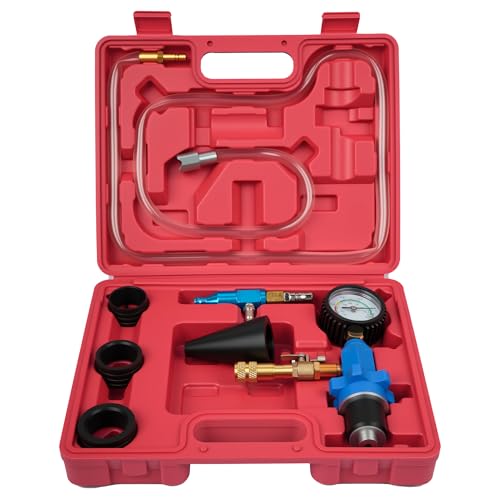
Maintaining an orderly workshop after clearing tracked-in debris often highlights the need to avoid messy fluid spills during vehicle maintenance. While keeping workspace floors clean with a versatile 3-in-1 vacuum for floors handles dry dirt, servicing engine cooling loops demands specialized pneumatic equipment. Selecting the best cooling system vacuum purge and refill kit prevents air pockets and unexpected overflow when refilling radiators. By converting workshop compressed air into steady vacuum suction, these tools evacuate the entire cooling passage and pull fresh coolant directly into the engine block.
Comparing these tools involves evaluating gauge accuracy, brass manifold durability, and the versatility of included rubber adapters. Reliable setups feature universal conical plugs and fitted sleeves that seat securely into varied radiator filler necks to hold negative pressure. Our review analyzes manufacturer specifications, connection hardware, and included accessories without relying on unverified claims or simulated testing. Examining these documented details helps you pick a dependable pneumatic refill system that simplifies coolant exchanges and protects your workspace.




Frequently Asked Questions
How does a coolant vacuum refill kit work?
Pneumatic refill kits connect to an air compressor to pull air from an empty cooling system. Once negative pressure reaches roughly -25 to -20 inHg, opening the coolant valve draws fresh antifreeze in without trapping air pockets.
Do these vacuum refill kits require an air compressor?
Yes, these kits rely on shop air to generate vacuum suction via a Venturi valve. They include standard American or European style air fittings to connect directly to standard air lines.
How do universal adapters fit different vehicle radiators?
Kits provide stepped rubber sleeves or universal conical rubber adapters ranging from roughly 0.55 to 2.17 inches. Pressing the tapered rubber plug into the radiator neck creates an airtight seal for proper evacuation.
Can a vacuum purge kit identify cooling system leaks?
Yes, the integrated vacuum gauge reveals leaks prior to filling. If the gauge pointer drops toward zero after closing the air supply valve, air is entering through a loose hose or damaged radiator seam. Just as checking seals on a vacuum for wood floors ensures performance, tight radiator connections guarantee proper vacuum hold.
What is the benefit of a brass manifold over aluminum?
Brass manifolds provide excellent corrosion resistance and enhanced thread durability during repeated fitting connections. High-grade aluminum manifolds also resist corrosion while reducing overall tool weight in storage cases.




Write Your Review
No reviews yet. Be the first to share your experience!