


Dealing with sudden plumbing leaks, flooded basements, soggy entryway mud, or heavy workshop sawdust quickly exposes the limits of a standard upright cleaner. Many homeowners turn to online community discussions to ask are wet dry vacuums worth it reddit threads frequently debate, seeking candid advice before dedicating storage space to a bulky utility tub. While residential stick and canister vacuums excel on dry carpets and delicate hardwoods, they cannot ingest liquids without risking motor burnout or mildew growth. A dedicated utility vacuum bridges this gap by isolating liquid collection in a sealed drum while handling coarse, abrasive debris that would instantly ruin a standard household machine.
Community discussions frequently emphasize that utility machines provide emergency flood recovery, garage versatility, and rugged durability that ordinary cleaners cannot match. For households dealing with recurring pet accidents, specialized machines like pet stain vacuum cleaners offer dedicated fiber agitation, but wet dry utility vacuums provide sheer raw volume for water extraction. Deciding whether to purchase a utility vacuum ultimately depends on your available storage space, workshop projects, and how often you face messy indoor spills. Understanding motor ratings, tank capacity, and filter configurations helps determine whether a utility barrel or upright washer genuinely justifies its place in your cleaning routine.


Pros
- Versatile 3-in-1 operation handles standing water, dry debris, and exterior blowing tasks with ease.
- Generous 6-gallon tank capacity strikes a balanced sweet spot between debris volume and portable footprint.
- Four 360-degree swivel casters and a balanced 13.4-pound build make moving between work areas smooth.
- Comes ready to work out of the box with three separate nozzles, extension wands, and wet/dry filter sets.
Cons
- A 10-foot power cord means larger workshops or long driveways may require an extension cord.
- Uses a 1-1/4-inch diameter hose that is better suited for fine to medium debris rather than large workshop wood chunks.
- Requires manual filter swapping between the foam filter for wet extraction and dry filters for dust collection.
The Stanley SL18116P is a corded 6-gallon wet/dry utility vacuum powered by a 4.0 peak horsepower motor, making it a capable cleaning solution for garages, workshops, basements, and busy residential households. Built by an established tool manufacturer, this unit is engineered for homeowners, hobbyists, apartment renters, and DIY enthusiasts who regularly encounter messy cleanups that regular upright or stick vacuums cannot safely handle. Whether you need to clear standing water from a leaky pipe, clean dirt out of a vehicle, or sweep up renovation dust, this vacuum offers a durable balance of utility and compact sizing.
In practical cleaning situations, the SL18116P functions as a true multi-purpose machine with its 3-in-1 cleaning capability. The 4.0 peak HP motor provides dependable suction for pulling wet liquid spills from hard floors, as well as clearing away dry dirt, wood chips, sawdust, and coarse tracked-in entryway debris. When dry debris pickup is complete, the vacuum hose can be disconnected from the intake port and inserted into the rear exhaust blower port. This allows users to quickly clear fallen leaves, grass clippings, and workbench dust out of a garage bay or off a patio without requiring a separate yard tool.
Build quality and mobility are practical highlights of the machine. Weighing in at 13.4 pounds with dimensions of 13.8 by 13.8 by 20.47 inches, the vacuum remains easy to lift and carry via its sturdy top-mounted handle. Four independent 360-degree swivel casters provide steady roll-around mobility across concrete slabs, linoleum, and basement floors without tipping under typical pulling force. The machine features a total reach of over 16 feet, calculated from its 10-foot electrical cord, 6-foot flexible hose, and three included rigid extension wands, making vehicle interior detailing and elevated corner reach achievable.
Maintenance and filter setup are straightforward but require attention to the type of mess you are tackling. For dry vacuuming, the unit utilizes a reusable dry filter and a disposable dust bag to capture particulate matter, preventing airborne dust from recirculating into the room. When converting the vacuum to extract wet liquid spills, users must remove the dry filtration elements and slide the included foam filter over the internal filter cage to safeguard the motor assembly. The bucket provides over 22 liters of capacity, giving ample holding volume before needing to unlatch the top motor head to empty dirty water or dump collected shavings.
Prospective buyers should keep a few operational boundaries in mind before purchasing. The 10-foot cord provides adequate reach for small rooms and immediate work areas, but cleaning a two-car garage or working along an outdoor driveway will likely require a heavy-duty extension cord. Additionally, the hose and attachment diameter is sized at 1-1/4 inches, which is nimble for reaching between car seats and under appliances, but can present occasional clogs if attempting to suction oversized wood scraps or thick building rubble.
For homeowners, vehicle owners, and workshop hobbyists seeking a compact, reliable wet/dry vac at a reasonable footprint, the Stanley SL18116P provides dependable cleaning power and generous utility. Its multi-nozzle attachment package, integrated blower feature, and solid 6-gallon capacity make it an outstanding multi-purpose addition to any domestic cleaning or DIY maintenance lineup.
The Stanley SL18116P separates wet and dry vacuuming duties efficiently through its modular filter system. For liquid pickup, removing the paper bag and dry filter in favor of the included foam sleeve allows the 4.0 peak HP motor to draw up standing water, basement seepage, and plumbing overflows directly into the 6-gallon polypropylene drum without damaging internal mechanical parts.
For dry cleaning tasks, the reusable dry filter and paper collection bag work in tandem to trap drywall dust, sawdust, automotive debris, and coarse dirt. Having both dedicated filters supplied in the box ensures that users can alternate between liquid extraction and dry sweeping without risking dust blow-by or saturated paper filtration.
Out of the box, the Stanley SL18116P comes equipped with a comprehensive set of cleaning attachments designed to handle various household and workshop environments. It features a 1-1/4-inch by 6-foot flexible vacuum hose alongside three interlocking extension wands that extend overhead and floor reach.
Surface cleaning tools include a wide floor nozzle for open flat surfaces, a utility gulper nozzle for concentrated spills and automotive upholstery, and a slim crevice nozzle for reaching narrow gaps, baseboards, and vehicle consoles. A foam filter, reusable dry filter, and dust collection bag complete the accessory kit.
The Stanley SL18116P wet/dry vacuum is backed by a manufacturer 12-month limited warranty from the date of purchase. This warranty covers defects in materials and manufacturing workmanship under standard consumer operation.
Owners should consult the included operator manual for routine maintenance steps, correct filtration replacement procedures, and motor care to ensure long-term durability and ongoing warranty compliance.


Pros
- Dual wet and dry pickup functionality tackles tough garage messes, sawdust, and standing puddles with ease.
- Generous 6-gallon capacity handles sizable cleaning jobs before requiring a manual tank empty.
- Comprehensive auto detailing attachment package reaches tight crevices, vehicle floorboards, and car seats.
- Built-in reverse blower port adds versatile utility for sweeping doorways and inflating household items.
Cons
- At 16.1 pounds and standing over two feet tall, it requires dedicated storage room compared to standard stick vacuums.
- Functions as a wet-dry recovery vacuum rather than a carpet extractor, meaning it does not spray cleaning solutions or shampoo fabrics.
- Uses a two-stage filtration arrangement rather than a sealed HEPA allergen containment system.
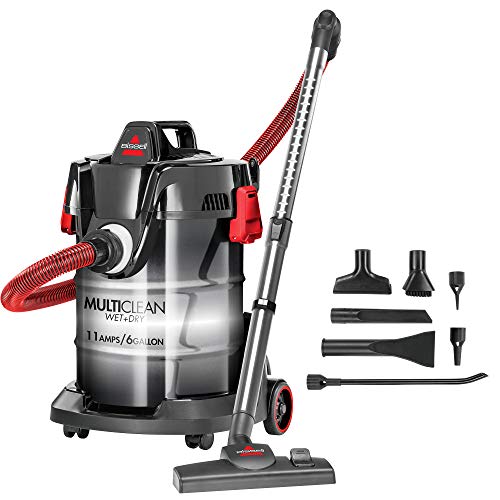
The BISSELL MultiClean Wet/Dry Garage and Auto Vacuum 2035M is a dedicated utility cleaner designed for homeowners, DIY hobbyists, and vehicle owners who need more heavy-duty debris handling than a standard household vacuum provides. Driven by a robust 11-amp motor, this drum-style machine manages the coarse dirt, sawdust, tracked-in gravel, and wet messes commonly encountered in garages, workshops, and vehicle interiors. It serves as a practical bridge between light home uprights and oversized commercial shop vacuums, making it well-suited for suburban households that prioritize garage upkeep and routine car detailing.
Dry and wet debris management is central to the design of the MultiClean 2035M. The 11-amp motor provides steady suction across both operational types, lifting dry soils from rubber floor mats and automotive carpeting while safely clearing standing liquids from smooth concrete floors or utility spaces. Rather than relying on separate machines, users can switch between clearing dry sawdust and sucking up wet spills by selecting the appropriate attachment. Additionally, the machine includes an integrated blower function, which redirects airflow outward to quickly push loose leaves and dirt off driveways, porches, and shop thresholds, or to inflate air mattresses using the included adapters.
The vacuum is built around a durable 6-gallon (23-liter) collection drum, finished in a distinctive red casing. Measuring 16 x 16 x 24.5 inches and weighing approximately 16.1 pounds, the canister provides substantial internal volume while maintaining reasonable floor maneuverability. The included auto tool kit significantly broadens its day-to-day usefulness, packaging a slender crevice tool for sliding between vehicle seats, an upholstery brush for scrubbing fabric seating, and precision suction nozzles designed to extract fine dirt from dashboard seams and cup holders.
Maintenance centers on the unit's 2-stage filtration system, which is engineered to trap particulate matter before it reaches the motor housing. This dual-stage barrier helps extend the usable lifespan of the filter assembly, shielding internal mechanical parts from excessive dust buildup during dry vacuuming runs. Emptying the 6-gallon drum is straightforward thanks to secure side latches that release the entire motor head assembly, granting wide-open access to dispose of dry trash or pour out collected wastewater after wet-pickup tasks.
Buyers should keep practical operational boundaries in mind before choosing this cleaner. Because it is a traditional wet/dry utility vacuum, it lacks solution spray jets or motorized brush rolls, meaning it will not perform hot-water extraction or deep shampooing on auto upholstery. Furthermore, its two-stage filtration does not match the clinical particle capture of a certified, sealed HEPA setup, so fine drywall dust may require specialized care. Its footprint and 16.1-pound dry weight also make it bulkier to store than a slender cordless vacuum.
For homeowners and car enthusiasts seeking a dependable, multi-purpose utility vacuum for workshops, vehicles, and patio maintenance, the BISSELL MultiClean 2035M delivers excellent practical value. Its balance of 11-amp cleaning power, 6-gallon holding capacity, specialized automotive attachments, and blowing versatility makes it a reliable addition to any home garage setup.
The BISSELL MultiClean 2035M includes a specialized auto detailing toolkit tailored for precision car care and general household utility. Key attachments include a crevice tool designed to access tight gaps between vehicle seats and center consoles, along with an upholstery brush that assists in agitating hair and fine debris from cloth seats and floor carpets.
For specialized tasks, the package features a precision wet suction tool for localized liquid recovery, as well as a precision blowing and suction attachment for tight corners. Detailing and inflatables nozzle tools round out the package, allowing users to redirect the exhaust blower port to quickly inflate air beds, pool floats, and outdoor toys.
Versatility is the primary advantage of the BISSELL MultiClean 2035M wet-dry configuration. Powered by an 11-amp motor, the cleaner can capture both solid debris like gravel, wood shavings, and pet crumbs, as well as liquid messes such as spilled buckets, melting garage snow, or accidental plumbing leaks.
The generous 6-gallon (23-liter) tank provides ample room for liquid collection, preventing frequent interruptions to dump wastewater. When switched to the blowing port, the machine changes from a suction vacuum into an air blower, providing an effective way to sweep dry dirt away from garage doorways, decks, and workshop benches.


Evaluating Wet Dry Vacuums: Forum Consensus, Real Capabilities, and Household Value
Discussions across home improvement forums consistently highlight that utility vacuums are not direct replacements for standard household uprights, but rather specialized tools designed for situations that would destroy a standard vacuum. Homeowners often ask whether these rugged barrels justify their storage footprint or simply end up gathering dust in a garage corner. The general sentiment among experienced homeowners is that a single plumbing disaster pays for the machine immediately, provided you select a size matching your available space. Understanding the genuine capabilities and operational demands of these machines helps separate online hype from practical everyday value.
The Core Forum Consensus on Everyday Utility
Online homeowner communities consistently advise that utility vacuums earn their keep during messy domestic emergencies and rough renovation tasks. Forum contributors frequently note that using a delicate household canister or cordless stick to clean fireplace ash, drywall residue, broken glass, or muddy garage floors rapidly ruins vacuum belts, punctures bags, and clogs delicate motor impellers. Wet dry utility units utilize bypass motors and broad internal channels that route abrasive materials straight into a durable plastic drum without passing through fragile motorized rollers. For basement upkeep or garage projects, these machines offer durability standard vacuums cannot match.
However, community discussions also offer a crucial reality check regarding routine indoor living spaces. A standard utility vacuum lacks motorized brush rollers necessary for agitating deep carpet pile, features bulky rigid hoses that can scuff furniture, and rarely includes sealed HEPA filtration without specialized accessories. For apartment dwellers or homes with minimal storage, keeping a large drum tucked away for rare liquid spills often proves impractical. Forum consensus agrees utility tubs excel in garages and basements, but rarely suit primary living rooms.
Distinguishing Utility Shop Vacuums from Floor Washing Vacuum Mops
Confusion often arises when comparing industrial-style shop vacuums against modern upright wet/dry floor washers designed for interior hard surfaces. Traditional utility vacuums like the Stanley SL18116P or the Vacmaster VOC809PF utilize large collection drums and bypass configurations designed to pull standing water, coarse debris, or workshop dust into an open bucket. In contrast, modern cordless hard floor washers focus on simultaneous washing, scrubbing, and dirty water recovery across sealed hardwoods, tile, and laminate. When regular kitchen floor maintenance takes priority over garage tasks, examining dedicated hard floor vacuum mop combos offers insight into how these specialized indoor appliances operate.
The Shop-Vac Wet Dry Vacuum Cleaner and Mop represents this newer interior category, combining 15000Pa suction with a self-cleaning motorized roller and voice prompt guidance. Operating at 75 decibels with a weight of 7.5 pounds, this design suits living areas rather than jobsites. The manufacturer specifically notes that non-foaming cleaning agents must be used to protect internal components from foaming damage during active washing cycles. While an upright mop vacuum simplifies routine kitchen floor care, it cannot replace the raw gallon capacity needed when clearing a flooded basement or damp outdoor leaves.
Interpreting Motor Specifications: Peak Horsepower, Airflow, and Water Lift
Manufacturer specifications for wet dry vacuums often feature bold horsepower figures that can confuse first-time buyers evaluating forum advice. Peak horsepower reflects the maximum motor output under momentary surge conditions rather than sustained operating output during typical cleaning tasks. For heavy-duty debris collection and extensive liquid removal, higher motor ratings like the 6.5 Peak HP motor on the CRAFTSMAN CMXEVBE17595 supply steady pull for heavy projects. Meanwhile, residential utility models like the Vacmaster VOC507PF operate with a 3 Peak HP motor, which provides plenty of power for everyday domestic cleanups while drawing less electrical current.
Airflow measured in cubic feet per minute (CFM) and static suction measured in water lift provide a much clearer picture of actual pickup capability. Airflow determines how effectively the vacuum carries light, bulky debris through the wand, with models like the Vacmaster VOC809PF delivering 75 CFM and the VOC507PF providing 65 CFM. Water lift indicates the vertical pulling force necessary to lift heavy liquids or dense slurry from flooded floors, exemplified by the Vacmaster VHB305M motor that provides 52 inches of static water lift. Balancing airflow and static lift ensures the vacuum handles sawdust while lifting standing water through long hoses.
Tank Capacity and Practical Footprint in Residential Spaces
Selecting the proper drum capacity represents one of the most critical debates across DIY forums because tank size directly dictates maneuverability and storage convenience. A massive 16-gallon machine like the CRAFTSMAN CMXEVBE17595 offers immense debris holding volume and features an oversized drain port to empty gallons of extracted water without heavy lifting. Yet, a drum of this size demands significant floor space in a garage or utility closet and can prove unwieldy when dragged up staircases. For homes lacking a spacious workshop, storing a wide drum creates clutter unless large projects demand that capacity.
Mid-sized utility units ranging between 5 and 8 gallons, such as the 6-gallon Stanley SL18116P or the 8-gallon Vacmaster VOC809PF, represent what many forum regulars consider the residential sweet spot. These tanks hold enough water to handle a backed-up washing machine or water heater leak without requiring constant emptying, while remaining compact enough to roll smoothly on four swivel casters. Compact models like the 2.5-gallon Vacmaster VOM205P and the 3.2-gallon Vacmaster VHB305M weigh around 5.5 to 6 pounds and offer wall-mounting brackets to save floor space. Choosing a compact footprint ensures that you actually pull the vacuum out for minor spills rather than leaving it untouched due to cumbersome handling.
Filtration Protocols: Switching Filters Between Wet and Dry Tasks

One of the most frequent operational blunders cited by repair threads involves failing to switch internal filter media before vacuuming liquids. Wet dry vacuums rely on dry cartridge filters, reusable cloth covers, or paper dust collection bags to trap fine dust and protect the motor during dry pickup. Sucking up liquids while a standard paper cartridge or dust bag remains installed quickly turns paper fibers into soggy pulp, destroying the filter and allowing wet slurry into the motor housing. Manufacturers consistently specify that dry filters must be removed and replaced with a dedicated foam wet filter sleeve prior to drawing standing water.
The Vacmaster VOC507PF and the Stanley SL18116P both include separate cartridge or reusable dry filters alongside dedicated foam wet filters to support this required transition. For fine dry particles like drywall dust, cold ashes, or fine sawdust, utilizing high-efficiency dust bags inside the drum prevents premature cartridge clogging and maintains steady suction. The CRAFTSMAN CMXEVBE17595 utilizes a Qwik Lock filter system compatible with genuine Craftsman replacement filters, allowing quick changes between wet and dry setups without requiring separate tools. Verifying filter setup protects the motor impeller from moisture damage and prevents foul odors inside the drum.
Automotive Detailing and Garage Cleanup Capabilities
Car enthusiasts and vehicle detailing hobbyists frequently advocate for wet dry vacuums as superior alternatives to commercial coin-operated car washes. Standard household uprights cannot fit into tight automobile footwells, and small cordless dustbusters frequently lack the suction depth needed to pull ground-in gravel out of dense automotive carpeting. Machines specifically tailored for garage and vehicle maintenance, such as the BISSELL MultiClean 2035M, include specialized auto detailing attachments like precision crevice tools, upholstery brushes, and small wet suction nozzles. Powered by an 11-amp motor, this machine handles muddy floor mats and spilled drinks effectively.
Hose diameter also plays a pivotal role in automotive detailing and workshop efficiency. Narrow 1-1/4 inch hoses, featured on models like the Stanley SL18116P and Vacmaster VJC507P, provide excellent flexibility in tight car interiors and focus air velocity for detailing nozzles. Conversely, wider 2-1/2 inch hoses, such as the Dual-Flex hose on the CRAFTSMAN 16-gallon unit, resist kinking and allow bulky wood shavings, leaves, and large debris to pass without lodging in the bend. Evaluating typical garage debris helps determine whether narrow wands or wide-bore hoses offer superior utility.
Blower Ports and Drainage Mechanisms for Extended Functionality
A major secondary benefit highlighted by DIY owners is the integrated rear blower port found on nearly all utility vacuum designs. By simply disconnecting the vacuum hose from the suction inlet and inserting it into the exhaust port, the machine instantly converts into a high-velocity utility blower. Models such as the Vacmaster VOC809PF, the Stanley SL18116P, and the Vacmaster VOM205P convert quickly to clear sawdust from workbenches, blow patio debris off walkways, or clear grass clippings from garages. The BISSELL MultiClean even includes specialized inflatable nozzle tools, allowing exhaust air to inflate pool toys and air mattresses.
When handling substantial liquid volumes, tank drainage systems become equally essential for user safety and back comfort. Water weighs over eight pounds per gallon, meaning a 16-gallon tank filled halfway with floodwater can easily exceed sixty pounds of dead weight. Built-in drain ports on CRAFTSMAN and Vacmaster models allow draining through a threaded plug without lifting. Smaller models lacking drain ports require manual tipping, which remains manageable on units under five gallons but becomes strenuous on larger capacity tubs.
Comparing Wet Dry Vacuums with Dedicated Carpet Extractors
Homeowners often wonder whether a wet dry shop vacuum can double as a deep carpet shampooer or fabric stain extractor. While a wet dry vacuum can easily extract liquid spills, dirty slush, or pooled water from carpeting, it lacks the pressurized solution spray nozzles and motorized scrubbing brushes built into dedicated carpet shampooers. For homeowners seeking restorative cleaning of deeply soiled area rugs or heavily stained living room carpeting, exploring specialized carpet extractors for home use illustrates how specialized pumps wash fibers. A shop vacuum can assist by pulling standing moisture from flooded carpets, but it does not wash or rinse the fibers autonomously.
Many DIY enthusiasts overcome this limitation by pairing a wet dry vacuum with manual carpet spot treatments and handheld scrub brushes. You can apply a gentle cleaning solution directly to a car seat or carpet stain, agitate the fabric with a stiff bristle brush, and use the utility vacuum gulper nozzle to extract the suspended grime. The BISSELL MultiClean 2035M excels at this type of hybrid extraction due to its precision wet suction tool and two-stage filtration system that helps extend filter lifespan. This provides effective spot extraction for vehicle upholstery and floor mats without purchasing a separate carpet machine.
Maintenance Habits to Prevent Drum Mold and Suction Loss
The biggest drawback mentioned across forum discussions is the unpleasant odor that develops if a wet dry vacuum is stored improperly after wet pickup. Leaving dirty, stagnant water or damp sludge inside a sealed plastic drum creates an ideal breeding ground for mildew, bacteria, and foul odors that blast into the air the next time the motor starts. Dumping liquid promptly after each wet task, rinsing the drum, and wiping the interior prevents odors. Allowing the drum and foam filter sleeve to air-dry completely before reassembling the unit ensures that your equipment stays fresh and ready for immediate deployment.
Routine filter inspection and hose maintenance also keep the motor operating at peak suction efficiency over years of service. Sudden suction loss typically stems from a caked filter, a hose clog, or an unseated motor gasket. Tapping dry cartridge filters over a trash bin dislodges caked sawdust, but washing paper cartridges with water should be avoided unless the manufacturer explicitly lists them as washable. Storing extension wands and nozzles on the integrated on-board storage holders, as featured on the Vacmaster VJC507P and Stanley SL18116P, prevents lost accessories and keeps cords neatly wrapped.
Final Practical Verdict on Value and Everyday Ownership
Weighing online homeowner sentiment against practical specifications reveals that wet dry vacuums are undeniably worth the investment for anyone with a garage, basement, vehicle, or active DIY hobby. They serve as an inexpensive insurance policy against broken water pipes, overflowing toilets, and messy renovation spills that would quickly destroy expensive household vacuums. For smaller living spaces, compact wall-mounted models like the Vacmaster VOM205P or VHB305M provide essential spill recovery and vehicle detailing capability while occupying virtually zero floor space. Matching the tank size, motor power, and hose diameter to your actual living situation ensures you enjoy reliable utility whenever messy unexpected accidents arise.


Write Your Review
No reviews yet. Be the first to share your experience!