


Finding the right floor cleaning equipment often begins with independent evaluations, leading many shoppers to ask %what is the best vacuum cleaner according to consumer reports%? Leading consumer testing organizations do not crown a single universal winner because household cleaning demands vary drastically between dense carpeting, bare tile, and homes managing daily pet shedding. Independent evaluators rate machines across distinct categories, measuring deep carpet particle extraction, bare floor debris control, exhaust filtration, and handling comfort. If you compare ratings across retail channels or browse warehouse club vacuum models, you will notice that top-ranked models are divided by vacuum format rather than grouped under one blanket recommendation.
Standardized laboratory evaluations assess how well machines capture embedded grit without scattering loose debris or blowing fine allergens back into living spaces. While full-size uprights often dominate heavy carpet agitation, bagged canisters and lightweight stick designs deliver distinct advantages for stairs, hard surfaces, and tight corners. Households tackling persistent animal messes might also consider vacuums for pet stains to manage damp spills alongside dry surface dirt. Understanding how independent evaluation criteria match your specific flooring types, storage limits, and maintenance expectations helps you identify the ideal machine for your household routine.


Understanding Independent Vacuum Ratings and Performance Benchmarks
Independent consumer evaluation groups do not identify a single universal machine when consumers ask %what is the best vacuum cleaner according to consumer reports%. Instead, rigorous testing programs separate cleaners into structural formats like upright, canister, stick, and handheld categories. Each category faces standardized laboratory trials designed to measure embedded sand removal, surface debris pickup, particle containment, and long-term mechanical reliability. Understanding these benchmark scores allows you to translate evaluation results into practical decisions for your specific living space.
A vacuum that achieves top scores for deep carpet agitation may prove cumbersome on stairs or sluggish under low furniture. Conversely, an ultra-maneuverable stick vacuum that glides effortlessly across hardwood may lack the motorized brush roll necessary to pull grit from thick rugs. Independent testing matrices account for these functional trade-offs by publishing discrete sub-scores for carpet, bare floors, pet hair, emissions, and noise. Reviewing these individual metrics rather than relying solely on an overall composite score ensures that you prioritize the attributes that matter most in your home.
How Consumer Testing Organizations Evaluate Vacuum Cleaners
Testing organizations evaluate vacuum cleaners using calibrated surfaces and standardized dirt mixtures. Engineers spread precise quantities of fine sand, talc, and simulated pet hair across various carpeting textures and bare floors. The machine makes a controlled number of passes while sensors and post-cleaning weigh-ins determine the exact mass of debris collected. These controlled procedures isolate mechanical efficiency from user technique, ensuring reliable comparative data across diverse brands.
Beyond raw pickup numbers, independent testing places substantial weight on owner satisfaction and brand reliability surveys. A vacuum that cleans thoroughly in its first month offers little value if its motor burns out or its plastic latches break within two years. Survey data gathered from tens of thousands of real consumers helps analysts predict which brands maintain their performance over extended ownership cycles. Evaluating both mechanical measurements and historical durability scores provides a complete picture of overall machine quality.
Perimeter cleaning also represents a vital part of the testing protocol. Technicians place debris directly against baseboards and room corners to see if the machine can capture dirt without requiring specialized attachments. Floorheads with poorly designed edge channels often leave lines of dust along walls, forcing homeowners to make secondary passes with a crevice tool. Top-rated models consistently demonstrate strong edge suction and balanced airflow across the entire width of the floor nozzle.
Carpet Agitation and Deep Cleaning Benchmarks
Embedded dirt in medium-pile and high-pile carpets presents the toughest challenge for any vacuum cleaner. Independent testing scores carpet cleaning by measuring how much deeply embedded sand a machine extracts from dense fibers. Success on carpet requires a balance between strong motor airflow and motorized brush roll agitation. Without mechanical bristle contact to open carpet fibers, suction alone cannot pull compacted dirt from the carpet backing.
Specialized floor heads make a significant difference in these carpet benchmarks. For instance, the Aspiron Canister Vacuum features an easy-glide floor brush designed for hard floors and short carpets, but manufacturer specifications explicitly note that it is not compatible with long-pile carpets. Similarly, the Amazon Basics 2-in-1 Corded Stick Vacuum Cleaner utilizes a 300W motor calibrated for low-pile carpets and bare surfaces rather than plush area rugs. Checking floor head specifications prevents the frustration of buying an agile cleaner that struggles on deep fibers.
Pile height adjustments also factor heavily into user ratings and carpet preservation. When a vacuum sits too low on plush carpeting, the suction nozzle can seal completely against the backing, making the machine nearly impossible to push and risking motor overheating. Conversely, setting the floorhead too high lifts the bristles away from the fibers, drastically reducing cleaning efficacy. Modern vacuums often feature manual height levers or automatic bypass valves to maintain consistent airflow across varied pile depths.
Bare Floor Performance and Debris Scatter Prevention
Bare floor testing focuses on sweeping efficiency, edge cleaning, and the prevention of debris scatter. When a motorized brush roll spins too quickly against hardwood or ceramic tile, it frequently kicks particles backward instead of funneling them into the suction inlet. Top-scoring bare floor machines either feature a dedicated brush roll shutoff switch or employ specialized suction-only floorheads. Testing benchmarks reward floorheads that capture large debris like cereal without plowing it across the room.
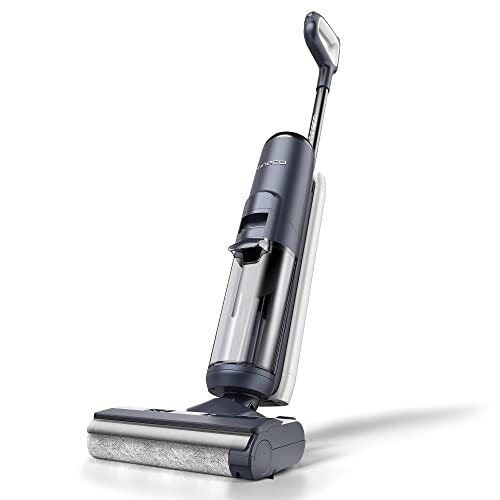
Maintaining sensitive hardwood requires gentle contact surfaces that prevent micro-scratching. Felt strips, rubberized wheels, and soft bristles help protect polyurethane finishes while maintaining proper airflow seals against the floor. For homeowners dealing with sticky spills alongside dry dirt, switching between traditional dry vacuums and dedicated hard floor cleaners provides a more thorough solution. Proper airflow seals along baseboards and cabinet toe-kicks ensure that loose dust along room borders is captured on the initial pass.
Floorhead airflow distribution is just as critical on smooth tile and linoleum as it is on wood. Wide suction channels that maintain even static pressure prevent debris from clumping around the outer edges of the intake port. Vacuums with poorly directed airflow often drag heavier grains across the floor, leaving behind visible tracking marks. Choosing a cleaner with smooth-rolling casters and balanced suction geometry prevents unnecessary surface wear while maximizing pickup efficiency.
Emissions, Filtration Efficiency, and Sealed Systems
Air quality testing measures whether a vacuum retains fine particulates or exhausts them back into the ambient room air. Independent testers use particle counters stationed around the exhaust vent to record escaping dust while the vacuum operates under load. Clean air performance depends on two essential design elements: true HEPA filter media and a fully sealed internal body. If air leaks past unsealed gaskets before reaching the exhaust filter, fine allergens escape regardless of the filter rating.
Sealed bagged systems often score higher in emission tests because the collection bag itself acts as an efficient multi-stage primary filter. The Aspiron Canister Vacuum incorporates an advanced filtration design with HEPA media and pre-motor filtration to trap microscopic particles and protect mechanical components. High-efficiency filtration keeps fine dust away from sensitive motor bearings, extending operating life while keeping room air noticeably fresher. Replacing bags before they are overfilled ensures that airflow velocity remains high enough to sustain proper filtration pressure.
Washable filters in bagless systems also require diligent user habits to preserve rated air quality scores. When a fine mesh filter becomes loaded with microscopic soot and dander, overall vacuum airflow drops rapidly. Washing the filter under cold water restores airflow, but the filter must dry completely for at least twenty-four hours before reinstallation. Installing a damp filter invites mold growth inside the housing and risks electrical shorting in the suction motor.
Canister Vacuums in Independent Evaluation Categories
Canister vacuums consistently earn high marks in independent evaluations for versatility, bare floor agility, and stair cleaning. Placing the heavy motor and dust receptacle on wheels allows the user to guide a lightweight wand and floorhead with minimal wrist fatigue. The low-profile wands easily slide beneath low sofas, beds, and heavy credenzas where upright machines cannot reach. Flexible hoses also make it substantially safer to clean full staircases while leaving the canister base anchored at the landing.
The Aspiron Canister Vacuum exemplifies these format strengths with a corded 1700W motor delivering up to 45 kilopascals of suction. Its large internal dust bag design reduces the frequency of maintenance pauses, making it well-suited for covering multi-room floor plans. With convenient integrated tools and automatic cord rewind, storage and transition between surfaces remain seamless. However, because it relies on an easy-push floor brush rather than an electric motorized beater bar, it excels primarily on smooth surfaces, short rugs, and above-floor dusting rather than wall-to-wall plush carpets.
Maneuvering a canister vacuum requires adjusting to following wheels and hose management. Swiveling casters on the canister body allow the unit to track smoothly behind the operator across open living areas. High-quality canister models feature rubberized bumper guards that protect baseboards and door casings from accidental impacts during turns. When properly configured, canister vacuums offer an exceptional balance of acoustic comfort, raw suction power, and low operator strain.
Stick and Handheld Formats for Quick Cleaning Routines
Stick vacuums represent the fastest-growing category in consumer evaluations due to their lightweight frames and grab-and-go convenience. While full-size canisters and uprights excel at deep weekly sessions, compact stick models address high-traffic kitchen messes and daily crumbs before they get tracked throughout the home. Independent testing evaluates stick vacuums on power stability, dust cup emptying cleanliness, and maneuverability around tight dining chairs. Corded stick variations eliminate battery degradation concerns while keeping total machine weight down.
Weighing just 3.9 pounds, the Amazon Basics 2-in-1 Corded Stick Vacuum Cleaner converts directly between an upright stick format and a handheld unit. Its continuous 300W corded motor and 19.7-foot power cord offer steady power for studio apartments, dorms, and secondary cleaning tasks. When rapid localized cleanup is needed in tight corners, integrating compact handheld vacuums into your workflow saves the effort of assembling larger cleaning equipment. The self-standing frame and accessible washable filter provide hassle-free storage in compact closets.
Dust capacity in stick vacuums remains considerably smaller than in traditional upright or canister platforms. A 0.5-liter dust cup fills rapidly when capturing larger cereal spills or high-volume pet shedding. Frequent emptying is necessary to prevent debris from choking the primary cyclonic shroud and reducing active suction. For light daily maintenance on hard floors and low-pile runners, however, the compact stick profile delivers unmatched speed and physical ease.
Bagged Versus Bagless Reliability and Ownership Maintenance
The debate between bagged and bagless vacuums is a central theme in independent consumer research and long-term owner surveys. Bagged vacuums enclose dirt inside self-sealing paper or synthetic pouches, creating a clean disposal process that protects users from inhaling dust clouds. Furthermore, replacement bags protect internal cyclone shrouds from fine dust buildup, often resulting in fewer clogs and longer motor lifespans. Bagged models like the Aspiron unit require specific compatible bags, such as replacement dust bag pack ASIN B0HGFBR427 for the AS-CA040 model, to maintain proper fit and filtration seals.
Bagless models eliminate recurring consumable purchases by collecting debris in a clear plastic cup that users empty directly into the trash. However, bagless dust bins require frequent washing of pre-motor filters and careful emptying to avoid releasing fine particles back into the room. Over time, failing to wash or replace filters in bagless machines restricts airflow, causing motors to run hotter and lose suction. Deciding between these two styles requires balancing the modest recurring cost of bags against the frequent hands-on maintenance demanded by bagless dust cups.
Long-term reliability data consistently reflects that user maintenance habits dictate machine longevity more than initial purchase format. Neglecting to clear tangled strings from a brush roll places unnecessary strain on motor drive belts regardless of whether a machine uses a bag. Similarly, operating a bagged vacuum with an overstuffed pouch restricts motor cooling and can cause thermal cutoff switches to trip. Adhering to manufacturer guidelines for consumable changes preserves peak performance across the lifetime of the appliance.
Matching Independent Evaluation Standards to Your Home Layout
Determining %what is the best vacuum cleaner according to consumer reports% ultimately depends on mapping testing criteria directly to your household layout. Homes dominated by dense, wall-to-wall carpeting demand a vacuum with robust mechanical brush agitation and variable suction controls. In contrast, urban apartments with hardwood floors, low-pile runners, and limited closet space benefit significantly more from lightweight stick designs or compact canisters. Identifying your dominant flooring type should always be the initial filter before examining specific brand rankings.
Consider secondary household variables such as multi-level staircases, furry pets, and family members sensitive to airborne dust. Homes with shedding animals require specialized rubberized attachments and sealed HEPA exhaust filtration to capture fine dander without clogging airflow channels. Evaluating cord length, attachment utility, and consumable availability ensures your selected cleaner remains practical for years of dependable service. Examining these factors alongside objective evaluation benchmarks provides a clear, reliable path toward the best vacuum for your specific home.
Always consult the specific manufacturer documentation and user manual for model-specific care instructions and safety guidelines. Proper maintenance routines, such as clearing hair wraps and inspecting intake pathways, safeguard suction power across every cleaning cycle. Unplugging the machine prior to inspecting components or replacing filters ensures safe operation at all times. When you understand how independent scoring categories reflect real-world cleaning dynamics, you can select equipment with confidence and maintain pristine floors throughout your living spaces.




Write Your Review
No reviews yet. Be the first to share your experience!