


Pet owners frequently face persistent shedding that settles deep into furniture fabric, car upholstery, and area rugs. While standard household machines often suffer from tangled brush rolls and clogged narrow tubes, many wonder whether a utility wet-dry machine can resolve heavy shedding. In practical terms, will a shop vac pick up dog hair without issue on flat hard surfaces, but stubborn fur intertwined in fabric fibers presents a distinct challenge. Powerful suction alone cannot always dislodge stubborn strands that cling to carpet fibers through static friction and woven tension.
Standard utility vacuums rely almost entirely on sheer air velocity rather than motorized agitation, meaning performance varies dramatically based on surface type and tooling. When dealing with difficult pet messes or muddy tracked-in debris, some households also evaluate specialized pet stain vacuum cleaners to address lingering moisture alongside fur. Understanding the mechanical differences between utility shop vacuums, standard residential uprights, and modern pet grooming vacuum units helps ensure you select the appropriate tool for your household chores.



Understanding Shop Vac Capabilities and Dog Hair Removal Realities
A standard shop vac will pick up dog hair readily from smooth hard surfaces, garages, and workshop floors where debris sits loose on the surface. However, the outcome changes significantly when you attempt to clean medium-pile carpets, vehicle upholstery, or living room furniture. Utility wet-dry vacuums generate immense air velocity, yet they lack the motorized agitation brushes found on household upright vacuums. Consequently, clearing loose clumps of fur is straightforward, but lifting embedded guard hairs requires specific accessories and techniques.
Suction Dynamics Versus Mechanical Agitation
Traditional utility vacuums rely on high airflow measured in cubic feet per minute alongside sealed suction lift to draw debris through wide-diameter hoses. This open-air velocity easily swallows large fur balls, wood shavings, and dry spills without choking the intake port. In contrast, standard household vacuum cleaners use an electric motor to spin a bristled brush roll against textile fibers. The mechanical beating action loosens intertwined strands, flicking them upward into the vacuum airstream where suction carries them away.
When a vacuum lacks a mechanical brush roll, its raw suction power must overcome both gravity and the physical friction holding hair against carpet loops. Dog hair often features microscopic barbed cuticles that lock into woven fabrics like hook-and-loop fasteners. A utility nozzle gliding across a rug simply pulls air through the surrounding carpet backing while the hair remains pinned down. Increasing motor wattage or vacuum horsepower does not reliably solve this friction problem on its own.
Airflow dynamics also shift dramatically depending on the diameter of the vacuum hose. A typical two-and-a-half-inch shop vac hose moves an impressive volume of air, but the air speed at the nozzle perimeter is relatively diffuse. Narrower one-and-one-quarter-inch hoses concentrate the air velocity into a tighter focal point, which creates a stronger pull against stubborn debris. Even with concentrated velocity, relying solely on air pressure to separate trapped fur from dense upholstery remains an uphill battle.
Performance Across Flooring, Vehicle Carpets, and Upholstery
On hard surfaces such as sealed hardwood, concrete, tile, and vinyl, a shop vac performs exceptionally well against pet shedding. Because loose fur cannot weave itself into a hard substrate, the vacuum sweeps up massive piles of hair in seconds. Wide utility nozzles clear expansive basement or garage floors far faster than narrow domestic stick vacuums. Pet owners who maintain workshops or grooming spaces find utility vacuums ideal for sweeping up dry clipping messes quickly.
Vehicle interiors present a far tougher challenge due to the inexpensive needle-punch carpeting commonly installed in automotive floor pans and trunks. This dense, non-woven fabric traps pet hair aggressively, making standard utility nozzles slide across the surface without extracting embedded fur. Many car owners assume their shop vac is broken when it fails to pull dog hair from trunk liners. In reality, the lack of mechanical scraping action prevents the vacuum from dislodging hairs anchored within the dense carpet felt.
Household furniture, couches, and mattresses present similar friction barriers when pet hair settles into textured upholstery weaves. While you might turn to dedicated mattress handheld vacuums with vibrating pads or specialized fabric rollers for bedroom furnishings, utility shop vacs can feel cumbersome indoors. The heavy ridged hoses can scuff wooden sofa legs, and rigid plastic utility wands lack the delicate fabric glides needed for soft cushions. Using a utility vac on delicate living room fabrics requires careful nozzle selection to avoid fabric abrasion.
Filtration Systems, Cartridges, and Airborne Dander
Standard utility vacuums are primarily built for coarse jobsite cleanup like sawdust, drywall chips, and standing water. Most factory setups include a single pleated paper cartridge or a simple foam filter sleeve over the motor float cage. While these filters capture coarse pet hair clumps easily, microscopic pet dander and fine dried skin flakes pass straight through standard filter pores. Without adequate filtration, the vacuum exhaust port simply redistributes allergy-triggering dander back into your ambient indoor air.
Upgrading to a high-efficiency cartridge filter or inserting a high-filtration disposable collection bag dramatically improves air cleanliness. Clean collection bags act as an initial barrier, catching bulky fur and fine dust before it reaches the main motor chamber. This dual-stage containment keeps the internal canister clean and protects the pleated filter from becoming caked in a greasy mat of dander. Keeping the filter clean preserves the machine suction and prevents the motor from overheating during extended cleaning sessions.
For households with severe pet allergies, verifying the presence of true HEPA filtration is an essential consideration. True HEPA material captures minute airborne particles, including microscopic dander and pollen carried indoors on dog coats. Several modern pet cleaning appliances integrate multi-layer filtration, such as fine steel pre-filter meshes paired with high-efficiency particulate cores. These multi-stage systems separate coarse fur at the outer screen, allowing the inner pleated media to capture microscopic particles without premature clogging.
Managing Static Electricity and Stubborn Fur Cling
Static electricity plays a major role in how tenaciously dog hair adheres to synthetic carpeting and car interiors. As dry winter air circulates indoors, running a plastic vacuum nozzle across synthetic nylon or polyester fibers generates a significant electrostatic charge. This static charge causes pet hairs to cling even more tightly to the fabric surface, actively fighting the vacuum suction. As a result, the harder you scrub with a bare plastic nozzle, the more resistant the hair becomes.

Breaking this electrostatic bond requires physical contact that discharges or mechanically peels the hair away from the fibers. Rubberized squeegee edges, silicone grooming rakes, and specialized brush strips provide the friction needed to roll the fur into manageable clumps. Once the hair is rolled into a bundle, the static bond weakens, allowing the vacuum air stream to sweep it away effortlessly. Many utility vacuum users keep a dedicated handheld rubber scraper nearby specifically to prep stubborn surfaces prior to vacuuming.
Wiping the surface with a very light mist of water or an anti-static fabric solution can also neutralize stubborn electrical charges. You must never spray excessive moisture into a dry vacuum setup unless the machine is specifically configured for wet extraction. However, a faint dampness on carpet fibers relaxes static cling enough to let high-velocity airflow do its job. Combining mild static reduction with appropriate nozzle contact yields far cleaner results than relying on suction alone.
Comparing Utility Shop Vacuums and Dedicated Pet Grooming Units
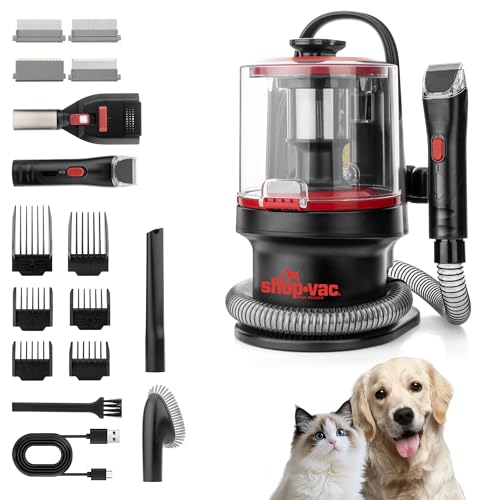
Recognizing the unique demands of pet hair management, manufacturers have developed specialized grooming vacuum systems that bridge the gap between utility power and pet care. Well-known utility brands, including Shop-Vac, now produce dedicated pet grooming vacuums alongside traditional workshop canisters. These grooming models feature integrated deshedding rakes, clipper attachments, and flexible combs that capture shedding fur directly from the dog coat before it ever reaches your floors.
Motor acoustics represent a massive difference between workshop utility vacuums and dedicated pet grooming appliances. A standard shop vac motor produces harsh, high-decibel noise and high-pitched whine that routinely frightens nervous dogs and cats. Specialized pet vacuum kits, such as those engineered by oneisall, incorporate suspended motor housings and dual sound-absorbing foam layers to operate near fifty-nine decibels. The reduced noise profile keeps animals calm during brushing routines, turning cleanup into a preventative home grooming process.
Collection canister capacities also vary substantially across these distinct vacuum categories to match different household needs. Standard workshop utility vacs may hold several gallons of bulk debris, but their large tubs are inconvenient to clean after quick indoor grooming sessions. Dedicated pet grooming kits typically feature transparent two-liter or three-point-three-liter canisters designed for fast, single-button disposal. These multi-liter capacities hold ample quantities of fluffy coat hair while remaining compact enough to store inside a bedroom or bathroom cabinet.
For quick touch-ups on couches and cat towers, lightweight cordless units like the PAKEWAY handheld pet vacuum provide maximum agility. These portable tools utilize dual soft rubber brushes, including saw-toothed and cone-toothed configurations, to lift sticky fur from upholstery without dragging out long power cords. While a massive workshop vac excels in the garage, keeping a compact handheld unit nearby ensures daily shedding gets resolved before it embeds deeply into living room textiles.
Essential Attachments for Clearing Entangled Hair
Equipping your vacuum with the correct nozzle profile transforms its ability to lift stubborn animal fur. Standard utility wands feature wide rectangular openings that disperse suction power across too broad an area. A specialized claw utility nozzle concentrates suction into a narrower slot while providing rigid plastic teeth along the rim to rake across dense fabrics. As you pull the claw nozzle across automotive carpeting, the teeth pull trapped fur out of the fiber weave.
Air-driven turbo nozzles represent another high-value accessory upgrade for standard wet-dry utility vacuums. These attachments feature an internal turbine wheel powered entirely by the incoming air stream, which spins an internal roller brush at high speed. While not as powerful as an electrically driven motor brush, an air-driven turbine provides the mechanical agitation necessary to comb dog hair out of low-pile rugs. The spinning bristles constantly flick fur loose, allowing the high-velocity vacuum airflow to whisk it away instantly.
Rubber-bladed floor squeegees also offer outstanding utility when clearing large hard floor areas coated in pet fur. Traditional bristled brooms and standard vacuum floor brushes tend to accumulate tangled hair along their bristles, creating a messy mat that requires frequent manual detangling. A smooth rubber squeegee blade glides cleanly across hard tile or laminate, pushing fur forward while the suction port consumes it. This design prevents hair from clogging the tool perimeter, keeping workflow fast and hygienic.
Preventing Hose Clogs and Maintaining Airflow
Pet hair presents unique clogging hazards inside corrugated vacuum hoses due to its flexibility and tendency to form dense, felted plugs. When damp hair, wood dust, or general dirt enter the hose together, they bind together around internal hose ridges. Once a small wad of fur catches on an internal rib, subsequent debris quickly piles up behind it, causing an abrupt drop in vacuum suction. Regularly inspecting the hose entrance and wand junction helps catch developing blockages before they choke the motor.
Clearing an obstruction requires disconnecting the vacuum from power and detaching the hose from both the canister and wand ends. Dropping a small weighted marble or feeding a smooth plastic drain rod through the corrugated tube safely dislodges stubborn fur mats without puncturing the flexible hose wall. Never use sharp metal wire hangers, as they can easily puncture the flexible vinyl ridges and ruin the airtight seal. Running warm water through the disconnected hose flushes out sticky dander deposits, though you must allow it to dry completely before reassembly.
Canister hygiene and filter maintenance also demand consistent attention when dealing with heavy shedding. Pet hair takes up substantial volume within a collection chamber, creating a loose, fluffy mass that fills canisters faster than heavy dirt or sawdust. Emptying the dust cup frequently prevents hair from piling up against the primary filter cartridge, preserving essential cooling airflow across the motor. For washable filter elements, periodic rinsing under running water removes oily dander buildup, ensuring the machine maintains peak suction across every cleaning session.
Long-Term Carpet Maintenance and Deep Fiber Care
Dry vacuuming with a shop vac or specialized pet appliance resolves surface shedding, but it cannot address pet body oils, dander residues, and tracked-in moisture. Over time, natural oils from your dog coat transfer to carpet yarns, causing dust to adhere more stubbornly to the carpet base. When dry extraction alone no longer leaves carpets feeling fresh, pairing dry vacuuming with residential carpet extractors helps dissolve embedded oily grime. A comprehensive cleaning routine uses dry vacuuming for weekly fur removal and wet extraction for seasonal deep fiber restoration.
Establishing a consistent cleaning rhythm keeps shedding manageable across peak seasonal coat-blowing periods. Grooming dogs outdoors or using an enclosed grooming vacuum tool significantly minimizes the volume of loose hair that settles into household floor coverings. When stray fur does reach your rugs or car seats, addressing it promptly prevents human foot traffic from grinding hairs deep into the backing material. Relying on the right combination of high suction, mechanical agitation, and proper filtration ensures pet hair cleanup remains fast and effective throughout the entire year.






Write Your Review
No reviews yet. Be the first to share your experience!