


Keeping floors clean across a busy home often feels like an unending battle against dust, pet fur, and daily debris. Many homeowners wonder which robot cleaner is best when trying to balance automated convenience against thorough cleaning performance. Autonomous floor machines now range from ultra-slim suction units designed to slip under low sofas to versatile hybrid models that vacuum and wipe sealed hard floors in a single run. For homes with extensive bare surfaces, exploring dedicated vacuum mop combos highlights how different wet and dry technologies manage tough daily spills alongside regular floor sweeping.
Selecting an automated machine requires understanding how motor power, brush designs, and navigation sensors interact across varied surfaces. Units equipped with brushless suction ports offer clear advantages for pet owners dealing with tangled fur, while dual-action combos demand careful management of water tanks and cleaning solutions. Vertical glass cleaning robots even expand automation beyond flooring by using pneumatic suction to cling to window panes. By evaluating your flooring materials, furniture clearances, and maintenance preferences, you can determine which robotic cleaner delivers dependable results for your living space.
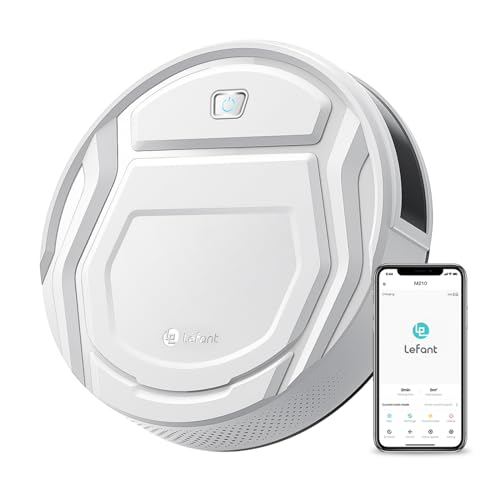
Pros
- Brushless suction port prevents pet hair tangles, reducing maintenance headaches
- Compact 2.99-inch low-profile body easily navigates underneath low-clearance furniture
- Lithium iron phosphate battery provides up to 120 minutes of runtime in low suction mode
- Smart control flexibility with the companion Lefant App plus Alexa and Google Assistant voice integration
- Equipped with 6D anti-collision infrared sensors to help detect obstacles and prevent jamming
Cons
- Lacks a motorized roller brush, which limits deep agitation on medium and high-pile carpets
- Manufacturer explicitly advises against using the zigzag cleaning mode on carpet
- Maximum 120-minute battery life applies specifically to the low suction running mode
The Lefant M210 is an entry-level robotic vacuum designed primarily for routine dry debris removal across hard floors and low-profile living areas. Standing out with its compact frame and roller-free pickup design, this cleaner is well-suited for pet owners, apartment dwellers, and busy households looking for automated daily maintenance without the chore of untangling hair from a traditional motorized brush roll.
Floor cleaning is handled through a brushless suction port paired with a digital motor. Because there is no rotating brush roll underneath, pet hair, dirt, and dust travel straight into the collection bin, significantly lowering hair wrap issues. The cleaner supports six distinct operating modes, including zigzag, random, spot, edge, scheduled timed cleaning, and manual control via the Lefant App. While the unit handles daily debris on hard surfaces effectively, the manufacturer explicitly notes that zigzag mode should not be used on carpets, making it primarily a hard-floor specialist with light area-rug utility.
Measuring approximately 11 inches in diameter and 2.99 inches in height, the Lefant M210 features a notably slim build that allows it to glide under low-clearance bed frames, couches, and entertainment centers where upright vacuums cannot reach. Navigation is guided by upgraded FreeMove Technology 3.0, which utilizes 6D built-in anti-collision infrared sensors to detect potential trapping points and adjust travel paths before the vacuum becomes wedged.
Daily operation and scheduling are managed through Wi-Fi pairing with the dedicated Lefant App, which also lets users adjust suction levels, direct manual movement, and integrate voice commands through Amazon Alexa or Google Assistant. Power is supplied by a lithium iron phosphate battery that delivers up to 120 minutes of runtime when operated in low suction mode. When cleaning cycles end or battery power dwindles, the vacuum automatically returns to its base for self-charging. Routine maintenance centers on sliding out and emptying the internal dustbin and keeping sensor windows clean.
Buyers should be aware of practical operational boundaries before purchasing. Because this model relies exclusively on pure suction without brush-roll bristles, it will not provide deep mechanical agitation on thick carpets or dense area rugs. In addition, reaching the full 120-minute battery benchmark requires operating in low suction mode, meaning higher power settings will yield shorter run times.
For pet owners and households with primarily hard floors seeking an affordable, low-profile robotic vacuum that reduces hair-clearing maintenance, the Lefant M210 offers dependable practical value. Its balance of smart scheduling, voice compatibility, and anti-tangle suction makes it an appealing everyday helper for keeping dust bunnies and shed fur under control.
The key feature of the Lefant M210 for pet households is its brushless suction inlet. Traditional robot vacuums rely on bristle or rubber roller brushes that inevitably collect tangled pet hair, requiring scissors or specialized tools to cut free after every cleaning session. By eliminating the roller brush entirely, this robot pulls loose fur, whiskers, and dander straight into the dustbin.
This brushless layout makes the machine especially effective along hard surfaces such as tile, vinyl, and sealed wood floors where pet hair floats and gathers in room corners. However, without rotating bristles to agitate carpet fibers, pet owners with deep carpet piles should view this vacuum as a hard-floor surface maintainer rather than a deep carpet extractor.
Setup and daily controls run through the companion Lefant App, which allows users to schedule automated floor cleaning, switch power modes, and guide the cleaner manually. Compatibility with Amazon Alexa and Google Assistant adds hands-free voice convenience for starting or stopping cycles.
To navigate living spaces without constant manual rescue, the cleaner relies on FreeMove Technology 3.0. A series of 6D anti-collision infrared sensors monitor the vacuum's surroundings, detecting low furniture skirts, table legs, and tight spaces. The system adjusts trajectory automatically to reduce collisions and prevent the robot from getting stuck beneath household items.

Pros
- Low-foaming formula prevents clogs and protects sensitive robot mop docking station pumps and sensors
- Highly concentrated 25.36 fl oz bottle yields up to 4 gallons of usable cleaning solution
- pH-neutral blend is explicitly compatible with sealed hardwood, engineered wood, laminate, and bamboo
- Fast-drying formulation reduces prolonged standing moisture on moisture-sensitive wood planks
Cons
- Requires manual dilution measuring rather than coming as a pre-mixed, pour-and-go solution
- Surface compatibility is restricted to sealed wood and specified hard floors, so unsealed surfaces are not supported
- Lemon fragrance may not appeal to households seeking completely fragrance-free cleaners
WoldoClean Robot Mop Wood Floor Cleaner is a specialized liquid cleaning concentrate formulated for automated mopping machines and wet dry vacuums. Packaged in a 25.36 fl oz bottle, this cleaner is engineered for homeowners and apartment dwellers who rely on robot mops to maintain sealed hardwood, engineered planks, parquet, laminate, cork, bamboo, oak, or maple floors. Because robot mopping hardware relies on narrow fluid tubes and delicate dispensing nozzles, using general household soap can lead to severe blockages. This product directly addresses those maintenance concerns with an anti-clog, low-foam chemistry.
In everyday operation, the solution operates through controlled dilution, mixing directly into a robot vacuum clean-water tank, docking station reservoir, or wet dry vac dispenser. The manufacturer recommends a 1:20 dilution with clean water for daily upkeep, or a stronger 1:5 ratio when targeting stubborn spills and sticky kitchen messes. As the mop pad agitates the floor, the pH-neutral formula works to break down routine household grime without stripping delicate finishes or depositing a dull, streaky film. Additionally, the fast-drying formula is structured to evaporate rapidly, reducing the moisture dwell time that wood flooring experiences during wet cleaning cycles.
Compatibility is one of the standout practical benefits of this concentrate. The product description highlights support for all robot vacuums equipped with mopping capability, alongside standalone wet dry vacuums. Specific platform compatibility includes iRobot Braava Jet, Shark VacMop, Narwal, Mova, and Ecovacs Deebot systems. Crucially, the low-foaming profile protects internal pump components, valves, and water-level dock sensors from foaming errors and residue build-up. At the floor level, its pH-neutral profile makes it suitable for modern multi-surface homes that feature sealed oak, maple, engineered hardwood, or laminate hallways and living rooms.
Daily handling is straightforward, though it requires user attention to mixing ratios. Because this 25.36 fl oz bottle is concentrated, it can yield up to 4 gallons of ready-to-use mopping liquid. For automated docking stations that dilute or pump fluid for pad washing and tank refills, a single bottle is estimated to provide between 75 and 150 uses, delivering strong economic value compared to single-use cartridges or pre-diluted floor cleaners. Refilling requires simply adding the measured concentrate into the clean water tank alongside tap or distilled water according to the desired cleaning strength, leaving behind a light lemon scent.
Despite its versatility, buyers should observe several practical limitations. This solution is specifically formulated for sealed hard surfaces; it should not be applied to unsealed wood, unfinished boards, or surfaces sensitive to water penetration. Additionally, because it is a concentrate rather than a ready-to-use liquid, users must take a moment to measure the proper 1:20 or 1:5 ratio, as accidental over-concentration could lead to unnecessary residue. Finally, households that require completely unscented supplies should note that the formula includes a fresh lemon fragrance.
For households seeking a reliable, machine-safe floor cleaning solution for their automated or wet dry floor washers, WoldoClean Robot Mop Wood Floor Cleaner is a well-balanced option. It delivers tailored protection for machine pumps, leaves sealed hardwood and laminate free of sticky buildup, and stretches household floor-care budgets thanks to its high-yield concentrate design.
WoldoClean Robot Mop Wood Floor Cleaner is specifically formulated to care for sealed wood finishes, engineered flooring, parquet, laminate, cork, bamboo, oak, and maple. Its pH-neutral chemistry ensures that daily grime, footprints, and light spills are lifted without degrading polyurethane coatings or wax finishes. Because wood planks are vulnerable to water damage, the fast-drying formulation helps prevent puddling and minimizes the time moisture rests on floor seams.
For routine maintenance, a 1:20 dilution ratio provides steady daily cleanliness across high-traffic living areas and hallways. For tougher spot cleaning in dining rooms or kitchens, increasing the solution strength to a 1:5 ratio provides extra cleaning power against stuck-on residues without leaving a dulling film behind.
This cleaning concentrate is engineered for universal compatibility across mopping robot vacuums and wet dry vacuums. The manufacturer explicitly identifies compatibility with popular automated systems, including iRobot Braava Jet, Shark VacMop, Narwal, Mova, and Ecovacs Deebot models. Its anti-clog, low-foam chemistry is essential for these automated platforms, ensuring that micro-jets, fluid pumps, solenoid valves, and dock sensors remain unobstructed by soap suds or mineral crystallization.
One 25.36 fl oz bottle produces up to 4 gallons of usable cleaning solution, yielding approximately 75 to 150 tank cycles in typical self-washing docks and onboard robot reservoirs. This makes it an efficient and hardware-safe alternative to standard household detergents that can trigger dock sensor faults or void machine pump warranties.
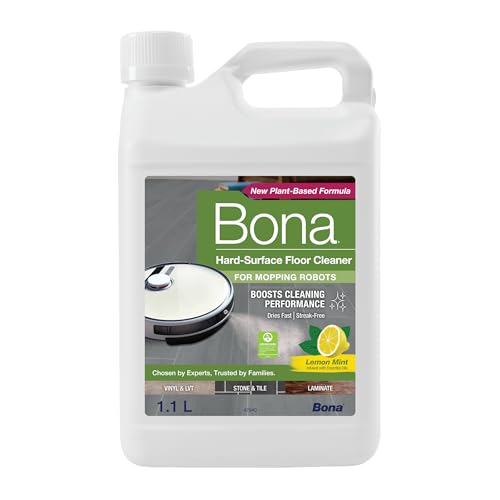
Pros
- Economical 1:20 dilution ratio ensures one 37.2 fl oz bottle handles numerous automated mopping cycles
- GREENGUARD GOLD certification and over 90% bio-based content support lower indoor emissions
- Safe across a wide variety of sealed hard floors including laminate, vinyl, ceramic tile, and marble
- Designed to resist streaking and cloudy residue on high-traffic hard flooring
Cons
- Requires manual measuring and mixing with water before filling machine reservoirs
- Not suitable for unsealed wood, unsealed stone, carpets, or rugs
- Some robot manufacturers recommend only proprietary brand solutions, requiring user verification
Bona Hard-Surface Floor Cleaner Robot Concentrate is a specialized liquid cleaning solution crafted specifically for automated mopping hardware. Unlike generic ready-to-use floor washes, this formula is engineered to work seamlessly within the fluid systems of mopping robots and upright wet-dry mopping vacuums. It offers a reliable, low-foaming alternative for homeowners, renters, and busy families who want to keep high-traffic hard floors clean without clogging delicate machine sprayers or leaving sticky films behind.
In everyday household environments, floor maintenance requires a delicate balance between cleaning efficacy and finish protection. Bona addresses this with a water-based, pH-balanced formulation that holds GREENGUARD GOLD certification and features more than 90 percent bio-based content. Designed to lift light grease, muddy shoe prints, dropped crumbs, and routine grime, the solution is described by the manufacturer as drying quickly and leaving a streak-free, residue-free surface across sealed floors.
Fluid mechanics inside automated mopping robots demand a specific chemical consistency. Standard floor detergents often foam excessively, which can damage small pump systems, obstruct internal fluid pathways, or leave a slippery detergent layer on smooth floors. Because this Bona solution is formulated specifically for mopping appliances, it flows cleanly through fluid reservoirs and dosing nozzles, allowing microfiber mopping pads and roller heads to agitate dirt effectively without gumming up moving parts.
Mixing and surface application are straightforward. The concentrate requires a strict 1:20 dilution ratio with clean water before use, such as adding up to 10 milliliters of cleaner for every 200 milliliters of water. This makes the 37.2-fluid-ounce (1.1-liter) jug exceptionally high-yielding. The manufacturer explicitly supports application across all sealed hard-surface floors, including ceramic tiles, laminate, linoleum, luxury vinyl, and sealed marble, giving multi-surface homes wide flexibility.
Practical limitations center primarily on preparation requirements and surface boundaries. Because this is a concentrated liquid rather than a ready-to-pour spray, users must measure doses accurately to avoid over-concentration, which could lead to unwanted residue. Additionally, it is strictly formulated for sealed hard surfaces and is not intended for unsealed wood, untreated porous stone, or carpeted areas. It is also a general surface cleaner rather than an EPA-registered disinfectant or biological sanitizer.
For households relying on automated robot mops or upright wet mopping vacuum machines, Bona Hard-Surface Robot Concentrate serves as a practical, dependable consumable. Its plant-derived credentials, neutral pH, broad sealed-floor compatibility, and economical dilution profile make it an easy recommendation for anyone looking to optimize daily floor cleaning routines without risking residue buildup on their floors or damage to their cleaning machines.
Bona Hard-Surface Robot Concentrate is engineered to integrate smoothly with the clean-water reservoirs of most mopping robots and upright mopping vacuum machines. Its low-foaming chemistry is tailored to avoid clogging internal pumps, gravity-fed valves, and fine spray jets that standard floor soaps frequently obstruct.
Users must adhere to the 1:20 dilution ratio, combining up to 10 ml of concentrate per 200 ml of water. This ensures proper viscosity and active cleaning concentration, preventing fluid lines from gumming up while keeping microfiber pads moist enough for consistent agitation across floorboards and tile surfaces.
While the manufacturer highlights compatibility with most automated mopping platforms, buyers should check their specific machine manual regarding warranty guidelines. Some appliance brands mandate proprietary fluids, but for robots accepting third-party concentrates, this pH-neutral formula offers broad hardware utility.
This cleaning concentrate is specifically formulated for sealed hard-surface flooring materials, including ceramic tile, laminate, linoleum, vinyl, and sealed marble. The pH-balanced composition is gentle on factory-applied floor finishes while lifting daily household traffic marks, cooking splatters, and pet paw prints.
The quick-drying, water-based formulation is designed to evaporate cleanly without leaving streaks or dulling residues. This makes it particularly effective in kitchens, entryways, and open-concept living spaces where natural sunlight often highlights cleaning smears and film on darker vinyl or polished tile.
It is crucial to note that this formula is restricted to sealed hard floors. It should not be used on unsealed hardwood, raw stone, or soft furnishings, and spills should always be cleaned in tandem with machine pads that are frequently washed to prevent dirt redeposition.


Pros
- Brushless, tangle-free suction design eliminates hair wrapping and reduces maintenance for pet owners
- Impressive manufacturer-stated 5200Pa suction across three adjustable power settings
- Slim 2.99-inch height fits easily under low coffee tables, dressers, and couches
- Smart control options include companion smartphone app scheduling plus Alexa and Google Assistant voice commands
- Four-stage electronic water control allows tailored mopping moisture on hard floors
Cons
- Not suitable for medium- or high-pile carpeting; performance is restricted to hard floors, wood, and low-pile rugs
- Relies on bump-and-sensor navigation rather than advanced LiDAR room mapping or designated virtual no-go zones
- Specific dust bin and water tank capacities are not listed in fluid or volume metrics by the manufacturer
The ROPVACNIC Robot Vacuum and Mop Combo (Model S1) is an automated 2-in-1 floor-care machine designed for routine multi-surface upkeep in busy American households. Engineered primarily for apartment dwellers, pet owners, and homeowners managing wood and hard surfaces alongside low-pile rugs, this unit tackles everyday dust, pet shedding, and minor floor spots without requiring manual push-vacuuming. Its combination of wet mopping and vacuuming makes it an appealing option for budget-conscious buyers seeking an entry-level robotic helper for daily maintenance.
In real-world cleaning situations, this robot addresses daily debris using a 3-point cleaning system and a manufacturer-rated 5200Pa of suction across three selectable power stages. Instead of relying on a traditional bristled roller, the machine uses a direct, no-entanglement suction inlet flanked by dual rotating electric side brushes. This direct-suction approach is specifically intended to channel dog and cat hair, crumbs, and tracked-in grit directly into the suction path without wrapping around an agitator bar. Simultaneously, the electronically controlled water tank offers a four-stage personalized water adjustment system, allowing users to dial in light dampness for dust removal or slightly heavier moisture for minor sticky spots on wood and tile-like hard surfaces.
From a structural standpoint, the robot features a remarkably low-profile build measuring 12 by 12 inches with a height of only 2.99 inches, weighing approximately 7.28 pounds in a light black housing. This compact chassis allows it to clear low-hanging furniture, including bed frames, sideboards, and living room couches, where dust bunnies and pet fur often accumulate out of reach. The underside houses dual motorized side brushes designed to reach along baseboards, while the mopping plate attaches smoothly to the base. It comes paired with a compact charging dock to which the robot autonomously returns whenever cleaning concludes or battery replenishment is needed.
Setting up the unit is straightforward, involving app pairing for smartphone scheduling and connecting to voice platforms such as Amazon Alexa or Google Assistant. Maintenance is noticeably lower on the vacuuming side because the absence of a brush roll eliminates the tedious task of cutting away wound-up pet hair with scissors. Users simply empty the internal dry debris container, wipe the drop and bumper sensors periodically, and clear occasional threads from the twin side sweepers. When utilizing the mopping function, routine maintenance involves filling the onboard water reservoir with clean tap water, dampening and securing the mop pad, and washing the cloth pad thoroughly after each cleaning run to avoid stale odors.
Despite its practical advantages, this model has natural operational boundaries. Because it relies on high-coverage sensor algorithms and directional obstacle detection rather than overhead laser LiDAR or optical camera mapping, it cleans in semi-random or reactive patterns and lacks customized virtual boundary lines or selective room targeting. Furthermore, surface compatibility is strictly limited to wood, hard floors, and low-pile carpets; it is not suited for medium- or high-pile carpeting, shag rugs, or unlevel thresholds. The lack of an auto-lifting mop plate also means users should remove the mopping bracket before sending the machine across area rugs to prevent wetting carpet fibers.
For homeowners, renters, and pet owners looking for a budget-friendly automated floor cleaner that tackles daily pet hair without brush-roll tangles, the ROPVACNIC Robot S1 offers reliable utility. While it does not replace a heavy-duty upright extractor or a laser-guided premium robot for deep restorative carpet cleaning, its solid 5200Pa suction rating, slim clearance, and adjustable electronic mopping deliver sensible, hands-free cleanliness across daily hard-surface living areas.
The ROPVACNIC S1 addresses pet hair challenges through a specialized roller-free suction opening rather than a standard spinning brush roll. Traditional vacuum agitator bars tend to collect tightly bound fur, requiring frequent manual intervention and cutting. By pairing a direct suction throat with dual rotating electric side brushes, this cleaner channels stray hairs, dander, and food crumbs straight toward the collection bin, minimizing maintenance hassles for dog and cat households.
Backed by a manufacturer-rated 5200Pa suction profile across three adjustable levels, the unit supplies substantial lift for hard floors, wood surfaces, and low-pile area rugs. Users can select higher suction stages for high-traffic entryways or pet resting zones, ensuring small debris and dry spills are swept clean from perimeter baseboards and tight floor corners.
Equipped with a 2-in-1 mopping module, the ROPVACNIC Robot S1 actively manages floor hydration via an electronically controlled high-capacity water reservoir. Unlike passive gravity-fed drip mops, the electronic system features four personalized water-flow adjustment stages. This granular control allows users to match moisture dispersion to their specific hard-floor conditions, avoiding puddling on sealed wood while delivering sufficient wetness to lift fresh footprints and light dirt.
To maintain optimal results on hard surfaces, the mopping pad should be laundered after every cleaning session, and water should be emptied between cycles. Because the vacuum does not automatically detect carpets to lift its mop plate, damp mopping is best restricted to entirely hard-surface areas like kitchens, hallways, and living rooms with wood flooring.
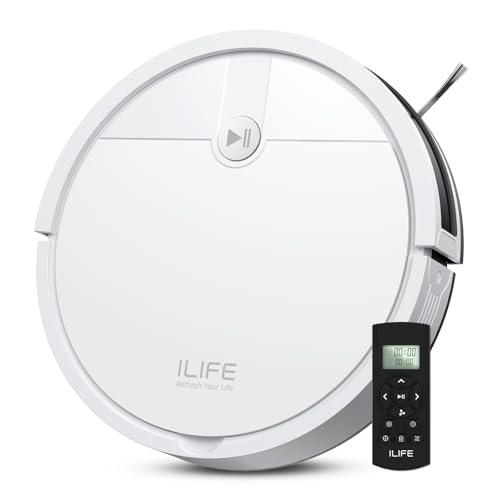
Pros
- Direct suction port prevents pet hair tangles, significantly reducing brush-roll untangling maintenance
- Slim 2.99-inch height fits under low-clearance furniture where standard uprights cannot reach
- Generous runtime of up to 120 minutes with automatic return-to-dock recharging
- Simple operation via remote control or one-button touch without requiring home Wi-Fi or app setup
- Multi-surface cleaning covers hardwood, laminate, tile, stone, and low pile rugs
Cons
- Suction-only design lacks a motorized rotating brush roll, making it unsuitable for medium or high-pile carpeting
- Operates without smart digital mapping or app-based boundaries, relying instead on infrared sensors and remote scheduling
- Dry-cleaning only vacuum with no wet mopping or liquid spill pickup capabilities
The ILIFE V2 is an automated dry vacuum cleaner designed primarily for apartment dwellers, busy pet parents, and homeowners seeking hands-off floor care for bare surfaces and low pile flooring. Measuring 12.2 inches in diameter and only 2.99 inches tall, this compact robotic cleaner focuses on everyday dust, loose dirt, and shedding pet hair. Rather than relying on complicated mobile apps, the V2 offers straightforward control through an included remote control or a physical one-touch button on the cleaner itself, making it an approachable option for first-time robot vacuum buyers.
Cleaning pickup relies on a direct, tangle-free suction port rather than a motorized bristle brush roll. For households with dogs and cats, this design eliminates the tedious chore of cutting wrapped hair and tangled fur off an agitator bar. The vacuum effectively gathers surface dirt, tracked-in litter, crumbs, and hair across hardwood, tile, laminate, natural stone, and low pile carpets. Because the unit is equipped with auto clean, edge clean, and spot clean modes, users can target stubborn localized spills or send the robot along wall baseboards where dust bunnies routinely accumulate.
With a compact profile weighing approximately 7.1 pounds, the robot maneuvers smoothly under coffee tables, nightstands, and low sofas where standard stick or upright vacuums struggle to reach. Navigation is guided by built-in infrared sensors that detect furniture, walls, and sudden drop-offs like staircases. While the V2 does not utilize laser room mapping, its collision-avoidance and drop-off sensors provide the situational awareness needed to move through rooms without constantly bumping hard into baseboards or tumbling down steps.
Day-to-day operation is streamlined by preset routine scheduling and a solid battery life. The manufacturer specifies up to 120 minutes of continuous cleaning on a single full charge, which is plenty of time to cover common living spaces before power depletes. When the battery runs low, the robot automatically returns to its floor charging dock to replenish itself. Maintenance involves pulling out the internal dry dustbin to empty collected debris and occasionally wiping down the external infrared sensors to ensure clear navigation.
Prospective buyers should keep realistic performance boundaries in mind before purchasing. Because the ILIFE V2 uses a bristle-free suction port, it relies solely on airflow rather than mechanical agitation. As a result, it is not built to pull deeply embedded grit out of plush or high-pile carpets. Furthermore, it does not support smart home app pairing, interactive virtual no-go zones, or wet-mopping tasks. Floor areas should be kept relatively clear of loose cables and thick floor rugs to ensure unobstructed movement throughout the cleaning cycle.
For households with predominantly hard floors such as wood, tile, laminate, or stone, the ILIFE V2 delivers dependable and low-maintenance everyday value. Pet owners tired of clearing tangled hair from traditional brush rolls will appreciate the direct suction system. Supported by a 12-month warranty and U.S.-based customer support, this robot vacuum serves as a practical, hassle-free helper for daily sweeping and pet hair maintenance.
Pet hair management is one of the most frustrating aspects of floor care because long strands and thick undercoats quickly choke standard spinning brush rolls. The ILIFE V2 addresses this issue by utilizing a dedicated tangle-free suction port. Because there is no central rotating roller beneath the chassis, dog and cat hair travels straight into the suction pathway and directly into the dustbin without binding or wrapping around mechanical parts.
This tangle-free suction channel performs especially well on flat, rigid surfaces like hardwood, tile, laminate, and stone. Pet dander, loose fur tumbleweeds, dry kibble, and stray litter are gathered smoothly during regular passes. While it easily collects surface hair on low pile carpets and flat-woven rugs, homes with heavy carpet shedding may still need an upright with a motorized brush roll for deep fiber agitation. For routine daily sweeping, however, the direct suction mechanism saves considerable maintenance time.
Efficient coverage in budget-friendly robot vacuums depends on smart sensor integration and reliable power. The ILIFE V2 features integrated infrared anti-collision and anti-fall sensors that identify physical obstacles and edge drops. These sensors assist the vacuum in slowing down near furniture legs and turning away from stairwells, protecting both your furnishings and the machine itself during unsupervised runs.
The internal battery supports up to 120 minutes of runtime on a single charge, allowing the vacuum to clean multiple rooms before needing more power. When the battery level drops, the unit automatically navigates back to its charging dock to recharge. Homeowners can also program the machine to start automatic daily sweeps using the preset scheduling function, ensuring floors are maintained consistently even when no one is home.

Pros
- Ultra-concentrated 1:60 formula produces up to 8 gallons of solution from a single compact 16 oz bottle
- Low-foam design helps protect delicate internal robot mop pumps, dispensing lines, and spray nozzles
- Documented compatibility with leading robot floor mop systems including Roborock, Dreame, and Roomba
- Safe for multiple impermeable hard surfaces such as tile, granite, laminate, vinyl, and sealed parquet
Cons
- Requires manual measuring to maintain the exact 1:60 dilution ratio in small onboard robot reservoirs
- Restricted exclusively to impermeable floors and not suitable for unsealed wood or porous surfaces
- Contains an added fragrance that may not suit households preferring completely unscented formulas
ERRECOM Floor is an ultra-concentrated liquid cleaning solution specifically formulated for automated robot mops, electric floor scrubbers, and hard-surface floor-cleaning machines. Built for households seeking a dependable alternative to single-brand proprietary refills, this 16-fluid-ounce (500 ml) bottle dilutes at a 1:60 ratio with water to yield up to 8 gallons of ready-to-use liquid. It is primarily designed for busy homeowners, apartment dwellers, and pet owners who rely on robotic maintenance to manage everyday dust, kitchen spills, and tracked-in debris across hard floors.
In automated floor-care equipment, excessive foam can lead to pump cavitation, nozzle clogs, and water-dispensing errors. ERRECOM directly addresses this issue with a low-foam formula engineered to pass smoothly through narrow fluid lines while keeping microfiber pads evenly saturated. The solution is formulated to provide deep cleaning of routine household grime while helping prevent rapid resoiling over time. In addition, it dries rapidly on hard surfaces to reduce the appearance of dull halos, water marks, or slippery streaks.
Surface compatibility covers impermeable hard floors, making the formula suitable for routine automated mopping over ceramic tile, marble, granite, vinyl, laminate, and parquet. Because the chemical balance targets everyday soils while respecting common floor finishes, it can handle light kitchen grease, entryway dirt, and pet paw prints without clouding properly finished materials. However, users should always ensure that their flooring is thoroughly sealed, as repeated damp mopping on unsealed or worn seams can compromise non-waterproof boards.
Using and mixing the cleaner is straightforward, though it does require attention to dilution. With an ultra-concentrated 1:60 ratio, only a small capful or fraction of an ounce is needed to fill the modest water reservoirs typically found on robotic cleaners, which often hold between 200 and 400 milliliters of water. Adding the correct measured amount to clean water preserves the low-foam characteristics, maintains nozzle clarity, and distributes a pleasant, subtle fragrance throughout the room during operation.
Realistic limitations center on measurement accuracy and surface boundaries. Pouring too much concentrate into a small reservoir can lead to sticky residues on high-gloss tiles or unwanted suds in internal lines. Furthermore, the manufacturer explicitly restricts application to impermeable hard floors, meaning unsealed natural stone or unfinished wood surfaces should be avoided. The presence of an added fragrance also means individuals sensitive to scented cleaning products may prefer a scent-free alternative.
For homeowners and renters looking for an economical, multi-brand refill compatible with Roborock, Dreame, Roomba, Braava Jet, Shark, or Tineco systems, ERRECOM Floor concentrated cleaner offers solid everyday value. Its low-foaming profile, quick-drying performance, and high-yield 8-gallon capacity make it a practical maintenance staple for keeping daily living spaces clean with minimal fuss.
ERRECOM Floor concentrate is formulated for broad hardware versatility across automated floor cleaners and wet-dry floor machines. The manufacturer explicitly documents compatibility with major robot brands including Roborock, Dreame, Roomba, iRobot Braava Jet, Shark, and Tineco floor appliances.
A critical technical requirement for robot mops is low-suds performance. Standard household detergents frequently generate thick foam that trips water-level sensors and damages miniature internal pumps. This low-foam formulation flows cleanly through internal metering valves and spray nozzles, helping prolong machine lifespan while delivering consistent liquid application to mopping pads.
The manufacturer confirms compatibility across a wide range of impermeable hard-floor surfaces, including ceramic and porcelain tile, marble, granite, vinyl, laminate, and parquet. The solution is designed to dry rapidly, helping minimize water pooling and visible streaks on glossy stone or polished laminate.
While this cleaner supports varied impermeable surfaces, users should verify that their floors are properly sealed before running wet cleaning cycles. Avoiding application on unsealed hardwood, worn plank seams, or cracked porous stone prevents water seepage and protects underlying subfloors over long-term use.
Understanding Which Robot Cleaner Fits Your Cleaning Needs
Answering which robot cleaner is best requires evaluating your home layout, primary flooring materials, and daily cleaning priorities. No single automated machine excels across every household scenario because compact vacuum units, hybrid vacuum-mop combos, and specialized window cleaners serve fundamentally different purposes. Some households benefit most from tangle-free suction ports that swallow shedding pet hair without wrapping around rollers, while others require automated fluid dispensing to keep sealed hard floors polished. Looking closely at motor design, navigation logic, and maintenance demands helps you match the right machine to your routine.
Identifying the Main Categories of Robotic Cleaners
Robotic cleaning hardware generally splits into three distinct product categories based on mechanical design and intended surfaces. Traditional robot vacuums focus exclusively on dry debris collection by drawing dust, crumbs, and hair into an internal hopper using mechanical agitation or direct suction. Hybrid 2-in-1 machines combine a dry suction channel with a rear-mounted microfiber pad and fluid reservoir, allowing the device to sweep and wipe sealed hard floors simultaneously. Specialized robotic cleaners, such as window-washing units, utilize high-pressure pneumatic adsorption rather than drive wheels to clean vertical glass panes safely.
Choosing among these broad categories depends primarily on the surfaces you need to clean on a weekly basis. A home covered predominantly in low-pile carpeting gains little benefit from a mopping attachment that must be manually removed before carpet runs. Conversely, homes with expansive tile or laminate areas often see substantial time savings from a dual-action system that manages light surface stains alongside dust collection. Recognizing whether your biggest daily annoyance is pet hair on rugs, grime on bare floors, or smudged window glass narrows your options immediately.
Brushless Suction Ports Versus Bristle Roller Brushes
The floorhead intake design represents one of the most critical mechanical choices when selecting an autonomous vacuum cleaner. Traditional robot vacuums rely on rotating bristle brush rolls that beat carpets to loosen embedded grit and sweep dust into the intake pathway. While effective on carpets, these rotating rollers quickly accumulate long hair and animal fur tightly bound around the brush core and end bearings. Clearing tangled rollers requires frequent manual intervention with scissors or cleaning blades to prevent the drive motor from overheating.
Brushless direct suction ports eliminate the central rotating roller entirely, pulling dirt and fur straight into the dustbin through an open suction channel. Models like the Lefant M210 and the ILIFE V2 utilize this streamlined airflow structure specifically to prevent hair from binding around rotating parts. Because there are no bristles for fur to wrap around, pet owners spend significantly less time clearing jams and maintaining the vacuum intake. While direct suction may retrieve slightly less deeply embedded sand from thick carpets, it delivers reliable, tangle-free pickup across hardwood, tile, and low-pile floor coverings.
For homes managing both dry shedding and recurring wet pet messes, relying solely on dry robotic suction will leave stuck-on stains unaddressed. In these instances, pairing an automated vacuum with specialized pet stain vacuums offers a practical dual-appliance strategy for deep fabric extraction. The robotic cleaner handles routine hair accumulation across open hard floors, while a deep cleaner tackles heavier soil on upholstery and carpet fibers. This division of labor keeps your automated hardware running smoothly without exposing dry vacuum motors to damp debris.
Navigational Sensors and Low-Profile Clearance
A robot cleaner can only clean areas it can physically reach, making chassis height a vital design specification. Many standard robotic vacuums stand over three and a half inches tall, which often prevents them from slipping beneath low coffee tables, dressers, and modern sofas. Slim-profile designs measuring around 2.99 inches in height, such as the Lefant M210 and ILIFE V2, easily slide beneath low furniture where dust bunnies typically congregate. Ensuring the robot fits beneath your primary furniture pieces dramatically increases the overall square footage cleaned during each autonomous run.
Navigational capability also depends on the internal sensor suite that guides the machine away from hazards. Built-in infrared anti-collision sensors detect walls, cabinet bases, and furniture legs before the machine impacts them at full speed. Meanwhile, downward-facing cliff sensors monitor floor level drops, stopping the machine and turning it away from open staircases or high threshold steps. Advanced algorithmic pathing allows units to toggle between systematic zigzag lines, perimeter edge tracing, and concentrated spot cleaning depending on user preference.
While premium lidar towers offer precise digital room mapping, they also add significant height to the top of the chassis. Bumper-based and infrared sensor systems maintain a flatter profile, allowing the machine to access tighter spaces beneath baseboards and low cabinetry. For open floor plans or smaller apartments, infrared sensor guidance provides ample coverage without the bulk or expense of raised laser turrets. Checking your room thresholds and furniture clearances ensures your chosen navigation style matches your living environment.
Evaluating Mopping Mechanisms and Water Control
Hybrid robotic cleaners introduce active or passive wet cleaning components to assist with hard floor maintenance. Basic combo models utilize passive gravity-fed damp pads that wet the floor continuously until the internal reservoir empties. More advanced platforms, like the ROPVACNIC S1, feature electronically controlled water tanks that meter moisture through internal pumps based on user settings. This electronic regulation prevents water from puddling when the robot pauses or docks, protecting sensitive flooring materials from moisture damage.
Multi-stage water adjustment settings allow users to tailor fluid volume to specific floor types and seasonal conditions. Sealed ceramic tile can withstand heavier damp mopping to break up kitchen grease and mud, whereas engineered wood requires minimal moisture that evaporates rapidly. Choosing a unit with adjustable water stages ensures that delicate wood joints do not swell from excessive saturation. Additionally, high-capacity fluid tanks reduce the need to pause cleaning cycles for mid-run refills during whole-house cleaning routines.
Choosing the Correct Cleaning Formulations for Robot Mops
Operating a robotic mop requires careful attention to the fluids poured into the internal clean water reservoir. Using standard household dish soaps, bleach, or thick floor detergents can quickly ruin internal peristaltic pumps and clog fine dispensing nozzles. Furthermore, conventional floor soaps produce heavy suds that trigger false error readings in fluid-level sensors and leave sticky, streak-laden residues across shiny floors. Safe robotic mopping demands specialized low-foam cleaning solutions engineered specifically for small automated fluid passages.
Formulations like WoldoClean Robot Mop Wood Floor Cleaner, Bona Hard-Surface Floor Cleaner Concentrate, and ERRECOM Concentrated Cleaner are designed specifically for automated docking stations and on-board tanks. These solutions feature pH-neutral profiles that clean sealed hardwood, laminate, vinyl, and tile without dissolving protective floor finishes. High concentration ratios, ranging from 1:20 up to 1:60, mean a small bottle produces gallons of ready-to-use liquid while safeguarding internal valves against mineral crusting. Fast-drying chemical properties also mean less standing moisture remains on bare wood surfaces after the robot passes.
Transitioning between damp bare floors and expensive floor coverings is another vital consideration when running automated wet cycles. Homeowners mindful of protecting rugs on hardwood floors often set physical boundaries or remove wet mopping plates before running cleaning cycles near fiber edges. Because basic robotic combos lack automated pad-lifting mechanisms to clear high-pile carpets, separating wet mopping sessions from carpet vacuuming prevents accidental wetting of decorative textiles. Always confirm your floor manufacturer recommendations before introducing any damp cleaning solution to wood finishes.
Understanding Vertical Glass and Window Cleaning Robots
Robotic cleaning technology extends beyond horizontal floor surfaces into vertical glass maintenance with dedicated window cleaning machines. Devices like the Tosima WA9C Pro adhere directly to vertical glass surfaces using powerful pneumatic suction fans delivering between 2600 and 3200 Pa of adsorption force. Internal pressure sensors continuously monitor the vacuum seal against the glass, adjusting motor draw to prevent the unit from slipping or losing contact. Integrated dual or quad spray nozzles project fine mists of cleaning fluid across the path to lift outdoor dust, rain spots, and pollen.
Systematic navigational algorithms guide window robots across extensive glass panels using vertical N-shaped or horizontal Z-shaped travel paths. These structured paths ensure edge-to-edge wiping without missing outer corners or leaving streaked gaps in the middle of large panes. On-board optical edge detection sensors identify frame boundaries and frameless glass edges, instructing the unit to reverse direction safely before losing pneumatic seal. Handheld remote controls give users the ability to target stubborn water spots manually or increase spray volume on heavily soiled exterior glass.
Safety systems represent the most crucial design element for any automated appliance operating overhead or along multi-story exterior glass. Reliable window robots incorporate an internal uninterruptible power supply battery that keeps the device firmly suctioned to the glass for up to 25 minutes during unexpected power outages. Audible sirens and flashing indicator lights alert users immediately if electrical supply disconnects. Furthermore, heavy-duty mechanical safety ropes anchored to secure indoor fixtures ensure the machine cannot fall to the ground if suction is compromised.
Battery Longevity, Motor Power, and Recharging Cycles
Battery capacity directly dictates how much continuous cleaning an autonomous robot can complete before returning to its base. Many budget-friendly and mid-range robotic vacuums utilize lithium-based battery packs that deliver up to 120 minutes of runtime under eco or low-suction operating modes. Advanced battery chemistries, such as lithium iron phosphate cells, provide stable power delivery over hundreds of discharge cycles with minimal heat generation. However, running units at maximum suction levels or engaging active mopping pumps noticeably reduces overall operating duration per charge.
Suction ratings vary widely across the robotic vacuum market, with compact units offering standard suction while high-performance hybrids reach up to 5200 Pa. Higher suction levels provide superior vacuuming capability along dusty baseboard edges, grout lines, and low-pile welcome mats. When battery voltage drops below a preset threshold, autonomous units suspend cleaning and navigate back to their charging dock automatically. Ensuring your charging station rests against a clear wall with unobstructed approach paths prevents docking failures that leave robots stranded mid-room.
App Connectivity, Voice Control, and Simple Remotes
Control interfaces significantly impact the daily convenience and accessibility of your automated cleaning hardware. Many modern robot cleaners connect to home Wi-Fi networks, allowing users to schedule cleaning times, adjust motor power, and track progress via mobile smartphone apps. Voice integration with smart assistants like Amazon Alexa or Google Assistant enables hands-free cleaning activation through simple verbal instructions. These digital features make it simple to initiate cleaning cycles while away at work so floors are clear of debris upon returning home.
Despite the popularity of smartphone applications, some users prefer direct physical controls that bypass Wi-Fi setup and network troubleshooting. Models like the ILIFE V2 offer straightforward push-button operation on the robot body alongside dedicated infrared remote controls. This physical interface proves especially convenient for households with intermittent Wi-Fi or users who dislike managing mobile apps. Having full access to spot cleaning, edge tracing, and docking functions from a simple handheld remote ensures seamless daily operation without software complications.
Routine Maintenance for Dustbins, Filters, and Fluid Passages
Maintaining an autonomous cleaner requires routine upkeep to preserve suction efficiency and prolong component lifespan. Dustbins should be emptied every few cleaning cycles to prevent compacted debris from choking the internal airflow pathway. High-efficiency pleated filters require gentle tapping over a trash receptacle or careful rinsing only when explicitly authorized by the manufacturer manual. Reinstalling a damp filter can cause motor damage and foul odors, so filters must dry completely for at least 24 hours before reinsertion.
Sensors, driving wheels, and fluid spray nozzles also require periodic inspection to ensure reliable navigational performance. Dust buildup over downward cliff sensors or infrared bumper windows can cause erratic movement patterns or false drop-off alerts. For mopping units and window cleaners, flushing clean water through the fluid lines prevents cleaning concentrate residues from crystalizing inside spray tips. Using an unclogging needle on nozzle openings ensures fine, uniform spray patterns across glass and hard flooring during every automated cycle.
Practical Factors for Choosing Your Ideal Robotic Cleaner
Determining which robot cleaner is best ultimately hinges on matching mechanical specifications to your home unique floor plan and daily mess types. If your primary challenge involves shedding pet fur across hardwood and low-pile rugs, a slim robot vacuum featuring a tangle-free brushless suction port provides the most reliable everyday solution. If you want to eliminate footprints and light kitchen spills on sealed tile, an electronically controlled vacuum-mop combo paired with low-foam concentrate balances sweeping and damp wiping effectively.
For homes with extensive floor-to-ceiling glass or tall exterior panes, introducing an automated window cleaner handles difficult vertical chores that conventional vacuums cannot touch. Balancing suction power, chassis clearance, fluid management, and interface preferences guarantees you select a machine that integrates smoothly into your household maintenance routine. By assessing these practical factors against your lifestyle, you can invest in automated cleaning equipment that delivers consistent, hands-free cleanliness week after week.








Write Your Review
No reviews yet. Be the first to share your experience!