


Heavy workshop messes, flooded basements, and coarse construction debris quickly overwhelm ordinary household vacuums. When standard utility tools fail to clear thick slurry or large wood shavings, workshop owners frequently ask what is the most powerful shop vac for handling demanding cleanups. True cleaning strength involves more than just a large motor label on the canister lid. High performance depends on how efficiently a utility vacuum translates electrical current into sealed suction lift and continuous airflow.
Selecting the right utility machine means looking closely at verified motor specifications rather than marketing superlatives. Many homeowners researching heavy-duty corded wet dry vacuums discover that horsepower ratings describe brief peak output rather than continuous operational muscle. Examining measurable metrics like sealed water lift, air watts, and tank design helps identify models capable of maintaining strong pickup through heavy cycles. Understanding these technical elements ensures you select an effective machine without paying for empty performance claims.

Pros
- Versatile 3-in-1 operation handles standing water, dry debris, and exterior blowing tasks with ease.
- Generous 6-gallon tank capacity strikes a balanced sweet spot between debris volume and portable footprint.
- Four 360-degree swivel casters and a balanced 13.4-pound build make moving between work areas smooth.
- Comes ready to work out of the box with three separate nozzles, extension wands, and wet/dry filter sets.
Cons
- A 10-foot power cord means larger workshops or long driveways may require an extension cord.
- Uses a 1-1/4-inch diameter hose that is better suited for fine to medium debris rather than large workshop wood chunks.
- Requires manual filter swapping between the foam filter for wet extraction and dry filters for dust collection.
The Stanley SL18116P is a corded 6-gallon wet/dry utility vacuum powered by a 4.0 peak horsepower motor, making it a capable cleaning solution for garages, workshops, basements, and busy residential households. Built by an established tool manufacturer, this unit is engineered for homeowners, hobbyists, apartment renters, and DIY enthusiasts who regularly encounter messy cleanups that regular upright or stick vacuums cannot safely handle. Whether you need to clear standing water from a leaky pipe, clean dirt out of a vehicle, or sweep up renovation dust, this vacuum offers a durable balance of utility and compact sizing.
In practical cleaning situations, the SL18116P functions as a true multi-purpose machine with its 3-in-1 cleaning capability. The 4.0 peak HP motor provides dependable suction for pulling wet liquid spills from hard floors, as well as clearing away dry dirt, wood chips, sawdust, and coarse tracked-in entryway debris. When dry debris pickup is complete, the vacuum hose can be disconnected from the intake port and inserted into the rear exhaust blower port. This allows users to quickly clear fallen leaves, grass clippings, and workbench dust out of a garage bay or off a patio without requiring a separate yard tool.
Build quality and mobility are practical highlights of the machine. Weighing in at 13.4 pounds with dimensions of 13.8 by 13.8 by 20.47 inches, the vacuum remains easy to lift and carry via its sturdy top-mounted handle. Four independent 360-degree swivel casters provide steady roll-around mobility across concrete slabs, linoleum, and basement floors without tipping under typical pulling force. The machine features a total reach of over 16 feet, calculated from its 10-foot electrical cord, 6-foot flexible hose, and three included rigid extension wands, making vehicle interior detailing and elevated corner reach achievable.
Maintenance and filter setup are straightforward but require attention to the type of mess you are tackling. For dry vacuuming, the unit utilizes a reusable dry filter and a disposable dust bag to capture particulate matter, preventing airborne dust from recirculating into the room. When converting the vacuum to extract wet liquid spills, users must remove the dry filtration elements and slide the included foam filter over the internal filter cage to safeguard the motor assembly. The bucket provides over 22 liters of capacity, giving ample holding volume before needing to unlatch the top motor head to empty dirty water or dump collected shavings.
Prospective buyers should keep a few operational boundaries in mind before purchasing. The 10-foot cord provides adequate reach for small rooms and immediate work areas, but cleaning a two-car garage or working along an outdoor driveway will likely require a heavy-duty extension cord. Additionally, the hose and attachment diameter is sized at 1-1/4 inches, which is nimble for reaching between car seats and under appliances, but can present occasional clogs if attempting to suction oversized wood scraps or thick building rubble.
For homeowners, vehicle owners, and workshop hobbyists seeking a compact, reliable wet/dry vac at a reasonable footprint, the Stanley SL18116P provides dependable cleaning power and generous utility. Its multi-nozzle attachment package, integrated blower feature, and solid 6-gallon capacity make it an outstanding multi-purpose addition to any domestic cleaning or DIY maintenance lineup.
The Stanley SL18116P separates wet and dry vacuuming duties efficiently through its modular filter system. For liquid pickup, removing the paper bag and dry filter in favor of the included foam sleeve allows the 4.0 peak HP motor to draw up standing water, basement seepage, and plumbing overflows directly into the 6-gallon polypropylene drum without damaging internal mechanical parts.
For dry cleaning tasks, the reusable dry filter and paper collection bag work in tandem to trap drywall dust, sawdust, automotive debris, and coarse dirt. Having both dedicated filters supplied in the box ensures that users can alternate between liquid extraction and dry sweeping without risking dust blow-by or saturated paper filtration.
Out of the box, the Stanley SL18116P comes equipped with a comprehensive set of cleaning attachments designed to handle various household and workshop environments. It features a 1-1/4-inch by 6-foot flexible vacuum hose alongside three interlocking extension wands that extend overhead and floor reach.
Surface cleaning tools include a wide floor nozzle for open flat surfaces, a utility gulper nozzle for concentrated spills and automotive upholstery, and a slim crevice nozzle for reaching narrow gaps, baseboards, and vehicle consoles. A foam filter, reusable dry filter, and dust collection bag complete the accessory kit.
The Stanley SL18116P wet/dry vacuum is backed by a manufacturer 12-month limited warranty from the date of purchase. This warranty covers defects in materials and manufacturing workmanship under standard consumer operation.
Owners should consult the included operator manual for routine maintenance steps, correct filtration replacement procedures, and motor care to ensure long-term durability and ongoing warranty compliance.


Pros
- Dual wet and dry pickup capabilities combined with an easy blower conversion function.
- Extensive 13-piece accessory kit specifically adapted for car detailing and tight crevices.
- Lightweight 10.99-pound construction with rolling casters and a balanced top handle for mobility.
Cons
- The 2.5-gallon tank capacity requires frequent emptying during larger liquid or workshop cleanups.
- The 12-foot power cord may require an extension cord when cleaning outside or away from wall outlets.
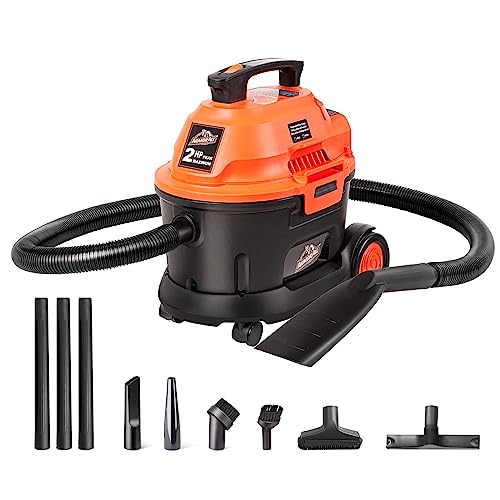
The Armor All AA255W is a portable corded wet/dry utility vacuum engineered primarily for vehicle cleaning, garage maintenance, and small household spill management. Operating on standard AC power, this model suits homeowners, vehicle enthusiasts, and hobbyists who need specialized tools for cleaning floorboards, car seats, workbenches, or localized liquid spills without the bulk of a heavy industrial unit.
According to manufacturer specifications, the vacuum is powered by a 2 peak horsepower motor configured to pull wet debris and dry dirt into its 2.5-gallon durable polypropylene tank. In addition to standard vacuuming, the motor exhaust port converts into a functional blower, which can be used to clear leaves, grass clippings, and loose dust from garage surfaces and vehicle exteriors. Total cleaning reach is defined by the 12-foot electrical cord and a 6-foot by 1-1/4-inch flexible hose, providing adequate coverage around a single vehicle or workbench without requiring constant machine relocation.
Weighing 10.99 pounds and measuring 14.2 by 10.6 by 14.38 inches, the AA255W features a rolling wheel base and a top-mounted carry handle for quick transport. The vacuum comes with a 13-piece accessory setup that includes three extension wands, a crevice tool, a blower nozzle adapter, a deluxe car nozzle, a round dust brush, a detail brush, a 2-in-1 utility nozzle, and a floor brush with an integrated squeegee. Filtration is managed by two distinct elements: a reusable cloth filter intended for general dry vacuuming and a foam sleeve designed specifically for wet liquid recovery.
Daily setup and ongoing storage are simplified by built-in slots that keep the nozzles, wands, hose, and power cord neatly attached to the vacuum body. Routine maintenance involves unclamping the motor head to empty collected dust or liquids from the tank, followed by checking the filtration setup. Users must remember to exchange the reusable cloth filter for the foam filter before collecting liquids, and allow the washable cloth filter to dry fully after routine rinsing to maintain adequate airflow and motor protection.
While practical for tight vehicle interiors and spot cleanups, the AA255W has clear functional boundaries. Its 2.5-gallon tank is not intended for high-volume flooded basement cleanup or whole-house floor cleaning. Additionally, while the 12-foot power cord is manageable around a garage stall, reaching vehicles parked in long driveways or outdoor spaces will require a properly rated extension cord.
For shoppers seeking a dedicated, cost-effective utility cleaner for car interiors, workbench debris, and minor liquid spills, the Armor All AA255W represents a well-equipped, compact choice. Its broad tool assortment and dual wet/dry capability make it particularly appealing for localized garage tasks and everyday vehicle maintenance.
The Armor All AA255W comes equipped with a comprehensive 13-piece tool package tailored for automotive care and precision cleaning tasks. For reaching floors and broader surfaces, the set provides three extension wands alongside a dual-purpose floor brush and squeegee nozzle that handles both solid dirt and standing liquid.
For specialized detailing work, the vacuum includes a deluxe car nozzle, a narrow crevice tool, a round dust brush, a detail brush, and a 2-in-1 utility nozzle for fabric surfaces. A dedicated blower adapter nozzle connects to the exhaust port for blowing out dirt, while the included reusable cloth dry filter and foam wet filter ensure the motor is properly configured for the cleaning task at hand.
Designed to handle both liquid spills and solid workshop debris, the AA255W uses a durable 2.5-gallon polypropylene collection tank driven by a 2 peak HP motor. When collecting dry dirt, shavings, or automotive dust, the machine utilizes its reusable cloth filter. When addressing liquid spills, the cloth filter must be swapped out for the included foam wet filter to protect the motor assembly from moisture.
The integrated blower conversion feature broadens its usefulness in utility environments. By attaching the hose to the rear exhaust port, the vacuum easily redirects high-velocity air through the blower nozzle adapter, making it useful for blowing dust off power tools, clearing sawdust from tabletops, or pushing debris away from car windshield cowls.


Analyzing Real Utility Vacuum Power and Suction Metrics
Determining what is the most powerful shop vac requires looking beyond advertised motor labels and understanding how suction forces operate in real workshop environments. In standard consumer utility models, machines peak around 5.0 to 6.0 horsepower, as demonstrated by heavy-duty units like the 6 peak horsepower Vacmaster VOC812SF or the 5.5 peak horsepower Vacmaster Beast series. However, advertised horsepower represents the theoretical peak mechanical output achieved in brief test scenarios before the motor settles into normal operation on standard electrical lines. Genuine pickup performance depends on how effectively the motor converts electrical current into sealed water lift, steady cubic feet per minute of airflow, and durable suction pressure across demanding cleaning tasks.
Peak Horsepower Versus Operational Air Watts
Manufacturers frequently highlight peak horsepower on packaging because large numbers offer an intuitive way for shoppers to gauge motor capacity on retail shelves. In practical electrical engineering, peak horsepower describes the maximum mechanical wattage generated during the initial startup burst before heat build-up and electrical resistance stabilize the motor. A standard North American 120-volt household circuit backed by a standard 15-amp breaker can safely deliver approximately 1,800 watts of continuous electrical power. Running continuously at an actual output of five or six mechanical horsepower would draw far more current than residential circuits permit and immediately trip electrical breakers.
Air watts provide a considerably more accurate measure of cleaning strength because this metric evaluates kinetic airflow in combination with sealed vacuum pressure. A high air-watt rating demonstrates that the internal turbine and impeller assembly are aerodynamically tuned to convert electrical energy into active suction rather than losing power to internal heat and turbulence. For example, the Vacmaster Professional Beast Series explicitly states an output rating of 320 air watts alongside a sealed suction pressure of 20 kilopascals from its 5.5 peak horsepower motor. Reviewing verified air watts gives shoppers a grounded baseline that cuts through marketing labels and identifies genuine mechanical efficiency.
Understanding Water Lift and Airflow Dynamics
Evaluating vacuum capability requires an understanding of two fundamental physical measurements: sealed water lift and airflow volume. Water lift, usually expressed in inches, measures static pressure by recording how high a sealed column of water can be pulled upward against gravity. The Vacmaster VOC812SF lists an impressive 83 inches of water lift, demonstrating exceptional static suction capability for demanding tasks. High static pressure is essential when extracting heavy liquids from flooded basements, unclogging sink drains, or pulling dense gravel and wet soil through a vertical hose run.
Airflow volume, measured in cubic feet per minute, describes the total quantity of air moving through the intake port and canister under open conditions. While static lift provides the vertical muscle needed to lift dense matter, airflow volume generates the atmospheric velocity required to sweep wide paths of light sawdust, drywall dust, and shavings. A vacuum engineered with high water lift but restricted airflow will lift water efficiently but struggle to collect scattered debris over broad garage floors. Conversely, an open system with high airflow but weak static lift will stall the moment a nozzle encounters wet mud or heavy standing water.
Comparing High-Output Utility Vacuum Configurations
The current utility vacuum market features distinct chassis designs engineered for different working conditions and physical spaces. High-capacity standalone canisters, such as the 8-gallon Vacmaster stainless steel model with 6 peak horsepower, emphasize rugged construction and high liquid containment. The rigid stainless steel drum resists puncture damage from sharp metal shavings, broken tiles, and jobsite debris while remaining stable during intense suction cycles. Larger collection barrels also provide spacious internal chambers that keep accumulated debris away from the primary filter, preventing premature suction drop during extended cleaning sessions.
Compact high-velocity cleaners present an alternative design approach that concentrates motor energy into a portable, lightweight enclosure. The Vacmaster Beast Series VFB511H packs its 5.5 peak horsepower motor into a 5-gallon tank, optimizing air velocity by shortening the internal pathway between nozzle and exhaust. Similarly, the DEWALT DXV04T pairs a 5.0 horsepower motor with a compact 4-gallon poly tank to offer aggressive pickup in a portable form factor. These compact configurations demonstrate that sheer tank volume does not determine suction power, allowing contractors to carry maximum cleaning strength directly to tight project spaces.
Acoustic Engineering and Motor Longevity
Traditional utility vacuums are infamous for producing ear-piercing decibel levels that cause rapid operator fatigue in enclosed workshops and vehicle cabins. Modern engineering increasingly incorporates sound-dampening baffles and balanced airflow chambers to reduce operational noise without compromising cleaning force. The DEWALT STEALTHSONIC DXV06P-QT exemplifies this design shift by pairing a powerful 5 horsepower motor with specialized sound-suppression technology. Manufacturer documentation notes that this quiet motor design cuts operating noise roughly in half compared to conventional configurations while extending motor operational lifespan.
Lower operating decibels enable tradespeople to work inside residential living spaces and finished basements without disrupting household members or requiring immediate hearing protection. Acoustically engineered motor housings also frequently feature improved thermal dissipation paths that help internal bearings, armatures, and carbon brushes stay cooler during continuous running. When examining specialized industrial vacuum cleaners and heavy-duty shop units, acoustic control and thermal management often separate premium machines from short-lived bargain alternatives. A well-balanced motor operates more smoothly, reduces mechanical vibration, and delivers reliable performance over years of rigorous service.
The Impact of Hose Diameter and Air Resistance
The diameter and interior texture of your vacuum hose dramatically alter the air velocity and static pressure delivered at the working tool. Compact utility vacuums like the Stanley SL18116P and Armor All AA255W utilize 1-1/4-inch diameter hoses to maximize localized air velocity for tight automotive detailing and light dust collection. However, a narrower hose introduces increased friction against moving air and creates choke points when attempting to ingest wood chips, plaster fragments, or leaves. High-output utility models benefit substantially from wider hose diameters, such as 1-7/8 inches or 2-1/2 inches, which accommodate bulky debris without clogging.
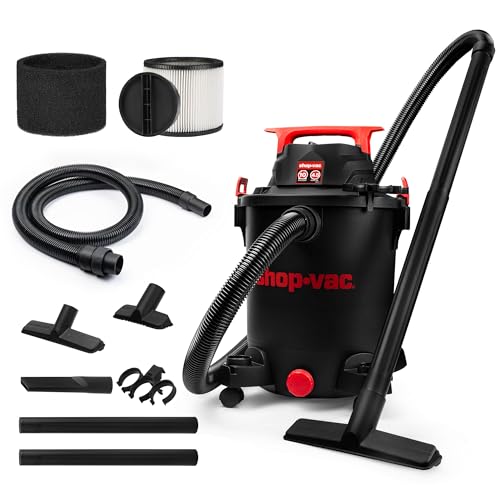
Hose length is another critical performance variable because each foot of flexible hose introduces internal friction that gradually diminishes total suction at the nozzle. Wall-mounted systems, such as the Shop-Vac 5-gallon 5.5 HP wall-mount unit, often supply extended hose assemblies reaching 18 feet to allow broad garage coverage from a fixed bracket. While long hoses provide exceptional convenience when detailing vehicles parked in a driveway, the expanded air column introduces frictional drag that slightly softens peak water lift. When maximum static pulling force is required for deep standing water, using a shorter hose directly connected to the tank yields optimal performance.
Filtration Architecture and Sustained Suction Performance
A utility vacuum can feature an exceptionally potent motor, but inadequate filtration will cause suction pressure to drop precipitously within minutes of operation. Fine microscopic particles like drywall sanding dust, cold wood ash, and concrete powder rapidly penetrate standard paper filters, caking the surface and choking airflow. Advanced models like the Vacmaster Beast series employ high-efficiency cartridge filters capable of capturing particles down to 1 micron while maintaining open airflow pleats. Pairing a pleated cartridge filter with an internal disposable collection bag captures fine debris before it ever contacts the filter element, preserving strong suction throughout large jobs.
Transitioning between dry dust extraction and liquid collection requires strict attention to the internal filtration configuration to prevent motor damage. Before collecting water or wet slurry, operators must remove dry paper cartridge filters and install a specialized foam filter sleeve over the float cage. Operating a utility vacuum with a wet paper filter causes the paper fibers to collapse, destroying the filter and risking water ingestion into the electrical motor housing. Always consult the manufacturer instructions in your equipment manual to verify proper filter placement and float mechanism movement before initiating wet suction tasks.
Tank Capacity, Mobility, and Liquid Disposal Mechanics
Canister capacity dictates how long a utility vacuum can operate during flood cleanups and extensive remodeling projects before requiring disposal breaks. The Shop-Vac 5430115 provides a large 10-gallon drum powered by a 4.5 peak horsepower motor, allowing contractors to collect significant volumes of debris without interruption. However, liquid adds weight quickly, with ten gallons of collected water weighing over 83 pounds and creating an intense physical strain if lifted manually. To eliminate the risk of back injury and messy spills, high-capacity utility vacuums feature built-in tank drains at the base that allow users to empty dirty liquid effortlessly.
Maneuverability features play an equally significant role in determining how effectively a heavy utility cleaner navigates a crowded shop or garage. Swivel casters with durable non-marring rubber coatings, such as those included on the DEWALT 6-gallon vacuum, glide over rough expansion joints and cords without scratching finished floors. Compact portable options like the Armor All 2.5-gallon utility vac prioritize light carrying handles over large rolling bases, allowing operators to clean workbenches and stairs easily. Determining whether your cleaning tasks involve stationary bench work, rolling floor cleanup, or wall-mounted convenience will guide you toward the right physical chassis.
Practical Selection Principles for Heavy-Duty Cleaning
Selecting an effective utility vacuum requires matching the machine’s primary suction metrics against the specific messes you encounter most frequently in your workspace. If your main challenge involves extracting standing water from basement leaks, plumbing failures, or outdoor drains, prioritize high sealed water lift ratings such as the 83 inches delivered by the Vacmaster 6 peak horsepower model. When managing heavy woodworking operations where planers and table saws generate mounds of wood shavings, focus on wide hose diameters and high airflow volume to keep ports clear and work surfaces tidy.
Broader equipment insights shared in our detailed guide to choosing a vacuum cleaner reinforce the principle that ideal machinery matches the exact requirements of your working environment. Small household workshops, vehicle enthusiasts, and quick hobby cleanups benefit immensely from compact 2.0 to 4.5 horsepower units that store compactly on garage shelves. Heavy-duty jobsite remodeling and commercial cleanup demands necessitate larger 5.0 to 6.0 horsepower machines equipped with durable poly or stainless steel tanks. Evaluating static lift, airflow capacity, and filtration construction ensures you invest in reliable cleaning equipment tailored to your toughest projects.
Understanding utility vacuum strength requires evaluating the complete cleaning system rather than focusing solely on peak horsepower figures displayed on motor shrouds. Real cleaning muscle emerges from the precise balance between static water lift, continuous airflow volume, unobstructed hose geometry, and high-efficiency filtration design. By analyzing verified manufacturer specifications and selecting an equipment layout designed for your specific mess profile, you can secure dependable suction power that handles demanding workshop cleanups, plumbing emergencies, and routine vehicle maintenance with equal confidence.




Write Your Review
No reviews yet. Be the first to share your experience!