


Mattress hygiene presents a unique cleaning challenge because microscopic pests and allergens bury themselves deep within fabric layers rather than sitting loosely on the surface. When evaluating %what is the best dust mite vacuum%, standard floor sweepers frequently fall short because they lack the concentrated agitation and high-efficiency particulate containment necessary for upholstery. Dedicated bed cleaners and sealed canister systems address this issue by combining focused airflow with specialized filtration media to capture microscopic debris, shed skin flakes, and allergen particles. Anyone interested in specialized bedding care can look into mattress vacuums with UV light to see how auxiliary sanitizing features operate on delicate textiles.
Selecting the ideal machine requires balancing suction capability, physical agitation speed, filtration design, and ease of handling. Handheld mattress cleaners from brands such as JIGOO, Teant, and FEPPO incorporate vibrating beaters and ultraviolet emitters, while bagged canisters utilizing EnviroCare or isinlive replacement bags rely on heavy-duty airflow through multi-layered filtration paper. Understanding how these mechanical features interact allows homeowners to choose equipment that removes embedded debris without damaging mattress ticking or releasing irritants back into bedroom air.




Pros
- Compatible with both manual sprayers and standard steam carpet extraction machines
- Generous 2-pound container provides substantial floor and upholstery coverage
- Leaves no lingering chemical scent, visible residue, or color stains on treated surfaces
- Includes a dedicated half-cup scoop for simple, mess-free mixing
Cons
- Requires manual dissolving in water before dispensing into spray bottles or cleaner tanks
- Does not include dispensing hardware, requiring an existing spray bottle or carpet extractor
- Kills live mites and fleas at the source, but lingering waste allergens may require secondary cleaning steps
The Ecology Works Dust Mite and Flea Control Powder is a specialized, water-soluble treatment formulated for households looking to manage indoor allergens and pest issues directly at the source. Unlike standard carpet shampoos or basic deodorizers that only wash away surface grime, this product is specifically designed to kill dust mites and fleas. It serves as an essential treatment additive for allergy-conscious households, asthma sufferers, pet parents dealing with seasonal flea cycles, and homeowners with carpeted rooms or fabric-heavy furnishings.
Application flexibility is one of the strongest practical benefits of this two-pound formula. Users can dissolve the powder into warm water to treat up to 800 square feet using a standard pump or trigger sprayer, or dilute it to cover up to 400 square feet inside a steam carpet cleaner. Running the solution through a carpet extractor allows the active ingredients to penetrate deep into dense carpet pile, area rugs, and heavy upholstery where dust mites thrive on shed skin cells and fleas lay eggs. An included half-cup scoop keeps preparation fast and prevents accidental overdosing.
Surface compatibility is exceptionally broad, extending well beyond living room carpets. According to the manufacturer, the diluted solution is suitable for mattresses, bed pillows, couches, car interiors, hard surfaces, and pet bedding. Because the formula is colorless, odorless, and hypoallergenic, it does not leave behind greasy residues, watermarks, or perfumed scents that could irritate sensitive respiratory tracts or trigger skin reactions in children and pets.
Integrating this treatment into an everyday floor-care routine is straightforward, though it does require a few minutes of prep. The powder must be stirred thoroughly in water until completely dissolved before pouring it into a carpet cleaning machine tank or hand sprayer to ensure consistent distribution and avoid clogging spray nozzles. For comprehensive indoor allergen management, treating mattress pads, pet beds, and high-traffic carpet walkways every few months helps disrupt the reproductive cycles of pests and keeps sleeping areas noticeably fresher.
There are a few realistic boundaries to keep in mind before purchasing. This product is a concentrated powder additive, meaning buyers must supply their own clean pump sprayer, spray bottle, or steam carpet extractor to apply it. Additionally, while the formula is EPA-registered to kill active dust mites and fleas, the manufacturer clarifies that eradicating live organisms is step one; neutralizing the lingering allergen proteins found in older dust mite waste may call for supplemental vacuuming with high-efficiency filtration or specialized allergen neutralizing sprays.
For households battling persistent allergy flare-ups, pet-related flea cycles, or simply seeking an extra layer of protection during annual carpet deep cleanings, The Ecology Works Dust Mite and Flea Control Powder offers serious value. Its clean, non-staining profile and dual-use spray or carpet cleaner application make it a practical, highly targeted investment for creating a cleaner indoor living environment.
Using this powder alongside an extraction machine delivers deep fiber penetration across broad carpeted areas. When dissolved into the clean-water tank of a standard steam carpet cleaner, the solution treats up to 400 square feet, allowing the machine scrub brushes and fluid jets to disperse the pest-control agent directly into the backing and carpet underlayment where dust mites congregate.
For spot treatments on mattresses, upholstered armchairs, decorative pillows, and pet resting zones, mixing the powder for trigger spray use extends total coverage up to 800 square feet. A light, even mist across fabric surfaces delivers source-level control without oversaturating the underlying foam or batting, ensuring typical household drying times remain manageable.
Proper dissolution is critical to ensuring your spray nozzles and carpet cleaner plumbing operate without blockages. Utilizing the included half-cup measuring scoop makes measuring accurate, and blending the powder into warm tap water helps the granules break down swiftly into a clear, uniform liquid.
Because the mixed solution is completely odorless and colorless, it will not discolor lighter fabrics, white mattress ticking, or light-toned carpets. Any leftover diluted mixture can be stored in a labeled spray bottle for quick touch-ups on pet bedding between deep-cleaning cycles.
Evaluating Vacuum Design and Performance for Dust Mite Removal
Identifying %what is the best dust mite vacuum% requires looking beyond raw wattage or marketing claims to examine how airflow, mechanical vibration, and sealed filtration work together. Dust mites measure roughly 0.2 to 0.3 millimeters across, making them invisible to the naked eye while they cling tenaciously to woven fibers. Because they feed on shed human skin flakes that accumulate in mattresses, pillows, and upholstered furniture, removing them requires breaking their grip on fabric weaves. A successful cleaner must physically displace these microscopic particles, draw them through a reliable vacuum pathway, and trap them securely so they cannot re-enter the breathing zone.
Mechanical Agitation and High-Speed Beater Mechanisms
Suction alone rarely extracts debris trapped several millimeters below a mattress surface because woven textiles create resistance that dissipates airflow. Dedicated bed vacuums solve this limitation by integrating high-speed vibrating beaters or motorized roller bars that strike the fabric thousands of times per minute. For example, units like the IRIS USA mattress vacuum employ vibrating pads oscillating at 6,500 beats per minute, whereas models such as the Teant and Gxzsk utilize roller brushes spinning at 30,000 to 33,000 RPM. This rapid mechanical impact loosens embedded skin scales and particles, bouncing them toward the surface where negative air pressure can lift them away.
The construction of the vibrating mechanism also impacts cleaning consistency across different fabric weights. Some designs use metal and rubber composite beaters, like those found in CFBF cleaners, which deliver a sharp percussive force without snagging delicate fibers. Softer mattress toppers, plush pillow tops, and memory foam react differently to vibration, requiring users to glide the appliance steadily rather than applying heavy downward pressure. When selecting a machine, examining whether the agitator utilizes a rotating brush roll or a pulsing strike plate helps determine how gently or aggressively it treats delicate upholstery fabrics.
Suction Power and Motor Capabilities
Airflow volume and static lift determine whether a vacuum can transport dislodged matter into the collection chamber. Manufacturers of mattress-specific vacuums typically express negative pressure in kilopascals (kPa), with standard units generating between 12 kPa and 18 kPa of suction. Handheld models powered by 500-watt motors, including designs from CFBF, FEPPO, and Gxzsk, provide the sustained vacuum pull needed to clear wide swathes of dense fabric. Higher static suction ensures that fine dust particles drawn out by the beater bar do not settle back down into the mattress weave before reaching the intake port.
Motor engineering also plays an important role in device longevity and operational heat buildup. High-speed brushless motors, like the 70,000 RPM assembly documented in FEPPO cordless units, maximize efficiency while reducing motor wear and mechanical noise. When evaluating suction specifications, shoppers should note that a wider intake nozzle distributes suction across a broader contact area, speeding up mattress cleaning while maintaining adequate lift. Narrower nozzles concentrate airflow more intensely, which helps along seams, tufting, and mattress edges where allergen accumulation often clusters.
Filtration Architecture and HEPA Trapping Systems
The primary danger during dust mite extraction is the accidental redistribution of fine particulate matter back into bedroom air. Dust mite droppings and fragmented bodies measure between 10 and 40 microns, but smaller particulate fragments can break down well below one micron. High-efficiency particulate air (HEPA) filters trap 99.97% of particles as small as 0.3 microns, making certified micro-filtration an essential requirement for any allergen-focused cleaner. A vacuum without true high-efficiency exhaust filtration simply transforms into an allergen blower, pulling microscopic debris out of the mattress and dispersing it directly into the ambient environment.
Many modern mattress vacuums implement a dual-cup cyclonic structure to preserve filtration efficiency across extended cleaning sessions. In these systems, such as those featured in JIGOO and Teant models, one cyclone chamber separates coarse hair and lint while the second chamber channels fine dust through the HEPA filter. This separation prevents the pleated filter membrane from clogging prematurely, sustaining high airflow throughout the cleaning routine. Users looking for reliable filtration across the home often compare specialized mattress units with traditional corded bagless vacuum cleaners to understand how multi-cyclonic chambers maintain airflow under heavy dust loading.
Thermal Air Generation and Dehumidification
Environmental conditions inside a mattress heavily influence dust mite vitality, as these organisms thrive in humid environments with relative moisture levels exceeding 50 percent. Several dedicated mattress vacuum cleaners address this biological factor by blowing heated air directly onto the fabric during operation. Cleaners such as the Teant emit air warmed to approximately 149 degrees Fahrenheit, while models from CFBF, Gxzsk, and FEPPO produce hot airflow around 140 degrees Fahrenheit. Introducing dry, elevated temperatures helps remove body moisture absorbed by mattress fibers during sleep, creating an inhospitable habitat for moisture-dependent microfauna.
While hot air helps lower surface moisture, operators must understand the practical limitations of rapid thermal exposure. A quick pass with a 140-degree air jet temporarily warms surface fibers, but it does not instantly heat the dense core of a six-inch or ten-inch mattress. Users should glide the machine slowly across the fabric surface to allow reasonable heat transfer, taking care to follow all manufacturer recommendations regarding synthetic textiles. Combining warm air circulation with mechanical extraction provides a dual-action approach that leaves bedding noticeably drier and fresher between regular wash cycles.
Ultraviolet-C Light and Ultrasonic Sanitation Technologies
Auxiliary sanitation features have become standard additions on handheld mattress cleaners, most notably ultraviolet germicidal irradiation operating at 253.7 nanometers. Radiation in the UV-C spectrum disrupts the cellular bonds of biological organisms, rendering them inert when exposed for sufficient durations. Many units, such as those produced by JIGOO, FEPPO, and CFBF, also incorporate ultrasonic transducers emitting frequencies between 40,000 Hz and 50,000 Hz. Manufacturers state that these high-frequency acoustic waves interfere with the feeding and reproductive cycles of microscopic pests residing within woven furnishings.
Safety mechanisms remain a critical consideration whenever dealing with germicidal ultraviolet radiation in home environments. Direct exposure to 253.7nm light can cause skin irritation and corneal damage, which is why reputable manufacturers install gravity-sensing roller switches. In devices like the Teant and Gxzsk cleaners, the UV-C tube illuminates only when all base wheels make full, level contact with the cleaning surface. Lifting or tilting the vacuum immediately breaks contact and turns off the lamp, protecting the operator from accidental light exposure during furniture maneuvers.
Corded Reliability Versus Cordless Portability
Deciding between a corded appliance and a cordless design involves balancing unrestricted run time against physical maneuverability. Mattress cleaning demands deliberate, slow overlapping strokes across broad flat surfaces, which can consume significant time when treating king-size beds and matching box springs. Corded cleaners like the 500-watt models from IRIS USA, JIGOO, and CFBF feature 16-foot power cords that plug directly into wall outlets, delivering consistent, unthrottled motor power without battery depletion concerns. This uninterrupted power supply proves particularly advantageous when users need to treat multiple beds, large sectional sofas, and heavy drapery in a single session.
Conversely, cordless units provide unmatched agility for households cleaning multi-story properties, camper vans, or awkwardly positioned guest beds. Handheld cordless designs such as the 2.9-pound FEPPO model operate on rechargeable battery cells, offering up to 30 minutes of continuous runtime on moderate power settings. Homeowners exploring cordless versatility frequently reference battery powered vacuum cleaners to evaluate how battery capacity influences weight distribution and overall operating duration. Selecting a cordless option requires factoring in whether the available runtime accommodates your household routine without requiring intermediate recharge pauses.
Handheld Mattress Cleaners Versus Canister Vacuums with Sealed Bags
While handheld mattress vacuums offer specialized features like UV lamps and thermal air, traditional canister vacuums with high-grade disposable bags remain a formidable alternative. Canister models such as the Eureka Mighty Mite series utilize multi-layered paper and non-woven fabric bags, exemplified by aftermarket options from EnviroCare and isinlive. Multi-ply Style MM and Type C replacement bags capture particles down to fractions of a micron while providing several quarts of holding capacity. Pairing a canister vacuum with an upholstery tool allows homeowners to leverage tremendous motor lift across mattresses, headboards, and heavy floor coverings.
The primary advantage of a bagged canister vacuum lies in clean, hygienic disposal that minimizes airborne dust release. When emptying a bagless handheld dust cup, fine skin flakes and allergen dust can easily billow into the surrounding room unless dumped outdoors or directly inside a garbage liner. In contrast, sealed paper bags retain collected debris permanently, allowing users to remove and discard the bag with minimal exposure to captured irritants. However, canisters lack the vibrating strike plates and heating elements found on dedicated bed units, making them complementary tools rather than direct functional equivalents.
Dust Sensors and Visual Indicators for Cleaning Verification
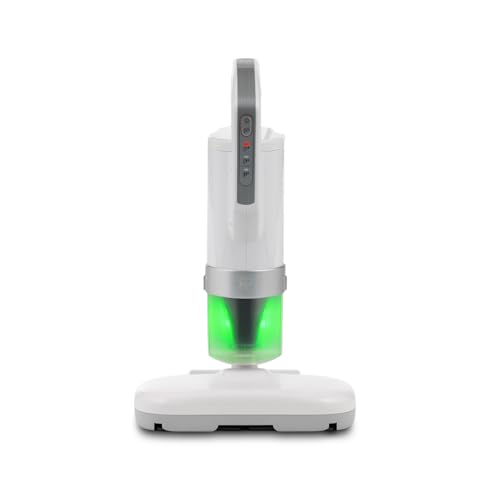
Because dust mites and skin flakes remain invisible to the naked human eye, determining when a mattress is thoroughly clean can challenge homeowners. Modern mattress cleaners increasingly incorporate real-time particle sensors and colored LED displays to indicate surface cleanliness levels. The JIGOO J300 and IRIS USA handheld cleaners feature dynamic indicator lights that switch from red or amber to green once the intake detects reduced particulate density. Similarly, green LED floorhead lights on models like the CFBF highlight fine debris and pet hair across woven mattress fabrics, helping users spot dusty zones that require additional passes.
Visual feedback systems help prevent premature stopping during upholstery cleaning routines. Users often underestimate how much dead skin and lint settles into quilting seams, leading them to pass over sections too quickly. Dust index displays encourage a methodical pace, prompting the operator to continue overlapping strokes until the sensor confirms that particle concentration has dropped. While electronic sensors provide helpful estimates of intake cleanliness, they should be viewed as guidance tools rather than definitive scientific measurements of biological eradication.
Proper Maintenance and Washing Procedures for Mattress Vacuums
Maintaining optimal vacuum hygiene is essential to prevent motor strain and maintain allergen capture efficiency over time. Most bagless bed vacuums come equipped with washable dual dust cups and detachable HEPA filter cartridges that collect fine debris. Rinsing these components under cool tap water removes caked-on dust, but filters must dry completely for at least 24 hours before reinstallation. Inserting a damp HEPA filter into an operational vacuum cleaner restricts airflow, damages the micro-fiber weave, and encourages mold development inside the motor housing.
Brush rolls and air intake ducts also require periodic inspection to remove entangled hair and fabric threads. Modern mattress cleaners feature automatic locking rotor protection that shuts down the motor if sheets or blankets become wrapped around the beater bar. If the roller stalls or the unit triggers thermal overload protection, operators should disconnect power immediately and inspect the brush assembly. Clearing hair wraps with scissors and wiping down sensor lenses ensures that mechanical beaters, UV lamps, and suction channels continue operating in accordance with manufacturer guidelines.
Integrated Fabric Management Beyond the Vacuum Cleaner
Vacuuming forms an indispensable component of allergen reduction, but achieving optimal living conditions requires a layered household strategy. Microscopic dust mites penetrate deep into inner mattress batting, pillow cores, and padded box springs that surface vacuums cannot reach entirely. Combining routine vacuuming with specialized mineral treatments, such as The Ecology Works Dust Mite and Flea Control powder, helps neutralize pest populations across carpets and upholstery. This EPA-registered mineral formulation can be mixed with water and applied as a spray or carpet cleaner additive to treat extensive square footage safely.
Enclosing mattresses and pillows in zippered, allergen-impermeable protector encasements provides an additional barrier that prevents skin flakes from migrating inward. Washing bed sheets, pillowcases, and duvet covers weekly in water heated to at least 130 degrees Fahrenheit kills live mites and dissolves residual waste products. Vacuuming the encasement surface every few weeks with a high-filtration machine prevents new biological debris from accumulating on exterior seams. Adopting this integrated maintenance protocol ensures that mattress vacuuming produces lasting improvements in bedroom air quality and overall sleeping comfort.




Write Your Review
No reviews yet. Be the first to share your experience!