


Floating floor assemblies rely entirely on a stable, resilient foundation to prevent premature seam separation and board deflection under daily foot traffic. When installing tongue-and-groove laminate over concrete or wood subfloors, selecting the right underlayment system dictates how well your floor manages impact sound and ground moisture over time. Investing in premium laminate floor pads long term protection safeguards the structural integrity of your planks while eliminating hollow echoes across high-traffic hallways and living spaces. Reviewing our laminate floor pad durability guide reveals how proper density prevents locking joints from bending or snapping under heavy furniture.
Subfloor imperfections and migrating moisture vapor present serious threats to composite wood cores if an adequate vapor retarder is missing from the installation plan. Modern underlayments combine dense fiber or closed-cell foam cores with attached poly vapor barriers to isolate the decorative wear layer from sub-slab dampness. Choosing proven products from reliable manufacturers like Floorlot, SOUND STEP, and Quiet Walk helps you navigate specific room requirements, whether you need radiant-heat compatibility or pre-attached pad approval. Taking time to match the underlayment roll size, thickness, and acoustic ratings to your layout prevents costly repairs down the road.

Pros
- Integrated moisture barrier eliminates the need to purchase and lay separate vapor films
- 3mm high-density construction minimizes hollow acoustic echo in floating wood and laminate floors
- Includes pre-attached seam tape and printed cutting grids for straightforward DIY installation
- Meets IIC and STC impact and airborne sound criteria for condo and HOA compliance
Cons
- Formulated specifically for laminate, engineered wood, and solid hardwood, rather than luxury vinyl plank (LVP) or tile
- At 200 square feet per roll, larger open-concept living spaces require purchasing and joining multiple rolls
- Maintaining a continuous moisture seal requires careful, gap-free seam alignment during rollout
The Floorlot GoldMax Premium Floor Underlayment is a specialized 3mm acoustic and vapor-barrier foundation designed specifically for floating laminate, engineered wood, and solid hardwood flooring installations. Sized at 200 square feet per roll, this underlayment is built for homeowners, condo owners, and DIY renovators who need reliable subfloor protection without buying separate vapor films. Its balanced 3mm profile offers supportive cushioning beneath hard planks, helping to soften each step while protecting finished flooring against long-term moisture hazards rising from concrete or wooden subfloors.
Subfloor moisture remains a primary threat to wood and laminate planks, often leading to warping, cupping, or mold growth if left unchecked. The GoldMax roll integrates an impervious moisture-blocking film that creates a continuous barrier against ground dampness, removing the labor of spreading standalone plastic sheeting. In active households, acoustic performance is equally vital. Floating floors frequently produce a thin, hollow clicking under everyday foot traffic and pet claws. This 3mm dense cushion absorbs impact sound and carries certified IIC (Impact Insulation Class) and STC (Sound Transmission Class) ratings, making it a dependable choice for second-story bedrooms, condominiums, and townhomes bound by strict HOA acoustic guidelines.
Constructed with a distinctive gold vapor film bonded to resilient foam, the material resists tearing during unrolling and plank placement. Dimensions measure 44 inches wide on a compact 10 by 10-inch roll, making it manageable to maneuver through narrow hallways and stairwells. Floorlot includes built-in joining tape along the edge, which simplifies sealing adjacent rows without hunting for separate vapor tape. Additionally, the printed surface features clear alignment grid lines that act as a visual guide, allowing installers to make clean, straight utility-knife cuts around closets, heating vents, and irregular room corners.
Installation requires sweeping the subfloor clear of debris, rolling out the padding gold-side up, and trimming the edges to leave appropriate perimeter expansion gaps. Because the built-in adhesive strip secures seam to seam, joining consecutive rows is straightforward, provided the subfloor is flat and dry prior to rollout. It is crucial to butt seams closely without overlapping the foam, using the pre-applied tape strip to create a tight moisture seal. This simple process helps keep planks seated flat and stable during subsequent floorboard assembly, preventing shifting beneath your feet as you work.
While the GoldMax underlayment excels under specified floating floors, it is strictly intended for laminate, engineered wood, and solid hardwood assemblies. It is not advertised for thin luxury vinyl tile (LVP/LVT) or ceramic tile, where thicker 3mm foam could compromise locking mechanisms or cause grout failure. Furthermore, the integrity of the moisture barrier relies entirely on complete seam coverage; any untaped tears or careless gaps around floor registers can compromise subfloor protection over time.
For homeowners and property managers upgrading to laminate, engineered hardwood, or solid wood flooring, Floorlot GoldMax provides a reliable all-in-one foundation. Its combination of integrated vapor shielding, 200-square-foot coverage, and HOA-compliant sound dampening delivers peace of mind and quiet comfort underfoot. If you are preparing a multi-level renovation or simply want to eliminate hollow plank sounds in a busy family home, this underlayment roll represents a practical, high-value preparatory step.
Underlayment performance hinges on reliable moisture control and noise reduction. The Floorlot GoldMax underlayment addresses both through its bonded vapor film and resilient 3mm foam core. The built-in moisture barrier blocks rising vapors from concrete slabs, which safeguards wood and laminate planks from buckling, seam swelling, and dampness-related deterioration.
For acoustic comfort, the dense 3mm structure dampens vibrations caused by daily foot traffic, running children, and active pets. Its certified IIC and STC sound ratings provide documented compliance for condo associations and apartment complexes that require verified impact and airborne noise insulation between floors.
This underlayment is engineered specifically for solid hardwood, engineered wood, and laminate flooring systems. The 200-square-foot roll unrolls smoothly across clean, leveled subfloors, and the printed grid pattern allows for quick, straight cuts using a standard utility knife without requiring constant measuring with a straightedge.
Seam integration is handled via the included adhesive strip, ensuring consecutive rows butt tightly against each other without creating thick overlapping ridges. To ensure maximum subfloor protection, always seal perimeter edges and inspect seams for complete coverage before locking floating floorboards into position.
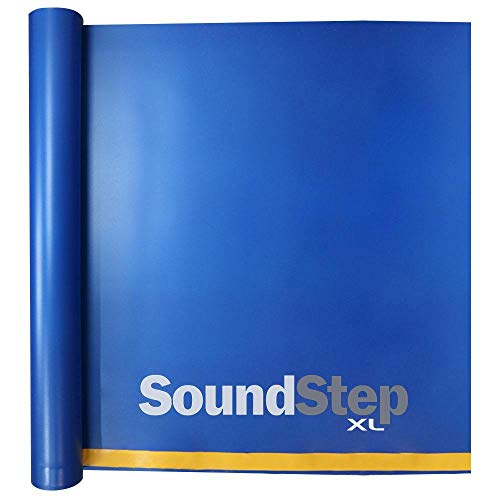
Pros
- Factory-attached vapor barrier eliminates the need to buy and spread separate plastic sheeting
- Dense crosslink foam resists compression to protect click-lock joints in high-traffic hallways
- Approved for both standard planks and pre-padded laminate or engineered wood flooring
- Rolls out flat without stubborn edge curling during installation
Cons
- Each roll covers 100 square feet, requiring careful seam taping across larger floor plans
- Designed specifically for hard-surface wood and laminate rather than carpet or thin vinyl sheet installations
SoundStep XL is a specialized 100-square-foot roll underlayment designed for homeowners, renovators, and DIYers laying down laminate, engineered wood, or solid hardwood planks. Serving as a crucial stabilizing layer between the subfloor and finished surface, this product targets the common complaints of hollow footstep sounds and subfloor moisture risks. Its balanced 0.08-inch thickness provides structural cushion without creating the excessive vertical give that can compromise click-together floor joints.
In everyday household environments, floor noise and joint deflection are frequent challenges, especially in active living rooms, hallways, and entryways. The crosslink foam core in SoundStep XL delivers substantial acoustic dampening, absorbing impact energy to create a quieter, more solid feel underfoot. Because the foam is engineered for compression resistance, it maintains its structural density under heavy furniture and frequent foot traffic, protecting the integrity of delicate locking mechanisms over time.
Moisture protection is another core operational strength of this underlayment. The integrated vapor barrier membrane prevents ground moisture and vapor emissions from migrating up through concrete slabs or wooden subfloors into your floorboards. This protective shield is essential for preventing warping, cupping, and plank swelling. Moreover, SoundStep XL is explicitly approved for pad-attached flooring, solving a frequent dilemma for buyers who want extra vapor and sound defense without voiding plank warranties through over-padding.
Handling and placing the underlayment is straightforward during floor installation projects. Measuring 4 feet wide by 25 feet long, the green foam unrolls smoothly and lays flat across common substrates with minimal curling at the edges. It accommodates multiple assembly preferences, working reliably under floating, click-together, and full glue-down installations. Trimming around door jambs, closets, and perimeter walls requires only a standard utility knife.
While SoundStep XL offers substantial subfloor defense, buyers should keep a few practical limitations in mind. Because each roll covers 100 square feet, multi-room projects or expansive open floor plans will require multiple rolls, requiring precision butt-joining and quality moisture-seal tape along every seam to preserve vapor barrier performance. It is also tailored for rigid plank systems like wood and laminate, meaning it is not intended for direct use under stretch-in carpet or flexible sheet vinyl.
For anyone preparing to install laminate, engineered hardwood, or pad-attached planks over concrete or wood subfloors, SoundStep XL represents a reliable, cost-effective foundation. It combines reliable moisture resistance, joint-supporting density, and acoustic comfort in an easy-to-handle roll that helps protect your flooring investment for years to come.
Subfloor moisture is one of the leading causes of plank buckling, joint separation, and finish failure in laminate and wood flooring. SoundStep XL addresses this issue directly by incorporating a factory-attached vapor barrier membrane that blocks ground moisture rising from concrete slabs or crawlspace-backed subfloors.
By integrating the vapor barrier directly into the crosslink foam roll, the product eliminates the hassle of laying down independent polyethylene sheeting before underlayment placement. When seams are properly taped during installation, this continuous barrier keeps finished planks dry and dimensionally stable across varying seasonal humidity conditions.
SoundStep XL provides broad compatibility across major rigid residential flooring types, including laminate, engineered wood, and solid wood planks. It supports multiple installation approaches, functioning equally well in floating click-lock setups or permanent glue-down applications.
Critically, this underlayment is certified for use with pad-attached flooring products. Many standard underlayments are too thick or spongy to pair with pre-padded boards, which can cause excessive flex and broken locking tabs. SoundStep XL provides the dense, low-profile support needed to enhance moisture protection and sound control without destabilizing pre-padded planks.

Pros
- Integrated 6-mil vapor barrier and DriWick technology guard against subfloor moisture damage.
- Approved for floating, glue-down, and nail-down installations under LVP, laminate, and engineered wood.
- Compression-resistant recycled fibers support heavy furniture without bottoming out.
- Certified GREENGUARD Gold with zero VOCs for health-conscious living spaces.
- Compatible with flooring planks that already come with pre-attached acoustic pads.
Cons
- The 50 sq ft coverage per roll is best for smaller rooms or repairs and requires multiple rolls for large areas.
- Strictly limited to flooring planks measuring 4mm or thicker, excluding thin sheet vinyl.
- Subfloors must still be clean, dry, and flat before laying down the underlayment.
QuietWalk LV 50 is a specialized acoustic and moisture-barrier underlayment roll designed to provide essential support beneath hard-surface flooring. Tailored for homeowners, renters, and DIY renovators installing resilient or floating floors, this 50-square-foot roll addresses the common challenges of subfloor moisture, hollow walking sounds, and plank deflection. Whether you are updating a laundry room, hallway, bathroom, or localized pet-friendly entrance, this underlayment establishes a reliable foundation that complements high-traffic modern floor coverings.
Real-world floor performance relies heavily on how well subfloor moisture and ambient room noise are managed. QuietWalk LV 50 incorporates patented DriWick technology to draw trapped moisture away from the subfloor while utilizing an integrated 6-mil vapor barrier to block moisture from reaching flooring planks. In addition to moisture control, the dense synthetic fiber structure effectively absorbs impact noise from pet claws, shoes, and falling objects. This sound-dampening quality helps reduce sound transmission between floor levels, which is especially beneficial in multi-story homes and apartment buildings.
In terms of material construction, the underlayment is manufactured in the USA using 100 percent recycled synthetic fibers. Measuring 200 inches long by 36 inches wide with a slim 0.06-inch profile, the dense fiber matrix resists compression under heavy furniture, preventing the bounce or locking-joint failure that can plague luxury vinyl planks. For indoor air quality, the material is GREENGUARD Gold Certified with zero VOCs, making it a responsible choice for households with children, pets, or allergy sensitivities.
Installation versatility is one of the standout aspects of QuietWalk LV 50. It supports floating, glue-down, and nail-down installation methods across luxury vinyl planks (LVP), luxury vinyl tile (LVT), SPC, WPC, rigid core, laminate, and engineered wood flooring. Notably, it is explicitly approved for use beneath planks that already have pre-attached backing pads, providing an extra layer of thermal and acoustic protection. The lightweight 5-pound roll rolls out flat and trims quickly with a utility knife, while compatibility with QuietWarmth and standard radiant floor-heating systems ensures steady thermal transfer during colder months.
Despite its solid engineering, prospective buyers should recognize a few practical boundaries. The underlayment is strictly intended for flooring products that measure 4 millimeters or thicker, meaning it should not be paired with ultra-thin glue-down vinyl sheets. Additionally, while the 50-square-foot roll is convenient for powder rooms, small entryways, or spot floor repairs, larger multi-room remodels will require multiple rolls, requiring careful seam taping to preserve vapor barrier integrity. Proper subfloor leveling and sweeping remain mandatory, as an underlayment cannot compensate for severe dips or structural subfloor damage.
QuietWalk LV 50 offers dependable acoustic dampening, subfloor moisture defense, and long-term plank support in an eco-friendly format. If you are laying down resilient luxury vinyl, laminate, or engineered wood in a compact space or high-traffic room, this roll provides the thermal, sound, and moisture isolation needed to extend the life and comfort of your hard floors.
QuietWalk LV 50 is formulated for compatibility with luxury vinyl tile (LVT), luxury vinyl plank (LVP), stone plastic composite (SPC), wood plastic composite (WPC), multilayer rigid core flooring, laminate, and engineered wood. The manufacturer requires that the selected floor planks measure at least 4mm in thickness to maintain plank joint integrity over the fiber cushion.
The material works across floating, glue-down, and nail-down flooring assemblies, making it adaptable to varied subfloor environments. It is also approved for installation directly beneath flooring planks with pre-attached backing pads, offering an extra barrier against impact sound and vapor migration. When prepping your project, trim the roll using a sharp utility knife, join adjacent seams according to manufacturer guidelines, and pair with approved radiant floor-heating systems if desired.

Pros
- Dri-Wick vapor barrier prevents subfloor moisture from damaging overlying wood and laminate planks
- Approved for floating planks with pre-attached pads, avoiding common padding conflicts
- Pre-attached edge tape system speeds up row alignment and seam connection
- GREENGUARD Gold Certified for low chemical emissions in bedrooms and family spaces
- Dense recycled fiber structure offers reliable acoustic dampening and joint support
Cons
- Not compatible with luxury vinyl flooring, which requires the brand's QuietWalk LV product instead
- Each roll covers 100 square feet, requiring multiple rolls for medium to large open layouts
- Fibrous 3 mm material requires a fresh, sharp utility blade for clean edge trimming
QuietWalk Underlayment is a specialized 3 mm subfloor pad designed specifically for floating laminate and engineered or solid hardwood flooring installations. Covering 100 square feet per roll, this underlayment suits homeowners, DIY remodelers, landlords, and condo residents looking to improve acoustic comfort and subfloor protection in bedrooms, living areas, and upper levels. Manufactured in the USA using recycled fibers, it combines structural support with an integrated vapor barrier.
Underfoot performance centers on acoustic moderation and moisture management. The dense, crush-resistant recycled fiber pad helps deaden hollow footstep sounds and impact vibrations commonly associated with floating laminate planks. Meanwhile, the integrated moisture barrier incorporates Dri-Wick technology to help prevent concrete or subfloor dampness from migrating into finished wood surfaces. Additionally, this underlayment is formally approved for use under flooring products that already feature pre-attached backing pads, solving a frequent dilemma during modern floating floor renovations.
Build quality is defined by a consistent 3 mm thickness (0.11811 inches) measuring 36 inches wide by 400 inches long, with an overall weight of 13 pounds per roll. The blue recycled fiber blend maintains its density under standard household furniture without collapsing over time, helping support tongue-and-groove plank joints. The product is also GREENGUARD Gold Certified for low chemical emissions, supporting healthier indoor air quality in bedrooms, nurseries, and home offices.
Installation is tailored for floating floor assemblies with an integrated edge lip and seam-taping system. DIYers can roll the underlayment across clean, dry subfloors and seal consecutive rows directly using the pre-attached tape strip without purchasing separate seam tape. Trimming around door casings, baseboards, and closet corners requires a sharp utility blade to cleanly slice through the dense fiber layer. The material is also approved for use with QuietWarmth radiant floor heating systems.
A key limitation to consider before purchasing is flooring category compatibility. The manufacturer explicitly states that standard QuietWalk is not intended for luxury vinyl plank or tile (LVT/LVP), recommending their QuietWalk LV underlayment instead for resilient vinyl floors. With 100 square feet of coverage per roll, open-concept living spaces will also require careful room measurements to accommodate perimeter cuts and layout waste.
For homeowners and DIYers installing floating laminate or hardwood floors over concrete or wood subfloors, QuietWalk Underlayment provides a dependable balance of moisture control, sound dampening, and reliable joint support. Its pre-attached pad compatibility and built-in seam tape make it a practical, high-utility choice for residential bedroom and living-room flooring projects.
QuietWalk is engineered specifically for floating floor applications beneath laminate and hardwood planks. The roll features a factory-applied overlap lip and adhesive taping strip along the edge, allowing you to join seams smoothly without purchasing specialized underlayment tape. Subfloors should be swept clean of debris and dry before unrolling the 36-inch wide material.
Subfloor compatibility includes standard plywood, OSB, and concrete substrates, and the material is safe for pairing with QuietWarmth radiant heating systems. Standard QuietWalk is not designed for luxury vinyl tile or plank installations; vinyl projects should utilize QuietWalk LV to ensure proper subfloor support for flexible resilient planks.
Moisture protection is provided by an integrated Dri-Wick barrier film that prevents subfloor moisture vapor from migrating into laminate or hardwood cores. This defense helps protect finished floors against warping, cupping, and moisture-related damage over time.
Acoustic performance comes from dense recycled fibers rather than lightweight open-cell foam. The 3 mm fiber structure absorbs footfall impact and reduces hollow echoes, creating a quieter, more solid feeling underfoot in residential living spaces and multi-story homes.
Comprehensive Guide to Long-Term Protection with Premium Laminate Floor Pads
A floating laminate floor functions as an integrated mechanical system that responds continuously to indoor temperature swings, ambient humidity shifts, and daily foot traffic. Beneath the decorative planks, the underlayment pad acts as the primary defense against subfloor moisture, hollow walking sounds, and localized joint deflection. Investing in premium laminate floor pads long term protection ensures your flooring maintains its structural integrity while delivering a quiet, supportive walking surface. Selecting a suitable pad establishes a resilient foundation that protects your investment across decades of regular residential use.
Mechanical Joint Support and Compression Resistance
Modern laminate planks rely on precision-milled tongue-and-groove click profiles that cannot tolerate continuous vertical movement underfoot. When an underlayment is excessively soft or overly thick, walking across the room creates localized flexing that stresses these delicate locking edges. Over time, recurring vertical deflection can cause micro-fractures, visible seam peaking, and eventual board separation. Laying a pad with high compression resistance ensures steady support across minor subfloor dips, allowing the floating planks to span joints safely without structural fatigue.
Dense crosslinked polyethylene foam and needle-punched synthetic fibers provide the firmness needed to bear heavy furniture and repeated foot traffic. Products like SoundStep XL Underlayment for Laminate use dense crosslink foam architecture to prevent crushing in high-traffic corridors and living areas. Similarly, dense fiber structures resist permanent compression under static loads, preventing heavy bookcases or sofas from creating permanent indentations in the pad. By resisting permanent crushing, high-density materials keep the entire walking surface level and eliminate hollow squeaking sounds over time.
Subfloor Moisture Management and Vapor Barrier Dynamics
Subfloor dampness represents one of the most persistent threats to composite wood cores, leading to swollen edges, cupping, and core delamination. Concrete slabs release water vapor continuously as ambient temperatures fluctuate, even years after the foundation has cured. Without an impermeable vapor retarder, rising vapor condenses against the underside of the planks and penetrates the wood fiber core. Installing an underlayment equipped with an integrated vapor barrier prevents rising moisture from reaching vulnerable decorative boards.
Attached vapor membranes eliminate the extra step of spreading loose plastic sheeting across the room before rolling out padding. For example, FLOORLOT GoldMax Premium Floor Underlayment features a built-in moisture-blocking film that provides reliable subfloor defense without requiring secondary poly films. Advanced fiber underlayments such as QuietWalk LV 50 pair a built-in 6-mil vapor barrier with patented DriWick technology. This specialized fiber configuration actively manages subfloor moisture by wicking away dampness while the heavy barrier layer shields the planks above.
Plywood and oriented strand board subfloors also require careful moisture evaluation before laying down any underlayment roll. While wood subfloors breathe naturally, rooms positioned over unconditioned crawlspaces or damp basements face upward humidity migration. Sealing every underlayment seam with moisture-resistant tape ensures continuous perimeter-to-perimeter vapor protection across the entire layout. Skipping seam tape leaves vulnerable gaps where damp air can condense directly beneath plank seams, encouraging edge swelling and mildew growth over time.
Acoustic Performance and Impact Sound Damping
The hollow, sharp clicking sound characteristic of floating laminate installations often frustrates homeowners who prefer the solid feel of traditional hardwood. Impact noise occurs when shoes, pet nails, or dropped items strike the hard wear layer, sending vibrations echoing through the assembly. An effective underlayment pad absorbs these vibrations, dampening sound transfer within the room and restricting transmission into rooms below. High-density underlayments provide the necessary mass to convert higher-frequency clicks into a low, muted footfall sound.
Multifamily buildings and condominium associations frequently enforce strict acoustic standards measured by Impact Insulation Class (IIC) and Sound Transmission Class (STC) ratings. Floorlot GoldMax Premium Floor Underlayment carries documented IIC and STC ratings specifically intended to satisfy homeowner association requirements. These acoustic benchmarks measure how effectively a floor assembly dampens impact vibrations and airborne sound between multi-story units. Checking building compliance before purchasing materials ensures your installation meets local codes and avoids mandatory renovations later.
Recycled synthetic fibers excel at sound dampening because the dense, interwoven web disrupts sound waves more effectively than standard thin foams. In models such as QuietWalk Underlayment 100 sq ft, dense fiber construction absorbs footfall noise while providing a solid base beneath floating planks. This dense composition helps replicate the solid footfall feel associated with nail-down hardwood installations. Homeowners installing laminate in second-story bedrooms, home offices, or media rooms benefit greatly from this high level of acoustic control.
Compatibility with Pre-Attached Cushioning Pads
A significant portion of modern laminate and rigid core planks comes with a pre-attached foam or cork pad from the factory. Laying a standard underlayment beneath planks that already have factory padding often causes severe joint failure by doubling cushion thickness. Most flooring manufacturers strictly prohibit adding a second generic foam pad because excess cushioning breaks the delicate click-lock mechanisms. However, bare subfloors, particularly concrete, still require vapor protection and enhanced acoustic dampening.
Certain specialized underlayments carry explicit manufacturer approvals for use beneath pad-attached flooring assemblies. SoundStep XL Underlayment for Laminate features a dense, compression-resistant structure engineered to support pad-attached floors without creating excess cushioning. Both QuietWalk LV 50 and the standard 100 square foot QuietWalk rolls are also officially approved for flooring featuring pre-attached backing. Using these specialized underlayments allows you to gain superior vapor defense and sound suppression without voiding your flooring warranty.
Before combining an underlayment with pad-attached laminate, always check the plank manufacturer guidelines for maximum allowable pad thickness. Incompatible padding setups can lead to soft spots where the floor flexes noticeably under normal walking weight. Dense, non-yielding underlayment profiles prevent this movement by acting as a firm, stable base rather than a squishy cushion. Paying attention to manufacturer approvals preserves your financial investment and ensures long-term seam stability.
Thermal Conductivity and Radiant Heating Systems
In-floor radiant heating systems require underlayments that balance thermal conductivity with proper moisture management. If an underlayment has an excessive thermal resistance value, it acts as an insulator, blocking heat from rising into the living space. Conversely, the padding must remain chemically and structurally stable when exposed to continuous warmth from radiant elements. Selecting an underlayment explicitly certified for radiant heating prevents material breakdown, odor generation, and thermal inefficiencies.
Fiber-based underlayments often provide excellent thermal distribution when paired with modern radiant heating networks. QuietWalk underlayment products are fully compatible with QuietWarmth radiant heat systems and most common hydronic or electric radiant floor heating assemblies. The dense recycled fibers distribute heat evenly across the underside of the laminate planks, reducing cold spots across the room. Furthermore, the material maintains its structural integrity without softening or off-gassing when subjected to repeated heating and cooling cycles.
Proper placement of the underlayment relative to the heating elements is critical for safety and system efficiency. Radiant heating mats typically rest directly beneath the underlayment or between the pad and the laminate, depending on manufacturer specifications. Always review the detailed installation manuals for both your heating system and your chosen underlayment before securing seams. Ensuring proper thermal compatibility keeps your heating bills manageable while delivering uniform comfort during cold winter months.
Indoor Air Quality and Material Certifications
Because underlayment covers every square foot of an installation, its chemical composition plays a direct role in indoor air quality. Many standard petroleum-based foams emit volatile organic compounds that linger in living spaces for weeks or months after installation. Choosing products manufactured with low-emission standards protects indoor air in enclosed spaces such as bedrooms and nurseries. Recognizing reliable third-party environmental certifications helps you avoid products that compromise your home environment.
GREENGUARD Gold certification represents one of the most rigorous chemical emission standards in the flooring industry. Both QuietWalk LV 50 and QuietWalk 3 mm underlayment hold GREENGUARD Gold certifications, confirming that they meet strict limits for chemical emissions and volatile organic compounds. In addition, these products are manufactured in the United States using 100 percent recycled synthetic fibers, reducing environmental waste without sacrificing structural performance. Selecting certified materials provides peace of mind regarding indoor air cleanliness throughout the life of your floor.
Domestic manufacturing also ensures tighter compliance with strict environmental regulations and material consistency. Products proudly made in the USA often adhere to more stringent production oversight than unbranded imported alternatives. When planning a residential renovation, checking for verified green certifications eliminates guesswork about chemical off-gassing. Clean indoor air contributes significantly to a healthier living environment, making material certification an essential buying consideration.
Layout Planning, Roll Coverage, and Seam Sealing
Accurate room measurement and square footage planning prevent awkward project delays and excessive material waste. Underlayment rolls are manufactured in diverse sizes, ranging from compact 50 square foot rolls to large 200 square foot contractor rolls. QuietWalk LV 50 covers 50 square feet per roll, making it ideal for powder rooms, small entryways, or tight hallways. Meanwhile, SoundStep XL and standard QuietWalk rolls provide 100 square feet of coverage, which aligns smoothly with medium-sized bedrooms and living areas.
Large open-concept living spaces benefit from high-capacity options such as FLOORLOT GoldMax Premium Floor Underlayment, which supplies 200 square feet per roll. This larger roll format reduces the overall number of seams you must tape, accelerating installation progress across expansive floor plans. GoldMax also features printed grid lines on the surface film, enabling fast, straight, and accurate cuts along perimeter walls and around door jambs. Minimizing cutting errors saves valuable project time and ensures cleaner edge alignments.
Executing proper seam connections is paramount when establishing an unbroken moisture barrier across your room. Quality underlayments include integrated lip-and-tape systems that streamline seam alignment while keeping seams flat. To complete the process correctly, butt the roll edges tightly together without overlapping the padding layers, as overlapping creates an uneven ridge beneath floating planks. Peel the protective backing from the pre-attached tape strip and press firmly along the entire seam length to create an airtight, moisture-resistant seal.
Subfloor Flatness and Surface Preparation Standards
An underlayment pad provides cushioning and moisture defense, but it cannot bridge major humps or deep depressions in the subfloor. Floating laminate planks require a flat substrate to prevent hollow sounds and vertical board movement. Industry guidelines typically specify that subfloors must be flat within three-sixteenths of an inch over a ten-foot radius. Inspecting your subfloor with a long straightedge before unrolling your pad identifies high spots that need grinding and low spots that require self-leveling compound.
Thorough cleaning of the subfloor surface is equally vital before rolling out any underlayment material. Stray drywall nails, plaster chunks, or coarse grit left on concrete or plywood will press upward into the pad under walking pressure. Over time, these hard foreign objects can puncture vapor barriers and cause annoying clicking noises beneath the floor. Vacuuming the substrate completely ensures that your underlayment lays perfectly flat and maintains an uncompromised barrier across the entire room.
Routine Floor Maintenance and Surface Protection
Even the most resilient underlayment pad cannot protect laminate planks if surface maintenance practices are neglected. Excessive surface moisture from wet mopping or unapproved cleaning solutions can seep downward through plank joints, damaging the fiberboard core from above. Homeowners should establish a dry or damp microfiber cleaning routine that removes abrasive grit without introducing standing water. Reviewing a detailed laminate floor care kit overview provides clear guidance on choosing microfiber tools and pH-neutral formulas tailored for laminate surfaces.
Using chemical cleaners containing wax, oil, or harsh solvents can cloud the transparent wear layer and leave sticky residues that attract dirt. Dedicated formulas preserve the factory finish while effectively lifting household spills and foot traffic oils. Selecting approved, compatible laminate floor cleaners ensures your planks remain clean without deteriorating the delicate protective coating. Combining an impermeable subfloor underlayment pad with proper topical maintenance guarantees that your floor remains stable and attractive for years to come.
Protective felt pads under furniture legs and walk-off mats at exterior entryways complete your long-term floor defense strategy. Heavy dining chairs and coffee tables exert concentrated downward pressure that can indent planks if feet lack soft buffers. Placing felt pads beneath heavy legs prevents surface scratches and evenly distributes static loads into the underlying pad. Maintaining proper indoor humidity levels between 35 and 55 percent also stops excessive plank expansion and contraction, supporting the subfloor pad in doing its job.
Critical Selection Priorities for Residential Projects
Selecting the appropriate underlayment requires matching specific product capabilities to your subfloor conditions and plank specifications. Over on-grade or below-grade concrete slabs, absolute priority belongs to underlayments with verified vapor barriers and high moisture resistance. If your chosen laminate planks already include pre-attached acoustic padding, confirm that your underlayment carries explicit approval for pad-attached installations. Balancing roll coverage with your room dimensions helps you optimize budget efficiency while minimizing material waste.
Sound suppression requirements should guide your selection when outfitting second-floor bedrooms or multi-tenant living spaces. Evaluating IIC and STC acoustic ratings ensures you satisfy HOA mandates while creating a tranquil, echo-free home environment. Whether you prioritize the domestic recycled fiber construction of QuietWalk, the crosslink foam resilience of SoundStep XL, or the large-format grid layout of Floorlot GoldMax, quality underlayment remains an indispensable investment. Taking a methodical approach to choosing your underlayment pad ensures your floating laminate floor delivers decades of quiet, comfortable, and dependable service.


Write Your Review
No reviews yet. Be the first to share your experience!