


Dealing with pet hair on rugs or crumbs on hardwood can quickly turn a simple cleaning task into a frustrating chore. Many homeowners struggle with the balance between powerful suction and easy maneuverability, especially when switching between carpet and tile. Finding the right Irobot Roomba 675 Robot Vacuum Review means looking beyond basic specs to understand how navigation, filtration, and maintenance actually impact your daily routine. You want a device that handles the mess without requiring constant manual intervention or clogged filters.
After carefully analyzing the product specifications and user feedback for these iRobot models, it is clear that the right choice depends on your specific floor types and cleaning habits. Some options prioritize hands-free operation with auto-empty docks, while others focus on advanced obstacle avoidance and mopping capabilities. This roundup helps you weigh the tradeoffs between budget-friendly units and premium features, ensuring you select a vacuum that fits your space and budget. Check out our guide to best vacuums only roborock for more comparisons in the robot vacuum category.

Pros
- LiDAR navigation tracks neat cleaning rows and operates reliably without needing overhead room lights turned on.
- Integrated carpet detection prevents moisture transfer onto rugs during active mopping routines.
- Customizable cleaning modes provide true flexibility to vacuum only, mop only, or run both functions at once.
- SmartScrub functionality provides active pad agitation for better hard-surface stain management than passive drip cloths.
Cons
- Initial pairing and ongoing robot communication strictly require a 2.4 GHz Wi-Fi network connection.
- The 4.1-inch total height with the LiDAR turret may prevent the machine from clearing very low-profile furniture toe kicks.
- The robot avoids carpets while mopping rather than lifting the pad, requiring a separate vacuum-only pass to clean carpets.
The iRobot Roomba 105 Combo is an automated 2-in-1 robot vacuum and mop engineered for busy households, pet owners, and apartment dwellers balancing hard surfaces with area rugs. Built around a 4-stage cleaning architecture, it incorporates an edge-sweeping brush, a multi-surface main brush roll, a microfiber mopping pad, and power-lifting suction that the manufacturer rates at 70 times the level of legacy Roomba 600 series units. For households that prioritize hands-off daily maintenance over dragging out heavy uprights and manual spray mops, this combo machine offers an approachable way to tackle dust, kitchen crumbs, and surface spills in a single pass.
Daily cleaning performance relies on thoughtful floor segregation. Unlike basic hybrid robots that drag wet mop cloths indiscriminately over carpeting, the Roomba 105 Combo features automatic carpet detection designed to steer the wet pad away from rugs while mopping cycles are active. Users can tailor cleaning jobs across vacuum-only, mop-only, or simultaneous vacuum-and-mop routines directly from the Roomba Home App. When dealing with dried spills or higher-traffic hallways, the onboard micro-pump distributes steady liquid flow to the microfiber pad, while the selectable SmartScrub setting provides twice the scrubbing intensity compared to standard gliding passes.
Hardware design centers on systematic coverage rather than random bouncing patterns. The robot utilizes ClearView LiDAR navigation mounted on top of its chassis to generate precise floor layouts, clean in disciplined rows, and maneuver around household obstacles even in complete darkness. At 13.2 inches wide, 13.2 inches long, and 4.1 inches tall with an overall weight of 6.27 pounds, the chassis manages to navigate under standard bed frames and dining chairs while housing its multi-surface agitation components. The sleek black exterior integrates subtle textures that fit cleanly alongside contemporary furniture, while top-panel buttons provide direct manual controls when a phone or voice assistant is out of reach.
Setup requires pairing the robot with a 2.4 GHz Wi-Fi band, after which users can return their mobile devices to faster 5 GHz frequencies. The companion Roomba Home App facilitates deep personalization, letting homeowners outline keep-out zones around pet bowls or cluttered corners, set room-specific suction levels, adjust cleaning passes, and monitor remaining filter life. Routine upkeep involves rinsing or laundering the reusable microfiber mop pad, periodically clearing hair from the multi-surface brush roll, and returning the unit to its self-charging dock. Adding manufacturer-compatible cleaning solution to the tank also allows for tailored hard-floor freshness without clogging the internal micro-pump.
Prospective buyers should keep realistic expectations regarding clearance dimensions and rug workflows. Because the LiDAR dome increases the robot height to 4.1 inches, it might not clear tight clearance gaps underneath certain low-profile recliners, dressers, or toe kicks that ultra-thin 3-inch vacuums could navigate. In addition, while the carpet-avoidance system keeps rugs safe from wet pads during mopping, the robot does not lift its mop pad to vacuum carpets in the same run; carpets must be vacuumed separately in vacuum-only mode or tackled with the mop pad removed. Multi-pet homes may also need to monitor debris levels closely since the manufacturer does not specify an extra-large dust bin capacity.
Overall, the Roomba 105 Combo represents a practical, high-value floor-care solution for budget-conscious families, renters, and multi-surface homeowners. By combining LiDAR-guided efficiency, customizable moisture regulation, and active carpet safeguarding, it takes the guesswork out of hybrid cleaning routines. If your home features an open-concept mix of hard floors and area rugs that demands consistent daily debris pickup without water damage to textiles, this model delivers dependable automated maintenance at an accessible tier.
The Roomba 105 Combo addresses one of the most frustrating aspects of 2-in-1 robot cleaning: damp carpets. By utilizing dedicated onboard detection sensors, the robot recognizes soft textile boundaries and actively steers clear of area rugs and carpeting whenever a wet mopping cycle is selected. This design removes the tedious chore of building physical blockades or drawing awkward exclusion zones every time the floor needs washing.
Mopping efficiency is bolstered by an electronically controlled micro-pump that keeps the reusable microfiber pad evenly damp from start to finish rather than relying on uneven gravity dripping. Users can toggle between standard water delivery or compatible cleaning solutions to target sticky kitchen spills. For tougher grime, engaging the SmartScrub mode triggers double the scrubbing action across hard floor surfaces to loosen dried spots before they settle.
Efficient room tracking is powered by ClearView LiDAR technology, which creates detailed layout maps of your living space during its initial cleaning sweeps. Because LiDAR operates using light pulses rather than optical camera lenses, the Roomba 105 Combo navigates reliably in bright daylight, low-light hallways, or pitch-black rooms without losing its position or getting stuck in repetitive loops.
Control options fit seamlessly into smart home setups, supporting hands-free voice commands through Amazon Alexa, Apple Siri, and Google Assistant. Through the Roomba Home App, homeowners can inspect real-time progress, review estimated cleaning durations, adjust suction stages, establish virtual keep-out boundaries, and track consumables such as filter life to keep operation smooth over the long haul.


Pros
- Smart ClearView LiDAR navigation plans efficient row-by-row cleaning routes and creates customizable home maps.
- Supports digital keep-out zones and targeted room cleaning directly through the Roomba Home smartphone app.
- Recharge and resume functionality prevents abandoned cleaning cycles in mid-room floor plans.
- Multi-surface brush and side brush work together to pull debris from edges and floor surfaces.
Cons
- LiDAR sensor housing creates a 4.1-inch clearance height that may restrict access under very low furniture.
- Requires a dedicated 2.4 GHz Wi-Fi network connection during initial setup and continuous robot communication.
- Does not include an auto-emptying base station, requiring manual dust bin emptying after cleaning runs.
The iRobot Roomba 105 Vac is an automated dry vacuum cleaner designed for apartment dwellers, busy families, and multi-surface households seeking structured floor maintenance. Built to take the daily chore of floor sweeping off your hands, this robotic unit moves away from basic bump-and-turn models by introducing intelligent laser-guided coverage. It is especially suited for pet owners dealing with shedding hair, parents battling routine snack crumbs, and anyone with a mixture of floor coverings who wants predictable, systematic sweeping rather than random navigation patterns.
Cleaning capability centers on a 3-Stage Cleaning system backed by what the manufacturer lists as 70 times more power-lifting suction compared to older Roomba 600 series models. Agitation is handled by a multi-surface brush roll paired with an angled edge-sweeping brush to sweep dirt out of baseboard perimeters into the central vacuum channel. Users can tailor cleaning intensity directly from their smartphone by adjusting suction power levels and setting the number of cleaning passes per room. When localized messes occur, such as spilled dry pet kibble or tracked-in soil by the front door, the dedicated spot clean mode commands the robot to vacuum a targeted zone repeatedly for up to five minutes.
Navigation and spatial awareness represent a notable operational step forward thanks to onboard ClearView LiDAR technology. The top-mounted sensor scans interior spaces quickly to create accurate floor plans, enabling the robot to navigate smoothly around obstacles, calculate efficient parallel cleaning paths, and avoid tumbling down stairways using integrated drop-off cliff sensors. If the cleaning cycle outlasts the robot's current battery reserve, the Roomba 105 Vac automatically navigates back to its compact charging dock to power up before resuming the clean precisely where it stopped.
Hardware design remains practical and compact, weighing in at 6.15 pounds with dimensions of 4.1 by 13.2 by 13.2 inches in a matte black finish. Initial configuration runs through the Roomba Home app over a 2.4 GHz Wi-Fi connection, after which mobile devices can switch back to standard 5 GHz networks. The mobile interface provides full schedule automation, estimated cleaning times, filter life tracking, and customizable keep-out zones to shield delicate floor areas or pet feeding dishes. For physical interactions, users can initiate cycles via top-panel buttons or pair the machine with Siri, Google Assistant, or Alexa-compatible smart home devices for spoken voice commands.
Realistic operational limitations should be factored into your decision. Because the LiDAR dome elevates the vacuum's profile to 4.1 inches, it may fail to slip under ultra-low clearance couches, media consoles, or platform beds that lower-profile optical robots might navigate. Additionally, this is a dedicated dry-vacuuming system without built-in mopping hardware, and it utilizes a standard self-charging base rather than an auto-emptying dust tower, meaning owners will need to routinely empty the onboard dust bin and inspect the multi-surface brush roll for accumulated fibers manually.
For homeowners and renters looking for an affordable, name-brand robot vacuum with sophisticated room mapping and customizable suction control, the iRobot Roomba 105 Vac stands out as a dependable choice. Its combination of structured row navigation, voice-assistant support, targeted spot treatment, and virtual boundary protection delivers reliable everyday convenience for multi-surface living spaces without unnecessary operational complexity.
ClearView LiDAR technology serves as the primary guidance system for the iRobot Roomba 105 Vac, rapidly generating floor maps for structured, row-by-row cleaning rather than chaotic bounce patterns. This active scanning allows the robot to calculate efficient paths, steer cleanly around furniture legs, and maintain spatial awareness even in dimly lit rooms where optical cameras often struggle.
Through the Roomba Home mobile app, mapping capabilities extend to custom room labeling, schedule targeting, and virtual keep-out zones to safeguard pet bowls, toy areas, or clutter-prone corners. Integrated cliff detection sensors continuously monitor floor edges to prevent accidental drops down open stairwells, while recharge-and-resume logic guarantees that larger floor plans receive complete coverage by recharging mid-cycle and finishing remaining rooms automatically.
Routine upkeep on the Roomba 105 Vac is straightforward and designed to keep mechanical components running smoothly over time. The onboard dust bin unlatches quickly for manual disposal directly into a household trash can, while the Roomba Home application actively monitors and displays filter status so you know when it is time to inspect or swap out the pleated filter element.
The multi-surface brush roll and single edge-sweeping brush can be accessed from the underside for routine clearing of wrapped long hair, pet fur, or accumulated thread. Regularly wiping down the clear sensor windows, charging contact plates, and the LiDAR dome with a dry microfiber cloth ensures unobstructed navigation and uninterrupted charging contact across weekly cleaning schedules.

Pros
- Multifunction dock handles debris emptying for up to 90 days, pad washing, and heated pad drying at 113°F.
- Automatic 10mm mop lift prevents wet pad contact on low-pile rugs and carpets during mixed cleaning runs.
- Tangle-free rubber brushes effectively gather pet hair without excessive winding or frequent manual cutting.
- Smart LiDAR mapping and obstacle avoidance reduce the need to pre-clear floors of cords and shoes before cleaning.
Cons
- Multifunction docking station occupies significant floor space and requires routine clean and dirty water tank management.
- The 10mm mop clearance may still touch high-pile carpets or thick shag rugs.
- Manufacturer specifications do not provide exact battery runtimes or dock water tank capacities.
The iRobot Roomba Plus 415 is an automated floor-care system designed for multi-surface households, busy families, and pet owners looking to streamline daily floor maintenance. Engineered as a hybrid vacuum and mopping robot, it handles dry debris collection and wet scrubbing in a single coordinated run. For homes with both hard floors and area rugs, this design reduces the need to run separate appliances or drag out manual mops for routine messes.
Cleaning performance is supported by a manufacturer-rated 20,000Pa of suction and DualClean spinning mop pads. To address stuck-on grime, the integrated SmartScrub mode applies downward pressure against hard flooring, targeting dried food splatters, beverage drips, and tracked-in muddy paw prints. When transitioning from hard flooring onto carpets or rugs, built-in floor sensors prompt the mop pads to lift 10mm automatically, keeping soft flooring dry while continuing dry vacuum extraction.
The build quality reflects a focus on accessibility and pet-friendly maintenance. Measuring 3.29 inches in height, the robot features a slim chassis designed to slide under low-profile sofas, dressers, and beds where pet dander settles. The underside employs tangle-free rubber brushes that collect long hair and pet fur without the tight winding commonly seen on standard bristled rollers. In addition, an extending side brush sweeps along baseboards and corners to guide loose crumbs into the primary vacuum stream.
Day-to-day operation centers on the AutoWash Dock, which minimizes regular hands-on upkeep. The station empties the robot dust bin for up to 90 days, cleans the mop pads after cleaning sessions, and dries them with 113°F warm air to help prevent sour odors and mildew. Navigation is driven by LiDAR mapping and obstacle recognition, which allows the robot to steer around stray shoes, pet toys, and charging cords. Homeowners can use the mobile app or voice control to set targeted cleaning zones in high-traffic entryways or around kitchen islands.
Despite its automation, there are practical boundaries to keep in mind. The multifunction dock requires dedicated floor clearance and needs routine attention to empty dirty water and replenish the clean water supply. While the 10mm mop lift works well for common low-profile rugs, plush or high-pile carpeting may still graze the damp pads. Additionally, battery runtime and specific tank capacities are not listed in the manufacturer specifications, meaning run duration on a single charge will vary depending on the home layout and scrubbing intensity.
Overall, the iRobot Roomba Plus 415 is a compelling choice for households seeking automated floor care with minimal manual maintenance. It is particularly well suited for pet owners and busy families with mixed sealed hard floors and standard rugs who want dependable crumb pickup, automated mopping, and self-cleaning dock convenience without daily chores.
The wet-cleaning system on the Roomba Plus 415 uses DualClean mop pads combined with iRobot SmartScrub technology. Instead of simply dragging a damp cloth across the floor, the system applies downward pressure to actively scrub away dried spills, sticky kitchen footprints, and pet tracks across compatible hard floors.
Moisture control is managed with automated surface detection. When the unit approaches carpet or area rugs, it elevates the spinning mop pads 10mm into the chassis, allowing the vacuum to continue pulling debris from rugs without dampening the fibers. After completing the run, the AutoWash Dock washes the pads and dries them using 113°F warm air to curb bacterial odor buildup.
Navigation in the Roomba Plus 415 relies on precision LiDAR mapping paired with optical obstacle detection. This layout allows the robot to plan efficient cleaning paths in light or dark rooms while dynamically avoiding unexpected floor hazards like pet toys, power cables, and shoes, eliminating the chore of pre-cleaning before starting a cycle.
For households with shedding animals, the cleaning head incorporates dual tangle-free rubber brushes that resist hair wrapping, routing pet fur straight into the suction channel. Users can also designate specific cleaning zones in the app, such as litter box perimeters or food bowl stations, for fast, targeted spot cleaning on demand.


Pros
- AutoEmpty dock manages dry dust and debris for up to 75 days without creating dust clouds during disposal
- Automatic carpet avoidance prevents the wet microfiber mopping pad from dampening area rugs or carpeted rooms
- ClearView LiDAR mapping supports precise room navigation, custom cleaning schedules, and app-based keep-out zones
- Multiple cleaning modes allow customized suction levels and adjustable liquid output for different floor care tasks
- SmartScrub mode provides enhanced back-and-forth agitation for sticky messes on hard floors
Cons
- Setup requires a dedicated 2.4 GHz Wi-Fi network connection and does not support initial configuration on 5 GHz bands
- At 4.09 inches tall, the top-mounted LiDAR sensor may restrict access under low-profile couches and cabinets
- The manufacturer does not publish exact liquid tank capacities or runtime figures per battery charge
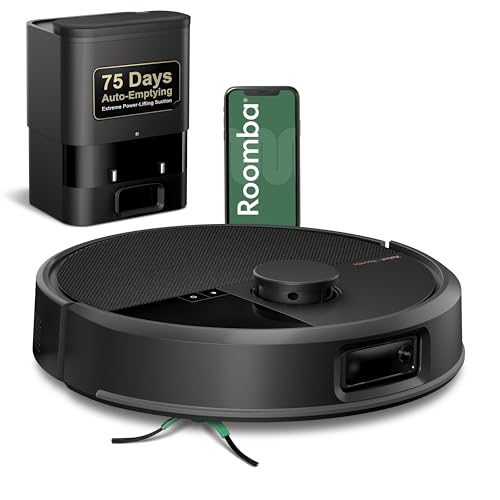
The iRobot Roomba 105 Combo Robot Vacuum and Mop with AutoEmpty Dock is a versatile 2-in-1 automated floor-care machine designed for busy homes, pet owners, and multi-surface spaces. Operating as both a dry vacuum and an active damp mop, this robotic cleaner handles daily floor maintenance by pairing automated dirt disposal with intelligent path planning. For households balancing area rugs and hard floors, its standout operational feature is automatic carpet avoidance during mopping cycles, which ensures that wet microfiber pads never drag across delicate rugs.
Dry debris pickup is driven by a multi-surface brush roll, a dedicated edge-sweeping brush, and an intense suction system that the manufacturer lists at 70 times baseline power-lifting capability. Crumbs, pet hair, and tracked-in entrance dirt are swept into the internal dustbin before the robot returns to the dock to automatically evacuate the debris. The dock uses sealed replacement bags designed to trap 99% of particles down to 0.7 microns, preventing the messy dust plumes commonly associated with emptying bagless robot vacuum bins.
Hard-floor care is handled via an integrated microfiber mopping pad fed by an internal micro-pump that dispenses clean water or compatible cleaning solutions. For kitchens and entryways dealing with dried spills or sticky messes, the Roomba Home App includes a SmartScrub mode that commands the robot to perform 2X deeper scrubbing compared to standard single-pass mopping. Because the unit actively recognizes carpets and steers clear during wet cycles, you do not need to install physical barriers or program complex no-mop boundaries just to protect your rugs.
Navigation is powered by ClearView LiDAR technology that rapidly scans and maps your layout. Measuring 13.35 by 13.19 inches with an overall height of 4.09 inches, the robot maneuvers smoothly between chair legs, navigates along baseboards, and uses built-in drop sensors to prevent falls down stairs. Through the Roomba Home App, you can view estimated cleaning times, schedule specific rooms, adjust the number of cleaning passes, set keep-out zones, and track consumable filter status.
There are practical limitations to keep in mind before purchasing. The 4.09-inch profile is slightly taller than camera-only or sensor-less robot vacuums, meaning it may not fit beneath furniture with very low ground clearance. Furthermore, setup strictly requires a 2.4 GHz Wi-Fi connection, and the manufacturer does not provide exact runtimes or fluid tank capacities, meaning very large floor plans may require the robot to clean in stages or pause for tank refills.
For homeowners, apartment dwellers, and pet-friendly households wanting hands-off floor care without manual dustbin dumping, the Roomba 105 Combo provides strong practical value. Its balance of reliable LiDAR mapping, up to 75 days of sealed debris collection in the AutoEmpty dock, and dependable carpet detection while mopping makes it a well-rounded maintenance cleaner for everyday living.
The Roomba 105 Combo features a controlled wet-cleaning system powered by an internal micro-pump that keeps the microfiber mopping pad evenly damp throughout the cycle. Users can fill the fluid reservoir with plain water or a compatible cleaning solution to help lift dried footprints, light grease, and surface grime from hard flooring surfaces.
When deeper agitation is needed for sticky kitchen spills or high-traffic entryways, users can activate the SmartScrub mode in the app. This feature directs the robot to scrub back and forth over the floor surface, providing double the scrubbing action of standard mopping passes. Because the robot automatically detects carpeting, it discontinues mopping paths over soft flooring, ensuring rugs remain completely dry without manual intervention.
Using ClearView LiDAR mapping, the Roomba 105 Combo scans your home layout quickly upon initial setup, creating an accurate digital floor plan inside the Roomba Home App. The onboard LiDAR allows the robot to clean in structured, efficient rows rather than random bounce patterns, minimizing missed spots across open floor plans.
The navigation array also includes integrated cliff sensors to prevent tumbling down stairwells or off raised thresholds. Inside the companion app, users can leverage the generated map to assign room names, establish customized keep-out zones around pet bowls or clutter, and view estimated cleaning times before starting a cycle.
Routine dry maintenance is heavily reduced by the included AutoEmpty dock, which pulls debris out of the robot's bin and into an enclosed disposal bag capable of holding up to 75 days of collected dust and pet hair. When the bag reaches capacity, it can be lifted out and thrown away without exposing the user to loose dust particles.
Wet cleaning components require regular manual attention to maintain hygiene and performance. The microfiber mopping pad should be removed, laundered, and dried between cleaning runs, and the robot comes packaged with an extra pad to simplify laundering rotations. Additionally, users can monitor the operational lifespan of the onboard filter directly through the Roomba Home App to ensure optimal airflow over time.

Pros
- Exceptional manufacturer-rated 30,000 Pa suction with dual rubber brushes that minimize pet hair tangles.
- Fully automated AutoWash Dock empties dust for up to 3 months, cleans with 167°F heated water, and dries the mop at 122°F.
- Retracting protective mop shield reliably keeps carpets dry during mixed vacuuming and mopping runs.
- ClearView Pro LiDAR and PrecisionVision AI navigate multi-room spaces accurately while avoiding low-lying obstacles like cords and pet waste.
Cons
- Substantial base station dimensions and a 39.25-pound combined shipping weight require a dedicated floor space near a power outlet.
- Relies on proprietary AllergenLock disposable dust bags and specialized cleaning solution refills for ongoing maintenance.
- The 4.1-inch robot chassis height may not fit under low-profile furniture and toe kicks.
The iRobot Roomba Max 775 is an automated 2-in-1 robot vacuum and mop engineered for busy homes, pet owners, and multi-surface layouts. By pairing an ultra-high suction vacuum system with a heated roller mop and a comprehensive AutoWash dock, this machine targets households that want to minimize day-to-day cleaning chores across both carpets and hard floors. With features tuned specifically for pet hair pickup, wet spill removal, and allergen containment, it serves as a whole-home floor care hub for high-traffic living spaces.
Cleaning performance is driven by a manufacturer-rated 30,000 Pa suction motor and dual tangle-resistant rubber brushes designed to agitate carpets and gather fine dust without severe hair wrapping. For hard floors, the PowerSpin roller mop utilizes heated spot mopping, steady downward pressure, and 200 RPM rotation to scrub dried-on kitchen spills and muddy tracks. An integrated scraping system continuously cleans the roller mop with 167-degree Fahrenheit water during operation, while an automatic retracting mop cover lifts and shields the wet component when transitioning to rugs and carpets to keep carpet fibers dry.
The unit measures 14.7 by 14.4 by 4.1 inches and features ClearView Pro LiDAR combined with PrecisionVision AI. This hardware package allows the robot to generate detailed 3D floor maps, optimize path planning, and recognize common household obstacles such as power cords, dropped shoes, and pet waste. For perimeter coverage, extended mopping reach and dual spinning edge brushes sweep debris out from baseboards and corners toward the main pickup channel, while Advanced Dirt Detect technology identifies heavily soiled areas to automatically initiate deeper scrubbing passes.
Routine maintenance is centered around the multifunction AutoWash Dock, which manages dust disposal, water handling, and roller care. The dock automatically empties the robot dustbin into carbon odor-control AllergenLock bags that can store debris for up to 3 months. In addition to dispensing cleaning solution, the base cleans the roller mop with 167-degree Fahrenheit heated water and dries it with 122-degree Fahrenheit warm air to prevent lingering moisture odors. Users will primarily need to refill the clean water tank, empty dirty wastewater, and occasionally wipe down sensors or replace the sealed bag.
Despite its high degree of automation, the Roomba Max 775 carries practical operational limits. The combined dock and robot assembly weighs 39.25 pounds and requires open clearance around the base station for smooth docking and unobstructed LiDAR scanning. The 4.1-inch robot profile may struggle to clear low-clearance couches or kickboards. Furthermore, the dock utilizes proprietary AllergenLock debris bags and dedicated solution refills, meaning long-term ownership involves recurring consumable costs.
For households with shedding pets, active children, and a mix of hard floors and carpets, the iRobot Roomba Max 775 provides a highly autonomous cleaning solution that tackles both dry debris and stubborn surface stains. The addition of heated mopping, roller washing, and active carpet shielding addresses common pain points seen in standard combination robots. While it requires dedicated space and consumable replenishment, it offers substantial daily floor-care convenience for pet owners and multi-room homeowners seeking a hands-off cleaning routine.
The iRobot Roomba Max 775 addresses hard-floor cleaning with a PowerSpin roller mop system that operates at 200 RPM under steady downward pressure. To tackle stubborn kitchen grime and dried-on spills, the robot features heated spot mopping and an internal scraping mechanism that flushes the roller with 167-degree Fahrenheit water during cycles, helping prevent the transfer of dirty wash water across clean floors.
To protect area rugs and wall-to-wall carpeting, the machine incorporates an industry-first retracting roller mop cover. When the robot detects carpeted surfaces, the protective cover activates to lift and shield the damp roller, isolating moisture away from pile fibers. The AutoWash Dock completes the wet-cleaning workflow by auto-dispensing cleaning solution, washing the roller mop in 167-degree water, and circulating 122-degree warm air to dry the roller between runs.
Navigation on the Roomba Max 775 is powered by ClearView Pro LiDAR and PrecisionVision AI to navigate complex floor plans and recognize obstacles in real time. The LiDAR sensor quickly generates 3D spatial maps of multi-room homes, enabling efficient cleaning paths and targeted room assignments via the Roomba Home App. PrecisionVision AI provides obstacle avoidance by detecting everyday hazards such as charging cords, footwear, and pet waste.
For targeted floor care, the companion app allows users to define specific pet zones, set custom cleaning schedules, and command the robot through Amazon Alexa, Siri, or Google Assistant voice commands. Built-in Advanced Dirt Detect sensors identify concentrated patches of wet or dry debris ahead of the robot, automatically prompting the system to adjust suction, dispense moisture, and execute repeated passes over dirty traffic lanes.


Common Questions About Robot Vacuums
Do these models work well on mixed flooring?
Yes, most models feature multi-surface brushes and sensors that detect floor changes. The iRobot Roomba 105 Combo automatically avoids carpets while mopping to keep rugs dry. This design helps maintain consistent cleaning performance across hardwood, tile, and carpeted areas in your home.
How effective are they at removing pet hair?
Many of these robots use anti-tangle rubber brushes specifically designed for pet hair. The Roomba Max 705 and 775 models highlight dual rubber brushes that resist clogging. According to product descriptions, these brushes stay in contact with floors to lift debris effectively without frequent manual cleaning.
What is the difference between the AutoEmpty docks?
AutoEmpty docks store debris in a bag for up to 75 days, reducing manual emptying. Some higher-end models include washing and drying features for mop pads. This setup allows for longer periods of hands-free cleaning, which is ideal for busy households with minimal time for maintenance.
Can I control these vacuums with voice assistants?
Yes, most iRobot models work with Alexa, Siri, and Google Assistant. You can start, stop, or schedule cleans via voice commands or the Roomba Home App. This integration adds convenience, allowing you to manage cleaning tasks from anywhere in your home without physically interacting with the device.
Are these vacuums suitable for small apartments?
Yes, many models have slim designs that fit under furniture and navigate tight spaces. The Roomba 105 Vac is compact and efficient for smaller living areas. For more options on space-saving cleaning tools, see our review of best compact canister vacuums which discusses similar maneuverability benefits for smaller homes.






Write Your Review
No reviews yet. Be the first to share your experience!