


Floor cleaning routines often stall when an old machine loses suction or suffers motor failure, leaving homeowners wondering how to balance replacement expenses against cleaning performance. Anyone shopping for floorcare hardware quickly discovers that answering how much does a vacuum cost involves far more than checking a single sticker price. Modern models span a wide spectrum from simple handheld units to intricate whole-home systems with motorized nozzles and digital controls. Researching everyday household vacuum options reveals that build quality, filtration integrity, and suction design all influence where a machine lands on the pricing ladder.
Upfront purchase prices also represent only part of the financial equation over the life of a cleaning machine. Ongoing consumables like replacement filters, specialty bags, and eventual battery packs alter the lifetime expense significantly. Comparing standard dry vacuums with versatile hard-floor vacuum and mop machines underscores how specialized mechanics can either streamline maintenance or introduce additional upkeep demands. By evaluating your flooring layout, pet cleanup requirements, and preferred vacuum format, you can pinpoint an appropriate spending level without overpaying for unnecessary bells and whistles.
Understanding Vacuum Pricing Tiers and Total Cost of Ownership
Assessing the financial commitment required for a new floor cleaner demands an understanding of design formats, component quality, and long-term operating demands. While budget-friendly models satisfy simple cleanup tasks in smaller apartments, multi-level homes with mixed flooring often demand specialized brush rolls and sealed filtration that elevate manufacturing expenses. Evaluating the market by category and ongoing ownership demands ensures you select a machine that provides reliable suction without unexpected future expenses.
Primary Vacuum Formats and Relative Price Profiles
Vacuum cleaners encompass several distinct mechanical formats, each engineered for specific spatial requirements and floor types. Traditional upright units remain popular for carpet-heavy households due to their direct-drive motor placement and wide cleaning heads, typically positioning them in accessible budget to midrange brackets. Canister vacuums separate the motor and dust receptacle into a wheeled body connected to a wand, requiring flexible hoses and specialized floorheads that often shift them into moderate to high-end pricing territory. Stick vacuums prioritize lightweight convenience and compact storage, though high-performance cordless variants frequently command premium figures due to dense lithium-ion cells and brushless motor architecture.
Handheld and compact canister units focus on targeted cleaning, stairs, upholstery, and automobile interiors rather than wall-to-wall carpeting. Because these compact machines use smaller housings and streamlined attachments, their initial acquisition expense generally remains below full-sized uprights and canisters. Conversely, automated robot vacuums incorporate laser navigation, optical sensors, and automated emptying bases that drive development costs higher than purely manual counterparts. Choosing the right format begins with recognizing which surfaces you clean most frequently, as investing heavily in high-pile carpet agitation makes little sense for homes dominated by smooth tile and hardwood floors.
Entry-Level Utility Versus Premium Engineering
Entry-level vacuum cleaners frequently rely on molded plastic chassis, universal floorheads without active agitation, and basic single-stage filtration. These machines capably manage dry debris, dust bunnies, and superficial grit on hard floors and thin rugs, offering practical value for dorms, workshops, and small living quarters. However, lightweight construction and budget-grade motors often carry higher acoustic output, shorter continuous duty cycles, and limited serviceability. If a budget machine experiences internal motor wear or cracked housings, replacement parts are rarely stocked by third-party suppliers, which frequently necessitates replacing the entire unit.
Premium floorcare equipment distinguishes itself through robust engineering materials, durable polycarbonate plastics, and reinforced wands capable of enduring years of weekly household abuse. High-end motors feature precision balancing, thermal overload protections, and extended operational lifespans designed to maintain steady airflow even as the collection container fills. These platforms also integrate sound-dampening insulation around the motor chamber, reducing high-pitched motor whine to a much more tolerable hum. While the upfront investment is noticeably greater, premium manufacturers tend to support their products with extensive spare parts catalogs, making minor repairs far more practical than premature appliance disposal.
The Hidden Ongoing Expenses of Bagged and Bagless Systems
The fundamental decision between a bagged collection system and a bagless dust cup dramatically influences the overall cost of owning a vacuum cleaner. Bagless models appear cheaper initially because they eliminate the recurring purchase of disposable paper or synthetic collection bags. Users simply dump the dirt cup directly into a waste receptacle and wash the pre-motor sponges periodically. Nevertheless, bagless designs place substantial strain on washable and replaceable motor filters, which slowly saturate with fine dust over time and require eventual replacement to prevent motor overheating and suction degradation.
Bagged vacuum cleaners require continuous replenishment of genuine replacement bags, representing a steady operational cost over the lifespan of the machine. Despite this recurring expense, high-efficiency synthetic bags act as an exceptional preliminary filter, capturing coarse debris, hair, and microscopic particulates before airflow reaches the motor chamber. This design keeps internal components pristine, significantly extends secondary filter longevity, and prevents messy dust clouds during disposal. Homeowners dealing with respiratory sensitivities often find that the modest recurring cost of sealed bags delivers superior hygienic value compared to shaking out a messy plastic dust bin.
Cordless Battery Replacements and Power Lifespans
Cordless cleaning tools offer unmatched agility across stairs, vehicles, and multi-story floor plans without tethering the operator to a wall outlet. However, cordless power systems introduce a finite component lifespan that directly impacts long-term expenditure. Lithium-ion battery packs naturally degrade with every discharge and recharge cycle, typically losing optimal capacity after several hundred cycles of regular cleaning. When a built-in battery pack fails to hold a charge, owners must factor in the expense of an official replacement pack or face a completely non-functional machine.
Corded vacuums avoid battery degradation entirely by drawing steady electricity directly from standard wall outlets. A long power cord guarantees consistent suction from the first room to the last, eliminating runtime anxiety and the threat of mid-cleaning shutdowns. Machines equipped with substantial cords also tend to maintain lower manufacturing expenses because they require no expensive chemical battery packs or integrated charging docks. For households that prioritize dependable long-term operation over lightweight cordless portability, corded platforms offer superior value retention and eliminate future battery replacement costs.
Motor Filtration, Sealed Systems, and Maintenance Overhead
Filtration architecture represents another critical technical divergence that separates basic cleaners from advanced floorcare platforms. Inexpensive models frequently employ open-chassis filtration, where unfiltered air can escape through micro-gaps around the dust container or housing seams before passing through the final exhaust filter. While these systems trap larger particles like pet hair and breadcrumbs, fine dust and airborne particulate matter may recirculate back into living areas. Upgrading to a certified sealed system ensures that every cubic inch of intake air passes through high-efficiency media before exhausting back into the room.
Maintaining certified filtration demands adherence to strict replacement intervals for secondary exhaust filters and intake screens. Using compact cleaners for quick messes can reduce wear and tear on primary household vacuums, thereby spacing out filter replacements across multiple machines. Neglecting filter care leads to restricted airflow, forcing the motor to work harder against backpressure and elevating internal operating temperatures. Replacing exhaust media according to the manufacturer schedule preserves motor health and protects household air quality, representing a necessary maintenance line item in your overall cleaning budget.
Specialized Formats and Portable Utility: The Handheld Canister Example
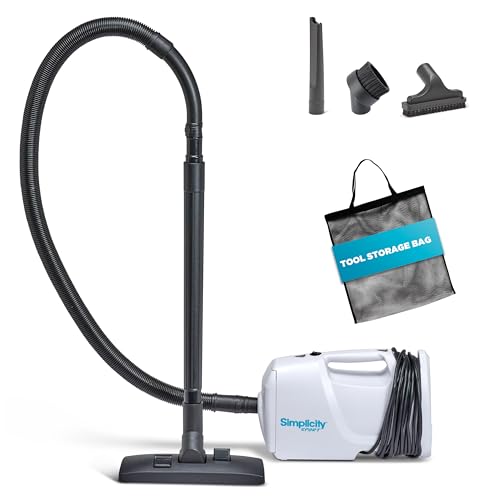
Evaluating specialized vacuum form factors illustrates how targeted utility can deliver impressive cleaning power without the price tag of a full-size upright. The Simplicity Vacuums Handheld Canister Vacuum, known as the S100 model, demonstrates how dedicated design choices address above-floor cleaning, vehicle detailing, and hard surfaces. Built as a lightweight canister equipped with a convenient carry strap, this platform allows users to move freely up staircases and through tight recreational vehicle quarters. Its adjustable suction control permits smooth transitions from delicate curtains to bare hard floors, highlighting how functional versatility can be achieved without complicated motorized floor nozzles.
Operating considerations for a specialized machine like the Simplicity Vacuums Handheld Canister Vacuum reinforce the importance of factoring in consumables. Because this model utilizes a bagged canister design compatible with SS-6 vacuum replacement bags, users benefit from clean, sealed disposal without blowing dust back into living spaces. Manufacturer documentation specifically cautions against reusing SS-6 vacuum bags, noting that reusing depleted bags can restrict airflow, strain internal motor windings, and void warranty protections. Replacing genuine bags when they reach two-thirds full preserves high suction performance and protects your appliance investment, confirming that disciplined consumable management directly prolongs equipment life.
Flooring Surfaces, Pet Cleanup, and Accessory Tool Requirements
The specific flooring materials installed throughout your home directly dictate what attachments, floorheads, and motor power your vacuum must possess. Bare floors such as ceramic tile, laminate, and finished hardwood require smooth floorheads with soft bristles that glide without scratching delicate sealants. Conversely, thick carpeting and dense rugs require motorized brush rolls with stiff bristles to agitate embedded grit out of the carpet pile. Vacuums equipped with interchangeable nozzles or brush roll shut-off switches naturally cost more to manufacture, reflecting the mechanical complexity needed to service diverse floor types safely.
Households with shedding pets must evaluate how pet hair and biological debris influence accessory wear and cleaning demands. While general vacuums can gather loose fur from smooth tiles, pet stains and embedded fur often require specialized extraction tools or upholstery nozzles. When pet accidents occur, deploying specialized pet mess extractors alongside a dry vacuum ensures that liquid messes are properly treated without damaging dry-only vacuum motors. Factoring in the expense of pet-specific tools, such as mini motorized turbines or dedicated crevice attachments, prevents frustration and ensures your equipment handles tough fur without frequent brush-roll clogs.
Warranty Protections and Repairability Considerations
Warranty length and manufacturer support policies provide crucial insight into the expected durability of any vacuum cleaner. Budget-tier models frequently carry ninety-day or single-year limited warranties that cover only major manufacturer defects while excluding floor tools, hoses, and power cords. Conversely, premium vacuum brands often offer multi-year warranties extending from three to seven years, signaling greater manufacturing confidence in motor endurance and electrical components. Understanding what a warranty covers helps buyers avoid unexpected out-of-pocket expenses when mechanical components encounter premature wear.
Repairability also determines whether a minor malfunction results in a simple fix or forces an expensive appliance replacement. Reputable vacuum manufacturers distribute replacement drive belts, brush rollers, gaskets, and wand assemblies through authorized repair centers and online parts retailers. When a machine is engineered with modular, accessible assemblies, homeowners can swap out a worn drive belt or replace a cracked hose collar using basic household screwdrivers. Selecting a brand known for accessible replacement parts ensures your vacuum remains fully operational throughout its intended service life without requiring a complete system upgrade.
Balancing Upfront Expense Against Long-Term Durability
Calculating the true financial impact of a vacuum cleaner requires balancing the purchase price against expected operating lifespan. A budget cleaner that costs very little initially might only provide two or three years of reliable service before motor burnout or plastic latch failures force a replacement. In contrast, a well-built midrange or premium machine designed for modular maintenance can reliably clean a home for seven to ten years with basic filter and belt changes. Dividing the total ownership cost over the actual years of dependable cleaning often reveals that moderate upfront investments provide far superior value over disposable alternatives.
Making an informed choice ultimately comes down to aligning machine capabilities with your home layout, floor types, and maintenance tolerance. Always consult the product manual before operating a new unit, ensuring you understand proper filter washing techniques, belt inspection routines, and bag replacement thresholds. By prioritizing essential features like sealed filtration, reliable suction pathways, and readily available replacement parts over flashy digital gimmicks, you can select a cleaning machine that fits your budget and reliably preserves your living environment for years to come.







Write Your Review
No reviews yet. Be the first to share your experience!