


Real Suction Fun for Curious Toddlers
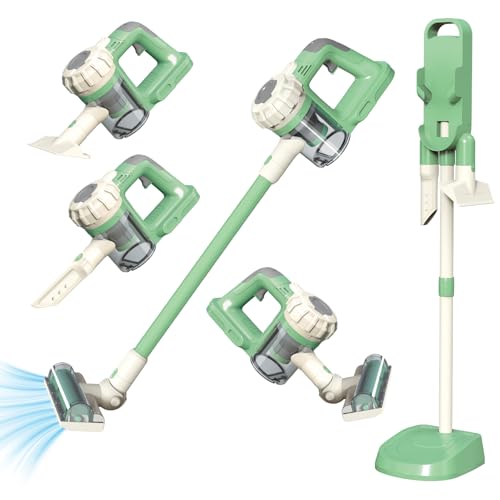
Toddlers love shadowing parents during daily chores, often grabbing at the handle while you sweep crumbs off the rug or clear hard floors. Handing a child a heavy machine is impractical, which is why miniature cleaning toys have become so popular. Getting the best toy vacuum that really works gives little helpers a way to join in with gentle, functional suction that lifts tiny paper bits. While adults use full-sized cordless vacuum cleaners for heavy messes, these scaled-down toys focus on lightweight frames, realistic sounds, and safe operation.
Evaluating these play appliances means reviewing manufacturer specifications, attachment varieties, battery demands, and kid-friendly storage features rather than raw airflow ratings. These toys rely on compact battery motors designed for safe play without excessive noise or mechanical hazards. Our comparison examines listed nozzle tools, convertible handheld modes, and sturdy plastic builds to see which designs deliver practical pretend play. Reviewing these verified details helps you match an engaging toy to your child’s age and play habits.


Frequently Asked Questions
Can a toy vacuum pick up real household dirt?
A toy vacuum provides gentle suction intended for light debris like paper scraps and tiny crumbs rather than heavy dirt. Manufacturers restrict motor power to ensure small fingers remain safe during playtime. These units cannot replace household cleaners for deep floor maintenance. Instead, the suction offers an interactive effect that makes chore play engaging and fun.
How do toy vacuums differ from standard cordless vacuums?
Toy vacuums are designed exclusively for pretend play, using lightweight plastic bodies, low-voltage motors, and snap-on nozzles. Unlike full-size cordless vacuum cleaners with extra batteries, play models run on disposable AA cells to operate small fans and simulated cyclone chambers. They lack motorized brush rolls and sealed filters, making them easy for toddlers to carry.
What safety features should parents check on play vacuums?
Parents should look for smooth edges, durable construction, and screw-secured battery compartments. Because children push toys across rugs and hard floors, sturdy parts prevent accidental breakage. Low operating volume is also essential so motor sounds stay pleasant. Manufacturers typically recommend these toys for children ages three and older due to small detachable nozzles.
What batteries do working toy vacuums require?
Most functional play vacuums require three to five standard AA alkaline batteries to power their sound and suction features. For example, Casdon designs typically need three AA batteries, while BAYMI sets utilize five AA cells. Since active play can drain standard cells over time, having extra batteries ready is helpful. Manufacturers rarely bundle batteries inside the box.
Do toy vacuums work better on bare floors or carpets?
Toy cleaners roll smoothly on both surfaces, but suction works best on flat, bare floors. Hardwood or tile lets the nozzle create a closer seal to pull in paper bits. Thick carpet fibers tend to trap particles beyond the reach of low-power toy fans. Using the wide floor attachment on smooth surfaces gives children the best pickup during play.







Write Your Review
No reviews yet. Be the first to share your experience!