


Chipped edges and shattered clay units often derail masonry projects before the first mortar line sets. Working with tough clay or dense concrete pavers requires clean scoring and controlled force so you get straight breaks without wasting expensive materials. Evaluating manual splitters, heavy chisels, and specialized power saw blades reveals that picking the best tool to cut brick depends on your exact project scale and dust tolerances. While a wide bolster chisel handles quick patio adjustments, larger block jobs demand mechanical leverage or reciprocating blades to slice through aggregate cleanly. Pairing your cutting gear with a reliable drill for brick and concrete ensures every anchor point and layout adjustment stays neat across tough masonry surfaces.
Hand protection and blade composition make a massive difference when you strike or grind through dense masonry. Cheap chisels mushroom quickly at the strike cap, while poor saw blades lose their carbide teeth on the first porous paver. Based on detailed manufacturer specifications and user feedback, tools featuring heat-treated alloy steel and broad shock-absorbing guards offer far better control and hand safety during repetitive splitting. Selecting the right setup saves hours of frustration, reduces joint gap errors, and keeps your brickwork looking crisp from the first cut to final placement.

Pros
- Enlarged striking cap adds extra hand protection and helps prevent head mushrooming over repeated hammer blows.
- Heat-treated steel blade withstands heavy impact when working against brick and hardened mortar.
- High-visibility finish with bold markings ensures quick tool identification in bags and on jobsites.
- Lacquer finish protects bare steel surfaces against rust during damp storage conditions.
Cons
- Does not include an integrated rubber hand guard or vibration-dampening sleeve.
- Broad 4-inch blade width is too wide for narrow joint raking or detailed mortar repointing.
The Crescent CBCH40 4-Inch Brick Chisel is a dedicated masonry striking tool built for scoring, splitting, and dressing brick, block, and mortar. Tailored for DIY renovators, homeowners maintaining brick veneer or paver walkways, and property managers handling general masonry prep, this chisel delivers a wide contact area to cleanly score break lines or shear off excess mortar buildup.
Measuring 4 inches across the cutting edge, this chisel is engineered for splitting standard brick units and preparing masonry surfaces. According to the manufacturer, the tool is tested to 150 percent of ASME standards to verify structural strength under repeated hammer blows. The broad blade allows users to establish an even score line across a brick face, helping achieve cleaner fractures during layout adjustments, fireplace hearth modifications, or brick paver installations.
Crescent manufactures this chisel from heat-treated steel to maintain edge retention and overall structural toughness against abrasive masonry substrates. To improve user safety, the tool features an enlarged striking cap intended to shield the user's hand from errant strikes and prevent dangerous mushrooming of the metal head over time. Additionally, the body is treated with a protective lacquer coating to inhibit rust and finished in high-visibility rawhide paint with bold size markings for rapid identification in a busy workspace.
When preparing brick for replacement or trimming damaged mortar beds, users position the wide cutting edge along the desired break line and strike the enlarged cap squarely with a masonry hammer or hand drilling hammer. Because the chisel has a solid steel body rather than an overmolded rubber grip, maintaining a steady, gloved grip is recommended during repetitive strikes to manage impact vibration and ensure precise blade placement.
While the 4-inch width is ideal for splitting standard bricks or leveling broad mortar surfaces, it is generally too wide for targeted tuckpointing or raking narrow vertical mortar joints. In addition, the tool relies on its enlarged steel cap rather than a full elastomeric hand guard, meaning hand safety depends on proper hammer technique. For intricate tuckpointing or joint cleanup under one inch wide, a narrower plugging or cape chisel will be needed.
For homeowners, landlords, and DIY renovators seeking an affordable, heavy-duty striking tool to split bricks, chip away stubborn mortar, or assist in patio paver modifications, the Crescent CBCH40 delivers solid practical value. Its heat-treated steel core, protective striking cap, and high-visibility finish make it a dependable masonry tool to keep on hand for general brickwork and exterior maintenance.
The Crescent CBCH40 is engineered around heat-treated steel, providing the structural resilience needed to withstand direct steel-on-steel impacts from masonry hammers. The enlarged striking cap at the top is specifically designed to resist mushrooming, which reduces the hazard of flying metal fragments during prolonged striking tasks.
Surface longevity is reinforced with a clear lacquer coating that seals the steel against humidity, helping prevent rust formation when the chisel is stored in garages, sheds, or job boxes. The high-visibility rawhide paint and prominent size markings ensure the tool remains easy to identify quickly, even when covered in masonry dust or mixed with other heavy striking gear.
With its broad 4-inch cutting edge, this chisel is best suited for scoring along the circumference of clay or concrete bricks before striking a clean fracture. It is equally functional for chipping down uneven mortar beds, removing high spots on brick pavers, or stripping away stubborn mortar drips following masonry installations.
For brick replacement and veneer repairs, the broad blade helps break damaged units away from existing mortar without requiring power tools. However, users should match the tool width to the task, selecting a narrower cold chisel or joint raker when working inside tight mortar joints.

Pros
- Hardened 10-inch blade includes three cutting edges for longer operational lifespan
- Convenient height adjustment mechanism pairs a 3-position pin with a fine-tuning screw
- Operates quietly with zero need for electrical power, fuel, or water hookups
- Solid 45-pound build delivers exceptional bench and ground stability during cuts
Cons
- Maximum cutting depth of 3-3/8 inches will not accommodate oversized retaining wall blocks
- Substantial 45-pound weight requires deliberate effort to carry across large project sites
- Mechanical splitting creates a naturally textured split edge rather than a diamond-saw smooth cut
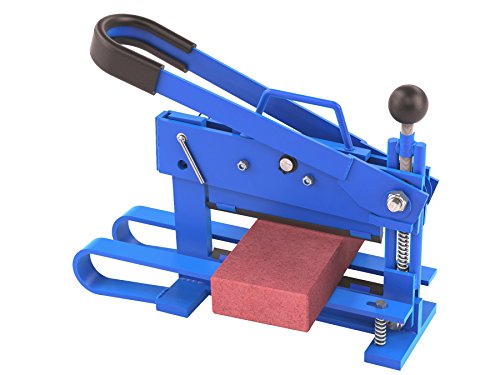
The BonTool 11-590 Paver and Brick Buster is a dedicated manual masonry splitter engineered for patio contractors, hardscape installers, and homeowners tackling brick paving projects. Designed specifically for cutting concrete pavers and bricks, this tool provides a quiet, mechanical alternative to loud gas or electric cutoff saws. Its bench-ready, stand-alone configuration makes it a reliable asset for sizing blocks directly beside the installation area without power cords or water connections.
Equipped with a 10-inch wide cutting blade and a 3-3/8-inch maximum depth capacity, this unit easily manages standard brick sizes and residential concrete paving stones. A standout design feature highlighted by the manufacturer is the innovative hardened blade that incorporates three distinct cutting edges. When one edge eventually dulls after extensive use, the blade can be turned to a fresh edge, extending service life and maintaining sharp, clean cuts across extensive patio or walkway installations.
Precision height adjustment is handled through a versatile two-part mechanism. A three-position removable pin allows operators to make rapid coarse adjustments according to general brick thickness, while an integrated fine-adjustment screw dials in the exact height needed for an even split. Mechanical leverage is applied through an extended steel handle equipped with a durable rubber grip, which helps reduce hand strain and ensures controlled pressure throughout repetitive cutting tasks.
In terms of build and portability, the Buster features a rugged 45-pound framework measuring 20.5 by 6 by 15 inches. The substantial weight works to the user's advantage by keeping the base planted firmly on the ground or utility table during downward lever strokes. Maintenance is minimal compared to motorized saws, as there are no filters, belts, spark plugs, or slurry containment systems to manage at the end of the day.
Potential buyers should keep in mind the inherent operational boundaries of mechanical splitting. With a depth limit of 3-3/8 inches and a 10-inch width, this tool cannot accept large commercial architectural slabs or thick landscape retaining wall blocks. Additionally, like all guillotine-style splitters, it produces a fractured, rock-faced split line rather than the perfectly smooth, polished edge generated by a diamond wet saw.
For hardscape contractors, landscapers, and serious DIY renovators focused on concrete paver patios, brick garden walkways, and masonry border trims, the BonTool 11-590 offers outstanding utility and durability. Its sturdy construction, triple-edge blade versatility, and dependable height adjustment make it a valuable, long-term addition to any masonry tool collection.
The BonTool 11-590 is built to process standard masonry materials up to 10 inches in width and 3-3/8 inches in thickness. These specifications make it an ideal fit for common clay bricks, concrete patio pavers, and matching border units used in residential hardscaping.
Setup and height adjustment are fast and intuitive. Users pull the 3-position pin to set the blade opening roughly to the block height, then turn the fine-adjustment screw to seat the blade firmly against the masonry surface before applying leverage through the rubberized handle.
The three-sided cutting edge on the hardened blade ensures extended functionality on demanding jobsites. Rather than replacing the cutting component when dull, the blade can be repositioned to expose a sharp edge, keeping project downtime to a minimum.
According to manufacturer specifications, the BonTool 11-590 Paver and Brick Buster is designed specifically for splitting concrete pavers and bricks. Its hardened blade applies concentrated mechanical pressure along a single score line to snap blocks cleanly.
It is not recommended for materials exceeding 3-3/8 inches in height, such as heavy commercial retaining wall blocks or large structural building units. Buyers should verify their block dimensions prior to purchase to ensure proper fit within the 10-inch by 3-3/8-inch cutting window.

Pros
- Generous 130-pound load capacity accommodates heavy concrete pavers and retaining wall units
- Adjustable jaw spread offers versatility across varied brick, slab, and block dimensions
- Stand-up handling reduces repetitive spinal bending and keeps fingers out of pinch zones
- Pre-assembled construction allows immediate deployment on hardscape projects
Cons
- Gripper height of 1 1/8 inches may not provide enough bite on irregular, rounded, or severely tumbled stones
- Product listing text contains references to the PaverPAW PB name, creating potential confusion regarding branding and exact model specifications
- Lifting heavy materials relies on steady user balance and manual clamp control to prevent mid-air slippage
The Unmake Adjustable Heavy Duty Brick Tongs tool is a manual masonry transport and positioning clamp tailored for DIY homeowners, landscapers, and property maintenance workers. Designed to handle individual pavers and blocks directly from a shipping pallet or ground stack, this device eliminates the need to awkwardly grip heavy masonry units with bare fingers. It is particularly well suited for anyone planning a patio extension, walkway installation, or segmental retaining wall build who wants to streamline block transport while minimizing physical strain.
In terms of operational performance, the clamp is rated to lift loads up to 130 pounds (58 kg), making it capable of handling standard clay face bricks as well as thicker architectural concrete pavers. The clamping jaws feature a contact length of 4 inches (10 cm) and a lip height of 1 1/8 inches (2.8 cm). According to the product specifications, the tool also incorporates alignment wings and integrated spacer tabs, which are designed to help users lay blocks with uniform spacing and maintain straight joint lines without constantly setting the tool aside to measure.
The physical build of the tool features an adjustable silvery metal frame with an overall listed weight of approximately one pound. Its configuration focuses on practical field ergonomics, allowing the operator to lift, carry, and lower paving blocks from a standing or semi-upright posture. This layout significantly reduces the knee flexion and lumbar compression associated with installing hundreds of consecutive pavers by hand, making extended afternoon hardscaping projects noticeably more manageable.
Using the tool is straightforward because it arrives ready to work with no preliminary assembly required. The operator adjusts the jaw spread to match the target paver dimension, lowers the grippers over the outer edges, and lifts the handle to engage the mechanical clamping force. For daily maintenance, keeping the sliding adjustment tracks and pivot points clear of bedding sand, stone dust, and dried mortar will ensure smooth opening and closing during long-term storage and repeated use.
Prospective buyers should keep a few practical limitations in mind before ordering. The 1 1/8-inch gripper depth is designed for flat, manufactured edges and will struggle to securely clamp natural cleft flagstone, irregular cobblestones, or heavily weathered historic bricks with rounded corners. In addition, the manufacturer description includes mixed references to the PaverPAW PB model name, which introduces some ambiguity regarding specific part branding. Handling loads near the maximum 130-pound limit also requires careful physical control, as sudden shifts in angle could compromise jaw grip.
Overall, the Unmake Adjustable Brick Tongs tool offers practical utility for residential walkway, patio, and border projects where standard modular pavers are used. By keeping hands away from crushing hazards and reducing repetitive stooping, it delivers clear ergonomic benefits over manual lifting. Homeowners and DIY renovators seeking a simple, non-motorized way to speed up paver layout will find it a worthwhile addition to their masonry tool collection.
The Unmake brick tongs are designed to work across a broad range of manufactured hardscape materials. Compatible substrates include standard clay pavers, concrete patio slabs, interlocking pavers, modular retaining wall units, and dimensioned brick blocks that fit within the tool adjustable jaw range.
Because the jaw lips measure 1 1/8 inches high and 4 inches wide, the clamp requires a relatively flat, uniform edge to establish a safe mechanical hold. Natural stone with rounded edges, rustic fieldstone, or deeply textured rustic pavers may slip under load and should be handled with specialized stone clamps instead.
This tool is engineered primarily for exterior residential hardscaping tasks, such as setting patio pavers on screeded sand, aligning garden pathway borders, or placing perimeter retaining blocks. Its ability to extract and lay blocks directly from the pallet stack reduces project transit time across the jobsite.
When working outdoors in gritty environments, users should regularly brush dry sand and crushed aggregate out of the adjustment mechanism to avoid binding. Storing the tool in a dry shed or garage between hardscaping projects helps keep the metal pivot points operating smoothly.
Pros
- Oversized hand guard provides critical knuckle and finger protection from missed strikes
- Hardened one-inch carbon steel blade offers precise scoring control on brick and stone
- Twelve-inch overall shaft length keeps hands safely below the hammer striking cap
- Solid drop-forged steel core provides dependable durability for manual demolition jobs
Cons
- Requires manual hammer strikes, which may be slow for large-scale demolition projects
- One-inch flat profile is not thin enough for clearing out very narrow mortar joints during repointing
- Cutting edge will require standard bench grinding or filing after heavy contact with hard aggregate
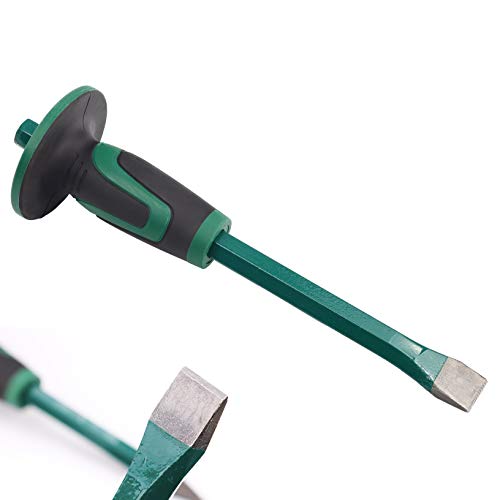
The Lestino 1-inch by 12-inch rock chisel is a manual shaping and splitting tool engineered for homeowners, DIY renovators, and property maintenance crews working on brick, stone, and concrete. Whether dealing with a cracked patio block, adjusting brick veneer units to fit an opening, or chipping away excess mortar during minor renovations, having a dedicated masonry chisel provides far more control than standard framing chisels or general-purpose pry bars.
According to manufacturer specifications, this chisel is built for scoring and shaping hard masonry materials, including brick, natural stone, and concrete. The 1-inch wide blade delivers a balanced contact surface, focusing kinetic strike energy into a narrow line to split masonry cleanly. This precision helps prevent collateral fractures on surrounding brick faces, which is particularly valuable when replacing individual spalled or damaged units within an existing wall or hearth.
Material durability centers on a single-piece, drop-forged high carbon steel body topped with a hardened cutting edge. The hardening process helps the blade withstand impact without premature dulling, cracking, or excessive blade deformation when cutting into dense masonry aggregate. The tool features a high-visibility green hand guard designed with a wide circular rim that buffers stray hammer impacts, offering important peace of mind when swinging heavy drilling hammers or hand sledges.
Using the tool is straightforward and requires no assembly. Position the 1-inch edge against a pre-marked score line on your brick or stone, hold the rubberized safety grip firmly, and tap the anvil head squarely with a 2-pound to 4-pound masonry hammer to score the profile before striking harder for the final split. Regular upkeep involves wiping down the carbon steel after contact with wet mortar or damp masonry dust, storing the tool in a dry space to deter rust, and periodically dressing the striking face if steel mushrooming occurs over long-term use.
While this tool excels at targeted splitting and edge-dressing, it has natural physical limits. The 1-inch width is too bulky for fine tuckpointing work on narrow mortar joints, which typically call for specialized pointing chisels. Similarly, large concrete slab removals or full patio demolitions will quickly exceed the speed of any manual hand tool, making rotary hammers or pneumatic breakers more practical for heavy-duty tear-outs.
For residential brick maintenance, hearth facings, walkway repairs, and general backyard landscaping, the Lestino 12-inch hand chisel offers solid utility. The combination of drop-forged carbon steel and a protective safety guard makes it a sensible, beginner-friendly addition to any home masonry toolkit.
Blade Profile: 1-inch flat cutting edge designed for scoring and shaping.
Overall Length: Approximately 12 inches for ample reach and handling room.
Material: One-piece drop-forged high carbon steel with a hardened edge.
Safety Features: Broad circular hand guard collar for knuckle and hand deflection.
Compatible Materials: Common clay brick, concrete pavers, stone, and mortar.
Score-splitting brick pavers and patio stones to fit curved borders or tight corners.
Chipping out fractured or deteriorated bricks without damaging neighbouring units.
Dressing natural fieldstone edges for dry-stack or mortared retaining wall installations.
Removing hardened mortar lumps or cement splatter from masonry restoration surfaces.

Pros
- Durable heat-treated alloy steel construction withstands heavy hammer impact
- Thick rubber hand guard provides crucial knuckle and hand protection from missed strikes
- Wide four-inch blade speeds up demolition and surface scraping on larger masonry units
- Shock-absorbing grip helps dampen excessive vibration during tough demolition tasks
Cons
- Four-inch blade width is too wide for clearing narrow vertical mortar joints during delicate repointing
- Manual striking tool requires physical exertion and an external hammer or mini-sledge
- Not intended for massive structural demolition projects where powered rotary breakers are necessary
The Firecore 4-Inch Stone and Concrete Chisel is a heavy-duty manual demolition hand tool tailored for homeowners, DIY renovators, and maintenance crews working with masonry, brick, and concrete surfaces. When spot repairs on walkways, patios, or masonry walls do not justify hauling out an air hammer or electric breaker, a robust cold chisel provides the necessary precision and impact force. This tool bridges the gap between delicate detailing and aggressive demolition, offering an accessible solution for anyone preparing masonry for repairs, repointing, or localized replacement.
In terms of supported tasks, the tool is explicitly engineered for breaking, cutting, splitting, carving, and demolishing a wide variety of hard substrates. According to manufacturer specifications, the chisel works across standard clay or concrete brick, masonry surfaces, poured concrete, rock, natural stone, cement block, cinder block, tile, and mortar beds. The four-inch cutting edge makes it especially effective for broad scoring and splitting tasks, such as sizing concrete pavers, knocking down stubborn mortar lumps, or lifting old exterior walkway sections without damaging adjacent components.
Material construction focuses on heavy impact resilience and user protection. The core body is crafted from heat-treated alloy steel, delivering the concentrated strength and edge hardness necessary to bite into masonry substrates without premature mushrooming or dulling. Surrounding the steel shaft is a thick, textured rubber handle engineered for non-slip tool positioning and vibration dampening. Crowning the handle is an oversized, bright yellow rubber shield that safeguards knuckles and thumbs from glancing blows, significantly increasing striking confidence when working with heavy drilling hammers or hand sledges.
Using the Firecore chisel involves minimal setup, but sensible manual tool handling applies. Position the four-inch blade against the target fracture line on your brick, mortar bed, or block, then strike the reinforced steel head squarely with an appropriately weighted masonry hammer. Thanks to the protective collar, minor positioning adjustments can be made without exposing fingertips directly to hammer swing paths. For ongoing maintenance, keeping the steel shaft clean and dry prevents surface corrosion, while standard metal files or bench grinders can touch up the cutting edge if heavy rock work eventually rolls the bevel.
Realistic limitations stem mostly from its specific geometry. While a four-inch blade is a distinct advantage when splitting broad concrete block faces or scraping down high spots on a patio, it is generally too wide to fit inside standard three-eighths-inch mortar joints for precise tuckpointing prep. Additionally, because it is a manual hand tool, clearing large areas of cured concrete or full-depth slab foundations will demand substantial physical effort compared to powered demo tools.
For anyone tackling small to medium masonry repairs, brick walkway renovations, or localized mortar removal, the Firecore 4-Inch Chisel represents an affordable and protective tool. The combination of heat-treated alloy steel and an integrated safety shield makes it a dependable addition to any homeowner or contractor tool bag for controlled manual breaking.
The Firecore masonry chisel supports a wide spectrum of mineral and cementitious building materials. According to the manufacturer, the tool is compatible with common brick, architectural masonry, poured concrete, natural rock, quarried stone, and standard mortar joints. It is equally suited for engineered blocks, including hollow cinder blocks and solid cement blocks, as well as ceramic and stone tile assemblies.
Because the broad four-inch cutting profile distributes striking force over a wider line, users should assess material brittleness before striking. Dense materials like stone, rock, and concrete benefit from deep scoring before a final splitting strike. When working near finished brick veneer or decorative surfaces, controlled hammer swings are recommended to prevent inadvertent spalling or cracking beyond the intended fracture line.
Tool safety is a central highlight of the Firecore chisel design. The prominent yellow rubber hand shield sits directly between the impact cap and the grip area, designed to absorb energy and deflect accidental hammer impacts away from knuckles and fingers. This provides added reassurance when working at odd angles or in low-clearance areas where hammer control can be awkward.
To maintain peak performance, inspect the striking head periodically for mushrooming or steel deformation after extended pounding sessions with heavy sledges. Store the tool in a dry environment to prevent surface rust on the exposed alloy steel blade. Routine manual tool safety practices, including eye protection against flying masonry chips and heavy work gloves, should always be observed during demolition.

Pros
- Thick rubber hand guards offer reliable protection against missed hammer strikes.
- Diverse 3-piece assortment covers point breaking, flat scraping, and wide brick splitting.
- Heat-treated alloy steel construction resists excessive deformation during heavy manual pounding.
- Shock-dampening rubber grip minimizes hand fatigue during repetitive demolition work.
Cons
- Manual demolition is physically demanding and slower than using powered rotary or demolition hammers for large slabs.
- The wide protective hand guard adds bulk that can restrict tool clearance in tight, narrow corners.
- Cutting edges will require periodic resharpening after prolonged use against hard concrete or stone.
The Firecore 3-Piece Masonry Chisel Set is a manual striking tool kit designed for DIY homeowners, renovators, and property maintenance crews tackling masonry cutting and demolition. The package includes an 8.27-inch brick chisel, an 11-inch point chisel, and an 11-inch flat chisel. This configuration gives users a targeted profile for different stages of demolition, from cracking dense slabs to cleaning up loose mortar joints and splitting individual bricks.
According to manufacturer specifications, these chisels are suited for working with brick, masonry, concrete, rock, stone, mortar, tile, and cinder blocks. The point chisel concentrates impact energy to initiate fractures in thick concrete walkways or rock, while the flat chisel works well for chipping surface high spots, scraping excess mortar, and removing tile. For scoring and cutting clay or concrete masonry units, the wider 8.27-inch brick chisel provides a broader blade for clean separation along scored lines.
Tool construction centers on heat-treated alloy steel designed to handle repetitive blows from small sledges or club hammers without premature fracturing. A notable design feature is the integrated safety-yellow rubber hand guard mounted above the grip on each tool. This guard creates a wide defensive barrier to deflect glancing blows away from knuckles and fingers, while the textured rubber handle dampens shock waves to help mitigate hand and wrist strain.
Using the Firecore chisels requires minimal preparation beyond pairing them with an appropriately weighted masonry hammer and standard eye and hand protection. Positioning is straightforward because the rubber grip keeps the chisel steady against uneven stone or mortar lines. Routine care involves simply wiping away cement dust after use, storing the tools in a dry area to prevent surface corrosion, and dressing the steel edges on a grinding wheel or stone when they eventually dull.
While heat-treated alloy steel handles tough manual projects, this set is not intended to replace heavy machinery on large-scale jobs. Breaking up entire driveways or thick foundation walls is considerably more efficient with an electric breaker or pneumatic tool. Additionally, while the broad rubber shield is a crucial safety benefit, its outer diameter can make it difficult to position the chisel blade flush inside deeply recessed masonry joints or tight wall corners.
For homeowners and property managers who need reliable hand tools for targeted patio repairs, brick splitting, fireplace tear-outs, or localized mortar removal, the Firecore 3-Piece Masonry Chisel Set offers strong value. The combination of durable heat-treated steel, three distinct blade shapes, and hand-shielding safety guards makes it a practical addition to any masonry maintenance toolbox.
Based on manufacturer data, the Firecore chisel set is compatible with a wide range of common masonry and hardscape materials. These include clay brick, concrete brick, mortar, natural stone, field rock, poured concrete, tile, and cinder or cement blocks.
The varying chisel tips allow users to match the tool to the specific hardness and structure of the material. Pointed profiles are best for fracturing hard rock and unreinforced concrete slabs, flat blades suit mortar scraping and tile removal, and wide brick chisels are tailored for cleanly splitting modular masonry units.
This set contains three distinct manual tools: one 8.27-inch brick chisel, one 11-inch point chisel, and one 11-inch flat chisel. Each tool is forged from heat-treated alloy steel designed for high hardness and concentrated strike transfer.
Every chisel in the set includes a shock-absorbing, non-slip rubber handle topped with an oversized, high-visibility yellow rubber hand guard to shield the user's hand and fingers during heavy manual striking.

Pros
- Slim 1/16-inch kerf minimizes accidental chipping of adjacent tile glazes or brick faces
- Diamond grit abrasive edge provides extended working life over basic carbide grit accessories
- Wide multi-tool brand compatibility supported by two included fitment adapters
- Flush-cut geometry allows easy access into corners and tight spaces where rotary blades cannot fit
Cons
- Not compatible with Bosch StarLock or other quick-change systems that require proprietary StarLock mounts
- Narrow 1/16-inch kerf requires multiple parallel passes to clear out wider standard exterior masonry joints
- Diamond grit can wear prematurely if forced against dense aggregates or hard structural concrete
The EZARC Diamond Oscillating Saw Blade 3-Pack is an oscillating multi-tool accessory specifically engineered for clearing out deteriorated mortar, old tile grout, plaster, and porous concrete. It is well-suited for American homeowners, DIY remodelers, and maintenance teams who need controlled joint prep in tight areas without the dust storm and aggressive risk of an angle grinder. By attaching directly to an oscillating tool, it delivers localized scraping and cutting power for small-scale repointing prep, bathroom renovations, and detail work along masonry edges.
The defining feature of this blade set is the flush-cutting diamond grit edge, which the manufacturer states lasts up to five times longer than traditional carbide grit blades in abrasive materials. With a narrow cutting kerf of roughly 1/16 inch (1.6 mm), each blade cuts clean, precise relief channels directly inside joint lines. This thin profile is especially helpful when dealing with narrow grout lines or delicate brick veneer joints where an oversized blade could easily chip the adjacent face. The blade geometry also allows users to reach tight 90-degree corners and flat planes where circular diamond discs simply cannot fit.
Each blade measures approximately 3.5 inches long by 1.4 inches wide, constructed with a resilient steel body capped by diamond abrasive along the working perimeter. To ensure broad multi-tool compatibility, EZARC packages these blades with two additional adapters. According to product specifications, this configuration fits popular brands including DeWalt, Milwaukee, Makita, Dremel, Ridgid, Craftsman, Ryobi, and non-StarLock Bosch models. Having three blades in the pack offers practical convenience, ensuring backup cutting power if an abrasive surface wears down during extended joint cleanout.
Setting up the EZARC blades is straightforward, requiring only securing the arbor interface to your tool's clamp mechanism, adding an included adapter if your specific tool spindle requires it. During joint removal, steady pressure and moderate oscillating speeds work best, allowing the diamond grit to grind away crumbling mortar or grout rather than forcing the tool. Because the kerf is approximately 1/16 inch, clearing standard 3/8-inch brick mortar joints will require making parallel relief passes along the top and bottom of the joint before removing the center core. Dust accumulation should be cleared periodically with a shop vacuum to prevent grit clogging and ensure clear visibility along your cut line.
While effective for detailed tasks, these oscillating blades have realistic limitations compared to heavy-duty masonry equipment. The blade is not compatible with Bosch StarLock or Fein StarLock interfaces without dedicated conversion hardware. Furthermore, while the narrow 1/16-inch kerf is ideal for precision tile grout and thin brick veneer joints, clearing deep or wide structural mortar joints across an entire exterior wall would be slow and inefficient. The diamond grit is designed for mortar, plaster, grout, and porous concrete, but hitting hard aggregates, structural rebar, or dense natural stone will accelerate blade wear.
For localized mortar cleanout, bathroom re-grouting, edge trimming, and small masonry repair projects, the EZARC Diamond Oscillating Saw Blade 3-Pack offers dependable utility and precision. It fills the gap between slow manual grout rakes and overly aggressive rotary grinders, giving DIYers the control needed to protect surrounding surfaces. Buyers needing to prep joints in tight corners or narrow profiles will find this pack a sensible, budget-friendly addition to their multi-tool setup.
EZARC includes two fitment adapters with this 3-pack to support wide compatibility across major oscillating multi-tool platforms. Supported brands include DeWalt, Milwaukee, Makita, Ridgid, Dremel, Genesis, Craftsman, Rockwell, Black & Decker, Porter-Cable, Worx, AEG, Ryobi, and standard non-StarLock Bosch models. Users with StarLock, StarLock Plus, or StarLock Max tools must note that these blades do not natively mount to StarLock quick-change arbors.
In terms of working materials, the diamond abrasive is rated by the manufacturer for removing defective tile grout, cleaning up mortar, scraping plaster, shaping porous concrete, and cleaning out planked deck joints. The 1/16-inch (1.6 mm) kerf makes it suitable for narrow joints where preserving adjacent tile, brick veneer, or masonry edges is the primary goal.

Pros
- Thick, wide hand guard shields knuckles and fingers from missed blows and glancing hammer strikes
- Forged chrome-vanadium (CR-V) steel core with 54-58 hardness resists premature deformation and chipping
- Tempered cutting edge handles tough tasks from splitting brick pavers to breaking old mortar joints
- Compact 8-inch profile offers precise positioning and easy handling for DIY masonry repairs
Cons
- Manual striking tool requires a separate club hammer, sledge, or mallet
- Hardened edge will eventually require sharpening after extensive work against dense concrete aggregate
- The 8-inch length is designed for targeted demolition and is not suited for deep pry-bar leverage
The TOOLEAGUE 8-Inch Masonry Chisel with Hand Protection is a manual demolition and shaping tool engineered for homeowners, DIY renovators, and property maintenance workers. When trimming pavers for a garden walkway, scoring brick veneer, or breaking away deteriorated mortar joints before repointing, a standard utility chisel cannot handle the shock. This tool provides the impact resistance and surface area needed to work through tough masonry without splintering.
Substrate compatibility and cutting performance are centered around common exterior and interior masonry materials. According to the manufacturer, the chisel is constructed from forged chrome-vanadium (CR-V) steel with heat-hardened and tempered blades rated at a hardness of 54-58. This balance of hardness and toughness allows the blade to cut, split, and break clay bricks, concrete blocks, and mortar beds effectively, transferring hammer energy directly into the stone rather than flexing or bending under impact.
A primary feature of the tool is its thick, wide hand guard, which addresses one of the most common hazards of manual masonry work: hammer overstrikes. The broad flange sits directly above the hand, creating a physical shield against missed blows and glancing hammer strikes. The textured red-and-black handle sleeve also helps absorb strike vibrations, reducing the hand fatigue and joint numbness often experienced when working with bare-metal cold chisels.
Using the chisel effectively requires pairing it with a suitable striking tool, such as a two-to-three-pound club or hand-drilling hammer. For splitting bricks or patio pavers, scoring a shallow groove along the intended fracture line before delivering firm, concentrated strikes yields cleaner breaks. Maintenance is straightforward: brushing off abrasive stone dust, wiping the metal clean, and keeping it stored in a dry environment will protect the forged steel finish from premature surface oxidation.
There are practical limitations to keep in mind. While the 54-58 hardness rating withstands standard masonry and concrete demolition, heavy aggregate and high-strength commercial concrete will gradually dull the cutting bevel, requiring routine touch-ups with a grinding stone or metal file. Furthermore, at 8 inches (22 cm) in length, this chisel is meant for focused chipping and splitting rather than heavy structural prying or large-scale slab breakup, where powered rotary tools or longer demolition bars are preferable.
For homeowners and DIYers seeking a dependable, safety-conscious striking tool for brick edging, hearth renovations, or exterior wall repairs, the TOOLEAGUE 8-inch chisel offers dependable construction at an accessible entry point. Its protective guard gives less-experienced DIY workers the confidence to strike firmly without fear of painful hand injuries.
The standout safety element of the TOOLEAGUE 8-inch masonry chisel is its oversized protective hand guard. By providing a broad collar between the strike cap and the user grip, it helps absorb shock and defends against hammer overstrikes during intense demolition tasks.
Constructed from heat-hardened and tempered chrome-vanadium steel with a hardness profile of 54-58, the blade provides the rigidity needed for splitting brick and fracturing cured mortar without brittle chipping under typical hand-hammer impacts.

Pros
- Purpose-built tool shape creates uniform faux brick joints without specialized machinery
- Compact 9.25-inch length offers easy handling around tight fireplace corners and small wall sections
- Lightweight manual design allows smooth maneuverability across large surface areas
- Provides an economical method for creating masonry aesthetics without installing full-depth brick
Cons
- Must be used while mortar, plaster, or stucco is still wet; cannot score cured or hardened masonry
- Requires a steady hand and a reliable straightedge or layout guide to produce level, uniform courses
- Specific blade composition and handle construction materials are not detailed in manufacturer specifications
The Bon Simulated Brick Cutter is a specialized masonry detailing tool engineered to carve decorative brick joint lines into wet wall coatings. Instead of hanging individual thin bricks or laying standard clay brick, decorative plasterers, contractors, and DIY renovators can apply a base coat of cementitious material and use this handheld tool to profile realistic joints. This approach is well suited for homeowners looking to upgrade an interior accent wall, refresh a plain concrete fireplace surround, or craft exterior faux brick panels without the structural load or expense of traditional masonry units.
Substrate compatibility centers entirely on wet, workable cementitious mixes. The manufacturer highlights its effectiveness across wet mortar, exterior stucco coats, interior plaster, and smooth cement wall finishes. In practical decorative work, the user applies a fresh plaster or mortar scratch coat, lets it reach the appropriate semi-firm working consistency, and then draws the tool through the wet surface to displace material and form the simulated mortar joints. It does not perform chemical cleaning, sealing, or joint repointing, but rather acts strictly as a mechanical shaping tool during the active plastering phase.
Constructed with dimensions of 9.25 inches in length by 1 inch wide and 1 inch thick, the tool offers a slender, lightweight profile. Bon highlights its durability for repeated passes across textured, abrasive plaster and cement blends. The compact footprint makes it easy to control when guiding the cutter along layout lines, establishing horizontal bed joints and vertical head joints that mimic common running bond or stack bond brickwork patterns. Its low weight also helps prevent hand strain when outlining large decorative facades or expansive basement accent walls.
Achieving clean results requires proper layout planning and good timing relative to mix set times. Users typically snap chalk lines or hold a straightedge against the wet wall to ensure level horizontal courses before drawing the cutter along the guide. Vertical joints can be marked off standard brick lengths, such as standard eight-inch modular spacings, and scored individually. Once the scoring is complete, tool maintenance is straightforward: simply rinse wet mortar or stucco residue off the cutter with clean water before the mix hardens. Storing the tool clean and dry preserves the profile for future decorative projects.
Realistic limitations are closely tied to the working window of your mortar or stucco. This tool cannot cut, groove, or score hardened masonry, cured concrete, or dry plaster. If the wall mix dries too quickly, the cutter may tear the surface rather than leaving a sharp, defined joint line. Conversely, if the mix is overly wet, the carved joint may slump or lose definition. Users must plan their workflow carefully to detail the wall before the material takes its initial set, and beginners may need practice to maintain steady hand pressure and consistent joint depth.
For homeowners, creative DIYers, and plasterers seeking a realistic brick appearance without the structural weight of standard masonry, the Bon Simulated Brick Cutter offers solid practical value. It serves as a focused, inexpensive hand tool that turns standard stucco or plaster applications into custom faux brick facades with uniform, professional-looking joint lines.
This tool is designed specifically for unhardened, workable cementitious surfaces. Supported materials include fresh plaster coatings, wet mortar mixes, exterior stucco finishes, and wet cement wall applications.
It is not suitable for dry, cured brick, hardened concrete, existing mortar joints, stone, or tile. Detailing must take place while the applied substrate remains pliable enough to yield clean, displaced joint grooves.
For best results on decorative walls and fireplace surrounds, establish accurate layout lines using a masonry level or straightedge prior to carving. Align the cutter against your guide to draw straight, consistent horizontal bed lines across the wet finish.
After horizontal lines are established, space vertical head joints at uniform intervals to replicate standard brick patterns. Always test your timing on a small trial patch to confirm that the mortar or plaster has firmed up sufficiently to hold crisp line definition without slumping.
Maintenance for the Bon Simulated Brick Cutter requires prompt cleaning after each work session. Rinse the tool thoroughly with clean water and wipe away any clinging plaster, stucco, or mortar before the mixture sets.
Avoid letting cementitious material harden along the cutting edges, as scraping cured mortar can damage the profiling edges. Store the tool in a dry toolbox or utility bucket to keep it ready for future decorative projects.
Frequently Asked Questions
Can a brick chisel cut through both clay brick and concrete pavers?
Yes, a heavy-duty wide bolster chisel cuts both clay brick and concrete pavers, though technique varies slightly. Clay bricks fracture quickly along a shallow score line, whereas concrete pavers need deeper, multi-sided scoring because of aggregate density. Using a forged chisel with an enlarged striking cap prevents mushrooming during heavy hammer blows.
What makes a reciprocating saw blade effective for brick cutting?
Carbide tooth strips give reciprocating saw blades the cutting strength needed to slice porous brick and limestone without melting conventional teeth. Blades like the PAYA TOOLS masonry blade feature extra-large tooth geometry and thick bodies to produce straight cuts with significantly less airborne dust than high-speed dry abrasive grinders. They fit standard half-inch shank reciprocating saws for quick plunge cuts in aerated concrete or composite panels.
How do you clean mortar dust and residue off newly cut brick?
Rinsing fresh cuts with clean water and applying a targeted detergent for cleaning brick removes stubborn slurry and surface residue. Avoid letting wet slurry dry on textured brick faces, as Portland cement binds quickly into porous clay pores. A stiff nylon brush and a thorough cold-water rinse lift leftover aggregate without damaging fragile mortar joints.
Is a manual brick splitter better than an angle grinder for patio projects?
A manual splitter like the BonTool Paver and Brick Buster offers faster, silent, and completely dust-free cutting for high-volume patio installations. Grinders produce hazardous crystalline silica clouds and screeching noise, requiring respirators and dust shrouds. Splitters rely on mechanical leverage and hardened multi-edge blades to snap pavers cleanly along adjusted heights without electric cords.
Can oscillating multi-tool blades cut full-depth structural bricks?
No, oscillating diamond blades are designed for mortar removal, joint cleanup, and shallow trimming rather than full-depth brick splitting. Blades with diamond grit edges excel at raking defective joints or trimming tight corners where bulky tools cannot fit. For coring pipe or conduit pathways through brick, using a specialized hole saw for brick provides the necessary cutting depth and circular diameter.
Why do masonry chisels require hand guards and heat-treated steel?
Thick rubber hand guards protect knuckles from glancing mallet strikes and dampen intense vibration during repetitive masonry cuts. Heat-treated alloy steel ensures the cutting blade retains its edge against abrasive brick without premature chipping or bending. Standard untreated wood chisels will dull instantly or shatter when struck against dense masonry substrates.




Write Your Review
No reviews yet. Be the first to share your experience!