


Dried paint drips and accidental overspray can quickly ruin the rustic charm of textured masonry. Porous clay brick and mortar joints soak up liquid pigments in minutes, so basic scrubbing simply won’t cut the mustard. Identifying the best paint stripper for brick ensures you can lift stubborn latex splatters, graffiti marks, and old spills without eroding delicate surfaces. A dependable chemical remover penetrates deep into surface pores, saving your elbow grease while leaving a clean slate for future repairs.
Careful analysis of manufacturer formulations and user feedback highlights why clinging spray gels stand out for vertical chimney facades and exterior brick walls. A no-drip gel stays put so active ingredients can break down tough binders over a steady dwell time. Pairing a targeted paint remover with effective methods for cleaning exterior brick surfaces helps keep masonry pristine without caustic chemicals. That thoughtful care protects your home’s historic curb appeal.

Pros
- Thick no-drip gel formula clings to vertical baseboards, trim, and localized floor spills without running.
- Low-VOC, biodegradable formulation offers a less pungent alternative to heavy solvent-based strippers.
- Compatible with a wide range of household surfaces including carpet, fabrics, laminate, tile, brick, and concrete.
- Safe for use on cured factory-finished surfaces such as vehicle clear coats when cleaning up overspray.
Cons
- Requires a mandatory 10- to 30-minute dwell time and potential repeat applications rather than offering instant wipe-away cleaning.
- Not suitable for painted walls, aftermarket coatings, or varnished hardwood floors where the chemistry can damage the underlying finish.
- Not designed for stripping furniture or heavy multi-layered coatings, which require specialized paint strippers.
Max Strip Latex Paint Remover Gel Spray is a specialty 22-fluid-ounce stain and spill cleaning solution engineered specifically for post-painting household cleanup. Designed for DIY homeowners, renters, and busy families dealing with home renovation accidents, this cleaner targets fresh or dried latex paint drips, roller splatter, and fine overspray. Unlike general household multi-surface sprays, it focuses entirely on breaking down the synthetic polymers found in latex coatings.
The primary cleaning mechanism relies on a no-drip gel spray that penetrates hardened or wet latex paint over a required dwell time of 10 to 30 minutes. Once applied, the low-VOC, biodegradable formula softens the latex layer so it can be wiped away with a cloth or gently agitated with a scrub brush. For stubborn or thick paint splatters, the manufacturer notes that multiple applications may be necessary, underscoring that this is a patient soaking treatment rather than an instant wipe-away cleaner.
Compatibility is a critical consideration with this chemical cleaner. Max Strip explicitly lists the formula as color-safe for carpet, fabrics, laminate, tile, concrete, brick, and certain wood surfaces. It is also formulated not to harm factory-finished or heat-treated automotive coatings, making it handy if overspray settles on a vehicle parked nearby. However, it is not universally floor-safe. The formula can damage aftermarket paints, varnishes, painted walls, and finished hardwood floors, making spot testing essential before full application.
Packaged in a 22-fluid-ounce trigger bottle measuring 1.75 by 4 by 9.25 inches and weighing approximately 1.7 pounds, the spray is straightforward to handle and store in a laundry room, garage, or cleaning closet. The gel consistency ensures that when spraying vertical baseboards, carpet edges, or masonry, the product stays placed over the spill rather than running down into unwanted crevices. Cleanup involves wiping off the softened residue with a rag, damp sponge, or scrub pad according to surface needs.
Buyers should note explicit functional boundaries outlined by the manufacturer. This spray is not a furniture stripper and will not strip down entire dressers, cabinets, or heavy multi-layered architectural paint projects, for which a dedicated varnish stripper is recommended. Furthermore, applying this cleaner to varnished hardwood flooring or painted drywall risks dissolving the existing finish right alongside the spill.
For households and DIY renovators needing to rescue carpet fibers, tile grout, or laminate flooring from latex paint drips and overspray, Max Strip Latex Paint Remover offers a reliable, low-VOC solution. Provided users respect the 10- to 30-minute dwell time and keep it away from finished hardwood and painted walls, it serves as an effective safeguard for post-project paint accidents.
Surface compatibility with Max Strip Latex Paint Remover must be evaluated carefully to prevent accidental damage to existing finishes. The manufacturer explicitly designates the formula as color-safe for carpet, fabric, laminate flooring, tile, brick, and concrete, making it well suited for tracking down errant splatter in common DIY work zones.
A notable feature is its compatibility with factory-finished and heat-treated surfaces, including automotive vehicle paint, which allows users to lift outdoor overspray without stripping the clear coat. However, the product is not safe for aftermarket coatings. It can cause noticeable damage to painted walls, aftermarket varnishes, and finished hardwood floors, meaning it should not be applied to finished wood flooring where the clear seal could soften.
Because dye compositions and surface sealers vary across homes, spot testing on an inconspicuous corner of carpet, upholstery, or laminate is recommended prior to treating widespread paint splatters.
Using Max Strip Latex Paint Remover successfully depends almost entirely on respecting its designated dwell time. Unlike quick-evaporating surface degreasers or carpet spot sprays, this low-VOC formula is not instant-acting and requires between 10 and 30 minutes of undisturbed contact time to penetrate cured latex binders.
The trigger sprayer dispenses a thick, white gel that clings firmly to vertical spots, carpet tufts, and masonry without dripping or running down walls. Users should spray a liberal coat over the dried paint spill and allow the chemical action to soften the mess before touching it.
After the 10- to 30-minute dwell period has elapsed, the softened paint can be lifted using a rag, nylon scrubbing pad, or stiff-bristled utility brush depending on the underlying texture. For heavy drops or paint that has cured for months, a second application and dwell cycle may be necessary to fully lift the pigment.
Pros
- Free from caustic chemicals like methylene chloride and NMP with virtually no harsh odors or irritating fumes.
- Thick no-drip gel clings effectively to vertical walls, masonry, and tile surfaces without pooling.
- Broad compatibility across concrete, stone, tile, brick, metal, glass, and fiberglass.
- Safe on factory-applied vehicle clear coats for treating road sap, bumper stickers, and overspray.
Cons
- Not compatible with aftermarket painted walls or varnished hardwood floors where it can lift the finish.
- Requires mechanical scraping and periodic monitoring every 15 minutes rather than an instant spray-and-wipe application.
- Not formulated for heavy multi-layer furniture refinishing or whole-room stripping projects.
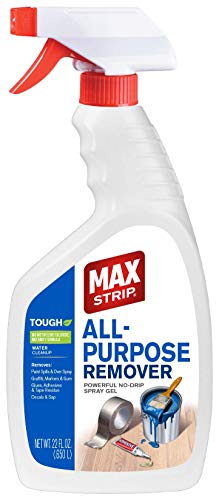
Max Strip All Purpose Paint Remover is a specialized spot-cleaning spray gel designed to tackle stubborn surface deposits that standard household cleaners cannot touch. Formulated specifically for lifting paint spills, overspray, marker stains, graffiti, adhesive residue, decals, gum, and tree sap, this 22 oz cleaner caters to DIYers, homeowners, and trade contractors alike. Whether you are dealing with errant roller splatter on a garage floor or tape residue along a tile border, this product focuses on localized stain removal without the logistical complexity of industrial-grade stripping chemicals.
The cleaning mechanism relies on a clinging spray gel that stays exactly where you apply it. Unlike thin liquid solvents that rapidly run down vertical walls or soak unpredictably into porous masonry, this gel maintains contact with the stain to break down the bond between the dried paint or adhesive and the underlying surface. The manufacturer outlines a simple dwell-and-scrape workflow: apply the gel liberally, inspect the treated area in 15-minute increments until the deposit softens, and gently lift the residue away using a manual scraper. This predictable approach gives users control over spot remediation on tough outdoor and workshop messes.
A major design advantage is the chemical formulation, which is completely free of caustic compounds like methylene chloride and N-Methyl-2-pyrrolidone (NMP). Traditional chemical strippers often release suffocating fumes that demand heavy-duty respirators and intensive room ventilation. Max Strip eliminates those harsh chemical odors, making it far more manageable to use in enclosed indoor areas, small basements, utility closets, or residential garages. While standard cleaning caution is always sensible, avoiding caustic vapors makes household cleanup noticeably less intimidating for first-time DIY users.
Surface compatibility is broad across sturdy structural materials, including concrete, brick, tile, stone, metal, glass, masonry, plaster, fiberglass, and bare wood. It is particularly helpful for lifting dried latex drips, adhesive backing, or spray paint from masonry and patio pavers. Additionally, the manufacturer notes that factory-finished coatings, such as original vehicle paint, remain unaffected by the formula. This specific tolerance allows vehicle owners to tackle exterior contaminants like tree sap or stubborn vinyl decals without degrading their automotive clear coat.
However, understanding the limitations of this cleaner is essential to avoiding costly household mistakes. Max Strip explicitly states that this product is not designed for aftermarket painted or varnished surfaces, meaning it can damage painted drywall, colored interior trim, and varnished hardwood floors. Furthermore, it is not intended for heavy furniture refinishing jobs that involve peeling back decades of layered lacquer or varnish; those deep restoration tasks require a dedicated multi-layer stripper. Users must also anticipate physical cleanup involving scrapers and wipe-down towels, as this is a dwell-based solvent rather than a fast-evaporating spray cleaner.
For homeowners, renters, and hobbyists needing an effective spot cleaner for garage floors, stone walkways, tiled utility rooms, or workshop tools, Max Strip All Purpose Paint Remover is a reliable and practical addition to the cleaning closet. Its lack of caustic fumes, clinging gel consistency, and multi-surface versatility make it an excellent choice for accidental paint drips, adhesive tag removal, and localized stain remediation where heavy chemical stripping would be hazardous overkill.
Max Strip All Purpose Paint Remover is formulated for safe use on a specific roster of hard surfaces including concrete, brick, ceramic or porcelain tile, natural stone, metal, glass, masonry, plaster, fiberglass, and unfinished bare wood. It provides a practical way to strip spray paint from concrete pathways or scrape dried grout haze and adhesive off hard flooring installations without causing etching.
The formula can also be used on cured, factory-finished coatings such as standard vehicle paintwork, making it useful for lifting tree sap, road tar, bumper stickers, and adhesive decals. However, it should never be applied to aftermarket painted surfaces, painted interior drywall, or finished hardwood flooring, as the active solvent will soften and lift varnishes, polyurethanes, and standard decorative wall paints.
To achieve the best results with Max Strip All Purpose Paint Remover, spray a uniform, generous layer of gel directly over the target spill, dried paint, or adhesive residue. Because the formula uses a thick gel base, it clings securely to vertical brick, metal posts, or wall plaster without immediately dripping down to clean surfaces below.
Allow the gel to dwell undisturbed while monitoring the spot every 15 minutes. Once the paint or glue has visibly softened or wrinkled, use a plastic or metal putty scraper to gently lift the softened residue away from the substrate. Wipe the area clean with a damp rag or sponge afterward to remove any lingering residue, ensuring the surface is completely clear of both the deposit and the remover gel.
Frequently Asked Questions
Can you use a paint stripper on interior fireplace brick?
Yes, non-caustic gel strippers without methylene chloride or NMP work well on interior fireplace brick. Formulas like Max Strip emit low VOCs and no harsh fumes, making them practical for enclosed living spaces. You apply the gel onto paint spots, let it dwell, and gently scrape it off before wiping with a damp sponge. Always lay a drop cloth on the hearth to catch softened debris.
How long should paint stripper dwell on exterior brick?
Most no-drip paint remover gels require a dwell time of 15 to 30 minutes. Checking the treated spot every 15 minutes reveals when the coating has softened enough for a scraper or stiff nylon brush. Clinging gel formulas stay active on porous masonry without drying out prematurely. Cooler weather or heavy buildup may require a slightly longer dwell before your final rinse.
Will chemical paint removers damage mortar joints?
No, mild biodegradable paint strippers will not degrade sound mortar joints when used as directed. Harsh caustic removers containing strong acids can etch lime-based mortar, but solvent-free alternatives keep joints intact. Avoid aggressive wire wheels or steel chisels during removal to prevent gouging soft joint profiles. A stiff nylon brush safely works loosened pigment out of textured joint lines.
Should you seal brick after stripping off paint?
Yes, applying a breathable water repellent after stripping paint protects exterior masonry exposed to driving rain. Once the surface is dry and free of chemical residue, treating the wall with protective exterior brick sealers prevents water intrusion while allowing moisture vapor to escape. Sealing bare brick minimizes freeze-thaw damage and helps prevent efflorescence salt deposits over time.
What is the %best paint stripper for brick% on vertical walls?
Gel-based spray removers serve as the %best paint stripper for brick% on vertical masonry because they cling without dripping. Liquid thinners quickly run off vertical facades before penetrating dried paint, creating uneven results. Clinging gels maintain consistent contact with paint films across the entire dwell period, making them the practical choice for chimneys and walls in 2026. If repainting later, prep bare masonry with quality exterior brick primers for masonry.




Write Your Review
No reviews yet. Be the first to share your experience!