


Porous exterior masonry constantly absorbs moisture and releases natural mineral salts that can quickly ruin a standard latex coating. Moisture vapor trapped behind impermeable film coatings causes blistered surfaces, flaking chips, and stubborn efflorescence deposits that degrade curb appeal. Selecting the best paint for brick house projects means prioritizing water repellency, strong adhesion on rough textures, and high alkali resistance. Many homeowners who refresh outdoor facades also evaluate the best white paint for brick to ensure solid hiding power across weathered clay or concrete blocks. A proper masonry coating preserves the structural texture of brick while forming a durable barrier against heavy rain and intense sun exposure.
Applying an exterior masonry coating requires balancing weather protection with simple surface preparation. High pH levels in cured mortar joints can easily break down ordinary house paints, making self-priming acrylic latex formulas and alkali-resistant coatings essential. Property owners frequently review manufacturer specifications and user feedback to find solutions that withstand outdoor exposure without peeling. Careful product selection protects your exterior brickwork while delivering an attractive, uniform finish that lasts for years.
Pros
- Blocks up to 12 PSI of water pressure on porous masonry and concrete surfaces.
- Fast recoat window of 4 hours with touch-dry status achieved in 1 hour.
- Low-odor formula makes it manageable to apply in enclosed basement spaces.
- Alkali-resistant barrier holds up well against persistent moisture and mineral seepage.
Cons
- Not formulated for floors, stairs, or any horizontal foot-traffic surfaces.
- Cannot be applied over active water leaks and requires prior patching with hydraulic cement.
- Requires a full 7 to 14 day cure time to achieve maximum washability and durability.
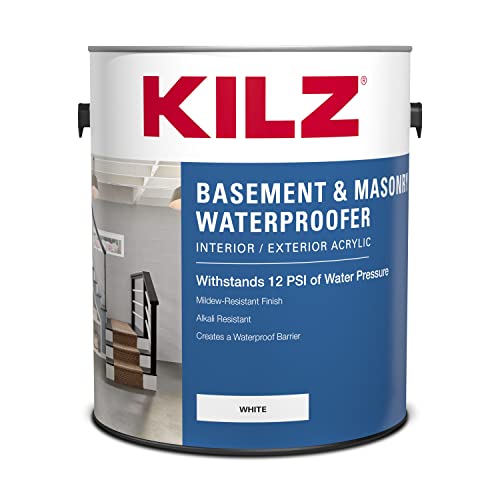
KILZ Basement and Masonry Waterproofing Paint in white is a heavy-bodied liquid coating designed for American homeowners and property managers dealing with damp vertical masonry. It is specifically formulated for porous substrates such as cinder block, concrete, brick, and stucco. Rather than acting as a simple cosmetic paint, this specialized barrier is intended for basement perimeters, retaining walls, and foundation blocks that regularly encounter moisture vapor and hydrostatic pressure.
Moisture control is the primary function of this coating, backed by nanotechnology that helps create a tight barrier against water penetration. The manufacturer rates this formula to withstand up to 12 PSI of water pressure, which assists in keeping minor groundwater seepage from migrating through foundation walls. In addition to stopping liquid transfer, the paint is alkali resistant, preventing mineral salts and efflorescence from lifting the finish off the wall prematurely.
Indoor usability is supported by a low-odor formulation that minimizes strong chemical fumes during application in enclosed basement areas. It dries to the touch within 1 hour, allowing a recommended second coat to be rolled or brushed on after 4 hours. Once applied, the surface takes between 7 and 14 days to cure fully, after which it forms a tough, washable white coating that can be wiped clean during routine room upkeep.
Proper surface preparation is mandatory to achieve the manufacturer-stated water barrier performance. Below-grade installations require all cracks, joints, and spalled holes to be patched with hydraulic cement before painting begins. The manufacturer also explicitly states that this paint is not for use on floors or on walls with active water leaks. It is strictly a vertical masonry wall coating and cannot withstand walking traffic, vehicle tires, or pressurized rushing water.
Understanding these practical limitations helps ensure successful moisture management. Homeowners seeking to seal concrete basement floors, garage slabs, or patios will need a dedicated floor epoxy or concrete floor sealer instead. Furthermore, if a basement wall is currently weeping water, that active flow must be stopped and the surface allowed to dry before applying this paint.
For homeowners, DIY renovators, and landlords looking to brighten damp basement spaces and halt wall dampness, KILZ Basement and Masonry Waterproofing Paint provides dependable moisture resistance. When paired with proper crack patching and applied strictly to vertical concrete or cinder block walls, it delivers a durable, clean white barrier that holds up well against tough masonry conditions.
KILZ Basement and Masonry Waterproofing Paint is formulated exclusively for porous vertical masonry surfaces both indoors and outdoors. Supported substrates include concrete blocks, cinder blocks, poured concrete walls, brick, stucco, and exterior masonry retaining walls. It creates an effective barrier against ambient dampness and subterranean moisture when applied over clean, sound masonry.
Manufacturer instructions strictly exclude this product from floor applications. It lacks the abrasion resistance required for foot traffic, furniture movement, or vehicle tires, meaning it should never be rolled onto basement slabs, garage floors, or patios. Additionally, it cannot be applied over active, running water leaks; any active water intrusion must be mitigated and cracks sealed with hydraulic cement prior to application.
Application of this waterproofing paint is straightforward thanks to its low-odor consistency, which is especially beneficial when working in enclosed basement areas with limited natural ventilation. The paint dries to the touch in approximately 1 hour under standard conditions, and a secondary coat can be applied after 4 hours to ensure thorough pinhole coverage on rough masonry.
Full film performance requires a cure period of 7 to 14 days. During this curing window, the nanotechnology barrier cross-links to achieve its rated 12 PSI water-pressure resistance and alkali resistance. Once cured, the decorative white surface is fully washable, allowing homeowners to clean off dust, cobwebs, and surface dirt without compromising the waterproofing film.

Pros
- Self-priming capability reduces project steps on clean, sound masonry
- Alkali resistance up to pH 12.0 helps avoid bonding failures on alkaline surfaces
- Simple soap-and-water cleanup makes post-application maintenance straightforward
- Flat finish delivers uniform gray coverage while maintaining the natural texture of the brick or stucco
Cons
- Porous or heavily textured brick can significantly lower coverage toward the 250 square feet per gallon mark
- Substrate requires thorough prior cleaning and preparation to ensure proper adhesion
- Specific dry and recoat times are not detailed on the primary packaging label and must be verified
KILZ Self-Priming Masonry, Stucco and Brick Paint in flat gray is a water-based acrylic latex coating engineered for both interior and exterior architectural surfaces. This product suits homeowners, landlords, and DIY renovators seeking to refresh weathered exterior brick, update an interior fireplace surround, or coat exterior stucco walls. By integrating primer and paint into a single formula, it eliminates the requirement for a separate masonry primer on sound, properly prepared surfaces.
Designed to accentuate existing surface textures while providing a uniform, natural look, this paint offers solid hiding properties and dependable water repellency. A notable performance feature highlighted in the product specifications is its alkali resistance up to pH 12.0. This characteristic is particularly valuable when coating masonry substrates, concrete, or stucco where residual surface alkalinity might otherwise degrade conventional acrylic coatings or compromise long-term adhesion.
The product comes packaged in a standard one-gallon container (128 fluid ounces) with a gross weight of approximately 11.4 pounds. As a water-based acrylic latex paint, it applies with low drag and provides a flat gray sheen. The manufacturer specifies a coverage range between 250 and 400 square feet per gallon. Smoother surfaces like interior drywall or dense masonry lean toward the higher end of the spread rate, whereas rough brick, split-face block, or deeply textured stucco naturally absorb more coating and reduce yield toward the lower estimate.
Application is versatile, allowing users to apply the paint using a brush, roller, or paint sprayer depending on the size and texture of the masonry. Prior to application, surfaces must be properly prepared, clean, and free of loose debris, chalk, or peeling materials. Because this is a water-borne latex formulation, tool cleanup and accidental overspray management require only warm water and mild soap, bypassing the need for mineral spirits or harsh chemical thinners.
While this paint offers built-in water repellency and self-priming convenience, buyers should keep several practical limitations in mind. It is a decorative and protective surface coating rather than a penetrating clear sealer or structural masonry repair mortar. It will not bridge structural cracks or resolve chronic moisture intrusion behind walls. Furthermore, heavily porous, weathered brick will consume substantially more product, so planning for the lower end of the coverage estimate is recommended for coarse textures.
For property owners wanting an accessible, all-in-one gray masonry finish that preserves the tactile texture of brick and stucco, KILZ Self-Priming Masonry Paint represents a practical, budget-conscious choice. Its alkali resistance up to pH 12.0 and water-repellent properties provide reassuring durability across diverse interior and exterior projects. Just ensure the masonry is thoroughly cleaned and fully prepared before application to achieve the best bond.
According to manufacturer specifications, this self-priming paint is formulated for use across both smooth and textured building materials. Supported interior and exterior surfaces include brick, stucco, smooth and rough masonry, concrete, tile, and drywall.
The formula is specifically designed to accentuate the profile of textured substrates without creating an unnatural plastic sheen. To ensure maximum adhesion across all supported substrates, surfaces must be properly prepared, clean, and dry prior to paint application.
KILZ Self-Priming Masonry Paint covers approximately 250 to 400 square feet per gallon. The exact coverage rate depends largely on substrate porosity, texture depth, and application thickness. Highly porous brick and rough-cast stucco will require more material than smooth drywall or dense concrete.
Users can apply this acrylic latex paint using standard painting equipment including brushes, rollers, or sprayers. Once the application is complete, brushes, rollers, and equipment clean up quickly using ordinary household soap and warm water.

Pros
- Complete makeover kit includes necessary painting tools, reducing extra trips to the home improvement store
- Versatile water-based formula supports custom 10% to 20% water dilution for tailored whitewash transparency
- Low-odor and non-toxic formulation makes it practical for occupied living rooms, family rooms, and bedrooms
- Multi-surface compatibility covers interior brick walls, outdoor concrete, and natural stone structures
Cons
- The 16-fluid-ounce container covers a limited surface area and may require multiple bottles for large fireplaces or full accent walls
- Whitewash dilution requires trial spot-testing on an inconspicuous brick area to ensure proper absorption and appearance
- Offered specifically in white, which limits options for homeowners seeking off-white, gray, or darker masonry color tones
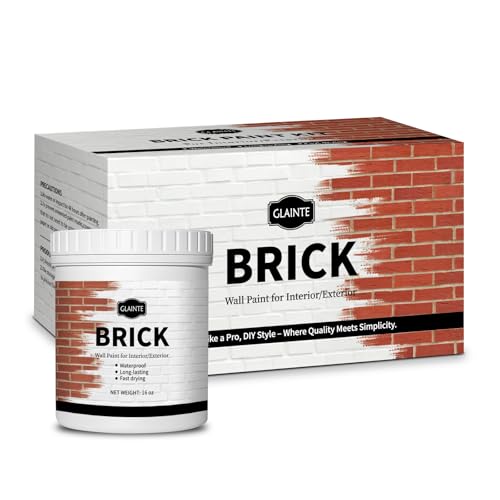
The Mollor 16oz Brick Paint and Fireplace Makeover Kit is a specialized, water-based masonry coating system designed for homeowners looking to modernize red, smoke-stained, or dated brick fireplaces. Instead of requiring extensive mechanical grinding or harsh chemical strippers, this all-in-one package provides a pigment-rich white finish formulated for hearth surrounds, accent brick walls, and concrete features throughout American homes.
Designed specifically to bond with rough, porous masonry textures, the paint adheres tightly to interior brick, stone, and exterior concrete surfaces. The water-based formula is low-odor, making it particularly suitable for living rooms, dens, and enclosed spaces where strong solvent odors are undesirable. In addition to serving as a full-coverage opaque white coating, it offers adjustable transparency; users can blend the paint with 10% to 20% clean water to achieve an airy whitewash or limewash aesthetic without obscuring the natural texture of the masonry.
Mollor packages this makeover solution with a complete set of DIY painting tools, eliminating the need to source separate brushes or application accessories before starting a project. The paint relies on a masonry-friendly binder engineered to resist peeling, flaking, and fading. While formulated primarily for indoor hearth updates, the coating is also resilient enough for exterior exposure, designed by the manufacturer to withstand outdoor moisture, heavy downpours, and UV exposure on patio brick or foundation concrete.
Because masonry surfaces vary drastically in porosity and previous exposure, proper surface preparation and testing remain essential. The manufacturer strongly recommends spot-testing an inconspicuous brick section prior to full application to evaluate absorption rates and final transparency. With a 16-fluid-ounce volume, a single container is ideal for standard fireplace facings, single hearth surrounds, or small accent borders, while expansive multi-story chimney stacks or wide exterior facades will require multiple kits.
For apartment renters with landlord approval, condo dwellers, or suburban homeowners tackling a weekend hearth refresh, the Mollor Brick Paint Kit offers an accessible and low-mess solution. It provides a simple path to transforming weathered brick surfaces without specialized contracting tools, delivering clean, updated visual appeal to home masonry.
The Mollor Brick Paint formula provides adaptable opacity based on the aesthetic requirements of the room. Applied straight from the container, the pigment-dense white paint produces solid, opaque coverage that completely covers dark red, orange, or soot-darkened brick surfaces.
For homeowners who prefer a distressed, farmhouse, or translucent German smear appearance, the paint can be diluted with 10% to 20% clean tap water. This dilution allows the undertones and textural details of the brick to show through while softening the overall contrast. Applying the diluted mixture with the included tools and lightly dabbing with a damp cloth allows for controllable distress levels across the entire hearth.
This coating is formulated for rough, porous masonry surfaces including standard kiln-fired brick, unpolished natural stone, poured concrete, and cinder block structures. Its tight adhesion profile locks directly into porous substrates without the need for mechanical grinding or heavy surface etching.
While suitable for interior fireplace surrounds and exterior masonry structures, it is intended for decorative vertical masonry and hearth borders rather than direct firebox interiors exposed to active flames. Ensuring the brick is clean, dry, and free of loose mortar or oily soot residues before painting will yield the cleanest bond and longest-lasting finish.

Pros
- Self-priming design minimizes prep time by eliminating the need for a separate masonry primer coat
- Alkali resistance up to pH 12.0 provides strong adhesion over challenging concrete and stucco surfaces
- Water-base acrylic latex cleans up quickly with standard household soap and water
- Accommodates brush, roller, or sprayer application for flexible project workflows
Cons
- Coverage drops toward 250 square feet on rough, unsealed, or highly porous masonry substrates
- Requires thorough surface prep and clean substrates to maintain proper adhesion and water repellency
KILZ Self-Priming Masonry, Stucco and Brick Paint in Tan is a water-base acrylic latex coating tailored for homeowners, DIY renovators, and property managers working on mineral and textured surfaces. Whether you are refreshing weathered outdoor brickwork, updating a stucco facade, or coating interior accent masonry, this formula combines priming and finish coats into a single product. It provides a flat tan finish designed to accentuate natural surface textures without leaving an artificial sheen.
Formulated specifically for challenging mineral substrates, this paint features alkali resistance up to pH 12.0. This characteristic is particularly important for fresh or high-alkaline masonry, concrete, and stucco where standard latex paints often fail or blister. The acrylic latex base provides water repellency and strong hiding properties, helping to mask minor surface imperfections while protecting vertical and textured surfaces from moisture intrusion.
In practical application, this 1-gallon can offers versatile handling across multiple application methods, allowing users to apply it via roller, brush, or airless paint sprayer. The listed coverage spans 250 to 400 square feet per gallon. Smoother, sealed surfaces like drywall or previously painted brick will yield coverage closer to the 400-square-foot mark, whereas rough, porous stucco or rough-cast brick will absorb more product and stay near the 250-square-foot range.
Cleanliness and maintenance during project workflow remain straightforward due to the water-base formula. Brushes, roller covers, and sprayer nozzles clean up easily with warm water and mild soap, avoiding the harsh chemical solvents required by oil-base masonry sealers. Proper surface preparation remains vital before application, requiring dry, clean, and properly prepared masonry, stucco, brick, or concrete surfaces to secure dependable adhesion.
As with any specialized masonry coating, realistic limitations apply. Because coverage varies significantly with substrate porosity, larger projects or highly textured exterior walls may require additional gallons. While the formula lists tile and concrete suitability, high-abrasion horizontal surfaces such as garage floors or driveways require dedicated traffic-rated floor coatings rather than a flat wall paint.
For American households tackling interior fireplace surrounds, exterior stucco accents, basement foundation walls, or brick siding, this 1-gallon can of KILZ Masonry, Stucco and Brick Paint offers practical value and user-friendly application. Its built-in primer, water repellency, and pH 12.0 alkali resistance make it a reliable choice for long-term surface protection and clean, flat aesthetics.
This formula is engineered specifically for properly prepared masonry substrates, including rough and smooth stucco, exterior brick, interior drywall, concrete, and tile surfaces. Its self-priming capability allows direct application onto clean mineral materials without requiring a separate bonding coat.
Substrate texture plays a direct role in coverage and absorption. Smooth interior drywall or pre-sealed masonry achieves maximum coverage up to 400 square feet per gallon, whereas rough, porous stucco or textured brick absorbs significantly more paint, reducing total spread closer to 250 square feet per gallon.
Application versatility is a major benefit of this water-base coating. DIY users and contractors can apply the product using standard synthetic bristle brushes, masonry roller naps, or airless spray systems depending on project scale and surface contours.
Cleanup requires no harsh chemical thinners or mineral spirits. Tools, equipment, and incidental splatters wash clean easily with standard household soap and warm water, making post-project cleanup fast and convenient for residential users.
Pros
- Self-priming and self-sealing all-in-one formula streamlines application on porous masonry
- Water-dilutable composition lets you control whitewash opacity and highlight natural brick texture
- Low-odor, low-VOC water-based formula works comfortably on indoor fireplaces and outdoor walls
- Delivers a smooth, uniform matte white finish without excessive shine or plastic sheen
Cons
- Quart container size requires multiple cans for large exterior walls or extensive brick projects
- Specific square-foot coverage rates and exact dry times are not listed on the basic packaging
- Requires manual dilution testing to dial in your preferred balance of brick transparency and white pigment
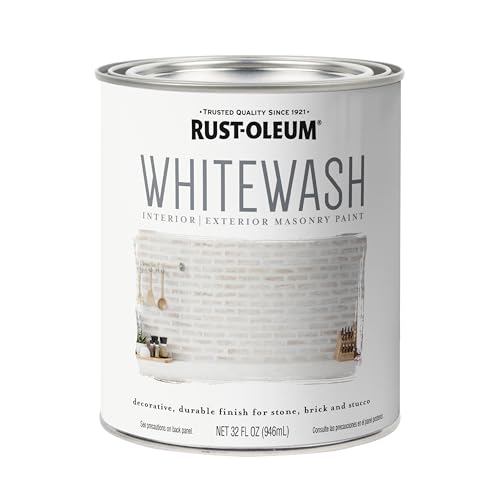
Rust-Oleum Whitewash Interior and Exterior Masonry Paint is a specialized coating designed to refresh porous architectural surfaces while retaining their natural underlying texture. Formulated for brick, stone, stucco, and wood, this water-based product caters to homeowners, DIY renovators, and property managers looking to brighten outdated brickwork without creating an artificial, heavy plastic appearance. Its primary appeal lies in decorative masonry transformations, particularly on interior fireplace surrounds, accent walls, and exterior masonry features.
The core functional benefit of this formula is its customizable coverage. Because it can be diluted with water, users can adjust the transparency from a subtle, translucent wash that lets brick color variations peek through to a more opaque, solid look. The manufacturer lists the formula as self-priming and self-sealing, which eliminates the need to purchase separate primer coats or protective sealers for compatible porous surfaces. Furthermore, it cures to a smooth matte finish, preserving the authentic rustic character of masonry rather than introducing an unwanted gloss.
Packaged in a standard 1-quart can, the coating features a low-odor and low-VOC water-based chemistry. This profile makes it practical for occupied interior spaces, such as living room hearths, where strong chemical fumes would be disruptive. At the same time, the formula is rated for exterior exposures, providing aesthetic flexibility for outdoor stucco surfaces, brick columns, and garden walls. Because it is water-based, cleanup requires only standard water, avoiding the harsh solvents associated with traditional oil-based masonry paints.
Successful results on porous brick and masonry depend on careful surface preparation and deliberate dilution control. Surfaces must be clean, stable, and dry before application to ensure uniform adhesion across porous brick pores and mortar lines. If you desire a traditional whitewashed appearance, testing small diluted batches on an inconspicuous brick area or a spare sample board is recommended to establish your preferred water-to-paint ratio before tackling prominent focal points.
This product also has practical limitations to keep in mind. A 1-quart container provides limited volume, making it best suited for targeted accents rather than entire exterior building envelopes unless purchased in larger quantities. While the manufacturer identifies it as self-priming and self-sealing, it is a decorative whitewash paint rather than a structural mortar repair or a heavy-duty penetrating water repellent for moisture intrusion issues. Additionally, exact square-foot coverage rates and precise recoat intervals are not provided on the primary product sheet, so project planning requires conservative estimations based on substrate porosity.
For property owners and DIYers who want to soften the harsh tones of indoor fireplace brick, stone accents, or outdoor stucco, Rust-Oleum Whitewash Masonry Paint provides an accessible, all-in-one solution. Its dilutable water-based formulation, low odor, and clean matte finish make it an attractive option for decorative masonry makeovers that keep natural surface textures front and center.
Rust-Oleum Whitewash Masonry Paint is formulated for highly porous surfaces, making it compatible with brick, stone, stucco, and wood. It can be applied across both interior and exterior architectural elements.
Because it is designed to let natural surface texture show through, it is particularly suitable for irregular masonry surfaces such as fireplace surrounds, accent walls, and textured stucco facades.
This whitewash paint cures to a smooth, matte white finish that avoids artificial gloss or high-sheen reflection. The flat appearance helps maintain the rustic, architectural look of exposed brickwork and masonry.
Coverage is customizable by adding water, allowing users to choose between a semi-transparent antique wash that reveals the underlying brick tones or a more opaque white coating.
The formula can be applied straight from the container or diluted with clean water to reach the desired transparency and whitewash effect. Preparing a small test batch on an inconspicuous brick or sample surface helps dial in the exact water ratio before full application.
As a water-based product with an all-in-one self-priming and self-sealing design, it streamlines application and cleans up easily with water after project completion.

Pros
- Self-priming capability eliminates the need for a separate primer on properly prepared masonry and brick
- Formulated with alkali resistance up to pH 12.0 and water repellency to withstand challenging masonry conditions
- Supports rolling, brushing, and spraying application methods for versatile project handling
- Water-based formula enables quick and easy cleanup using standard soap and water
Cons
- Square-foot coverage varies significantly (250 to 400 square feet) depending on surface porosity and texture roughness
- Flat finish may show scuffs and surface dirt more readily in high-traffic indoor areas than glossier sheens
- Requires thorough surface prep on dirty or chalky masonry to achieve proper bonding and hiding
KILZ Self-Priming Masonry, Stucco, and Brick Paint is a specialized acrylic latex coating formulated to seal, protect, and brighten interior and exterior textured substrates. Designed for homeowners, property managers, and DIYers maintaining porous mineral surfaces, this one-gallon coating provides an all-in-one primer and paint solution. It is especially suited for refreshing unfinished basement perimeter walls, exterior foundation stucco, patio brickwork, concrete steps, and fireplace masonry without requiring multiple separate primers.
Substrate compatibility is a primary strength of this formulation. The manufacturer specifies compatibility with smooth, rough, and textured masonry, brick, stucco, drywall, and tile surfaces. A standout functional specification is its alkali resistance up to pH 12.0, which helps resist the chemical lifting, blistering, and efflorescence degradation that often damage standard paints when applied over fresh or alkaline cement-based materials. Additionally, the built-in water-repellency properties help shed moisture on exterior facades and prevent liquid penetration across textured indoor surfaces.
Application flexibility allows users to apply the paint via roller, brush, or airless paint sprayer depending on the nature of the project. The 128-fluid-ounce can yields a manufacturer-stated coverage rating of 250 to 400 square feet per gallon. Smoother interior drywall or prepared masonry will achieve coverage closer to the higher end of that spectrum, while rough-cast stucco or porous split-face brick will naturally absorb more paint toward the 250-square-foot mark. The flat white finish is intentionally engineered to accentuate surface texture rather than fill it in, preserving the authentic architectural appearance of brick and masonry work.
Maintenance and cleanup are straightforward because the coating relies on an acrylic latex, water-based carrier. Tools, roller covers, brushes, and spray equipment wash clean with basic soap and warm water, eliminating the need for mineral spirits or harsh solvent cleaners. Once fully cured, the flat white surface provides a clean, glare-free aesthetic that brightens dimly lit utility spaces, crawlspaces, and basement areas while holding up against exterior weather exposure.
There are practical limitations to keep in mind before starting a project. While the self-priming formulation reduces prep steps on sound surfaces, thorough surface preparation remains essential. Loose mortar, efflorescence, peeling coatings, or slick non-porous tile glazes require appropriate cleaning, scraping, or etching prior to painting to ensure proper bonding. Furthermore, because a flat sheen has a matte texture, it does not clean as effortlessly as semi-gloss enamel when exposed to heavy indoor scuff marks or grease splashes.
For households looking to refresh, seal, and protect masonry, stucco, concrete, or brick surfaces, KILZ Self-Priming Masonry, Stucco, and Brick Paint provides reliable, cost-effective performance. Its combination of water repellency, alkali resistance up to pH 12.0, wide application versatility, and simple soap-and-water cleanup makes it a dependable coating choice for routine home maintenance and renovation projects.
This KILZ formulation is engineered for broad compatibility across textured and smooth mineral substrates. Supported surfaces include smooth, rough, and textured masonry, stucco, brick, drywall, and tile. Its resistance to alkaline conditions up to pH 12.0 makes it particularly suitable for cement-rich surfaces that can degrade standard acrylic wall paints.
Coverage estimates range from 250 to 400 square feet per 1-gallon container. Actual spread rates depend heavily on substrate porosity, with rough exterior stucco and unsealed concrete block requiring more paint than dense brick or smooth drywall surfaces.
Frequently Asked Questions
Can you use regular exterior acrylic paint on exterior brick?
No, standard exterior paint should not be applied to bare exterior brick without a dedicated masonry primer or a self-priming masonry formulation. Porous clay brick contains soluble salts and alkaline mortar that degrade ordinary film coatings over time. Masonry formulas like KILZ Self-Priming Masonry Paint resist high alkali levels up to pH 12.0 to maintain adhesion. Choosing dedicated products prevents moisture blisters and flaking along textured mortar joints.
How much paint coverage can you expect per gallon on textured brick?
Most masonry coatings deliver between 250 and 400 square feet of coverage per gallon on properly prepared surfaces. Deeply textured mortar joints and rough brick faces absorb substantially more liquid, lowering the actual yield closer to the 250-square-foot mark. Planning extra quantity ensures thorough coverage when rolling or spraying porous exterior facades. Diluting specialized formulas like Rust-Oleum Whitewash can alter coverage depending on whether you want a solid or semi-transparent finish.
What is the difference between waterproofing paint and standard water-repellent masonry paint?
Waterproofing paints block active water pressure, while water-repellent masonry paints shield exterior surfaces against surface rain and moisture intrusion. Products like KILZ Basement and Masonry Waterproofing Paint resist water pressure up to 12 PSI, making them suitable for retaining walls and foundation masonry. Standard acrylic latex masonry paints offer surface water repellency while retaining enough flexibility for temperature shifts. For indoor fireplace brick or vertical accents, homeowners often evaluate dedicated interior brick wall sealers instead of heavy waterproofing barriers.
Do you need to prime exterior brick before applying masonry paint?
It depends on the formulation of the masonry paint you select. Self-priming masonry paints eliminate the separate primer step by incorporating specialized bonding agents that lock directly onto porous stone, stucco, and brick. If you use non-priming exterior coatings, applying an alkali-resistant masonry primer is necessary to prevent premature peeling. Proper surface cleaning and crack repair before painting remain essential regardless of whether a primer is integrated.
Can you dilute masonry paint for a whitewashed or semi-transparent look?
Yes, several water-based masonry and fireplace paints allow water dilution to create semi-transparent whitewash effects. Formulations like Mollor 16oz Brick Paint recommend blending 10% to 20% clean water to lighten the opacity while showcasing natural brick texture. Testing diluted mixtures on an inconspicuous masonry spot helps verify the transparency level before coating broad wall sections. Pairing a subtle wash with curated exterior accent colors for brick homes creates a balanced visual contrast.
How long does masonry paint take to dry and fully cure?
Most water-based masonry coatings dry to the touch in 1 to 4 hours, but full curing typically takes between 7 and 14 days. Recoat windows usually open after 4 hours under moderate humidity and mild temperatures. Rain, heavy frost, or high humidity during the initial cure window can soften the binder and compromise water resistance. Allowing adequate cure time ensures the coating achieves maximum washability and alkali resistance.




Write Your Review
No reviews yet. Be the first to share your experience!