


Heavy foot traffic quickly crushes synthetic carpets, leaving dull walkways and frustrating pile distortion across main living areas. Natural plant fibers provide an earthy alternative, offering dense structural stability that stands up to daily household movement without losing its organic charm. Selecting the best jute area rug allows you to introduce warm texture into living rooms, dining spaces, or busy entryways while maintaining a grounded, durable floor surface. Flatweave and looped plant profiles handle furniture weight reliably, giving rooms an inviting aesthetic that synthetic weaves rarely match.
Surface thickness and weave structure dictate how well these plant textiles fit beneath interior doors and furniture bases. A low-profile 0.35-inch flatweave slides neatly under low clearance thresholds, whereas a chunky three-quarter-inch looped weave delivers distinct underfoot texture in open seating zones. Pairing either construction with a supportive rug pad prevents shifting on smooth subfloors while cushioning the natural fibers against premature friction wear. Evaluating doorway clearances, expected foot traffic, and specific room dimensions helps secure the ideal balance of comfort, durability, and practical everyday maintenance.
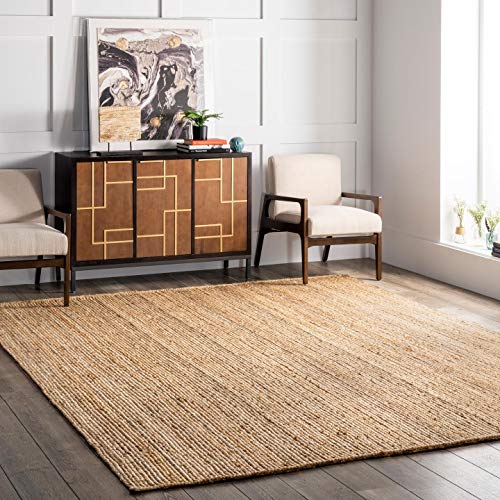
Pros
- Slim 0.35-inch flatweave thickness allows easy clearance under swinging doors and low-profile furniture
- Made of 100% natural jute fiber for an earthy, neutral look that complements various floor surfaces
- Generous 6 by 9 foot rectangular dimensions cover substantial living room, dining, or entryway space
- Straightforward routine maintenance using low-suction dry vacuuming or handheld attachments
Cons
- Requires low suction or attachment-only vacuuming to prevent aggressive motorized beater bars from pulling natural fibers
- Lacks an integrated non-skid backing, requiring a separate rug pad to prevent slipping on smooth floors
- Not compatible with wet extraction carpet cleaners, steam mops, or heavy liquid saturations
The nuLOOM Rigo Natural Solid Flatweave Area Rug is a 6-foot by 9-foot floor covering woven from 100% natural jute in India. Designed for high-traffic gathering spaces such as living rooms, dining rooms, kitchens, and hallways, this rectangular rug provides an organic, neutral foundation that complements hardwood, tile, or laminate flooring. With a manufacturer-listed thickness of roughly 0.35 inches, it sits low to the floor, making it an appealing option for homeowners and apartment dwellers who want area coverage without creating high tripping edges or obstructing interior doors.
Routine floor care for this natural fiber rug centers on gentle dry vacuuming. Manufacturer instructions state that households should vacuum the rug one to two times per week on the lowest suction setting, or by using a handheld vacuum tool. This approach removes tracked-in grit, everyday crumbs, and loose dust without aggressively tugging at the woven jute strands. For localized spills or spots, the manufacturer advises spot cleaning with mild detergent and a damp cloth rather than using saturated liquid extraction machines.
Weighing 25 pounds, the rug offers solid physical substance that helps it settle evenly over flat surfaces. The flatweave design balances visual texture with everyday resilience across common household traffic zones. Because natural jute fibers are inherently firm underfoot, pairing the rug with an underlying rug pad is strongly recommended by the manufacturer. A quality pad introduces extra cushioning, prevents shifting on slick hard floors, and creates a protective buffer that minimizes friction between the rug backing and the floor finish.
Setup and everyday room integration are straightforward thanks to the 108-inch by 72-inch rectangular footprint. The slim edge profile slides smoothly underneath dining room chairs, coffee tables, and couch legs without creating uneven wobbles. However, because the flatweave backing does not have built-in rubberized grips, using a dedicated non-slip pad is essential to keep the rug safely anchored in high-traffic hallways and active family spaces.
Buyers should keep natural fiber maintenance boundaries in mind. Jute is susceptible to moisture retention, which means carpet shampooers, wet-dry extractors, and steam cleaners must be avoided to prevent fiber damage, staining, or warping. Furthermore, standard upright vacuum cleaners equipped with stiff, motorized brush rolls should not be run over the weave on high agitation settings, as they can cause premature fraying and fiber shedding.
For households seeking a warm, organic accent to tie together an open floor plan, the nuLOOM Rigo 6x9 flatweave area rug offers dependable style and solid everyday functionality. As long as you maintain it with gentle low-power vacuuming, address spills quickly with mild detergent, and place a protective pad underneath, it serves as a practical, handsome flooring solution for modern homes.
Routine care for the nuLOOM Rigo flatweave jute rug requires gentle debris removal rather than aggressive brush-roll agitation. The manufacturer recommends vacuuming the surface one to two times weekly on the lowest power suction level or using a handheld vacuum attachment to lift fine dirt and crumbs without pulling the woven fibers.
For liquid spills or localized spots, dab the affected spot promptly with a clean cloth and mild detergent. Heavy wet extraction, saturation cleaning, and steam mops should be strictly avoided, as natural jute absorbs liquids easily and can suffer watermarks or textural distortion if thoroughly soaked.
With an approximate profile of 0.35 inches, this 6-foot by 9-foot rug fits easily into living rooms, dining rooms, kitchens, and hallways where interior door clearance is a priority. The low-profile flatweave construction slips under dining chairs and coffee tables without bunching or creating raised trip hazards.
Because this 100% jute rug features an unbacked woven finish, the manufacturer specifically advises placing a separate rug pad underneath. A pad prevents shifting on slick hard floor surfaces, provides extra underfoot comfort, and protects both your flooring and the rug from everyday friction wear.

Pros
- Handwoven thick jute loop construction provides rich organic texture and visual warmth
- Generous 8x10 rectangular footprint covers spacious living rooms, dining spaces, or home office zones
- Neutral fiber color easily blends with coastal, rustic, cottage, and casual aesthetic themes
- Substantial 48-pound build helps the floor covering remain grounded across hard surfaces
Cons
- Vulnerable to water damage and requires strict avoidance of excess moisture and damp settings
- Cannot be cleaned with spinning vacuum beater bars or aggressive wet carpet shampoos
- Natural handwoven plant fibers feature expected variations in loop height and texture
The SAFAVIEH Natural Fiber Area Rug (model NF447A) is a large-format 8-foot by 10-foot floor covering handwoven from thick natural jute fibers. Designed with a chunky loop-woven construction, this rug serves homeowners, apartment dwellers, and home-office workers who want organic texture and understated styling in their primary living areas. Its natural, earthy tone complements coastal, cottage, rustic farmhouse, and casual contemporary interiors, providing broad decorative flexibility across larger open rooms.
In everyday living spaces, the rug offers a distinct tactile profile anchored by thick 3/4-inch jute loops and a total weight of 48 pounds. The substantial loop pile delivers textured dimension underfoot, though natural plant fibers feel firmer than synthetic plush or cut-pile carpets. Because natural jute fibers vary in thickness and elasticity, loop heights can differ across the surface, which is a normal characteristic of authentic handwoven floor textiles. A dedicated rug pad is strongly recommended under this rug to provide supplemental step cushioning, prevent shifting on smooth hard subfloors, and protect wood or tile finishes from fiber abrasion.
Maintenance for natural jute requires targeted, low-moisture care to maintain structural strength. Routine upkeep should be performed using a suction-only vacuum or a standard vacuum with the beater bar completely disengaged, as rotating brush heads can catch and fray the chunky loops. For unexpected spills, spot cleaning must be handled promptly with a clean, dry cloth. Moisture is a primary limitation for jute products; excess water weakens the plant fibers and can cause discoloration, meaning this rug is unsuitable for damp basements, bathrooms, or outdoor settings.
Setup is straightforward but requires patience as the rolled rug acclimates to the room. Upon arrival, the product may display temporary creases and curl marks from transit packaging. Laying the rug flat for several days or briefly reverse-rolling the tighter edges helps the thick weave relax into place. Because the 8x10 footprint spans 96 by 120 inches, staging furniture placement ahead of time helps position the rug smoothly without repeated dragging across subfloor surfaces.
For buyers evaluating organic area rugs, the SAFAVIEH NF447A delivers authentic plant-fiber craftsmanship, substantial heft, and timeless neutral styling at a generous scale. While households needing stain-resistant synthetic fibers or water-washable options should look elsewhere, this chunky jute rug represents a practical and attractive choice for dry living rooms, home offices, and transitional sitting spaces.
This SAFAVIEH area rug is handwoven entirely from natural jute plant fibers, fashioned into thick, chunky loops that create a pronounced ribbed texture across the surface. Because jute is an organic crop, minor variations in fiber diameter, shading, and loop height are inherent to the hand-loomed weave rather than manufacturing flaws.
Natural jute brings an earthy, unrefined character to interior spaces, functioning well beneath wood, metal, and upholstered furniture. However, plant fibers naturally absorb atmospheric humidity and liquids, making them best suited for climate-controlled indoor rooms where spills and dampness are minimal.
Routine vacuuming without a beater bar is essential for preserving the handwoven jute loops. Rotating brushes and stiff vacuum agitators can pull at the woven fibers, leading to excessive fuzzing or unraveling of the thick loops over time.
Keep liquids away from the rug surface whenever possible, and treat localized spots using a dry cloth or blotting towel immediately upon contact. Do not use wet extraction machines, steam mops, or aggressive chemical detergents on natural jute, as excess moisture can permanently alter fiber texture and coloration.
Measuring 8 feet by 10 feet, this natural fiber rug is scaled for medium to large living rooms, master bedrooms, and home workspaces. Its casual, loop-woven profile coordinates with farmhouse, coastal, and transitional aesthetics while defining seating arrangements and work zones.
Avoid placing this jute rug in areas subject to direct moisture or water tracking, such as full bathrooms, open porches, mudrooms, or damp basements. For entryways and offices, pair the rug with a quality underlay pad to enhance foot traction and protect subflooring.
Floor Placement and Care: Best Jute Area Rug Insights
Rough plant fibers bring organic character to interior rooms, but navigating pile thickness, routine maintenance, and moisture exposure requires practical planning. Selecting the best jute area rug that matches your space means understanding everyday vacuuming methods, doorway clearances, and floor pad requirements.
How should you clean a natural jute area rug?
Vacuum your jute rug regularly using suction only without a beater bar, and immediately blot liquid spills with a dry cloth. Motorized brush rolls can fray handwoven loops and flatweave plant fibers over time. Excess moisture weakens plant strands, so avoid steam cleaning or liquid saturation. For stains elsewhere on synthetic carpets, homeowners often rely on dedicated spot cleaners, but natural jute requires dry blotting and mild detergent sparingly.
Do you need a rug pad under a jute area rug?
Yes, using a quality rug pad underneath your jute rug is essential to prevent slipping and protect your flooring. Jute rugs do not have built-in rubber backing, which allows them to slide across hard surfaces like wood or tile. A dedicated pad adds cushioning and stops coarse underside fibers from rubbing directly against floor finishes.
Can a jute area rug be used in high-moisture rooms or outdoors?
No, natural jute rugs are designed exclusively for dry indoor spaces and should never be used on outdoor patios or in humid bathrooms. Jute absorbs liquid and humidity quickly, which can cause fiber discoloration, structural breakdown, and water staining. Keep your rug in dry areas such as living rooms, dining rooms, hallways, and offices.
What is the difference between flatweave jute and chunky loop pile?
Flatweave jute rugs feature a low 0.35-inch thickness that easily clears swinging doors, while chunky loop weaves offer a thicker 0.75-inch pile with prominent texture. The nuLOOM Rigo flatweave provides a sleek profile suited for dining chairs and entryways. Meanwhile, the SAFAVIEH natural loop design delivers pronounced rustic texture for open seating areas.
How do you flatten packaging creases in a new jute rug?
Lay the rug flat in a warm room for several days, or briefly reverse-roll it to relax tight packaging tension. Coarse natural fibers take a short period to settle after being rolled for shipment. Placing flat weights or books on curled corners will flatten edges without harming the woven strands.


Write Your Review
No reviews yet. Be the first to share your experience!