


Critical Filtration Standards for Hazardous Dust Containment
Renovation projects involving historic buildings often release hazardous microscopic particles that quickly bypass standard domestic filters and recirculate into living areas. Unlike routine cleanup where a simple shop unit captures drywall chips or saw debris, handling mineral fibers requires fully sealed collection canisters, multi-stage interception, and individually verified filtration media. Exploring the best hepa vacuums for asbestos means identifying systems rated for critical abatement protocols rather than relying on standard commercial labels. This evaluation examines documented manufacturer specifications, waterlift ratings, cubic-feet-per-minute airflow, and tank designs to help you select compliant equipment for hazardous containment.
Contractors and property managers regularly face trade-offs between drum capacity and maneuverability when navigating confined remediation zones or multiple stories. Everyday cleanup tasks might rely on convenient cordless vacuums with extra batteries, but abatement machinery depends on continuous line power to maintain sustained vacuum lift under dense particulate loads. Heavy rotationally molded polyethylene drums provide durability against abrasive debris while multi-layer collection bags prevent fiber leakage during disposal. Our breakdown highlights listed certifications, included tooling packages, and bypass motor architectures to clarify what each unit provides out of the box.



Frequently Asked Questions
What differentiates a certified hazardous vacuum from a standard household unit?
A critical containment vacuum features an individually tested, serialized absolute HEPA filter capturing 99.97% of particles down to 0.3 microns, paired with a completely sealed housing. Standard residential machines, including popular upright vacuum cleaners, often permit fine microscopic particulate to vent past motor seals or seams back into the room. Hazardous models use airtight gaskets, multi-stage pre-filters, and drop-in micro-porous bags to keep dangerous mineral fibers securely inside the canister.
Can these critical HEPA vacuums collect both wet spills and dry debris?
Only models specifically designated as wet-dry extractors can safely handle liquid recovery alongside dry dust. For example, units like the Dustless Technologies D1606 and SOOTMASTER wet-dry vacuum are engineered to recover liquids and dry particles without requiring filter changes. Using a dedicated dry-only vacuum on liquid spills can destroy the absolute HEPA paper media and void the manufacturer warranty.
How does an automatic filter-cleaning feature benefit hazardous dust extraction?
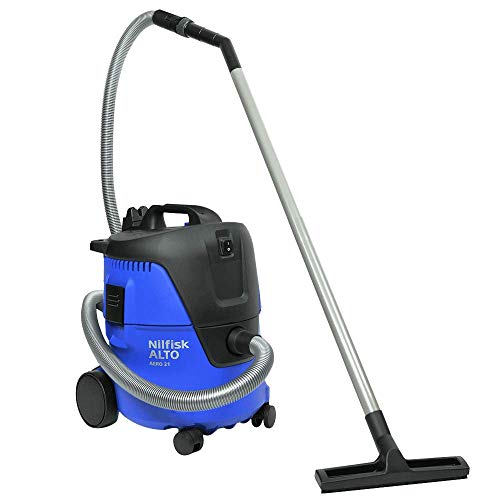
Automated filter cleaning systems sustain high airflow by clearing fine particulate off the filter media without requiring manual user intervention. Units such as the Starmix industrial extractor use electromagnetic pulses, while Nilfisk incorporates push-to-clean valves to reverse airflow through the pleats. This process prevents premature filter blinding and reduces exposure risks during lengthy remediation tasks.
Why are bypass motors essential for lead and asbestos remediation vacuums?
Bypass motors use separate cooling fans to protect the electrical motor windings from the vacuumed debris stream. Unlike flow-through motors found in lightweight self-emptying robotic vacuums or utility sweepers, bypass designs ensure that motor cooling air never mixes with contaminated collection air. This mechanical isolation maintains stable suction performance even when handling heavy particulate loads across extended shifts.
What tank size is ideal when evaluating 5-gallon and 15-gallon recovery canisters?
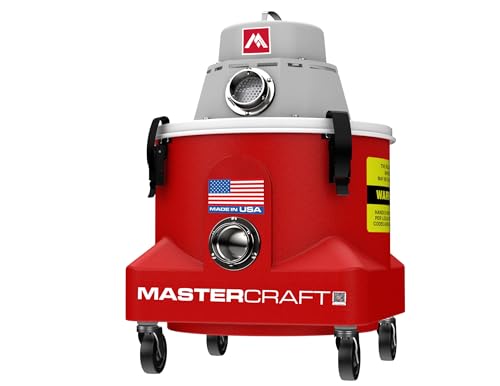
Canister capacity depends primarily on project scope, jobsite access, and decontamination protocols. Compact 5-gallon to 7-gallon tanks offer convenient transport through narrow hallways, stairwells, and tight residential rooms. Larger 10-gallon to 15-gallon recovery tanks allow longer operational cycles on commercial jobsites, reducing the frequency of hazardous bag disposal and seal inspections.



Write Your Review
No reviews yet. Be the first to share your experience!