


Stripping aged polyurethane, leveling uneven board seams, and removing decades of foot traffic require controlled mechanical power. Traditional drum units cut fast but can easily gouge softer wood fibers, whereas modern planetary heads and orbital buffers offer forgiving operation across delicate boards. Matching the appropriate abrasive mesh or driver plate to your specific floor condition prevents catastrophic cross-grain scratches. That is why sourcing the best floor sander for hardwood floors is critical whether you manage historic solid oak or modern engineered planks.
Heavy resurfacing equipment must balance aggressive coating removal with tight dust management and balanced weight distribution. Fastening replacement boards with a hardwood floor nailer solves structural movement, but a flat, chatter-free profile depends entirely on your sanding setup. Manufacturer specifications show that multi-head planetary sanders, variable-speed orbital polishers, and heavy-duty driver plates each handle distinct phases of the restoration sequence. Evaluating motor amperage, head rotation mechanics, and abrasive disc diameter ensures you strip stubborn wax and old finish without grinding away precious wear layers.
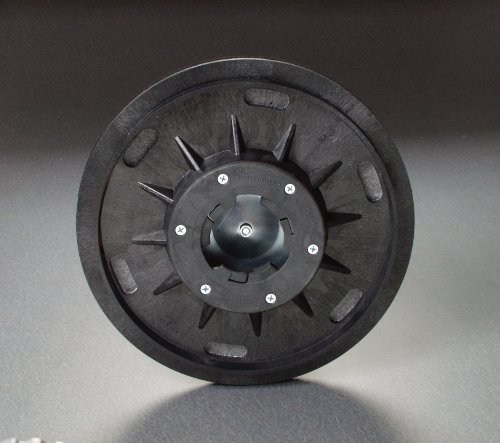
Pros
- Standard NP-9200 clutch plate fits a broad range of commercial and rental floor buffers
- Dedicated sandpaper gripping face helps prevent disc slippage during floor prep
- 16-inch size offers practical surface coverage for residential rooms and commercial spaces
- Sturdy construction built to withstand rotational torque from floor machines
Cons
- Requires a compatible rotary buffer with matching clutch plate specifications to operate
- This is an attachment driver only and does not include sandpaper discs or the floor machine itself
- Sanding applications require careful machine handling to avoid gouging floor surfaces
The Malish 16-Inch Economy Sandpaper Driver with NP-9200 Plate is a heavy-duty floor machine accessory designed specifically for abrasive floor care, screening, and sanding tasks. Unlike standard pad drivers meant for soft polishing pads or carpet bonnets, a dedicated sandpaper driver is engineered to interface directly with abrasive sanding paper and screening discs. This tool is best suited for DIY renovators, property managers, and flooring contractors who already own or rent a commercial rotary floor buffer and require a rugged, reliable driver plate for floor resurfacing projects.
In practical floor-care applications, this driver acts as the direct mechanical link between the rotary buffer motor and the abrasive medium. Whether preparing wood subfloors, screening existing finishes prior to recoating, or smoothing rough patches, the driver face provides the grip needed to hold sandpaper firmly in place under high rotational torque. By maintaining steady contact against the floor, it helps prevent discs from bunching, shifting, or tearing mid-project, which is essential for achieving an even, consistent scratch pattern across the working area.
Build quality is a focal point for Malish accessories, and this economy driver is constructed to handle the rigors of heavy floor maintenance. It comes pre-installed with the widely used NP-9200 clutch plate, which connects directly to the machine drive hub. The 16-inch diameter platform provides ample surface area, typically matching up well with 16-inch or 17-inch apron buffers. The durable base material resists moisture and friction heat, while the balanced profile minimizes machine vibration during extended operation.
Setting up the driver is straightforward. Operators simply align the NP-9200 clutch plate with the buffer drive hub and lock it into place using the machine standard twist-on motion. Abrasive sandpaper discs are then centered onto the bottom face. Routine maintenance involves inspecting the face for debris accumulation or wear and verifying that the NP-9200 plate hardware remains tightly secured to the driver block. Storing the driver flat when not in use helps preserve its shape and prevents warping.
A practical limitation is that this unit is strictly an accessory driver and requires an appropriate single-disc rotary machine to function. It does not include abrasive discs, and buyers must ensure their machine uses the NP-9200 mounting pattern before purchasing, as clutch plate configurations vary across floor buffer brands. Additionally, rotary sanding requires careful control, as an uneven hand or pausing in place can easily mar delicate floor surfaces.
For anyone undertaking serious floor prep, wood floor screening, or surface refinishing, the Malish 16-Inch Economy Sandpaper Driver with NP-9200 Plate is a practical, value-focused investment. It delivers the structural stability and trusted fit needed to tackle demanding abrasive floor work without having to pay premium prices for specialty attachments.
The Malish 16-Inch Sandpaper Driver comes standard with the NP-9200 clutch plate, making it compatible with many popular rotary floor machines that accept this universal-style mounting system. Checking your buffer drive lug pattern prior to purchase is always recommended to ensure proper fitment.
The 16-inch diameter base provides a balanced platform designed to spin smoothly under standard floor machine operating speeds. Its economy-tier design focuses on functional durability, offering reliable disc grip for heavy sanding, stripping, and screening applications without unnecessary complexity.

Pros
- Integrated 1 HP vacuum motor and rubber skirt contain fine airborne dust during aggressive sanding tasks.
- Belt-driven planetary 3-head design helps prevent gouging and delivers a smooth, consistent finish.
- Patented two-axis pivoting heads adjust naturally to minor floor height variations and cupped planks.
- Six-inch non-marking transport wheels allow straightforward mobility across job areas without scuffing bare wood.
- Quick-change tooling setup makes switching out abrasive grits and resurfacing attachments fast and simple.
Cons
- Heavy commercial-style build requires dedicated effort to transport, load, and store between projects.
- Dual high-horsepower electric motors demand dedicated circuit planning to prevent tripped breakers on residential wiring.
- Specialized exclusively for wood sanding and deck resurfacing tasks, making it unsuitable for routine household vacuuming or wet spill cleanup.
The Onfloor 16-Inch Wood Floor Sander with Integrated Vacuum is an industrial-grade resurfacing machine built for homeowners, property renovators, and flooring specialists undertaking serious wood floor restoration. Unlike standard floor buffers or basic rental drum sanders that throw fine dust into the air, this machine pairs a heavy-duty 1.5 HP sanding motor with a dedicated 1 HP on-board dust extraction vacuum. It is specifically intended for leveling, smoothing, and prepping worn solid hardwood floors and weathered exterior decking.
Sanding wood surfaces inevitably generates substantial fine debris, which makes the dual-motor design especially practical. The primary 1.5 HP motor operates a planetary 3-head sanding platform across a 16-inch path, while the bottom-mounted 1 HP dual-capacitor vacuum pulls dust directly from the active contact zone. A flexible perimeter rubber brush skirt seals against the floor to trap wood particles before they can become airborne, keeping residential living spaces and work areas significantly cleaner throughout the resurfacing process.
Mechanical performance relies on a belt-driven planetary configuration that distributes pressure evenly across three distinct tool heads. Drum sanders can easily leave deep gouges if paused for a second, but this planetary system rotates multiple heads in unison to promote a flat, forgiving cut. In addition, Onfloor equips the machine with a patented mounting system that permits the grinding heads to pivot across two independent axes. This mechanical flexibility allows the abrasive tooling to follow slight undulations, cupped deck boards, or crowning without digging uneven grooves into the lumber.
Job-site logistics and machine maintenance are well considered despite the heavy overall construction. The sander rides on 6-inch non-marking transport wheels, enabling operators to roll it smoothly across thresholds, subflooring, or finished decks without leaving track marks. Switching between coarse removal grits and finer finishing abrasives is handled via a quick-change tooling system that eliminates tedious teardown times. Both motors include dedicated safety mechanisms, with manual overload protection on the sander motor and thermal overheat protection on the vacuum drive.
Potential buyers should keep realistic expectations regarding its specialized footprint and power requirements. This is a heavy, single-purpose restoration tool and is not designed for everyday household vacuuming, wet mopping, or delicate floor finishes such as laminate or vinyl plank. Running dual heavy-duty motors simultaneously also requires access to robust residential electrical circuits and suitable heavy-gauge power cords to prevent nuisance breaker tripping.
For ambitious DIYers restoring historic wood floors or contractors requiring a balanced resurfacing platform with active dust management, the Onfloor 16-inch sander offers an effective balance of power and forgiveness. Its pivoting planetary head design minimizes surface damage, while the integrated vacuum significantly cuts down on post-project cleanup.
The core advantage of the Onfloor 16-inch platform lies in its specialized planetary sanding action, which provides a much more forgiving finish than traditional straight-line drum sanders. Because three independent tool heads rotate together on a belt-driven planetary axis, the machine resists tracking lines or gouging deeply into soft grain patterns on solid hardwood floors and exterior pressure-treated deck boards.
Uneven floorboards, crowning, and minor cupping are common obstacles in older homes and weathered outdoor decks. The patented multi-axis floating suspension allows each tool head to articulate along two axes, keeping consistent surface contact across uneven wood planks without requiring excessive downward operator pressure.
Whether removing stubborn exterior deck stains, stripping aged polyurethane, or flattening cupped oak planks, the 16-inch working width covers substantial floor area with each pass. The integrated quick-change system lets users rapidly transition through progressive abrasive grits, streamlining the entire resurfacing process from coarse leveling down to final finish preparation.
Airborne particulate control is handled by an integrated 1 HP vacuum motor mounted at the bottom of the collection tank. Designed with dual capacitors and internal thermal overheat protection, this auxiliary vacuum provides continuous extraction right at the cutting surface, pulling fine wood dust out of the work zone as soon as the abrasives generate it.
Containment around the 16-inch perimeter is maintained by a dense rubber brush skirt. This skirt rides directly along the floor, forming a dynamic barrier that holds dust within the vacuum stream and stops particles from escaping into household ductwork or surrounding rooms during intensive indoor sanding jobs.
The main sanding drive features a 1.5 HP motor protected by an accessible manual overload breaker to prevent electrical and mechanical damage under heavy loads. Combined with non-marking 6-inch transport wheels, this dual-motor setup delivers high-output surface preparation while keeping dust management fully self-contained on the machine.

Pros
- Powerful 1.5 HP (1100W) ECM motor with an adjustable 175 to 1950 RPM range for versatile scrubbing, stripping, and polishing
- Interchangeable compatibility with standard Oreck Orbiter pads and scrub brushes
- Complete cleaning kit right out of the box with three brushes, two pads, and a microfiber carpet bonnet
- Strong manufacturer coverage with a 5-year warranty on the motor and a 2-year warranty on other components
Cons
- At 39 pounds, lifting and carrying the machine up and down stairs requires significant physical effort
- Lacks an onboard solution tank, requiring users to manually apply cleaning solutions or dry compounds to floors
- Orbital motion at higher RPM settings requires careful pad selection to avoid scuffing softer flooring materials
The HHQ Commercial Floor Scrubber is a heavy-duty orbital floor machine engineered for homeowners, landlords, and property managers tackling demanding floor-care tasks. Operating on a 1.5 HP (1100-watt) ECM motor, this machine bridges the gap between lightweight consumer electric mops and heavy industrial floor buffers. It caters specifically to users dealing with neglected tile and grout lines, scuffed hardwood, dull natural stone, or soiled carpets who want to avoid back-breaking labor on hands and knees.
At the core of the machine is an orbital cleaning head that eliminates the difficult torque and pulling common to traditional rotary buffers. With multiple speed modes spanning from 175 to 1950 RPM, users can dial in the precise rotational intensity needed for specific chores. Lower speeds provide controlled scrubbing on delicate stone or shower pans, while higher RPM settings deliver the friction required to scrub, sand, wax, buff, and polish hardwood or strip built-up wax finishes from hard floors.
Surface compatibility is extensive, covering tile, grout, hardwood, vinyl, concrete, marble, travertine, shower pans, and dry-cleaned carpets. Rather than relying on wet extraction, carpet cleaning is achieved via dry maintenance using the included microfiber carpet bonnet, which prevents sticky detergent residues from causing rapid re-soiling. The complete kit includes a dedicated pad holder, three specialized scrub brushes, two stripping and polishing pads, and the carpet bonnet. Furthermore, because the drive system is compatible with Oreck Orbiter accessories, sourcing replacement or specialty pads remains simple and convenient.
Measuring 8.4 by 13 by 45 inches and weighing 39 pounds, this machine is deliberately heavy to generate the downward pressure essential for deep mechanical scrubbing. While the weight aids cleaning performance, rubber transport wheels allow users to roll the unit easily across flat thresholds between rooms. Operation is managed through accessible fingertip controls on the handle, helping maintain steady control during extended cleaning routines.
Potential buyers should keep a few practical considerations in mind. The 39-pound mass, while beneficial for surface agitation, can be cumbersome when lifting the unit across multiple staircases or navigating tight storage closets. Additionally, the unit does not incorporate onboard clean-water tanks or solution spray triggers, meaning cleaning concentrates, stripping solutions, or dry carpet powders must be applied manually to the floor before running the machine.
For high-traffic households, multi-surface homes, and DIY floor refinishers seeking commercial-grade agitation, the HHQ Floor Scrubber represents a versatile, hard-wearing investment. Supported by a 5-year manufacturer warranty on the motor and a 2-year warranty on all other components, this orbital machine delivers reliable mechanical power and long-term maintenance value for challenging restoration projects.
The HHQ floor scrubber ships with a well-rounded set of accessories designed to tackle diverse flooring projects without requiring immediate add-on purchases. The package includes one primary orbital buffer and scrubber machine, one pad holder, three distinct scrub brushes for aggressive surface cleaning, two polishing and stripping pads for floor finishing, and one microfiber carpet bonnet.
A notable benefit for long-term ownership is accessory cross-compatibility. The included pads and brushes fit Oreck floor scrubber machines, and genuine Oreck Orbiter pads and brushes can be mounted directly onto this HHQ unit. This dual compatibility ensures users can readily find replacement bonnets, sanding screens, and specialized scrubbing heads at major floor-care retailers across the United States.
Power delivery is handled by an electronically commutated motor (ECM) rated at 1.5 HP and 1100 watts. This motor architecture provides efficient, continuous power for extended deep-cleaning sessions without bogging down under the machine's 39-pound weight.
The unit features variable speed control spanning from 175 to 1950 RPM. This wide range enables users to customize head speed depending on surface vulnerability and task type. Slower speeds allow gentle cleaning on travertine, marble, and shower pans, while higher speeds generate the rapid oscillation required for stripping old wax, buffing hardwood, or agitating dry carpet cleaning compounds.

Pros
- Open-mesh silicon carbide construction resists loading and clogging from sticky floor waxes and varnishes
- Usable on both sides, effectively doubling the usable sanding surface per sheet
- Standard 12x18-inch rectangular profile fits popular rental and commercial orbital floor sanders
- Heavy-duty 60 grit delivers rapid stripping action for tough coatings and uneven floor surfaces
Cons
- Aggressive 60-grit profile leaves noticeable scratch marks requiring finer grits before applying final finish
- Requires a matching 12x18-inch rectangular buffer or pad driver and is incompatible with circular rotary discs
- Generates significant fine dust that demands immediate vacuum extraction and thorough surface tacking
The HUAALIUCHE 12x18-inch 60 Grit Sanding Screen Sheets come in a 10-pack designed specifically for rectangular floor buffers, oscillating floor sanders, and orbital floor machines. Engineered for homeowners tackling DIY wood restoration, flooring contractors, and property managers, these abrasives handle heavy surface preparation, wax stripping, and aggressive finish removal. If you are refinishing worn hardwood floors in high-traffic hallways, prepping a basement concrete slab, or removing stubborn glue from tile, these sheets provide the mechanical cut needed to clear old coatings.
Featuring an open-weave silicon carbide mesh, these 60-grit screening sheets deliver coarse abrasion while allowing dust and residue to pass directly through the open matrix. Standard paper-backed sandpaper often glazes and loads up quickly when heat softens old polyurethane, varnish, or paste wax. In contrast, the porous mesh design helps reduce friction buildup and premature clogging. According to the product specifications, these screens are suited for aggressive coating removal, leveling surface imperfections, and stripping glues or paints across hardwood, stone, concrete, and tile surfaces.
A practical feature of these 12x18-inch pads is their dual-sided design. Both faces are uniformly coated with industrial-grade silicon carbide particles, which means you can flip the sheet once one side becomes worn or loaded. The 18 by 12 by 0.1-inch dimensions fit common rental and commercial rectangular orbital floor maintenance machines. The mesh backing remains flexible enough to adapt to minor floor undulations while offering the structural integrity required to stay aligned beneath heavy buffer drive pads.
Operating with floor screens requires pairing the abrasive sheet with a proper backing pad or driver on your rectangular floor machine. As the buffer oscillates over the floor, loose particles and finish debris exit through the mesh openings. Between passes, users can lift the sheet to shake out dry residue, vacuum the work area with a dedicated shop vacuum, and reverse the sheet to maximize working life. Once floor screening is complete, thorough dry vacuuming and wiping with tack cloths are necessary to eliminate residual silicon carbide dust before coating.
Buyers should recognize that 60 grit is an aggressive, coarse abrasive intended for primary stripping and heavy surface preparation rather than finish-ready smoothing. Using 60 grit on hardwood will leave visible scratch marks that must be blended out using progressively finer grits, such as 120 and 220 mesh screens, before applying stain or clear protective sealants. Furthermore, because these are 12x18-inch rectangular sheets, they will not fit standard circular 17-inch or 20-inch rotary disc buffers without cutting or improper overhang.
For multi-surface households and DIY renovators needing to strip stubborn finishes from hardwood or prep stone and concrete floors, this 10-pack of HUAALIUCHE 60-grit screens offers strong utility and dependable cut. The reversible mesh structure and anti-clogging open weave make it an efficient consumable for rental floor sanders. Pair this pack with finer smoothing grits to achieve a clean, level foundation for your new floor stain or protective topcoat.
The HUAALIUCHE 60-grit screens are designed for rigorous surface preparation across hardwood, concrete, stone, and tile flooring. On hardwood floors, the coarse abrasive strips away degraded polyurethane, paste wax, and surface gouges to reveal bare timber. For concrete and tile applications, the silicon carbide mesh assists in scraping away adhesive residues, dried thin-set remnants, and peeling floor paints.
Because 60 grit is coarse, users should follow up with finer screens before final finishing on natural wood. Matching the abrasive grit to the project phase ensures that old coatings are stripped cleanly without inflicting gouges that cannot be smoothed by intermediate sanding stages.
Maintaining sanding screens focuses on managing dust loading to extend abrasive life. The open-grid design allows you to lift and shake loose accumulated dust during floor restoration passes. Once one side shows diminished bite, turn the sheet over to utilize the fresh reverse face.
Operators should periodically vacuum the floor using a heavy-duty shop vacuum to keep debris from building up beneath the machine driver pad. Proper dust evacuation prevents premature mesh glazing and keeps the silicon carbide particles working effectively.
Frequently Asked Questions
Can an orbital floor buffer replace a drum sander for hardwood refinishing?
No, standard orbital buffers lack the downward pressure and linear cutting aggression required to level severely warped or cupped planks. Buffers excel at fine abrasion, screening between topcoats, and light surface scouring on relatively flat rooms. Deep stock removal on uneven solid hardwood typically requires a planetary or drum machine before an orbital unit smooths the final scratch pattern.
How do you prevent swirl marks when running a planetary sander on solid hardwood?
Step through abrasive grits sequentially without skipping more than one grit rating between passes. Planetary heads rotate on multiple axes to reduce linear cut marks, but coarse scratches will telegraph through clear poly coats if you jump abruptly from heavy 36-grit directly to fine 100-grit media. Clearing all loose grit between stages with dedicated tools to clean hardwood floors also stops rogue particles from rolling underneath the driver pad.
Can you safely operate the Best Floor Sander For Hardwood Floors on engineered wood planks?
Yes, provided the engineered plank wear layer is thick enough to withstand mechanical friction. Engineered boards with veneers under two millimeters can be easily worn down to the core plies by aggressive drum equipment. Multi-speed orbital buffers and gentle screening pads provide the safest method to abrade clear finishes on engineered boards without burning through the real wood veneer.
Why are silicon carbide mesh screens preferred over regular paper for floor screening?
Silicon carbide mesh screens feature an open-weave grid that prevents liquefied polyurethane, varnish, and old paste wax from clogging the abrasive surface. Dust passes directly through the mesh pores rather than packing against the grit, keeping contact consistent across the entire floor. Dual-sided manufacturing also allows you to flip each screen sheet, doubling abrasive life during finish scuffing.
What subfloor prep is needed before running floor sanding machinery?
Subfloors must be structurally stable, completely dry, and flat before sanding surface hardwood planks. Protruding cleat heads or shifting panels can tear abrasive discs, chatter against pad drivers, or cause uneven low spots. Correcting subfloor hollows beforehand with an approved floor leveler for plywood eliminates deflection, ensuring your sanding heads make consistent, uniform contact across every plank.
How does on-board dust containment improve sander performance in 2026?
Integrated vacuum systems pull fine particulates away from the contact pad before debris can bake onto the abrasive sheet. Trapped floor dust generates excess friction that softens old urethane coats, which quickly gums up driver pads and leaves burns on raw timber. Clean suction skirts protect indoor air quality while allowing abrasive grains to cut clean wood cleanly throughout the pass.


Write Your Review
No reviews yet. Be the first to share your experience!