


Containing Fine Dust During Wall Renovation
Fine gypsum dust from joint compound travels quickly through doorways, settling into carpets and damaging electronics across adjacent rooms. Traditional sanding blocks create massive clouds that require hours of sweeping and scrubbing. Setting up one of the best drywall sanders with vacuum attachment options traps airborne particles at the surface before they coat baseboards. Connecting your sanding head directly to a wet-dry vac or utilizing an integrated extraction motor prevents fine sediment from migrating across your living space.
Manual sanding heads and motorized disc tools offer distinct advantages depending on whether you are patching a modest seam or smoothing a full ceiling. Hand sanders rely on workshop vacuum suction and abrasive mesh screens to maintain airflow, while motorized pole sanders spin circular pads at adjustable speeds. Based on supplied manufacturer specifications, power ratings, and included hose adapters, our comparison highlights practical options for keeping your workspace clean. While heavy post-construction dust calls for specialized shop vacs, maintaining surrounding living areas often requires pairing your setup with a versatile lift-away vacuum once major debris clears.



Frequently Asked Questions
How does a drywall sander with a vacuum attachment collect dust?
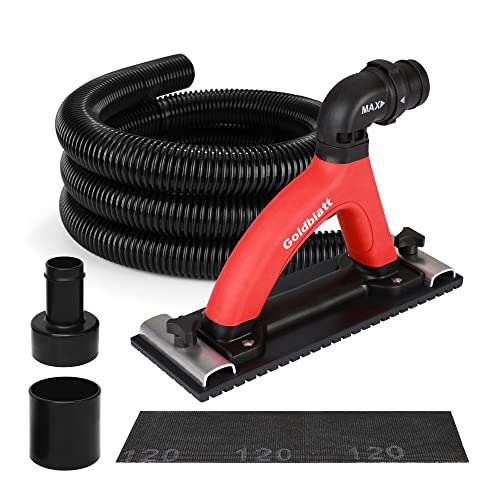
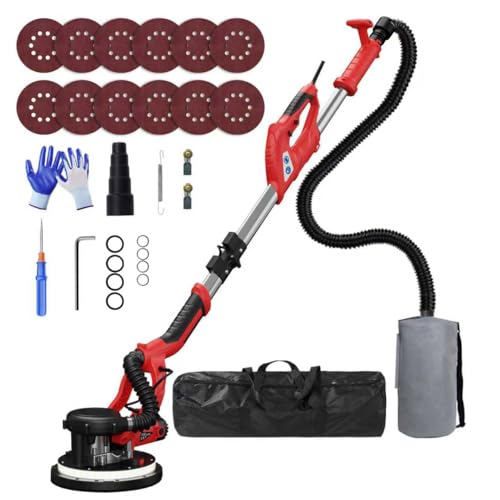
A vacuum sander captures airborne particles through perforated discs or mesh screens connected to active suction. Airflow draws gypsum powder through the tool housing into a vacuum hose before it disperses into the room. Models like the Protmex feature built-in motor suction that channels debris into attached bags, while manual heads like Hyde connect to an external wet-dry vacuum.
Can you use a regular household vacuum cleaner with a drywall sander?
Standard household vacuum cleaners should never be connected to drywall sanders. Ultra-fine gypsum dust easily penetrates ordinary filters, quickly clogging the motor and causing internal damage. Instead, connect your sander to a dedicated wet-dry vacuum equipped with fine-dust collection bags. While a cordless vacuum with swappable batteries works well for everyday home upkeep, it cannot safely handle abrasive plaster powder.
What is the main difference between manual and electric Best Drywall Sanders With Vacuum Attachment options?
Manual vacuum sanders rely on arm power and external shop vacuum suction, whereas electric models use an integrated motor to spin circular pads. Hand sanders are lightweight and well-suited for small drywall patches. Electric models feature variable speeds up to 2100 RPM and telescoping poles for ceilings, though their motorized weight requires more arm endurance during prolonged overhead work.
What hose adapter sizes are needed to connect to a shop vacuum?
Most vacuum sanders include coupling adapters that fit 1-1/4 inch, 1-1/2 inch, 1-3/4 inch, or 2-1/2 inch vacuum hoses. Products such as the Hyde 09170 come standard with multi-size coupling adapters designed to fit wet-dry vacuum hoses from various manufacturers. An airtight friction fit prevents vacuum pressure loss and keeps fine dust inside the hose.
What type of sandpaper works best with a dust-free drywall sander in 2026?
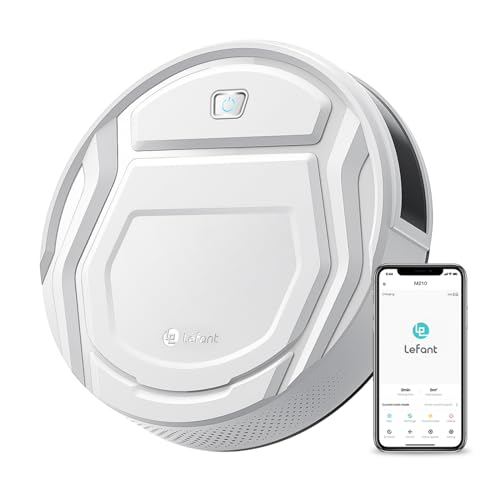
Perforated sanding discs and open-mesh abrasive screens work best because they allow vacuum airflow to pull dust directly through the material. Solid sandpaper blocks suction channels, causing immediate dust buildup and clogging. Mesh screens resist loading and let suction draw fine powder into the hose smoothly. For home cleanups after DIY renovations, floor maintenance using a robot vacuum for carpets helps keep stray dust from settling into deep rug fibers.




Write Your Review
No reviews yet. Be the first to share your experience!