


Essential Tools for Clean Cooling System Maintenance
Keeping a home garage clean often feels like a constant battle against dust and tracked debris, especially when switching between a shop vacuum and everyday floor care equipment. When vehicle repairs enter the picture, avoiding messy coolant spills is just as critical as having the best cordless stick vacuum with removable battery ready for quick floor pickups. Exploring the best coolant vacuum refill kits helps you refill radiators quickly while drawing fresh fluid directly into the system without liquid splashing across concrete floors. This guide reviews kits with airtight sealing, brass valves, and multi-vehicle adapters based on verified manufacturer specifications.
Standard radiator filling methods often trap air pockets that cause dangerous engine overheating, whereas pneumatic refilling uses shop air to pull negative pressure before drawing fluid. Opting for a tool with a reliable dual-scale vacuum gauge allows you to verify system integrity before refilling, preventing costly leaks. Our analysis focuses on listed adapter compatibility, operating pressure requirements, and durable construction to help you choose the right kit.


Frequently Asked Questions
How does a coolant vacuum refill kit prevent airlocks?
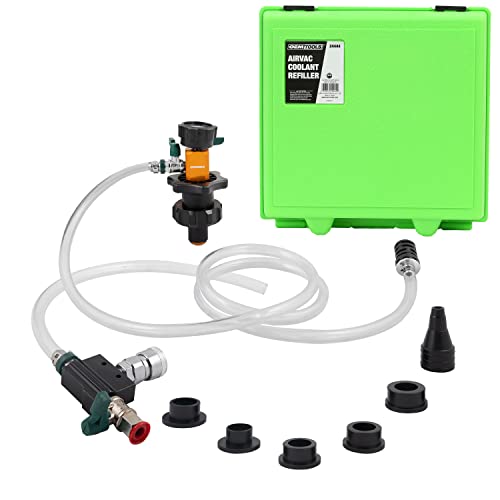
A coolant vacuum refill kit prevents airlocks by pulling a deep vacuum on the cooling system before adding fluid. The pneumatic venturi unit draws negative pressure, collapsing hoses and clearing air from passages like the heater core. Opening the valve draws fresh coolant into every void instantly. This stops air pockets that cause engine overheating.
Do you need an air compressor to operate vacuum refill kits?
Pneumatic vacuum refill kits require an external air compressor to generate suction through a venturi block. Most refilling tools recommend an operating pressure between 70 and 110 psi to pull a proper vacuum. While some kits include a hand pump for pressure tests, vacuum refilling relies on shop air. Without adequate compressor airflow, the tool cannot draw fluid.
How can you detect cooling system leaks before refilling?
You can detect leaks by monitoring the integrated vacuum gauge after pulling suction on the cooling system. Closing the valve isolates the system so you can watch for pressure loss. If the gauge holds steady, the cooling circuit is sealed. A dropping reading indicates a leak, similar to losing suction on a unsealed Shark Navigator Lift Away Speed vacuum.
Will universal cone adapters fit every radiator neck?
Universal tapered cone adapters fit many radiator necks, but they do not fit every threaded design. Conical rubber adapters wedge into round openings between 0.3 and 1.8 inches to seal. However, certain European vehicles use specialized threaded caps that require dedicated adapters. Selecting a kit with both styles provides the widest vehicle coverage.
What maintenance is required for Best Coolant Vacuum Refill Kits in 2026?
Routine maintenance involves flushing fluid hoses with clean water and checking rubber seals for cracks. Dried coolant residue can foul internal brass valves if left inside the tool. Storing the assembly inside its hard case protects the pressure gauge from drops. Inspecting O-rings regularly ensures your kit maintains an airtight seal during refills.







Write Your Review
No reviews yet. Be the first to share your experience!