


Wet food scraps, heavy coffee grounds, and dinner prep peelings often turn standard kitchen cleanup into a messy chore. Ordinary thin liners can stretch thin or burst at the seams under moisture, leaving sticky residue at the bottom of the can. Switching to the best compostable kitchen trash bags offers a cleaner way to handle organic scraps without messy leaks. Many households pair these eco-conscious liners with compact setups like slim trash cans for kitchen spaces to keep food waste separated from dry refuse.
Evaluating plant-based liners requires checking verified certifications and physical dimensions rather than marketing claims alone. True compostability depends on recognized standards such as ASTM D6400, EN 13432, or approvals from BPI and TÜV AUSTRIA. Bag thickness, ranging from 0.9 mil to 1.18 mil, along with reinforced bottom seals, keeps organic scraps secure during bag changes. Whether you need standard tall liners or alternatives like wide mouth trash bags for quick kitchen scraping, matching bin dimensions prevents rim slippage.

Pros
- Derived from renewable sugar cane materials with official USDA Certified Biobased verification
- Integrated ergonomic handles make closing and carrying full bags simple without separate twist ties
- Sized for standard 13-gallon tall kitchen trash cans found in most American homes and apartments
- Manufacturer emphasizes high puncture and leak resistance compared to conventional plastic options
- Manufactured in the United States
Cons
- Plant-based sugar cane material is biobased and recyclable, but it is not certified compostable or biodegradable for municipal food-waste programs
- While listed as 100 percent recyclable, plastic film recycling programs vary widely and many curbside programs do not accept plastic bags
- Features integrated tie handles rather than a built-in sliding drawstring closure
Hippo Sak Plant Based Tall Kitchen Garbage Bags provide an eco-conscious waste containment option for American households seeking to reduce reliance on petroleum-based plastics. Sized for standard 13-gallon kitchen trash cans, this 45-count pack serves busy families, apartment renters, and home cooks who want dependable daily waste management backed by renewable materials. These bags suit anyone looking for a USDA Certified Biobased alternative that fits seamlessly into existing tall kitchen bins.
In daily household use, these 13-gallon liners fit standard tall kitchen receptacles commonly stationed beside islands, tucked into pull-out cabinets, or standing along kitchen walls. The integrated ergonomic handles simplify the routine chore of pulling a full bag from the bin, knotting the top securely, and hauling waste out to curbside collection bins. Because proper bag retention depends on both bag sizing and the specific can rim, the wide handle configuration allows users to knot or loop the bag around can edges to prevent slippage during heavy kitchen prep.
From a materials perspective, Hippo Sak manufactures these bags in the United States using renewable plant-based sugar cane rather than conventional fossil fuels. The company holds a USDA Certified Biobased Product designation and advertises puncture and leak resistance designed to withstand wet food scraps, heavy packaging, and everyday household refuse. While exact mil thickness is not stated by the manufacturer, the sugar cane formulation is built to deliver strong seam integrity and structural resilience during transit to the outdoor garbage container.
Handling and bag changes remain straightforward thanks to the built-in handle cutouts. When lifting a loaded bag out of a kitchen can, the handles distribute pulling tension evenly, minimizing the strain that can cause thin film to tear at the rim. Users should observe that while the manufacturer notes the product is 100 percent recyclable, most municipal curbside recycling programs in the United States do not accept loose plastic bags or can liners in standard blue bins. Where film drop-off receptacles or specialized recycling programs exist, verify local acceptance before attempting to recycle used or clean bags.
Realistic limitations center on closure type, material properties, and waste-stream compatibility. Unlike bags featuring sliding plastic drawstrings, these liners use loop handles that require manual tying to close completely. Additionally, while biobased and derived from sugar cane, these bags are not advertised as certified compostable or biodegradable, meaning they should not be placed into backyard compost piles or municipal green-waste food scrap bins. Buyers seeking certified BPI compostable bags for organic waste sorting will need to look specifically for compost-certified alternatives.
For households, apartments, and offices looking to shift away from traditional petroleum-derived trash bags without sacrificing everyday durability, the Hippo Sak Plant Based 13-Gallon Trash Bags present a practical and sustainable household option. They provide reliable containment for everyday kitchen trash, comfortable handling, and verified biobased credentials, making them a worthwhile choice for environmentally minded waste management.
Hippo Sak utilizes a plant-based formulation derived from renewable sugar cane, earning official recognition as a USDA Certified Biobased Product. This production method is designed to lower the product's carbon footprint compared to virgin petroleum plastics or traditional recycled resins.
The manufacturer backs the material with puncture-resistant and leak-resistant claims tailored for routine tall kitchen can duties. While the exact gauge measurement is not published, the dense plant-derived film is engineered to handle wet vegetable peelings, carton corners, and standard kitchen trash without tearing along the seams.
A critical distinction for waste-conscious consumers is understanding the difference between biobased, biodegradable, and compostable products. Hippo Sak bags are USDA Certified Biobased, meaning they are created from renewable biological resources such as sugar cane rather than fossil fuels. They are not certified compostable, and users should not deposit them into municipal compost systems or home compost tumblers.
While the manufacturer highlights that the bags are 100 percent recyclable, curbside recycling guidelines across the United States generally reject plastic film and bags because they tangle in sorting facility machinery. Consumers wishing to recycle clean bags should verify whether local grocery store drop-off bins or specialized plastic film programs accept biobased polyethylene films.
Pros
- Crafted from renewable cornstarch blends meeting ASTM standards for industrial composting
- Substantial 1.18 mil film thickness helps resist tears from daily household garbage and food scraps
- Sized at 23.6 by 31.5 inches to fit standard 13 to 15 gallon kitchen wastebaskets securely
- Completely unscented build avoids synthetic fragrances in enclosed living spaces
Cons
- Requires industrial composting facilities to properly break down and is not rated for backyard compost piles
- Lacks integrated drawstring closures, requiring users to tie the bag opening manually
- Prolonged exposure to heavy, standing liquids can weaken plant-based films over time
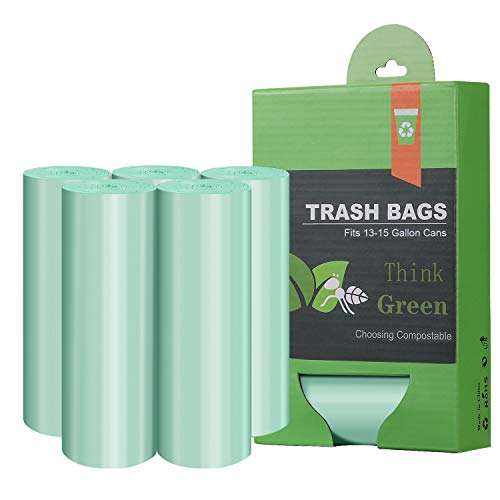
The AYOTEE 13-15 Gallon Compostable Trash Bags provide an environmentally aware waste management solution for American households looking to replace conventional petroleum-based plastic liners. Manufactured using renewable cornstarch blends, these green liners cater to busy families, apartment renters, and eco-conscious homeowners managing daily kitchen food scraps, nursery diaper pails, or cat litter cleanup. Meeting ASTM compostability criteria for industrial processing facilities, they offer a structured way to handle residential refuse without contributing to long-lasting plastic waste.
Designed to accommodate standard 10 to 15 gallon tall kitchen cans and 50-liter receptacles, each liner measures 23.6 inches wide by 31.5 inches long. This generous cut provides sufficient overhang around the rim of your container, preventing the bag from sliding down under the weight of wet vegetable peelings, coffee grounds, and discarded packaging. At 1.18 mil thick, the film delivers reinforced structural resistance against everyday punctures during routine kitchen tidying, counter wipe-downs, and room-to-room trash collection.
The material construction relies on an unscented formulation that avoids synthetic masking agents or added perfumes. Because the plant-based resin maintains an odorless profile, it helps contain typical refuse without dispersing heavy artificial scents across kitchens or pantry areas. The semi-translucent green coloration also assists users in visually identifying bag contents, which simplifies sorting between standard waste and separated organic matter for municipal collection programs.
Packaging consists of 60 individual liners divided into four compact rolls of 15 bags each, making them easy to store inside a utility cabinet, beneath the sink, or beside cleaning supplies. Routine use is straightforward: simply separate a liner along the roll perforation, shake it open, and seat it evenly inside your designated bin. When the bag reaches capacity, gather the top edges together and tie them off by hand before transporting the bundle to your municipal collection bin or outdoor receptacle.
While these bags deliver dependable strength for routine dry and damp household trash, plant-derived cornstarch films behave differently than conventional heavy-duty plastic contractor bags. They are certified for breakdown in commercial industrial composting facilities, meaning backyard compost heaps will not achieve the temperatures necessary to decompose the material properly. Furthermore, the design does not include built-in drawstrings, and leaving excessively wet or hot food waste in the liner for multiple days can soften the bottom seam.
For homeowners and renters seeking a practical, plastic-free consumable for standard kitchen trash cans, nursery diaper bins, or home office wastebaskets, the AYOTEE 60-pack represents a sensible, value-oriented addition to everyday household cleaning routines. Provided users account for manual top-knotting and verify local municipal acceptance for industrial compost processing, these liners deliver the balance of volume, tear resistance, and plant-based responsibility needed for day-to-day cleanup tasks.
Each AYOTEE trash bag is sized at 23.6 inches wide by 31.5 inches long, engineered specifically to fit standard tall kitchen cans ranging from 10 to 15 gallons, or up to 50 liters. The dimensions provide ample perimeter width and vertical depth, ensuring the top edge drapes comfortably over the container rim without stretching thin or snapping during installation.
The broad cut also accommodates a variety of secondary household receptacles, including office paper bins, laundry room wastebaskets, nursery diaper containers, and litter box cleanup pails. The 1.18 mil gauge offers steady support for everyday household density, keeping trash contained securely until collection day.
These trash liners are formulated from renewable cornstarch blends rather than standard petroleum-derived polyethylene. This plant-based construction reduces plastic consumption while maintaining the elasticity and puncture resistance needed for general household chores and food paper collection.
The product meets ASTM compostability standards, engineered to break down safely within dedicated industrial composting facilities. Because commercial composting infrastructure provides controlled heat and microbial conditions, buyers should verify that municipal programs in their region accept compostable bioplastics before placing them in organic waste streams.

Pros
- Certified to ASTM D6400 and EN 13432 compostability standards for home or facility composting
- Octagonal bottom seal provides dependable protection against wet kitchen leaks
- Generous 24.8 by 31.4 inch dimensions fit standard tall kitchen receptacles up to 27.4 inches high
- Unscented plant starch composition contains no artificial fragrances or heavy chemical odors
- Translucent green finish facilitates waste sorting and compost stream identification
Cons
- Lacks an integrated drawstring closure, requiring the top rim to be tied by hand
- Plant-starch material is naturally more prone to puncture from sharp bones or rigid packaging than heavy-duty synthetic plastics
- Susceptible to premature degradation if stored in damp, high-humidity, or excessively hot environments
FORID 13-Gallon Compostable Trash Bags are plant-based can liners made for eco-conscious households, kitchen organizers, and apartment residents managing food scraps or everyday household waste. Designed to fit standard 13-gallon (55-liter) tall kitchen receptacles, this 80-count package distributed across five rolls serves anyone looking to reduce conventional plastic usage without having to downsize to miniature countertop pails.
In terms of practical utility, each liner measures 24.8 inches wide by 31.4 inches long. According to the manufacturer, this cut fits round garbage bins with diameters up to 15.7 inches and rectangular wastebaskets with a longest side up to 12.4 inches, provided the bin height does not exceed 27.4 inches. The clear green tint allows users to quickly inspect contents, making it easier to verify that only compostable organics or appropriate recyclables are placed inside before curbside transport or backyard processing.
The build quality centers on plant starch material (PSM), a bio-based formulation derived from renewable plant extracts. FORID specifies compliance with both the American ASTM D6400 standard and the European EN 13432 standard, confirming compostability under controlled conditions. To handle damp kitchen waste such as coffee grounds and produce trimmings, each liner features an octagonal sealed base, which the manufacturer rates to withstand up to 83 pounds without splitting or leaking.
For everyday setup and handling, the five rolls store neatly inside pantries, pull-out drawers, or the bottom of clean bin shells. Because these bags use an open-top format rather than built-in drawstrings, users should allow a few inches of collar overhang around the top rim of the trash can so the excess material can be tied off manually prior to removal. Changing bags requires a standard gathering technique at the neck to lift the liner out smoothly.
Realistic limitations must be kept in mind when switching to bio-based liners. Plant-starch films do not possess the puncture resistance of thick polyethylene contractor bags, meaning sharp chicken bones, rigid plastic clamshell corners, or jagged cardboard edges can cause punctures if forced. Additionally, exposure to standing liquids over long periods or storage in warm, humid utility closets can accelerate breakdown, meaning bags should be kept dry until deployed.
Overall, FORID 13-Gallon Compostable Trash Bags offer a reliable, certified option for households seeking a lower-footprint alternative to standard tall kitchen liners. Ensuring your trash bin dimensions align with the listed sizing and checking local municipal guidelines for compostable bag acceptance will deliver the most dependable waste-management experience.
These trash liners are produced from plant starch material (PSM), utilizing renewable plant extracts rather than conventional petroleum resins. This formulation is unscented, making it appropriate for individuals sensitive to artificial perfumes or masking fragrances in their kitchens.
The material complies with ASTM D6400 and European EN 13432 standards. The manufacturer indicates that the bags can be processed in home composting setups or municipal composting facilities where accepted. Because local municipal composting infrastructure varies widely across the United States, verifying with your local waste hauler or city organics program is recommended before placing compostable liners into municipal green bins.
Each bag provides a 13-gallon (55-liter) capacity, measuring 24.8 inches in width by 31.4 inches in length. This sizing makes them compatible with the standard tall kitchen trash can category commonly found in American homes.
The manufacturer specifies that these bags fit round cans with a diameter of 15.7 inches or less, rectangular cans with their longest side measuring 12.4 inches or less, and overall bin heights up to 27.4 inches. Measuring the inner perimeter and height of your waste can before purchase helps ensure a secure fit with adequate rim overhang.

Pros
- Triple-certified compostable profile meeting BPI, CMA, and TÜV AUSTRIA OK compost HOME requirements
- Exact fit for standard 13-gallon (49.2-liter) tall kitchen trash and compost containers
- Plant-based construction offers a practical alternative to non-degradable conventional plastic liners
- Reinforced 0.9-mil film provides steady containment for routine organic scrap collection
Cons
- Requires storage in a cool, dry area with a manufacturer-recommended 9-month shelf life to maintain film integrity
- Municipal commercial composting program availability varies by region, requiring local service verification
- Plant-based compostable material has lower puncture tolerance against sharp bones or heavy sitting liquids compared to heavy synthetic plastics
UNNI 13-Gallon Compostable Bags serve as a practical waste management accessory for households aiming to streamline food-scrap disposal and kitchen bin cleanliness. Measuring 23.75 inches by 31.49 inches, these 49.2-liter liners fit standard tall kitchen cans commonly used in American apartments and family homes. This 50-count roll is particularly suited for eco-conscious renters, busy family kitchens, and gardeners managing residential organic collection.
Featuring an extra-thick 0.9-mil construction made from plant-based materials, the liners are engineered to hold vegetable peels, coffee grounds, and everyday kitchen refuse without premature tearing. Unlike conventional polyethylene trash bags that persist in landfills indefinitely, these liners rely on bio-based polymers formulated to break down in appropriate composting environments while maintaining the structural integrity required to haul everyday kitchen waste to an outdoor organics bin or backyard pile.
Verification of compostability is backed by key industry benchmarks, including BPI certification under U.S. ASTM D6400 criteria and CMA field testing within operating commercial facilities. Additionally, the bags carry the OK compost HOME certification from TÜV AUSTRIA, which confirms they are formulated to decompose in ambient backyard compost piles without requiring high industrial heat. This multi-standard compliance gives households clear confidence whether they participate in municipal curb-side composting programs or maintain private yard composters.
Integrating these liners into daily kitchen routines is straightforward, though handling requires basic care tailored to compostable films. The roll measures roughly 6.42 by 4.41 inches and fits conveniently into under-sink caddies or cleaning utility closets. The manufacturer recommends storing the roll in a cool, dry area away from direct sunlight and moisture, and utilizing the supply within nine months of purchase to ensure maximum film tensile strength during daily bin lining and lifting.
Because the plant-derived material is engineered to degrade naturally, prolonged contact with heavy liquids or sharp, dense items like poultry bones can soften or puncture the film over time, making regular bin emptying advisable. Furthermore, municipal organics acceptance varies widely across U.S. cities, so homeowners should verify local compost guidelines if relying on city haulers. For households seeking reliable 13-gallon tall kitchen liners that align with responsible organic waste management, UNNI delivers a well-certified, practical consumable.
UNNI 13-Gallon Compostable Bags are backed by independent third-party verification to confirm environmental breakdown claims. The Biodegradable Products Institute (BPI) certifies these liners under ASTM D6400, the primary U.S. standard for compostability in commercial facilities. In addition, field testing by the Compost Manufacturing Alliance (CMA) verifies degradation performance inside active industrial processing systems.
For residential users without access to industrial organics pickup, these bags also feature the OK compost HOME certification issued by TÜV AUSTRIA. This distinction verifies that the plant-based film is capable of breaking down under lower-temperature backyard composting conditions, offering flexibility across both municipal green-bin programs and home garden compost setups.
Because compostable bags are designed to break down faster than conventional petroleum plastics, proper storage ensures they perform reliably in daily use. The manufacturer specifies storing rolls in a cool, dry cabinet away from excessive heat, steam, and direct sunlight. To maintain optimal puncture resistance and seal strength, the liners should be used within nine months of purchase.
When lining tall kitchen cans, placing food scraps inside without pooling standing liquids will extend bag durability. For high-moisture items like soup remnants or wet melon rinds, combining scraps with dry paper towels or emptying the bin every few days prevents premature moisture softening of the plant-based film.
Frequently Asked Questions
What certifications confirm the best compostable kitchen trash bags?
Look for recognized standards including ASTM D6400, EN 13432, BPI certification, or TÜV AUSTRIA OK compost HOME. These official marks verify that a bag breaks down safely in industrial facilities or home compost environments. Basic labels like plant-based do not guarantee compostability on their own.
Do 13-gallon compostable bags fit standard tall kitchen cans?
Yes, standard 13-gallon compostable liners measure roughly 23.6 to 24.8 inches wide by 31.4 inches tall, fitting typical tall kitchen bins. Plant-based films have less stretch than regular plastic, so measuring your bin rim helps avoid tears. For larger containers like a 16-gallon trash bin, step up in bag size.
Can plant-based trash bags hold wet food scraps without leaking?
Yes, plant-based liners hold wet food scraps reliably when built with octagonal bottom seals and thicknesses between 0.9 and 1.18 mil. However, prolonged exposure to moisture weakens compostable resins over time. Emptying your food scrap bin every two to three days prevents bag softening and maintains leak resistance.
What is the typical shelf life of compostable bags in 2026?
Most compostable bags remain fresh for 9 to 12 months after manufacture. Because these bags use plant starches like cornstarch, ambient heat and humidity start the breakdown process in storage. Storing your spare rolls in a cool, dry pantry ensures the material retains its strength until use.
Are compostable bags compatible with swing lid or hands-free cans?
Yes, compostable bags function well in hands-free setups, including swing lid trash cans and sensor models. Since plant-based materials feel less grippy on smooth plastic, folding the rim firmly over the can collar keeps the liner securely in place when disposing of kitchen waste.


Write Your Review
No reviews yet. Be the first to share your experience!