


Pouring a fresh slab often feels like a missed opportunity when standard troweled finishes leave outdoor spaces looking utilitarian. Authentic clay pavers deliver timeless curb appeal, yet traditional sand joints invite weeds, shifting pavers, and stubborn efflorescence deposits that require seasonal maintenance. Decorative stamping solves this issue by pressing realistic paver textures directly into setting concrete. Finding the best brick pattern concrete forms requires looking at polyurethane flex ratings, authentic joint depth, and handle placement. If you coordinate flatwork alongside vertical accents like an exterior brick veneer outdoor kitchen, matching your paver pattern creates a cohesive masonry aesthetic.
Based on product specifications and user feedback, rigid polyurethane forms provide the structural support needed for wide patios, while flexible floppy mats handle tight borders against foundation walls. Using a quality liquid or powder release agent prevents fresh cement paste from pulling away and marring the surface detail. Whether you want a rugged running bond, a classic herringbone layout, or clean stack bond edges, these tools deliver authentic masonry character without the settling issues of loose pavers.

Pros
- Thick polyurethane construction delivers high tensile strength and flexible performance over fresh concrete.
- Dual rear handles provide positive grip for clean lifting and accurate overlapping without disturbing wet edges.
- Supports both horizontal slabs (patios, walkways) and vertical decorative stone wall applications.
- Seamless texture skin profile helps blend overlapping borders naturally without rigid joint seams.
Cons
- Requires a separate liquid or powder release agent that is not included with the stamp pad.
- Working large concrete pours with a single 23.6-inch stamp can be time-critical before the slab sets.
- Achieving uniform texture depth requires consistent hand or tamper pressure across the entire polyurethane surface.
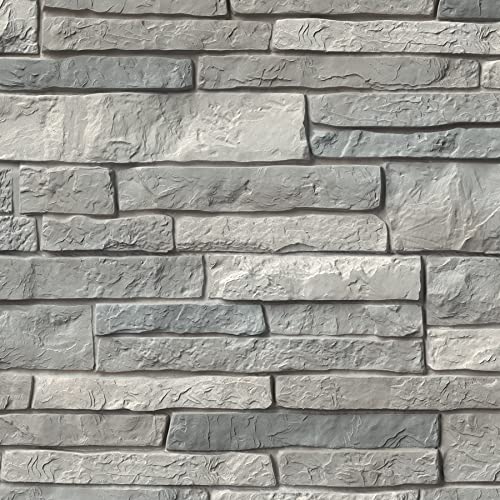
The SGHE 23.6-Inch Concrete Stamp is a polyurethane texture skin designed to imprint realistic stone patterns into fresh horizontal and vertical concrete surfaces. This tool is built for DIY renovators, homeowners, and property maintenance teams looking to upgrade plain concrete slabs into decorative architectural surfaces without investing in natural stone masonry or high-cost pre-cast materials. Its compact square footprint makes it suitable for residential patio slabs, garden walkways, landscape borders, and vertical wall treatments.
Functioning as a seamless texture skin, the tool imprints a continuous, organic stone texture rather than deeply recessed faux grout joints. This design gives users flexibility when rotating and overlapping sections across a fresh slab, helping avoid repetitive or artificial patterns. Proper application relies heavily on the use of a compatible concrete release agent, either liquid or powder, which must be applied prior to stamping to prevent wet cement paste from adhering to the polyurethane surface.
The stamp is constructed from thick polyurethane elastomer, engineered to balance pliable flexibility with edge tear resistance and high tensile strength. This flexibility allows the mat to contour over subtle slab variations while maintaining crisp textural detail. On the reverse side, two integrated handles provide positive handholds for lifting, positioning, and moving the stamp cleanly without dragging it across wet concrete.
Working with the stamp involves timing your pour so the concrete reaches the plastic stage where it accepts an impression without slumping or retaining excessive bleed water. Once the release agent is misted or dusted onto the surface, the user positions the stamp, applies firm and even pressure across the surface, and uses the dual handles to lift straight upward. Because cement sets quickly, tool cleanup should occur promptly with clean water and a soft brush before any cementitious slurry hardens on the polyurethane.
A primary limitation of this product is that it ships as an individual 23.6-inch by 23.6-inch skin. Managing a sizable patio or long driveway with a single stamp requires rapid repositioning before the concrete slab loses workability, which may prove challenging on hot or windy pour days. Additionally, users must purchase release agents separately and practice their tamping technique to ensure consistent impression depth across the entire installation.
For property owners and DIYers tackling small to medium-sized decorative concrete projects, the SGHE stone texture stamp offers a durable, reusable method for creating custom textured surfaces. When paired with proper release agents and careful placement timing, it delivers substantial visual value for patios, sidewalks, and landscape retaining walls.
According to manufacturer specifications, this polyurethane stamp is engineered for both horizontal flatwork and vertical concrete applications. Horizontal uses include poured concrete patios, garden walkways, residential sidewalks, pool decks, and garage aprons where a textured stone finish is desired.
For vertical surfaces, the stamp can be applied to freshly placed concrete retaining walls, foundation facings, and decorative plaster or overlay coats. The tool requires an unhardened, workable cementitious base to accept impressions and is not designed for cured or existing hard masonry without an overlay.
The SGHE texture skin is primarily intended for exterior landscape and architectural enhancements, helping plain grey concrete mimic quarried stone. The polyurethane material is resilient against common outdoor moisture conditions and direct contact with wet concrete paste.
Successful exterior stamping depends on environmental factors such as wind, temperature, and sun exposure, which dictate how quickly the concrete sets. Users should plan their stamping sequence carefully, keep release agents close at hand, and clean the tool thoroughly after the pour to preserve the detail of the polyurethane mold.

Pros
- Durable 10 mil PET plastic offers reliable flexibility while resisting accidental tears during handling
- Standard 6.3 x 2-inch individual brick size replicates the classic look of face brick or subway-style masonry
- Four included sheets allow users to gang templates together to cover wide accent walls much faster
- Rinses clean easily between paint applications to prevent stubborn paint buildup on stencil bridges
Cons
- Requires careful offloading of paint onto paper towels to prevent bleed-through beneath the plastic edges
- Lacks built-in interlocking registration marks, requiring manual visual alignment across extended wall surfaces
- Not suitable for rough, heavily textured, or uneven masonry walls where flat stencil contact is impossible
The Hosomono 4-Piece Brick Stencil Set is designed for DIY homeowners, renters, and property managers who want the architectural warmth of an exposed brick accent without the expense, labor, and weight of installing real masonry veneer. Each set includes four reusable plastic sheets measuring 17 x 10 inches, with cutouts that produce individual brick shapes measuring 6.3 x 2 inches. This scale closely mimics common decorative brickwork, making it suitable for accent walls, fireplace surrounds, mudroom entryways, kitchen backsplashes, and patio floor accents.
In terms of performance, the stencil templates work reliably across smooth, flat surfaces such as interior drywall, sanded wood, metal, glass, and sealed concrete. You can use several standard applicators with these stencils, including high-density foam rollers, round stencil brushes, makeup sponges, pencils, or spray paint. Using the four sheets side by side allows DIYers to cover larger horizontal spans simultaneously, significantly reducing the downtime spent waiting for single panels to dry before moving on to adjacent sections.
Material durability is driven by the 10 mil PET plastic construction. This thickness hits a practical middle ground: it provides enough structural rigidity to hold sharp brick silhouettes without fluttering under light roller pressure, yet remains supple enough to curve slightly if working into tight corners or against baseboards. The clear-white plastic finish is also helpful during application, as it provides enough transparency to let you align mortar joint gaps against previously painted sections without losing track of your layout lines.
Proper setup and execution remain essential for clean results. The target surface should be clean, dry, and free of loose dust or oil before positioning the stencil. Securing the perimeter firmly with low-tack painter tape or a temporary repositionable stencil spray adhesive is strongly advised to prevent shifts during painting. To avoid paint bleeding under the cutouts, always offload excess paint from your roller or brush onto a scrap piece of cardboard or paper towel before touching the stencil surface. A nearly dry applicator technique creates crisp brick profiles, whereas an overloaded roller will inevitably force paint beneath the 10 mil plastic edges.
There are realistic limitations to keep in mind before starting your project. Because these stencils lack laser-cut interlocking registration pins, maintaining continuous, plumb mortar joints across a tall 10-foot wall requires manual measuring, leveling, and careful visual checking. Furthermore, this product is strictly intended for flat, uniform substrates; it will not seal effectively over heavily textured drywall, split-face block, or rough brick surfaces. Cleanup should also be completed promptly after each work session using warm water and mild soap before latex or acrylic paints cure permanently onto the bridges.
For DIY decorators seeking a low-cost, high-impact aesthetic upgrade, the Hosomono 4-pack provides an economical, repeatable template system. While it demands patience with paint loading and alignment, the reusable PET sheets deliver consistent faux-brick patterns that can transform plain drywall into a stylish rustic or industrial focal point on a modest budget.
According to manufacturer specifications, these Hosomono brick stencils can be applied to most flat, clean surfaces. Compatible interior and craft substrates include primed drywall, smooth interior wood, flat concrete, canvas, metal, glass, paper, and craft fabrics. Smooth vertical and horizontal planes yield the best pattern fidelity.
Rough masonry, knockdown drywall texture, heavy orange peel, and uneven brickwork are not recommended for direct stenciling. Surface irregularities create microscopic gaps beneath the 10 mil PET sheet, which can cause wet paint to seep past the edges and blur the intended faux mortar lines.
Maintaining clean stencil bridges ensures crisp edges across multiple painting passes. Wash the PET sheets immediately after use with warm water and mild liquid soap, gently wiping away wet paint with a soft sponge. Avoid abrasive scrubbing pads or stiff wire brushes, which can bend or snap the narrow plastic divider joints.
If working with spray paint or fast-drying mediums, soak the stencils in warm soapy water for several minutes before wiping clean. Once dry, store the sheets flat between pieces of cardboard or hang them vertically to prevent creases, warping, and bending before your next DIY project.

Pros
- High-detail polyurethane replication of historic, weathered running bond brickwork
- Includes floppy mat and touch-up skin for detailing edges and tight perimeter areas
- Durable built-in handles on rigid stamps backed by a manufacturer lifetime warranty
- Large 38x20 inch mat footprint speeds up impression work across wide concrete slabs
Cons
- Requires mandatory purchase of separate liquid or powder release agents to prevent sticking
- Heavy overall kit weight of 70 pounds requires physical stamina and proper transport planning
- Steep concrete-finishing learning curve where timing, slump, and placement precision are critical
The Walttools Georgetown Brick Concrete Stamp Set is a heavy-duty decorative concrete texturing system engineered to replicate the appearance of aged, historic brick pavers. Designed for masonry contractors, landscape professionals, and ambitious DIY renovators tackling exterior concrete pours, this five-piece set transforms plain slabs into vintage-styled surfaces. The pattern mirrors classic Georgetown architecture, showcasing oversized, rounded, and weathered brick impressions set in a traditional running bond layout. It is particularly well matched for homeowners and property managers planning decorative concrete driveways, garden walkways, front entries, and patio renovations.
Unlike basic decorative rollers, this texturing mat set provides substantial three-dimensional relief across large surface areas. The mats measure approximately 38 inches by 20 inches, allowing efficient placement across wet concrete to maintain pace with slab setup times. Each impression reproduces realistic wear marks, rounded brick edges, and recessed faux mortar joints without requiring individual brick laying or standard repointing maintenance. The system utilizes a bidirectional step layout, meaning installers can orient and mate the stamps from either end to establish a continuous, natural bond pattern without unnatural seam repetition.
Built from dense, high-grade polyurethane, the stamping tools provide rigid support when walked upon while preserving fine textural nuances from the master molds. The 5-piece set is balanced for practical jobsite sequencing, containing three rigid stamps with integrated lifting handles, one flexible floppy mat, and one detailing touch-up skin. According to Walttools, the heavy-duty handles on the rigid mats include a lifetime manufacturer warranty, addressing one of the most common failure points found on commercial stamping mats. The floppy mat bends readily against vertical obstructions like foundation walls and steps, while the touch-up skin blends transitional seams and fixes minor surface flaws.
Successful stamping with the Georgetown pattern depends heavily on correct slab timing and proper accessory usage. Users must apply a dedicated release agent, available in either powdered antique formulations or clear liquid sprays, across the concrete slab and stamps to prevent fresh paste from clinging to the polyurethane. Stamping begins once the concrete reaches the plastic stage where bleed water has evaporated and the slab supports foot pressure with minimal deflection. After the concrete cures and the release agent is washed or neutralized according to manufacturer instructions, sealing the textured surface with an appropriate exterior concrete sealer helps protect the pattern against weather and wear.
While this tool set delivers an authentic masonry aesthetic, it involves notable physical and technical demands. Weighing in at 70 pounds total, maneuvering the mats repeatedly across a live concrete pour requires significant strength and careful coordination. Concrete stamping offers no room for delayed work, as allowing the slab to set too hard will prevent crisp tool impressions, while stamping too early can create deep blowouts or surface slurry build-up. Additionally, because the kit does not include release agents, sealers, or joint-touching chisels, buyers need to budget for these essential consumables and auxiliary tools separately.
For projects where the timeless appeal of weathered brick is desired without the settling, weeding, and joint breakdown typical of dry-laid pavers, the Walttools Georgetown Brick Concrete Stamp Set represents a solid, durable investment. The combination of three rigid mats, a floppy tool, and a touch-up skin provides the core components necessary to handle both open slab runs and tight boundary detailing. Buyers prepared to manage concrete set times and apply proper release chemistry will find this set capable of producing upscale, historic-looking walkways and patios built to endure.
The Walttools Georgetown Brick Concrete Stamp Set comes as a coordinated 5-piece texturing package designed for complete field installation. It includes three standard rigid polyurethane stamps fitted with robust handles for primary line-and-row stamping across open flatwork. To handle perimeter borders, vertical abutments, and tight corners, the set includes one flexible floppy stamp that bends against obstacles where rigid mats cannot sit flat. A matching touch-up skin is also provided to smooth out minor squeeze-outs, blend pattern transitions, and texture perimeter borders seamlessly.
Using concrete texturing stamps requires strict adherence to timing and chemical separation. All concrete stamps must be used in conjunction with a liquid or powder release agent to prevent wet cement paste from suctioning to the polyurethane mats. Installers typically align the mats along a straight reference line, tamping them lightly to transfer the oversized brick relief into the slab surface. Because the Georgetown pattern features an interlocking step design operable from either end, installers can sequence the stamps across varying slab widths with minimal joint misalignment.

Pros
- Complete 8-piece system includes rigid stamps, a flex mat, and a touch-up skin for tackling both open fields and tight borders
- Durable polyurethane construction captures authentic worn brick detail with consistent 1/4-inch joint lines
- Handles on rigid stamps are backed by a manufacturer lifetime warranty for long-term reliability
- Even joint depth makes the pattern functional on both full-depth concrete pours and thin decorative overlays
Cons
- Complete 8-piece package weighs 90 pounds, requiring physical effort to transport, place, and lift across large pours
- Requires the separate purchase and application of a liquid or powder release agent to prevent concrete adherence
- Decorative concrete stamping demands strict timing and technique during the concrete setting window
The Walttools Olde Town Herringbone Brick Concrete Stamp Set is an 8-piece architectural texturing kit designed to imprint classic woven brick paver designs into fresh concrete slabs and decorative overlays. Modeled after historic Chicago street pavers, this tool set is aimed at concrete contractors, hardscape installers, and experienced DIY renovators who want the authentic appearance of aged brickwork without laying individual clay pavers. Its realistic surface texture features slight brick undulations and mildly weathered profiles that deliver an established, rustic urban character.
Each primary stamping tool measures 24 inches by 31 inches, providing balanced dimensions that balance manageable handling with rapid square-foot coverage on extensive pours. The pattern incorporates uniform 1/4-inch joints, creating consistent grout indentations across the entire surface. Because the joint depth remains even throughout the tool face, this stamp pattern is well-suited not only for standard full-depth exterior flatwork but also for thin concrete overlay applications where excessive stamp penetration could compromise the sub-base.
Construction quality centers on tough, flexible polyurethane material engineered to resist abrasion and retain fine surface details through high-repetition projects. The 8-piece package includes six rigid stamping mats designed for open field work, one floppy or flex mat designed to bend against perimeter walls, columns, and steps, and one touch-up skin for detailing joint intersections or correcting minor surface flaws. The rigid mats feature heavy-duty handles engineered for firm grip and lifting control, supported by a manufacturer lifetime warranty on the handles.
Proper operation requires careful timing and surface preparation during the concrete finishing process. As specified by Walttools, all concrete stamps require the application of a release agent, either in powder or liquid form, to prevent the polyurethane mats from pulling up wet paste when lifted. Installers must lay the mats in sequence once the concrete reaches the proper plasticity, tamp the pattern evenly across each mat, and transition to the flex mat and touch-up skin around forms, obstacles, and tight perimeters before the surface sets.
While this tool set provides exceptional decorative results, buyers should note that managing an eight-piece kit weighing approximately 90 pounds requires adequate job-site staging and physical stamina. Stamping concrete is inherently time-sensitive, requiring users to understand slab setting dynamics, line alignment, and release application to avoid misplaced impressions or tool sticking. For property owners and contractors seeking a durable, high-detail herringbone paver aesthetic on driveways, patios, walkways, or outdoor living spaces, this Walttools set delivers commercial-grade utility and lasting pattern fidelity.
The Walttools Olde Town Herringbone set is supplied as a complete 8-piece kit designed to handle both broad slab areas and tight edges. The package includes six rigid polyurethane stamps equipped with integrated lifting handles, one flexible floppy mat lacking rigid backing for bending against vertical obstructions, and one touch-up skin for detailing imperfections and joint transitions.
Each stamp mat measures 24 inches by 31 inches and features a classic herringbone paver arrangement with 1/4-inch joint spacing. The total shipping weight of the 8-piece set is approximately 90 pounds. Handles fitted to the rigid texturing mats include a manufacturer lifetime warranty against breakage.
Using concrete texturing mats requires proper surface timing and mandatory release chemistry. Before placing any stamp onto fresh concrete or overlay material, a compatible liquid or powder release agent must be applied to both the concrete surface and the stamp mats to ensure clean release without tearing the paste.
Installers should align the interlocking 24-inch by 31-inch mats progressively across the slab, using uniform hand or tamping pressure to transfer the herringbone pattern and 1/4-inch joint lines. The floppy mat should be reserved for tight corners, wall edges, and step transitions where rigid mats cannot flex, while the touch-up skin is used to hand-finish seams and minor surface variations.

Pros
- Includes rigid, flexible, and touch-up pieces to tackle both open slab fields and edge obstructions.
- Accurate 3.5-inch by 7.5-inch brick sizing closely mimics traditional running bond masonry pavers.
- Durable polyurethane material withstands repeated stamping when properly cleaned and stored.
- Sturdy integrated straps provide secure handholds for lifting and positioning mats on wet concrete.
Cons
- Requires a separate liquid or powder release agent to prevent concrete adhesion.
- Substantial total weight of 47 pounds requires physical stamina during large slab installations.
- Concrete stamping requires proper slab timing and technique to avoid uneven impressions.
The Walttools Worn Brick Running Bond Concrete Stamp Set is a specialized decorative masonry texturing kit engineered to imprint a classic brick paver look into freshly placed concrete slabs. This 5-piece set suits professional concrete contractors, hardscaping crews, and experienced DIY renovators aiming to create the look of traditional brick patios, walkways, driveways, or pool surrounds without laying individual masonry units.
Designed around a rustic running bond layout, the stamps feature individual simulated brick units measuring 3.5 inches by 7.5 inches within a 16-inch by 36-inch overall mat profile. This layout replicates the slight surface variations and worn edges found in aged exterior brickwork. The pattern creates a continuous interlocking brick appearance across large square-foot pours while maintaining authentic joint definition between simulated pavers.
Built from sturdy polyurethane elastomer, the set has a total shipping weight of approximately 47 pounds. Walttools outfits the tools with heavy-duty handles to simplify lifting and repositioning across wet concrete. The kit contains three rigid stamping mats for open slab sections, one flexible floppy mat without handles for bending against walls and vertical obstacles, and a small touch-up skin to detail joint intersections or smooth out irregular edges.
Successful texturing requires proper timing on freshly finished concrete along with an appropriate release agent. According to the manufacturer, all concrete stamps require either a liquid or powder release agent to prevent the polyurethane mats from pulling or sticking to the concrete paste. Stamping proceeds in sequence across the slab, followed by washing away residual release powder or cleaning liquid residues, and routinely rinsing the stamps after use to prevent concrete buildup.
While the 5-piece configuration provides the essential tools for small-to-midsize decorative projects, stamping concrete has an inherent learning curve. Larger commercial pours may require additional mats to maintain pace with the concrete cure window. Furthermore, the substantial 47-pound tool weight and manual tamping demand solid physical endurance, and release agents must be purchased separately.
For property managers, contractors, and ambitious homeowners wanting the enduring aesthetic of aged brick pavers with the structural integrity of poured concrete, the Walttools Worn Brick Running Bond Stamp Set offers a well-built, detail-accurate tooling solution.
The Walttools Worn Brick set provides a targeted selection of stamping mats engineered for comprehensive slab coverage. The kit includes three rigid concrete stamps outfitted with reinforced straps for repetitive stamping across the primary body of the pour.
To handle challenging transitions, the package includes one flexible floppy stamp designed without rigid backing or handles, allowing it to flex easily against foundation walls, steps, and columns. A compact touch-up skin is also provided to blend seam lines, address slight pattern disruptions, and refine perimeter textures.
Proper execution with polyurethane stamping mats depends on concrete readiness and tool lubrication. Stamping should commence only after the bleed water has fully evaporated and the concrete slab has reached plastic consistency capable of supporting weight without deep displacement.
A liquid or powdered release agent must be applied to both the concrete surface and the stamping mats before placement. Regular water rinsing after the project keeps the polyurethane molds free of hardened cement paste and preserves the fine texture details for future applications.

Pros
- Flexible flex mat bends easily into tight corners, up against walls, and around vertical obstructions
- Realistic worn brick texture provides high-detail joint lines and rustic surface variation
- Sturdy 10-pound polyurethane build balances physical durability with flexible handling
- Standard dimensions match corresponding rigid Walttools stamps for consistent pattern alignment
Cons
- Designed strictly as a specialty flex mat and does not include handles found on standard rigid stamps
- Requires a separate liquid or powder release agent to prevent concrete from sticking to the mat
- Sold as a single mat rather than a complete multi-piece stamping set
The Walttools Worn Brick Running Bond Floppy Concrete Stamp is a specialized decorative texturing tool designed to imprint the look of rustic brick pavers into freshly placed concrete slabs. Unlike standard rigid stamping tools that maintain a fixed, flat shape, this floppy mat is engineered specifically for DIY renovators, masonry contractors, and landscape builders who need to continue a decorative brick pattern into confined spaces. It addresses the practical challenge of detailing concrete directly adjacent to foundation walls, columns, retaining walls, steps, and formwork where rigid stamps cannot lay flat.
In terms of pattern execution, the mat produces a traditional running bond layout featuring individual brick dimensions of 3.5 inches by 7.5 inches. The overall stamping mat measures 16 inches by 36 inches, mirroring the dimensions of standard rigid mats in the same line. The face of the tool incorporates authentic weathering and distressed surface texture, replicating the look of established clay or concrete pavers with recessed mortar joints. This realistic detail allows decorative concrete walkways, patios, and driveways to mimic genuine laid brick without the risk of individual paver shifting or weed growth between sand joints over time.
Material construction relies on a heavy-duty, pliable polyurethane compound with a total tool weight of 10 pounds. Because it is classified as a flex or floppy stamp, it is manufactured thinner than standard rigid mats and deliberately omits carrying handles. This profile allows the user to bend the tool upward at a 90-degree angle against vertical surfaces or curve it into irregular borders. The 10-pound weight gives it enough mass to lay flat on the slab while retaining the flexibility necessary to be pressed into corners by hand or with a hand tamper.
Using this tool requires careful timing and surface preparation on fresh concrete. As with all polyurethane texturing mats, it must be paired with either a powder release or a liquid release agent applied to both the slab and the tool surface to prevent wet concrete from bonding to the polyurethane. During the stamping window, standard rigid stamps are generally used across the open field of the slab, while this floppy mat is pressed into tight perimeters and obstructions to complete the impressions. After the concrete has cured sufficiently, residual release agent is washed away, and the mat itself can be cleaned with plain water and stored flat out of direct sunlight.
Prospective buyers should note that this single mat is intended to complement, rather than replace, a full set of rigid concrete stamps. Because it lacks handles and a rigid core, using it across an entire wide-open slab is inefficient and can result in uneven pressure if walked on directly without care. Additionally, the mat does not include release agents or colorants, both of which must be purchased separately based on the chosen decorative finish.
For homeowners and trade workers pouring decorative patios, pool decks, or walkways with a brick finish, the Walttools Worn Brick Floppy Stamp is a practical necessity for edge work. It prevents unfinished flat borders around steps, columns, and walls, ensuring the worn brick running bond pattern remains continuous and authentic across the entire finished installation.
The Walttools Worn Brick Running Bond mat features an overall dimension of 16 inches wide by 36 inches long, matching standard decorative concrete stamp layouts. This sizing ensures straightforward alignment when linking the floppy tool to existing rigid stamps sharing the same pattern geometry.
Individual simulated bricks within the stamp measure 3.5 inches in width by 7.5 inches in length. This sizing closely mimics standard modular clay brick pavers, providing a classic residential aesthetic suited for walkways, outdoor kitchens, garden paths, and patio surfaces.
The pattern incorporates subtle surface pitting, softened corners, and irregular joint lines characteristic of weathered, reclaimed brick. This prevents the finished concrete from appearing artificial or overly uniform once colored and sealed.
Constructed entirely from durable polyurethane, this floppy stamp provides the pliability required to flex against vertical obstructions. Standard rigid stamps feature rigid composite backings and top-mounted handles that block placement within several inches of walls, making a flexible companion mat essential for full-coverage stamping.
At 10 pounds, the tool is lightweight enough for quick hand placement along perimeter form boards yet substantial enough to maintain texture clarity without tearing. The absence of handles ensures a flat back that can be rolled or folded as needed in tight clearance areas.
Proper tool maintenance requires storing the polyurethane mat flat in a cool, dry area away from direct sunlight and extreme temperatures to prevent permanent curling or distortion over time.

Pros
- Imprints uniform 4-inch by 7.5-inch brick border textures much faster than handling multi-piece stamp mats
- Solid 10-pound polyurethane build supplies natural downward weight for crisp pattern definition
- Overlapping grout lines assist in keeping patterns aligned cleanly along straight or curved borders
- Cleans easily with standard water and mild detergent after each use
Cons
- Requires a compatible custom roller frame and extension handle, which are sold separately
- Demands careful timing on fresh concrete to avoid sinking too deep or rolling after the slab has hardened
- Must be used with powder or liquid release agents to prevent concrete paste buildup on the polyurethane
The GlobMarble Brick Border Concrete Roller Stamp (RL 114010) is a dedicated masonry texturing tool engineered to imprint realistic brick patterns into concrete surfaces. Designed for DIY renovators, hardscaping homeowners, and professional concrete contractors, this 4-inch by 4-inch by 9-inch polyurethane roller provides a continuous rolling method to produce decorative borders on walkways, patios, driveways, and garden perimeters without the slower placement and lifting required by traditional rigid stamp mats.
In terms of pattern geometry, the roller imprints individual brick faces measuring 4 inches wide by 7.5 inches long with a 0.25-inch grout relief depth. The manufacturer indicates that rolling can texture concrete up to five times faster than traditional stamps. An overlapping grout line configuration is incorporated directly into the roller face to assist users in maintaining continuous joint alignment, making it practical for perimeter ribbon borders, curved walkway edges, and confined decorative accents.
Manufactured in the USA, the roller is constructed from high-grade polyurethane designed to withstand the abrasive characteristics of concrete aggregates and sand. Weighing 10 pounds with packaged dimensions of 14 by 7 by 7 inches, the tool utilizes its own mass to help press distinct joint lines into the concrete surface. The cylindrical body is designed to mount onto specialized roller frames (sold separately) for ergonomic push-pull operation across flatwork.
Operation requires proper concrete timing and surface preparation. The roller functions on freshly poured concrete once bleed water has completely dissipated and the surface has reached a firm, workable plasticity, as well as on prepared decorative concrete overlay systems. GlobMarble recommends pairing the roller with either a powder release or liquid release agent across the concrete and roller face to prevent sticking and surface tear-out. Cleanup is straightforward, requiring a rinse with mild detergent and clean water immediately after application before any cement paste cures.
A practical limitation to consider before purchasing is that this listing includes only the patterned polyurethane roller sleeve. The dedicated roller bracket frame and threaded extension poles required for standing operation must be acquired separately. In addition, achieving crisp, uniform 0.25-inch grout lines requires accurate jobsite timing, as rolling concrete that is too wet can cause surface slumping, while rolling a slab that is too firm will result in shallow, incomplete imprints.
For property owners, landlords, and masonry installers looking for an efficient way to frame flatwork with a classic brick profile, the GlobMarble RL 114010 roller offers a reusable, time-saving solution. It is especially well suited for accent borders, perimeter bands, and walkway ribbons where managing cumbersome multi-piece mat sets is impractical.
The GlobMarble Brick Border Roller Stamp is designed for texturing both newly poured concrete slabs and fresh decorative concrete overlay coats. To achieve crisp 0.25-inch deep brick imprints, concrete must reach a firm, workable consistency where it can support light pressure without deep sinking or edge tearing.
Applying a generous coat of liquid release or powder release agent onto both the roller and the concrete surface is recommended by the manufacturer to prevent fresh cement paste from pulling up during texturing passes.
Because the roller requires an external custom frame (sold separately), buyers should secure compatible mounting hardware and extension handles prior to pouring concrete. Immediate washing with clean water and a mild detergent ensures the polyurethane grooves remain free of dried cement residue between projects.

Pros
- Durable polyurethane build provides long-term shape retention and reliable edge definition
- Integrated handles make positioning, tamping, and lifting the rigid tool straightforward
- Realistic brick face texture and joint spacing mimic traditional stack bond masonry cleanly
- Proudly made in the USA with sturdy trade-grade materials suitable for recurring jobsite use
Cons
- Rigid form will not bend around tight radiuses or sharp curves, requiring a flexible mat for curved edges
- Requires proper release agent application to prevent fresh concrete paste from sticking to the urethane
- Achieving clean pattern depth depends heavily on working within the concrete set window
The GlobMarble 4010/1 Vintage Stack Bond Brick Border Concrete Stamp is a specialized rigid urethane tool designed to imprint a classic stacked brick pattern directly into fresh concrete. Built specifically for bordering driveways, walkways, patio perimeters, and vertical wall applications, this stamp caters to both DIY property owners and decorative concrete contractors who want the appearance of traditional brickwork without the labor of laying individual clay or concrete pavers. It offers a practical way to finish flatwork edges with clean, repeatable masonry styling.
Measuring 30 3/4 inches by 8 3/4 inches overall, the stamp mat features eight distinct brick sections, each measuring 8 1/4 inches by 3 1/2 inches. This stack bond orientation aligns the brick impressions side by side, creating structured, uniform joint lines that frame outdoor living spaces cleanly. The mold incorporates realistic surface texturing into each brick cavity, transferring authentic masonry variations onto the concrete surface rather than leaving behind a smooth, artificial finish.
Constructed in the USA from premium polyurethane, this stamp mat is built to withstand repeated jobsite stamping without cracking, tearing, or losing detail along the joint edges. Polyurethane is the industry standard for decorative concrete tooling because it holds its rigidity under foot pressure and tamping tools while remaining impervious to moisture. Molded top handles provide steady control, allowing the user to guide the stamp into place, seat it firmly against adjoining impressions, and pull it cleanly away from the slab without damaging the fresh pattern.
Using this border stamp effectively requires proper concrete timing and surface preparation. Fresh concrete must be floated and allowed to reach an appropriate plastic consistency that can support weight without slumping back into the imprinted joints. To prevent wet paste from sticking to the polyurethane surface, applicators must apply a suitable liquid or powdered release agent before stamping. The integrated handles make it easy to position the tool against forms or existing edges, press it evenly into the slab, and lift it vertically to maintain crisp mortar joint lines.
The primary limitation of this stamp is its rigid design. While rigidity ensures flat, level pattern transfer across straight runs and large flat areas, it will not conform to sharp landscape curves or tight radiuses. For projects featuring serpentine walkways or rounded patio edges, users will need to pair this rigid tool with a matching flexible polyurethane mat. Additionally, like all decorative concrete stamps, clean results depend on working strictly within the concrete setting window before the slab becomes too hard to receive clear impressions.
For homeowners and trade professionals looking to add vintage stack bond brick borders to driveways, patios, or masonry walls, the GlobMarble 4010/1 provides a durable, reliable solution. Its Made in USA polyurethane construction, practical handle placement, and authentic brick dimensions ensure clean, consistent results across straight border runs. It represents a dependable, time-saving investment for anyone upgrading outdoor concrete flatwork.
The GlobMarble 4010/1 stamp mat measures 30 3/4 inches long by 8 3/4 inches wide, making it well suited for standard border framing on patios, walkways, and driveway aprons. The mat features eight individual brick sections arranged in a vintage stack bond layout.
Each brick section within the mold measures 8 1/4 inches by 3 1/2 inches, closely mirroring standard brick dimensions. The stack bond orientation positions the bricks squarely side by side, creating continuous, crisp joint lines that establish a structured, classic masonry appearance along slab borders.
Fabricated from heavy-duty rigid polyurethane in the USA, this tool is engineered to resist deformation under regular tamping and foot pressure. Its rigid construction ensures that pattern depth remains consistent across flat concrete slabs and vertical retaining wall projects.
Integrated handles on the back of the mat facilitate accurate positioning and clean lifting. To ensure smooth release from freshly poured concrete, the stamp should be paired with an appropriate concrete release agent during stamping operations, following standard decorative concrete finishing procedures.

Pros
- Combination of rigid and flexible mats handles straight runs as well as curves and corners
- Durable polyurethane material holds fine brick texture through repeated impressions
- Molded handles improve placement control and make lifting off wet concrete easier
- Standard 8 1/4-inch by 3 1/2-inch brick proportions deliver an authentic architectural appearance
Cons
- Requires concrete stamping release agent to prevent wet concrete from sticking, which must be purchased separately
- Limited strictly to fresh, uncured concrete borders rather than existing hard masonry surfaces
- Proper timing on setting concrete requires prior stamping experience or careful practice to avoid shallow or uneven impressions
The GlobMarble Vintage Stack Bond Brick Border Concrete Stamp Set (Model 4010/S-3) is a specialized masonry tool designed to imprint authentic brick border patterns directly into freshly poured concrete. Tailored for American homeowners tackling decorative concrete upgrades, landscaping renovators, and professional flatwork contractors, this three-piece tool kit creates classic stack bond brick edging along driveways, patios, walkways, and garden perimeters without the labor of laying individual clay or concrete bricks.
Each mat in this three-piece set measures 30 3/4 inches by 8 3/4 inches, featuring eight defined brick sections sized at 8 1/4 inches by 3 1/2 inches. Engineered specifically for plastic-state concrete, the stamps press uniform joint lines and authentic surface textures into the slab. The inclusion of both rigid and flexible mats provides vital versatility: rigid forms keep long linear runs straight and level, while the flexible mat bends to accommodate tight radius curves, stair transitions, vertical edges, and abutments against existing walls.
Manufactured in the USA from durable polyurethane elastomer, these stamping mats resist tearing and maintain crisp edge definition over repeated pours. Selected mats include molded handles, which give users firm leverage when pressing the tool into wet concrete and pulling it straight up without smearing fresh mortar paste. The polyurethane build washes down easily with water after work, making daily jobsite maintenance straightforward while guarding against moisture absorption.
Successful application depends on proper concrete timing and surface preparation. Once concrete is placed, screeded, floated, and reaches the correct plastic stage where bleed water has dissipated, the user must apply a compatible concrete release agent across the surface and the stamp face to prevent suction and sticking. Users then align the stack bond border, press or tamp evenly across the rigid mats, and use the flexible form along tricky borders before moving forward sequentially.
This stamp kit is not an existing-brick repair or overlay tool; it requires newly placed, properly timed concrete flatwork to function. In addition, mastering the stamp placement without creating overlapping registration flaws or hollow impressions requires an understanding of concrete firmness, meaning first-time DIYers should practice on a test slab. Liquid or powder release agents, color hardeners, and edge-detailing touch-up tools are not included in the box and must be acquired separately.
For property owners and contractors looking to create durable, high-end brick borders without the labor and shifting joints associated with traditional brick pavers, the GlobMarble 4010/S-3 stamp set offers excellent build quality and architectural detail. Its mix of rigid and flexible polyurethane forms ensures reliable results across both straight runs and complex border contours.
The GlobMarble 4010/S-3 set provides three distinct stamping tools engineered to deliver a cohesive stack bond brick pattern. The overall footprint of each mat measures approximately 30 3/4 inches long by 8 3/4 inches wide, making it compact enough for controlled handling while long enough to progress quickly along linear borders.
Within each mat, eight individual brick sections measure 8 1/4 inches by 3 1/2 inches, matching traditional face brick proportions. The inclusion of both rigid mats for straight perimeter paths and flexible mats for tight radiuses, step risers, and structural obstacles provides complete jobsite adaptability.
Using concrete stamp mats requires careful attention to the concrete setting timeline. Concrete must reach a firm, workable state where footprints sink no deeper than roughly 1/4 inch, and bleed water must completely evaporate prior to stamping. A compatible liquid or powder release agent must always be applied to prevent polyurethane mats from sticking to wet concrete paste.
Polyurethane forms require immediate cleanup following completion of stamping work. Wash down the stamps using clean water and a soft-bristle masonry brush to remove any residual concrete paste before it sets. Store mats flat in a dry location out of prolonged direct sunlight to prevent thermal warping and preserve material elasticity.

Pros
- Flexible urethane bends up to 90 degrees for stamping stairs, slab edges, and wall joints
- Realistic stack bond brick pattern with defined 8 1/4 inch by 3 1/2 inch brick impressions
- Durable polyurethane construction made in the USA for repeated project use
- Handle-free profile provides better placement flexibility in tight corners
Cons
- Lack of handles requires deliberate finger placement and careful lifting to prevent pattern distortion
- Requires newly poured, properly timed concrete and release agents that are not included with the mat
- Designed specifically as a border mat rather than a large-format field stamp for broad slab coverage
The GlobMarble 4010/F Vintage Stack Bond Brick Border Concrete Stamp is a specialized texturing tool designed for homeowners, DIY concrete enthusiasts, and masonry contractors who want the appearance of laid brick without the labor of setting individual units. Made specifically for edge detailing on freshly poured concrete flatwork, this flexible stamp imprints a clean stack bond brick texture directly into the slab surface. It is well suited for residential patios, walkways, pool surrounds, and driveways where a decorative brick border adds architectural interest.
This mat measures 30 3/4 inches long by 8 3/4 inches wide and features eight individual brick sections, each dimensioned at 8 1/4 inches by 3 1/2 inches. When pressed into workable concrete, the mat transfers realistic brick texture and joint indentations that mimic traditional clay or concrete brickwork. Because it is proportioned as a perimeter border, users can align continuous runs around the edge of a slab to frame plain, broomed, or contrasting stamped concrete fields.
Construction quality centers on high-grade polyurethane urethane manufactured in the United States. Unlike stiff, rigid stamping mats that cannot conform to elevation changes, the 4010/F flexible formulation allows the form to bend up to a 90-degree angle. This flexibility allows users to wrap the stamp over fresh slab edges, roll it down vertical stair risers, and press it firmly into tight 90-degree inside corners against foundation walls where standard tools simply cannot reach.
Using this tool requires careful coordination with concrete placement timing. The mat is applied once the bleed water has evaporated and the concrete mix has set sufficiently to support stamping pressure without settling or tearing. Because this flex mat is designed intentionally without handles to maximize clearance in restricted spots, operators must grip the mat edges directly and lift straight upward to prevent dragging the pattern across wet paste. Proper cleaning with clean water immediately after use helps preserve the urethane pattern definition over time.
Buyers should understand the tool's practical scope before ordering. As a border stamp measuring under 9 inches in width, it is not intended for stamping broad, large-format field areas. Achieving clear, smudge-free impressions also depends heavily on standard decorative concrete practices, including proper slab readiness and the use of compatible concrete release agents, which are sold separately. Furthermore, the flexible urethane requires even hand pressure across the entire mat to ensure uniform imprint depth across all eight brick sections.
For property owners and builders looking to upgrade plain concrete slabs with a distinctive masonry border, the GlobMarble 4010/F provides durable material construction and essential edge-bending capability. Its ability to navigate corners, vertical steps, and curved margins makes it a valuable decorative masonry tool for both residential hardscaping and commercial finish work.
Standard rigid concrete stamps provide great load-bearing rigidity across wide, open flatwork, but they present significant challenges along borders, steps, and perimeter walls. The GlobMarble 4010/F flex stamp is specifically engineered to resolve these finishing obstacles by using a compliant urethane blend that bends up to a 90-degree angle.
This bending capability enables the user to press the mat down the vertical face of a stair riser while keeping the upper portion flat on the tread. It similarly allows clean pattern continuation over rounded or formed slab edges where rigid forms would bridge and leave blank, untextured gaps. In tight corners against existing masonry walls or columns, the flex design folds easily into position to complete the brick layout seamlessly.
The GlobMarble 4010/F presents a vintage stack bond arrangement, where brick impressions align directly alongside each other rather than running in an alternating running-bond overlap. The full stamp mat measures 30 3/4 inches in length and 8 3/4 inches in width.
Within the mat, the layout contains eight distinct brick profiles, each measuring 8 1/4 inches by 3 1/2 inches. These dimensions closely mirror standard American face brick sizes, giving the finished concrete edge a proportional, authentic brick appearance once stamped and fully cured.
Frequently Asked Questions
Do brick pattern concrete stamps require a release agent?
Yes, all decorative concrete stamp mats require a dedicated liquid or powdered release agent before placement. The release agent acts as a barrier between wet cement paste and the polyurethane mat, preventing concrete from sticking or tearing. Powdered release agents also leave subtle accent colors in the artificial grout joints and textured clefts.
What is the difference between rigid concrete stamps and floppy mats?
Rigid stamps support body weight across open slabs, while floppy mats bend to navigate tight obstructions. Rigid mats feature molded handles and stiff urethane backing so you can walk across them to embed brick textures evenly. Thinner floppy mats lack handles and bend up to 90 degrees against walls, columns, and step risers.
Can you use brick pattern concrete forms on existing cured concrete?
No, concrete stamps cannot imprint directly into cured, hardened concrete slabs. They function only on freshly poured concrete or wet polymer-modified stampable overlays. For existing vertical walls without pouring an overlay, using faux brick paneling sheets provides a practical decorative alternative.
How do you clean and maintain polyurethane concrete stamp mats?
Polyurethane stamp mats should be washed with clean water and mild detergent immediately after each pour. Allowing wet cement paste or dried release powder to cure on the stamp face can clog fine brick grain details. Avoid harsh solvent cleaners that degrade flexible urethane, and store mats flat away from direct sunlight.
Why do stamped concrete joints need touch-up skins and pointing tools?
Touch-up skins and hand chisels blend mat overlap seams and fix shallow joint impressions before concrete hardens. As you move stamps across wet concrete, excess slurry often squeezes between mat edges. Hand jointers and thin texturing skins allow you to clean grout lines, mirroring how modular prefabricated brick wall panels maintain consistent joint spacing.
When is the right time to start stamping fresh concrete?
Concrete is ready for stamping once surface bleed water evaporates and the slab supports foot pressure with a quarter-inch indent. Stamping too early causes heavy polyurethane mats to sink, creating uneven depressions. Stamping too late prevents the forms from transferring crisp paver borders and realistic texture into the stiffening slab.




Write Your Review
No reviews yet. Be the first to share your experience!