


Dark soot deposits and carbon residue easily penetrate porous hearth masonry over repeated burning cycles. These stubborn black marks resist ordinary dusting because wood smoke carries greasy tars that bond deep inside clay pores and sandy mortar joints. Selecting the best brick cleaner for fireplace surrounds requires balancing powerful degreasing solvents against the delicate mineral composition of interior masonry. Homeowners often rely on specialized masonry cleaning solutions to dissolve baked-on residue without introducing caustic acids into living spaces.
Standard household soaps often leave cloudy streaks across textured fire brick or wash away sandy historic mortar lines. High-cling gel formulas, peelable coatings, and targeted emulsifiers stick to vertical chimney breasts, providing sufficient dwell time to suspend greasy carbon for easy scrubbing or peeling. Reviewing manufacturer instructions, dwell times, and substrate compatibility safeguards decorative brick, smooth tile, and rough fieldstone alike. Homeowners managing wider exterior masonry can also evaluate general detergents for cleaning brick when maintaining connected hearth and chimney structures.
Pros
- Formulated without dangerous acids, reducing the risk of accidental burns or chemical etching on stone and mortar
- Effectively dissolves tough creosote, soot, and smoke residue on porous hearth brick
- Broad substrate compatibility covers fire brick, terracotta, marble, and general masonry
- Non-abrasive formula protects historic or soft brick surfaces during agitation
Cons
- Treated areas must not be allowed to dry prior to thorough rinsing, requiring careful indoor moisture control
- Compact 16 oz container is designed for localized hearth maintenance rather than large-scale exterior wall cleaning
- Manufacturer does not provide a square-foot coverage rating, requiring estimation for heavily soiled areas
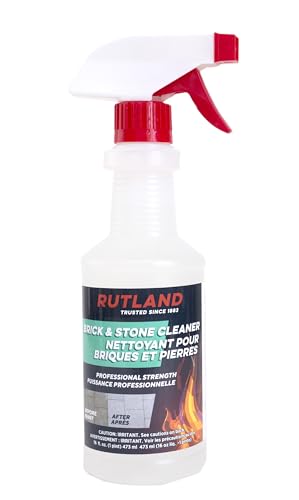
Rutland Brick and Stone Cleaner is a targeted, non-abrasive cleaning solution designed specifically to remove soot, creosote, and smoke residue from fireplace surrounds. Manufactured in the USA and supplied in a 16-fluid-ounce container, this clear liquid emulsifier serves homeowners, DIY renovators, and property managers seeking an effective way to refresh blackened hearths without resorting to aggressive mineral acids.
Regarding surface compatibility, Rutland formulates this cleaner for hearth brick, fire brick, terracotta, marble, and general porous masonry. The cleaner relies on an industrial-strength solvent blend to dissolve greasy creosote and bonded carbon film. Because it contains no dangerous acids, it provides a safer chemical profile for interior living spaces and helps protect acid-sensitive substrates like marble and decorative masonry from chemical etching.
The product packaging provides a manageable 16 oz volume that suits localized fireplace maintenance and annual post-winter cleaning tasks. Its non-abrasive liquid consistency ensures that cleaning power comes from chemical emulsification rather than grit, helping prevent scratch marks on smooth stone faces or crumbly mortar joints during routine care.
Application is straightforward: spray the cleaner onto the soiled area and agitate with a wet, non-metallic brush. The manufacturer explicitly notes that the solution must not dry on the surface before being completely rinsed with clean water. For indoor hearth work, users should prepare the area with drop cloths or towels to manage rinse water and dissolved soot slurry as it comes off the masonry.
A primary limitation to keep in mind is the container size. At 16 fluid ounces, this product is structured for spot cleaning fireplace faces, mantels, and fireboxes rather than treating broad exterior walls. Additionally, because the manufacturer does not list exact square-foot coverage figures, users tackling deep, multi-season creosote accumulation may need extra product and repeated scrubbing passes.
For anyone managing fireplace or chimney masonry, Rutland Brick and Stone Cleaner delivers a practical, acid-free balance of solvent cutting power and surface safety. It is a dependable choice for seasonal hearth touch-ups, restoring clean stone and brick visuals while keeping indoor masonry free from harsh acidic fumes.
Rutland indicates compatibility across several common hearth substrates, including standard hearth brick, fire brick, terracotta, marble, and general porous masonry.
The absence of dangerous acids makes this solution significantly safer for stone types that are prone to acid etching, such as marble, though testing an inconspicuous corner before full application remains standard practice.
This cleaning solution is specifically engineered to target carbon deposits, creosote, and smoke film created by wood burning and fireplace use.
By utilizing an industrial solvent emulsifier, the solution dissolves greasy binder compounds within chimney soot so they can be agitated away with a wet, non-metallic scrub brush.
The formula relies on an industrial-strength solvent emulsifier designed to attack organic carbon deposits without using harsh, hazardous acids.
This non-acid design prevents chemical degradation of surrounding mortar joints and minimizes corrosive fumes when cleaning indoors.

Pros
- Formulated from 100-percent natural sawdust with zero added waxes or oils
- Regular application actively controls creosote to ease seasonal chimney brushing
- Straightforward maintenance schedule of one brick every two weeks
- Lightweight, clean-handling block that creates no mess when loading
- Made in the USA
Cons
- Does not eliminate the need for regular mechanical chimney inspections and sweeping
- Requires ongoing replacement every two weeks during continuous heating seasons
- Single-brick pack requires purchasing multiples for extended winter use
MEECO'S RED DEVIL 1004 Creosote Control Firebrick is a specialized chimney maintenance consumable developed for homeowners who rely on wood-burning fireplaces, hearth inserts, or freestanding wood stoves. Unlike mechanical cleaning brushes or ash vacuums that tackle debris after the fact, this product acts as an active chemical and thermal treatment inside the firebox. Homeowners and cabin owners looking for a low-effort preventative measure to suppress glazed chimney deposits between seasonal sweepings will appreciate its simple, hands-off approach.
The cleaning and maintenance mechanism focuses on altering flue accumulations during normal firebox operation. As the firebrick burns, it disperses treatment agents that rise through the flue, modifying and breaking down sticky creosote deposits clinging to chimney walls. The manufacturer specifies using one brick every two weeks during the burning season, which helps keep flue passages conditioned and ensures that subsequent physical sweeps require far less manual scraping.
In terms of composition and build, this maintenance brick stands out by utilizing 100-percent all-natural sawdust. Many competitive chimney logs rely on paraffin waxes or petroleum binders, but this formulation contains no oils or waxes whatsoever. Measuring 2.75 by 7.5 by 6.5 inches and weighing just 0.5 pounds, the brick is compact, lightweight, and cleanly compacted so it will not crumble or leave greasy marks on your hearth rugs or fireplace tools. It is also manufactured in the USA, maintaining consistent production standards.
Using the firebrick is completely straightforward and fits easily into an everyday winter heating routine. Homeowners simply add one brick to an existing, established fire once every two weeks. There are no powders to measure, no liquid sprays to disperse, and no mechanical adjustments needed. It works across traditional brick or stone masonry fireplaces as well as enclosed wood stoves, providing versatile maintenance across common residential wood-heating setups.
A practical limitation to understand is that chemical creosote modifiers do not replace standard mechanical chimney sweeping or professional safety inspections. While the brick effectively loosens and controls buildup, detached ash and creosote particles must still be removed from the flue, smoke shelf, and firebox using traditional chimney sweeps or ash collection equipment. Additionally, because the package contains only one single-use brick, homes running fires daily throughout freezing months will need to plan ahead and stock several units.
For anyone managing a wood-burning fireplace or stove who wants to minimize heavy flue buildup and make seasonal maintenance smoother, the MEECO'S RED DEVIL 1004 Creosote Control Firebrick is a sensible, wax-free maintenance option. Its all-natural sawdust composition, clean handling, and proven bi-weekly treatment cycle make it a reliable companion for safer hearth operation.
Creosote is a natural byproduct of burning firewood, forming when unburned wood gases, tar droplets, and moisture condense along the cooler interior surfaces of a chimney flue. Over time, creosote hardens into flaky, tar-like, or glazed deposits that restrict flue airflow and create potential chimney fire hazards if left unmanaged.
Preventative chimney consumables like the MEECO'S RED DEVIL 1004 Creosote Control Firebrick work by treating deposits chemically during active combustion. The vapors released during burning modify the creosote, drying it out and turning sticky residue into brittle, brushable ash. Integrating one brick every two weeks into your burning schedule helps prevent dense glaze from solidifying on flue tiles or stainless steel liners, ultimately making annual sweepings faster and far more effective.

Pros
- Multi-surface cleaning across fireplace glass, porous brick, and outdoor stone
- Vertical cling spray mist helps dissolve soot before wiping
- Low-odor formulation is suitable for enclosed indoor living spaces
- Includes two portable spray bottles for multi-room or seasonal use
Cons
- Compact 3.5 fluid ounce bottle capacity is limited for large, floor-to-ceiling masonry projects
- Thick, multi-season creosote buildup may require repeated treatments and moderate brushing
- Generic brand listing provides minimal ingredient and safety data disclosures
The Generic Fast-Acting Fireplace Cleaner 2-Pack is a specialized liquid spray cleaner designed to lift soot, carbon buildup, and ash from hearth surfaces. Built for homeowners, apartment renters with gas fireplaces, and patio fire pit owners, this cleaner offers an accessible way to maintain fireplace aesthetics between seasonal chimney sweeps. Rather than relying on abrasive scouring powders that could scratch heat-treated glass, this spray uses a targeted liquid formula to dissolve grime chemically.
According to the product specifications, this cleaner supports both non-porous and porous surfaces, explicitly including fireplace glass, brick, and stone. The spray nozzle delivers a fine mist engineered to adhere to vertical surfaces, giving the active solution time to break down stubborn tar, soot, and ash. This wide surface compatibility makes it functional for indoor gas inserts, traditional wood-burning brick fireboxes, and outdoor natural stone fire pits.
The package contains two 3.5 fluid ounce spray bottles, prioritizing compact portability and targeted spot treatment over bulk liquid volume. The fine spray dispenser allows users to treat isolated soot marks on glass doors or localized blackening on masonry without drenching adjacent flooring. Additionally, the manufacturer emphasizes a formula that operates without releasing irritating fumes, which is an important consideration when working in finished living rooms and enclosed family areas.
Using the cleaner involves misting the solution onto completely cooled surfaces, allowing it to penetrate the carbon deposits, and wiping the residue away with a cloth or sponge. On porous brick and stone, the liquid works into surface textures to lift trapped ash to the surface. For routine maintenance, a simple wipe is typically sufficient, though deeply set soot on rough textured masonry may benefit from light agitating with a nylon utility brush.
Prospective buyers should keep realistic expectations regarding volume and cleaning scope. At 3.5 fluid ounces per bottle, this cleaner is best suited for localized spot cleaning rather than extensive hearth restorations. Furthermore, while the product claims fast action without strenuous scrubbing, severe layers of baked-on creosote or decades of neglected soot buildup will likely demand several passes and manual scrubbing to clear completely.
For households looking for a quick, low-odor maintenance spray to keep fireplace glass clear and remove fresh soot smudges from brick and stone, this two-pack offers practical convenience. It serves as a handy spot cleaner to keep near your hearth tools for routine touch-ups throughout the burning season.
This spray cleaner is formulated specifically for hearth materials, including tempered fireplace glass doors, porous brick surrounds, and natural stone structures. Its ability to clean non-porous glass without scratching makes it a practical alternative to abrasive kitchen scouring pastes.
For brick and stone, the liquid formula penetrates textured surfaces where dry vacuuming or dusting cannot dislodge oily soot particles. It is explicitly suited for both indoor gas fireplace assemblies and outdoor masonry setups, giving it versatility across different home heating configurations.
Always confirm that the fireplace and all surrounding masonry are completely cooled before applying the spray. When working around decorative mantels or polished wood floors, placing a drop cloth below the cleaning area helps catch loosened soot runoff during the wipe-down process.

Pros
- Includes dedicated physical tools such as a scraper, melamine sponge, and microfiber cloth for varied levels of soot buildup.
- Cleans tough creosote and ash haze without harsh chemical fumes or strong artificial fragrances.
- Safe across cold fireplace doors, wood-burning stoves, hearth panels, oven glass, and ceramic-glass cooktops.
- Finger-spray bottle provides controlled, even distribution across vertical glass panels.
Cons
- Restricted strictly to cold surfaces, requiring wood stoves and fireplaces to cool completely before cleaning.
- Heavy, multi-season creosote accumulation still demands manual scrubbing and scraper effort rather than an instant wipe.
- Intended specifically for glass, cooktops, and hearth surfaces rather than broad flooring or carpet cleaning.
The Quick 'n Brite Fireplace Glass Cleaner Kit is a targeted 16-fluid-ounce cleaning system engineered specifically for wood-burning stove owners, fireplace users, and multi-appliance kitchens dealing with cloudy, soot-stained glass. Baked-on creosote and carbon deposits are notoriously resilient against ordinary household glass sprays, making dedicated abrasive-safe chemistry and targeted mechanical tools essential. This kit serves homeowners, renters, and cabin owners who want an all-in-one package to restore transparency to fireplace doors, hearths, gas cooktops, and oven windows without exposing living spaces to harsh odors.
Designed for manual agitation, the kit pairs an odor-free liquid formulation with dedicated tools to tackle carbon buildup, smoke film, ash, dust, and stubborn creosote. Rather than relying on caustic fumes, the spray clings to vertical glass doors to loosen deposits, allowing the included double-sided scrubber sponge or melamine sponge to lift surface stains. For heavily encrusted carbon that resists simple sponging, the bundled scraper tool allows users to mechanically pare away thick layers without gouging glass surfaces when held at the proper angle.
The kit includes a sturdy 16-ounce bottle fitted with an ergonomic finger sprayer, alongside an assortment of reusable cleaning accessories. The inclusion of both a coarse scrubber sponge and a fine melamine sponge gives users distinct options depending on the intensity of the soot. A dense microfiber towel provides the finishing wipe to capture suspended particles and minimize smudging. Having each tool included eliminates the guesswork of matching secondary cleaning pads with the cleaning chemical.
Using the kit is straightforward but requires strict attention to surface temperature. According to the manufacturer, the solution and tools must only be applied to completely cold glass surfaces, meaning wood stoves and fireplaces must remain unlit and cooled. Users spray the cleaner evenly across the glass, work the residue with a damp sponge or scraper, and wipe away loosened grime with the dry microfiber cloth. Compatible surfaces include fireplace doors, gas-stove cooktops, oven glass doors, microwave glass, hearths, and ceramic-glass ranges.
While versatile on glass and ceramic surfaces, this cleaner is not a universal floor or multi-surface wash, nor is it formulated for warm or active heating appliances. Thick, multi-year layers of baked-on creosote will likely demand repeated applications and measured elbow grease with the scraper tool rather than a single spray-and-wipe pass. Additionally, the kit is intended solely for non-porous glass and ceramic materials, so it should not be treated as a replacement for masonry chimney sweeps or porous stone stain removers.
For households seeking a self-contained, USA-made solution to seasonal hearth grime and greasy stove glass, the Quick 'n Brite Fireplace Glass Cleaner Kit delivers dependable utility. Its combination of a paraben-free, low-odor formula with purpose-built scrubbing tools provides significant value for keeping fireplace doors and kitchen cooktops clear and well-maintained.
The Quick 'n Brite Fireplace Glass Cleaner Kit arrives with a complete assortment of mechanical cleaning tools to support the 16-ounce spray solution. Included in the package is a manual scraper tool designed to dislodge hard, baked-on carbon deposits without requiring razor blade improvisations.
For surface washing and agitation, the kit supplies both a textured scrubber sponge for coarse ash and soot along with a dense melamine sponge for fine polishing and smudge removal. A plush microfiber towel is also provided to buff the glass dry and capture residual moisture, ensuring all required maintenance supplies are ready to use directly out of the box.
Manufacturer guidelines indicate that this cleaning kit is formulated specifically for smooth, non-porous glass and ceramic-glass materials. Supported surfaces include wood stove doors, fireplace glass panels, gas-stove cooktops, microwave-oven windows, oven glass doors, and smooth hearth glass.
A critical manufacturer instruction is that all surfaces must be completely cold before application. Users should never spray the cleaner or apply the synthetic sponges to hot stove glass, active fireplaces, or warm cooktops to prevent thermal shock to the glass and heat damage to the cleaning pads.
Pros
- Includes both a 16-ounce cleaning gel and an ergonomic scrub brush for an all-in-one hearth cleaning solution.
- Thick gel formula clings effectively to vertical fireplace brick, masonry, and glass without immediately dripping.
- Documented compatibility covers both porous masonry materials like stone and rock as well as smooth fireplace glass.
- Short 3 to 5 minute dwell time allows for rapid spot cleaning and soot removal during routine maintenance.
Cons
- Requires manual physical scrubbing and multiple wipe-down passes to clear heavily baked-on creosote buildup.
- Restricted to masonry, rock, tile, and glass substrates, meaning it is not formulated for painted mantels or surrounding wood trim.
- Requires user-supplied clean water spray bottles and rags or microfiber towels to finish the wiping and rinsing process.
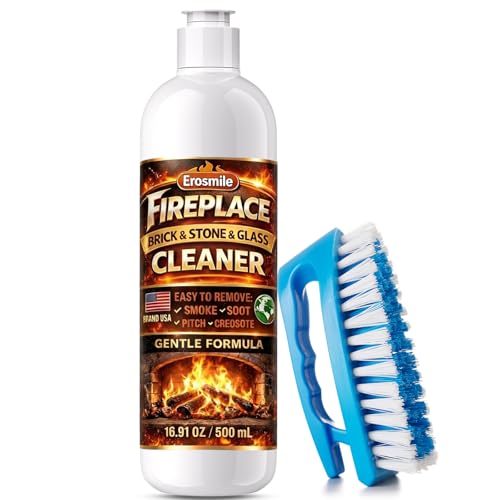
The EROSMILE Fireplace Soot Remover with Scrub Brush Kit is a specialized cleaning gel and manual brush package created specifically for hearth surrounds, wood-burning inserts, and fireplace glass doors. Homeowners and renters with wood-burning or gas hearths who struggle with dark smoke stains, carbon deposits, and dull brickwork will find this focused treatment particularly helpful. Rather than relying on generic household cleaners that run off vertical surfaces, this targeted formula is engineered to handle tough carbonaceous grime on heat-exposed surfaces.
This cleaner functions through chemical dwell penetration combined with manual mechanical scrubbing, operating entirely without motors, cords, or vacuum suction. The concentrated gel seeps into fine surface crevices to loosen accumulated soot, dust, and stubborn burnt marks. It is specifically formulated to treat porous materials such as brick, decorative rock, natural stone, and ceramic or porcelain hearth tile, as well as non-porous fireplace glass. Because carbon soot binds firmly to mineral substrates, pairing a concentrated gel with direct bristle agitation helps release embedded residue before it is wiped away.
The package contains a 16-fluid-ounce bottle of cleaning gel alongside a compact scrub brush designed for targeted agitation. The gel viscosity provides a practical advantage on vertical fireplace facades and tall glass doors, where thin liquid cleaners tend to pool at the base before breaking down tough soils. The included scrub brush provides sufficient bristle stiffness to work the gel into textured masonry crevices, brick mortar lines, and uneven stone joints without requiring motorized cleaning attachments.
Using the kit is straightforward and fits easily into routine seasonal home maintenance. The user applies the gel directly across the soiled fireplace surface, spreads and works it into the texture using the included scrub brush, and lets it dwell for 3 to 5 minutes. Once the chemical has loosened the soot layer, the area is sprayed lightly with clean water and wiped dry with a clean towel or microfiber cloth. Because the process produces suspended dark soot slurry, keeping absorbent rags and protective drop cloths on hand ensures that adjacent living room floors and hearth rugs remain completely clean.
While this cleaner provides targeted utility for mineral hearth surfaces, buyers should note its realistic practical limitations. It is not an automated or hands-free cleaner; longstanding soot buildup and heavily baked-on heat marks will likely require repeated applications along with firm manual effort. Additionally, the manufacturer specifies use for brick, stone, tile, rock, and glass only. It should not be used on painted woodwork, finished mantels, or unsealed flooring without masking off the area to protect against discoloration from chemical contact or dark runoff.
For households looking to restore the clean appearance of soot-stained brick hearths, decorative rock surrounds, or smoke-filmed glass doors, the EROSMILE Fireplace Cleaner Kit offers solid practical value. It combines an effective surface-clinging gel with a purpose-built scrubbing tool at an accessible price point. As long as you are prepared to supply your own wipe-down towels and put in manual scrubbing effort, this 16-ounce kit serves as a dependable, focused maintenance solution for seasonal hearth care.
The EROSMILE Fireplace Soot Remover is formulated specifically for durable, heat-exposed mineral and glass substrates commonly found in residential hearths. Supported surfaces include traditional fireplace brick, decorative rock, natural stone, hearth tiles, and glass stove doors. The clinging gel format ensures that both textured, porous masonry and slick glass panels receive adequate chemical contact time to loosen tough carbon deposits.
This product is not intended for use on painted fireplace mantels, stained wood surrounds, drywall, or delicate floor coverings like hardwood, laminate, or carpet. When cleaning fireplace stone or glass, placing a protective drop cloth or plastic barrier over adjacent flooring prevents dirty rinse water and dissolved soot from dripping onto sensitive household surfaces.
Application is a simple three-stage routine: apply the gel directly onto the stained brick, stone, or glass, spread and agitate evenly with the included scrub brush, and allow the solution to sit for 3 to 5 minutes. This dwell window gives the concentrated chemistry time to break down baked-on soot and heat marks before physical removal begins.
After dwelling, mist the surface with clean water and wipe the loosened grime away using a microfiber cloth or clean towel. Maintenance of the kit itself is minimal; simply rinse the scrub brush thoroughly under warm running tap water after use to clear soot residue, and ensure the 16-ounce bottle cap is securely tightened for storage between fireplace cleaning sessions.

Pros
- 100 percent chemical-free pumice construction eliminates the need for harsh, caustic chemical degreasers on cooking surfaces.
- Shapes to grill grates during use for effective carbon removal from multiple contact angles.
- Handheld dimensions provide firm physical grip and direct pressure without bulky, unwieldy metal scrapers.
- Free of wire bristles, eliminating the hazard of stray metal wires shedding into food.
- Supported by a manufacturer lifetime satisfaction guarantee.
Cons
- Pumice stone wears down with regular scrubbing, generating fine mineral dust that requires thorough wiping before cooking.
- Does not include an integrated handle, requiring caution or an aftermarket holder when working on hot cooking surfaces.
- Relies entirely on manual physical effort rather than automated or chemical-assisted cleaning.
The Avant Grub Commercial Grade Heavy Duty Grill Cleaning Brick 4-Pack is a manual pumice stone scouring tool designed for homeowners, backyard barbecue cooks, and commercial kitchen operators who need to restore flat top griddles, grill grates, and cookware. Instead of relying on harsh spray-on oven cleaners or caustic chemical degreasers, this cleaning block utilizes mechanical friction to lift stubborn, baked-on grease and carbonized food particles. It works well for anyone seeking an easy-to-grip scrubbing solution that eliminates chemical residues on food prep surfaces.
The cleaning method relies entirely on the natural abrasive characteristics of pumice stone. As the block is pressed across hot or cool surfaces, the stone slightly contours to the shape of grill grates, allowing it to scrub carbon deposits from multiple angles rather than merely scraping the top edge. For smooth flat top grills and cast-iron or steel griddles, the flat face of the stone scours away burnt marinades, grease crusts, and stubborn char without scratching the underlying metal when used as directed by the manufacturer.
Each brick measures 8 x 4 x 3.5 inches and features a lightweight charcoal black pumice construction, weighing approximately 1 pound. The handheld size is engineered to fit comfortably into an average grip, giving the user direct downward pressure and tactile control during heavy scouring passes. Because it is a solid block with no mechanical parts, batteries, or metal bristles, there is no risk of loose wire bristles breaking off and contaminating food, which is a frequent concern with traditional metal grill brushes.
Using and maintaining these cleaning bricks is straightforward across supported surfaces, including restaurant griddles, outdoor barbecue grates, pots, and pans. Users typically apply gentle to moderate pressure while moving the block in linear strokes across the soiled area. As the pumice abrades the grime, it gradually creates a fine residue of carbon and stone dust that is easily wiped clean with a damp towel, grill rag, or cooking oil before preheating for the next meal. The four-pack format provides replacement bricks on hand once an individual block wears down from routine use.
While pumice cleaning bricks offer chemical-free scrubbing, buyers should keep a few practical realities in mind. Because pumice is a friable, sacrificial mineral, the stone will wear down with every heavy cleaning session, shedding fine stone dust that must be thoroughly wiped away before cooking. Additionally, this pack includes only the raw pumice blocks without a handle or holder, so users cleaning hot griddles must exercise caution or pair the brick with an aftermarket heat-resistant grill brick handle to protect hands from radiant heat.
For home grillers, flat top griddle owners, and food service setups, the Avant Grub 4-Pack offers dependable scouring performance and consumable value backed by a lifetime satisfaction guarantee. It serves as a practical, chemical-free alternative to aerosol degreasers and eliminates the safety hazards associated with wire bristle brushes.
The mechanical scouring capability of the Avant Grub grill brick targets heavy carbon build-up and burnt food debris through natural mineral friction. As the user scrubs, the stone naturally grooves and molds around round grates or stays flat against griddles, lifting char from the sides and tops of cook surfaces simultaneously.
Because the pumice cleans without liquid chemicals or detergents, food surfaces remain free of chemical odors and lingering caustic compounds. Once scrubbing is complete, the loosened debris and fine stone dust wipe away with a damp cloth or a quick scrape and oil rubdown.
According to the manufacturer, this commercial grade pumice cleaner is suitable for flat top griddles, outdoor barbeque grills, cooking grates, pots, and pans. The stone is formulated to clean thoroughly without scratching treasured cookware or metal surfaces when applied properly.
While engineered to protect metal cook surfaces, users should always test pressure on delicate cookware finishes. It provides versatile scouring utility across backyard barbecues, food truck flat tops, and kitchen cookware plagued by baked-on residue.

Pros
- Supplied as a complete kit containing both the 16.91 fl oz gel and a matching scrub brush.
- Compatible with diverse hearth surfaces including brick, rock, natural stone, tile, marble, and glass.
- Quick 3 to 5 minute dwell period keeps routine hearth cleanup fast and manageable.
- Nonabrasive chemistry helps prevent accidental scratching on smooth tile and fireplace glass doors.
Cons
- Demands manual wiping and water rinsing, which can require multiple cloths on porous, rough-textured brick.
- Deeply embedded, multi-season soot deposits may require repeated applications and vigorous manual scrubbing.
- Not designed to pick up dry ash; loose debris must be vacuumed or swept out before application.
The EROSMILE Fireplace Cleaning Set is a targeted chemical cleaning solution designed for homeowners and renters who need to lift unsightly soot, ash dust, and scorch marks from their hearths. Fireplace maintenance often involves porous masonry that traps black carbon deposits deep within textured crevices. This product is formulated as a concentrated gel rather than a thin liquid spray, allowing it to adhere to vertical brick, stone surrounds, and interior firebox walls without immediately running down onto the floor.
In terms of cleaning performance, the manufacturer specifies that the gel penetrates surface crevices to loosen accumulated soot and stubborn burn marks. Application begins by squeezing the gel directly onto the stained area and working it evenly into the texture using the included handheld scrub brush. After allowing a dwell time of 3 to 5 minutes, the formula begins breaking down carbon grease and grime. The user then mists the treated surface with clean water and wipes away the emulsified residue using a microfiber cloth or utility towel.
Surface compatibility is a key consideration for hearth care, and EROSMILE explicitly formulates this product for brick, natural stone, rock, tile, marble, and fireplace glass doors. Because it is described as a nonabrasive and gentle formula, users can scrub carbon buildup off glass viewing panels and polished marble borders without the micro-scratching often caused by pumice stones or harsh gritty powders. The formulation is also rated for both indoor and outdoor applications, making it suitable for backyard fire pits, outdoor chimneys, and patio fireplaces.
Routine handling and cleanup are straightforward, though preparation is important. Before applying the gel, dry ash and loose debris should be vacuumed or brushed away so the chemical can directly contact the soot-stained surface. Because porous brick absorbs liquids quickly, keeping a spray bottle filled with clean water and a stack of absorbent rags nearby ensures the loosened soot does not dry back into the masonry pores during wiping. The 16.91 fl oz bottle provides enough volume for multiple spot treatments or thorough seasonal refresh sessions.
There are practical limitations to keep in mind. As a manual cleaning gel, the product relies on human effort for agitation and removal rather than mechanical extraction. Deeply set, multi-year soot stains on rough, unsealed brick will likely require multiple passes, extended scrubbing with the included brush, and repeated cloth rinsing. It does not replace a soot vacuum for bulk ash management, nor does it carry disinfectant or antimicrobial claims.
For households looking to clean up dull, smoke-blackened fireplace surrounds before or after the heating season, the EROSMILE Fireplace Cleaning Set offers a well-matched combination of clinging gel chemistry and mechanical scrubbing. Its nonabrasive nature on glass and marble, paired with dedicated masonry compatibility, makes it a sensible choice for homeowners seeking to restore their hearth without using destructive scouring tools.
Hearth surrounds often feature mixed building materials, making versatile chemical compatibility essential. The EROSMILE cleaning gel is explicitly intended for use on traditional brick, rough rock, natural stone, glazed tile, polished marble, and fireplace glass doors. This wide compatibility allows users to clean both the porous masonry surround and the transparent viewing door with a single product kit.
The nonabrasive formula is an important characteristic when dealing with polished tile, marble mantels, and tempered fireplace glass. Abrasive pastes and pumice blocks can leave permanent micro-scratches on delicate glossy finishes, whereas a gel formula combined with a standard synthetic bristle brush helps lift carbon without scouring the substrate. For unsealed stone or sensitive marble, spot testing on a small, inconspicuous corner before full application remains standard practice.

Pros
- Includes a dedicated scrub brush matched to the nonabrasive gel for quick, out-of-the-box application
- Thick gel consistency clings effectively to vertical fireplace walls and textured bricks without dripping excessively
- Safe for polished and delicate hearth surfaces including marble, natural stone, rock, and tile
- Free from overwhelming chemical fumes, making indoor hearth cleanup much more comfortable
Cons
- Requires manual physical scrubbing to agitate deep creosote deposits out of heavily textured, porous brick
- A 16-ounce container may require multiple tubs for expansive, floor-to-ceiling stone fireplaces
- Indoor cleanup requires careful towel placement around the hearth to catch rinse water and lifted soot
The Quick 'n Brite Fireplace Gel Cleaner Kit provides a dedicated cleaning solution for homeowners, renters, and fireplace owners tackling stubborn soot, ash, and creosote buildup. Unlike general household degreasers that run down vertical masonry, this specialized 16 oz pink gel clings to porous surfaces to loosen embedded carbon residue. It is engineered specifically for hearths and fireplace surrounds, making it a reliable fit for seasonal maintenance after winter burning or spring cleaning routines.
Cleaning performance hinges on chemical dwell and mechanical agitation. The thick gel works by penetrating into carbon stains, lifting soot and creosote so they can be dislodged with the included scrub brush. Because the formulation is nonabrasive, it does not scour or scratch smooth materials like marble and ceramic tile, yet it possesses enough cutting action to clean rough brick, fieldstone, and natural rock. The included stiff-bristle brush fits comfortably in hand, providing the necessary mechanical force to work the gel into tiny pores and mortar lines.
One of the strongest practical benefits of this cleaner is its user-friendly profile. Traditional fireplace cleaning chemicals often rely on noxious fumes, acids, or caustic lye that necessitate heavy rubber gloves, respirators, and open windows. Quick 'n Brite manufactures this formula without harsh chemicals, parabens, or heavy chemical scents. The manufacturer notes that users do not need to wear masks or gloves, offering peace of mind for parents, pet owners, and indoor apartment dwellers cleaning wood-burning or decorative hearths in enclosed spaces.
Using the kit follows a simple, repeatable process. You wet the included scrub brush with water, scoop a portion of the pink gel onto the bristles, and work it directly into the soot-stained masonry. After agitating the area and allowing the gel to break down the grime, the residue is removed by misting the surface with clean water and wiping it away with a terry-cloth towel or microfiber cloth. Placing an old towel along the hearth floor helps catch any dirty water runoff during the wiping and rinsing phase.
Prospective buyers should keep realistic expectations regarding heavily neglected masonry. While the gel easily dissolves routine soot film, thick layers of baked-on creosote built up over several decades will require multiple applications, extended dwell time, and substantial manual scrubbing. Additionally, the 16 oz tub is compact; large floor-to-ceiling rock fireplaces or expansive double-sided hearths may require more than one jar to complete a thorough restoration.
For households seeking a dependable, American-made fireplace cleaner that prioritizes surface safety and indoor air quality, the Quick 'n Brite Fireplace Gel Cleaner Kit represents an excellent investment. It delivers targeted cleaning power for brick, stone, and delicate marble surrounds while eliminating the harsh odors and abrasive hazards common to conventional chimney and masonry cleaners.
Quick 'n Brite explicitly formulates this nonabrasive cleaner for brick, stone, rock, tile, and marble fireplace surrounds. Its non-scratch gel ensures that glossy marble mantels and glazed hearth tiles are cleaned without etching, dulling, or surface abrasions.
On rough masonry such as unsealed brick and natural rock, the gel penetrates deeply into mortar joints and textured crevices where soot settles. Always test a small, inconspicuous spot first on rare natural stones or unsealed masonry to verify colorfastness and ease of rinse removal.
Application is straightforward: wet the included scrub brush with water, apply the pink gel directly to the brush, and scrub the stained brick or stone surface in circular motions to work the formula into the soot. Let the gel sit briefly on tough spots to loosen set-in creosote.
To rinse, lightly mist the treated area with a spray bottle of clean water and wipe away the emulsified soot using a damp terry cloth or microfiber rag. Rinse the cleaning brush with warm tap water after use and let it air dry so it remains ready for future seasonal touch-ups.

Pros
- Paint-on, peel-off application completely avoids water runoff and messy bucket rinsing indoors
- Unscented, water-based formula without harsh chemicals makes it well suited for indoor family living areas
- Broad masonry compatibility supports brick, natural stone, and tile fireplace surrounds
- Generous 128 fl oz jug provides plenty of solution for large fireplaces or repeated seasonal cleanups
Cons
- Requires full drying time before peeling, meaning it is not an instant wipe-away cleaner
- Formulated strictly for masonry materials like brick, stone, and tile, excluding wood mantels and metal inserts
- Extremely rough or crumbling brick may require careful, patient application to ensure a smooth, continuous peel
ChimneySaver Paint N Peel is a dedicated liquid masonry cleaner formulated specifically for restoring soot-stained fireplace fronts and hearths. Instead of relying on buckets of water, abrasive scrub pads, or harsh chemical degreasers that risk staining adjacent living room floors, this product uses a water-based, peel-away technique. It is an ideal option for homeowners, renters, and busy families who want to refresh smoke-damaged brick, stone, or tile surrounds without spreading black sludge into grout lines or floorboards.
The cleaning mechanism relies on an elastic binding process. Users paint the liquid directly onto the soiled masonry, allowing the formula to penetrate textured pores where smoke, creosote, soot, and ground-in dirt reside. As the product cures, it encapsulates those contaminants within a flexible film. Once completely dry, the entire layer peels away in sheets, physically lifting the trapped stains away from the surface beneath without needing any water rinses or mechanical abrasion.
Material safety and indoor air quality are central to this cleaner's design. The manufacturer highlights that the solution is unscented and contains no harsh chemicals, making it practical for closed indoor living areas where volatile chemical odors would linger. Compatibility extends across almost all brick, tile, and stone surfaces, providing consistent stain removal across varied hearth architectures without leaving oily residues or dulling natural finishes.
Applying the cleaner is straightforward, though it requires patience. Because no additional water is needed, preparation is mostly about protecting surrounding trim and applying a solid, uniform coat with a standard paintbrush or roller. The film must dry fully to peel off cleanly in large sections. Once removed, disposal is simple since the soot is trapped within the dried skin, keeping your hands, floors, and cleanup equipment significantly cleaner than wet scrubbing methods.
Realistic limitations center on curing time and material boundaries. This is not an instant spot-spray cleaner; rushing the peel before the coating cures completely will leave wet product behind that must be allowed to dry before removal. Additionally, the product is engineered for masonry, meaning it should not be applied to painted drywall, timber mantels, or metal fireplace inserts. Heavily pitted or flaking brick may also demand a thicker application to guarantee that the peeled sheet does not tear apart prematurely.
For households facing stubborn woodsmoke stains or seasonal soot buildup, ChimneySaver Paint N Peel provides a controlled, mess-free alternative to traditional fireplace scouring. The generous 1-gallon container ensures ample solution for multiple fireplace treatments, making it a reliable, high-value investment for home hearth maintenance.
ChimneySaver Paint N Peel is engineered for broad compatibility across porous masonry substrates. It safely treats traditional red brick, textured paving brick, glazed or unglazed tile, and natural stone fireplace surrounds. Because masonry tends to pull soot deep into microscopic voids, the liquid consistency allows the formula to settle into surface crevices where conventional sponges cannot reach.
The application routine requires zero mixing, dilution, or secondary water sources. Users simply coat the target soot stains with a thick, even layer using a brush. As the liquid dries, it turns into a cohesive, rubbery membrane. When peeled from the edges, it pulls the embedded soot, creosote, and smoke residue clean out of the texture, leaving the stone or brick visibly refreshed without water damage to surrounding carpet or hardwood.

Pros
- Penetrates glaze and tar-like creosote to make mechanical flue brushing significantly easier
- Safe for use in catalytic wood stoves, airtight stoves, inserts, and all standard chimney types
- Heat activated at 265 degrees Fahrenheit for straightforward application over established fires
- Comes with an included 1-ounce scoop for clean, repeatable dosing
Cons
- Requires an established fire reaching at least 265 degrees Fahrenheit to activate properly
- Does not replace the necessity of routine mechanical chimney sweeping and annual inspections
- Loose ash still requires manual sweeping and cleanup from the flue or firebox
Rutland Creosote Remover is a specialized granular hearth and chimney cleaning compound designed specifically for homeowners heating with cordwood, wood stoves, fireplace inserts, or traditional open hearths. Creosote buildup presents an ongoing challenge for any wood-burning setup, transitioning over time from flaky soot into dense, sticky glaze that clings stubbornly to flue walls. This product directly addresses that problem by introducing a chemical treatment into the burn chamber, making it an essential maintenance staple for households relying on wood heat throughout the winter.
The cleaning mechanism relies on heat activation at a minimum threshold of 265 degrees Fahrenheit. Once introduced to an active, well-established firebed, the rising heat volatilizes the formula, carrying microscopic active agents upward through the draft system. The manufacturer notes that these compounds penetrate sticky, tar-like creosote layers, chemically breaking the bond that holds the glaze to chimney tiles or metal liners. As the chemical reaction completes, the hard creosote degrades into a loose, powdery, non-adhering ash that readily falls to the hearth floor or is easily brushed away during routine sweeping.
Material safety and appliance compatibility are high priorities for hearth maintenance, and Rutland has engineered this formula for broad use across heating platforms. The product data confirms it is safe for all chimney flue constructions, including masonry tile, clay, and stainless steel pipe liners. Additionally, it is rated safe for modern airtight stoves, fireplace inserts, and free-burning masonry fireplaces. Critically for modern high-efficiency stoves, the compound will not damage or foul sensitive catalytic converters, ensuring clean-burning efficiency remains intact.
Using the treatment fits seamlessly into everyday stove operation. The 32-ounce container includes a 1-ounce measuring scoop, allowing users to apply measured doses directly onto glowing hot coals or active wood fires without guessing. Rutland specifies that the product is safe for regular or even everyday use during high-output heating periods. As the powder works, homeowners will notice that the converted powdery residue collects in the bottom of the stove or chimney clean-out, where it can be handled with standard ash shovels, hearth brushes, or dedicated ash-rated shop vacuums.
While this creosote treatment significantly simplifies chimney care, it has clear functional boundaries. It is not an instant chimney sweep in a tub and cannot bypass the need for physical inspections or mechanical flue brushing. The chemical changes the physical consistency of creosote deposits, but the resulting ash must still be physically removed from the system. Furthermore, households must achieve the required 265-degree Fahrenheit flue temperature for the chemical action to take effect, meaning it cannot be applied to smoldering, low-temperature burns or cold fireboxes.
For homeowners, cabin operators, and wood-heat enthusiasts looking to prevent dangerous glazed creosote accumulation, Rutland Creosote Remover offers dependable, proactive maintenance. It protects chimney integrity, preserves airflow, and reduces the physical effort required during seasonal flue cleaning. When used consistently in conjunction with dry cordwood and periodic mechanical sweeping, this 2-pound tub delivers reliable, cost-effective hearth care throughout the burning season.
Rutland Creosote Remover serves as a proactive maintenance tool rather than a substitute for professional flue care. By chemically transforming heavy, tar-like glaze into dry, non-adhering ash, the powder dramatically reduces the friction and resistance encountered when running a mechanical chimney brush down the flue. Homeowners who perform their own seasonal cleaning will find that treated flue walls release deposits with significantly less scrubbing effort.
Routine ash management remains essential following treatment. Once the powdery ash drops down into the firebox, stove base, or chimney cleanout tee, it must be cleared out using proper hearth tools. Users should always wait until embers and ash are completely cool before collection, using a metal ash bucket or a sealed, ash-rated vacuum cleaner rather than a standard household vacuum cleaner to prevent filter damage or fire hazards.
Proper application requires an active, hot firebed capable of generating at least 265 degrees Fahrenheit to initiate the heat-activation process. Users should add the measured 1-ounce scoop directly over hot coals or dry burning wood as directed by the manufacturer. Operating the stove or fireplace with adequate draft ensures that the active chemical vapor travels evenly up the full length of the chimney liner.
Appliance safety is well documented, with the manufacturer verifying compatibility across airtight stoves, inserts, and setups utilizing catalytic converters. Always store the securely closed 32-ounce container in a dry, cool location out of reach of children and pets. When adding powder over an open firebed, use appropriate fireplace gloves and hearth tools to avoid direct contact with hot embers or escaping heat.
Frequently Asked Questions
Can standard household acid cleaners safely clean fireplace brick?
No, harsh acids like muriatic acid should not be used on indoor fireplace brick. Acid releases dangerous fumes indoors and can quickly eat away mortar joints, etch clay face brick, and pit natural stone. Dedicated formulas like Rutland Brick and Stone Cleaner rely on non-acid emulsifiers and solvents to lift creosote and soot without degrading the masonry.
What is the difference between spray cleaners and gel cleaners on vertical fireplace brick?
Gel cleaners cling directly to vertical surfaces without running down the wall, whereas thin sprays work best for light soot and glass doors. Formulations like Quick N Brite Fireplace Gel Cleaner remain on upright fire brick for several minutes, giving active surfactants time to dissolve embedded carbon. Thin sprays run off rapidly, often needing repeated applications.
Does a peel-away masonry cleaner eliminate the need for heavy scrubbing and rinsing?
Yes, peelable cleaners like ChimneySaver Paint N Peel lift soot without scrubbing or water rinses. The paste dries into an elastomeric film that bonds to carbon deposits, letting you peel away trapped soot in one piece. This dry removal method protects finished hardwood floors, mantels, and living room carpets from dirty wastewater.
How can you tell soot stains apart from moisture-related mold on fireplace brick?
Soot appears as dry or greasy black carbon concentrated around the hearth opening, while biological mold appears greenish or powdery in damp fireboxes. For outdoor masonry fireplaces or damp chimneys facing biological growth, using a dedicated mold and mildew remover for brick clears active organic growth that soot cleaners cannot remove.
Are wire brushes safe to use when scrubbing soot off brick and mortar?
No, wire brushes can gouge soft clay brick faces and disintegrate sandy mortar joints. Steel bristles may also break off and lodge in brick pores, creating unsightly rust spots later. Manufacturers recommend using stiff non-metallic nylon scrub brushes to agitate emulsified soot safely without scratching masonry surfaces.
Can fireplace creosote control bricks replace physical brick and chimney cleaning?
No, creosote control firebricks condition chimney buildup rather than replacing standard maintenance. Burning a treatment brick releases minerals that convert sticky, tar-like creosote into brittle ash that sweeps away easily. While regular use makes chimney brushing simpler, property owners must still wash the hearth face and sweep the flue.





Write Your Review
No reviews yet. Be the first to share your experience!