


Many homeowners watching an automated cleaning disc navigate around baseboards wonder whether it functions more like a motorized broom or a genuine vacuum cleaner. When sorting out whether is roomba a vacuum or sweeper, the answer lies in how the machine handles airborne particulate matter versus loose surface debris. Traditional floor sweepers rely solely on revolving brushes to flick crumbs into an unsealed tray, whereas a true vacuum relies on an internal motor and impeller to create negative air pressure. Devices in the Roomba lineup utilize a hybrid mechanical and pneumatic architecture that combines active motorized suction with mechanical agitation. While full-size upright vacuums for hardwood and carpet deliver higher total airflow through large-diameter hoses, robotic units pack miniaturized vacuum systems into compact, low-profile chassis.
Understanding this distinction helps clarify what tasks an automated unit can realistically handle across different floor plans. Because an authentic Roomba pulls air through a dedicated filter before exhausting it back into the living space, it actively captures fine dust that a purely mechanical sweeper would simply scatter or leave trapped in carpet fibers. Modern iterations have expanded this engineering even further by integrating intense suction ratings, specialized edge-sweeping brushes, and even automated mopping pads. By evaluating how these components interact, you can determine whether a robot cleaner provides enough mechanical agitation and suction performance to meet your everyday floor care standards.


Pros
- LiDAR navigation tracks neat cleaning rows and operates reliably without needing overhead room lights turned on.
- Integrated carpet detection prevents moisture transfer onto rugs during active mopping routines.
- Customizable cleaning modes provide true flexibility to vacuum only, mop only, or run both functions at once.
- SmartScrub functionality provides active pad agitation for better hard-surface stain management than passive drip cloths.
Cons
- Initial pairing and ongoing robot communication strictly require a 2.4 GHz Wi-Fi network connection.
- The 4.1-inch total height with the LiDAR turret may prevent the machine from clearing very low-profile furniture toe kicks.
- The robot avoids carpets while mopping rather than lifting the pad, requiring a separate vacuum-only pass to clean carpets.
The iRobot Roomba 105 Combo is an automated 2-in-1 robot vacuum and mop engineered for busy households, pet owners, and apartment dwellers balancing hard surfaces with area rugs. Built around a 4-stage cleaning architecture, it incorporates an edge-sweeping brush, a multi-surface main brush roll, a microfiber mopping pad, and power-lifting suction that the manufacturer rates at 70 times the level of legacy Roomba 600 series units. For households that prioritize hands-off daily maintenance over dragging out heavy uprights and manual spray mops, this combo machine offers an approachable way to tackle dust, kitchen crumbs, and surface spills in a single pass.
Daily cleaning performance relies on thoughtful floor segregation. Unlike basic hybrid robots that drag wet mop cloths indiscriminately over carpeting, the Roomba 105 Combo features automatic carpet detection designed to steer the wet pad away from rugs while mopping cycles are active. Users can tailor cleaning jobs across vacuum-only, mop-only, or simultaneous vacuum-and-mop routines directly from the Roomba Home App. When dealing with dried spills or higher-traffic hallways, the onboard micro-pump distributes steady liquid flow to the microfiber pad, while the selectable SmartScrub setting provides twice the scrubbing intensity compared to standard gliding passes.
Hardware design centers on systematic coverage rather than random bouncing patterns. The robot utilizes ClearView LiDAR navigation mounted on top of its chassis to generate precise floor layouts, clean in disciplined rows, and maneuver around household obstacles even in complete darkness. At 13.2 inches wide, 13.2 inches long, and 4.1 inches tall with an overall weight of 6.27 pounds, the chassis manages to navigate under standard bed frames and dining chairs while housing its multi-surface agitation components. The sleek black exterior integrates subtle textures that fit cleanly alongside contemporary furniture, while top-panel buttons provide direct manual controls when a phone or voice assistant is out of reach.
Setup requires pairing the robot with a 2.4 GHz Wi-Fi band, after which users can return their mobile devices to faster 5 GHz frequencies. The companion Roomba Home App facilitates deep personalization, letting homeowners outline keep-out zones around pet bowls or cluttered corners, set room-specific suction levels, adjust cleaning passes, and monitor remaining filter life. Routine upkeep involves rinsing or laundering the reusable microfiber mop pad, periodically clearing hair from the multi-surface brush roll, and returning the unit to its self-charging dock. Adding manufacturer-compatible cleaning solution to the tank also allows for tailored hard-floor freshness without clogging the internal micro-pump.
Prospective buyers should keep realistic expectations regarding clearance dimensions and rug workflows. Because the LiDAR dome increases the robot height to 4.1 inches, it might not clear tight clearance gaps underneath certain low-profile recliners, dressers, or toe kicks that ultra-thin 3-inch vacuums could navigate. In addition, while the carpet-avoidance system keeps rugs safe from wet pads during mopping, the robot does not lift its mop pad to vacuum carpets in the same run; carpets must be vacuumed separately in vacuum-only mode or tackled with the mop pad removed. Multi-pet homes may also need to monitor debris levels closely since the manufacturer does not specify an extra-large dust bin capacity.
Overall, the Roomba 105 Combo represents a practical, high-value floor-care solution for budget-conscious families, renters, and multi-surface homeowners. By combining LiDAR-guided efficiency, customizable moisture regulation, and active carpet safeguarding, it takes the guesswork out of hybrid cleaning routines. If your home features an open-concept mix of hard floors and area rugs that demands consistent daily debris pickup without water damage to textiles, this model delivers dependable automated maintenance at an accessible tier.
The Roomba 105 Combo addresses one of the most frustrating aspects of 2-in-1 robot cleaning: damp carpets. By utilizing dedicated onboard detection sensors, the robot recognizes soft textile boundaries and actively steers clear of area rugs and carpeting whenever a wet mopping cycle is selected. This design removes the tedious chore of building physical blockades or drawing awkward exclusion zones every time the floor needs washing.
Mopping efficiency is bolstered by an electronically controlled micro-pump that keeps the reusable microfiber pad evenly damp from start to finish rather than relying on uneven gravity dripping. Users can toggle between standard water delivery or compatible cleaning solutions to target sticky kitchen spills. For tougher grime, engaging the SmartScrub mode triggers double the scrubbing action across hard floor surfaces to loosen dried spots before they settle.
Efficient room tracking is powered by ClearView LiDAR technology, which creates detailed layout maps of your living space during its initial cleaning sweeps. Because LiDAR operates using light pulses rather than optical camera lenses, the Roomba 105 Combo navigates reliably in bright daylight, low-light hallways, or pitch-black rooms without losing its position or getting stuck in repetitive loops.
Control options fit seamlessly into smart home setups, supporting hands-free voice commands through Amazon Alexa, Apple Siri, and Google Assistant. Through the Roomba Home App, homeowners can inspect real-time progress, review estimated cleaning durations, adjust suction stages, establish virtual keep-out boundaries, and track consumables such as filter life to keep operation smooth over the long haul.


Pros
- Smart ClearView LiDAR navigation plans efficient row-by-row cleaning routes and creates customizable home maps.
- Supports digital keep-out zones and targeted room cleaning directly through the Roomba Home smartphone app.
- Recharge and resume functionality prevents abandoned cleaning cycles in mid-room floor plans.
- Multi-surface brush and side brush work together to pull debris from edges and floor surfaces.
Cons
- LiDAR sensor housing creates a 4.1-inch clearance height that may restrict access under very low furniture.
- Requires a dedicated 2.4 GHz Wi-Fi network connection during initial setup and continuous robot communication.
- Does not include an auto-emptying base station, requiring manual dust bin emptying after cleaning runs.
The iRobot Roomba 105 Vac is an automated dry vacuum cleaner designed for apartment dwellers, busy families, and multi-surface households seeking structured floor maintenance. Built to take the daily chore of floor sweeping off your hands, this robotic unit moves away from basic bump-and-turn models by introducing intelligent laser-guided coverage. It is especially suited for pet owners dealing with shedding hair, parents battling routine snack crumbs, and anyone with a mixture of floor coverings who wants predictable, systematic sweeping rather than random navigation patterns.
Cleaning capability centers on a 3-Stage Cleaning system backed by what the manufacturer lists as 70 times more power-lifting suction compared to older Roomba 600 series models. Agitation is handled by a multi-surface brush roll paired with an angled edge-sweeping brush to sweep dirt out of baseboard perimeters into the central vacuum channel. Users can tailor cleaning intensity directly from their smartphone by adjusting suction power levels and setting the number of cleaning passes per room. When localized messes occur, such as spilled dry pet kibble or tracked-in soil by the front door, the dedicated spot clean mode commands the robot to vacuum a targeted zone repeatedly for up to five minutes.
Navigation and spatial awareness represent a notable operational step forward thanks to onboard ClearView LiDAR technology. The top-mounted sensor scans interior spaces quickly to create accurate floor plans, enabling the robot to navigate smoothly around obstacles, calculate efficient parallel cleaning paths, and avoid tumbling down stairways using integrated drop-off cliff sensors. If the cleaning cycle outlasts the robot's current battery reserve, the Roomba 105 Vac automatically navigates back to its compact charging dock to power up before resuming the clean precisely where it stopped.
Hardware design remains practical and compact, weighing in at 6.15 pounds with dimensions of 4.1 by 13.2 by 13.2 inches in a matte black finish. Initial configuration runs through the Roomba Home app over a 2.4 GHz Wi-Fi connection, after which mobile devices can switch back to standard 5 GHz networks. The mobile interface provides full schedule automation, estimated cleaning times, filter life tracking, and customizable keep-out zones to shield delicate floor areas or pet feeding dishes. For physical interactions, users can initiate cycles via top-panel buttons or pair the machine with Siri, Google Assistant, or Alexa-compatible smart home devices for spoken voice commands.
Realistic operational limitations should be factored into your decision. Because the LiDAR dome elevates the vacuum's profile to 4.1 inches, it may fail to slip under ultra-low clearance couches, media consoles, or platform beds that lower-profile optical robots might navigate. Additionally, this is a dedicated dry-vacuuming system without built-in mopping hardware, and it utilizes a standard self-charging base rather than an auto-emptying dust tower, meaning owners will need to routinely empty the onboard dust bin and inspect the multi-surface brush roll for accumulated fibers manually.
For homeowners and renters looking for an affordable, name-brand robot vacuum with sophisticated room mapping and customizable suction control, the iRobot Roomba 105 Vac stands out as a dependable choice. Its combination of structured row navigation, voice-assistant support, targeted spot treatment, and virtual boundary protection delivers reliable everyday convenience for multi-surface living spaces without unnecessary operational complexity.
ClearView LiDAR technology serves as the primary guidance system for the iRobot Roomba 105 Vac, rapidly generating floor maps for structured, row-by-row cleaning rather than chaotic bounce patterns. This active scanning allows the robot to calculate efficient paths, steer cleanly around furniture legs, and maintain spatial awareness even in dimly lit rooms where optical cameras often struggle.
Through the Roomba Home mobile app, mapping capabilities extend to custom room labeling, schedule targeting, and virtual keep-out zones to safeguard pet bowls, toy areas, or clutter-prone corners. Integrated cliff detection sensors continuously monitor floor edges to prevent accidental drops down open stairwells, while recharge-and-resume logic guarantees that larger floor plans receive complete coverage by recharging mid-cycle and finishing remaining rooms automatically.
Routine upkeep on the Roomba 105 Vac is straightforward and designed to keep mechanical components running smoothly over time. The onboard dust bin unlatches quickly for manual disposal directly into a household trash can, while the Roomba Home application actively monitors and displays filter status so you know when it is time to inspect or swap out the pleated filter element.
The multi-surface brush roll and single edge-sweeping brush can be accessed from the underside for routine clearing of wrapped long hair, pet fur, or accumulated thread. Regularly wiping down the clear sensor windows, charging contact plates, and the LiDAR dome with a dry microfiber cloth ensures unobstructed navigation and uninterrupted charging contact across weekly cleaning schedules.

Pros
- Multifunction dock handles debris emptying for up to 90 days, pad washing, and heated pad drying at 113°F.
- Automatic 10mm mop lift prevents wet pad contact on low-pile rugs and carpets during mixed cleaning runs.
- Tangle-free rubber brushes effectively gather pet hair without excessive winding or frequent manual cutting.
- Smart LiDAR mapping and obstacle avoidance reduce the need to pre-clear floors of cords and shoes before cleaning.
Cons
- Multifunction docking station occupies significant floor space and requires routine clean and dirty water tank management.
- The 10mm mop clearance may still touch high-pile carpets or thick shag rugs.
- Manufacturer specifications do not provide exact battery runtimes or dock water tank capacities.
The iRobot Roomba Plus 415 is an automated floor-care system designed for multi-surface households, busy families, and pet owners looking to streamline daily floor maintenance. Engineered as a hybrid vacuum and mopping robot, it handles dry debris collection and wet scrubbing in a single coordinated run. For homes with both hard floors and area rugs, this design reduces the need to run separate appliances or drag out manual mops for routine messes.
Cleaning performance is supported by a manufacturer-rated 20,000Pa of suction and DualClean spinning mop pads. To address stuck-on grime, the integrated SmartScrub mode applies downward pressure against hard flooring, targeting dried food splatters, beverage drips, and tracked-in muddy paw prints. When transitioning from hard flooring onto carpets or rugs, built-in floor sensors prompt the mop pads to lift 10mm automatically, keeping soft flooring dry while continuing dry vacuum extraction.
The build quality reflects a focus on accessibility and pet-friendly maintenance. Measuring 3.29 inches in height, the robot features a slim chassis designed to slide under low-profile sofas, dressers, and beds where pet dander settles. The underside employs tangle-free rubber brushes that collect long hair and pet fur without the tight winding commonly seen on standard bristled rollers. In addition, an extending side brush sweeps along baseboards and corners to guide loose crumbs into the primary vacuum stream.
Day-to-day operation centers on the AutoWash Dock, which minimizes regular hands-on upkeep. The station empties the robot dust bin for up to 90 days, cleans the mop pads after cleaning sessions, and dries them with 113°F warm air to help prevent sour odors and mildew. Navigation is driven by LiDAR mapping and obstacle recognition, which allows the robot to steer around stray shoes, pet toys, and charging cords. Homeowners can use the mobile app or voice control to set targeted cleaning zones in high-traffic entryways or around kitchen islands.
Despite its automation, there are practical boundaries to keep in mind. The multifunction dock requires dedicated floor clearance and needs routine attention to empty dirty water and replenish the clean water supply. While the 10mm mop lift works well for common low-profile rugs, plush or high-pile carpeting may still graze the damp pads. Additionally, battery runtime and specific tank capacities are not listed in the manufacturer specifications, meaning run duration on a single charge will vary depending on the home layout and scrubbing intensity.
Overall, the iRobot Roomba Plus 415 is a compelling choice for households seeking automated floor care with minimal manual maintenance. It is particularly well suited for pet owners and busy families with mixed sealed hard floors and standard rugs who want dependable crumb pickup, automated mopping, and self-cleaning dock convenience without daily chores.
The wet-cleaning system on the Roomba Plus 415 uses DualClean mop pads combined with iRobot SmartScrub technology. Instead of simply dragging a damp cloth across the floor, the system applies downward pressure to actively scrub away dried spills, sticky kitchen footprints, and pet tracks across compatible hard floors.
Moisture control is managed with automated surface detection. When the unit approaches carpet or area rugs, it elevates the spinning mop pads 10mm into the chassis, allowing the vacuum to continue pulling debris from rugs without dampening the fibers. After completing the run, the AutoWash Dock washes the pads and dries them using 113°F warm air to curb bacterial odor buildup.
Navigation in the Roomba Plus 415 relies on precision LiDAR mapping paired with optical obstacle detection. This layout allows the robot to plan efficient cleaning paths in light or dark rooms while dynamically avoiding unexpected floor hazards like pet toys, power cables, and shoes, eliminating the chore of pre-cleaning before starting a cycle.
For households with shedding animals, the cleaning head incorporates dual tangle-free rubber brushes that resist hair wrapping, routing pet fur straight into the suction channel. Users can also designate specific cleaning zones in the app, such as litter box perimeters or food bowl stations, for fast, targeted spot cleaning on demand.
Pros
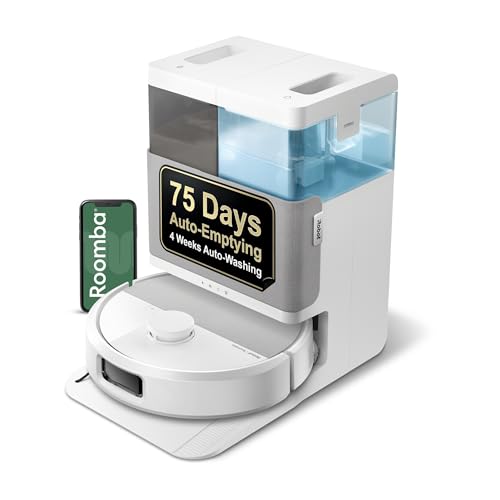
- AutoEmpty dock manages dry dust and debris for up to 75 days without creating dust clouds during disposal
- Automatic carpet avoidance prevents the wet microfiber mopping pad from dampening area rugs or carpeted rooms
- ClearView LiDAR mapping supports precise room navigation, custom cleaning schedules, and app-based keep-out zones
- Multiple cleaning modes allow customized suction levels and adjustable liquid output for different floor care tasks
- SmartScrub mode provides enhanced back-and-forth agitation for sticky messes on hard floors
Cons
- Setup requires a dedicated 2.4 GHz Wi-Fi network connection and does not support initial configuration on 5 GHz bands
- At 4.09 inches tall, the top-mounted LiDAR sensor may restrict access under low-profile couches and cabinets
- The manufacturer does not publish exact liquid tank capacities or runtime figures per battery charge
The iRobot Roomba 105 Combo Robot Vacuum and Mop with AutoEmpty Dock is a versatile 2-in-1 automated floor-care machine designed for busy homes, pet owners, and multi-surface spaces. Operating as both a dry vacuum and an active damp mop, this robotic cleaner handles daily floor maintenance by pairing automated dirt disposal with intelligent path planning. For households balancing area rugs and hard floors, its standout operational feature is automatic carpet avoidance during mopping cycles, which ensures that wet microfiber pads never drag across delicate rugs.
Dry debris pickup is driven by a multi-surface brush roll, a dedicated edge-sweeping brush, and an intense suction system that the manufacturer lists at 70 times baseline power-lifting capability. Crumbs, pet hair, and tracked-in entrance dirt are swept into the internal dustbin before the robot returns to the dock to automatically evacuate the debris. The dock uses sealed replacement bags designed to trap 99% of particles down to 0.7 microns, preventing the messy dust plumes commonly associated with emptying bagless robot vacuum bins.
Hard-floor care is handled via an integrated microfiber mopping pad fed by an internal micro-pump that dispenses clean water or compatible cleaning solutions. For kitchens and entryways dealing with dried spills or sticky messes, the Roomba Home App includes a SmartScrub mode that commands the robot to perform 2X deeper scrubbing compared to standard single-pass mopping. Because the unit actively recognizes carpets and steers clear during wet cycles, you do not need to install physical barriers or program complex no-mop boundaries just to protect your rugs.
Navigation is powered by ClearView LiDAR technology that rapidly scans and maps your layout. Measuring 13.35 by 13.19 inches with an overall height of 4.09 inches, the robot maneuvers smoothly between chair legs, navigates along baseboards, and uses built-in drop sensors to prevent falls down stairs. Through the Roomba Home App, you can view estimated cleaning times, schedule specific rooms, adjust the number of cleaning passes, set keep-out zones, and track consumable filter status.
There are practical limitations to keep in mind before purchasing. The 4.09-inch profile is slightly taller than camera-only or sensor-less robot vacuums, meaning it may not fit beneath furniture with very low ground clearance. Furthermore, setup strictly requires a 2.4 GHz Wi-Fi connection, and the manufacturer does not provide exact runtimes or fluid tank capacities, meaning very large floor plans may require the robot to clean in stages or pause for tank refills.
For homeowners, apartment dwellers, and pet-friendly households wanting hands-off floor care without manual dustbin dumping, the Roomba 105 Combo provides strong practical value. Its balance of reliable LiDAR mapping, up to 75 days of sealed debris collection in the AutoEmpty dock, and dependable carpet detection while mopping makes it a well-rounded maintenance cleaner for everyday living.
The Roomba 105 Combo features a controlled wet-cleaning system powered by an internal micro-pump that keeps the microfiber mopping pad evenly damp throughout the cycle. Users can fill the fluid reservoir with plain water or a compatible cleaning solution to help lift dried footprints, light grease, and surface grime from hard flooring surfaces.
When deeper agitation is needed for sticky kitchen spills or high-traffic entryways, users can activate the SmartScrub mode in the app. This feature directs the robot to scrub back and forth over the floor surface, providing double the scrubbing action of standard mopping passes. Because the robot automatically detects carpeting, it discontinues mopping paths over soft flooring, ensuring rugs remain completely dry without manual intervention.
Using ClearView LiDAR mapping, the Roomba 105 Combo scans your home layout quickly upon initial setup, creating an accurate digital floor plan inside the Roomba Home App. The onboard LiDAR allows the robot to clean in structured, efficient rows rather than random bounce patterns, minimizing missed spots across open floor plans.
The navigation array also includes integrated cliff sensors to prevent tumbling down stairwells or off raised thresholds. Inside the companion app, users can leverage the generated map to assign room names, establish customized keep-out zones around pet bowls or clutter, and view estimated cleaning times before starting a cycle.
Routine dry maintenance is heavily reduced by the included AutoEmpty dock, which pulls debris out of the robot's bin and into an enclosed disposal bag capable of holding up to 75 days of collected dust and pet hair. When the bag reaches capacity, it can be lifted out and thrown away without exposing the user to loose dust particles.
Wet cleaning components require regular manual attention to maintain hygiene and performance. The microfiber mopping pad should be removed, laundered, and dried between cleaning runs, and the robot comes packaged with an extra pad to simplify laundering rotations. Additionally, users can monitor the operational lifespan of the onboard filter directly through the Roomba Home App to ensure optimal airflow over time.

Pros
- Comprehensive maintenance bundle includes rollers, filters, side brushes, screws, and a screwdriver
- Detachable roller design pairs with the included cleaning tool to make unraveling tangled hair much simpler
- Restores physical sweeping performance and edge-cleaning reach at a fraction of OEM component costs
- Tool-free snap-in installation for the dual main brush assembly makes routine swaps fast and straightforward
Cons
- Aftermarket third-party set rather than original equipment manufactured by iRobot
- Compatible only with Roomba 500 and 600 series dual-roller modules, not modern rubber extractors on e, i, or s series vacuums
- Traditional bristle brush naturally traps pet hair and requires regular manual untangling
This aftermarket replenishment accessory pack from Pivxsnkew is designed specifically for owners of Roomba 500 and 600 series robot vacuums looking to refresh worn cleaning parts. Whether running a Roomba 694 in a busy family home or an older Roomba 650 in an apartment, mechanical brush wear and saturated filters gradually reduce everyday cleaning performance. This kit directly targets budget-conscious households that want to extend their robot vacuum service life without overpaying for original manufacturer replacements.
Roomba 500 and 600 series vacuums rely on a counter-rotating dual-brush system paired with a side-sweeping brush to pull debris into the dust bin. This kit supplies the primary floor-contact points: one traditional bristle brush and one flexible rubber-style beater brush. Working in tandem, these rollers agitate carpet fibers and sweep hard floor surfaces to dislodge dust, crumbs, and tracked-in debris. The four included side brushes help ensure the vacuum continues pulling debris from baseboards and corners, while the three dust filters maintain proper airflow through the dust bin.
The replacement parts are constructed from molded polycarbonate and synthetic bristles designed to match the original factory form factor. The package comes with a mini screwdriver and four dedicated screws, which solves the common issue of lost or stripped side brush fasteners during routine upkeep. The manufacturer also includes a comb-style cleaning tool, which is helpful for cutting through wrapped pet hair, thread, and carpet fibers that gather around the central bristle roller over time.
Installing the main roller brushes requires no tools at all. Vacuum owners simply unlatch the robot cleaning head brush frame, drop the new rollers into the keyed drive sockets, and snap the latch shut. Replacing the side brush takes only a couple of minutes using the included screwdriver to secure the arm onto the motor post. Maintaining these parts involves tapping out dust from the filters after a few cleaning cycles and periodically removing the roller endcaps to clear out built-up fur and fuzz.
Because this is a third-party accessory bundle, physical fitment tolerances may occasionally feel slightly tighter or looser than factory-original parts. Additionally, this kit is strictly built for Roomba models utilizing the classic dual bristle and beater brush mechanism; it will not fit modern Roomba e-series, i-series, j-series, or s-series models that use dual rubber extractors. Bristle rollers also require more hands-on clearing than all-rubber designs, especially in homes with shedding cats or dogs.
For households operating compatible Roomba 600 or 500 series robot vacuums, this replacement kit offers a practical and economical way to keep daily floor cleaning on track. It delivers all the standard wear items - rollers, edge brushes, and filters - alongside the necessary maintenance tools, making it an easy recommendation for routine robot vacuum servicing.
The core of this replacement kit is the dual-brush mechanical system that defines Roomba 500 and 600 series cleaners. The package includes one traditional bristle brush and one flexible beater brush, replicating the original dual-action cleaning head setup. As the robot moves, the flexible beater brush loosens larger debris from floor surfaces while the dense bristle brush sweeps fine dust and pet hair upward into the suction channel.
Also included are four replacement side-sweeping brushes. These three-arm brushes are designed to spin along room perimeters, sweeping crumbs and dirt away from walls and baseboards into the direct path of the main counter-rotating rollers. The included hardware and screwdriver ensure you have the exact screws needed to secure the brushes firmly in place without hunting for spare parts.
Routine maintenance is essential for keeping robot vacuums operating efficiently, and this kit is organized to make replacement simple. The dual main rollers feature snap-in end fixtures that drop directly into the vacuum module without requiring tools. The brush ends are detachable, allowing you to slide off hair coils and debris that tend to wrap around the drive axles.
To help with everyday brush care, a dedicated cleaning tool is provided to clear fibers caught in the main bristles. Swapping the side brush requires only the included mini screwdriver to remove the retaining screw, seat the new brush, and fasten it down. The three flat dust filters easily slot into the robot dust bin frame to help maintain proper vacuum airflow.


Understanding How Roombas Combine Vacuum Suction and Sweeping Mechanics
To answer the primary question directly, a Roomba is fundamentally an autonomous robot vacuum cleaner rather than a simple floor sweeper. While it incorporates spinning sweep brushes and rotating rollers to dislodge debris, it depends on an internal electric motor to generate vacuum suction that pulls particulate matter through an internal filter. Understanding the engineering behind this hybrid system helps clarify how it manages daily dust, pet hair, and floor grit across diverse home layouts.
The Fundamental Distinction Between Vacuum Suction and Mechanical Sweeping
A traditional mechanical sweeper relies entirely on kinetic energy transferred from rotating brushes to propel debris into a collection hopper. These devices do not have an electric fan, an exhaust port, or a differential air pressure system to lift fine particles. As a result, manual or motorized sweepers excel at snatching up large, visible crumbs from firm surfaces, but they struggle with fine silt, dander, and deep carpet grit. They lack the sealed airflow channels necessary to draw micro-particles out of carpet pile or floor crevices.
A vacuum cleaner, by contrast, relies on an internal fan or motor to generate active suction by lowering the air pressure inside its intake nozzle. Ambient air rushes into the low-pressure void, carrying dust, dirt, and pet hair along with it through an internal pathway. A Roomba operates on this exact pneumatic principle. Although its exterior profile is compact, the machine houses a dedicated motor that pulls air through its cleaning head, routes it through an airtight dust channel, and forces it through a pleated filter before expelling clean exhaust air.
Because the Roomba draws air through a filtration chamber, it actively separates microscopic allergens from the exhaust stream. A simple floor sweeper merely displaces airborne dust, frequently blowing light particles into the room while collecting heavier grit. By sustaining continuous suction, the robot prevents micro-debris from blowing out of the collection chamber as it travels across different floor textures.
Inside the Cleaning Head: Dual Rollers, Side Brushes, and Airflow Channels
The confusion regarding whether a Roomba is a sweeper often stems from its visible underside components. Every Roomba model features an edge-sweeping brush that protrudes beyond the machine circumference to pull dirt out of corners and baseboard edges. Beneath the chassis, the cleaner also uses rotating extractors or brush rolls that sweep the floor surface. In legacy platforms such as the 500 and 600 series, this assembly consisted of a counter-rotating bristle brush and flexible beater bar.
Third-party maintenance kits, such as replacement packages from Pivxsnkew, still supply these classic bristle and beater rollers alongside replacement side brushes and filters for older units. These brushes mechanically lift debris from the carpet pile so the internal suction channel can whisk it away. Modern platforms have replaced bristle brushes with dual multi-surface rubber rollers that spin in opposite directions. The first roller loosens embedded dirt and guides it toward the center of the cleaning head, while the second roller accelerates the debris directly into the high-velocity vacuum intake channel.
This mechanical interaction mirrors the brush-roll action found on full-size upright vacuum cleaners. Without this physical agitation, vacuum airflow alone would struggle to pull heavy grit out of carpet fibers. The mechanical sweeping motion works in close coordination with active suction rather than serving as an alternative to it. The combination of sweeping brushes and motorized airflow ensures that both large debris and microscopic dust enter the collection bin reliably.
Motor Power and Suction Metrics Across Generations
Suction capabilities have evolved dramatically across different generations of robotic cleaners. Early robotic units featured modest airflow ratings, leading some users to compare their cleaning efficacy to that of a battery-powered carpet sweeper. However, continuous motor refinements have significantly increased static pressure and volumetric airflow in modern robotic chassis. Current generation models, including the Roomba 104, 105, 415, and 505 series, feature high-efficiency motors engineered to pull stubborn messes from dense pile and hard flooring.
Manufacturer specifications for modern models highlight these advancements through substantial performance ratings. Units such as the Roomba 104 and Roomba 105 combo systems feature power-lifting suction rated at seventy times the power of classic Roomba 600 series robots. Higher-tier options, like the Roomba Plus 415 and 415X, feature suction specifications reaching up to 20,000 Pa of static pressure. These elevated suction levels allow the intake port to lift embedded pet fur, dried mud, and microscopic dust that a non-suction sweeper would simply roll over.
The internal airflow path accelerates the dislodged particulate directly into the sealed bin without allowing it to settle back onto the cleaned flooring. Higher suction also maintains consistent pickup when transitioning across uneven threshold transitions. While a mechanical sweeper loses effectiveness whenever its brushes lose firm surface contact, a robot vacuum draws in nearby dust through active airflow even across small floor gaps.
Carpet Agitation and Deep Pile Performance Realities
Carpet cleaning highlights the operational boundary between basic sweepers and dedicated vacuum cleaners. When operating on flat commercial carpet or low-pile rugs, a basic carpet sweeper can flick loose lint into its bin. Once the pile height increases, however, sweeper brushes merely flatten the fibers without removing the heavy sand and grit resting near the backing. A Roomba counters this limitation by combining the physical beating action of its rollers with focused negative air pressure.
The rubber fins compress the carpet pile momentarily, flexing the fibers to release trapped grit into the direct line of suction. Even with robust motor systems, robotic cleaners face physical constraints compared to full-size corded machines. Their compact chassis, modest battery reserves, and limited floor clearance mean they cannot always replace a high-draw upright machine on thick plush carpeting. Households with deep-pile textiles often find that dedicated vacuums for plush carpets provide the motor power and adjustable deck heights needed to prevent roller stalls.
A Roomba serves primarily as a continuous maintenance cleaner, preventing daily debris from sinking deep into the pile rather than providing the periodic deep-cleaning extraction of a heavy corded appliance. Daily automated runs keep surface grit from abrading carpet fibers over time. For homes with standard low-to-medium pile carpets, this continuous vacuuming maintains a consistently clean appearance between occasional deep cleans.
Hard Floor Pickup and Hybrid Vacuum-Mop Configurations
On hard surfaces such as tile, engineered vinyl, and sealed hardwood, the balance between sweeping and vacuum suction shifts. A traditional broom or sweeper frequently pushes fine flour, pet dander, or dust bunnies across the room, scattering debris into the air. A Roomba uses its angled edge-sweeping brush to gently flick edge debris inward toward the center intake where active suction captures it immediately. This direct capture minimizes the scatter effect commonly seen with unsealed sweepers or poorly shielded floor heads.
Many contemporary units also combine dry vacuum pickup with wet hard-floor maintenance. Models such as the Roomba 104, 105 Combo, 415, and 505X integrate microfiber mopping pads and controlled fluid dispensing systems alongside their suction motors. These hybrid systems vacuum dry grit first, preventing abrasive dirt from scratching delicate floor coatings, and then follow up with micro-pumped water or cleaning solution. If you want to maintain sensitive surfaces, reviewing specialized vacuums for hard wood floors helps contextualize how robotic extraction and mopping pads safeguard wood finishes against grit abrasion.
Smart detection sensors on combo models lift the wet pads or steer the robot away from carpets entirely to keep area rugs dry during mopping cycles. This dual-action approach handles both loose debris and sticky spills in a single autonomous pass. In contrast, a mechanical floor sweeper has zero damp-cleaning capability and would simply smear wet kitchen spills across the floor.
Air Filtration, Dust Containment, and Auto-Emptying Docks
A defining characteristic of an authentic vacuum cleaner is its ability to separate incoming debris from the exhaust air stream using engineered filtration media. Mechanical sweepers do not feature filtration systems because they do not process a moving volume of air. In contrast, every Roomba contains a pleated filter designed to capture small particulate matter before air exits the chassis. These filters trap pet dander, pollen, and dust mite residue, preventing recirculated exhaust air from degrading indoor air quality during a cleaning cycle.
Modern self-emptying docking stations have extended this dust-containment capability even further. Bases such as the AutoEmpty dock on the Roomba 105 Vac and the AutoWash dock on the Roomba Plus 415 and 505 series feature enclosed vacuum pumps that evacuate the robot dustbin automatically. These docks use sealed filter bags capable of capturing allergens as small as 0.7 microns for up to 75 to 90 days of autonomous operation. The entire debris transfer occurs within a closed pneumatic channel, eliminating the cloud of dust associated with manually shaking out a mechanical sweeper tray.
Some multi-function docks, such as the AutoWash stations accompanying the Roomba 505 and 505X models, also wash and heat-dry the mopping pads after each cycle. This automated wash routine prevents mold, mildew, and stale odors from developing inside the damp fabric. This level of sealed waste management highlights how far robotic vacuums have advanced beyond rudimentary manual cleaning tools.
Component Maintenance: Caring for Rollers, Brushes, and Filters
Maintaining steady cleaning performance requires regular inspection and upkeep of both mechanical and pneumatic components. Because a Roomba relies on spinning brushes to feed debris into its suction channel, hair and thread can wrap around the roller bearings over time. When hair accumulates around the drive pegs, it increases motor resistance and reduces mechanical efficiency. Cleaning these assemblies involves popping out the dual extractors, pulling off the roller end caps, and sliding trapped hair away from the metal axles.
Filter care is equally critical to preserving active vacuum suction. A clogged pleated filter restricts airflow through the impeller, causing a noticeable drop in pickup power even if the roller brushes continue to spin freely. Most manufacturers recommend tapping the filter against the side of a trash receptacle weekly and replacing it every two to three months, depending on pet ownership and cleaning frequency. Washing pleated filters with water should generally be avoided unless the user manual explicitly designates the filter as washable, as trapped moisture can ruin the paper-like filter medium.
For older units, comprehensive third-party tune-up kits, such as those supplied by Pivxsnkew with replacement filters, side brushes, and flexible beater bars, provide an accessible way to keep older mechanical assemblies spinning freely. Replacing worn side brushes ensures that the robot continues to pull edge debris into the vacuum path instead of missing corner dust. Always disconnect the battery or remove the robot from its charging base before performing maintenance, and consult the manufacturer manual for model-specific part removal guidelines.
Evaluating When a Robot Vacuum Fits Your Cleaning Strategy
Deciding how a robot vacuum fits into your home depends on aligning its capabilities with your daily lifestyle. A Roomba functions best as an automated maintenance appliance that runs on a daily schedule to keep baseline dust and pet hair levels low. Because it travels autonomously beneath beds, sofas, and low cabinetry, it sweeps and vacuums areas that traditional upright or canister vacuums rarely reach during routine weekly cleaning. Its smart navigation systems, such as ClearView LiDAR and obstacle avoidance cameras, allow it to map room layouts and clean in neat, organized rows without manual intervention.
However, recognizing that a Roomba is a compact vacuum cleaner rather than an industrial powerhouse prevents unrealistic expectations. It cannot handle large spills of damp material unless specifically rated as a wet and dry appliance, nor can it replace the concentrated suction of a corded vacuum for deep upholstery extraction. By treating the machine as an automated vacuum with built-in sweeping brushes, you can maximize its strengths, automate daily floor maintenance, and prolong the intervals between labor-intensive manual cleaning sessions.
Ultimately, calling a Roomba a sweeper overlooks the electric impeller, multi-stage filtration, and sealed pneumatic paths that define its operation. While it uses mechanical sweeping brushes as an intake aid, its core cleaning mechanism is pure vacuum suction. Recognizing this design helps you select the right maintenance accessories, schedule regular cleanings, and keep your floors clean with minimal hands-on effort.



Write Your Review
No reviews yet. Be the first to share your experience!