


Workshop spills, construction drywall dust, and flooded basements demand far more suction than an ordinary upright or canister vacuum can produce. Many homeowners and tradespeople find themselves asking what is the most powerful wet dry vac when standard utility machines struggle to pull standing water or heavy wood chips through a clogged hose. Navigating motor specifications can be confusing because manufacturers publish varying figures such as peak horsepower, air watts, and sealed suction pressure. Choosing the proper machine requires balancing these airflow ratings against practical needs like drum capacity and hose diameter, especially if you also want a versatile wet dry vacuum for car detailing and garage cleanup.
While heavy-duty corded machines with larger motors provide continuous high-volume airflow, compact utility vacs offer portability for rapid spill response in tighter quarters. Understanding the difference between theoretical motor potential and usable suction at the end of the cleaning wand prevents frustrating clogs and motor strain. The following guide breaks down manufacturer performance metrics, design differences between compact and full-sized shop vacuums, and essential operating practices to help you select and maintain the right machine for challenging cleanup projects.




Pros
- Weighs only 6.7 pounds, making it exceptionally easy to carry between the house, garage, and vehicle
- Converts quickly into a blower to sweep workbenches, patios, or tight corners
- Includes a 5-foot hose along with utility and crevice nozzles sized for automotive and tight-gap detailing
- Compact footprint with built-in cord wrap and handle simplifies off-the-floor shelf storage
Cons
- Small 2.5-gallon capacity requires frequent emptying during larger wet cleanups or extensive workshop tasks
- Manufacturer specifies that it is not compatible with the CRAFTSMAN CMXZVBE38662 car cleaning kit
- Friction-fit hose design lacks locking clips found on larger commercial-grade shop vacuums
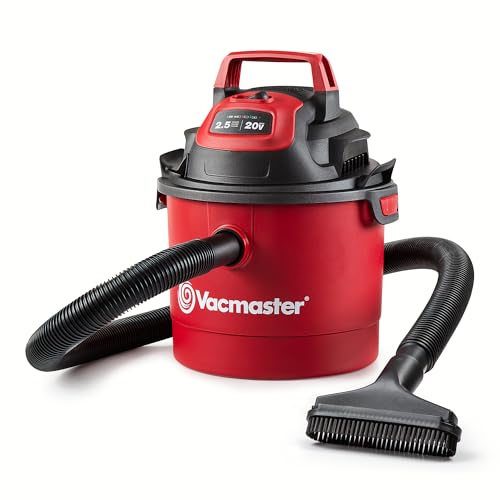
The CRAFTSMAN CMXEVBE17250 is a compact, 2.5-gallon wet/dry shop vacuum designed for quick pick-ups, automotive cleanup, and light garage maintenance. Powered by a 2.5 peak HP motor and weighing just 6.7 pounds, this portable unit suits apartment dwellers, homeowners, DIY hobbyists, and vehicle owners who need wet and dry utility without hauling a heavy drum. Its compact 13.1 by 12.57 by 14.74-inch footprint makes it especially well suited for spaces where storage room is at a premium.
In everyday use, this cleaner handles both dry debris, such as sawdust, tracked-in dirt, and food crumbs, as well as minor liquid spills. In addition to standard vacuum suction, the machine features two-in-one capability via an exhaust blower port. Users can switch the hose connection to blow away wood shavings from workbenches or light debris from garage doorways. The 1-1/4-inch accessory system is intentionally sized for detailed, tight-space maneuvering rather than large construction rubble.
The vacuum arrives with a 1-1/4-inch by 5-foot friction-fit hose, a utility nozzle, a dedicated crevice tool, and a dry filter bag. For standard dry vacuuming, it utilizes genuine CRAFTSMAN CMXZVBE38737 filter bags to collect debris and keep the internal drum clean. A sturdy top-mounted carry handle and dedicated cord-wrap points assist with organized storage. Buyers looking to use specialized automotive accessories should note that CRAFTSMAN lists this model as incompatible with the CMXZVBE38662 car cleaning kit.
Operating the unit is straightforward, requiring no complex assembly beyond pressing the friction-fit hose into place and attaching the desired nozzle. The lightweight drum makes emptying liquid spills or dumping dry dirt simple and manageable without straining your back. Maintenance involves inspecting and replacing the filter bag when full and drying the tank interior following liquid collection to prevent odors.
Because of its 2.5-gallon capacity, this vacuum is not intended for whole-room flood cleanup, major remodeling jobs, or continuous drywall sanding. The friction-fit hose connection relies on snug pressure rather than a locking latch, meaning pulling too hard on the hose while cleaning could cause disconnection. In addition, those seeking wide-area hard floor sweeping will find the compact utility nozzle better fitted for localized messes rather than broad floor surfaces.
For vehicle owners, hobbyists, and homeowners seeking an affordable, highly portable wet/dry cleaner for quick car detailing, bench dusting, and small household spills, the CRAFTSMAN CMXEVBE17250 offers dependable everyday utility. Backed by a 3-year limited warranty, it balances grab-and-go convenience with practical suction for compact spaces.
Weighing only 6.7 pounds and measuring 13.1 by 12.57 by 14.74 inches, this CRAFTSMAN wet/dry vacuum is built specifically for users who prioritize mobility over large capacity.
An ergonomic top handle allows for comfortable one-handed transport up stairs, across the yard, or around a vehicle interior. The integrated cord-wrap feature keeps the power cord secured neatly against the housing, preventing snagging during closet or shelf storage.
The vacuum comes equipped with 1-1/4-inch accessories designed to reach tight crevices and manage varied surfaces. Included in the package are a 1-1/4-inch by 5-foot friction-fit hose, a crevice tool, a wide utility nozzle, and an initial filter bag.
For dry cleanup tasks, the machine utilizes genuine CRAFTSMAN CMXZVBE38737 replacement filter bags. Note that this unit is explicitly designated by the manufacturer as not compatible with the CMXZVBE38662 car cleaning kit accessory.
Pros
- Dual wet and dry pickup capabilities combined with an easy blower conversion function.
- Extensive 13-piece accessory kit specifically adapted for car detailing and tight crevices.
- Lightweight 10.99-pound construction with rolling casters and a balanced top handle for mobility.
Cons
- The 2.5-gallon tank capacity requires frequent emptying during larger liquid or workshop cleanups.
- The 12-foot power cord may require an extension cord when cleaning outside or away from wall outlets.
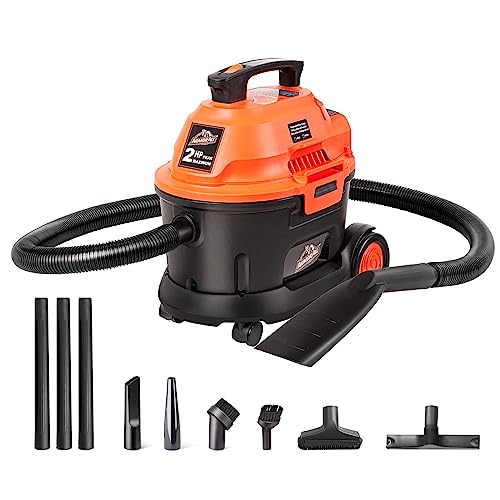
The Armor All AA255W is a portable corded wet/dry utility vacuum engineered primarily for vehicle cleaning, garage maintenance, and small household spill management. Operating on standard AC power, this model suits homeowners, vehicle enthusiasts, and hobbyists who need specialized tools for cleaning floorboards, car seats, workbenches, or localized liquid spills without the bulk of a heavy industrial unit.
According to manufacturer specifications, the vacuum is powered by a 2 peak horsepower motor configured to pull wet debris and dry dirt into its 2.5-gallon durable polypropylene tank. In addition to standard vacuuming, the motor exhaust port converts into a functional blower, which can be used to clear leaves, grass clippings, and loose dust from garage surfaces and vehicle exteriors. Total cleaning reach is defined by the 12-foot electrical cord and a 6-foot by 1-1/4-inch flexible hose, providing adequate coverage around a single vehicle or workbench without requiring constant machine relocation.
Weighing 10.99 pounds and measuring 14.2 by 10.6 by 14.38 inches, the AA255W features a rolling wheel base and a top-mounted carry handle for quick transport. The vacuum comes with a 13-piece accessory setup that includes three extension wands, a crevice tool, a blower nozzle adapter, a deluxe car nozzle, a round dust brush, a detail brush, a 2-in-1 utility nozzle, and a floor brush with an integrated squeegee. Filtration is managed by two distinct elements: a reusable cloth filter intended for general dry vacuuming and a foam sleeve designed specifically for wet liquid recovery.
Daily setup and ongoing storage are simplified by built-in slots that keep the nozzles, wands, hose, and power cord neatly attached to the vacuum body. Routine maintenance involves unclamping the motor head to empty collected dust or liquids from the tank, followed by checking the filtration setup. Users must remember to exchange the reusable cloth filter for the foam filter before collecting liquids, and allow the washable cloth filter to dry fully after routine rinsing to maintain adequate airflow and motor protection.
While practical for tight vehicle interiors and spot cleanups, the AA255W has clear functional boundaries. Its 2.5-gallon tank is not intended for high-volume flooded basement cleanup or whole-house floor cleaning. Additionally, while the 12-foot power cord is manageable around a garage stall, reaching vehicles parked in long driveways or outdoor spaces will require a properly rated extension cord.
For shoppers seeking a dedicated, cost-effective utility cleaner for car interiors, workbench debris, and minor liquid spills, the Armor All AA255W represents a well-equipped, compact choice. Its broad tool assortment and dual wet/dry capability make it particularly appealing for localized garage tasks and everyday vehicle maintenance.
The Armor All AA255W comes equipped with a comprehensive 13-piece tool package tailored for automotive care and precision cleaning tasks. For reaching floors and broader surfaces, the set provides three extension wands alongside a dual-purpose floor brush and squeegee nozzle that handles both solid dirt and standing liquid.
For specialized detailing work, the vacuum includes a deluxe car nozzle, a narrow crevice tool, a round dust brush, a detail brush, and a 2-in-1 utility nozzle for fabric surfaces. A dedicated blower adapter nozzle connects to the exhaust port for blowing out dirt, while the included reusable cloth dry filter and foam wet filter ensure the motor is properly configured for the cleaning task at hand.
Designed to handle both liquid spills and solid workshop debris, the AA255W uses a durable 2.5-gallon polypropylene collection tank driven by a 2 peak HP motor. When collecting dry dirt, shavings, or automotive dust, the machine utilizes its reusable cloth filter. When addressing liquid spills, the cloth filter must be swapped out for the included foam wet filter to protect the motor assembly from moisture.
The integrated blower conversion feature broadens its usefulness in utility environments. By attaching the hose to the rear exhaust port, the vacuum easily redirects high-velocity air through the blower nozzle adapter, making it useful for blowing dust off power tools, clearing sawdust from tabletops, or pushing debris away from car windshield cowls.


Evaluating Real Suction Power in Wet/Dry Shop Vacuums
Determining what is the most powerful wet dry vac requires looking beyond simple horsepower numbers stamped across the motor housing. In heavy utility cleanup, peak horsepower indicates the theoretical maximum output of an electric motor during startup rather than the continuous working power available at the nozzle. True cleaning performance combines motor power, sealed suction lift, air volume, and airflow velocity through the hose. For demanding projects requiring maximum raw power, machines equipped with 6.0 to 6.5 peak horsepower motors and high air-watt ratings stand out as the most capable options.
Understanding Power Metrics: Peak Horsepower, Air Watts, and Airflow
Motor labels on wet and dry vacuums frequently showcase peak horsepower as the primary headline figure. Peak horsepower refers to the maximum mechanical output an electric motor produces under standardized manufacturer test procedures before thermal overload or circuit limitations intervene. During normal household and workshop operation, a vacuum runs on standard 120-volt alternating current circuits, which physically cap continuous operating output at roughly two horsepower. While a higher peak rating reflects a more robust motor design capable of handling heavy resistance, it does not guarantee superior cleaning suction by itself.
A more accurate representation of working suction is air watts, which quantifies the actual energy delivered through the airflow path. Air watts combine the volume of air moved per minute with the amount of vacuum pressure the motor generates against resistance. A motor rated at 320 air watts, for example, delivers substantial energy to lift dense wet debris or heavy gravel off workshop floors. Examining air-watt specifications provides a clearer picture of whether a machine can maintain suction when attached to long hoses or specialized cleaning wands.
Sealed suction, often measured in kilopascals (kPa) or inches of water lift, defines how high a column of water the vacuum can pull when airflow is completely sealed. High static pressure is essential for extracting standing water, pulling wet sawdust out of crevices, or unclogging floor drains. In contrast, cubic feet per minute (CFM) measures the gross volume of air circulating through an open hose, which dictates how quickly the machine sweeps up lightweight dry debris. Balancing high static lift with generous airflow creates an effective cleaning machine capable of handling both heavy sludge and wide floor surfaces.
High-Capacity Heavy-Duty Shop Vacuums for Demanding Workspaces
For large workshops, job sites, and significant water removal tasks, large-capacity models with large motors deliver the highest sustained power. The CRAFTSMAN CMXEVBE17595 16 Gallon 6.5 Peak HP Wet dry shop vacuum represents the heavy-duty tier, offering a 6.5 peak horsepower motor designed for expansive cleanup projects. Its sizable 16-gallon drum holds substantial dry refuse or liquid before requiring disposal, reducing interruptions during major renovations. Furthermore, the unit features an oversized built-in tank drain that allows users to empty heavy water loads conveniently without tipping a hefty drum.
Another top contender in the high-power category is the Vacmaster VBVCM1211 1101 12-Gal 6 Peak HP Wet/Dry vac, which combines a 6.0 peak horsepower motor with a rated 320 air watts of suction power. This machine generates 16 kPa of static water lift, providing the force needed to pull wet mud, plaster dust, and heavy workshop refuse. Its 12-gallon capacity provides an optimal balance between generous collection volume and easier maneuverability in crowded garages. The integrated heavy-duty handles and caster wheels support steady movement even when the tank carries significant liquid weight.
Selecting a high-capacity machine is particularly valuable when recovering liquids from burst pipes, flooded basements, or outdoor drainage tasks. Water weighs over eight pounds per gallon, meaning a full 12-gallon or 16-gallon container quickly becomes difficult to carry manually. Machines built with dedicated drain ports eliminate the physical strain of hoisting full tanks over sink ledges or outdoor curbs. The expansive internal tank volume also delays the activation of the internal float mechanism, allowing prolonged pumping without repeated shutoffs.
High-Suction Compact Models: The High Air-Watt Advantage
Raw tank volume is not the sole indicator of high suction, as specialized compact utility machines demonstrate remarkable static pressure. The Vacmaster Professional Beast Series VFB511H 0201 5-gallon model generates a substantial 320 air watts and a high static pressure rating of 20 kPa. Despite having a modest 5-gallon tank, this motor configuration creates exceptional pulling force through its hose. That intense lift makes it capable of extracting embedded sand from vehicle carpet fibers and pulling dense gravel from hard-to-reach floor registers.
Comparing static lift between tank sizes reveals important airflow dynamics that impact daily cleaning efficiency. A 5-gallon tank with 20 kPa of sealed pressure can actually out-pull a larger 16-gallon unit when clearing dense, concentrated clogs in a restricted hose. Because the smaller drum contains less internal air space to evacuate, the motor establishes maximum working vacuum pressure almost instantaneously. For mechanics, detailers, and craftspeople dealing with localized heavy messes, a compact high-pressure machine often feels more responsive than a bulky drum vacuum.
Drum construction also influences long-term durability when handling abrasive workshop refuse and caustic liquids. Units like the Vacmaster VOC508S 1101 5-Gal 4 Peak HP Stainless steel vac feature a stainless steel tank that resists cracking, chemical degradation, and scratching from metal shavings. Delivering 135 air watts, this 4 peak horsepower model provides dependable suction for everyday garage tasks where rugged container materials are preferred. Polypropylene tanks remain popular for their light weight and corrosion immunity, but stainless canisters provide rigid durability under heavy workshop abuse.
Mid-Range and Portable Utility Cleaners: Everyday Performance Trade-Offs
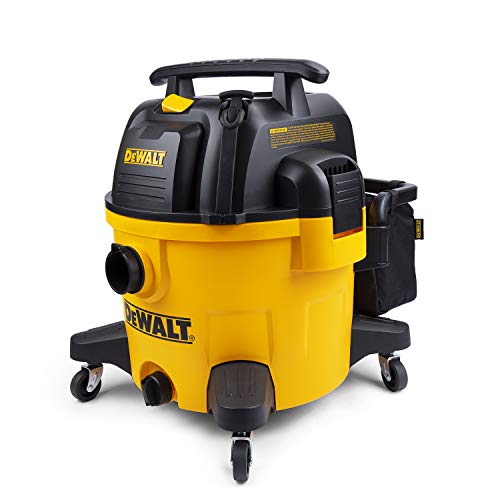
Mid-sized wet/dry units occupy a practical middle ground for homeowners who need solid pickup power without storing a massive drum. The DEWALT 9 Gallon Wet/Dry VAC features a 5.0 peak horsepower motor paired with a 9-gallon tank, delivering strong suction for sawdust, wood chips, and wet spills. Rubberized casters on this unit improve maneuverability across uneven workshop floors, while a water-resistant on/off switch prevents moisture intrusion during wet pickup. A 10-foot power cord and convenient accessory storage bag keep attachments readily accessible for diverse home improvement tasks.
Smaller portable units prioritize ease of transport for tight spaces, quick cleanups, and automotive maintenance. The Armor All VO405P 0901 4 Gallon Wet/Dry Vac 2.0 delivers 2.0 peak horsepower (rated at 660 watts), which easily handles light sawdust, dry crumbs, and spilled liquids. Similarly, the CRAFTSMAN CMXEVBE17250 2.5 Gallon 2.5 Peak HP Wet vac offers a compact 2.5-gallon design that stores conveniently on a garage shelf. While these smaller motors cannot match the deep suction of a 6.5 PHP unit, their lightweight housings allow users to carry them effortlessly up stairs or into attic spaces.
When choosing between mid-sized and compact options, evaluating your specific cleaning surfaces ensures you achieve clean results without damaging materials. Homeowners who frequently transition between garage concrete and indoor living spaces often review guides on cleaning hard surface flooring to avoid scratching polished wood finishes with coarse utility nozzles. Utility shop vacuums generally use plastic nozzles that lack soft bristles, making careful attachment selection essential. Matching the right tool to the surface prevents accidental marring while still capturing fine sawdust and coarse debris.
Corded Power vs. Cordless Mobility in Wet/Dry Cleaning
Power source selection directly dictates the operational capabilities and continuous output of any wet/dry vacuum cleaner. The Vacmaster DVOM202P 1101 2.5-Gal 20V Cordless model provides exceptional freedom of movement without hunting for electrical outlets or managing cord tangles. However, its 20-volt lithium-ion battery system delivers an estimated runtime of approximately 13 to 15 minutes, depending on the attached accessories and workload. Cordless vacuums excel at rapid vehicle touch-ups, remote shed cleanups, and spot remediation where extension cords cannot reach.
Corded machines, in contrast, draw continuous electrical current from standard household wall outlets, allowing prolonged operation without power degradation. High-output motors rated at 5.0 to 6.5 peak horsepower require substantial wattage that current portable battery packs cannot sustain over extended periods. For continuous tasks like drywall sanding, shop tool dust extraction, or draining a flooded basement, a corded machine remains the standard choice. The continuous power ensures that suction force does not decline as a battery pack discharges during heavy use.
Operating high-powered corded shop vacuums requires appropriate electrical planning to prevent tripped circuit breakers and voltage drops. A 6.5 peak horsepower motor draws significant amperage during initial startup and under heavy vacuum loads. Using an undersized, lightweight extension cord can restrict electrical current, leading to motor overheating and reduced suction performance. Manufacturers recommend utilizing heavy-gauge extension cords matched to the machine amperage rating to ensure the motor receives full operating voltage across long distances.
The Impact of Hose Diameter and Airflow Velocity
The diameter of the vacuum hose plays an enormous role in determining whether a machine excels at moving bulk material or fine dust. Large shop vacuums, such as the CRAFTSMAN 16-gallon unit, feature 2-1/2-inch diameter hoses capable of passing wood chunks, dry leaves, and crumpled paper without jamming. Because the larger internal cross-section reduces air friction, high-CFM motors can move tremendous volumes of air effortlessly. This wider aperture is essential for high-debris environments like framing jobs and commercial woodworking shops.
In contrast, smaller utility vacs like the Armor All AA255W 2.5 Gal 2 Peak HP Wet/Dry Utility vac utilize narrower 1-1/4-inch hoses. While a smaller diameter increases the risk of clogs from large wood scraps, it accelerates airflow velocity through narrow nozzles. This rapid air stream creates concentrated pickup energy that effectively dislodges embedded hair and fine sand from automotive carpeting. Smaller hoses also offer superior flexibility, making them easier to weave between vehicle seats, under workbenches, and around tight corners.
Hose construction and flexibility also impact user control and overall cleaning stamina during demanding chores. The CRAFTSMAN POS-I-LOCK hose incorporates Dual-Flex technology, offering 180-degree mobility at each connection collar to prevent annoying kinks during tight turns. Vacmaster Beast models feature premium kink-resistant hose materials designed to resist collapsing under intense static vacuum pressures. Selecting a hose with secure locking latches prevents accidental detachment when pulling the machine across crowded garage floors.
Filtration Systems and Their Effect on Sustained Suction
Maintaining high suction over extended cleaning sessions depends entirely on the condition and design of the internal filtration system. Wet/dry vacuums rely on pleated cartridge filters to capture airborne dust particles down to one micron while allowing exhaust air to exit freely. As fine particles like drywall powder or cold ash coat the filter pleats, airflow becomes severely restricted, causing motor strain and suction loss. Inspecting and cleaning cartridge filters regularly prevents motor overheating and maintains peak pulling force throughout messy tasks.
Using high-efficiency disposable collection bags alongside a cartridge filter is one of the most effective ways to preserve vacuum suction during dry pickup. Readers familiar with traditional bagged vacuum cleaners understand that containing debris within a sealed bag keeps internal filters clean and prevents fine dust from escaping into room air. Compatible collection bags act as a pre-filter, capturing heavy debris and fine silt before it ever contacts the main pleated element. This dual-stage barrier maintains strong airflow across the entire cleanup project and makes emptying the drum clean and simple.
Liquid extraction requires a completely different filtration protocol to protect the vacuum motor from moisture damage. Before vacuuming standing water or spilled liquids, operators must remove the paper cartridge filter and install a foam wet sleeve. Attempting to vacuum liquids through a standard paper dry filter saturates the media, destroying its structure and choking airflow instantly. Furthermore, the internal float valve rises as liquid accumulates in the drum, automatically sealing the motor intake when the tank reaches maximum capacity.
Blower Conversion Capabilities for Workshop and Outdoor Cleanup
Many modern wet/dry vacuums feature dual-purpose designs that convert the exhaust port into a high-velocity air blower. Machines like the Vacmaster VBVB611PF 1101 6 Gal 5 Peak HP Wet/Dry vac include a detachable blower head that releases with a simple one-hand mechanism. This unit delivers maximum blowing speeds up to 190 miles per hour, generating 70 CFM of airflow to clear leaves, grass clippings, and shop debris. Similarly, the 12-gallon Vacmaster model features a lift-up blower reaching 210 miles per hour, turning the vacuum into a potent yard and garage maintenance tool.
Built-in rear blower ports on standard units, including the DEWALT 9-gallon and CRAFTSMAN models, also provide convenient clearing power without detaching motor components. By simply inserting the vacuum hose into the exhaust port, users can blow sawdust off workbenches, clear dry leaves from garage thresholds, or inflate air mattresses using adapter nozzles. This reverse airflow capability saves time by dislodging debris from deep corners where vacuum nozzles cannot reach. Once the refuse is blown into an open area, switching the hose back to the intake port allows swift collection.
Operating a shop vacuum in blower mode requires basic safety precautions to protect both the machine and the operator. High-speed exhaust air can propel sharp wood slivers, metal shavings, and small pebbles at high velocities across enclosed spaces. Operators should always wear safety glasses and hearing protection when using high-output blower attachments. Additionally, verifying that the drum and internal filter are reasonably clean before engaging the blower prevents residual canister dust from discharging into the air.
Troubleshooting Suction Loss and Preserving Peak Motor Performance
When a powerful wet/dry vacuum suddenly loses suction during operation, systematic inspection quickly reveals the underlying cause. A sudden high-pitched motor whine combined with a complete loss of airflow almost always indicates that the internal float valve has sealed the intake. This safety mechanism triggers when liquid reaches the tank capacity, but it can also activate prematurely if the machine is tipped or bumped during transport. Turning off the power switch, waiting for the motor to stop spinning, and righting the unit resets the float ball immediately.
Gradual suction decline typically stems from airflow obstructions inside the hose, wand connections, or the collection filter. Removing the hose and sighting down its interior often reveals lodged wood scraps or clumped damp lint narrowing the passage. If the hose remains clear, inspect the pleated cartridge filter for thick caked dust that restricts air passage. Most washable cartridge filters can be gently tapped against a waste bin or rinsed with low-pressure water, though they must dry completely before reinstalling for dry pickup.
Preserving peak motor power over years of rigorous service requires regular container cleaning and proper dry storage. After vacuuming liquids or wet sludge, thoroughly emptying the drum, wiping down internal surfaces, and allowing the tank to air-dry prevents rust and mildew growth. Inspecting lid latches and tank gaskets ensures a tight vacuum seal, preventing ambient air leaks that diminish suction at the floor nozzle. Following manufacturer care guidelines and using genuine replacement parts keeps your shop vacuum running at its highest possible performance level.




Write Your Review
No reviews yet. Be the first to share your experience!