


Automating Daily Floor Care with Smart Robot Vacuums
Managing pet fur, tracked dirt, and crumbs across hard floors and area rugs takes valuable time each week. Robotic vacuums reduce that chore by running automated cleaning passes around furniture legs and baseboards. When evaluating a robot vacuum cleaner best buy, shoppers look for dependable navigation sensors, smooth floor transitions, and strong suction power that cleans without constant oversight. For homes with rugs, comparing automated helpers with dedicated small vacuums for rugs clarifies which setup keeps different textures fresh.
Floor cleaners range from slim budget units to premium models with self-emptying docks, spinning mops, and LiDAR mapping. This overview examines manufacturer specifications, brush roll designs, dustbin styles, and stated runtimes across leading automated cleaners without relying on personal testing claims. Selecting the right setup depends on floor surfaces, clearance under beds, and whether you want a self-emptying dustbin to minimize maintenance. For households needing deep spot cleaning, looking at specialized Shark vacuums for floor cleaning shows how robotic cycles complement heavy-duty upright models.

Pros
- Ultra-slim 2.85-inch height navigates low-profile furniture that standard uprights and bulkier robots cannot reach
- Simple remote control operation eliminates the need for smartphone pairing, app accounts, or Wi-Fi troubleshooting
- BoostIQ technology adjusts suction quickly within 1.5 seconds to handle varying debris and floor surfaces
- Quiet, microwave-level sound profile lets you run routine cleanups without interrupting conversation or television
Cons
- Lacks Wi-Fi and app connectivity, meaning all scheduling and manual steering rely strictly on the physical remote
- The 100-minute maximum runtime is measured on hardwood floors and will decrease when higher suction modes engage
- Relies on sensor-guided bounce navigation rather than digital room mapping or customizable app-based no-go zones
The eufy 11S MAX is a compact, entry-friendly robotic vacuum built to handle daily floor maintenance in busy American households, rental apartments, and multi-surface spaces. Standing at just 2.85 inches tall, this low-profile cleaner specifically targets hard-to-reach dust bunnies, crumbs, and loose hair under coffee tables, bed frames, and low sofas. It serves as an accessible cleaning appliance for first-time robot vacuum buyers, seniors, and anyone who prefers straightforward hardware controls over complex smartphone applications.
Day-to-day cleaning relies on an adaptive system centered around eufy BoostIQ Technology. The vacuum automatically detects when extra suction power is required and ramps up its performance within 1.5 seconds to pull up stubborn debris. On hardwood floors, the vacuum offers up to 100 minutes of continuous runtime while keeping noise down to a level comparable to a running microwave. The single-side brush layout is intentionally engineered to sweep dirt directly into the central suction inlet rather than flicking fine particles across hard surfaces.
In terms of exterior build, the 11S MAX features an anti-scratch tempered glass-top cover that resists cosmetic scuffs from low furniture contact. Weighing approximately 6.35 pounds with a diameter under 13 inches, the unit is light and compact enough to carry between different levels of a home. For safe travel across rooms, the chassis integrates infrared sensors to evade household obstacles and drop-sensing technology to prevent accidental tumbles down staircases.
Daily operation and maintenance are straightforward because the unit operates entirely without Wi-Fi or mobile apps. Users start cleanups, direct movement, and select modes using either the physical push button on the glass deck or the included remote control. When its battery runs low after a cleaning session, the vacuum automatically guides itself back to its charging base to recharge, keeping it prepared for the next floor run without manual intervention.
While the simplified design makes everyday use stress-free, there are practical boundaries to keep in mind. Because the 11S MAX does not connect to Wi-Fi, you cannot set virtual boundaries, draw no-go zones on a phone, or trigger cleanups while away from home. Its navigation operates via infrared sensor response rather than precision laser room mapping, and the claimed 100-minute runtime is based on hardwood conditions and will naturally shorten when BoostIQ suction kicks into higher gear.
For households seeking a dependable, quiet robot vacuum to maintain hardwood floors and low-profile living areas without digital complications, the eufy 11S MAX offers great practical value. Its slim chassis, automatic suction boosting, and hassle-free remote control provide a set-and-forget floor-care routine that easily keeps daily dirt under control.
The eufy 11S MAX uses an array of infrared obstacle-detection sensors alongside drop-sensing cliff detectors to navigate through living rooms, hallways, and bedrooms. This sensor system allows the vacuum to steer away from large obstacles, walls, and furniture legs while safely preventing falls down open staircases and floor transitions.
All controls are handled through the included infrared remote control or the physical top-mounted power button. Because the unit does not feature Wi-Fi or Bluetooth radios, users do not need to download third-party software, manage wireless passwords, or adjust mobile permissions, making it ready to use almost immediately after unboxing.
When the cleaning cycle ends or the onboard battery depletes, the vacuum initiates self-recharging behavior by locating and docking with its home charging station. This automated return keeps the cleaner charged and ready for the next scheduled or manual run without requiring hands-on battery management.

Pros
- Self-maintaining dock automates dust bin emptying, 167°F hot-water mop washing, and heated air drying
- Strong 18,500 Pa suction easily handles fine dust, pet hair, and coarse debris like cat litter
- Automatic 10 mm mop lifting keeps carpets and rugs dry during combined vacuum and mopping runs
- All-rubber roller and specialized side brush noticeably reduce routine hair tangle removal
Cons
- Only connects to 2.4 GHz Wi-Fi networks and does not support 5 GHz frequencies
- All-in-one docking station requires dedicated physical floor space and clearance near an outlet
The Roborock Qrevo S Pro is an automated floor-care system engineered for busy households, parents, and pet owners who need consistent vacuuming and mopping across mixed flooring. Combining dry vacuuming with dual rotating mopping pads, this robot cleaner targets routine messes such as tracked-in dust, pet dander, and food crumbs. Its primary appeal lies in its high degree of automation, allowing users to offload daily floor maintenance to a machine that manages its own dust disposal and mop pad maintenance.
Cleaning capability is centered around a manufacturer-specified 18,500 Pa suction motor that pulls debris from hard floor seams, edges, and carpet pile. When transitioning to carpeted areas, the robot applies an automatic carpet strategy that boosts suction for embedded grit while lifting the mopping assembly 10 mm above the floor surface to protect fibers from moisture. For hard floor areas, the dual spinning mops maintain steady contact to wipe down kitchen spills, dried paw prints, and light surface stains using adjustable water flow rates.
Brush maintenance is often a pain point in pet-friendly homes, but the Qrevo S Pro addresses this with a specialized anti-tangle architecture. It features an all-rubber main brush roll, a zero-tangle side brush, and a guarded omnidirectional wheel, all designed to channel hair directly into the suction inlet rather than wrapping tightly around spinning components. At the all-in-one docking base, collected debris is automatically transferred into a sealed 2.7L dust bag capable of storing between 7 and 9 weeks of dry material under typical household conditions.
Navigation and spatial awareness are powered by smart obstacle detection that helps the vacuum identify and steer clear of everyday floor hazards such as shoes, power cords, toys, and chair legs. Measuring 3.8 inches in height, the low-profile robot slides under raised couches, dressers, and beds where dust clusters tend to hide. The integrated Roborock SmartPlan 2.0 AI adjusts cleaning power and route selection according to the specific floor layout and past cleaning history, maintaining an unobtrusive sound profile of approximately 55 dB during standard operation.
Initial setup is straightforward through the companion app, though it strictly requires a 2.4 GHz Wi-Fi network connection. While the dock manages self-emptying, 167°F mop pad washing, and 113°F warm air drying, owners must still periodically handle basic dock upkeep, such as replacing the 2.7L dust bag, filling clean water, and emptying dirty wastewater containers. The physical size of the docking station also demands thoughtful placement with sufficient wall and clearance space in a central room or laundry area.
For homeowners and renters looking to maintain spotless hard floors and fresh carpets without daily intervention, the Roborock Qrevo S Pro represents a dependable, high-convenience investment. Its strong suction, intelligent mop lifting, and self-cleaning dock features provide practical, time-saving value for busy multi-surface homes managing the steady mess of kids and pets.
The all-in-one docking station on the Roborock Qrevo S Pro acts as a comprehensive base designed to reduce manual floor-care chores. Following each cleaning cycle, the dock automatically pulls debris from the robot dustbin into an internal 2.7L sealed bag. This bag design locks in dust and debris while offering enough storage volume to last between 7 and 9 weeks under normal cleaning frequencies, minimizing contact with loose dirt.
Beyond debris containment, the dock actively manages mop hygiene through heated self-cleaning. It washes the dual rotating pads with 167°F hot water to loosen sticky spills and grime gathered from hard floors, followed by 113°F warm air drying. This controlled drying phase prevents persistent dampness and helps eliminate stale odors, ensuring the cleaning pads are dry, fresh, and ready for the next scheduled floor run.
Managing mixed flooring is straightforward thanks to the adaptive carpet handling built into the Roborock Qrevo S Pro. When sensors detect area rugs or wall-to-wall carpeting, the robot automatically engages a 10 mm mop lifting mechanism. This lifts the damp pads clear of low- to medium-pile carpet surfaces, preventing accidental water transfer while simultaneously ramping up suction to extract embedded particles and pet hair from deep within the fibers.
On hard surfaces, the dual spinning mop system works in tandem with the vacuum function to deliver thorough daily maintenance. By distributing a controlled, adjustable flow of water, the pads provide steady friction to tackle dried beverage splashes, pet footprints, and grease near cooking areas. This dual-action approach allows the robot to leave floors refreshed in a single cleaning pass without requiring manual tool swaps.
Pros
- Brushless suction port prevents pet hair tangles, reducing maintenance headaches
- Compact 2.99-inch low-profile body easily navigates underneath low-clearance furniture
- Lithium iron phosphate battery provides up to 120 minutes of runtime in low suction mode
- Smart control flexibility with the companion Lefant App plus Alexa and Google Assistant voice integration
- Equipped with 6D anti-collision infrared sensors to help detect obstacles and prevent jamming
Cons
- Lacks a motorized roller brush, which limits deep agitation on medium and high-pile carpets
- Manufacturer explicitly advises against using the zigzag cleaning mode on carpet
- Maximum 120-minute battery life applies specifically to the low suction running mode
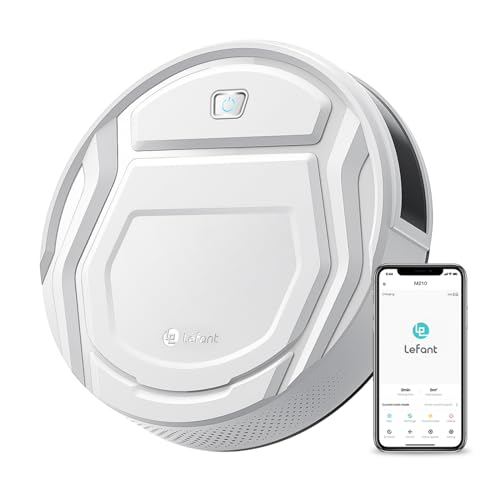
The Lefant M210 is an entry-level robotic vacuum designed primarily for routine dry debris removal across hard floors and low-profile living areas. Standing out with its compact frame and roller-free pickup design, this cleaner is well-suited for pet owners, apartment dwellers, and busy households looking for automated daily maintenance without the chore of untangling hair from a traditional motorized brush roll.
Floor cleaning is handled through a brushless suction port paired with a digital motor. Because there is no rotating brush roll underneath, pet hair, dirt, and dust travel straight into the collection bin, significantly lowering hair wrap issues. The cleaner supports six distinct operating modes, including zigzag, random, spot, edge, scheduled timed cleaning, and manual control via the Lefant App. While the unit handles daily debris on hard surfaces effectively, the manufacturer explicitly notes that zigzag mode should not be used on carpets, making it primarily a hard-floor specialist with light area-rug utility.
Measuring approximately 11 inches in diameter and 2.99 inches in height, the Lefant M210 features a notably slim build that allows it to glide under low-clearance bed frames, couches, and entertainment centers where upright vacuums cannot reach. Navigation is guided by upgraded FreeMove Technology 3.0, which utilizes 6D built-in anti-collision infrared sensors to detect potential trapping points and adjust travel paths before the vacuum becomes wedged.
Daily operation and scheduling are managed through Wi-Fi pairing with the dedicated Lefant App, which also lets users adjust suction levels, direct manual movement, and integrate voice commands through Amazon Alexa or Google Assistant. Power is supplied by a lithium iron phosphate battery that delivers up to 120 minutes of runtime when operated in low suction mode. When cleaning cycles end or battery power dwindles, the vacuum automatically returns to its base for self-charging. Routine maintenance centers on sliding out and emptying the internal dustbin and keeping sensor windows clean.
Buyers should be aware of practical operational boundaries before purchasing. Because this model relies exclusively on pure suction without brush-roll bristles, it will not provide deep mechanical agitation on thick carpets or dense area rugs. In addition, reaching the full 120-minute battery benchmark requires operating in low suction mode, meaning higher power settings will yield shorter run times.
For pet owners and households with primarily hard floors seeking an affordable, low-profile robotic vacuum that reduces hair-clearing maintenance, the Lefant M210 offers dependable practical value. Its balance of smart scheduling, voice compatibility, and anti-tangle suction makes it an appealing everyday helper for keeping dust bunnies and shed fur under control.
The key feature of the Lefant M210 for pet households is its brushless suction inlet. Traditional robot vacuums rely on bristle or rubber roller brushes that inevitably collect tangled pet hair, requiring scissors or specialized tools to cut free after every cleaning session. By eliminating the roller brush entirely, this robot pulls loose fur, whiskers, and dander straight into the dustbin.
This brushless layout makes the machine especially effective along hard surfaces such as tile, vinyl, and sealed wood floors where pet hair floats and gathers in room corners. However, without rotating bristles to agitate carpet fibers, pet owners with deep carpet piles should view this vacuum as a hard-floor surface maintainer rather than a deep carpet extractor.
Setup and daily controls run through the companion Lefant App, which allows users to schedule automated floor cleaning, switch power modes, and guide the cleaner manually. Compatibility with Amazon Alexa and Google Assistant adds hands-free voice convenience for starting or stopping cycles.
To navigate living spaces without constant manual rescue, the cleaner relies on FreeMove Technology 3.0. A series of 6D anti-collision infrared sensors monitor the vacuum's surroundings, detecting low furniture skirts, table legs, and tight spaces. The system adjusts trajectory automatically to reduce collisions and prevent the robot from getting stuck beneath household items.

Pros
- Bagless self-emptying base avoids the recurring cost of proprietary disposal bags
- True HEPA dock filtration captures fine dust, dander, and allergens down to 0.3 microns
- 360-degree LiDAR navigation operates reliably in both daylight and dark rooms
- Matrix Clean multi-pass pattern delivers thorough coverage on high-traffic floor areas
- Up to 120-minute runtime with automated Recharge and Resume for whole-home coverage
Cons
- Bagless canister dumping can disperse airborne dust if emptied quickly indoors
- Operates as a dry-only robot vacuum without wet mopping or liquid scrubbing features
- At 4.1 inches tall, the top LiDAR dome may restrict clearance under low couches or cabinets
The Shark AV2501S AI Ultra Robot Vacuum is an automated dry-floor cleaner designed for busy households, active pet owners, and multi-surface homes requiring hands-off daily maintenance. Equipped with a self-emptying base that stores debris for up to 30 days, this model addresses the common chore of constantly dumping miniature on-board robot bins. For homeowners with shedding pets or high-traffic entryways, having an automated machine that docks and self-clears debris brings meaningful convenience to standard cleaning routines.
Under the hood, Shark utilizes a multi-surface cleaning system engineered to pick up dirt and debris across all floor types. Rather than relying on a single straight-line pass, the manufacturer integrates Matrix Clean Navigation, which commands the robot to vacuum in a precise grid pattern, passing over messes multiple times. Coupled with Shark suction and a self-cleaning brushroll designed to actively shed pet hair, the vacuum is configured to manage fine dust, dander, and tracked-in grit without requiring immediate manual intervention after every run.
A primary highlight of this system is the bagless, self-emptying base station. Unlike competing designs that rely on recurring purchases of disposable dock bags, this station uses an easy-dump collection bin paired with true HEPA filtration. Shark claims the base filter captures and seals 99.97% of dust and allergens down to 0.3 microns, which makes it particularly attractive for allergy-conscious households. Measuring 13.7 inches wide by 4.1 inches tall and weighing 14.42 pounds as a total package, the hardware feels solid, though the 4.1-inch clearance requires some planning around low couches and bed frames.
Day-to-day operation is coordinated by 360-degree LiDAR vision, which quickly maps the home and navigates around everyday obstacles in bright daylight or total darkness. Through Wi-Fi pairing with Amazon Alexa or Google Assistant, users can initiate on-demand sessions or schedule daily cycles. The onboard battery supports up to 120 minutes of runtime, and when the battery depletes mid-cycle, the Recharge and Resume protocol sends the unit back to the dock before returning to complete the unfinished zones. Maintenance involves periodically washing the bagless canister, checking the side brushes, and servicing the washable base filters.
While the automated emptying dock saves considerable time, the bagless mechanism means dumping the collection canister can occasionally disperse a small puff of dust, which might bother sensitive users. In addition, this model is purely a dry robot vacuum; it does not support wet mopping, liquid extraction, or scrubbing. Homeowners with exceptionally low furniture should also verify vertical clearance, as the top-mounted LiDAR dome increases total robot height compared to non-mapping or camera-only alternatives.
For households seeking reliable automated vacuuming without ongoing consumable bag costs, the Shark AV2501S AI Ultra represents a strong balance of navigation intelligence and debris management. Its combination of methodical matrix grid cleaning, pet-hair-focused brush design, and HEPA-filtered self-emptying makes it a dependable choice for keeping both carpet and hard floors consistently tidy between deeper cleaning sessions.
The Shark AV2501S utilizes 360-degree LiDAR vision to scan and map floor plans accurately upon its initial cleaning runs. Because LiDAR relies on light detection and ranging rather than optical cameras, the vacuum navigates effectively in both well-lit rooms and total darkness without losing its spatial coordinates.
In addition to basic pathing, Shark equips this model with Matrix Clean Navigation. Instead of a single back-and-forth track, the robot can execute overlapping passes in a grid pattern. This methodical coverage helps ensure that high-traffic corridors, entryways, and pet resting zones receive focused vacuum agitation rather than quick, single sweeps.
Pet hair management is a core design focus for the Shark AI Ultra system. The robot features a self-cleaning brushroll engineered to clear hair wrap during operation, minimizing the chore of cutting tangled pet fur off the roller bar between cleaning cycles.
Complementing the brushroll is the self-empty base station equipped with true HEPA filtration. The manufacturer states that this filtration setup captures 99.97% of dust and allergens down to 0.3 microns, trapping fine dander and tracked-in outdoor particles inside the sealed dock rather than recirculating them into living spaces.

Pros
- Brushless, tangle-free suction design eliminates hair wrapping and reduces maintenance for pet owners
- Impressive manufacturer-stated 5200Pa suction across three adjustable power settings
- Slim 2.99-inch height fits easily under low coffee tables, dressers, and couches
- Smart control options include companion smartphone app scheduling plus Alexa and Google Assistant voice commands
- Four-stage electronic water control allows tailored mopping moisture on hard floors
Cons
- Not suitable for medium- or high-pile carpeting; performance is restricted to hard floors, wood, and low-pile rugs
- Relies on bump-and-sensor navigation rather than advanced LiDAR room mapping or designated virtual no-go zones
- Specific dust bin and water tank capacities are not listed in fluid or volume metrics by the manufacturer
The ROPVACNIC Robot Vacuum and Mop Combo (Model S1) is an automated 2-in-1 floor-care machine designed for routine multi-surface upkeep in busy American households. Engineered primarily for apartment dwellers, pet owners, and homeowners managing wood and hard surfaces alongside low-pile rugs, this unit tackles everyday dust, pet shedding, and minor floor spots without requiring manual push-vacuuming. Its combination of wet mopping and vacuuming makes it an appealing option for budget-conscious buyers seeking an entry-level robotic helper for daily maintenance.
In real-world cleaning situations, this robot addresses daily debris using a 3-point cleaning system and a manufacturer-rated 5200Pa of suction across three selectable power stages. Instead of relying on a traditional bristled roller, the machine uses a direct, no-entanglement suction inlet flanked by dual rotating electric side brushes. This direct-suction approach is specifically intended to channel dog and cat hair, crumbs, and tracked-in grit directly into the suction path without wrapping around an agitator bar. Simultaneously, the electronically controlled water tank offers a four-stage personalized water adjustment system, allowing users to dial in light dampness for dust removal or slightly heavier moisture for minor sticky spots on wood and tile-like hard surfaces.
From a structural standpoint, the robot features a remarkably low-profile build measuring 12 by 12 inches with a height of only 2.99 inches, weighing approximately 7.28 pounds in a light black housing. This compact chassis allows it to clear low-hanging furniture, including bed frames, sideboards, and living room couches, where dust bunnies and pet fur often accumulate out of reach. The underside houses dual motorized side brushes designed to reach along baseboards, while the mopping plate attaches smoothly to the base. It comes paired with a compact charging dock to which the robot autonomously returns whenever cleaning concludes or battery replenishment is needed.
Setting up the unit is straightforward, involving app pairing for smartphone scheduling and connecting to voice platforms such as Amazon Alexa or Google Assistant. Maintenance is noticeably lower on the vacuuming side because the absence of a brush roll eliminates the tedious task of cutting away wound-up pet hair with scissors. Users simply empty the internal dry debris container, wipe the drop and bumper sensors periodically, and clear occasional threads from the twin side sweepers. When utilizing the mopping function, routine maintenance involves filling the onboard water reservoir with clean tap water, dampening and securing the mop pad, and washing the cloth pad thoroughly after each cleaning run to avoid stale odors.
Despite its practical advantages, this model has natural operational boundaries. Because it relies on high-coverage sensor algorithms and directional obstacle detection rather than overhead laser LiDAR or optical camera mapping, it cleans in semi-random or reactive patterns and lacks customized virtual boundary lines or selective room targeting. Furthermore, surface compatibility is strictly limited to wood, hard floors, and low-pile carpets; it is not suited for medium- or high-pile carpeting, shag rugs, or unlevel thresholds. The lack of an auto-lifting mop plate also means users should remove the mopping bracket before sending the machine across area rugs to prevent wetting carpet fibers.
For homeowners, renters, and pet owners looking for a budget-friendly automated floor cleaner that tackles daily pet hair without brush-roll tangles, the ROPVACNIC Robot S1 offers reliable utility. While it does not replace a heavy-duty upright extractor or a laser-guided premium robot for deep restorative carpet cleaning, its solid 5200Pa suction rating, slim clearance, and adjustable electronic mopping deliver sensible, hands-free cleanliness across daily hard-surface living areas.
The ROPVACNIC S1 addresses pet hair challenges through a specialized roller-free suction opening rather than a standard spinning brush roll. Traditional vacuum agitator bars tend to collect tightly bound fur, requiring frequent manual intervention and cutting. By pairing a direct suction throat with dual rotating electric side brushes, this cleaner channels stray hairs, dander, and food crumbs straight toward the collection bin, minimizing maintenance hassles for dog and cat households.
Backed by a manufacturer-rated 5200Pa suction profile across three adjustable levels, the unit supplies substantial lift for hard floors, wood surfaces, and low-pile area rugs. Users can select higher suction stages for high-traffic entryways or pet resting zones, ensuring small debris and dry spills are swept clean from perimeter baseboards and tight floor corners.
Equipped with a 2-in-1 mopping module, the ROPVACNIC Robot S1 actively manages floor hydration via an electronically controlled high-capacity water reservoir. Unlike passive gravity-fed drip mops, the electronic system features four personalized water-flow adjustment stages. This granular control allows users to match moisture dispersion to their specific hard-floor conditions, avoiding puddling on sealed wood while delivering sufficient wetness to lift fresh footprints and light dirt.
To maintain optimal results on hard surfaces, the mopping pad should be laundered after every cleaning session, and water should be emptied between cycles. Because the vacuum does not automatically detect carpets to lift its mop plate, damp mopping is best restricted to entirely hard-surface areas like kitchens, hallways, and living rooms with wood flooring.


Pros
- Bagless 60-day self-empty base eliminates the need to buy disposable replacement bags.
- Sonic mopping scrubs at 100 passes per minute to agitate stuck-on surface grime on hard floors.
- True HEPA base filtration captures 99.97% of microscopic particles down to 0.3 microns.
- 360-degree LiDAR navigation provides quick mapping, room customization, and reliable night or day operation.
- CleanEdge Detect system actively blows dust out of baseboards and wall corners into the vacuum path.
Cons
- Requires manual intervention to install, remove, and wash the mopping pads between wet and dry cycles.
- Dumping the bagless dock bin into an indoor trash can may release a small cloud of dust.
- Includes only a 12-ounce starter bottle of cleaning solution, requiring future purchases of compatible formula.
The Shark Matrix Plus Robot Vacuum & Mop Combo (AV2610WA) is designed for busy households, pet owners, and multi-surface homes that need an automated solution for both dry debris and surface grime. Combining strong vacuum suction for carpets with active sonic mopping for hard floors, this robotic cleaner aims to reduce daily maintenance by handling routine floor care on a scheduled grid. With an XL self-emptying base that stores up to 60 days of dust without requiring disposable replacement bags, it offers particular appeal to budget-conscious families who dislike ongoing consumable costs.
Cleaning capability centers around two distinct technologies: Matrix Clean and high-speed sonic mopping. On carpets and hard floors, the robot operates in a cross-directional matrix pattern to make multiple passes over stubborn dirt, providing up to 30% better carpet pickup than standard single-pass cleaning based on manufacturer tests. When wet mopping hard floors, the integrated sonic pad scrubs at 100 vibrations per minute to lift dried-on spills. Through the companion smartphone app, users can initiate targeted Matrix Mop cycles on specific high-traffic zones, delivering up to 50% improved stain cleaning compared to prior base models.
For households with shedding pets and allergy concerns, the robot is equipped with a self-cleaning brushroll designed to actively prevent pet hair wrap while digging deep into carpet fibers. Fine particles and dander pulled into the base are sealed with True HEPA filtration, which captures 99.97% of dust and allergens down to 0.3 microns. Along perimeter baseboards, the CleanEdge Detect system deploys focused air blasts alongside corner recognition to blow trapped dust directly into the vacuum intake path, delivering up to 50% better edge pickup than Shark robots without this feature active.
Navigation is driven by 360-degree LiDAR vision, enabling the robot to create accurate floor plans of your home quickly and operate reliably in bright daylight or pitch darkness. The mobile app allows homeowners to designate specific cleaning zones, adjust passes, and adapt to room rearrangements over time. When the battery runs low during extensive cleaning runs, the unit automatically recharges at the dock and resumes cleaning at the exact point it paused. The base itself is bagless, meaning dirt bins are simply unlatched and emptied into the trash, while the included microfiber mopping pads can be washed and reused.
While the Shark AV2610WA offers automated floor care, it does have practical limitations that buyers should keep in mind. Because the self-emptying base is bagless, opening and dumping the canister into an indoor trash can may create a slight plume of dust, which sensitive individuals may prefer to do outside. Additionally, while the robot vacuums and sonic-mops hard floors, users must still monitor the water and solution levels in the tank and routinely swap or wash the reusable mopping pads between damp cycles. The package also only includes a 12-ounce starter bottle of Shark VACMOP solution, meaning specialized solution must eventually be replenished.
Overall, the Shark Matrix Plus AV2610WA represents a balanced, highly capable floor-care appliance for homes with a mix of carpeting and hard flooring. Its combination of 360-degree LiDAR mapping, bagless 60-day dirt capacity, True HEPA dock filtration, and active scrubbing pads makes it well suited for pet owners, parents, and apartment or single-family dwellers who want hands-off daily floor maintenance without expensive ongoing bag subscriptions.
The Shark Matrix Plus utilizes 360-degree LiDAR vision technology to scan and map living spaces with high precision. This laser-guided system functions independently of ambient light, allowing the robot to map floor plans accurately and avoid obstacles during both daytime and nighttime cleanings. Homeowners can use the interactive smartphone app to view rooms, set specific cleaning zones, and execute targeted Matrix Clean or Matrix Mop cycles.
In addition to mapping precision, the robot incorporates intelligent recharge-and-resume logic. If a cleaning session exceeds the robot's single-charge capacity, it automatically navigates back to the XL dock, replenishes its battery, and returns directly to the spot where it paused to finish the job. This ensures thorough multi-room coverage without missing entire sections of large floor plans.
Managing pet hair and fine allergens is a primary strength of the Shark AV2610WA cleaning system. The robot is fitted with a specialized self-cleaning brushroll engineered to extract hair and dander from carpets and hard floors while continuously clearing itself to minimize annoying hair wraps around the core mechanism.
Once debris is vacuumed, the self-empty base evacuates the robot's internal dust cup into an XL bagless holding canister equipped with True HEPA filtration. This filtration standard captures and traps 99.97% of airborne particles, dust, and pet allergens down to 0.3 microns, preventing fine dirt from blowing back into household air during dock evacuation cycles.

Frequently Asked Questions
How do self-emptying docks improve robot vacuum maintenance?
Self-emptying docks store weeks of debris in sealed bags or canisters, reducing how often you handle dust. Models like the roborock Qrevo S Pro evacuate debris automatically upon docking, preventing full bins from stopping cycles. Advanced docks also wash and dry mop pads using warm air to stop odors. This hands-off design lets you run schedules while changing the bag every few weeks.
Can a robot vacuum cleaner clean pet hair without tangling?
Robots with rubber rollers or brushless suction ports handle pet hair with fewer tangles than bristle brushes. Units like the Lefant M210 use direct suction openings to funnel shed fur directly into the dustbin without roller wrap. For homes managing stubborn carpet stains, pairing an automated vacuum with dedicated carpet cleaner machines for pet messes provides thorough floor care.
How do robot vacuums protect carpets during wet mopping?
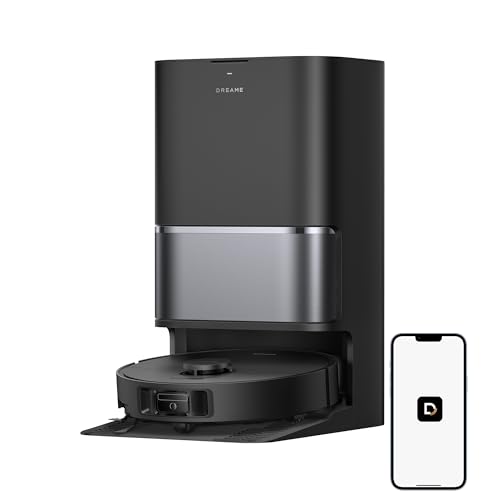
Modern combo units use sensors to raise their mop pads or avoid carpets entirely. Units like the dreame L40 Ultra Gen 2 detect transitions and lift damp pads over rugs. This mechanism keeps wet microfiber off pile fibers while maintaining active suction. In mobile apps, setting virtual no-mop boundaries provides extra protection for thicker rugs.
What makes a slim robot vacuum better for low furniture?
A lower body profile allows the vacuum to slide directly under beds, sofas, and low cabinets where dust collects. Compact models like the eufy 11S MAX measure under three inches tall, granting clearance where taller LiDAR turrets get stuck. While ultra-slim designs rely on infrared sensors, they navigate tight spots that standard uprights cannot reach.
Can robot vacuums clean multi-level homes and stairs?
Robot vacuums cannot climb stairs and rely on drop sensors to prevent falling down steps. While many models map multiple levels, you must carry the unit between floors manually. For cleaning stair treads, risers, and tight landings, using a lightweight cordless vacuum for steps remains practical. Automated robots excel on flat floors, leaving vertical surfaces to portable vacuums.


Write Your Review
No reviews yet. Be the first to share your experience!