


Dealing with a flooded floor or a sodden liquid spill quickly leads many homeowners to wonder: is a wet and dry vacuum good for carpets? While traditional household vacuums handle daily dust and surface litter, they cannot ingest liquids without risking electrical short circuits and ruined motor assemblies. Utility shop vacuums and modern all-in-one vacuum mops offer the appealing promise of sucking up both moisture and dry dirt. However, carpets present unique physical obstacles that hard floors do not, including dense fiber piles, backing moisture retention, and embedded grit that resists simple airflow.
The short answer is that suitability depends entirely on the design of the machine and the cleaning objective. Utility canister vacuums excel at rapid liquid extraction after plumbing accidents or heavy spills, but they lack the mechanical agitation found on dedicated upright vacuums for mixed flooring to lift deep dirt. Meanwhile, multi-surface wet dry floor washers handle hard surfaces and low-pile area rugs, yet struggle on thick wall-to-wall carpeting. Understanding these mechanical differences prevents permanent fiber damage, persistent mildew growth, and disappointing suction results.

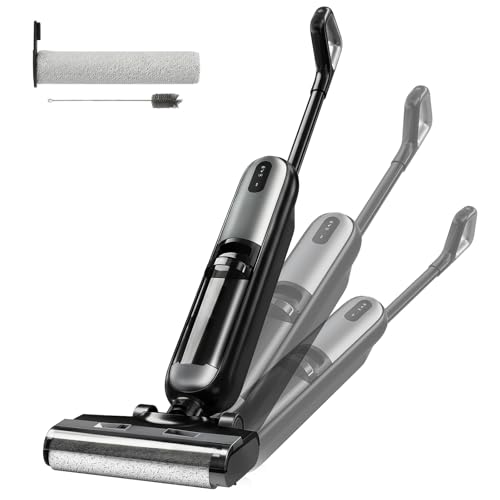

Pros
- Versatile 3-in-1 operation handles standing water, dry debris, and exterior blowing tasks with ease.
- Generous 6-gallon tank capacity strikes a balanced sweet spot between debris volume and portable footprint.
- Four 360-degree swivel casters and a balanced 13.4-pound build make moving between work areas smooth.
- Comes ready to work out of the box with three separate nozzles, extension wands, and wet/dry filter sets.
Cons
- A 10-foot power cord means larger workshops or long driveways may require an extension cord.
- Uses a 1-1/4-inch diameter hose that is better suited for fine to medium debris rather than large workshop wood chunks.
- Requires manual filter swapping between the foam filter for wet extraction and dry filters for dust collection.
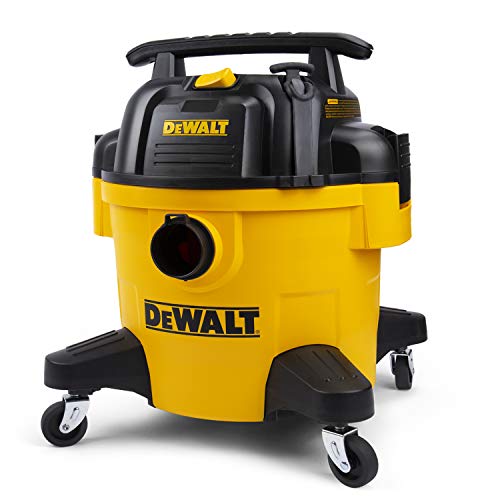
The Stanley SL18116P is a corded 6-gallon wet/dry utility vacuum powered by a 4.0 peak horsepower motor, making it a capable cleaning solution for garages, workshops, basements, and busy residential households. Built by an established tool manufacturer, this unit is engineered for homeowners, hobbyists, apartment renters, and DIY enthusiasts who regularly encounter messy cleanups that regular upright or stick vacuums cannot safely handle. Whether you need to clear standing water from a leaky pipe, clean dirt out of a vehicle, or sweep up renovation dust, this vacuum offers a durable balance of utility and compact sizing.
In practical cleaning situations, the SL18116P functions as a true multi-purpose machine with its 3-in-1 cleaning capability. The 4.0 peak HP motor provides dependable suction for pulling wet liquid spills from hard floors, as well as clearing away dry dirt, wood chips, sawdust, and coarse tracked-in entryway debris. When dry debris pickup is complete, the vacuum hose can be disconnected from the intake port and inserted into the rear exhaust blower port. This allows users to quickly clear fallen leaves, grass clippings, and workbench dust out of a garage bay or off a patio without requiring a separate yard tool.
Build quality and mobility are practical highlights of the machine. Weighing in at 13.4 pounds with dimensions of 13.8 by 13.8 by 20.47 inches, the vacuum remains easy to lift and carry via its sturdy top-mounted handle. Four independent 360-degree swivel casters provide steady roll-around mobility across concrete slabs, linoleum, and basement floors without tipping under typical pulling force. The machine features a total reach of over 16 feet, calculated from its 10-foot electrical cord, 6-foot flexible hose, and three included rigid extension wands, making vehicle interior detailing and elevated corner reach achievable.
Maintenance and filter setup are straightforward but require attention to the type of mess you are tackling. For dry vacuuming, the unit utilizes a reusable dry filter and a disposable dust bag to capture particulate matter, preventing airborne dust from recirculating into the room. When converting the vacuum to extract wet liquid spills, users must remove the dry filtration elements and slide the included foam filter over the internal filter cage to safeguard the motor assembly. The bucket provides over 22 liters of capacity, giving ample holding volume before needing to unlatch the top motor head to empty dirty water or dump collected shavings.
Prospective buyers should keep a few operational boundaries in mind before purchasing. The 10-foot cord provides adequate reach for small rooms and immediate work areas, but cleaning a two-car garage or working along an outdoor driveway will likely require a heavy-duty extension cord. Additionally, the hose and attachment diameter is sized at 1-1/4 inches, which is nimble for reaching between car seats and under appliances, but can present occasional clogs if attempting to suction oversized wood scraps or thick building rubble.
For homeowners, vehicle owners, and workshop hobbyists seeking a compact, reliable wet/dry vac at a reasonable footprint, the Stanley SL18116P provides dependable cleaning power and generous utility. Its multi-nozzle attachment package, integrated blower feature, and solid 6-gallon capacity make it an outstanding multi-purpose addition to any domestic cleaning or DIY maintenance lineup.
The Stanley SL18116P separates wet and dry vacuuming duties efficiently through its modular filter system. For liquid pickup, removing the paper bag and dry filter in favor of the included foam sleeve allows the 4.0 peak HP motor to draw up standing water, basement seepage, and plumbing overflows directly into the 6-gallon polypropylene drum without damaging internal mechanical parts.
For dry cleaning tasks, the reusable dry filter and paper collection bag work in tandem to trap drywall dust, sawdust, automotive debris, and coarse dirt. Having both dedicated filters supplied in the box ensures that users can alternate between liquid extraction and dry sweeping without risking dust blow-by or saturated paper filtration.
Out of the box, the Stanley SL18116P comes equipped with a comprehensive set of cleaning attachments designed to handle various household and workshop environments. It features a 1-1/4-inch by 6-foot flexible vacuum hose alongside three interlocking extension wands that extend overhead and floor reach.
Surface cleaning tools include a wide floor nozzle for open flat surfaces, a utility gulper nozzle for concentrated spills and automotive upholstery, and a slim crevice nozzle for reaching narrow gaps, baseboards, and vehicle consoles. A foam filter, reusable dry filter, and dust collection bag complete the accessory kit.
The Stanley SL18116P wet/dry vacuum is backed by a manufacturer 12-month limited warranty from the date of purchase. This warranty covers defects in materials and manufacturing workmanship under standard consumer operation.
Owners should consult the included operator manual for routine maintenance steps, correct filtration replacement procedures, and motor care to ensure long-term durability and ongoing warranty compliance.

Pros
- Vacuums up dry dirt and washes floors at the same time to eliminate multi-step floor cleaning routines.
- Dual-tank engineering ensures clean solution and dirty liquid remain completely isolated during cleaning.
- Tangle-free brush roll and hair strainer guard minimize pet hair wrapping and drain clogs.
- Supports a wide range of surfaces including tile, wood, laminate, vinyl, linoleum, and area rugs.
- Comes bundled with two bottles of specialized pet cleaning formula and a dedicated self-cleaning tray.
Cons
- Geared toward surface cleaning on area rugs and mats rather than deep wall-to-wall carpet extraction.
- Dual-tank system and brush-roll components require regular manual rinsing and air-drying after wet cleaning.
- Optimal cleaning and odor-neutralizing performance relies on using manufacturer-approved formulas.
The Bissell CrossWave Pet Pro 2306A is an upright wet-dry vacuum mop built specifically for pet households and busy families managing multi-surface flooring. By integrating dry suction with active wet cleaning, the machine tackles dry crumbs, tracked-in dirt, and liquid pet messes in a single step, eliminating the need to sweep or vacuum before mopping. Its design directly targets homes with hard surfaces such as tile, wood, laminate, vinyl, and linoleum, while also offering the ability to refresh area rugs and mats throughout high-traffic living areas.
At the center of its cleaning system is a dual-tank configuration that keeps fresh water and cleaning formula completely separate from dirty, collected wastewater. This ensures that you are consistently applying clean solution onto your floors rather than spreading dirty water around. To address pet messes, the unit incorporates a tangle-free brush roll and a hair guard designed to capture strands and reduce clogs in the dirty tank. Packaged with two 8-ounce bottles of specialized Pet Solution, the system helps neutralize lingering pet odors while lifting stuck-on paw prints and dried spills.
In terms of build and form factor, the CrossWave Pet Pro measures 10.5 by 12 by 46 inches and weighs 11 pounds, finished in a titanium, grapevine purple, and sparkle silver scheme. The relatively light 11-pound footprint makes it practical to guide around kitchen islands, dining chairs, and entryway runners. The bundled accessories include the pet brush roll, cleaning solution, and a dedicated self-cleaning storage tray that provides a designated spot to dock the unit and run water through the roller mechanism after completing a cleaning session.
Routine operation and maintenance are straightforward, though they do require consistent care after every use. Filling the clean-water tank with tap water and the included pet solution prepares the unit for action, while the dirty-water recovery tank requires emptying once full or after cleaning is finished. The internal hair guard helps separate solid debris and pet hair from dirty water to prevent clogs when pouring down the drain. Utilizing the included self-cleaning tray helps flush residual debris from the brush roll, but regular disassembly and air-drying of the roller, filter, and dirty tank are necessary to prevent stale odors.
While the CrossWave Pet Pro handles sealed hard floors and area rugs effectively, it is not built to replace a dedicated, high-capacity carpet extractor for thick wall-to-wall carpeting. Its rug capability is geared toward surface cleaning and light revitalization rather than deep-pile extraction. Additionally, wet-dry vacuums require immediate post-cleaning maintenance compared to standard dry vacuums, as dirty water tanks and moist brush rolls must be cleaned promptly to maintain hygiene.
For pet parents, apartment dwellers, and homeowners with extensive hard flooring seeking to consolidate sweeping and mopping into a single routine, the Bissell CrossWave Pet Pro 2306A offers high practical value. The combination of targeted pet-hair management, dual-tank sanitation, multi-surface versatility, and bundled accessories makes it a strong, time-saving investment for routine floor care.
The Bissell CrossWave Pet Pro 2306A is engineered to simplify multi-surface floor care by bridging the gap between hard floor washing and light rug maintenance. Rather than switching between a broom, a dry vacuum, and a traditional mop, users can clean sealed wood, tile, laminate, vinyl, and linoleum seamlessly. The machine can also transition onto area rugs and mats, allowing you to lift surface dirt and freshen entryway runners without swapping machines.
Pet owners benefit from dedicated design touches aimed at managing shedding and pet stains. The tangle-free brush roll is structured to minimize hair wrapping around the roller core, while the internal hair guard in the dirty collection container strains hair out of liquid waste. Paired with the included Bissell Pet Solution, the system works to loosen dried-on food, muddy paw tracks, and accidental liquid spills while leaving a clean scent behind.
Hygiene is a central design focus in the CrossWave Pet Pro through its two-tank architecture. The clean solution tank dispenses fresh water and cleaning concentrate directly to the brush roll, while the dirty recovery tank collects wastewater and debris separately. This prevents cross-contamination across different rooms and guarantees that dirty water is never redeposited back onto your cleaned floors.
Post-cleanup care is supported by the included self-cleaning tray. By docking the machine and running water through the system, the tray flushes out the brush roll and nozzle assembly without requiring you to handle messy roller surfaces directly. Removing the dirty tank, emptying collected hair via the built-in strainer guard, and allowing all wet components to air-dry ensures long-term operational cleanliness and odor control.
Pros
- Dual wet and dry pickup capabilities combined with an easy blower conversion function.
- Extensive 13-piece accessory kit specifically adapted for car detailing and tight crevices.
- Lightweight 10.99-pound construction with rolling casters and a balanced top handle for mobility.
Cons
- The 2.5-gallon tank capacity requires frequent emptying during larger liquid or workshop cleanups.
- The 12-foot power cord may require an extension cord when cleaning outside or away from wall outlets.
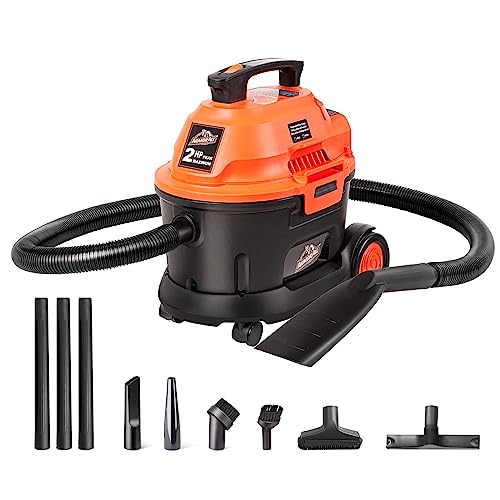
The Armor All AA255W is a portable corded wet/dry utility vacuum engineered primarily for vehicle cleaning, garage maintenance, and small household spill management. Operating on standard AC power, this model suits homeowners, vehicle enthusiasts, and hobbyists who need specialized tools for cleaning floorboards, car seats, workbenches, or localized liquid spills without the bulk of a heavy industrial unit.
According to manufacturer specifications, the vacuum is powered by a 2 peak horsepower motor configured to pull wet debris and dry dirt into its 2.5-gallon durable polypropylene tank. In addition to standard vacuuming, the motor exhaust port converts into a functional blower, which can be used to clear leaves, grass clippings, and loose dust from garage surfaces and vehicle exteriors. Total cleaning reach is defined by the 12-foot electrical cord and a 6-foot by 1-1/4-inch flexible hose, providing adequate coverage around a single vehicle or workbench without requiring constant machine relocation.
Weighing 10.99 pounds and measuring 14.2 by 10.6 by 14.38 inches, the AA255W features a rolling wheel base and a top-mounted carry handle for quick transport. The vacuum comes with a 13-piece accessory setup that includes three extension wands, a crevice tool, a blower nozzle adapter, a deluxe car nozzle, a round dust brush, a detail brush, a 2-in-1 utility nozzle, and a floor brush with an integrated squeegee. Filtration is managed by two distinct elements: a reusable cloth filter intended for general dry vacuuming and a foam sleeve designed specifically for wet liquid recovery.
Daily setup and ongoing storage are simplified by built-in slots that keep the nozzles, wands, hose, and power cord neatly attached to the vacuum body. Routine maintenance involves unclamping the motor head to empty collected dust or liquids from the tank, followed by checking the filtration setup. Users must remember to exchange the reusable cloth filter for the foam filter before collecting liquids, and allow the washable cloth filter to dry fully after routine rinsing to maintain adequate airflow and motor protection.
While practical for tight vehicle interiors and spot cleanups, the AA255W has clear functional boundaries. Its 2.5-gallon tank is not intended for high-volume flooded basement cleanup or whole-house floor cleaning. Additionally, while the 12-foot power cord is manageable around a garage stall, reaching vehicles parked in long driveways or outdoor spaces will require a properly rated extension cord.
For shoppers seeking a dedicated, cost-effective utility cleaner for car interiors, workbench debris, and minor liquid spills, the Armor All AA255W represents a well-equipped, compact choice. Its broad tool assortment and dual wet/dry capability make it particularly appealing for localized garage tasks and everyday vehicle maintenance.
The Armor All AA255W comes equipped with a comprehensive 13-piece tool package tailored for automotive care and precision cleaning tasks. For reaching floors and broader surfaces, the set provides three extension wands alongside a dual-purpose floor brush and squeegee nozzle that handles both solid dirt and standing liquid.
For specialized detailing work, the vacuum includes a deluxe car nozzle, a narrow crevice tool, a round dust brush, a detail brush, and a 2-in-1 utility nozzle for fabric surfaces. A dedicated blower adapter nozzle connects to the exhaust port for blowing out dirt, while the included reusable cloth dry filter and foam wet filter ensure the motor is properly configured for the cleaning task at hand.
Designed to handle both liquid spills and solid workshop debris, the AA255W uses a durable 2.5-gallon polypropylene collection tank driven by a 2 peak HP motor. When collecting dry dirt, shavings, or automotive dust, the machine utilizes its reusable cloth filter. When addressing liquid spills, the cloth filter must be swapped out for the included foam wet filter to protect the motor assembly from moisture.
The integrated blower conversion feature broadens its usefulness in utility environments. By attaching the hose to the rear exhaust port, the vacuum easily redirects high-velocity air through the blower nozzle adapter, making it useful for blowing dust off power tools, clearing sawdust from tabletops, or pushing debris away from car windshield cowls.

Pros
- Combines dry vacuuming and wet mopping into a single, time-saving cleaning pass
- Dedicated clean and dirty tanks ensure floors are washed with fresh water rather than recycled grime
- Broad multi-surface capability covers sealed hardwoods, laminate, tile, and low-pile area rugs
- FreshStart filter treatment helps minimize sour smells during and after wet cleaning sessions
Cons
- Requires manual tank and filter rinsing after each wet cleaning session to prevent residue buildup
- Not intended for plush wall-to-wall carpeting or deep extraction needs
- Fluid capacity and power cord length are not stated in baseline manufacturer specifications
The Bissell CrossWave Turbo (model 3888A) is an all-in-one wet and dry vacuum mop engineered for busy households seeking to vacuum and wash hard floors and area rugs in a single step. Rather than juggling a standard dry vacuum followed by a traditional bucket and mop, this multi-surface machine tackles dry crumbs, tracked-in dirt, and liquid spills simultaneously. It is particularly well suited for active homes with children or pets, apartment dwellers with mixed hard surfaces, and anyone looking to streamline their weekly floor-care routine.
Cleaning functionality centers on Bissell's dual-action wet-and-dry system. Instead of pushing dirty water around like a standard sponge mop, the CrossWave Turbo applies clean water and cleaning formula to the floor while immediately vacuuming up the resulting dirty solution and loose debris. A key component of this layout is two-tank technology, which keeps the clean water supply completely isolated from the collected dirty water tank. In addition, the machine includes an antimicrobial-treated FreshStart filter designed to prevent moldy or musty odors from forming on the filter between cleanings.
Weighing 11 pounds with dimensions measuring 11 inches by 13 inches by 26 inches, the CrossWave Turbo features a sturdy, manageable upright design. The 11-pound weight gives the cleaning head sufficient downward contact to lift sticky messes and kitchen spills without making the machine awkward to carry across rooms or up stairs. Although sometimes categorized under handheld vacuums in retail catalogs, its upright body, dual-tank layout, and floorhead make it a dedicated floor-washing machine tailored for full-room maintenance.
Surface versatility stands out as one of this model's primary operational advantages. Bissell explicitly rates the CrossWave Turbo safe and effective for tile, sealed wood floors, laminate, linoleum, rubber floor mats, pressed wood floors, and area rugs. Daily operation is straightforward: users fill the clean-water tank with water and compatible Bissell formula, clean the designated area, and empty the dirty-water container when full. Routine maintenance involves rinsing the dirty tank, washing the FreshStart filter, and clearing the brush area of tangled hair to maintain proper airflow and suction.
While the CrossWave Turbo is effective for hard floors and area rug refreshing, buyers should keep its practical limitations in mind. It is not designed to replace a dedicated, high-extraction carpet cleaner for thick, wall-to-wall carpets, nor should it be used on unsealed wood floors that cannot tolerate moisture. Furthermore, because specific fluid tank volumes and cord measurements are not published in the baseline listing, homeowners with larger floor plans may need to empty and refill the tanks periodically during extensive cleaning sessions.
For homeowners and renters looking to cut cleaning time in half, the Bissell CrossWave Turbo 3888A offers dependable performance across everyday hard surfaces and decorative rugs. Its two-tank sanitation, odor-resistant filter, and dual vacuum-and-wash capability deliver clear advantages over manual mop-and-bucket methods. With the added benefit of supporting the BISSELL Pet Foundation, this machine serves as a practical, high-value tool for managing daily household messes.
The Bissell CrossWave Turbo 3888A is built to transition across diverse flooring surfaces without requiring separate cleaning machines. The manufacturer explicitly documents compatibility with tile, sealed wood floors, laminate, linoleum, rubber floor mats, pressed wood floors, and area rugs. This range allows users to move directly from high-traffic tile entryways to sealed hardwood dining areas and low-pile entryway rugs in one continuous cleaning session.
Unlike traditional mop heads that tend to leave excess standing water, the vacuum-assisted recovery system pulls moisture back into the dirty tank as you clean. This active extraction helps minimize puddle formation on moisture-sensitive surfaces like laminate and sealed wood. When refreshing area rugs, the machine cleans surface fibers and lifts dry grit, revitalizing high-traffic accents without soaking the rug backing.
Maintaining cleanliness inside a wet-dry vacuum is essential for consistent suction and fresh-smelling operation. The CrossWave Turbo utilizes two separate tanks to isolate clean water and formula from collected dirty water, pet hair, and debris. This separation ensures that dirty solution is never reapplied to your clean floors during washing passes.
The system also features an antimicrobial-treated FreshStart filter, which helps protect the filter element against odor buildup caused by trapped damp particles. To keep the cleaner in top condition, users should empty and rinse the dirty tank after every wet cleaning run, inspect the brush roll for wrapped hair, and allow the filter to air dry thoroughly before reassembly.


Pros
- Vacuums dry debris and washes wet messes simultaneously to cut cleaning time in half
- Dual-tank design ensures only fresh water is applied to floors during cleaning cycles
- Up to 35 minutes of cordless runtime accommodates multi-room hard-floor cleaning sessions
- Hands-free self-cleaning cycle flushes the brush roller with the press of a button
- Safe and tested compatibility with delicate surfaces like hardwood and natural marble
Cons
- Designed strictly for hard floors and cannot be used on carpets or area rugs
- Requires specific handle orientation during assembly with the button facing the user for proper operation
- Dirty water recovery tank must be manually emptied and rinsed after each use to prevent odors
The Dreame G10 Pro is a cordless wet-dry vacuum mop engineered specifically for hard-surface floor care in busy homes, apartments, and active pet households. By integrating vacuuming and mopping into a single pass, this upright machine eliminates the need for separate brooms, traditional mops, and dry stick vacuums. Homeowners with extensive hardwood, marble, tile, or rare wood floors will find it especially well suited for routine maintenance, kitchen cleanups, and high-traffic entryway care where dry grit and wet spills accumulate daily.
In practical floor care, managing mixed debris often requires multiple passes with separate tools. The Dreame G10 Pro addresses this challenge by utilizing a synchronized pickup system that lifts pet hair, dust, and crumbs while simultaneously washing away wet spills like sauces, milk, and muddy tracks. Its dual water-tank design isolates fresh cleaning water from extracted wastewater, ensuring that clean liquid is consistently distributed across the roller rather than recirculating dirty water over your flooring.
Weighing 11.2 pounds with an upright footprint measuring 13.1 by 12.1 by 44.7 inches, this cleaner offers balanced maneuverability around kitchen islands, dining tables, and hallway edges. The cordless architecture removes the hassle of managing power cords between outlets, while the internal battery supports up to 35 minutes of extended use on a single charge. The handle includes direct control access, featuring a dedicated self-cleaning button that must be positioned facing the operator during initial setup for proper function.
Maintenance after cleaning is streamlined through the included charging and storage dock. Once docked, a single press of the self-cleaning button activates an automatic wash cycle that spins and rinses the roller, removing residual grime without manual scrubbing. Routine user upkeep simply involves emptying the recovered dirty-water tank, rinsing out collected debris, and allowing the roller and tank components to air dry between cleaning sessions.
A realistic limitation of the Dreame G10 Pro is its dedicated focus on hard flooring. Because it is engineered as a hard-floor washer, it does not support dry carpet vacuuming, rug restoration, or upholstery cleaning. Additionally, like all wet-dry vacuum cleaners, maintaining tank hygiene is essential, as leaving standing wastewater in the recovery container will lead to unpleasant odors over time.
For homeowners and renters looking to consolidate their floor-cleaning gear, the Dreame G10 Pro represents a practical, time-saving solution. It offers dependable debris suction, fresh-water floor washing, and hands-free roller maintenance in a single cordless frame, making it an excellent investment for anyone managing high-traffic hard floors in modern homes.
The Dreame G10 Pro is tailored for North American homes featuring diverse hard flooring, including sealed hardwood, marble, tile, and rare wood finishes. Its dual-tank distribution system meters clean water onto the roller while pulling wet messes and dry dirt into the recovery tank, avoiding over-saturation on water-sensitive surfaces.
By washing and vacuuming at the same time, the machine effectively manages routine sticky messes, spilled liquids, and tracked-in dirt in high-traffic zones like kitchens and mudrooms without the need to sweep before mopping.
Routine upkeep on the Dreame G10 Pro is straightforward thanks to the included docking station. Placing the machine on the dock and activating the one-press self-cleaning cycle spins the roller with clean water, clearing away caught hair and dirt without requiring direct manual contact with the wet brush.
To maintain peak performance and prevent mildew smells, users should detach and empty the dirty-water tank after each use, rinse the internal float and filter components, and leave the brush roller upright in a dry spot to air dry fully.


Evaluating Wet and Dry Vacuum Performance on Carpets and Area Rugs
Determining whether a wet and dry vacuum suits carpeted floors requires distinguishing between routine dry maintenance and emergency liquid remediation. A conventional vacuum relies on high airflow paired with a motorized brush roll to dislodge dirt buried within carpet backing. In contrast, utility wet/dry machines and upright vacuum mops approach floor care with completely different mechanical priorities. Understanding what these tools can and cannot accomplish protects carpet fibers, prevents moisture issues, and ensures realistic cleaning expectations.
Mechanical Differences Between Utility Shop Vacuums and Carpet Cleaners
Utility shop vacuums, such as the Stanley SL18116P 6 Gallon or the DEWALT DXV06P 6 Gallon vacuum, feature powerful motors rated at 4 peak horsepower designed to move large volumes of air and bulk debris. These machines draw sawdust, gravel, standing water, and slush through wide-diameter hoses without clogging. However, their standard floor nozzles and gulper tools consist of static plastic or metal heads without motorized brush rollers. On flat surfaces, strong suction pulls debris smoothly, but carpet pile demands physical agitation to release deep-seated grit.
When pushed across residential carpeting, a utility vacuum glides over the top surface while drawing air primarily from the perimeter of the nozzle. Because no rotating bristles sweep between the yarn tufts, fine sand, pet dander, and microscopic dust particles remain trapped deep near the primary backing. Using a utility machine for routine dry vacuuming on carpeting often results in surface cleanliness while leaving deep soil behind. Over time, that unaddressed grit acts like sandpaper against carpet fibers under foot traffic, causing premature fiber wear.
Conversely, standard upright carpet vacuums feature motorized brush rolls engineered with stiff bristles or rubber agitators. These rotating bars vibrate carpet yarns, opening the pile so motor suction can extract particles from the base of the carpet. While utility models offer broad versatility across garages and workshops, their lack of active mechanical agitation makes them an incomplete substitute for standard dry upright or canister vacuums on wall-to-wall carpets.
Upright Wet Dry Vacuum Mops Compared to Utility Canisters
The modern floor care category also includes upright multi-surface wet dry vacuum mops, which differ substantially from barrel-style shop vacuums. Machines such as the Bissell CrossWave Pet Pro and CrossWave Turbo incorporate rotating roller brushes and dual-tank systems that separate fresh cleaning solution from collected wastewater. These upright designs are primarily engineered for sealed hard floors like tile and hardwood, but specific models include dedicated settings for low-pile area rugs and runners.
When activated on an area rug setting, machines like the Bissell CrossWave meter out a controlled amount of cleaning solution while the spinning microfiber and nylon brush roll grooms the fiber surface. This action helps lift pet hair and freshen rug tufts without completely drenching the backing material. However, this capability remains restricted to low-pile rugs, flat-weave floor coverings, and entry mats. Placing an upright vacuum mop on medium-pile or high-pile carpeting can saturate dense fibers, bog down the roller motor, or cause excess water to pool beneath the rug.
Other upright wet dry mops, including the dreame G10 Pro, NEWBULIG Cordless Wet Dry Vacuum, and HAUSMEISTER Hydroflex Max, are explicitly formulated for sealed hard floors. Models like the HAUSMEISTER unit deliver 15 kilopascals of suction and 500 watts of power designed for hard surfaces, while the dreame G10 Pro offers up to 35 minutes of runtime on sealed flooring. Attempting to use hard-floor-exclusive vacuum mops on carpets can trigger roller-tangle sensor alerts, restrict airflow, or deposit wastewater directly onto soft fibers. Always check manufacturer documentation to confirm whether a specific upright wet dry model permits area rug use.
Liquid Extraction Capabilities During Household Emergencies
Where wet and dry utility vacuums truly excel on carpets is during urgent liquid emergencies. When a plumbing line ruptures, an appliance overflows, or a pet overturns a full water bowl onto a rug, immediate moisture removal is critical to prevent mold colonization. A high-capacity shop vacuum, such as the Vacmaster VOC508S with its 5-gallon stainless steel tank or a compact Armor All AA255W utility vac, can rapidly extract standing fluid from the carpet surface.
Using a rigid gulper nozzle or specialized utility claw, the user can apply downward mechanical pressure directly to saturated carpet zones. The concentrated suction draws water out of both the face yarns and the upper layers of the carpet cushion. While this process does not wash fibers with detergent, it extracts the bulk volume of standing liquid far more effectively than blotting with towels or running a standard residential dry vacuum.
Homeowners must realize, however, that extracting standing water is only the initial phase of flood remediation. Carpet padding underneath the primary backing functions like a dense sponge, trapping moisture in foam pores that standard vacuum suction cannot fully empty. If gallons of water saturate wall-to-wall carpeting, utility vacuum extraction must be supplemented with high-velocity air movers, dehumidifiers, or professional restoration equipment to prevent subfloor rot and mildew growth.
Necessary Filter Adjustments for Wet Versus Dry Operation
Operating a wet and dry vacuum safely on carpets requires configuring the filtration system correctly for the intended task. Utility vacuums utilize distinct filter types depending on whether the intake material is dry dust or liquid slush. For dry cleaning tasks, manufacturers provide pleated cartridge filters or reusable cloth covers paired with paper collection bags to capture fine particulate matter and protect the motor fan.

Attempting to extract liquids with a dry paper cartridge filter still installed inside the drum causes immediate operational problems. Water saturates the paper medium, causing pores to swell shut, choking airflow, and drastically reducing suction power within seconds. Furthermore, damp paper filters can tear or develop mold if stored inside a closed vacuum drum. Before extracting any liquid spill from carpeting, the dry filter and dust collection bag must be removed and replaced with a specialized foam wet filter.
Models like the Stanley SL18116P and Vacmaster VOC508S include foam filters specifically engineered to shield the motor housing from splashing liquid while allowing unrestricted wet airflow. After completing water extraction on a carpeted area, the collection drum, hose interior, and foam sleeve require thorough rinsing and air drying before dry filtration components are reinstalled. For readers maintaining vehicle interiors or utility mats, our guide on wet and dry utility vacuums for vehicles covers additional hose configurations and accessory tips.
Carpet Pile Thickness and Structural Limitations
Carpet pile height and density serve as major determinants in whether any wet and dry vacuum proves practical. Low-pile commercial carpeting, indoor-outdoor needle-punch mats, and flat-weave area rugs tolerate rigid utility nozzles relatively well. On these short fibers, debris sits close to the surface, allowing the high velocity of a 4-horsepower motor to lift crumbs, dirt, and pet hair without snagging the floorhead.
In contrast, medium to deep plush carpeting creates significant friction against static vacuum floorheads. Thick yarn tufts wrap around the edges of wide utility nozzles, forming a tight suction seal that glues the tool to the carpet surface. Pushing a standard shop vac attachment across deep pile requires substantial physical exertion and risks crushing delicate yarn twists without extracting dirt settled near the backing.
For households containing deep Saxony, frieze, or high-density shag carpets, specialized vacuum heads with adjustable height settings and rotating agitator bars remain essential. Exploring vacuums designed for deep plush carpets demonstrates how dedicated carpet floorheads manage airflow channels to prevent suction lock while agitating long fibers. Without these engineered relief valves and rotating brushes, utility wet dry units prove frustrating and inefficient on luxurious carpets.
Spot Cleaning and Stain Removal Nuances
Many homeowners contemplate using a wet and dry vacuum as an improvised carpet spot cleaner for pet stains, food spills, or tracked-in mud. While this technique can succeed, it requires a deliberate two-step procedure rather than simple suction. A wet/dry vacuum does not contain pressurized spray nozzles to inject detergent deep into fibers like a dedicated carpet extractor does, meaning the user must apply spot treatment manually.
To spot-treat a carpet mess, first pretreat the stained area with an appropriate carpet-safe cleaning solution and allow it to dwell according to label instructions. Gently agitating the spot with a soft-bristled handheld brush loosens bonded dirt and lifts trapped pigments from the yarn. Once the stain is dissolved into the liquid suspension, the wet and dry vacuum can be employed with a narrow nozzle to pull out the moisture and suspended soil.
This extraction technique prevents excess moisture from being driven deeper into the carpet backing, which often occurs when scrubbing aggressively with dry towels. However, users should avoid using harsh foaming detergents in the recovery tank without a defoaming agent. High-velocity airflow can whip foaming soaps into suds that travel upward into the motor housing, potentially triggering the internal float shut-off valve prematurely or damaging motor bearings.
Managing Moisture Retention and Odor Prevention
Introducing moisture to indoor carpeting always carries the secondary risk of persistent musty odors and structural damage if drying conditions are poor. While hard floors dry quickly through simple evaporation, carpet fibers trap moisture within enclosed yarn clusters and adjacent underlayment. Even after aggressive extraction with a powerful wet/dry machine, carpet backing can retain dampness for several hours or days under poor ambient ventilation.
When damp conditions persist beyond 24 to 48 hours, microbial growth and mildew spores can develop, creating sour odors that prove difficult to eradicate. Whenever a wet and dry vacuum is deployed to remove significant liquid spills from carpeting, the surrounding room environment must be actively managed. Opening windows, turning on ceiling fans, and positioning floor drying fans directly over the treated area dramatically accelerates evaporation rates.
Routine post-cleaning maintenance of the vacuum itself is equally crucial for household air quality. A wet/dry vacuum drum that holds dirty water and wet carpet lint becomes a breeding ground for bacteria if left unemptied in a closet. Emptying the recovery tank immediately, rinsing out the flexible hose with clean water, and allowing all filters to dry completely preserves machine suction and keeps exhaust air fresh.
Key Decision Factors for Household Floor Care
Deciding how to incorporate a wet and dry machine into a residential cleaning routine depends on overall flooring distribution and typical household messes. If a home primarily features tile, laminate, or vinyl with scattered low-pile area rugs, a multi-surface upright vacuum mop provides excellent everyday utility. Models capable of handling sealed hard surfaces while lightly refreshing accent rugs eliminate the need to switch between traditional mops and dry stick vacuums for daily maintenance.
For homes with extensive wall-to-wall carpeting, a wet and dry utility machine serves as a valuable secondary emergency tool rather than a primary carpet cleaner. Keeping a compact utility canister, such as the Armor All AA155 1.5-Gallon or a 6-gallon Stanley unit, in a basement, garage, or utility closet ensures readiness for plumbing emergencies, vehicle cleanups, and basement leaks. Pairing that emergency liquid pickup capability with a dedicated upright carpet vacuum ensures both deep-pile dry agitation and rapid spill protection across the entire home.
Matching the capabilities of your equipment to your specific flooring layout prevents unnecessary wear and ensures that both dry soil and unexpected moisture are handled effectively. Ultimately, a wet and dry vacuum is exceptional for emergency liquid extraction and coarse surface cleanup on carpets, but it does not replace a dedicated upright vacuum for routine deep dry cleaning or a specialized carpet extractor for restorative washing. Selecting the right tool for each specific carpet challenge protects flooring investments, optimizes cleaning speed, and ensures a cleaner living environment.





Write Your Review
No reviews yet. Be the first to share your experience!