


Vacuum cleaners efficiently lift loose crumbs, fine dust, and pet hair, but dry suction cannot always remove sticky residues or greasy kitchen films. Many households find themselves scrubbing stubborn grime by hand after running their primary floor cleaner across tile or sealed planks. This common cleaning challenge frequently leads people to ask are steamers good for cleaning everyday household surfaces without relying on harsh chemicals. High-temperature steam breaks the bond between soil and flooring, allowing a microfiber pad or brush attachment to wipe away grime that suction alone leaves behind.
Pairing a dedicated steam cleaner with a reliable vacuum for hard wood floors creates an effective cleaning workflow that addresses dry dirt first and sticky residue second. While dry vacuuming clears away abrasive particles that might scratch smooth finishes during wiping, pressurized vapor lifts stuck spots and sanitizes non-porous surfaces. Understanding how temperature, pressure, and moisture levels interact helps determine which tasks benefit from steam appliances and which delicate finishes require dry vacuum care instead.


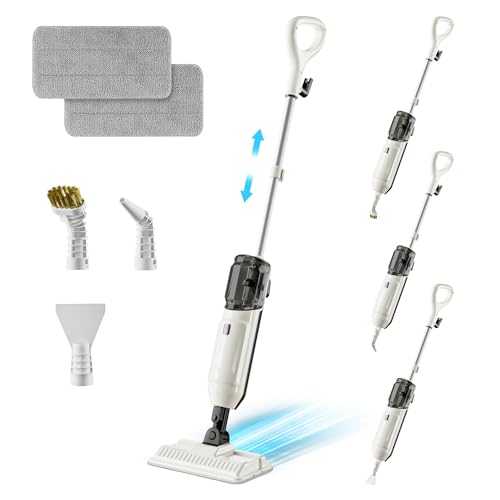
Pros
- Heats up to 260°F in 15 seconds for rapid, chemical-free cleaning on sealed hard surfaces.
- Generous 16.9oz water tank minimizes mid-cleaning refills during whole-room mopping.
- Flexible floorhead offers 135-degree swivel and 90-degree tilt for navigating under furniture and into tight corners.
- Self-standing upright body with an adjustable handle height improves daily comfort and storage convenience.
- Comes with two machine-washable pads and three detail accessories for multi-surface utility.
Cons
- Lacks dry vacuum suction, requiring floors to be swept or vacuumed prior to steam mopping.
- The 20-foot power cord may require moving between electrical outlets in larger open-plan rooms.
- Steam cleaning requires caution on unsealed or moisture-sensitive wood and laminate finishes.
The Wotaste Steam Mop Cleaner is a lightweight, corded hard-floor steam cleaner engineered for homeowners, apartment dwellers, and families seeking a chemical-free way to clean hard surfaces. Designed with an upright form factor that also accommodates handheld accessory cleaning, this machine is aimed at households dealing with sticky kitchen messes, muddy paw prints, and everyday dirt on sealed hard floors. It serves as an accessible floor-care option for pet owners, parents with crawling children, and individuals who prefer to avoid chemical cleaning solutions.
Operational performance centers on a rapid-heating boiler that produces 260°F steam in approximately 15 seconds. This thermal output targets stuck-on dirt, dried spills, and kitchen grease, breaking down grime using tap or distilled water alone. The manufacturer claims the unit eliminates up to 99.9% of common stains through high-temperature steam delivery. Sustaining this output is a 16.9-ounce water tank, which offers substantial liquid capacity compared to compact portable steamers, helping reduce interruptions for water refills while transitioning between rooms.
The structural build balances reach and maneuverability with practical ergonomics. A 135-degree rotating mop head enables smooth swiveling around kitchen islands and bathroom fixtures, while the 90-degree tilt allows the handle to drop low for sliding beneath beds, sofas, and dining sets. Users can adjust the handle height to reduce strain on the back, and the lightweight frame features a self-standing parking mechanism alongside onboard hooks to wrap the 20-foot power cord. In addition to the primary floorhead, the package supplies two reusable, washable microfiber pads and three specialized accessory attachments designed for targeted above-floor and detailed surface cleaning.
Day-to-day operation is straightforward across supported surfaces, which explicitly include hardwood, tile, laminate, and vinyl flooring. Setting up the unit involves filling the 16.9-ounce reservoir, securing a washable microfiber pad to the mop head, and plugging in the 20-foot cord. Maintenance is equally simple, as the microfiber cleaning pads can be washed and reused rather than repeatedly discarded. While the manufacturer identifies hardwood and laminate as compatible surfaces, floor finishes should always be properly sealed before applying steam, as unsealed cracks or compromised seams can be vulnerable to moisture accumulation.
Certain practical trade-offs come with this design. The 20-foot power cord provides respectable reach for small to mid-sized rooms, but expansive open-concept layouts will necessitate moving the plug to different electrical outlets. Additionally, because this machine relies purely on steam and pad absorption, it does not provide dry suction or vacuum debris pickup, meaning loose dirt, pet hair, and crumbs must be swept or vacuumed before mopping. Cord storage is strictly manual, requiring hand wrapping around the frame.
For shoppers looking for an affordable, chemical-free cleaning tool, the Wotaste Steam Mop Cleaner presents strong everyday utility. Its combination of rapid 15-second heating, a generous 16.9-ounce reservoir, low-profile articulation, and reusable cleaning pads delivers a practical floor-care solution for routine kitchen, bathroom, and living room maintenance across sealed hard floors.
The core cleaning mechanism of the Wotaste Steam Mop relies on a rapid-heating boiler that produces 260°F high-temperature steam within 15 seconds of power activation. This high heat works to soften and dissolve tough household messes, including kitchen grease, sticky spills, and ground-in dirt, without depending on chemical detergents or synthetic surface sprays.
By relying exclusively on water vapor and microfiber pad agitation, the machine provides a residue-free cleaning approach suitable for homes with pets, small children, or residents sensitive to strong scents. The built-in 16.9-ounce water capacity allows for steady steam output across multiple rooms before needing a water replenishment.
The manufacturer lists compatibility across four major hard surface types: hardwood, tile, laminate, and vinyl flooring. The smooth-gliding mop base allows for steady passes across expansive living room hardwood, bathroom tiles, and kitchen laminate without unnecessary physical dragging.
To protect sensitive hard floor finishes, it is recommended to ensure that hardwood and laminate installations are completely sealed before steam cleaning. Avoiding stationary dwell time on sealed wood seams helps preserve the material while taking full advantage of the mop's thermal cleaning action.
Beyond standard floor mopping, this unit includes three dedicated accessories and two washable microfiber pads to expand cleaning versatility. The auxiliary tools allow the machine to adapt to detailed tasks such as scrubbing greasy stovetops, sanitizing bathroom fixtures, or cleaning window and tile tracks.
The two washable pads attach securely to the base for floor duty, trapping loosened dirt as the steam sanitizes. They are fully reusable and can be laundered directly after heavy cleaning cycles, minimizing ongoing consumable expenses.


Pros
- Generates pressurized steam up to 248°F in 3 to 5 minutes for rapid grease and grime breakdown.
- Supplied with 13 practical accessories including a grout brush, extension hose, and squeegee for precise detailing.
- Large 13.5-ounce water capacity provides continuous cleaning power compared to ultra-compact handheld units.
- Weighs only 2.6 pounds, minimizing wrist fatigue during extended cleaning on walls, windows, and car seats.
- Water-only steam cleaning eliminates the need for harsh cleaning solutions around children and pets.
Cons
- Does not feature vacuum suction or water extraction, requiring a microfiber cloth or towel to wipe away loosened grime.
- The 9.8-foot cord may require an extension cord for larger rooms or outdoor car detailing tasks.
- Not designed for whole-house floor cleaning due to its handheld configuration.
The Ghanal Handheld Steam Cleaner is a compact, pressurized thermal cleaning system engineered for localized household chores and detail work. Designed for homeowners, apartment renters, pet owners, and auto-detailing enthusiasts, this unit relies on pressurized steam rather than chemical detergents to cut through stubborn messes. If you frequently struggle with baked-on stovetop residue, calcified bathroom fixtures, or dirty grout lines, this handheld steamer offers a targeted, chemical-free alternative to endless manual scrubbing.
Operational readiness is rapid, with the internal boiler reaching working temperature in 3 to 5 minutes. The unit generates pressurized steam reaching up to 248°F, which effectively softens stubborn grease, sticky deposits, and settled grime across heat-tolerant surfaces. Because this is a true steam generator rather than an extraction vacuum, its primary function is thermal agitation and loosening of debris. Users should keep a clean microfiber cloth or utility towel on hand to wipe away the suspended dirt as the steam lifts it from the surface.
Despite its budget-friendly price point, the machine includes a substantial 13-piece accessory set that dramatically broadens its utility. Included tools such as the flexible extension hose, detail grout brush, and glass squeegee allow users to tailor steam delivery to specific household surfaces. The machine easily transitions from degreasing metal stove grates and clearing out gunk from sliding window tracks to freshening pet bedding, car seats, and bathroom tile. The on-demand steam control gives you authority over steam release, preventing unnecessary pressure loss between tasks.
Weighing in at 2.6 pounds with dimensions of 8 by 5 by 11 inches, the steamer is well balanced for one-handed operation. The 13.5-ounce water reservoir strikes a comfortable middle ground, holding enough water to tackle multi-stage cleaning without making the machine cumbersome when held overhead. A 9.8-foot power cord provides reasonable reach around kitchen islands, vehicle interiors, and shower stalls, though working across very large rooms or reaching outdoor parking spots will likely require a grounded extension cord.
Prospective buyers should keep realistic expectations regarding handheld steam appliances. This unit is built for spot treatment and detailed crevice cleaning rather than broad floor mopping. It does not suction dirty water, nor does it replace a full-sized upright carpet extractor. Additionally, like all pressurized steam boilers, users must allow the system to cool down and depressurize before refilling the water tank, which requires a brief pause if tackling larger multi-room deep cleans.
For renters, pet owners, and busy families seeking a chemical-free way to refresh high-touch surfaces and blast away tight-space grime, the Ghanal Handheld Steam Cleaner represents an exceptionally practical value. Its versatile attachment package, rapid 3 to 5 minute warm-up, and high 248°F steam temperature make it a reliable household utility tool for routine deep-cleaning routines.
The Ghanal Handheld Steam Cleaner comes equipped with 13 specialized accessories configured to tackle diverse cleaning projects throughout the home. A flexible extension hose extends reach into deep vehicle footwells, high shower corners, and behind kitchen appliances where the main body cannot easily fit.
Dedicated brushes, including a specialized grout brush, focus steam pressure directly into narrow grout channels and textured tile to dislodge embedded mildew residue and dirt. The included squeegee attachment allows smooth gliding across glass surfaces, mirrors, and shower doors to loosen water spots and soap scum without relying on chemical glass sprays.
Additional nozzle tips and utility adapters allow users to direct concentrated, narrow steam blasts into intricate spaces such as stove burners, sink drains, faucet bases, and window tracks, turning difficult scrubbing chores into fast, steam-assisted wipe-downs.
This handheld steam cleaner is explicitly designed for multi-surface utility across non-porous and steam-compatible household materials. It performs reliably on kitchen countertops, ceramic tile, grout lines, stove grates, and stainless-steel fixtures where high heat can melt away baked-on oil and sticky food residue.
In the bathroom, the high-temperature steam helps clean ceramic sinks, porcelain bathtubs, glass shower enclosures, and plumbing hardware. It also offers utility for refreshing soft surfaces such as upholstery, mattresses, car interiors, and pet areas, using heat and moisture to loosen surface soils.
As with all high-temperature steam appliances operating up to 248°F, users should test an inconspicuous area on delicate fabrics, plastics, or painted finishes before full application. This unit is not designed for unsealed floors or heat-sensitive surfaces that cannot tolerate direct moisture and thermal contact.

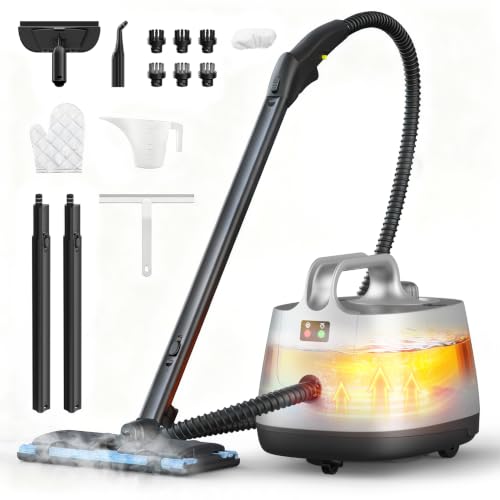

Evaluating Steam Cleaners for Home and Floor Care
Steam cleaners are exceptionally effective for sanitizing hard surfaces, melting stubborn kitchen grease, and loosening embedded bathroom grime without chemical cleaners. The thermal energy of pressurized vapor weakens the adhesive bonds holding dirt to surfaces, allowing simple wiping to lift what scrubbing struggles to remove. However, steam appliances do not replace standard vacuum cleaners because they lack dry suction and cannot collect dry crumbs, pet hair, or bulky debris. Understanding where steam excels and where standard vacuums remain essential allows homeowners to build an efficient, damage-free cleaning regimen.
How High-Temperature Steam Dislodges Dirt and Sanitizes Surfaces
Water heated past the boiling point creates pressurized vapor that transfers intense thermal energy directly to contaminated surfaces. When steam hits greasy stovetops, grout lines, or bathroom fixtures at temperatures exceeding 212 degrees Fahrenheit, it emulsifies oils and softens dried residues within seconds. Many compact units, such as models producing 221 to 248 degrees Fahrenheit, deliver enough heat to dissolve sticky substances without requiring abrasive detergents. This thermal action breaks surface tension, enabling attached microfiber pads or specialized nylon brushes to wipe soils away smoothly.
Beyond visible soil removal, steam provides natural sanitization by exposing bacteria and dust mites to extreme temperatures. Because the process relies exclusively on tap or distilled water, it leaves behind no chemical films, artificial scents, or toxic residues that could irritate pets or sensitive family members. Certain heavy-duty designs even produce steam temperatures up to 293 degrees Fahrenheit at working pressures reaching 60 PSI, which helps penetrate tight seams and textured surfaces. Users should recognize that sanitization requires holding the steam nozzle over the target area for several continuous seconds rather than rushing across the surface in a single swift pass.
The absence of chemical surfactants also means treated floors stay clean longer after steaming. Traditional cleaning agents often leave microscopic soap residues that attract airborne dust and accelerate new soil buildup. Steam vapor evaporates rapidly, leaving bare surfaces clean and streak-free when wiped with clean microfiber bonnets. For households managing allergies, eliminating harsh cleaning sprays reduces airborne irritants while effectively neutralizing common surface contaminants.
Steam Cleaners Versus Traditional Vacuums in Daily Cleaning Routines
A frequent misconception is that a steam cleaner can perform the same duties as an upright or canister vacuum cleaner. Vacuum cleaners rely on strong airflow and mechanical brush rolls to lift loose dry matter, such as sand, hair, and cereal, into a sealed filter bag or dust cup. Attempting to steam clean a floor before running a vacuum creates muddy streaks, as hot moisture turns loose dust and lint into paste. Running a capable dry vacuum first ensures that abrasive grit is removed so it cannot scratch delicate flooring under a moving steam pad.
For mixed flooring, combining tools produces far better results than relying on either appliance in isolation. A household utilizing versatile upright vacuums for hardwood and carpet can clear dry debris from rugs and bare floors before switching to a steam mop for deep sanitization. Steam effectively tackles spills, dried muddy paw prints, and sticky kitchen residues that dry vacuuming cannot budge. Once the dry debris is completely collected, the steam cleaner delivers the moisture and heat needed to restore shine and cleanliness.
Vehicle detailing represents another cleaning scenario where vacuums and steamers complement each other. Applying a dedicated wet dry vacuum for car detailing extracts coarse dirt, leaves, and liquid spills from floor mats and trunk carpets. Following dry extraction with a portable handheld steamer allows detailers to loosen sticky cupholder gunk, sanitize dashboard vents, and freshen fabric seats. Using each machine for its intended task protects internal vacuum motors from damp clogs while preventing steam nozzles from becoming obstructed by dry hair.
Compatible Surfaces and Crucial Material Limitations
While steam cleaners offer versatile performance, they are not universally safe for every household material. Dense, non-porous surfaces such as glazed ceramic tile, porcelain, sealed granite, and stainless steel handle pressurized steam exceptionally well. Grout lines benefit immensely from concentrated steam jets that loosen mildew and soap scum without eroding the mortar. In kitchens and bathrooms, metal fixtures, glass shower enclosures, and stovetops can tolerate high thermal output without sustaining damage.
Caution is mandatory when approaching porous materials, especially natural wood, unsealed laminate, and luxury vinyl planks. Unsealed or poorly finished hardwood floors absorb moisture rapidly, leading to cupping, warping, and permanent finish clouding when exposed to concentrated steam. While certain steam mops offer low-moisture settings designed for sealed hardwood, homeowners should verify manufacturer warranties before introducing heat and moisture to expensive wood floors. Delicate materials like silk, unsealed stone, antique furniture, and thin plastics should never be subjected to direct steam cleaning.
Soft furnishings, upholstery, and carpets also require specific handling to avoid unintended moisture damage. Steamers can freshen mattress surfaces, lift spot stains from synthetic sofa fabrics, and relax carpet pile, but they do not extract liquid like dedicated carpet shampooers. Saturating thick carpet padding with excess steam creates prolonged dampness that can promote mold growth under the backing. When refreshing fabrics, keeping the steam wand moving continuously and using a microfiber bonnet prevents excessive wetting while capturing loosened surface soil.
Handheld Cleaners Versus Upright Steam Mops and Canister Systems
Steam appliances come in several distinct form factors, each engineered for specific household cleaning applications. Compact handheld steamers, often weighing just three to five pounds, provide excellent maneuverability for tight spots, window tracks, car interiors, and countertop edges. Models with extended steam hoses and shoulder straps allow users to leave the boiler base on a counter while directing steam into tight oven corners or high shower tiles. Their smaller water reservoirs, typically holding between 250 and 350 milliliters, make them ideal for quick spot cleaning rather than entire floor plans.
Upright steam mops are designed primarily for flat floor maintenance and resemble lightweight stick vacuums. These units feature wide floorheads, reusable microfiber pads, and swivel joints that glide smoothly across tile, sealed stone, and compatible hard flooring. Many modern models incorporate rapid heating elements that produce steam in 10 to 15 seconds, allowing users to start cleaning almost immediately. Certain hybrid designs feature detachable handheld boilers, providing the floor coverage of a mop alongside the targeted spot cleaning capabilities of a portable handheld unit.
Heavy-duty canister steam systems resemble standard canister vacuums and feature large water tanks often holding 1.5 liters or more. Because their larger boilers generate higher pressure and continuous steam runtimes of 45 to 60 minutes, they suit extensive deep-cleaning sessions across multiple rooms. These units roll along floors on caster wheels and come with complete accessory bundles containing extension wands, squeegees, and brass wire brushes. The trade-off for this extended cleaning stamina is a larger storage footprint and longer initial preheating times.
Key Technical Specifications: Heat-Up Time, Pressure, and Tank Capacity
Evaluating the performance of a steam cleaner requires looking closely at heating wattage, pressure ratings, and boiler volume. High-wattage heating systems ranging from 1500 to 2500 watts can reach operating temperatures in as little as 10 to 15 seconds by using continuous-flow heating blocks. Conversely, traditional pressurized boiler tanks often require 3 to 6 minutes to heat water under pressure before releasing steam. Understanding this mechanism helps buyers select between on-demand fast startup and continuous high-pressure performance.
Steam pressure, usually measured in bar or pounds per square inch, determines how forcefully vapor exits the nozzle. Standard domestic handheld units typically generate roughly 3 bar of pressure, which equals approximately 43.5 PSI, providing sufficient force to dislodge kitchen grease and bathroom grime. Heavy-duty multipurpose units can generate up to 4 bar or 60 PSI, providing the concentrated force needed to blast packed dirt from engine bays and deep tile crevices. Variable steam output controls, offering multiple steam levels, allow operators to dial down intensity when transitioning from tough grout to delicate surfaces.
Water tank capacity directly dictates how long an operator can clean before pausing to refill and reheat the unit. Compact tanks holding 10 to 16 ounces provide roughly 10 to 15 minutes of continuous steam, making them convenient for swift bathroom touch-ups. Larger reservoirs exceeding 50 ounces offer up to an hour of uninterrupted cleaning, which prevents workflow interruptions during major home projects. Transparent water tanks or clear sight windows are particularly useful because they allow real-time monitoring of remaining water levels to prevent dry heating.
Step-by-Step Technique for Safe and Effective Steam Cleaning
Achieving optimal cleaning results while protecting household surfaces requires following a disciplined, structured procedure. Always begin by thoroughly vacuuming or sweeping the entire target area to remove loose grit, hair, and surface dust. If cleaning appliances or electrical fixtures, ensure power to the outlet is shut off before directing hot moisture toward switches or wiring. Assembling the appropriate attachment, such as a soft nylon brush for delicate tile or a squeegee for glass, ensures mechanical scrubbing matches the durability of the surface.
Fill the water reservoir according to manufacturer guidelines, taking care not to overfill sealed pressurized boiler units. Overfilling can reduce internal expansion space, causing hot water droplets to spit from the nozzle instead of dry steam. Allow the appliance to reach full operating temperature, indicated by a steady ready light or digital temperature display, before pulling the trigger. Direct the initial burst of steam into a sink or towel to clear condensed water trapped within the cool hose.
Work systematically across surfaces by maintaining a consistent working distance and steady forward movement. Keep a clean, dry microfiber cloth in hand to wipe away emulsified grease and pooled condensation immediately behind the steam nozzle. Allowing hot water puddles to sit on surfaces can cause mineral spotting and risks moisture infiltration into underlying materials. When cleaning vertical walls or tile surrounds, work from top to bottom so dripping condensation does not spoil sections you have already cleaned.
Maintenance and Descaling for Long-Term Machine Reliability
Routine maintenance is vital for preserving the heating efficiency and internal lifespan of any steam cleaning appliance. Mineral content found in standard tap water precipitates out when boiled, forming chalky calcium deposits inside internal heating tubes and boiler chambers. Over time, these mineral scales restrict steam flow, reduce output pressure, and can eventually trigger overheating protection shutoffs. Using distilled or demineralized water prevents scale formation and keeps nozzles spraying at peak pressure.
If mineral buildup does occur, descaling the boiler restores unobstructed airflow and even heating performance. Consult the product manual for approved descaling solutions, which commonly involve diluted white vinegar or commercial citric acid descaling mixtures. Pour the descaling solution into the cool reservoir, allow it to sit without heating to dissolve mineral deposits, and rinse thoroughly with clean water. Inspecting spray nozzles and using an included anti-clogging needle clears stubborn chalk fragments from brass or plastic tips.
Proper storage procedures also extend machine longevity and prevent unpleasant odors from developing inside the unit. After completing a cleaning session, turn off the heating element, unplug the power cord, and allow the machine to cool completely before releasing residual pressure. Empty any remaining water from the reservoir to prevent standing water from becoming stale or promoting corrosion in metal components. Wash reusable microfiber pads promptly and store steam hoses without sharp kinks that could damage internal reinforcement wires.
Matching Attachments to Specific Household Cleaning Tasks
Most multi-purpose steam cleaners include a variety of specialized nozzles and brush heads designed for distinct cleaning challenges. Small round nylon brushes provide gentle scrubbing action that dislodges soap scum around bathroom faucets without scratching chrome finishes. Brass wire brushes deliver stiffer abrasion intended strictly for cast iron stove grates, barbecue grills, and unfinished masonry where metal bristles will not cause cosmetic harm. Matching the brush stiffness to the underlying surface prevents accidental gouging or dulling of glossy finishes.
Angled jet nozzles concentrate steam into a narrow, high-velocity stream that flushes debris out of sliding door tracks and tight corners. Window squeegee attachments distribute steam evenly across glass panes while a rubber blade whisks away loosened dirt without leaving streaks. For large flat surfaces, wide triangular or rectangular floor brushes covered with microfiber pads absorb dissolved grease while spreading heat evenly. Switching between these dedicated tools ensures the thermal and mechanical energy of the machine is applied efficiently to each specific chore.
Steamers are undeniably good for cleaning when utilized as part of a coordinated strategy alongside regular dry vacuuming. Their ability to sanitize surfaces, melt greasy kitchen film, and renew discolored tile grout without chemical additives makes them invaluable tools for home maintenance. By respecting surface material limits, choosing the right form factor, and performing routine descaling, homeowners can maintain pristine, hygienic living spaces safely.


Write Your Review
No reviews yet. Be the first to share your experience!