


Managing pet hair on floors, furniture, and car seats often feels like an unending household chore. Traditional upright vacuums frequently struggle when pet fur wraps tightly around standard brush rolls or clogs narrow intake pathways. Many pet owners wonder whether heavy-duty workshop machinery or utility vacuums provide a sturdier alternative, leading to the practical question of whether are shop vacs good for pet hair cleanup in everyday settings.
While utility vacuums deliver tremendous airflow and wide intake hoses that rarely clog on clumps of fur, their effectiveness largely depends on the specific surface and the attachments you use. Unlike specialized carpet cleaners or pet stain vacuums that feature motorized agitation, utility designs rely primarily on raw suction to lift debris. Understanding how filtration, static cling, and nozzle design interact helps you decide if a utility or workshop-style cleaner makes sense for your household routine. By examining where these machines excel and where they fall short, pet owners can choose the most practical vacuum configuration for their daily cleaning needs.


Evaluating Shop Vacuums and Utility Cleaners for Pet Hair Removal
Utility-style shop vacuums and compact workshop cleaners offer notable advantages for pet owners, but they are not an automatic replacement for conventional floor cleaners. Their wide hoses and robust air channels easily swallow dense tufts of fur without choking, which solves one of the biggest headaches associated with standard household vacuums. However, raw air power alone cannot always dislodge stubborn fur fibers that weave themselves into carpet backing or textured fabric. Success depends on pairing that high suction volume with the right mechanical agitation and appropriate filtration.
How Suction Power and Airflow Impact Hair Collection
Shop vacuums operate with powerful electric motors designed to generate high cubic feet per minute airflow through generous intake diameters. When dealing with loose shedding across hard surfaces like concrete, tile, or garage floors, this air volume pulls hair in from several inches away. Standard household vacuums often rely on narrow intake paths that hair easily bridges, resulting in annoying clogs near the floorhead entrance. The broader intake path of a utility cleaner keeps airflow unobstructed even when vacuuming up entire mats of shedding fur.
The physical mechanism changes dramatically when you move from loose debris on hard floors to embedded fibers on woven surfaces. Without an active agitation element, air moving across carpet pile simply flows over hairs that have entwined with fabric threads. Vacuum pressure drops if an attachment seals too tightly against the floor, while lifting the nozzle breaks the suction seal entirely. For this reason, high static lift and high airflow provide raw power, but physical friction remains necessary to break the bond between pet hair and fabric weave.
The Challenge of Motorized Brush Rolls Versus Straight Suction
The primary difference between standard upright home cleaners and workshop vacuums centers on the presence of a motorized brush roll. Traditional uprights use spinning bristle bars to beat carpet fibers, lifting trapped hairs so intake air can whisk them away. Workshop vacuums almost universally feature straight-suction utility nozzles or squeegee floorheads that glide flat across surfaces. While this straight-suction design eliminates the frustrating chore of cutting tangled hair off a roller spindle, it sacrifices deep mechanical agitation.
Pet hair possesses microscopic scales along each shaft that physically latch onto woven upholstery fibers, automotive carpets, and low-pile mats. Straight suction pulls on the hair, but often lacks the perpendicular mechanical force required to unhook these scales. When using a utility vacuum on upholstered stairs or car trunks, operators frequently discover that the nozzle slides over the fur without pulling it free. Overcoming this limitation requires specialized passive friction attachments, such as rubberized squeegee edges or stiff-bristled utility brushes.
If you need to clean deep-pile fabric frequently, pairing utility straight suction with dedicated manual tools yields much better results. Some owners scrape the surface with a handheld rubber rake to gather fur into piles before vacuuming the gathered heaps with the utility hose. This two-step process preserves the clog-free benefits of the shop vacuum while achieving the fiber release that motorized agitators normally handle. It requires more manual effort than pushing an upright vacuum, but it prevents the motor strain and belt burnouts common to household units.
Filtration Considerations and Managing Pet Odors
Workshop vacuums are built to handle sawdust, drywall powder, and coarse construction debris, which influences how their filtration systems handle organic matter. Basic paper cartridge filters or foam sleeves capture visible pet hair easily, keeping the motor fan free of coarse strands. However, microscopic pet dander and dried saliva particles pass straight through coarse utility filters, blowing right back into your living space. Running a standard utility cleaner indoors without upgraded filtration can quickly trigger respiratory sensitivity in homes with shedding animals.
Installing high-efficiency particulate air filtration or multi-stage collection bags significantly changes this dynamic. When equipped with a certified fine-dust cartridge or a sealed collection bag, a utility vacuum traps fine dander particles securely inside the canister drum. The collection bag acts as an initial physical barrier, catching both clumps of fur and fine dust before air reaches the secondary pleated filter. This setup keeps the internal pleated cartridge clean longer, maintaining strong suction and reducing how often you need to knock dust out of the machine.
Odor accumulation represents another critical factor that pet owners must actively manage when using utility canisters. Pet hair contains natural oils and trapped moisture that produce unpleasant stale odors when stored inside an enclosed plastic drum over several weeks. Unlike bagged vacuums that you discard when full, open-canister shop vacs allow pet odors to recirculate each time the motor exhaust warms up. Emptying the drum immediately after intensive cleaning sessions and washing reusable filter elements prevents foul smells from settling into the vacuum housing.
Ideal Surfaces: Vehicles, Workshops, and Hard Flooring
While utility vacuums face limitations on indoor wall-to-wall carpeting, they excel across several specific cleaning environments. Vehicle interiors represent one of the best applications for shop-style suction, where durable floor mats and trunk carpets collect heavy dirt alongside pet fur. The rugged plastic construction of utility nozzles resists abrasive sand and gravel that might scratch delicate home vacuum components. Combined with flexible extension hoses, a compact utility setup reaches down between seat rails and under vehicle pedals far more easily than a bulky upright cleaner.

Hard surface flooring throughout garages, utility rooms, basements, and mudrooms also highlights the strengths of straight utility suction. Pushing a spinning brush roll across hard floors often scatters hair tufts backward instead of capturing them cleanly. A broad utility floor nozzle glides flat against smooth surfaces, creating an intake vortex that swallows fur without flinging it across the room. If your home features polished concrete, tile, or laminate transitions in high-traffic pet zones, utility suction handles daily fur tumbleweeds swiftly.
For delicate indoor fabrics and bedding, alternative handheld formats often prove more practical than wrestling a full-size utility drum. When evaluating smaller furniture surfaces, dedicated handheld vacuums for fabric cleaning provide lighter handling and targeted contact than heavy workshop hoses. Handheld designs allow you to maneuver across cushions and mattresses without dragging coarse utility plastic against delicate upholstery fabrics. Matching the equipment format to the surface prevents accidental fabric scuffs and makes quick spot cleanings much less cumbersome.
Attachment Strategies for Removing Stubborn Pet Fur
Achieving clean results with a utility vacuum requires moving beyond standard wide gulper nozzles to purpose-built accessories. Claw-style utility nozzles, commonly found in commercial car wash bays, concentrate suction into a narrow, angled intake slit. This concentrated opening increases airflow velocity at the contact point, providing more lifting power against stubborn fibers. Technicians and detailing enthusiasts favor claw nozzles because the rigid plastic edge can be scraped firmly against automotive carpet to loosen embedded fur.
Crevice tools and detail brushes represent another essential category for comprehensive pet hair extraction. Narrow crevice attachments accelerate intake speed and pull hair from tight gaps along sofa frames, vehicle seat folds, and baseboard ledges where shed fur tends to settle. Brushes with firm synthetic bristles physically rake across the surface, snagging loose strands while the adjacent suction port whisks them into the hose. The mechanical brushing action loosens the grip of the hair, allowing straight suction to complete the pickup without clogging.
Specialized car detailing kits, such as the vioview 26pcs Car Cleaning Kit, illustrate how diverse accessories improve pet hair removal in tight quarters. The vioview kit features a compact cordless handheld vacuum with a manufacturer-rated 35000Pa suction specification alongside six versatile nozzles, cleaning gel, and multiple detail brushes. These small brush heads allow users to sweep hair out of vent slats, textured dashboards, and seat crevices where larger utility nozzles cannot fit. Having dedicated detailing tools bridges the gap between raw vacuum suction and delicate interior components.
Corded Workshop Drums Versus Cordless Utility Handhelds
Choosing between a full-sized corded utility vacuum and a compact cordless utility machine depends heavily on your mobility needs and workspace layout. Large corded workshop drums provide continuous electrical power and massive waste capacity, allowing you to vacuum large sheds or several heavily soiled vehicles without stopping. However, their physical bulk, heavy corrugated hoses, and trailing power cords make them awkward to carry up staircases or maneuver inside cramped car cabins. If setting up the machine feels like a chore, quick pet hair cleanups are frequently postponed.
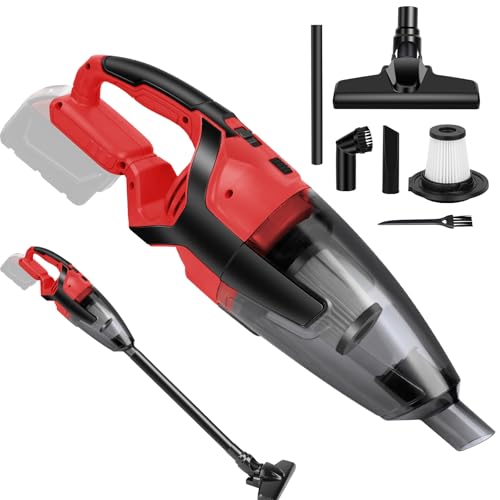
Cordless utility vacuums trade extreme drum capacity for rapid deployment and unrestricted mobility. Battery-powered units let you step immediately into a vehicle, camper, or utility room without hunting for an available wall outlet or untangling long extension cords. Units that integrate with existing power tool systems, such as the TRONYAN 120W Cordless Vacuum Cleaner Compatible with Milwaukee 18V batteries, offer notable convenience for workshop owners who already maintain compatible tool packs. The TRONYAN design operates as a tool-only handheld with a 600ml waste container, extension rods, and three interchangeable heads, providing quick pickup for furniture and workshops.
When considering cordless utility options, operating constraints such as battery runtime and waste volume require realistic planning. The vioview cordless kit lists up to 40 minutes of operating time from its detachable battery pack, which suits targeted spot cleaning and interior detailing. In contrast, tool-compatible units like the TRONYAN cleaner rely on your own 18V battery capacity to determine working duration. For extended whole-house pet hair sessions, corded units remain superior for non-stop endurance, while compact cordless utility vacuums provide rapid response for daily spot messes.
Maintenance, Filter Cleaning, and Avoiding Airflow Loss
Maintaining reliable suction in any utility vacuum requires regular attention to the air filtration path and debris container. Because pet hair forms dense, felt-like mats as it collects, it quickly coats the outer surface of internal filters, restricting airflow through the motor. When air passage is blocked, suction drops noticeably and the vacuum motor runs hotter due to reduced cooling airflow. Checking the condition of the filter after every major pet cleaning session ensures the machine maintains its rated performance.
Cleaning methods depend strictly on the filter material specified by the manufacturer in the product documentation. Many modern compact utility vacuums include washable, reusable filters, such as the dual filter setup supplied with the TRONYAN 120W cleaner or the washable filter in the vioview handheld kit. When washing reusable filters, always disconnect the vacuum from power sources or detach the battery pack before performing maintenance. Tap the dry filter gently over a trash bin to dislodge loose fur, rinse under cool running water without harsh detergents, and allow the filter to air dry completely for at least 24 hours before reinstalling it.
Installing a damp or improperly seated filter can permanently damage the vacuum motor and foster mold growth inside the housing. A damp filter draws airborne dust into its moist fibers, creating an impenetrable paste that destroys suction within minutes of operation. Always refer to your specific model manual for guidance on filter washing limits, replacement schedules, and internal seal inspections. Inspecting hose lines for static-clinging hair clumps and wiping down the interior drum with a mild disinfectant helps maintain fresh operation over the life of the machine.
Practical Takeaways for Pet Owners
Shop-style vacuums and compact workshop utility cleaners provide exceptional value when integrated into a broader pet cleanup strategy. Their clog-resistant air paths, durable construction, and ability to swallow large hair clumps make them unmatched for vehicles, hard floors, workshops, and garage spaces. However, relying on a utility vacuum as your sole cleaner for thick indoor carpeting usually leads to frustration due to the absence of motorized brush agitation.
If you want to use a utility vacuum for pet hair, equip the machine with fine-dust or HEPA-rated filtration to protect indoor air quality. Combine high airflow with claw nozzles, rubber squeegees, or detailing brushes to supply the manual friction necessary for lifting stubborn strands from woven fabrics. By pairing robust straight suction with the right specialized accessories, you can effectively conquer heavy pet shedding across vehicles and utility spaces without jamming your equipment.



Write Your Review
No reviews yet. Be the first to share your experience!