


Daily dust, shedding pet fur, and tracked-in grit quickly accumulate across floors, making manual sweeping feel like a never-ending chore. Many busy households wonder whether automated machines can genuinely replace manual cleaning routines or if are robot vacuum cleaners worth it for everyday maintenance. Modern robotic units promise automated floor care on set schedules, yet performance varies significantly across bare flooring, plush rugs, and obstacle-filled rooms. Understanding how autonomous cleaners manage daily debris helps determine if the investment aligns with your household needs. Homes with bare flooring often compare these units with dedicated vacuum cleaners for hardwood floors to see how daily suction holds up against deep-cleaning power.
Autonomous vacuums generally excel at maintaining surface tidiness rather than replacing intensive deep-cleaning machines. While traditional upright vacuums for multi-surface floors offer substantial airflow for dense carpets, robot models prioritize automated consistency across open walkways. Choosing an autonomous model requires balancing expectations around navigation, dustbin capacity, and routine brush maintenance. Evaluating these functional trade-offs reveals whether an automated cleaner fits your cleaning expectations or simply adds another gadget to maintain.

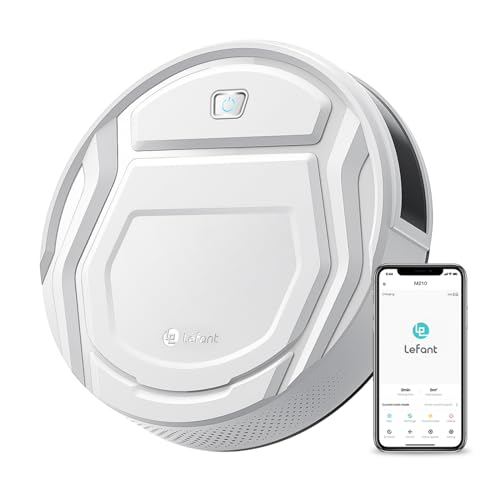
Pros
- Brushless suction port prevents pet hair tangles, reducing maintenance headaches
- Compact 2.99-inch low-profile body easily navigates underneath low-clearance furniture
- Lithium iron phosphate battery provides up to 120 minutes of runtime in low suction mode
- Smart control flexibility with the companion Lefant App plus Alexa and Google Assistant voice integration
- Equipped with 6D anti-collision infrared sensors to help detect obstacles and prevent jamming
Cons
- Lacks a motorized roller brush, which limits deep agitation on medium and high-pile carpets
- Manufacturer explicitly advises against using the zigzag cleaning mode on carpet
- Maximum 120-minute battery life applies specifically to the low suction running mode
The Lefant M210 is an entry-level robotic vacuum designed primarily for routine dry debris removal across hard floors and low-profile living areas. Standing out with its compact frame and roller-free pickup design, this cleaner is well-suited for pet owners, apartment dwellers, and busy households looking for automated daily maintenance without the chore of untangling hair from a traditional motorized brush roll.
Floor cleaning is handled through a brushless suction port paired with a digital motor. Because there is no rotating brush roll underneath, pet hair, dirt, and dust travel straight into the collection bin, significantly lowering hair wrap issues. The cleaner supports six distinct operating modes, including zigzag, random, spot, edge, scheduled timed cleaning, and manual control via the Lefant App. While the unit handles daily debris on hard surfaces effectively, the manufacturer explicitly notes that zigzag mode should not be used on carpets, making it primarily a hard-floor specialist with light area-rug utility.
Measuring approximately 11 inches in diameter and 2.99 inches in height, the Lefant M210 features a notably slim build that allows it to glide under low-clearance bed frames, couches, and entertainment centers where upright vacuums cannot reach. Navigation is guided by upgraded FreeMove Technology 3.0, which utilizes 6D built-in anti-collision infrared sensors to detect potential trapping points and adjust travel paths before the vacuum becomes wedged.
Daily operation and scheduling are managed through Wi-Fi pairing with the dedicated Lefant App, which also lets users adjust suction levels, direct manual movement, and integrate voice commands through Amazon Alexa or Google Assistant. Power is supplied by a lithium iron phosphate battery that delivers up to 120 minutes of runtime when operated in low suction mode. When cleaning cycles end or battery power dwindles, the vacuum automatically returns to its base for self-charging. Routine maintenance centers on sliding out and emptying the internal dustbin and keeping sensor windows clean.
Buyers should be aware of practical operational boundaries before purchasing. Because this model relies exclusively on pure suction without brush-roll bristles, it will not provide deep mechanical agitation on thick carpets or dense area rugs. In addition, reaching the full 120-minute battery benchmark requires operating in low suction mode, meaning higher power settings will yield shorter run times.
For pet owners and households with primarily hard floors seeking an affordable, low-profile robotic vacuum that reduces hair-clearing maintenance, the Lefant M210 offers dependable practical value. Its balance of smart scheduling, voice compatibility, and anti-tangle suction makes it an appealing everyday helper for keeping dust bunnies and shed fur under control.
The key feature of the Lefant M210 for pet households is its brushless suction inlet. Traditional robot vacuums rely on bristle or rubber roller brushes that inevitably collect tangled pet hair, requiring scissors or specialized tools to cut free after every cleaning session. By eliminating the roller brush entirely, this robot pulls loose fur, whiskers, and dander straight into the dustbin.
This brushless layout makes the machine especially effective along hard surfaces such as tile, vinyl, and sealed wood floors where pet hair floats and gathers in room corners. However, without rotating bristles to agitate carpet fibers, pet owners with deep carpet piles should view this vacuum as a hard-floor surface maintainer rather than a deep carpet extractor.
Setup and daily controls run through the companion Lefant App, which allows users to schedule automated floor cleaning, switch power modes, and guide the cleaner manually. Compatibility with Amazon Alexa and Google Assistant adds hands-free voice convenience for starting or stopping cycles.
To navigate living spaces without constant manual rescue, the cleaner relies on FreeMove Technology 3.0. A series of 6D anti-collision infrared sensors monitor the vacuum's surroundings, detecting low furniture skirts, table legs, and tight spaces. The system adjusts trajectory automatically to reduce collisions and prevent the robot from getting stuck beneath household items.


Pros
- 3L self-emptying dock significantly reduces daily bin-clearing chores for multi-week hands-free operation
- 6000Pa peak suction with automatic carpet boost provides dependable pull on heavy crumbs and pet hair
- LiDAR smart mapping stores up to 5 separate floor maps, making it well-suited for two-story or split-level homes
- Dual-band Wi-Fi support (both 2.4GHz and 5GHz) avoids common smart home router setup headaches
Cons
- Mopping plate does not auto-lift on carpets, requiring manual removal of the mop bracket or establishing app-based no-mop zones
- The advertised 150-minute runtime is restricted to gentle suction mode and decreases when running at higher suction levels
The Tikom L8000 Plus is an automated robot vacuum and mop designed for households seeking routine floor maintenance without constant hands-on effort. Built with an included self-emptying base station, it suits busy families, apartment renters, and pet owners who need consistent crumb and pet-hair pickup across mixed flooring. By pairing active vacuum suction with a damp-wiping mop module, this compact machine handles everyday dust and floor debris across both carpeted areas and hard-floor surfaces.
Cleaning performance centers on an adjustable vacuuming system that offers three distinct power stages, reaching up to 6000Pa of suction. When the robot transitions onto carpeted areas, the built-in carpet-boost sensor automatically increases suction to the maximum 6000Pa level to pull deeper debris and hair from carpet pile. For hard floors, the 2-in-1 design allows damp mopping using three adjustable water flow settings, matching liquid output to your floor type. Once cleaning concludes, the robot navigates back to its docking station where a 3L sealed dust bag collects debris, offering up to 90 days of hands-free operation before the bag requires disposal.
Navigation is driven by a top-mounted 360-degree LiDAR sensor that scans room layouts in real time. Rather than bouncing randomly off baseboards, the robot maps the home systematically to avoid repetitive passes, stairs, and stationary walls. The accompanying mobile app allows storage of up to five individual floor plans, making it practical for multi-story layouts. Through the app, users can define virtual walls, set specific no-go areas, designate no-mop zones, and select individual rooms for targeted spot cleaning. The unit also pairs with Amazon Alexa and supports both 2.4GHz and 5GHz Wi-Fi bands, simplifying smart home integration.
Routine operation is assisted by an operating runtime of up to 150 minutes when running in gentle suction mode. If the battery depletes midway through a larger floor plan, the robot automatically returns to the self-emptying base to recharge before resuming cleaning exactly where it stopped. Daily upkeep remains relatively low thanks to the auto-empty dock, though standard maintenance still involves periodically checking the brush roll for wrapped hair, rinsing the washable mop pad, and wiping down cliff and optical sensors to preserve navigational accuracy.
There are practical operational limits to keep in mind before purchase. Because the mopping module does not automatically lift when crossing rugs or carpets, users must physically remove the mop bracket or establish digital no-mop zones in the mobile app to keep carpets dry. Additionally, the mopping functionality operates as a passive damp wipe rather than an aggressive oscillating scrubber, making it best suited for light dust removal rather than heavy, dried spills. The maximum 150-minute runtime also applies strictly to the lowest gentle power setting. For households seeking reliable LiDAR mapping, multi-floor flexibility, strong carpet suction, and an auto-empty dust station, the Tikom L8000 Plus provides a well-balanced, practical cleaning package.
The 360-degree LiDAR turret on the Tikom L8000 Plus scans interior rooms quickly to generate accurate digital floor maps within the companion app. This laser-guided system plans orderly cleaning paths rather than wandering, helping the robot clean efficiently along walls and avoid tumbling down staircases. Because the system can store up to five separate maps, homeowners with multiple levels can easily transport the robot between floors without erasing previous room layouts.
Within the mobile application, users can actively manage their cleaning paths using digital boundaries. Setting virtual walls and custom no-go zones keeps the vacuum away from cluttered corners, cables, and pet feeding stations. When the mop pad is attached, creating no-mop zones ensures the damp pad avoids area rugs and wall-to-wall carpeting. The inclusion of dual-band Wi-Fi connectivity supporting both 2.4GHz and 5GHz networks also ensures a reliable connection to home routers during map updates.
The Tikom L8000 Plus incorporates a 2-in-1 sweeping and mopping module that allows the robot to vacuum debris while damp-wiping hard surfaces in a single run. The onboard water reservoir features three electronically controlled water flow levels, giving users direct control over how much moisture is released onto floors such as tile, vinyl, and sealed hard surfaces.
Because the unit relies on a drag-style microfiber mop pad rather than vibrating or spinning scrubbers, it is intended primarily for collecting fine dust, paw prints, and light daily grime rather than heavy, caked-on grease. To avoid dampening carpet fibers, users should set no-mop zones via the mobile app or detach the mop cloth bracket entirely before running a carpet-only cleaning cycle.

Pros
- Simultaneous vacuum and mop design handles dry debris and surface wiping in a single cleaning cycle
- Compact 2.99-inch height fits under low couches and furniture where upright vacuums cannot reach
- Includes a physical remote control alongside app and voice options, ideal for quick adjustments without a phone
- Solid manufacturer-rated 5000Pa suction lifts stubborn pet hair from low- and medium-pile carpeting
- Self-charging dock ensures the vacuum returns automatically to replenish its battery
Cons
- Relies on sensor-based zig-zag pathing rather than interactive LiDAR or camera-based room mapping
- Mopping functionality uses a passive damp pad without active mechanical scrubbing or automatic carpet lift
- The maximum 150-minute runtime specification is based solely on low-power quiet mode operation
The Tikom G8000 Max is a dual-function robotic vacuum and mop engineered to deliver automated floor care for busy homeowners, apartment renters, and multi-pet households. By uniting a manufacturer-specified 5000Pa suction rating with an integrated mopping attachment, the device addresses everyday surface dirt, tracked-in outdoor grit, and shedding pet hair across hard surfaces and carpets alike. For shoppers seeking regular floor maintenance without pushing a heavy upright machine every day, this automated platform serves as a convenient daily cleaning tool.
Cleaning versatility centers on its dual-action hardware layout, housing a 450 ml dustbin for dry debris and a 300 ml water reservoir for damp wiping. When running, the robot vacuums up loose dirt while simultaneously dragging a moist microfiber cloth across bare floors to trap fine surface dust. The vacuum offers four specialized operating patterns: a systematic Zig-zag pattern for broad coverage, an Edge setting for room perimeters and baseboards, a concentrated Spot mode for localized dry spills, and Manual steering via remote or app. Large climbing wheels enable smooth transitions over standard floor dividers between hard surfaces and low- to medium-pile carpets.
The physical build of the G8000 Max emphasizes access and low-profile maneuverability. Standing at just 2.99 inches tall with a 12.6-inch diameter, it easily clears the clearance gap beneath low-profile couches, platform beds, and entertainment stands where debris accumulates out of sight. Navigation relies on integrated anti-collision sensors and anti-drop cliff detection, helping the unit steer around baseboards and refrain from tumbling down stairwells. Control options are notably flexible: users can direct routines through a mobile application, link to voice control, press the physical buttons on the top housing, or rely entirely on the dedicated handheld remote, making it accessible for households that prefer not to manage smartphone pairing.
Routine setup and daily maintenance are refreshingly straightforward. The vacuum docks itself autonomously whenever battery reserves run low, keeping it topped up for the next scheduled session. Emptying the 450 ml dustbin requires releasing the rear module and dumping contents directly into the household trash, while the 300 ml water tank can be refilled at any sink. Maintaining pickup performance involves periodically checking the rotating brush roll for pet hair wrap, clearing the side brushes, and removing the mop pad to wash and dry between wet cleaning passes.
Prospective buyers should remain mindful of practical operational limits. The G8000 Max does not feature laser-guided LiDAR or visual camera mapping, meaning it cannot construct digital room layouts, save floor plans, or enforce digital no-go boundaries within the mobile app. Additionally, the mopping module is a passive water-wicking plate rather than an oscillating scrubber, and it lacks an automated lift mechanism, so the water tank and pad should be detached before sending the robot across carpeted rooms. Furthermore, the listed 150-minute maximum runtime applies strictly to low-power quiet mode and will naturally decrease at higher suction settings.
For households looking for an affordable, capable automated cleaner to maintain hard floors, tile, and low- to medium-pile rugs, the Tikom G8000 Max delivers dependable everyday functionality. Its balance of high listed suction power, ultra-slim furniture clearance, dual vacuum-and-mop capability, and multiple control methods makes it a practical purchase for keeping busy living spaces consistently tidy.
The Tikom G8000 Max features a manufacturer-rated 5000Pa suction system engineered to tackle daily pet hair, dirt, and kitchen crumbs. Its combination floor module incorporates a 450 ml dry dust collection bin paired with a 300 ml water reservoir, facilitating simultaneous dry sweeping and damp floor wiping in one continuous path.
Surface compatibility extends across hard floor surfaces including tile, sealed hard floors, and vinyl, alongside area rugs and short- to medium-pile carpeting. Integrated large-diameter wheels provide smooth climbing capability over interior door thresholds, allowing the cleaner to navigate between disparate room surfaces without getting hung up.
Navigational guidance is managed through built-in anti-collision sensors and anti-fall cliff detection modules that monitor walls, chair legs, and drop-offs such as stair landings. The robot utilizes four selectable navigation routines: an organized Zig-zag sweep for maximum room coverage, an Edge mode targeting baseboards, a concentrated Spot mode for small messy zones, and Manual control.
System operation is supported across four distinct control channels: a smartphone mobile app, voice-assistant integration, direct push-button operation on the cleaner chassis, and an included physical remote control. The physical remote offers straightforward, immediate control without requiring Wi-Fi pairing or smartphone accounts.
Power management is anchored by an automated self-charging function that directs the robot vacuum back to its docking base whenever the battery runs low. In low-power quiet mode, the machine delivers a manufacturer-listed runtime of up to 150 minutes, providing ample working time for typical household floor plans.
Regular maintenance involves unlatching and emptying the 450 ml dry bin, detaching the mopping cloth for routine washing, and refilling the 300 ml clean water reservoir as needed. Periodic cleaning of the main agitator roll and side sweeping brushes helps prevent hair binding and preserves consistent pickup performance over time.


Pros
- Brushless, tangle-free suction design eliminates hair wrapping and reduces maintenance for pet owners
- Impressive manufacturer-stated 5200Pa suction across three adjustable power settings
- Slim 2.99-inch height fits easily under low coffee tables, dressers, and couches
- Smart control options include companion smartphone app scheduling plus Alexa and Google Assistant voice commands
- Four-stage electronic water control allows tailored mopping moisture on hard floors
Cons
- Not suitable for medium- or high-pile carpeting; performance is restricted to hard floors, wood, and low-pile rugs
- Relies on bump-and-sensor navigation rather than advanced LiDAR room mapping or designated virtual no-go zones
- Specific dust bin and water tank capacities are not listed in fluid or volume metrics by the manufacturer
The ROPVACNIC Robot Vacuum and Mop Combo (Model S1) is an automated 2-in-1 floor-care machine designed for routine multi-surface upkeep in busy American households. Engineered primarily for apartment dwellers, pet owners, and homeowners managing wood and hard surfaces alongside low-pile rugs, this unit tackles everyday dust, pet shedding, and minor floor spots without requiring manual push-vacuuming. Its combination of wet mopping and vacuuming makes it an appealing option for budget-conscious buyers seeking an entry-level robotic helper for daily maintenance.
In real-world cleaning situations, this robot addresses daily debris using a 3-point cleaning system and a manufacturer-rated 5200Pa of suction across three selectable power stages. Instead of relying on a traditional bristled roller, the machine uses a direct, no-entanglement suction inlet flanked by dual rotating electric side brushes. This direct-suction approach is specifically intended to channel dog and cat hair, crumbs, and tracked-in grit directly into the suction path without wrapping around an agitator bar. Simultaneously, the electronically controlled water tank offers a four-stage personalized water adjustment system, allowing users to dial in light dampness for dust removal or slightly heavier moisture for minor sticky spots on wood and tile-like hard surfaces.
From a structural standpoint, the robot features a remarkably low-profile build measuring 12 by 12 inches with a height of only 2.99 inches, weighing approximately 7.28 pounds in a light black housing. This compact chassis allows it to clear low-hanging furniture, including bed frames, sideboards, and living room couches, where dust bunnies and pet fur often accumulate out of reach. The underside houses dual motorized side brushes designed to reach along baseboards, while the mopping plate attaches smoothly to the base. It comes paired with a compact charging dock to which the robot autonomously returns whenever cleaning concludes or battery replenishment is needed.
Setting up the unit is straightforward, involving app pairing for smartphone scheduling and connecting to voice platforms such as Amazon Alexa or Google Assistant. Maintenance is noticeably lower on the vacuuming side because the absence of a brush roll eliminates the tedious task of cutting away wound-up pet hair with scissors. Users simply empty the internal dry debris container, wipe the drop and bumper sensors periodically, and clear occasional threads from the twin side sweepers. When utilizing the mopping function, routine maintenance involves filling the onboard water reservoir with clean tap water, dampening and securing the mop pad, and washing the cloth pad thoroughly after each cleaning run to avoid stale odors.
Despite its practical advantages, this model has natural operational boundaries. Because it relies on high-coverage sensor algorithms and directional obstacle detection rather than overhead laser LiDAR or optical camera mapping, it cleans in semi-random or reactive patterns and lacks customized virtual boundary lines or selective room targeting. Furthermore, surface compatibility is strictly limited to wood, hard floors, and low-pile carpets; it is not suited for medium- or high-pile carpeting, shag rugs, or unlevel thresholds. The lack of an auto-lifting mop plate also means users should remove the mopping bracket before sending the machine across area rugs to prevent wetting carpet fibers.
For homeowners, renters, and pet owners looking for a budget-friendly automated floor cleaner that tackles daily pet hair without brush-roll tangles, the ROPVACNIC Robot S1 offers reliable utility. While it does not replace a heavy-duty upright extractor or a laser-guided premium robot for deep restorative carpet cleaning, its solid 5200Pa suction rating, slim clearance, and adjustable electronic mopping deliver sensible, hands-free cleanliness across daily hard-surface living areas.
The ROPVACNIC S1 addresses pet hair challenges through a specialized roller-free suction opening rather than a standard spinning brush roll. Traditional vacuum agitator bars tend to collect tightly bound fur, requiring frequent manual intervention and cutting. By pairing a direct suction throat with dual rotating electric side brushes, this cleaner channels stray hairs, dander, and food crumbs straight toward the collection bin, minimizing maintenance hassles for dog and cat households.
Backed by a manufacturer-rated 5200Pa suction profile across three adjustable levels, the unit supplies substantial lift for hard floors, wood surfaces, and low-pile area rugs. Users can select higher suction stages for high-traffic entryways or pet resting zones, ensuring small debris and dry spills are swept clean from perimeter baseboards and tight floor corners.
Equipped with a 2-in-1 mopping module, the ROPVACNIC Robot S1 actively manages floor hydration via an electronically controlled high-capacity water reservoir. Unlike passive gravity-fed drip mops, the electronic system features four personalized water-flow adjustment stages. This granular control allows users to match moisture dispersion to their specific hard-floor conditions, avoiding puddling on sealed wood while delivering sufficient wetness to lift fresh footprints and light dirt.
To maintain optimal results on hard surfaces, the mopping pad should be laundered after every cleaning session, and water should be emptied between cycles. Because the vacuum does not automatically detect carpets to lift its mop plate, damp mopping is best restricted to entirely hard-surface areas like kitchens, hallways, and living rooms with wood flooring.

Pros
- Impressive 5000Pa manufacturer-rated suction with automatic carpet detection for responsive power increases
- Compact 3.15-inch vertical height allows easy access under low furniture where dust bunnies gather
- Dual vacuum-and-mop functionality tackles loose dust and surface grime in a single cleaning cycle
- Versatile control choices through companion mobile app integration and popular voice assistants
- Backed by a reassuring 2-year manufacturer warranty and ongoing technical assistance
Cons
- Compact 250ml dustbin and 200ml water reservoir require frequent emptying and refilling in larger homes
- Uses sensor-based obstacle detection rather than laser room-mapping, so individual room boundaries cannot be saved
- Mopping function uses a damp wiping pad suited for light maintenance rather than heavy-duty scrubbing
The wrydao Robot Vacuum and Mop Combo is an automated entry-level floor-care appliance designed for busy homeowners, apartment residents, and pet parents who want hands-free daily floor upkeep. By combining dry vacuuming and damp surface wiping into an all-in-one system, this cleaner helps manage tracked-in dirt, pet hair, and kitchen crumbs across hard floors and low-pile carpets without requiring hours of manual sweeping.
Cleaning performance centers around a listed 5000Pa suction motor paired with an intelligent carpet auto-boost function. When the unit moves from hard flooring onto carpets, the suction automatically ramps up to pull away pet hair and fine debris trapped within carpet fibers. At the same time, the dual-action chassis allows the unit to vacuum dry particles into its 250ml dustbin while moistening floors using the integrated 200ml water tank, handling light floor film in one continuous pass.
From a hardware perspective, the robot sports a notably slim 3.15-inch profile and a width of 12.2 inches, weighing in at an easy-to-carry 7.36 pounds. This compact profile lets the machine navigate under low bed frames, toe-kicks, and living room couches that standard upright vacuums cannot reach. Built-in obstacle detection and cliff sensors help prevent collisions with walls and avoid tumbles down staircases, while the drive wheels can climb room thresholds and tackle slopes up to 15 degrees without getting stranded.
Routine setup and daily operation are straightforward. The robot connects to a dedicated mobile app and works seamlessly with Amazon Alexa or Google Assistant, letting you start cycles or switch between Auto, Manual, Edge, Spot, and Room modes using simple voice commands. Powered by a 2500mAh battery, it delivers up to 120 minutes of runtime covering up to 1,400 square feet before navigating itself back to the charging base to replenish its battery.
Buyers should keep practical limitations in mind before purchasing. With a 250ml dust capacity and a 200ml water tank, homes with multiple shedding pets will need to empty the bin and rinse the mop cloth frequently. Additionally, this unit relies on smart obstacle sensors rather than LiDAR or camera-based spatial mapping, meaning you will not get editable room maps or customizable digital no-go boundaries on your phone.
For households seeking an affordable, low-profile robotic floor cleaner that provides dependable suction, automated carpet boost, and convenient voice-control capabilities, this wrydao combo represents a practical and functional choice backed by a solid 2-year warranty.
This robotic cleaner utilizes a manufacturer-rated 5000Pa suction engine capable of capturing everyday floor messes like cereal crumbs, stray litter, and pet fur. The integrated Carpet Auto-Boost feature is particularly useful for mixed-floor homes, automatically increasing motor power the moment it detects carpeting to maximize suction pull on dense fibers.
Its 3-in-1 functionality sweeps, vacuums, and mops at the same time. The front mechanism sweeps dry particles into the vacuum channel, while the trailing pad delivers damp wiping using the 200ml water tank. This system is designed for picking up fine dust and routine hard-floor maintenance rather than heavy scrubbing of sticky or dried spills.
The wrydao cleaner comes equipped with sensor-based smart navigation and obstacle avoidance designed to protect household furnishings. The system identifies walls, furniture legs, and sudden floor drops like stairs, helping the unit redirect itself without aggressive impacts.
Users can tailor their daily cleaning sessions with five distinct operation modes: Auto for general coverage, Edge for room perimeters, Spot for concentrated debris piles, Room for designated spaces, and Manual for directed steering. Hands-free commands through Amazon Alexa and Google Assistant allow effortless activation without needing to touch the robot.
Equipped with a 2500mAh lithium battery, the robot provides up to 120 minutes of continuous cleaning per charge, which the manufacturer states can cover spaces up to 1,400 square feet under standard conditions. When power levels drop, the vacuum automatically navigates back to its self-charging dock to prepare for the next session.
Ongoing maintenance involves straightforward upkeep of the 2-in-1 container. The 250ml dustbin unlatches easily for debris disposal, while the 200ml water reservoir can be refilled and the reusable mop pad removed for hand-washing or rinsing after each mopping run.
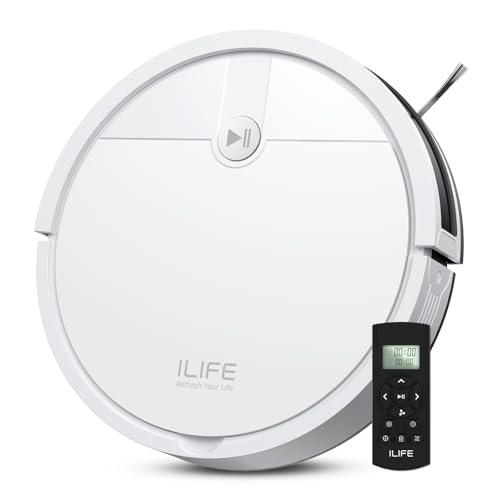
Pros
- Direct suction port prevents pet hair tangles, significantly reducing brush-roll untangling maintenance
- Slim 2.99-inch height fits under low-clearance furniture where standard uprights cannot reach
- Generous runtime of up to 120 minutes with automatic return-to-dock recharging
- Simple operation via remote control or one-button touch without requiring home Wi-Fi or app setup
- Multi-surface cleaning covers hardwood, laminate, tile, stone, and low pile rugs
Cons
- Suction-only design lacks a motorized rotating brush roll, making it unsuitable for medium or high-pile carpeting
- Operates without smart digital mapping or app-based boundaries, relying instead on infrared sensors and remote scheduling
- Dry-cleaning only vacuum with no wet mopping or liquid spill pickup capabilities
The ILIFE V2 is an automated dry vacuum cleaner designed primarily for apartment dwellers, busy pet parents, and homeowners seeking hands-off floor care for bare surfaces and low pile flooring. Measuring 12.2 inches in diameter and only 2.99 inches tall, this compact robotic cleaner focuses on everyday dust, loose dirt, and shedding pet hair. Rather than relying on complicated mobile apps, the V2 offers straightforward control through an included remote control or a physical one-touch button on the cleaner itself, making it an approachable option for first-time robot vacuum buyers.
Cleaning pickup relies on a direct, tangle-free suction port rather than a motorized bristle brush roll. For households with dogs and cats, this design eliminates the tedious chore of cutting wrapped hair and tangled fur off an agitator bar. The vacuum effectively gathers surface dirt, tracked-in litter, crumbs, and hair across hardwood, tile, laminate, natural stone, and low pile carpets. Because the unit is equipped with auto clean, edge clean, and spot clean modes, users can target stubborn localized spills or send the robot along wall baseboards where dust bunnies routinely accumulate.
With a compact profile weighing approximately 7.1 pounds, the robot maneuvers smoothly under coffee tables, nightstands, and low sofas where standard stick or upright vacuums struggle to reach. Navigation is guided by built-in infrared sensors that detect furniture, walls, and sudden drop-offs like staircases. While the V2 does not utilize laser room mapping, its collision-avoidance and drop-off sensors provide the situational awareness needed to move through rooms without constantly bumping hard into baseboards or tumbling down steps.
Day-to-day operation is streamlined by preset routine scheduling and a solid battery life. The manufacturer specifies up to 120 minutes of continuous cleaning on a single full charge, which is plenty of time to cover common living spaces before power depletes. When the battery runs low, the robot automatically returns to its floor charging dock to replenish itself. Maintenance involves pulling out the internal dry dustbin to empty collected debris and occasionally wiping down the external infrared sensors to ensure clear navigation.
Prospective buyers should keep realistic performance boundaries in mind before purchasing. Because the ILIFE V2 uses a bristle-free suction port, it relies solely on airflow rather than mechanical agitation. As a result, it is not built to pull deeply embedded grit out of plush or high-pile carpets. Furthermore, it does not support smart home app pairing, interactive virtual no-go zones, or wet-mopping tasks. Floor areas should be kept relatively clear of loose cables and thick floor rugs to ensure unobstructed movement throughout the cleaning cycle.
For households with predominantly hard floors such as wood, tile, laminate, or stone, the ILIFE V2 delivers dependable and low-maintenance everyday value. Pet owners tired of clearing tangled hair from traditional brush rolls will appreciate the direct suction system. Supported by a 12-month warranty and U.S.-based customer support, this robot vacuum serves as a practical, hassle-free helper for daily sweeping and pet hair maintenance.
Pet hair management is one of the most frustrating aspects of floor care because long strands and thick undercoats quickly choke standard spinning brush rolls. The ILIFE V2 addresses this issue by utilizing a dedicated tangle-free suction port. Because there is no central rotating roller beneath the chassis, dog and cat hair travels straight into the suction pathway and directly into the dustbin without binding or wrapping around mechanical parts.
This tangle-free suction channel performs especially well on flat, rigid surfaces like hardwood, tile, laminate, and stone. Pet dander, loose fur tumbleweeds, dry kibble, and stray litter are gathered smoothly during regular passes. While it easily collects surface hair on low pile carpets and flat-woven rugs, homes with heavy carpet shedding may still need an upright with a motorized brush roll for deep fiber agitation. For routine daily sweeping, however, the direct suction mechanism saves considerable maintenance time.
Efficient coverage in budget-friendly robot vacuums depends on smart sensor integration and reliable power. The ILIFE V2 features integrated infrared anti-collision and anti-fall sensors that identify physical obstacles and edge drops. These sensors assist the vacuum in slowing down near furniture legs and turning away from stairwells, protecting both your furnishings and the machine itself during unsupervised runs.
The internal battery supports up to 120 minutes of runtime on a single charge, allowing the vacuum to clean multiple rooms before needing more power. When the battery level drops, the unit automatically navigates back to its charging dock to recharge. Homeowners can also program the machine to start automatic daily sweeps using the preset scheduling function, ensuring floors are maintained consistently even when no one is home.

Evaluating Robot Vacuums: Everyday Reality, Performance, and Practical Value
Automated cleaners fundamentally alter how households approach floor care by shifting focus from weekly manual sessions to automated daily sweeps. Determining whether an autonomous machine justifies its place in your home requires evaluating your floor types, room layout, and willingness to perform regular component maintenance. While these machines save notable time on open floors, they serve as maintenance tools rather than complete replacements for deep-cleaning equipment. Understanding their practical mechanical limitations helps set realistic expectations before bringing one into your household routine.
Daily Maintenance Versus Deep Cleaning Power
Autonomous cleaners operate on a continuous maintenance philosophy rather than providing intermittent high-power extraction. A standard upright or canister vacuum utilizes heavy motor assemblies that generate substantial airflow to pull deeply embedded grit out of thick carpet fibers. In contrast, autonomous robotic cleaners use compact DC motors designed to navigate independently beneath low furniture while scooping up surface debris before it settles. The mechanical trade-off favors mobility and low electrical draw over sheer pulling volume.
Because robotic vacuums run on scheduled daily cycles, they prevent surface debris, pet dander, and crumbs from being trampled into rug fibers over time. This consistent schedule dramatically reduces the overall volume of visible dirt across high-traffic hallways and living rooms. However, automated units lack the sheer airflow and heavy mechanical agitation required for revitalizing compressed carpet pile. For thick or dense floor coverings, households generally achieve better results using dedicated vacuums suited for high-pile carpet alongside an automated daily maintenance unit. Relying solely on a compact autonomous cleaner for deep carpet pile often leaves fine grit buried deep within backing yarns.
Navigation Technology and Floor Plan Compatibility
A robot vacuum cleaner is only as effective as its ability to navigate around furniture without getting trapped. Entry-level models frequently employ basic infrared bump sensors and programmed zig-zag or random movement paths to navigate rooms. These basic sensors prevent steep stair falls and detect large walls, but random routing can result in missed patches in complex, multi-room floor plans. Furthermore, simpler machines spend more time bumping into chair legs and wandering along baseboards to find their way back home.
Advanced models feature top-mounted LiDAR radar turrets or optical sensors to generate precise digital maps of your living areas. LiDAR systems rapidly scan surrounding boundaries in 360 degrees, allowing the cleaner to plan methodical, room-by-room paths and remember multi-floor layouts. Digital maps also let users establish virtual boundaries, restricted zones, and targeted room cleaning through smartphone apps. Homes with open floor plans can easily manage with basic navigation, whereas segmented layouts with extensive furniture benefit considerably from precision mapping. Investing in advanced navigation largely eliminates the frustration of searching for a stuck vacuum under a bed.
Suction Metrics, Brush Rolls, and Pet Hair Management
Suction power in modern robot vacuums ranges widely, with manufacturer ratings often spanning from 4000Pa to 8000Pa. While higher suction metrics suggest stronger lift on area rugs and carpet seams, suction ratings alone do not tell the entire cleaning story. Floorhead design and airflow chamber geometry directly dictate how well that motorized suction translates into actual debris pickup on hard surfaces. Without effective sealing against the floor, high nominal pressure can disperse loose particles instead of funneling them into the dust chamber.
Pet owners face unique challenges with hair accumulation wrapping tightly around spinning components. Traditional bristle roller brushes tend to bind with long human hair and animal fur, requiring frequent manual cutting and maintenance. Several models address this by utilizing tangle-free brushless suction ports or specialized rubberized V-shaped rollers. Brushless ports eliminate hair wrap entirely by drawing pet hair directly into the intake port, making them exceptionally convenient for bare floors. Rubberized rollers provide better agitation on low-pile carpets while remaining easier to strip of wound fibers during routine servicing.
The Practical Utility of Hybrid Vacuum and Mop Systems
Many autonomous units now incorporate 2-in-1 hybrid functionality by attaching a water reservoir and microfiber mopping pad. These systems allow the robot to vacuum up loose grit while simultaneously wiping hard floors to remove light dust films and footprints. Electronically controlled water pumps allow users to regulate moisture output across hardwood, stone, and tile flooring to avoid excess wetting. This dual action leaves polished bare floors looking visibly fresher after daily cleaning passes.
Mopping attachments perform admirably for light surface freshening, but they cannot replace heavy manual scrubbing on stubborn, dried stains. Because the flat pad merely drags along behind the suction inlet with gentle downward pressure, stuck-on kitchen spills often remain behind. Additionally, managing rugs during mopping cycles requires specific robot features or user intervention. Advanced hybrid robots feature automated mop-lifting mechanisms that raise wet pads several millimeters when detecting carpet. Budget hybrid options without lifting plates require users to manually remove mop brackets or create digital no-mop barriers to protect delicate carpets from dampness.
Self-Emptying Stations Versus Manual Dustbin Emptying
Compact robot vacuums typically feature internal dustbins measuring between 250 milliliters and 450 milliliters in volume. In households with multiple shedding pets, these small onboard bins can fill up midway through a single cleaning cycle. If a dustbin becomes packed with debris, airflow drops significantly, preventing the unit from collecting additional dirt until manually emptied. Frequent bin clearing can interrupt the autonomous convenience that attracted buyers to robotic cleaners in the first place.
Self-emptying docking stations solve this constraint by utilizing a high-powered secondary motor to evacuate the robot bin after each run. These docking bases store debris inside multi-liter sealed bags or bagless cyclonic chambers, often accommodating several weeks of dirt before requiring attention. Self-emptying stations offer genuine hands-free automation for busy homeowners who dislike daily bin cleaning. However, the evacuation process produces several seconds of loud motor noise, and replacement dust bags represent an ongoing consumable cost. Bagless docking stations avoid bag purchases but require periodic bin rinsing and cyclone chamber dusting to maintain clean airflow.
Flooring Transitions, Thresholds, and Environmental Barriers
Floor surfaces dictate the overall success and convenience of an autonomous vacuum cleaner. Robot vacuums glide effortlessly across flat hardwood, tile, and laminate, where side brushes can sweep perimeter dust into the central suction channel. However, transitioning between different flooring materials requires robust drive wheels capable of climbing raised floor transitions and door thresholds. Thick expansion joints or tall metal transition strips can challenge smaller wheels and cause the robot to reverse course prematurely.
Loose power cords, dangling blind pulls, and thin throw rugs also present common hazards that can choke spinning side brushes. Preparing a home for smooth automated cleaning often requires picking up small floor clutter and securing loose cables. For homes with multiple levels, narrow staircases, or extensive clutter, portable cordless vacuum options for large living spaces provide targeted versatility that autonomous wheels simply cannot match. Handheld flexibility allows you to clean furniture cushions, vehicle interiors, and staircase treads where wheeled robots cannot climb. A robot vacuum works best as a collaborative partner alongside manual tools rather than a solitary solution.
Battery Capacity, Runtime, and Coverage for Large Homes
Cordless robotic operation depends entirely on rechargeable lithium battery packs, with stated runtimes typically varying from 120 minutes to 200 minutes. Manufacturer runtime estimates usually reflect low-suction quiet modes on hard floors, meaning heavy carpet cleaning and maximum suction draw down battery reserves faster. In larger houses, an aggressive suction profile can deplete the battery before the robot covers every scheduled zone. Understanding battery dynamics ensures the machine matches your home square footage.
Large homes benefit significantly from models equipped with automatic recharge and resume software. When battery power drops near critical thresholds, the robot navigates back to its charging base, replenishes its battery, and returns precisely where it paused. Without this feature, a depleted machine will remain at the dock, leaving uncleaned rooms until the next scheduled cycle. Battery degradation also occurs naturally over years of daily recharging cycles, gradually diminishing active runtime per session. Checking whether replacement battery packs are easily accessible can extend the overall working lifespan of the machine.
Routine Upkeep, Part Replacements, and Ownership Effort
Autonomous cleaners reduce daily labor, but they do not eliminate vacuum maintenance entirely. Optical cliff sensors and infrared lenses gather dust during operation, requiring periodic wiping with a clean microfiber cloth to prevent navigation errors. Side brushes also bend over time or tangle with stray threads, necessitating periodic unscrewing and detangling. Neglecting sensor lenses can cause a robot to misread dark carpet patterns as dangerous drop-offs and refuse to clean them.
Filters require consistent maintenance to preserve motor airflow and prevent dust blowback into the room. High-efficiency pleated filters should be tapped clear of fine particulate weekly and replaced according to manufacturer schedules. Roller bearings, rubber flap seals, and drive wheels also require occasional inspection to remove hair wraps and debris buildup. Treating these components with routine care ensures the vacuum maintains reliable suction and runs smoothly without mechanical strain. Keeping spare filters and side brushes on hand prevents sudden interruptions when wear parts degrade.
Evaluating Lifestyle Fit and Realistic Expectations
Deciding if an autonomous cleaner is worth the investment ultimately hinges on your lifestyle habits and household environment. If your home has predominantly hard floors, open pathways, and daily shedding from pets or children, a robot vacuum provides immense convenience by automating baseline cleanliness. It frees up personal time during the workweek and keeps floors presentable between deep cleaning routines. Walking barefoot across grit-free hardwood every evening provides immediate daily satisfaction for busy families.
Conversely, households packed with thick shag carpets, cluttered floor toys, or numerous split-level steps may find robot cleaners frustrating. A robotic cleaner cannot vacuum furniture upholstery, reach interior car seats, or clean baseboard trim directly. Recognizing that an autonomous vacuum serves as an automated maintenance assistant rather than an all-in-one cleaning replacement ensures you set realistic expectations. When paired with an occasional manual deep clean, an automated vacuum delivers tangible, time-saving value for modern homes. Balancing its automated strengths against your specific living layout ensures a worthwhile addition to your cleaning arsenal.
Investing in a robotic floor cleaner comes down to valuing automated daily maintenance over occasional manual deep cleaning. While they cannot fully eliminate the need for a traditional manual vacuum on thick carpets or stairs, they drastically minimize the frequency of manual sweeping. Assessing your floor plan, identifying your primary flooring materials, and acknowledging regular component upkeep will confirm whether an autonomous vacuum fits your household routine.


Write Your Review
No reviews yet. Be the first to share your experience!