


Floors collect dust, pet hair, and tracked-in grit daily, making automated cleaning an appealing solution for busy households. Figuring out how much is a roomba vacuum cleaner requires looking beyond a single sticker price, as robotic cleaners span distinct hardware tiers designed for different floor layouts. Entry-level units handle basic automated sweeping across bare floors and low-pile rugs, while advanced machines introduce room-by-room mapping and wet-dry functionality. For households comparing multi-surface tools, exploring dedicated hard floor cleaner and vacuum mop combo options highlights how dedicated scrubbing differs from light robotic damp wiping.
Evaluating the total cost also involves considering essential components, charging docks, and ongoing replacement parts like rubber rollers or edge brushes. Modern robotic platforms incorporate specialized sensors to navigate tidy rows or dodge obstacles, which significantly influences initial equipment expenses. Selecting the right setup comes down to your flooring mix, the presence of shedding pets, and whether you want automated self-emptying capabilities. Understanding these core hardware distinctions ensures you balance upfront investment with long-term convenience.
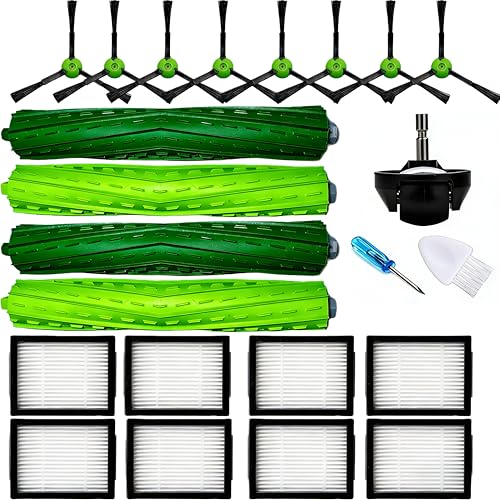
Pros
- Generous 23-piece bundle provides multiple maintenance cycles of wear items in a single package
- Includes dedicated service tools, featuring a screwdriver and cleaning brush tool for hassle-free part swaps
- Broad compatibility spanning multiple generations of Roomba e, i, and j Series machines
- Dual rubber brush rollers provide direct replacements to restore agitation for pet hair and debris cleanup
Cons
- Explicitly incompatible with Roomba Combo mop J7 and J9 models
- Roomba j7+ vacuums use two slightly different filter sizes, requiring buyers to verify their original filter dimensions before installing
- Non-OEM aftermarket replacement kit rather than genuine iRobot manufactured components
The JoyBros 23-Piece Replacement Parts Kit is a comprehensive maintenance bundle designed specifically for owners of compatible iRobot Roomba e, i, and j Series robot vacuums. When robot vacuums run daily across pet hair, tracked-in entryway dirt, and kitchen crumbs, their consumable components naturally suffer wear. This aftermarket kit targets budget-conscious homeowners, renters, and busy families who want to keep their automated floor cleaner operating in steady working order without buying individual parts at standard retail markups.
In practical day-to-day cleaning, maintaining fresh consumable parts directly influences debris pickup and airflow. The included dual multi-surface rubber brushes serve as the primary contact points on both carpet and hard floors, agitating settled pet hair and directing debris straight into the vacuum suction channel. Over time, original rollers can develop groove wear or hair build-up around the endcaps. Swapping in a fresh set restores proper agitation, while the 8 edge-sweeping brushes ensure that crumbs along kitchen cabinets and dust bunnies in room corners are effectively pushed into the main cleaning path.
Filtration and navigation hardware are also addressed in this bundle. The kit supplies 8 dust-bin filters that slide into the robot bin housing to trap fine particulate matter before air exhausts back into the room. To support mobility, a replacement front caster wheel is included, which is useful when older caster assemblies become jammed with wrapped pet hair or worn from rolling across tile grout and doorway thresholds. The package also bundles a dedicated cleaning tool and a screwdriver, eliminating the frustration of hunting for small tools during routine upkeep.
Setup and replacement require minimal effort. The screwdriver makes quick work of removing and securing the single screw on the edge-sweeping brushes, while the rubber rollers snap directly into the cleaning head module using color-coded orientation guides. However, compatibility requires careful attention before purchase. While this kit fits Roomba e5, e6, e7, i1 through i8, and j6 through j8 models, it is not compatible with Roomba Combo mop J7 or J9 models. Additionally, the manufacturer notes that Roomba j7+ models have two very similar filter sizes, making it necessary to cross-check your existing OEM filter size against the product listing details prior to ordering.
The primary limitations center on its status as an aftermarket kit. While the physical dimensions and component styles mirror factory specifications, materials may differ slightly from OEM originals. Robot vacuum maintenance remains an ongoing requirement; the manufacturer suggests replacing high-wear components every 1 to 3 months depending on household size, floor types, and pet activity. As long as buyers verify their specific model number and filter dimensions, this set offers a dependable, high-count solution to extend the working life of their robotic cleaner.
For owners of compatible iRobot Roomba e, i, or j Series vacuums, the JoyBros 23-Piece Replacement Kit represents a highly practical, cost-effective maintenance purchase. It delivers multiple spare sets of every major consumable part, providing months of routine servicing to keep automated floor care running smoothly across carpets, tile, and hard surfaces.
This JoyBros accessory package includes a total of 23 pieces tailored for specific robot vacuums: 2 sets of Dual Multi-Surface Rubber Brushes (4 rollers total), 8 Edge-Sweeping Brushes, 8 Replacement Filters, 1 Front Caster Wheel, 1 Brush Cleaning Tool, and 1 Mini Screwdriver.
Documented machine compatibility includes: Roomba e5, e6, e7; Roomba i1, i1+, i2, i3, i3+, i4, i4+, Combo i5, Combo i5+, i6, i6+, i7, i7+, i8, i8+; and Roomba Combo j5, Combo j5+, j6+, j7, j7+, j8+. Please note this kit is explicitly NOT compatible with Roomba Combo mop J7 or J9 platforms. Roomba j7+ owners should confirm their original filter size prior to installation due to variations in filter housings.
To maintain consistent floor-cleaning performance and suction airflow, the manufacturer recommends replacing consumable parts every 1 to 3 months based on household debris volume and daily vacuum frequency. High-traffic homes and households with shedding pets may require more frequent checks.
Routine care between replacements should include using the supplied brush tool to clear wrapped hair from the rubber roller axles and caster wheel barrel, alongside regular tapping of the dust filters to dislodge accumulated fine dust before reinserting the bin into your robot vacuum.


Understanding Roomba Vacuum Pricing, Features, and Ownership Expenses
Robotic vacuum pricing varies considerably based on navigation capabilities, cleaning power, automated dock accessories, and mopping integration. When shoppers ask about equipment costs, they encounter distinct categories ranging from simple automated sweepers to autonomous multi-surface systems. Examining these functional tiers clarifies what you receive at each tier without getting distracted by marketing jargon.
Core Tiers in Modern Robotic Vacuum Cleaners
Entry-level robotic vacuums prioritize straightforward floor cleaning without complex digital mapping features. These foundational models, such as the Roomba Vac Essential Q011, rely on optical and mechanical sensors to travel in neat paths while providing multi-stage debris extraction. They offer an accessible entry point for smaller floor plans or single-story apartments where advanced room zoning is unnecessary.
Moving into the mid-tier category introduces customized room selection and enhanced scheduling tools through advanced platform operating software. Machines in this bracket let users label individual rooms, schedule target cleanings for high-traffic kitchens, and manage suction levels directly through a smartphone app. Homeowners often find this tier provides the most practical balance between functional automation and reasonable initial expense.
Premium configurations incorporate advanced self-emptying docking stations, front-facing optical obstacle avoidance, or specialized hardware finishes. In addition to brand-new units, certified renewed platforms like the Roomba j7+ provide a budget-conscious path to acquiring higher-end features. Buyers exploring regional or retail specials, including warehouse club vacuum deals, can often secure bundled attachments or extended warranty coverage that alters the overall purchase value.
Hardware Mechanics and Suction Systems Influencing Cost
Internal motor strength and brush roll engineering represent major factors in robotic vacuum manufacturing expenses. Basic robotic sweepers often use single bristle agitators or compact intake ports that perform well on hard surfaces but struggle with stubborn carpet debris. More advanced Roomba platforms feature patented dual multi-surface rubber brushes that flex to maintain contact across changing floor heights.
These rubber rollers rotate in opposite directions to loosen, lift, and extract embedded dirt while resisting pet hair tangles that plague conventional bristles. The mechanical design reduces user intervention, which justifies the higher upfront investment for pet owners. Furthermore, variable suction settings allow units to alternate between quiet operation and deep carpet extraction depending on household needs.
Dirt Detect technology also distinguishes mid-tier and premium platforms from baseline cleaning machines. Internal acoustic or optical sensors identify areas with dense debris concentrations, prompting the robot to clean back and forth over that specific spot until the floor is clear. This targeted capability ensures thorough cleaning without requiring the user to run continuous high-power cycles throughout the entire residence.
Two-in-One Hybrid Cleaning Systems and Mopping Upgrades
Hybrid robots that vacuum and mop represent an expanding segment that carries distinct hardware engineering and pricing considerations. Entry-level hybrids, like the Roomba Combo Essential Y0140, feature a built-in fluid reservoir with a micro-pump that keeps a washable microfiber pad evenly damp during standard passes. This setup handles routine dusting and light moisture cleanup across sealed hard floors in a single continuous mission.
More versatile mid-range models, such as the Roomba Combo i5, use an interchangeable bin system to separate dry vacuuming from damp mopping. Installing the vacuum-only bin allows the machine to traverse both carpets and hard floors freely with full dust capacity. Swapping in the combo bin activates damp wiping for hard floor zones while utilizing approved cleaning solutions or plain water.
Deciding whether to invest in a hybrid model depends on your home layout and the proportion of hard surfaces to carpeting. A combo unit can eliminate the need for secondary manual sweeping tools, providing noticeable labor savings across open tile or hardwood. However, households with wall-to-wall carpeting often prefer standard vacuum-only units to avoid swapping bins or managing wet pads.
Smart Navigation and Software Intelligence Across Model Lines
The intelligence behind robotic navigation heavily dictates manufacturing costs and overall retail value. Basic navigation systems rely on straight-line tracking sensors to clean in systematic parallel rows, automatically turning when encountering baseboards or furniture legs. While methodical, these entry-level systems do not store permanent spatial layouts in memory, meaning they cannot accept room-specific dispatch commands.
Imprint Smart Mapping technology elevates robotic performance by generating detailed floor plan representations after initial mapping runs. This feature allows homeowners to name distinct zones, establish customized cleaning schedules for busy areas, and initiate spot cleaning around dining tables. Investing in smart mapping proves particularly advantageous for sprawling single-level layouts or homes with distinct clutter zones.
Software updates delivered through iRobot OS continuously refine how these machines adapt to your living habits over time. The operating system can recommend increased cleaning frequencies during seasonal pet shedding periods or elevated pollen months. Connecting with voice assistants like Alexa, Siri, or Google Assistant further enhances day-to-day usability without requiring manual button presses.
Self-Emptying Docks and Hands-Free Convenience Value
Automatic dirt disposal bases represent one of the most substantial hardware upgrades available for modern robotic vacuums. Clean Base docking stations house an internal motor that evacuates the robot dustbin into an enclosed allergen-locking bag upon docking. This automated transfer allows the cleaning system to operate for weeks or months without requiring physical dustbin emptying.
The added convenience of a self-emptying base carries a noticeable price premium compared to standalone charging cradles. For individuals with sensitive respiratory systems or households with multiple shedding animals, avoiding airborne dust clouds during manual emptying provides tangible health and comfort benefits. The enclosed collection bags also minimize loose debris spillage around the charging station.
Purchasing renewed or refurbished self-emptying packages, such as certified renewed Roomba j7+ units, offers a sensible compromise for cost-conscious shoppers. These certified packages generally undergo comprehensive component inspections and cleaning to ensure full operational reliability. Verifying warranty terms and return windows helps buyers secure premium automated docking features without paying maximum retail prices.
Ongoing Maintenance Costs and Consumable Part Kits
Calculating the total cost of owning a robotic vacuum requires budgeting for regular replacement components and consumables. Over months of routine operation, edge-sweeping brushes bend, high-efficiency pleated filters accumulate fine dust, and rubber extractors slowly experience surface wear. Neglecting these wearable items degrades airflow, increases motor strain, and diminishes overall debris pickup across hard floors and rugs.
Third-party replacement bundles, such as the JoyBros accessory package compatible with e, i, and j series platforms, significantly lower annual maintenance expenses. These multipacks supply spare dual multi-surface rubber brushes, multiple edge brushes, replacement filters, caster wheels, and cleaning tools at a fraction of individual part costs. Verifying exact part compatibility against your specific model series is crucial, as certain models like the j7+ utilize specific filter dimensions.
Maintaining a steady replacement schedule preserves suction efficiency and prolongs the operational lifespan of the vacuum motor. Manufacturers generally recommend inspecting filters weekly, cleaning brush bearings regularly, and replacing high-wear components every one to three months depending on cleaning frequency. Keeping affordable replacement parts on hand prevents downtime and keeps your robotic cleaning system performing reliably.
Battery Runtimes and Floor Plan Scaling
Battery capacity directly influences how much square footage a robotic vacuum can clean during a single continuous operational run. Standard entry-level configurations typically provide up to two hours of active cleaning time before their internal charge drops. For moderate apartments and open single-story homes, this runtime is generally sufficient to clean common living areas completely.
Larger properties benefit from expanded battery cells, such as the extended capacity battery integrated into the Roomba i4 EVO. Increased runtime minimizes mid-mission recharging breaks, allowing the robot to cover larger expanses of carpet and tile before docking. Furthermore, intelligent recharge-and-resume technology ensures that if the battery depletes mid-cycle, the robot docks, recharges, and returns to finish the remaining uncleaned space.
Choosing between standard and extended battery configurations should reflect your home square footage and floor plan complexity. High-pile carpeting creates additional friction against the brush rollers, which draws more battery power than gliding across polished hardwood. Investing in higher battery capacity prevents fragmented cleaning sessions across spacious multi-room floor plans.
Floor Surface Suitability and Pet Hair Management
Homes with high pet density present unique challenges that quickly reveal the limitations of budget cleaning hardware. Shed pet hair wraps tightly around conventional bristle brush rolls, requiring frequent scissors work to clear tangled axles and end caps. Upgrading to a model equipped with dual rubber extractors prevents hair tangling while directing fur smoothly into the collection bin.
While robotic cleaners maintain low daily hair levels, deep-set stains and heavy accidents require dedicated extraction tools. Complementing your robotic sweeper with specialized spot units, such as vacuums designed for pet messes, creates a balanced cleaning routine that protects carpets from permanent discoloration. This strategic combination allows the automated robot to handle dry daily fur while specialized extractors manage wet pet mishaps.
Transitioning between low-pile area rugs and smooth hard flooring also demands capable suspension and adaptable cleaning heads. Quality multi-surface wheels navigate over thresholds without getting stuck or dislodging edge brushes. Ensuring your chosen model adapts smoothly to mixed flooring prevents interrupted cleaning runs and reduces the need for manual rescues.
Practical Strategies for Maximizing Long-Term Investment Value
Getting the best value from your robotic vacuum investment involves matching device specifications directly to your living environment. Purchasing an expensive self-emptying unit with advanced mapping may be unnecessary for a compact studio apartment where an entry-level straight-line cleaner performs admirably. Conversely, underspending on a basic model for a sprawling two-story home with shedding dogs often leads to frustration and premature component wear.
Regular maintenance routines protect your financial investment by preserving motor efficiency and battery health over several years of use. Emptying manual dustbins promptly, clearing hair from wheel axles, and replacing clogged filters prevents internal thermal throttling. Utilizing cost-effective accessory bundles allows you to refresh worn brushes without paying excessive retail markups.
Ultimately, understanding the mechanical features, mapping technologies, and recurring maintenance requirements empowers you to choose the ideal robotic platform. By evaluating upfront equipment tiers alongside long-term consumable needs, you can secure dependable automated cleaning performance that aligns with your household budget. Careful planning guarantees that your chosen machine delivers genuine cleaning convenience across every room for years to come.


Write Your Review
No reviews yet. Be the first to share your experience!