


Daily household dust, pet hair drift, and stray crumbs can quickly overwhelm bare floors before the weekend chore schedule even begins. Many homeowners wonder if autonomous appliances can actually replace manual chores or if are robot cleaners any good for handling recurring debris. The short answer depends heavily on your expectations and floor plan, because these automated machines are primarily designed for continuous surface maintenance rather than deep, seasonal carpet scouring. Pairing an automated unit alongside heavier tools like hybrid hard floor vacuum mop combos often creates the most practical strategy for busy households.
Modern robotic units range from budget-friendly sweepers relying on direct brushless suction to advanced dual-function appliances equipped with smart laser navigation and auto-lifting mop plates. While they rarely deliver the sheer airflow of a corded upright, their ability to navigate under low furniture and run daily schedules keeps loose particles from settling deep into fibers. Understanding how different intake designs, navigation sensors, and bin capacities operate will help you determine whether an automated helper fits your cleaning routine. Examining technical components and practical trade-offs reveals what these devices genuinely accomplish on everyday flooring.
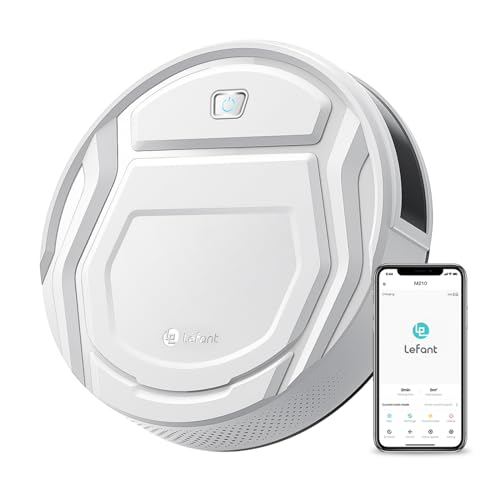
Pros
- Brushless suction port prevents pet hair tangles, reducing maintenance headaches
- Compact 2.99-inch low-profile body easily navigates underneath low-clearance furniture
- Lithium iron phosphate battery provides up to 120 minutes of runtime in low suction mode
- Smart control flexibility with the companion Lefant App plus Alexa and Google Assistant voice integration
- Equipped with 6D anti-collision infrared sensors to help detect obstacles and prevent jamming
Cons
- Lacks a motorized roller brush, which limits deep agitation on medium and high-pile carpets
- Manufacturer explicitly advises against using the zigzag cleaning mode on carpet
- Maximum 120-minute battery life applies specifically to the low suction running mode
The Lefant M210 is an entry-level robotic vacuum designed primarily for routine dry debris removal across hard floors and low-profile living areas. Standing out with its compact frame and roller-free pickup design, this cleaner is well-suited for pet owners, apartment dwellers, and busy households looking for automated daily maintenance without the chore of untangling hair from a traditional motorized brush roll.
Floor cleaning is handled through a brushless suction port paired with a digital motor. Because there is no rotating brush roll underneath, pet hair, dirt, and dust travel straight into the collection bin, significantly lowering hair wrap issues. The cleaner supports six distinct operating modes, including zigzag, random, spot, edge, scheduled timed cleaning, and manual control via the Lefant App. While the unit handles daily debris on hard surfaces effectively, the manufacturer explicitly notes that zigzag mode should not be used on carpets, making it primarily a hard-floor specialist with light area-rug utility.
Measuring approximately 11 inches in diameter and 2.99 inches in height, the Lefant M210 features a notably slim build that allows it to glide under low-clearance bed frames, couches, and entertainment centers where upright vacuums cannot reach. Navigation is guided by upgraded FreeMove Technology 3.0, which utilizes 6D built-in anti-collision infrared sensors to detect potential trapping points and adjust travel paths before the vacuum becomes wedged.
Daily operation and scheduling are managed through Wi-Fi pairing with the dedicated Lefant App, which also lets users adjust suction levels, direct manual movement, and integrate voice commands through Amazon Alexa or Google Assistant. Power is supplied by a lithium iron phosphate battery that delivers up to 120 minutes of runtime when operated in low suction mode. When cleaning cycles end or battery power dwindles, the vacuum automatically returns to its base for self-charging. Routine maintenance centers on sliding out and emptying the internal dustbin and keeping sensor windows clean.
Buyers should be aware of practical operational boundaries before purchasing. Because this model relies exclusively on pure suction without brush-roll bristles, it will not provide deep mechanical agitation on thick carpets or dense area rugs. In addition, reaching the full 120-minute battery benchmark requires operating in low suction mode, meaning higher power settings will yield shorter run times.
For pet owners and households with primarily hard floors seeking an affordable, low-profile robotic vacuum that reduces hair-clearing maintenance, the Lefant M210 offers dependable practical value. Its balance of smart scheduling, voice compatibility, and anti-tangle suction makes it an appealing everyday helper for keeping dust bunnies and shed fur under control.
The key feature of the Lefant M210 for pet households is its brushless suction inlet. Traditional robot vacuums rely on bristle or rubber roller brushes that inevitably collect tangled pet hair, requiring scissors or specialized tools to cut free after every cleaning session. By eliminating the roller brush entirely, this robot pulls loose fur, whiskers, and dander straight into the dustbin.
This brushless layout makes the machine especially effective along hard surfaces such as tile, vinyl, and sealed wood floors where pet hair floats and gathers in room corners. However, without rotating bristles to agitate carpet fibers, pet owners with deep carpet piles should view this vacuum as a hard-floor surface maintainer rather than a deep carpet extractor.
Setup and daily controls run through the companion Lefant App, which allows users to schedule automated floor cleaning, switch power modes, and guide the cleaner manually. Compatibility with Amazon Alexa and Google Assistant adds hands-free voice convenience for starting or stopping cycles.
To navigate living spaces without constant manual rescue, the cleaner relies on FreeMove Technology 3.0. A series of 6D anti-collision infrared sensors monitor the vacuum's surroundings, detecting low furniture skirts, table legs, and tight spaces. The system adjusts trajectory automatically to reduce collisions and prevent the robot from getting stuck beneath household items.


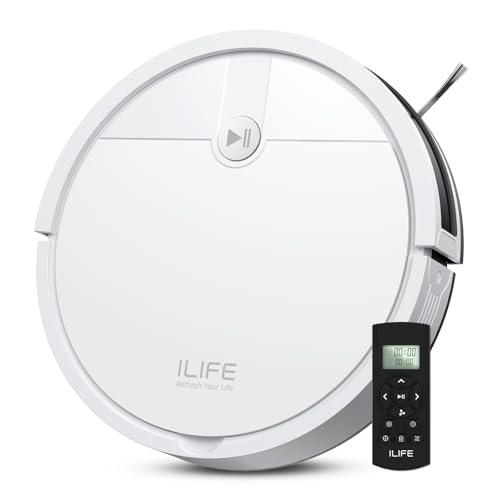
Pros
- Direct suction port prevents pet hair tangles, significantly reducing brush-roll untangling maintenance
- Slim 2.99-inch height fits under low-clearance furniture where standard uprights cannot reach
- Generous runtime of up to 120 minutes with automatic return-to-dock recharging
- Simple operation via remote control or one-button touch without requiring home Wi-Fi or app setup
- Multi-surface cleaning covers hardwood, laminate, tile, stone, and low pile rugs
Cons
- Suction-only design lacks a motorized rotating brush roll, making it unsuitable for medium or high-pile carpeting
- Operates without smart digital mapping or app-based boundaries, relying instead on infrared sensors and remote scheduling
- Dry-cleaning only vacuum with no wet mopping or liquid spill pickup capabilities
The ILIFE V2 is an automated dry vacuum cleaner designed primarily for apartment dwellers, busy pet parents, and homeowners seeking hands-off floor care for bare surfaces and low pile flooring. Measuring 12.2 inches in diameter and only 2.99 inches tall, this compact robotic cleaner focuses on everyday dust, loose dirt, and shedding pet hair. Rather than relying on complicated mobile apps, the V2 offers straightforward control through an included remote control or a physical one-touch button on the cleaner itself, making it an approachable option for first-time robot vacuum buyers.
Cleaning pickup relies on a direct, tangle-free suction port rather than a motorized bristle brush roll. For households with dogs and cats, this design eliminates the tedious chore of cutting wrapped hair and tangled fur off an agitator bar. The vacuum effectively gathers surface dirt, tracked-in litter, crumbs, and hair across hardwood, tile, laminate, natural stone, and low pile carpets. Because the unit is equipped with auto clean, edge clean, and spot clean modes, users can target stubborn localized spills or send the robot along wall baseboards where dust bunnies routinely accumulate.
With a compact profile weighing approximately 7.1 pounds, the robot maneuvers smoothly under coffee tables, nightstands, and low sofas where standard stick or upright vacuums struggle to reach. Navigation is guided by built-in infrared sensors that detect furniture, walls, and sudden drop-offs like staircases. While the V2 does not utilize laser room mapping, its collision-avoidance and drop-off sensors provide the situational awareness needed to move through rooms without constantly bumping hard into baseboards or tumbling down steps.
Day-to-day operation is streamlined by preset routine scheduling and a solid battery life. The manufacturer specifies up to 120 minutes of continuous cleaning on a single full charge, which is plenty of time to cover common living spaces before power depletes. When the battery runs low, the robot automatically returns to its floor charging dock to replenish itself. Maintenance involves pulling out the internal dry dustbin to empty collected debris and occasionally wiping down the external infrared sensors to ensure clear navigation.
Prospective buyers should keep realistic performance boundaries in mind before purchasing. Because the ILIFE V2 uses a bristle-free suction port, it relies solely on airflow rather than mechanical agitation. As a result, it is not built to pull deeply embedded grit out of plush or high-pile carpets. Furthermore, it does not support smart home app pairing, interactive virtual no-go zones, or wet-mopping tasks. Floor areas should be kept relatively clear of loose cables and thick floor rugs to ensure unobstructed movement throughout the cleaning cycle.
For households with predominantly hard floors such as wood, tile, laminate, or stone, the ILIFE V2 delivers dependable and low-maintenance everyday value. Pet owners tired of clearing tangled hair from traditional brush rolls will appreciate the direct suction system. Supported by a 12-month warranty and U.S.-based customer support, this robot vacuum serves as a practical, hassle-free helper for daily sweeping and pet hair maintenance.
Pet hair management is one of the most frustrating aspects of floor care because long strands and thick undercoats quickly choke standard spinning brush rolls. The ILIFE V2 addresses this issue by utilizing a dedicated tangle-free suction port. Because there is no central rotating roller beneath the chassis, dog and cat hair travels straight into the suction pathway and directly into the dustbin without binding or wrapping around mechanical parts.
This tangle-free suction channel performs especially well on flat, rigid surfaces like hardwood, tile, laminate, and stone. Pet dander, loose fur tumbleweeds, dry kibble, and stray litter are gathered smoothly during regular passes. While it easily collects surface hair on low pile carpets and flat-woven rugs, homes with heavy carpet shedding may still need an upright with a motorized brush roll for deep fiber agitation. For routine daily sweeping, however, the direct suction mechanism saves considerable maintenance time.
Efficient coverage in budget-friendly robot vacuums depends on smart sensor integration and reliable power. The ILIFE V2 features integrated infrared anti-collision and anti-fall sensors that identify physical obstacles and edge drops. These sensors assist the vacuum in slowing down near furniture legs and turning away from stairwells, protecting both your furnishings and the machine itself during unsupervised runs.
The internal battery supports up to 120 minutes of runtime on a single charge, allowing the vacuum to clean multiple rooms before needing more power. When the battery level drops, the unit automatically navigates back to its charging dock to recharge. Homeowners can also program the machine to start automatic daily sweeps using the preset scheduling function, ensuring floors are maintained consistently even when no one is home.


Pros
- Ultra-concentrated 1:60 formula produces up to 8 gallons of solution from a single compact 16 oz bottle
- Low-foam design helps protect delicate internal robot mop pumps, dispensing lines, and spray nozzles
- Documented compatibility with leading robot floor mop systems including Roborock, Dreame, and Roomba
- Safe for multiple impermeable hard surfaces such as tile, granite, laminate, vinyl, and sealed parquet
Cons
- Requires manual measuring to maintain the exact 1:60 dilution ratio in small onboard robot reservoirs
- Restricted exclusively to impermeable floors and not suitable for unsealed wood or porous surfaces
- Contains an added fragrance that may not suit households preferring completely unscented formulas
ERRECOM Floor is an ultra-concentrated liquid cleaning solution specifically formulated for automated robot mops, electric floor scrubbers, and hard-surface floor-cleaning machines. Built for households seeking a dependable alternative to single-brand proprietary refills, this 16-fluid-ounce (500 ml) bottle dilutes at a 1:60 ratio with water to yield up to 8 gallons of ready-to-use liquid. It is primarily designed for busy homeowners, apartment dwellers, and pet owners who rely on robotic maintenance to manage everyday dust, kitchen spills, and tracked-in debris across hard floors.
In automated floor-care equipment, excessive foam can lead to pump cavitation, nozzle clogs, and water-dispensing errors. ERRECOM directly addresses this issue with a low-foam formula engineered to pass smoothly through narrow fluid lines while keeping microfiber pads evenly saturated. The solution is formulated to provide deep cleaning of routine household grime while helping prevent rapid resoiling over time. In addition, it dries rapidly on hard surfaces to reduce the appearance of dull halos, water marks, or slippery streaks.
Surface compatibility covers impermeable hard floors, making the formula suitable for routine automated mopping over ceramic tile, marble, granite, vinyl, laminate, and parquet. Because the chemical balance targets everyday soils while respecting common floor finishes, it can handle light kitchen grease, entryway dirt, and pet paw prints without clouding properly finished materials. However, users should always ensure that their flooring is thoroughly sealed, as repeated damp mopping on unsealed or worn seams can compromise non-waterproof boards.
Using and mixing the cleaner is straightforward, though it does require attention to dilution. With an ultra-concentrated 1:60 ratio, only a small capful or fraction of an ounce is needed to fill the modest water reservoirs typically found on robotic cleaners, which often hold between 200 and 400 milliliters of water. Adding the correct measured amount to clean water preserves the low-foam characteristics, maintains nozzle clarity, and distributes a pleasant, subtle fragrance throughout the room during operation.
Realistic limitations center on measurement accuracy and surface boundaries. Pouring too much concentrate into a small reservoir can lead to sticky residues on high-gloss tiles or unwanted suds in internal lines. Furthermore, the manufacturer explicitly restricts application to impermeable hard floors, meaning unsealed natural stone or unfinished wood surfaces should be avoided. The presence of an added fragrance also means individuals sensitive to scented cleaning products may prefer a scent-free alternative.
For homeowners and renters looking for an economical, multi-brand refill compatible with Roborock, Dreame, Roomba, Braava Jet, Shark, or Tineco systems, ERRECOM Floor concentrated cleaner offers solid everyday value. Its low-foaming profile, quick-drying performance, and high-yield 8-gallon capacity make it a practical maintenance staple for keeping daily living spaces clean with minimal fuss.
ERRECOM Floor concentrate is formulated for broad hardware versatility across automated floor cleaners and wet-dry floor machines. The manufacturer explicitly documents compatibility with major robot brands including Roborock, Dreame, Roomba, iRobot Braava Jet, Shark, and Tineco floor appliances.
A critical technical requirement for robot mops is low-suds performance. Standard household detergents frequently generate thick foam that trips water-level sensors and damages miniature internal pumps. This low-foam formulation flows cleanly through internal metering valves and spray nozzles, helping prolong machine lifespan while delivering consistent liquid application to mopping pads.
The manufacturer confirms compatibility across a wide range of impermeable hard-floor surfaces, including ceramic and porcelain tile, marble, granite, vinyl, laminate, and parquet. The solution is designed to dry rapidly, helping minimize water pooling and visible streaks on glossy stone or polished laminate.
While this cleaner supports varied impermeable surfaces, users should verify that their floors are properly sealed before running wet cleaning cycles. Avoiding application on unsealed hardwood, worn plank seams, or cracked porous stone prevents water seepage and protects underlying subfloors over long-term use.

Evaluating Robot Cleaners: Performance, Practical Limitations, and Daily Realities
Autonomous vacuum cleaners have evolved from novelty gadgets into dependable appliances for steady surface maintenance. When evaluating whether are robot cleaners any good, the realistic answer is that they excel at preventing everyday grit from accumulating across bare surfaces and thin rugs. They do not replace the raw agitation or intense airflow of a full-size upright vacuum when digging deep ground-in soil out of thick carpet piles. Instead, their true value lies in automated frequency, sweeping up loose dust, pet fur, and kitchen crumbs daily so your home stays consistently tidy between manual cleaning sessions.
A major distinction comes down to the layout of your home and your tolerance for routine upkeep. In open-concept spaces with hardwood, laminate, or tile, a compact robot operates with high efficiency and sweeps along baseboards where debris collects. In homes with heavy clutter, thick shag rugs, or complex floor transitions, an autonomous machine may require pre-cleaning preparation to avoid getting trapped. Recognizing that these appliances function as routine maintenance tools rather than one-time deep scrubbers sets the proper foundation for choosing the right design.
Brushless Suction Inlets Versus Traditional Roller Brushes
One of the most critical engineering choices in automated cleaners is how debris enters the dustbin. Traditional vacuums depend on a rotating bristle brush roll to beat carpets and sweep hard surfaces, but rotating rollers frequently suffer from tightly wrapped pet hair and long fibers. Units like the Lefant Robot Vacuum Cleaner, Strong Suction utilize a unique brushless suction port that bypasses the traditional roller entirely. By pulling loose fur and dry debris directly into the intake without an internal brush, these designs dramatically reduce the time spent cutting tangled hair off moving axles.
Similarly, the ILIFE V2 Robot Vacuum Cleaner and the Thamtu Robot Vacuum Cleaner, Super Thin implement tangle-free inlet channels designed specifically for pet-heavy households. These direct-suction configurations rely on spinning side brushes to sweep edge particles toward the central suction aperture. Because there is no bristled bar to trap threads, dry dog hair and light debris flow smoothly into the dustbin without choking the airflow path. However, the trade-off is reduced mechanical agitation, meaning direct-suction ports cannot pull deeply embedded grit out of thick rugs as thoroughly as a motorized roller.
Conversely, more advanced units incorporate specialized rubberized rollers to strike a balance between agitation and tangle prevention. For instance, the Eureka E20 Plus Robot Vacuum and Mop Combo features a V-shaped rubber brushroll that agitates carpet fibers while helping to shed wrapped strands. Homes with a mix of hard floors and low-pile carpets often benefit from this hybrid approach. Deciding between a purely brushless port and a motorized rubber roller depends on whether your main challenge is hair maintenance or carpet fiber agitation.
Suction Power Metrics on Hard Floors Versus Carpets
Manufacturers frequently advertise suction power using Pascal units to indicate the static pressure generated by the internal motor. Entry-level units deliver adequate airflow for light dust, while upgraded machines like the Lefant M210 Pro Robot Vacuum, 4000Pa Suction provide 4000Pa of rated suction for pulling heavier crumbs and dried mud from tile grout. On smooth hard floors, even moderate suction achieves solid pickup because particles rest loosely on top of the surface. The spinning side brushes sweep debris toward the center, where the vacuum channel whisks it away without scattering.
On carpets, suction metrics face a much tougher test because carpet pile restricts airflow and creates friction against the floorhead. High-end platforms like the Eureka E20 Plus Robot Vacuum and Mop Combo generate up to 8000Pa of suction, allowing them to pull fine grit out of denser weaves. Even with high motor ratings, autonomous vacuums carry smaller internal impellers and compact battery systems than corded uprights. They excel at surface-level maintenance, but stubborn ground-in spills on carpets often call for deep carpet extractors for home care to flush out residue that air suction alone cannot lift.
Airflow pathways also dictate how effectively suction translates into real-world pickup over time. If internal filters become clogged with fine drywall dust or dander, even a powerful motor will experience a steep decline in actual suction. Checking the intake channel for blockages and cleaning the pre-filter regularly ensures that the rated motor power continues reaching the floor. Matching suction capabilities to your predominant floor material ensures you do not expect heavy carpet extraction from a lightweight chassis.
Navigation Systems: Random Bumping, Infrared Arrays, and LiDAR Mapping
How an autonomous cleaner finds its way around your furniture directly shapes its coverage efficiency and cleaning time. Basic automated cleaners navigate using bumper switches and infrared sensor arrays, adjusting their path when contacting an obstacle. The Lefant Robot Vacuum Cleaner, Strong Suction incorporates upgraded 6D infrared sensors to detect tight spots and turn away before becoming wedged. While random bounce patterns eventually cover most open areas through sheer running time, they can miss random corners or repeatedly vacuum the same open patch.
Mid-tier systems improve navigation by running pre-programmed zig-zag routes to systematically sweep floorboards in neat, parallel lines. The Lefant M210 Pro Robot Vacuum, 4000Pa Suction utilizes thirteen pairs of infrared sensors to chart an orderly back-and-forth grid across rooms. This systematic approach cleans rooms substantially faster than random bouncing and minimizes battery drain by avoiding unnecessary overlap. It also lowers the risk of bumping hard against delicate furniture legs or baseboards.
At the top tier of navigational technology, dual LiDAR sensors and artificial intelligence provide precision room mapping. The Eureka E20 Plus Robot Vacuum and Mop Combo uses 3D obstacle avoidance to measure room dimensions and identify low-lying obstacles even in dim lighting. Laser mapping generates real-time floor plans in a smartphone app, enabling customized no-go zones and specific room targeting. Households with complex multi-room layouts, dining chairs, and pet toys find that laser guidance drastically reduces human intervention.
Chassis Dimensions and Clearance Under Low Furniture

Dirt, dust bunnies, and pet dander tend to accumulate under beds, couches, and entertainment centers where standard vacuums cannot easily reach. A primary advantage of robotic cleaners is their compact vertical height, which lets them glide beneath low overhangs. Models like the ILIFE V2 Robot Vacuum Cleaner measure just 2.99 inches tall and feature a narrow 11-inch diameter body. This slim chassis slips effortlessly under low bed frames and toe kicks that would otherwise require moving heavy furniture during manual chores.
There is an engineering compromise between machine height and advanced mapping hardware that shoppers should keep in mind. Laser-guided robots require a raised circular LiDAR turret mounted on top of the chassis, which often adds half an inch or more to the overall profile. While laser guidance prevents bumping, the taller profile can prevent the robot from slipping beneath lower coffee tables and sofas. If your primary goal is eliminating dust from beneath low-clearance furniture, a compact ultra-slim model without a top turret may provide better physical access.
Wet Mopping Attachments and Safe Cleaning Formulations
Many modern autonomous appliances now function as hybrid units capable of simultaneously sweeping up dry debris and wiping hard floors with a damp pad. Advanced combos address the historic flaw of damp pads dragging across area rugs by integrating automated lifting brackets. The Eureka E20 Plus Robot Vacuum and Mop Combo features an auto-lifting mop plate that raises by ten millimeters upon detecting carpet fibers. This mechanism allows the machine to scrub sealed hard floors and transition immediately onto rugs without leaving damp streaks behind.
Using the proper cleaning fluid inside internal reservoirs is essential for safeguarding delicate internal pumps and preventing floor damage. Plain tap water often leaves mineral buildup in micro-nozzles, while harsh household detergents can foam excessively and ruin internal valves. Formulations such as ERRECOM Floor, Concentrated Cleaner for Robot provide low-foaming chemistry specifically engineered for robotic mop systems. With a concentrated 1:60 dilution ratio, this solution cleans impermeable surfaces like tile, vinyl, and laminate without leaving sticky halos or corrosive residues.
Even with advanced mop brackets and specialized cleaners, robot mops are designed for light surface wiping rather than heavy scrubbing. They lift fresh shoe prints, light dust, and small spills, but they lack the heavy downward pressure to remove sticky dried syrup or set-in grease. For messy liquid accidents or biological messes caused by animals, dedicated targeted pet stain vacuums offer the necessary suction extraction and sanitizing fluid delivery to clean fabrics safely.
Dust Collection: Manual Dustbins Versus Self-Emptying Stations
Managing collected debris is another area where robot cleaner designs differ significantly in everyday convenience. Compact standalone robots store sweepings in an onboard dustbin that typically requires manual emptying every one to two runs. Because these internal compartments are relatively small, pet hair can pack tightly inside and quickly restrict airflow if neglected. Regularly pulling out the bin, tapping loose dust from the filter, and clearing the intake mouth keeps standalone units operating at peak performance.
Self-emptying docking stations solve the frequent emptying requirement by automatically suctioning debris from the robot into a larger base compartment. The Eureka E20 Plus Robot Vacuum and Mop Combo includes a bagless self-emptying station capable of holding up to forty-five days of collected dirt. A transparent bagless base eliminates recurring costs for proprietary replacement bags while allowing you to verify when the chamber needs to be dumped. For households with multiple shedding pets, an auto-empty base dramatically cuts daily maintenance down to a monthly task.
App Connectivity and Simple Offline Controls
Control methods vary widely between high-tech smart models and straightforward push-button appliances. App-connected machines allow homeowners to schedule daily cleaning runs, monitor battery levels, adjust suction levels, and assign voice commands through virtual assistants. The Lefant Robot Vacuum Cleaner, Strong Suction lets users customize six cleaning modes, including edge tracking and spot cleaning, directly from a smartphone interface. This remote connectivity allows you to initiate an automated sweep while away from home so your floors are clean before you return.
However, app setup and wireless pairing can sometimes frustrate users who prefer simple, independent operation. Models like the Thamtu Robot Vacuum Cleaner, Super Thin eliminate Wi-Fi connectivity, app registration, and firmware updates entirely. Operating exclusively via a physical remote control and an onboard power button, it offers straightforward one-touch starting for renters or seniors who want hassle-free functionality. The ILIFE V2 Robot Vacuum Cleaner similarly provides easy push-button and remote scheduling, demonstrating that automated cleaning does not require complex digital infrastructure to be genuinely useful.
Battery Chemistries, Runtimes, and Auto-Recharge Reliability
Operating duration determines how much square footage an autonomous vacuum can clean on a single charge. Most standard units offer between 100 and 120 minutes of runtime on low suction settings, which is plenty of time for apartments and single-story floor plans. The Lefant M210 Pro Robot Vacuum, 4000Pa Suction expands runtime up to 200 minutes in quiet mode, allowing it to cover larger square footage without frequent charging pauses. When battery levels drop to around fifteen percent, modern robots automatically power down suction and guide themselves back to the charging dock.
Battery chemistry also influences long-term durability and charging reliability over years of ownership. Units such as the Lefant Robot Vacuum Cleaner, Strong Suction utilize lithium iron phosphate cells, which are known for superior cycle life and thermal stability compared to traditional lithium-ion packs. This battery durability helps maintain extended runtimes even after hundreds of discharge cycles. Keeping the metal charging contacts on both the dock and the robot free of dust ensures that the unit docks smoothly and recharges without interruption.
Floor Preparation and Realistic Ownership Expectations
Achieving satisfactory results with an autonomous cleaner depends heavily on establishing sensible floor preparation habits. Robot vacuums can easily catch loose phone charging cables, shoelaces, deep rug tassels, and thin bathroom mats in their side brushes. Spending thirty seconds clearing cords and small obstacles off the floor before initiating a cleaning run prevents the machine from stalling out and sounding an error alarm. Simple room preparation transforms the robot from a device that requires constant rescue into a truly hands-off maintenance tool.
Routine user maintenance is equally essential to keep mechanical components spinning smoothly. Side brushes collect tangled hair around their central mounting screws, which can strain small electric drive motors if left uncleaned. Dustbin filters need regular tapping over a trash can or washing according to the manufacturer manual, making sure washable filters dry completely before reinstallation. Inspecting infrared drop sensors and bumper edges periodically prevents navigation blind spots and keeps the appliance running safely along stairways.
Ultimately, autonomous floor cleaners are remarkably good at their intended job: keeping daily dust, surface grit, and drifting pet hair under steady control. They eliminate the chore of daily sweeping and maintain clean hard floors with minimal physical effort. When paired with an occasional manual deep cleaning, a well-chosen robot vacuum significantly reduces household dust buildup and gives you back valuable free time.


Write Your Review
No reviews yet. Be the first to share your experience!