


Sudden spills in the kitchen, tracked-in dirt by the entryway, and crumbs wedged between sofa cushions often make pulling out a heavy upright feel impractical. Many homeowners and car owners wonder if are handheld vacuums any good for managing these routine, localized messes without adding unnecessary friction to daily chores. These compact tools are engineered specifically for swift, spot-cleaning tasks where lightweight maneuverability matters far more than sprawling dust capacity. While they cannot replace primary floor machines like cordless vacuums for large homes, they fill an essential niche in modern household maintenance.
A portable handheld unit lets you address unexpected clutter the moment it happens, keeping debris from embedding deeply into fabrics or carpets. Modern designs feature lithium-ion power cells, washable filters, and specialized crevice nozzles that bring surprising versatility to tight nooks and vehicle interiors. Determining whether a handheld vacuum delivers worthwhile utility comes down to matching your expectations with realistic runtimes and bin capacities. When deployed for their intended purpose, these mini cleaners provide quick convenience that bulky floor vacuums simply cannot match.


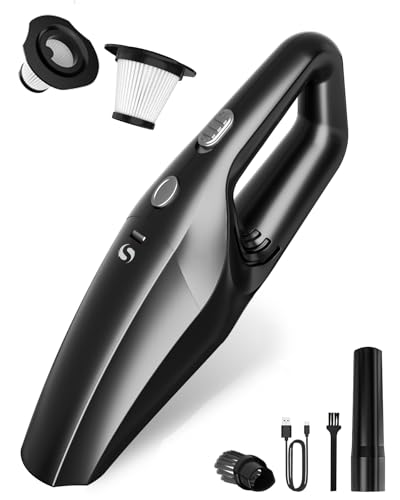


Pros
- Extremely lightweight at roughly 1.5 pounds, reducing wrist fatigue during elevated or vehicle cleaning.
- Flexible USB charging allows convenient recharging at home, in the office, or inside a vehicle.
- Includes dedicated attachments for narrow crevices and multi-surface pet hair pickup.
Cons
- Manufacturer specifications do not provide the exact battery runtime per charge or charging duration.
- Intended strictly for localized spot cleanups and dry debris rather than full-room floor cleaning.
The Shark Cyclone PET Handheld Vacuum (model CH701) is a compact, cordless vacuum engineered specifically for quick dry cleanups around the house and on the road. Shoppers maintaining furniture, vehicle seats, or staircases will find this model tailored for localized debris rather than broad flooring sweeps. Because it operates strictly as a handheld unit, it functions best as a supplemental cleaner alongside a primary upright or canister vacuum.
According to manufacturer specifications, the vacuum uses HyperVelocity suction to lift everyday dirt and pet hair from couches, mattresses, car interiors, and carpeted surfaces. Shark emphasizes its pet-cleaning capabilities, pairing the motor with specialized cleaning attachments. Prospective buyers should recognize that suction descriptions originate from manufacturer claims rather than independent standardized laboratory tests, though the configuration matches typical requirements for light upholstery pickup.
Weighing approximately 1.5 pounds and measuring 16.34 by 3.5 by 4.33 inches, the CH701 is exceptionally lightweight, which helps reduce wrist strain when reaching overhead or cleaning vehicle crevices. The package includes an 8-inch crevice tool for accessing tight spaces between car seats or cushions, alongside a multi-surface pet tool designed to gather hair from fabric. Debris collects in an XL bagless dust cup featuring a one-touch disposal mechanism that empties directly into a trash can.
Power is supplied by an internal rechargeable lithium-ion battery charged through a standard USB connection. This USB charging format offers flexible recharging options in cars, workshops, or near computer hubs without the bulk of a proprietary wall-mounted cradle. Routine maintenance centers around an easily removable, washable filter that helps preserve airflow over time. As with all washable vacuum filters, it should be completely air-dried before reinstallation to protect internal components.
While the vacuum excels at fast spot duty, shoppers should be aware of documented scope limits. The manufacturer data does not state the exact battery runtime per charge or total charge time, meaning tasks requiring prolonged continuous operation may require planning. Additionally, this is a dry-only vacuum without broad floor-head attachments, so it is not suited for wet spills or whole-room floor cleaning. For buyers seeking an affordable, ultra-portable handheld unit for pet hair, auto interiors, and quick daily pickups, the Shark CH701 provides a practical, straightforward option.
The Shark CH701 includes two distinct tools designed to expand its cleaning reach. An 8-inch crevice tool extends into narrow gaps, baseboard edges, vehicle door pockets, and deep between seat cushions where the main nozzle cannot fit.
A multi-surface pet tool is also provided, specifically shaped to lift pet fur, lint, and loose dirt from fabric upholstery, carpeted steps, and car seats without needing a motorized brush bar.
Maintaining the Shark Cyclone PET focuses on keeping the airflow pathway clear and the filtration system clean. The XL bagless dust bin features a one-touch release button, allowing users to drop collected debris directly into a waste bin without pulling the unit apart.
The removable filter can be rinsed with water to clear accumulated dust and restore suction performance. The manufacturer points to this washable design as a cost-saving measure, avoiding immediate filter purchases. Ensure the filter is completely dry before reinstalling it into the vacuum body to prevent motor damage.

Pros
- Integrated pull-out crevice tool and flip-up brush ensure attachments are always available on the tool body.
- Lightweight 2.6-pound frame reduces arm fatigue during stair cleaning and car detailing.
- Washable 21-ounce dust bowl empties cleanly without needing consumable replacement bags.
Cons
- The manufacturer does not provide exact battery runtime or charging duration specifications in the product data.
- Designed solely for dry spot cleanup and lacks floorhead extensions for whole-room floor maintenance.
The BLACK+DECKER Dustbuster AdvancedClean cordless handheld vacuum (ASIN B006LXOJC0) is designed for quick, targeted cleanups around the home and vehicle. At 2.6 pounds, this compact cleaner suits homeowners, renters, and vehicle owners looking for a lightweight grab-and-go option for stairs, sofa cushions, car floorboards, and high-traffic entryways. Its handheld format targets localized messes rather than full-room floor maintenance.
Cleaning power is driven by a 16V MAX lithium-ion battery paired with cyclonic action, which the manufacturer states spins dust and debris away from the filter to maintain consistent suction. Documented uses include picking up everyday dirt, loose debris, hair, and pet hair from furniture, carpeted stairs, and car interiors. Manufacturer documentation does not specify numerical suction ratings in air watts or cubic feet per minute, nor does it state an exact continuous run time per charge, so cleaning sessions should be planned around short spot tasks.
The build incorporates an integrated rotating slim nozzle that turns to reach tight angles between car seats or along baseboards. Rather than requiring detached accessory storage, the vacuum features a pull-out crevice tool and a flip-up dusting brush built directly onto the nozzle. Debris collects in a translucent 21-ounce bagless dirt bowl, allowing users to see when the chamber is approaching capacity. The package also includes a dedicated charging station that holds the vacuum upright while replenishing the battery.
Maintenance centers on routine emptying and filter upkeep. The manufacturer recommends emptying the 21-ounce dust bowl after every use and washing both the bowl and filter regularly to preserve suction performance. Because the bowl is washable, debris can be dumped out without direct contact with settled dirt. Users should ensure the washable filter is completely air-dried before reinstalling it into the vacuum housing.
This Dustbuster is built strictly for dry debris and should not be used on wet spills or damp surfaces. While it lacks motorized floor nozzles or extended wand reach for general flooring, it serves as a practical, low-profile supplemental vacuum for quick household messes, upholstery maintenance, and vehicle upkeep.
The primary physical feature of this Dustbuster model is its onboard accessory configuration. The slim nozzle rotates to adjust to awkward cleaning angles, making it easier to maneuver around automotive consoles, under vehicle pedals, and between sofa sections. A built-in crevice tool slides forward when extra reach is needed, and a flip-up brush engages quickly for dusting delicate trim or upholstery without requiring separate loose attachments.
Measuring 17.25 by 5.5 by 7.75 inches and weighing 2.6 pounds, the unit is balanced for one-handed operation. The included charging station provides a stable footprint for countertop or shelf storage while keeping the 16V battery connected to power between uses.

Pros
- Comes with two interchangeable batteries and a charger for extended cleaning sessions.
- Compact and lightweight 1.9-pound frame reduces hand fatigue during tight car interior detailing.
- Multi-use attachments allow the device to act as an air duster and inflator in addition to a vacuum.
Cons
- Compact handheld dustbin requires frequent emptying during extended cleanups.
- Manufacturer suction and runtime figures have not been validated by independent lab tests.
The FAOGO X12-Ultra handheld vacuum is a compact, cordless utility cleaner engineered for vehicle interiors, furniture, electronics, and small household messes. Weighing just 1.9 pounds, this portable device is aimed at drivers, apartment residents, and homeowners who need a convenient grab-and-go option for dry crumbs, pet hair, and surface dust without dealing with full-sized equipment.
According to manufacturer specifications, the vacuum utilizes a high-speed brushless motor capable of generating up to 50,000Pa of suction power. The system is powered by two removable, rechargeable battery packs that deliver a combined manufacturer-stated runtime of up to 60 minutes. While this dual-pack configuration allows continuous work by swapping packs, real-world runtime will vary depending on power draw, tool selection, and cleaning intensity.
Beyond standard dry vacuuming, the X12-Ultra features a multi-functional design with six included nozzles. These attachments allow the tool to function as an air duster for keyboards and tight crevices, as well as an inflator for balloons or small air mattresses. The kit also includes a storage bag to keep the main unit, charger, batteries, and nozzles organized in a trunk or closet.
Routine maintenance centers on the washable dust container and two included reusable filters. The dustbin detaches easily for disposal of dry debris, and both the bin and filters can be cleaned with water when dust accumulates. To prevent motor damage and maintain airflow, the manufacturer recommends letting washable components dry completely before reassembly.
Because of its compact dirt capacity and specialized attachment set, this unit serves as a supplemental detailer rather than a primary vacuum for carpets or hard floors. Shoppers seeking a versatile, multi-purpose car vacuum and air duster with swappable batteries will find the included accessory bundle practical for tight spaces and light cleanup jobs.
The FAOGO X12-Ultra comes equipped with six dedicated nozzles designed to handle distinct utility jobs. In vacuum mode, the nozzles assist with drawing pet hair, crumbs, and fine dust out of car seat seams, cup holders, and furniture crevices.
By attaching the appropriate nozzles to the exhaust or air port, the tool converts into an air blower or inflator. This setup is suited for blowing dust out of computer keyboards, camera gear, and electronic vents, or inflating small inflatables such as balloons and pool floats.
The package also includes two reusable filters, allowing one to be washed while the other remains in service, alongside a storage bag that holds the entire accessory kit, charger, and spare battery together.
Power is supplied by two interchangeable rechargeable batteries, addressing the short runtimes common to single-battery handheld vacuums. The manufacturer states that the dual-battery setup provides up to 60 minutes of combined operating time under standard conditions.
The quick-swap battery system allows users to replace a depleted pack immediately, minimizing downtime during longer detailing projects. A dedicated charging adapter is included in the package to recharge the packs between cleaning sessions.

Pros
- Extremely lightweight at 1.52 pounds, minimizing wrist fatigue during elevated or vehicle cleaning.
- Dual washable filtration helps prevent fine dust clogs and eliminates the immediate need for replacement filters.
- Flexible extension hose and crevice tools make it easy to reach tight crevices under car seats and along baseboards.
Cons
- Not designed for primary floor cleaning or large-area carpet coverage due to the compact handheld form factor.
- Product documentation does not provide part numbers or verified retail sources for replacement filters.
The Gxzsk Handheld Vacuum is a compact, cordless vacuum cleaner built for localized cleaning tasks in cars, home offices, and living spaces. Weighing 1.52 pounds and measuring 15.4 by 4.25 by 4.1 inches, it is designed for users who need a fast, portable solution for small dry messes rather than a full-size floor vacuum. The cordless handheld design makes it easy to carry outside to a vehicle or maneuver into high corners without wrestling with a power cord or searching for nearby electrical outlets.
According to manufacturer specifications, the vacuum is driven by a high-speed motor delivering up to 15kPa (15,000Pa) of suction power. It is powered by an internal 6000mAh battery that charges in approximately 3 hours using fast-charging technology. The manufacturer lists a maximum runtime of up to 30 minutes on a full charge, supported by an integrated battery indicator light that displays remaining power. Cleaning performance is focused on dry household debris, crumbs, dust, and loose pet hair on upholstery, vehicle floor mats, and desk surfaces.
The unit features a gray and deep blue plastic housing with an easy-to-empty 520mL dust cup. Air filtration relies on a two-tier system: an outer coarse steel mesh screen catches larger debris, while an inner HEPA-rated filter traps finer dust particles. The manufacturer notes that both the steel screen and the HEPA filter are washable and reusable, which helps maintain airflow by reducing clogs. The package includes three auxiliary attachments: a narrow suction nozzle for gaps, a brush attachment to agitate hair and dust on upholstery, and a flexible extension hose to access awkwardly angled areas.
Routine operation and maintenance are straightforward. Setup requires fully charging the internal battery prior to use. Once the 520mL bin fills with debris, it detaches from the motor assembly for quick emptying into a trash can. When suction diminishes, the steel pre-filter and HEPA filter can be rinsed under clean water. The manufacturer emphasizes allowing all filter parts to air dry completely before reinstalling them into the vacuum to avoid damaging the motor or compromising filtration efficiency.
Shoppers should keep in mind that this model is intended strictly for dry spot cleaning and quick touch-ups. Its compact cleaning width and handheld format make it impractical for cleaning expansive carpets or large open hard floors, and it has no documented wet-pickup capability. Additionally, the availability of exact replacement filters is not established in the listing, so buyers should exercise care when washing and handling the included filter. For vehicle owners and homeowners seeking an affordable, lightweight handheld tool for upholstery and crumb cleanup, the Gxzsk cordless vacuum offers convenient attachments and adequate battery duration for small jobs.
The Gxzsk cordless vacuum uses a two-stage filtration system designed to manage dry debris. It incorporates an upgraded coarse steel mesh that traps larger particles before they reach the inner pleated HEPA filter. This design helps minimize suction drop caused by dust buildup on the primary filter element.
Both the steel pre-filter and the HEPA filter can be washed and reused, which reduces the immediate need for disposable replacements. Always ensure that washed filters dry thoroughly before reinstalling them into the vacuum. Emptying the 520mL dust cup frequently helps sustain airflow and ensures reliable performance during spot cleaning.
The vacuum comes with three accessory pieces to assist with varied cleaning scenarios. The slim suction nozzle is tailored for narrow crevices, baseboards, and tight gaps between car seats where focused direct suction is required.
For textiles and vehicle upholstery, the snap-on brush attachment helps dislodge hair and dust clinging to fabric surfaces. A flexible extension hose connects to both nozzles, allowing users to reach around awkward obstructions, vacuum under vehicle pedals, or extend upwards toward elevated corners without tilting the entire vacuum body.


Evaluating Handheld Vacuums: Performance, Limitations, and Everyday Utility
Handheld vacuums are remarkably effective tools when used for the quick spot cleans and localized messes they were created to handle. They offer immediate accessibility, letting you lift dry crumbs, stray pet hair, and surface debris without untangling power cords or carrying a bulky frame. But they are not designed to clean entire rooms or deep-clean wall-to-wall carpeting. Understanding what these compact machines can and cannot accomplish prevents buyer frustration and ensures your cleaning routine runs smoothly.
Direct Answer: Where Handheld Vacuums Excel and Where They Fall Short
The short answer to whether these mini cleaners deliver real value is yes, provided your expectations align with their physical design. A handheld vacuum excels at rapid response tasks, such as clearing toast crumbs from a kitchen counter, removing cat fur from an armchair, or tidying car floor mats. Weighing typically between one and three pounds, these machines offer effortless handling that encourages frequent, low-effort touch-ups. Their grab-and-go portability ensures that minor household accidents get resolved in seconds rather than lingering until scheduled cleaning days.
Conversely, handheld units struggle when asked to tackle broad floor areas, thick carpet piles, or extensive household overhauls. Their narrow suction paths mean cleaning an entire living room rug would take an excessive amount of passes and test your patience. Smaller dust cups fill up quickly, demanding frequent emptying during larger cleaning sessions. Battery runtimes are intentionally calibrated for short bursts, making extended cleaning sessions impossible without pauses for recharging.
Understanding Motor Power and Suction Ratings in Compact Cleaners
Suction performance in portable vacuums relies heavily on motor engineering and airflow velocity rather than brute wattage. Many compact models utilize modern brushless motors capable of spinning at high speeds while drawing relatively low electrical power. Manufacturers often state suction power in pascals (Pa), with readings ranging from basic 5,000 Pa ratings up to substantial 25,000 Pa or higher claims on premium brushless models. High static pressure helps these small machines pull dense debris out of car seat crevices and upholstery seams where larger floor heads cannot reach.
However, static suction pressure alone does not guarantee superior cleaning if the intake channel design restricts physical airflow. Cyclonic air paths help separate incoming grit from the air stream before it impacts the primary filtration barrier. Dual cyclonic channels, featured on select designs from brands like Shark, assist in keeping the airflow moving smoothly across extended pickup cycles. Without effective aerodynamic separation, even a powerful motor will suffer a noticeable suction drop as fine dust coats the interior filter surface.
Battery Technology and Runtime Expectations in Real-World Use
Modern handheld cleaners depend almost entirely on rechargeable lithium-ion battery packs that supply consistent, fade-free voltage. Older nickel-cadmium batteries used to lose pulling strength gradually as the charge diminished, but lithium cells maintain steady motor speeds right up until the battery depletes. Typical operating times range from roughly 10 to 30 minutes depending on whether you run the machine on standard or high-power boost modes. While 15 minutes sounds brief on paper, it represents substantial time when clearing a few crumbs or vacuuming a sofa cushion.
Charging infrastructure has also evolved considerably across recent product generations. Many modern designs now feature standard USB Type-C charging ports, enabling users to recharge the cleaner in a vehicle, office desk, or kitchen counter using common phone cables. Other units rely on dedicated wall docks or magnetic drop-in bases that store accessories while keeping the battery fully topped off between uses. Recharging cycles generally take between two and four hours, so leaving the unit on its charging stand ensures it remains ready whenever an unexpected mess occurs.
Dustbin Capacity and Cyclonic Filtration Maintenance
Because handheld vacuums prioritize compact physical frames, their onboard dirt containers rarely hold more than 300 to 600 milliliters of dry debris. This compact chamber fills rapidly when vacuuming bulky items like spilled dry cereal, packaging scraps, or heavy shedding from large pets. Most modern units incorporate hands-free, one-touch release doors that let you dump collection cups directly into a trash can without touching dirty interior walls. Routine emptying after each major use maintains optimal airflow and prevents dust buildup from choking the internal cyclonic chamber.
Filtration systems in bagless handhelds usually combine a coarse stainless steel mesh screen with a fine-particle washable fabric or pleated HEPA filter. Unlike large sealed bagged vacuum cleaners that contain debris securely inside disposable bags, bagless hand units require manual filter rinsing to stay clean. A clogged filter restricts intake airflow, causing the motor to work harder while generating excessive heat and reduced suction. Always ensure that washed filters dry completely for at least 24 hours before reinstallation, as moisture drawn into high-speed electric motors can cause permanent damage.
Pet Hair Pickup and the Value of Motorized Attachments
Pet owners frequently invest in handheld cleaners to keep fur from accumulating on furniture, bedding, and carpeted stairs. Passive suction nozzles alone often struggle with pet fur because stubborn hairs weave tightly into fabric fibers through everyday friction. Handheld models equipped with specialized motorized brush rolls or rubberized pet tools provide the mechanical agitation required to dislodge tangled hair. Tools like the motorized self-cleaning pet brush found on select Shark UltraCyclone models actively comb fibers while vacuuming, delivering superior hair pickup compared to plain plastic nozzles.
Maintenance of these specialized pet accessories requires regular attention to preserve peak performance. Long pet hair can wind around brush axles, creating drag that strains the small internal drive belt or drive motor. Checking the rotating brush roll after intensive upholstery cleaning sessions allows you to snip away accumulated threads before they bind the mechanism. Keeping brush bristles clear also prevents friction wear against delicate upholstery fabrics, keeping your furniture surfaces looking neat and fresh.
Vehicle Detailing and Tight-Space Maneuverability
Car interiors present a uniquely demanding environment filled with narrow gaps, seat rails, cup holders, and textured floor carpeting. Dragging a standard full-size vacuum with an extension cord out to a driveway or parking spot can be awkward and inconvenient. A lightweight cordless handheld vacuum allows you to clean between front seats, under floor pedals, and inside door pockets without physical restriction. The compact form factor lets you maneuver around tight console areas where standard vacuum wands cannot easily pivot.
For deep vehicular messes involving damp soil or ground-in gravel, pairing your tool kit with heavy-duty cleaning equipment might be necessary. While standard cordless handhelds manage dry crumbs and daily dust brilliantly, dedicated wet dry vacuum setups for car detailing are better equipped for liquid spills or sodden winter footwells. Using a standard dry-only hand vac on wet debris will ruin the internal motor and void your manufacturer warranty. Sticking to dry gravel, dried dirt, and snack crumbs preserves your compact cleaner for years of reliable car upkeep.
Multi-Functional Capabilities: Blowers, Pumps, and Specialized Nozzles
Recent innovations in the compact cleaning category have transformed many handheld vacuums into versatile multi-functional utility devices. Several modern models feature reverse exhaust ports that double as high-velocity dust blowers or inflation pumps. By attaching narrow conical nozzles to the rear blower exhaust, users can blast dust out of mechanical computer keyboards, window tracks, or camera equipment. Some packages even provide inflation adapters suitable for blowing up pool toys, air mattresses, or vacuum compression storage bags.
Having multiple interchangeable attachments dramatically expands the practical value of a small cleaning tool. A pull-out crevice tool provides extended reach into deep sofa crevices, while dusting brushes with soft bristles safely clean delicate blinds, vents, and electronics. Flexible extension hoses, included with models like the Gxzsk cordless vac, allow you to hold the main motor in one hand while directing the suction nozzle with the other. Selecting a model with a comprehensive accessory kit ensures you are ready for a broad spectrum of household dusting chores.
Troubleshooting Loss of Suction and Airflow Restrictions
When a handheld vacuum suddenly stops picking up debris, the root cause is almost always an airflow blockage rather than a failing motor. Because the intake nozzles and internal ports are small, items like discarded coins, thick paper clips, or compacted lint balls can easily lodge in the nozzle throat. Inspecting the intake flap and clear nozzle opening should be your first diagnostic step whenever suction feels weak. Removing the dust cup and peering through the intake passage will reveal whether an obstruction is trapping debris before it enters the bin.
A second common culprit behind diminished suction is an uncleaned or improperly seated internal filter. As fine dust coats the exterior pleats of a HEPA or foam cartridge, the motor struggles to pull air through the restricted membrane. Tapping the filter over a trash bin to dislodge loose powder often provides immediate suction restoration during a cleaning session. If suction remains poor after emptying the bin and tapping the filter, wash the filter according to the manual or replace it if the material shows signs of tearing or wear.
Handheld Cleaners Compared to Stick, Upright, and Canister Machines
Choosing between a dedicated handheld vacuum and a larger primary vacuum comes down to how you distribute your cleaning workload. Upright and canister vacuums deliver powerful, continuous motor performance with wide floor heads designed to clean broad square footage efficiently. Cordless stick vacuums offer a versatile middle ground, frequently converting into handheld configurations by detaching the long floor extension wand. However, dedicated handheld units are noticeably lighter, more compact, and substantially easier to maneuver inside tight vehicle cabins or high storage shelves than converted stick vacuums.
For most households, a handheld vacuum serves best as a complementary secondary tool rather than an only appliance. Keeping a full-size floor vacuum in a closet for weekly deep cleaning while storing a compact handheld in the kitchen or entryway creates an efficient cleaning workflow. You avoid dragging out heavy machinery for minor accidents, saving time and physical effort on a daily basis. Viewing the handheld vacuum as a dedicated spot-cleaning specialist establishes realistic expectations and maximizes its daily convenience.
Realistic Ownership Costs, Filter Upkeep, and Lifespan
Maintaining a handheld vacuum over multiple years requires minimal ongoing investment, particularly if the model features washable filters. Most contemporary units come with reusable filter cartridges that can be rinsed in cold running water dozens of times before structural wear occurs. Replacing these filters once or twice a year, depending on frequency of use, helps maintain original suction levels without placing unnecessary strain on the motor. Selecting a brand that offers easily accessible replacement filters ensures your machine will not become obsolete when a filter wears out.
Battery longevity represents another important factor in long-term ownership satisfaction. Lithium-ion batteries experience gradual capacity loss over hundreds of charge cycles, eventually offering fewer minutes of runtime per charge. Keeping the vacuum stored at moderate room temperatures and avoiding leaving the battery in hot car trunks during summer months helps preserve chemical cell life. Following the manufacturer guidelines for initial battery charging and routine storage protects the power pack and maximizes the functional lifespan of your device.
Final Assessment: Deciding If a Handheld Vacuum Fits Your Routine
Ultimately, handheld vacuums are well worth the investment for households that frequently deal with small, localized messes. Whether you have children dropping dry snacks, pets shedding on the sofa, or an automobile interior that gathers daily debris, a compact cordless cleaner simplifies maintenance. Its primary strength lies in eliminating the setup time and physical bulk associated with standard floor cleaning machines. When you treat it as a rapid-response spot cleaner rather than a whole-house workhorse, a handheld vacuum becomes one of the most useful appliances in your home.




Write Your Review
No reviews yet. Be the first to share your experience!