


Loud utility vacuums can quickly turn a routine garage cleanup or workshop task into an ear-splitting headache. Standard utility models frequently generate sound levels exceeding eighty-five decibels, which echoes harshly across concrete floors and drywall. Homeowners, hobbyists, and vehicle detailers frequently ask what is the most quiet shop vac when they need dependable suction without deafening motor whine. Balancing suction with sound reduction requires looking closely at motor design, sound-dampening baffles, and exhaust diffusion.
Modern quiet utility vacuums utilize specialized air channels and isolated motor housings that reduce running sound down to conversational levels around sixty-five decibels. While traditional household uprights and dedicated hard floor vacuum mop combos focus on residential living areas, wet and dry utility extractors must manage sawdust, metal shavings, and water spills. Finding the right low-noise model depends on tank capacity, hose diameter, and realistic suction demands. Looking past simple peak horsepower ratings helps identify machines engineered specifically for quiet operation and daily reliability.





Understanding Noise Levels and Acoustic Engineering in Modern Utility Vacuums
Selecting a low-noise wet and dry vacuum requires understanding how acoustic dampening interacts with motor performance and air movement. When you operate a machine in an enclosed workshop, sound waves reflect off hard surfaces and amplify the perceived volume. Modern quiet utility extractors solve this challenge by combining insulated motor domes with specialized internal air pathways. Evaluating the relationship between decibel levels, mechanical baffling, and physical tank properties ensures you select a machine that keeps noise low without compromising everyday cleaning performance.
Decibel Ratings and Acoustic Output in Low-Noise Vacuums
Traditional workshop vacuums frequently operate between eighty and eighty-five decibels, creating an environment where hearing protection is virtually mandatory. In contrast, models engineered for quiet performance often register under sixty-five decibels according to manufacturer specifications. That ten-to-fifteen decibel drop represents an enormous reduction in perceived acoustic pressure because decibel measurements follow a logarithmic scale. A vacuum running at sixty-five decibels allows you to carry on a normal conversation or listen for approaching colleagues without shouting over the motor.
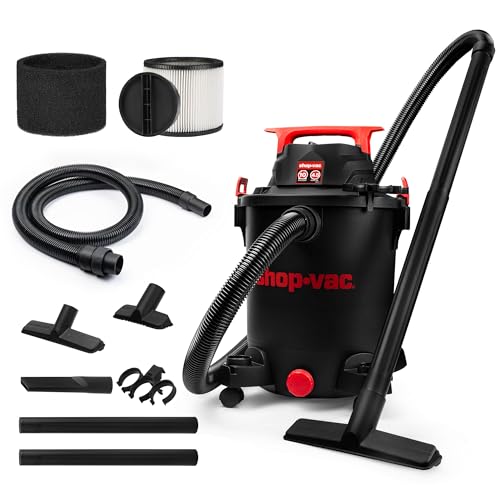
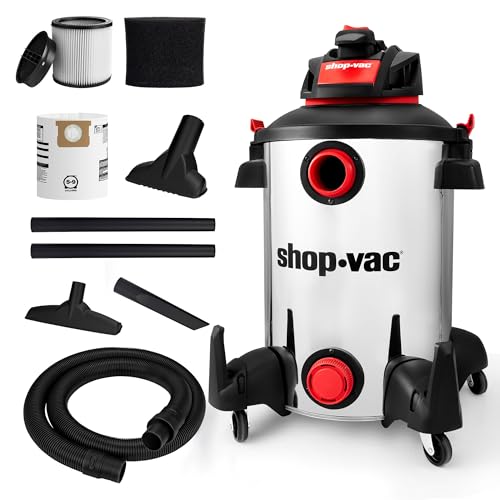
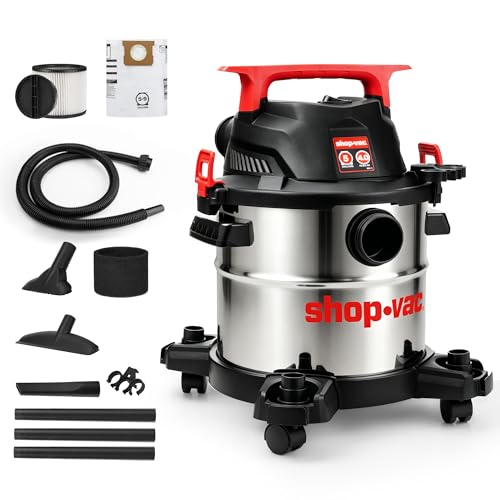
Brands achieve these low sound ratings through dedicated acoustic management rather than simple motor downsizing. The DEWALT Stealthsonic lineup, for instance, specifically advertises sound levels below sixty-five decibels on its five-gallon and ten-gallon models while maintaining four to five peak horsepower motors. Similarly, Shop-Vac rates its Whisper Series and Ultra Quiet models as operating up to sixty percent quieter than traditional standard vacs. ECOMAX also incorporates dampening housings on its stainless steel units, advertising up to eighty percent quieter operation to lower operating volume without restricting dry debris pickup.
Motor Enclosure Baffling and Airflow Path Dampening
The primary source of harsh shop vacuum noise is not just mechanical motor rotation, but high-velocity air rushing through internal cooling fans and turbine chambers. Unmuffled utility vacuums expel high-speed exhaust directly out of open plastic ports, generating sharp whistling and turbulent roar. Low-noise machines address this issue by directing exhaust air through internal serpentine channels lined with sound-absorbing foam. These acoustic labyrinths slow the escaping air, dampening high-frequency vibrations before the exhaust exits the motor head.
Motor isolation brackets also play a pivotal role in preventing motor vibrations from transferring into the exterior housing. When an electric motor bolts directly to hard plastic, the entire vacuum shell vibrates like an acoustic speaker cone. Rubberized dampening rings and double-walled motor lids decouple the mechanical movement from the outer tank. This isolation eliminates the harsh buzzing that characterizes cheaper utility vacuums, replacing it with a lower, smoother hum that dissipates quickly across a room.
Balancing Suction Power, CFM, and Acoustic Output
A common concern among workshop owners is that a quiet utility vacuum must sacrifice suction to keep the motor silent. Airflow, measured in cubic feet per minute, and static pressure, often referred to as water lift, determine real-world cleaning capability. A motor running at four to five peak horsepower can still draw substantial airflow even when equipped with an acoustic shroud. The Shop-Vac twelve-gallon Ultra Quiet unit, for example, provides one hundred and eight CFM alongside a heavy-duty five-and-a-half peak horsepower motor.
Air turbulence inside narrow hoses often accounts for a surprising portion of perceived operational sound. When high-velocity air squeezes through narrow plastic ridges, it generates high-pitched wind noise independent of the motor itself. Using wider hoses, such as the two-and-a-half-inch diameter format found on select Shop-Vac models, allows air to travel at slightly lower speeds while maintaining massive overall volume. Readers comparing utility extractors with home carpet extractors will notice that industrial utility models prioritize raw cubic airflow over targeted fluid injection pressure.
Tank Construction: Stainless Steel Versus Molded Polyethylene
Canister material significantly influences the acoustic profile of a utility vacuum during heavy pickup tasks. Molded polypropylene and high-density polyethylene tanks tend to absorb physical impacts from coarse gravel, drywall chunks, and wood shavings. These plastic drums naturally deaden ringing sounds, preventing sharp objects from reverberating like a drumhead when they enter the drum. Plastic canisters also resist denting and corrosion, making them reliable choices for mixed wet and dry jobs.
Stainless steel drums, found on units like the DEWALT ten-gallon Stealthsonic and ECOMAX five-gallon vacs, offer superior structural rigidity and chemical resistance. However, metal canisters can produce a bright metallic pinging sound when dense materials hit the inner wall at high velocity. Manufacturers counter this acoustic resonance by applying rubber base rings, heavier wall gauges, and directional intake deflectors that guide incoming air downward into the drum. Choosing between plastic and stainless steel often comes down to balancing impact resistance against long-term canister durability.
Tank Capacity, Portability, and Footprint Considerations
Drum size affects not only how often you empty debris, but also how sound behaves inside the vacuum chamber. Smaller tanks, such as three-gallon to five-gallon portable units, possess less internal air volume to act as an acoustic buffer. Compact vacuums like the Shop-Vac three-gallon or DEWALT five-gallon models rely on tight internal packaging and lightweight portability. Weighing around seventeen pounds, these smaller vacs roll easily into vehicles or crawl spaces where bulky machines cannot fit.
Larger ten-gallon and twelve-gallon vacuums provide massive holding capacity, making them suitable for extensive basement drainage or whole-shop dust collection. A larger tank provides a cavernous air buffer that can soften motor whine, though the vacuum itself occupies considerable floor footprint. Models like the Shop-Vac ten-gallon and twelve-gallon machines feature broad wheelbases and integrated caster assemblies to handle the weight of collected slurry. If storage room is limited, a mid-sized six-gallon unit often delivers an effective balance between acoustic dampening volume and easy storage.
Filter Maintenance and Preventing High-Pitched Airflow Restrictions
A quiet shop vacuum will quickly become loud and strained if routine filter maintenance is neglected. When a cartridge filter clogs with fine drywall dust or sawdust, the electric motor struggles to draw sufficient cooling air. This restriction creates vacuum cavitation inside the impeller housing, causing the motor pitch to climb into a shrill, high-frequency whine. The increased mechanical strain also generates excessive heat, which can prematurely wear motor bearings and compromise sound-deadening seals.
Installing high-efficiency disposable dust bags alongside your main cartridge filter keeps fine particulate away from the pleated filter surface. Units like the DEWALT Stealthsonic package include disposable bags that collect dry debris before it can cake against the main filter. When transitioning to wet spills, removing the dry paper bag and sliding a foam sleeve over the filter cage prevents liquid from ruining the paper media. Keeping airflow channels clear ensures the motor operates within its intended acoustic envelope and avoids unnecessary mechanical stress.
Wet Cleanup Versus Dry Debris Sound Dynamics
Vacuuming liquids produces an entirely different acoustic experience than gathering dry shavings or workshop dust. When water enters the canister, it forms a pooling liquid layer that actually dampens the hollow resonance of the tank. The initial sound of gurgling water quickly stabilizes into a steady, muted hum as the drum fills. Units equipped with bottom drain ports, like the Shop-Vac ten-gallon model, allow you to empty heavy wastewater cleanly without unseating the heavy motor head.
Every wet and dry vacuum relies on an internal float mechanism to shut off suction when liquid reaches maximum capacity. When this float ball rises into the intake seat, airflow abruptly stops, causing the motor turbine to free-wheel at high speed. The resulting high-pitched roar serves as an immediate auditory signal that the tank must be emptied immediately. Allowing the vacuum to run after the float engages can overheat the motor and damage internal acoustic insulation, so always power off promptly when the sound changes.
Hose Routing, Tool Attachments, and Whistle Prevention
The attachments fitted to your vacuum wand have a direct impact on the noise heard at the cleaning nozzle. Narrow crevice tools concentrate airflow into a restricted slot, which frequently creates a sharp, whistling hiss as air speeds up. Broad floor nozzles and gulper tools spread intake volume over a wider surface area, reducing air velocity and maintaining quiet operation. Ensuring the friction-fit connections between extension wands and nozzles remain tight prevents annoying air leaks that whistle during use.
Hose length and flexibility also determine how comfortably you can position the vacuum relative to your immediate workspace. A longer reach, like the combined twenty-two-foot span provided by select Shop-Vac models with seven-foot hoses and fifteen-foot power cords, lets you leave the main motor canister far behind. Placing the powerhead several yards away or around a partition dramatically reduces direct noise exposure at your ears. For standard domestic cleaning, shoppers browsing bulk club vacuum cleaner options typically encounter uprights, but workshop utility vacs offer unmatched reach for rough cleaning duties.
Exhaust Diffusion, Blower Ports, and Diffuser Caps
Many utility vacuums incorporate a secondary exhaust port that doubles as a forced-air blower for clearing patios and garage floors. While this feature adds versatility, an open exhaust port can blast unfiltered motor noise directly toward the operator. Several manufacturers design optional exhaust diffusers or foam mufflers that clip directly onto the blowing port during standard vacuuming. These small accessories disperse the concentrated jet of exhaust air, cutting draft noise and preventing the vacuum from kicking up loose dust behind it.
Operating the machine in blower mode inherently generates more noticeable sound than standard vacuum mode. Without a hose attached to the intake, air rushes freely across open baffles, creating a louder ambient rush. If you need to clear outdoor leaves or blow sawdust out of intricate tool corners, expect sound levels to increase slightly compared to sealed vacuuming. Always ensure the blower port remains free of debris, as any blockage at the exhaust outlet will increase internal motor temperature and alter running acoustics.
Practical Operating Protocols in Noise-Sensitive Spaces
Operating a utility vacuum indoors, in multi-family housing, or during late evening hours requires thoughtful acoustic management. Hard reflective surfaces like concrete floors, basement block walls, and uninsulated garage doors amplify motor noise by bouncing sound waves repeatedly. Placing the vacuum on a rubber utility mat or dense cardboard pad dampens mechanical vibration before it can resonate into the foundation. Keeping nearby doors closed prevents low-frequency motor hum from penetrating adjacent living rooms or disturbing resting family members.
Maintaining proper electrical supply is equally critical for keeping electric utility motors running smoothly and quietly. Undersized extension cords can cause voltage drops that force the electric motor to run inefficiently, leading to rough rotation and increased humming. Always select a heavy-duty extension cord rated for your vacuum amperage, particularly when operating high-draw units over long distances. Regularly checking the power cord for fraying, keeping caster wheels lubricated, and wiping down sealing gaskets will preserve both whisper-quiet operation and long-term utility reliability.
Key Selection Criteria for Low-Noise Utility Vacuums
Identifying the quietest utility vacuum comes down to prioritizing engineered acoustic dampening alongside your real-world cleaning capacity. Machines designed with isolated motor baffles, like the DEWALT Stealthsonic and Shop-Vac Whisper series, prove that high suction does not require painful decibel levels. Evaluating tank size, canister material, and included filtration accessories will help match the machine to your garage or workshop demands. Proper maintenance, timely filter swaps, and smart workspace positioning ensure your utility vacuum stays remarkably quiet through years of tough cleanup tasks.









Write Your Review
No reviews yet. Be the first to share your experience!