


Automobile interiors collect challenging debris, ranging from coarse road gravel and crushed snacks to stubborn pet fur embedded deep inside dense carpeting. Motorists frequently ask what is the most powerful car vacuum when standard household dusters fail to pull grit from seat crevices and footwells. True cleaning power involves a combination of sealed static lift, continuous airflow, and purposeful nozzle design rather than a single advertised metric. Drivers often seek a balance between portable convenience and robust suction to keep their vehicle cabins clean between professional wash appointments.
Evaluating suction performance requires looking past raw marketing numbers and examining motor architecture, battery voltage stability, and airflow restriction. While dedicated multi-gallon shop units provide immense air movement, compact handheld cleaners equipped with brushless motors and cyclonic chambers offer practical grab-and-go utility. If you frequently handle wet spills or deep upholstery shampooing, reviewing a wet dry vacuum for car detailing provides useful perspective on larger garage tools. For daily maintenance, understanding how portable engineering translates into real-world pickup helps you select an effective tool for tight automotive spaces.



Pros
- Integrated pull-out crevice tool and flip-up brush ensure attachments are always available on the tool body.
- Lightweight 2.6-pound frame reduces arm fatigue during stair cleaning and car detailing.
- Washable 21-ounce dust bowl empties cleanly without needing consumable replacement bags.
Cons
- The manufacturer does not provide exact battery runtime or charging duration specifications in the product data.
- Designed solely for dry spot cleanup and lacks floorhead extensions for whole-room floor maintenance.
The BLACK+DECKER Dustbuster AdvancedClean cordless handheld vacuum (ASIN B006LXOJC0) is designed for quick, targeted cleanups around the home and vehicle. At 2.6 pounds, this compact cleaner suits homeowners, renters, and vehicle owners looking for a lightweight grab-and-go option for stairs, sofa cushions, car floorboards, and high-traffic entryways. Its handheld format targets localized messes rather than full-room floor maintenance.
Cleaning power is driven by a 16V MAX lithium-ion battery paired with cyclonic action, which the manufacturer states spins dust and debris away from the filter to maintain consistent suction. Documented uses include picking up everyday dirt, loose debris, hair, and pet hair from furniture, carpeted stairs, and car interiors. Manufacturer documentation does not specify numerical suction ratings in air watts or cubic feet per minute, nor does it state an exact continuous run time per charge, so cleaning sessions should be planned around short spot tasks.
The build incorporates an integrated rotating slim nozzle that turns to reach tight angles between car seats or along baseboards. Rather than requiring detached accessory storage, the vacuum features a pull-out crevice tool and a flip-up dusting brush built directly onto the nozzle. Debris collects in a translucent 21-ounce bagless dirt bowl, allowing users to see when the chamber is approaching capacity. The package also includes a dedicated charging station that holds the vacuum upright while replenishing the battery.
Maintenance centers on routine emptying and filter upkeep. The manufacturer recommends emptying the 21-ounce dust bowl after every use and washing both the bowl and filter regularly to preserve suction performance. Because the bowl is washable, debris can be dumped out without direct contact with settled dirt. Users should ensure the washable filter is completely air-dried before reinstalling it into the vacuum housing.
This Dustbuster is built strictly for dry debris and should not be used on wet spills or damp surfaces. While it lacks motorized floor nozzles or extended wand reach for general flooring, it serves as a practical, low-profile supplemental vacuum for quick household messes, upholstery maintenance, and vehicle upkeep.
The primary physical feature of this Dustbuster model is its onboard accessory configuration. The slim nozzle rotates to adjust to awkward cleaning angles, making it easier to maneuver around automotive consoles, under vehicle pedals, and between sofa sections. A built-in crevice tool slides forward when extra reach is needed, and a flip-up brush engages quickly for dusting delicate trim or upholstery without requiring separate loose attachments.
Measuring 17.25 by 5.5 by 7.75 inches and weighing 2.6 pounds, the unit is balanced for one-handed operation. The included charging station provides a stable footprint for countertop or shelf storage while keeping the 16V battery connected to power between uses.


Pros
- 200-degree nozzle rotation allows access to high shelves, under car seats, and around tight corners.
- Onboard tools flip or slide out directly, eliminating the need to store and carry loose accessories.
- Weighs only 3 pounds, reducing wrist strain during quick spot cleaning.
Cons
- Handheld design and compact dirt bowl are not intended for whole-home floor vacuuming.
- Product documentation does not specify the exact battery runtime in minutes per charge.
The BLACK+DECKER Pivot Vac (model BDH2000PL) is a compact, cordless handheld vacuum designed for quick cleanups around the home and inside vehicles. Weighing 3 pounds, this portable unit targets everyday spot messes, crumbs, and light debris where bringing out a full-sized upright or canister vacuum would be inconvenient. Shoppers seeking a secondary cleaning tool for stairs, car interiors, upholstery, or countertops will find its focused form factor suited to fast pick-ups.
Power is supplied by an internal 20V MAX lithium-ion battery system, which the manufacturer states delivers high suction power for quick cleaning tasks. Because this model utilizes cyclonic action to spin debris away from the filter, airflow remains active as dirt enters the bowl. The documentation does not list exact runtime figures in minutes or specific air-watt ratings, so operating duration depends on the mess and frequency of use. It is primarily built for dry debris on vehicle upholstery, furniture cushions, and hard surfaces.
The central physical feature is the wide-mouth nozzle that pivots through a 200-degree arc. This articulated neck allows users to angle the suction opening above cabinets, under vehicle footwells, or into narrow recesses without awkward wrist twisting. Unlike portable vacuums that require carrying loose attachments, the BDH2000PL integrates its tools directly onto the nozzle body. It features a flip-up dusting brush for delicate surfaces and an extendable crevice tool that slides out to provide extra reach into deep gaps.
Maintaining the vacuum centers on its translucent bagless dirt bowl and washable filter assembly. The clear casing lets you monitor when debris accumulates, and the bowl opens for direct dumping into the trash to eliminate ongoing bag purchases. Cleaning the washable filter helps maintain airflow, though the filter must be allowed to air-dry fully before reinstallation. Measuring 7.16 by 6.2 by 11.9 inches, the nozzle folds against the body for compact placement on a shelf, counter, or utility bench.
As a dedicated handheld cleaner, the BDH2000PL is not built to clean large floor areas or replace an upright vacuum for household carpeting. Shoppers should ensure a handheld spot-cleaner matches their planned tasks, as it does not include floor extension wands or a motorized floor head. Backed by a 2-year limited warranty from BLACK+DECKER, this unit offers a practical, self-contained option for vehicle owners and households needing fast mess management without loose parts to track down.
The BLACK+DECKER BDH2000PL incorporates its cleaning attachments directly into the pivoting nozzle housing, eliminating loose accessories that can get lost in storage.
An extendable crevice tool slides forward from the nozzle tip to provide targeted reach between car seats, along baseboards, and into deep crevices. When gentle surface agitation is needed, a flip-up brush rotates into place to sweep dust from vehicle vents, window blinds, or fabric upholstery.
Routine care for the BDH2000PL involves a translucent, bagless dirt bowl that allows immediate visual checks of collected debris. The bowl unlatches for direct emptying into a waste receptacle.
To support consistent airflow, the vacuum uses cyclonic separation alongside a washable filter. Periodic rinsing under tap water keeps the filter clear of fine dust buildup, though it must be completely dry before reinsertion to protect internal components.
BLACK+DECKER provides a 2-year limited warranty for the BDH2000PL Pivot Vac, covering defects in materials and workmanship under ordinary household use.
Warranty coverage details, operational guidance, and genuine replacement filter sourcing should be confirmed through official BLACK+DECKER customer support channels.

Pros
- Includes two interchangeable rechargeable batteries to extend total operating time without waiting on a single charge cycle.
- Versatile 6-in-1 capability functions as a vacuum, blower, and inflator for automotive, home, and outdoor gear.
- Lightweight 1.96-pound body is easy to handle in confined spaces like vehicle footwells and overhead shelving.
Cons
- The dust container capacity is not specified by the manufacturer, which may require frequent emptying during larger tasks.
- The exact filtration efficiency rating is not documented for the included reusable filters.
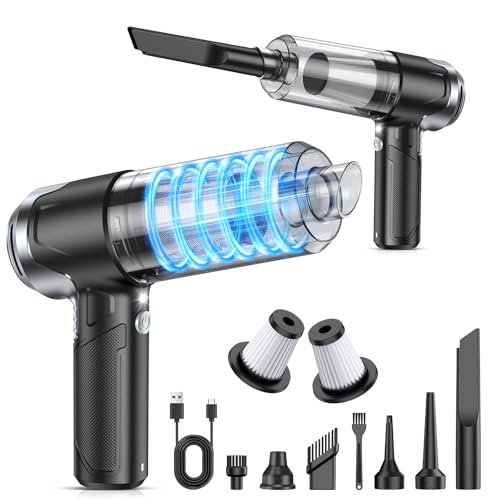
The FAOGO A01-Ultra is a portable cordless handheld vacuum cleaner tailored for vehicle owners and homeowners who need a compact tool for quick spot-cleaning tasks. Weighing just 1.96 pounds, its lightweight body is built for one-handed operation in tight quarters such as car footwells, vehicle consoles, sofa cushions, and computer keyboards. Because it is a compact handheld model, it is designed for targeted mess pickup rather than whole-home floor cleaning.
According to manufacturer specifications, the vacuum is driven by a brushless motor generating up to 50,000 Pa of suction across three adjustable power settings: low, medium, and high. To support extended cleanup sessions, the package includes two rechargeable batteries. The manufacturer lists operating runtimes of up to 150 minutes on low mode and up to 60 minutes on high mode across the two batteries. Shoppers should note that these figures are manufacturer-provided estimates rather than independently verified lab tests, and actual run duration will vary based on the chosen suction mode and attachment load.
Beyond standard dry debris pickup, this model features a 6-in-1 multi-functional design that allows it to operate as an air blower and inflator. The package provides six specialized attachments suited for vacuuming crevices, lifting surface pet hair from fabric seats, dislodging crumbs from keyboards, and inflating accessories like balloons or outdoor air mattresses. A dedicated storage bag keeps all nozzles and accessories contained when traveling or stored in a car trunk.
Routine maintenance centers on the dust collection chamber and the two included reusable filters. The manufacturer notes that the filters can be cleaned and reused; however, users should ensure washed filters are completely dry before reinserting them into the motor housing. The exact dust cup capacity and certified filter standard (such as HEPA) are not specified in the documentation, so frequent emptying may be necessary during heavier vehicle detailing.
While this compact handheld cannot replace an upright or stick vacuum for general floor maintenance, it serves as a highly capable secondary cleaner for localized debris. Shoppers seeking a portable, cordless cleaner for car interiors, desk workstations, and occasional outdoor inflation will find practical utility in this dual-battery kit.
The FAOGO kit includes six distinct attachments engineered to expand the handheld cleaner beyond basic dry vacuuming. These tools allow users to adapt the device for tight crevices between car seats, surface dusting across upholstery, and focused blowing to clear dust from electronics and keyboards.
The package also supports inflation tasks, making it practical for inflating balloons, pool toys, or camping air mattresses. Alongside the attachments, the manufacturer includes two reusable filters, two batteries, a battery charger, and a dedicated storage bag to keep all accessories neatly organized in a vehicle or closet.
Power is managed through a two-battery system designed to minimize cleaning interruptions. By providing two separate rechargeable packs, the vacuum allows users to swap batteries when one runs out during deeper detailing jobs.
The manufacturer specifies maximum operating times of up to 150 minutes on low mode and up to 60 minutes on high mode when utilizing both included batteries. Because operating on high suction increases power draw, real-world battery longevity will depend on the selected mode and the resistance encountered during vacuuming or inflating.

Pros
- Comes with two interchangeable batteries and a charger for extended cleaning sessions.
- Compact and lightweight 1.9-pound frame reduces hand fatigue during tight car interior detailing.
- Multi-use attachments allow the device to act as an air duster and inflator in addition to a vacuum.
Cons
- Compact handheld dustbin requires frequent emptying during extended cleanups.
- Manufacturer suction and runtime figures have not been validated by independent lab tests.
The FAOGO X12-Ultra handheld vacuum is a compact, cordless utility cleaner engineered for vehicle interiors, furniture, electronics, and small household messes. Weighing just 1.9 pounds, this portable device is aimed at drivers, apartment residents, and homeowners who need a convenient grab-and-go option for dry crumbs, pet hair, and surface dust without dealing with full-sized equipment.
According to manufacturer specifications, the vacuum utilizes a high-speed brushless motor capable of generating up to 50,000Pa of suction power. The system is powered by two removable, rechargeable battery packs that deliver a combined manufacturer-stated runtime of up to 60 minutes. While this dual-pack configuration allows continuous work by swapping packs, real-world runtime will vary depending on power draw, tool selection, and cleaning intensity.
Beyond standard dry vacuuming, the X12-Ultra features a multi-functional design with six included nozzles. These attachments allow the tool to function as an air duster for keyboards and tight crevices, as well as an inflator for balloons or small air mattresses. The kit also includes a storage bag to keep the main unit, charger, batteries, and nozzles organized in a trunk or closet.
Routine maintenance centers on the washable dust container and two included reusable filters. The dustbin detaches easily for disposal of dry debris, and both the bin and filters can be cleaned with water when dust accumulates. To prevent motor damage and maintain airflow, the manufacturer recommends letting washable components dry completely before reassembly.
Because of its compact dirt capacity and specialized attachment set, this unit serves as a supplemental detailer rather than a primary vacuum for carpets or hard floors. Shoppers seeking a versatile, multi-purpose car vacuum and air duster with swappable batteries will find the included accessory bundle practical for tight spaces and light cleanup jobs.
The FAOGO X12-Ultra comes equipped with six dedicated nozzles designed to handle distinct utility jobs. In vacuum mode, the nozzles assist with drawing pet hair, crumbs, and fine dust out of car seat seams, cup holders, and furniture crevices.
By attaching the appropriate nozzles to the exhaust or air port, the tool converts into an air blower or inflator. This setup is suited for blowing dust out of computer keyboards, camera gear, and electronic vents, or inflating small inflatables such as balloons and pool floats.
The package also includes two reusable filters, allowing one to be washed while the other remains in service, alongside a storage bag that holds the entire accessory kit, charger, and spare battery together.
Power is supplied by two interchangeable rechargeable batteries, addressing the short runtimes common to single-battery handheld vacuums. The manufacturer states that the dual-battery setup provides up to 60 minutes of combined operating time under standard conditions.
The quick-swap battery system allows users to replace a depleted pack immediately, minimizing downtime during longer detailing projects. A dedicated charging adapter is included in the package to recharge the packs between cleaning sessions.

Pros
- Ultra-lightweight 1 lb build makes it effortless to maneuver in tight vehicle interiors and around desks.
- Multi-functional design serves as both a dry vacuum and an air pump or duster.
- Standard Type-C charging port allows convenient recharging at home, in the office, or inside a vehicle.
Cons
- Mini form factor has a small collection capacity that is unsuitable for large-area floor cleaning.
- Max power mode reduces operating runtime to approximately 12-15 minutes before requiring a recharge.
The Mr.ego cordless handheld vacuum is a compact, multi-functional cleaning tool designed primarily for quick touch-ups in vehicles, home offices, RVs, and small living spaces. Weighing just one pound, this mini handheld unit suits drivers looking to clear console debris, remote workers tidying keyboards and desks, or campers needing a portable utility device. Its form factor allows it to stow neatly into glove compartments, backpacks, or desk drawers without taking up substantial storage space.
Cleaning performance is centered on a manufacturer-specified 126,000 RPM brushless motor rated to produce up to 22000Pa of suction. The vacuum operates across three selectable settings: Eco mode provides an estimated 30 to 35 minutes of runtime for light dust pickup, Normal mode runs for 20 to 25 minutes for routine debris, and Max mode delivers 12 to 15 minutes for heavier dirt. Shoppers should note that these suction ratings and runtimes are manufacturer-supplied specifications rather than independent laboratory test results, and actual cleaning duration will vary depending on the chosen power level.
Beyond standard suction tasks, the device features a 4-in-1 design that supports blowing, inflating, and deflating. The unit includes a specialized attachment kit featuring a crevice nozzle for tight seams between car seats, a dusting brush head for vents and keyboards, and an extended nozzle for deeper reaches. On the reverse or output side, the air stream can be utilized as an air duster to blow out dust from delicate surfaces, pump up pool floats or air mattresses, or evacuate air from vacuum-storage bags during travel.
Power and routine maintenance are tailored for mobile convenience. The vacuum utilizes a standard 15W+ Type-C fast-charging connection that achieves a full charge in approximately three hours, allowing users to recharge from home USB adapters or car charging ports. Debris disposal uses a twist-to-remove cup design to keep hands relatively clean during emptying. Internal filtration relies on a washable, reusable HEPA filter, which the manufacturer notes must be fully air-dried before reinstallation to prevent suction loss or motor strain.
While practical for targeted spot cleaning, this handheld model has distinct functional boundaries. Its mini footprint and modest dust cup volume make it unsuited for large-scale floor cleaning or whole-room vacuuming, and the 12 to 15 minute limit on Max mode requires measured use during intensive cleanups. For shoppers seeking an ultra-portable, multi-use inflator and car-detailing tool at an accessible price point, the Mr.ego handheld vacuum serves as an adaptable companion for light-duty messes and quick on-the-go maintenance.
The Mr.ego handheld vacuum incorporates a multi-speed power management system featuring three distinct operating modes. According to manufacturer specifications, Eco mode delivers between 30 and 35 minutes of operation for light dusting, Normal mode runs for 20 to 25 minutes for routine cleanups, and Max mode provides 12 to 15 minutes of peak suction for concentrated messes.
Recharging is handled via a modern Type-C port supporting 15W or higher fast-charging standards. A complete recharge takes approximately three hours from a depleted state. Because it relies on standard USB Type-C input, the vacuum can be charged using compatible in-vehicle 12V USB adapters, standard wall chargers, or portable power banks, offering high flexibility for automotive and travel use.
This unit provides versatility through its 4-in-1 operational capabilities, functioning as a vacuum cleaner, air duster, inflator, and deflator. By directing air output through dedicated attachments, users can blow dust from electronics or inflate items such as camping mattresses and pool floats, as well as compress storage bags.
The accessory package includes a dedicated crevice tool designed to reach deep into car seat tracks and tight gaps, a dusting brush attachment to lift fine dust from air vents and consoles, and an extended nozzle to expand the vacuum reach. Each nozzle attaches directly to the body to switch quickly between suction and air-pumping functions.
Debris containment is managed via a compact dust collection bin that utilizes a twist-to-remove mechanism for straightforward emptying. This design allows users to discard collected dirt directly into a waste bin without complicated disassembly.
The vacuum utilizes a washable and reusable HEPA filter to capture fine debris and protect the 126,000 RPM brushless motor. To sustain steady suction and prevent clogging, the manufacturer instructs users to wash the filter periodically and ensure it is completely dry before reinstalling it into the vacuum body.

Evaluating Power and Suction in Dedicated Vehicle Vacuums
Determining which vacuum cleaner delivers the greatest cleaning force inside an automobile depends heavily on how power is defined and measured. Many shoppers focus entirely on raw motor ratings or static suction numbers printed prominently across product packaging. In real vehicle cabins, true cleaning effectiveness requires a balanced combination of air speed, sealed lift, filtration design, and mechanical agitation. Examining these engineering elements reveals what truly lifts stubborn grit from automotive carpet fibers without damaging vehicle surfaces.
Defining Suction Metrics: Pascals, Air Watts, and Airflow Dynamics
Manufacturer specifications for portable automotive vacuums typically highlight static suction measured in pascals (Pa) or kilopascals (kPa). Advertised numbers often range from 16,000 Pa up to 50,000 Pa for modern high-speed handheld units. This pascal rating reflects sealed suction, which indicates the maximum lifting force the motor generates when airflow is completely blocked. While a high static pressure figure demonstrates motor pulling capability, it does not guarantee rapid cleaning across broad surfaces.
Airflow, measured in cubic feet per minute (CFM), represents the actual volume of air moving through the nozzle and collection bin. Debris transport relies heavily on CFM to carry heavy sand, road gravel, and food crumbs through the intake chamber. When a vacuum produces strong static lift but minimal airflow, it tends to seal tightly against fabric without carrying away loose dirt. Air watts combine both static lift and airflow volume into a standardized measurement that better reflects practical cleaning capacity.
Understanding the relationship between static pressure and airflow helps explain why two vacuums with identical ratings can clean very differently. A narrow nozzle creates high air velocity and lift in small areas, which works well for dislodging grit from seams. However, cleaning wider carpet areas requires sufficient airflow volume to keep dirt moving toward the collection container. Balancing sealed lift with steady airflow ensures that a vacuum lifts dirt from dense floor mats rather than simply adhering to the carpet surface.
Motor Architecture: Brushless Technology Versus Traditional Motors
The transition from traditional brushed motors to modern brushless motors represents a significant advancement in handheld vacuum capability. Conventional brushed designs rely on physical carbon brushes to transfer electrical current, generating mechanical friction and heat that limit rotational velocity. Brushless motors utilize electronic commutators to drive internal magnets without direct friction, allowing them to spin at extreme speeds. Several compact automotive cleaners now feature brushless motors operating between 95,000 and 126,000 revolutions per minute.
Operating at these high rotational speeds allows compact impellers to generate strong cyclonic air streams while consuming less electrical current. This reduced energy consumption limits internal heat buildup, helping protect internal components during demanding car detailing sessions. Brushless motors also allow manufacturers to build significantly lighter housings without sacrificing rotational torque. Drivers benefit from compact tools weighing between one and two pounds that generate substantial suction without causing wrist strain during footwell use.
Long-term reliability is another major advantage of modern brushless motor architecture. Because there are no physical brushes to wear down over repeated use, the motor maintains consistent rotational performance over its operational lifespan. Traditional motors often suffer from gradual power loss as carbon brushes degrade and collect internal dust. Investing in a brushless system provides dependable suction output that remains stable throughout the life of the cleaner.
Cordless Battery Platforms: Voltage Output and Runtime Balance
A vacuum motor can only deliver peak cleaning output if its power source maintains consistent electrical voltage under load. Portable car cleaners generally fall into two categories: high-voltage power-tool battery systems and integrated multi-cell lithium batteries. Models using dedicated 16V or 20V MAX battery platforms deliver heavy current discharge that drives larger fan impellers. In contrast, compact USB-rechargeable units utilize internal multi-cell packs, such as 6000mAh or 7500mAh configurations, to supply sustained operational current.
Higher battery capacity allows a vacuum to sustain maximum suction modes for longer intervals without experiencing rapid voltage drops. When operating at peak output, battery runtimes often settle between 12 and 15 minutes, whereas lower eco modes can extend past 35 minutes. Drivers planning thorough vehicle cleanups must account for these operational limits to avoid mid-session power loss. If you want to understand how runtime trade-offs affect cleaning routines, our guide on battery management in cordless vacuums explains the balance between power draw and runtime.
Charging flexibility is another key operational consideration when selecting a cordless cleaning platform. Many modern handheld cleaners now incorporate fast-charging ports that replenish batteries in three to five hours. This feature allows drivers to recharge the vacuum directly inside the vehicle using standard auxiliary adapters or USB power ports. Keeping the battery charged ensures that the device is always ready to handle sudden spills or routine cabin touch-ups.
Nozzle Geometry, Attachments, and Mechanical Agitation
Raw suction alone cannot always dislodge dirt from automotive upholstery and tightly woven floor mats. Vehicle carpets are specifically engineered to trap grit, road salt, and pet dander within dense synthetic fibers. Without physical agitation to loosen stuck particles, even a high-powered vacuum can leave debris embedded beneath the surface. Dedicated accessories bridge the gap between static motor suction and genuine particle extraction.
Motorized or self-cleaning pet brushes introduce mechanical bristle action that sweeps hair directly into the air path. Stiff manual scrubbing brushes also help loosen dried mud and sticky soil before the intake nozzle captures the particles. Narrow crevice tools concentrate available airflow across a smaller surface area, significantly increasing velocity inside tight gaps between seat cushions. Pivoting nozzles, like those engineered with 200-degree rotation, allow users to maintain optimal suction angles along awkward floorboards.
Using the incorrect attachment can drastically reduce the cleaning efficiency of an otherwise powerful machine. Wide floor heads disperse air velocity, making them less effective at lifting heavy gravel from automotive footwells. Matching the specialized nozzle to the specific surface ensures that suction energy remains focused where it is needed most. Taking advantage of multi-piece accessory sets allows you to transition smoothly from dashboard vents to deep trunk carpeting.
Filtration Resistance and Dust Separation Systems
Air filtration plays a vital role in maintaining suction strength throughout an entire vehicle cleaning task. As fine dust and chalky dirt accumulate inside a vacuum, the airflow path naturally encounters rising resistance. Basic single-stage filters can quickly become coated in dust, choking off air intake and causing motor suction to plunge. Advanced automotive models counteract this issue by implementing dual cyclonic air separation chambers.
Cyclonic action spins incoming air rapidly, forcing dense dirt particles out of the airstream and into the collection bin before they strike the filter. Washable HEPA filter media then trap microscopic particles without suffering rapid surface caking. This separation design keeps the motor breathing freely and sustains strong suction until the dust cup reaches physical capacity. In contrast, traditional systems that lack cyclonic separation often require frequent filter tapping to restore basic airflow.
Different vacuum formats manage filtration resistance in distinct ways to protect motor components. While compact bagless units rely on removable filters and cyclonic vortices, larger household cleaners use physical containment bags. Readers interested in alternative filtration mechanisms can compare how enclosed bagged vacuum cleaners isolate dust to maintain consistent airflow in domestic settings. Keeping filters clean remains the most reliable way to prevent power drops in any bagless automotive cleaner.
Dual-Function Utility: Integrated Suction and Air-Blowing Capabilities
Several modern portable automotive vacuums now incorporate multi-functional designs that offer both suction and air-blowing modes. In these configurations, the front intake port handles standard vacuuming tasks, while the motor exhaust port connects to specialized blowing nozzles. This dual capability expands cleaning utility beyond standard dust collection, especially in complex vehicle interiors. Drivers can utilize the concentrated air blast to clear dust from tight spots before engaging suction mode.
Air conditioning vents, center console crevices, and tight seams beneath seat mounting rails are notoriously difficult to reach with standard vacuum nozzles. A high-velocity air stream easily dislodges trapped crumbs, sand, and dust from these recessed areas, pushing debris onto open floor mats. Once the dirt is accessible on the main carpet, the user can switch the attachment to suction mode for quick capture. This two-step process achieves a deeper level of cabin cleanliness than suction alone could accomplish.
Some versatile cleaners also include specialized adapters for inflating air mattresses, camping gear, and sports equipment. Having multi-purpose capabilities makes the vacuum a valuable addition to emergency road kits and outdoor gear collections. However, using high-speed blowing modes generates heat and drains battery cells rapidly, requiring sensible power management. Ensuring that attachments lock securely onto the exhaust port prevents air leaks and guarantees maximum blowing force.
Form Factor Trade-Offs: Compact Handhelds Versus Garage Shop Vacuums
Deciding on the most practical vacuum format involves weighing raw capacity against everyday convenience. Heavy-duty corded wet/dry shop vacuums undoubtedly deliver the highest sustained airflow and largest waste capacities available for automotive care. However, dragging a bulky canister, uncoiling long extension cords, and maneuvering stiff hoses can discourage quick weekly maintenance. Compact handheld cleaners offer immediate access, fitting easily into vehicle trunks, door pockets, or glove compartments.
The compact footprint allows drivers to clean small spills, dry crumbs, and seat dust immediately before debris grinds into carpeting. While small dust cups holding 200 milliliters require frequent emptying, their lightweight one-pound to three-pound profiles make them easy to handle in tight cabins. Handheld cordless units also eliminate the risk of dragging dirty electrical cords across exterior vehicle paint. Choosing between a full-size shop canister and a mini handheld comes down to whether you prioritize deep restorative extraction or frequent, effortless upkeep.
Many vehicle owners discover that a hybrid approach provides the most comprehensive cleaning routine. Keeping a compact cordless vacuum in the trunk allows for immediate cleanups after road trips or outdoor excursions. Meanwhile, reserving a larger corded shop vacuum for seasonal deep cleaning handles heavy mud and wet floorboards. Understanding the distinct roles of each format ensures that you never expect a compact duster to perform industrial-scale carpet restoration.
Routine Maintenance for Preventing Suction Degradation
Maintaining peak vacuum performance requires simple, consistent maintenance after every few cleaning sessions. A clogged filter or packed dust container creates immediate backpressure that strains the motor and reduces cleaning effectiveness. Users should empty dust collection bowls as soon as debris reaches the maximum fill line indicated on the canister. Hands-free ejection mechanisms and quick-release buttons help simplify this process without scattering captured dust back into the air.
Washable HEPA filters should be rinsed periodically under running water to clear fine micro-dust trapped within the filter pleats. It is critical to let all washable filters dry completely for at least 24 hours before reinstalling them into the vacuum housing. Operating a vacuum with a damp filter can damage high-speed brushless motors and encourage mildew growth inside the sealed dust bin. Inspecting attachment nozzles for trapped hair or wedged gravel also keeps airflow pathways entirely unobstructed.
Checking battery health and storage conditions is equally essential for long-term power delivery. Storing lithium-powered vacuums in extreme vehicle temperatures, such as freezing winter conditions or scorching summer heat, can degrade battery cells prematurely. Bringing the vacuum indoors during extreme weather preserves battery capacity and ensures full motor voltage. Simple preventative care protects your investment and ensures that the vacuum delivers its full rated suction on demand.
Selecting the Ideal Cleaning Setup for Specific Automotive Needs
Matching a car vacuum to your specific lifestyle ensures that you achieve clean cabin surfaces without unnecessary hassle. Daily commuters who manage occasional food crumbs and dashboard dust typically thrive with an ultra-lightweight, USB-rechargeable mini vacuum. Pet owners, on the other hand, require motorized brush heads and high static pressure to extract stubborn fur from felted trunk liners. Families transporting sports gear or camping supplies often benefit from multi-accessory kits featuring extended hoses and blowing attachments.
Assessing vehicle size, typical debris types, and available storage locations helps narrow down the most effective design. Compact sedans require agile tools that slip under low seats, while large SUVs and minivans demand longer runtimes or swappable battery packs. Paying attention to voltage platforms, cyclonic separation, and attachment versatility will lead you to a tool that genuinely handles automotive messes. By focusing on airflow dynamics rather than relying purely on advertised marketing numbers, you can select a vacuum that keeps your car interior in pristine condition.
A thoughtful evaluation of power specifications, filtration efficiency, and attachment functionality reveals the ideal vacuum for any automotive interior. Reliable vehicle care does not require industrial machinery, but it does demand a well-engineered tool suited to your cabin environment. Choosing a balanced, high-efficiency vacuum ensures effortless upkeep and maintains your vehicle interior for years to come.




Write Your Review
No reviews yet. Be the first to share your experience!