


Vacuuming a carpeted staircase often turns into one of the most awkward household chores because standard upright machines are bulky, heavy, and dangerous to balance on narrow steps. Embedded dirt, pet hair, and tracked-in grit settle deeply into stair treads, corners, and vertical risers, demanding focused airflow and mechanical agitation rather than machine bulk. Homeowners frequently wonder what is the best vacuum for carpeted stairs to maintain safety on the steps while still pulling ground-in debris out of compact carpeting fibers. Using specialized equipment like a carpet extractor for home use can revive deep fibers periodically, but regular dry vacuuming remains the primary defense against premature carpet wear.
Finding the right machine comes down to how well a design balances overall weight, physical reach, and specialized carpet attachments without straining your back. Whether you choose a dedicated handheld unit, an adaptable stick model, or an air-driven turbo brush connected to an existing canister, safety and maneuverability should guide your decision. Some pet owners find that pairing a stair cleaner with targeted vacuums for pet messes provides a comprehensive cleaning routine across all heavily trafficked textile zones. Evaluating motor wattage, cord reach, dust cup management, and brush roll design helps identify the exact setup that makes stair maintenance fast and secure.

Pros
- Extremely lightweight build at under 4 pounds allows comfortable one-handed operation
- Motorized brush roll provides active mechanical sweep on low-pile carpet and bare floors
- Versatile 3-in-1 configuration easily transforms into a hand vacuum or high-reach wand
- Included crevice tool handles tight edges, seat cushions, and stair crevices
- 600-watt electric motor delivers continuous power without battery fade
Cons
- Compact dust container requires frequent emptying during larger cleaning sessions
- Manufacturer specifications do not include sealed HEPA filtration for allergy-sensitive users
- Not intended for deep cleaning dense, high-pile carpeting or heavy household soil
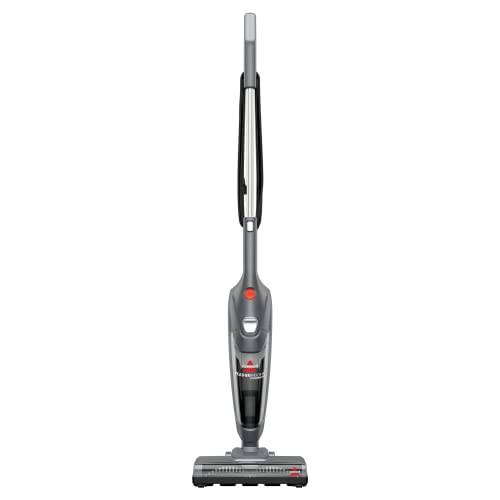
The Bissell Featherweight PowerBrush (model 2773A) is a lightweight corded stick vacuum engineered for quick cleanups in apartments, dorms, and busy single-family homes. Powered by a 600-watt motor and weighing just 4 pounds, this cleaner focuses on low-effort daily maintenance rather than heavy, whole-home carpet extraction. Its slim 7.8 by 4.5 by 42-inch frame makes it an accessible choice for seniors, renters, and anyone who prefers avoiding bulky upright vacuums for routine crumbs and surface dust.
Cleaning capability centers around an integrated motorized brush roll working alongside continuous electric suction. Unlike basic suction-only electric brooms, the motorized roller provides active mechanical agitation, which helps lift surface debris, tracked-in litter, and stray pet hair from low-pile carpets, bare floors, and area rugs. The product data explicitly supports cleaning across bare floors, carpets, stairs, and upholstery, giving it practical utility in high-traffic transition zones like entryways and kitchen eating areas.
Adaptability is one of the standout aspects of the Featherweight PowerBrush line. Using the quick-release handle, the machine easily converts into a handheld vacuum for clearing sofa cushions, pet beds, and car floor mats. Removing the floor foot allows the lightweight body to extend upward as a high-reach vacuum, helping clear cobwebs along crown molding and curtain rails. The included crevice tool attaches directly to tackle narrow corners, sliding door tracks, and tight gaps along baseboards.
Maintenance and daily handling remain straightforward due to the minimal 4-pound footprint. Storing the unit takes minimal closet space, and carrying it between floors requires little physical effort. Because it uses a bagless dry collection system, users must regularly dump the accumulated dirt cup into the trash to preserve airflow. The motorized roller should also be checked periodically to snip away wound hair and thread, keeping the brush spinning freely.
While practical for daily maintenance, the Featherweight PowerBrush has distinct operational boundaries. It is engineered strictly for dry debris pickup and cannot vacuum liquids or damp spills. The compact dust cup is sized for localized jobs rather than whole-house vacuuming, and the manufacturer provides no claims regarding sealed HEPA filtration. Furthermore, homes with thick, plush carpeting will find the lightweight floorhead lacks the deep-cleaning depth of a full-sized upright vacuum.
For shoppers seeking a budget-conscious, secondary floor-care tool that tackles quick daily messes without battery anxiety, the Bissell Featherweight PowerBrush 2773A represents strong practical value. Its motorized brush agitation, 600-watt motor, and quick 3-in-1 conversion make it a versatile asset for apartment living, stair maintenance, and rapid touch-ups on bare floors and light carpets.
The 3-in-1 design of the Bissell 2773A allows users to adapt the machine to different household cleaning chores in seconds. Operating with the floor nozzle and handle attached, it functions as an upright stick vacuum for floors and rugs. Detaching the lower foot turns it into an extended wand vacuum for reaching ceiling corners, drapes, and high vents.
Pressing the quick-release handle transforms the unit into an agile handheld vacuum. In this mode, the machine can be fitted with the included crevice tool, providing focused suction for vehicle floorboards, upholstered furniture crevices, and stair treads where wide floorheads cannot easily fit.
Unlike entry-level stick vacuums that rely strictly on straight suction, the Bissell Featherweight PowerBrush includes an active motorized brush roll within the floor nozzle. This brush roll spins mechanically to sweep up dirt, crumbs, and hair embedded in low-pile rugs and carpet fibers.
The cleaning head is engineered to transition across multiple bare floor surfaces and low-profile carpets. Routine care involves clearing any thread or hair that wraps around the brush roll to prevent strain on the 600-watt motor and ensure optimal sweeping action over time.
A Practical Guide to Vacuuming Carpeted Stairs Effectively
Determining the most effective vacuum setup for carpeted stairs requires balancing physical mobility with adequate brush agitation. Carpeted steps gather fine grit and stubborn hair that straight airflow alone rarely dislodges, yet carrying a ten-pound or fifteen-pound full-size vacuum up a narrow staircase poses real fall hazards. The most practical solutions generally include lightweight convertible stick vacuums, dedicated corded handheld machines, or specialized handheld turbo brush tools attached to an existing canister hose. Understanding how each format addresses the unique architecture of a staircase allows you to select equipment tailored to your home layout and physical comfort.
Stair Geometry and Why Standard Upright Vacuums Struggle
Staircases present a unique cleaning challenge because each step combines three distinct zones: the flat tread, the rounded bullnose, and the vertical riser. Traditional upright vacuums feature wide floorheads designed for flat, open rooms, making them far too bulky to sit flat on a standard ten-inch tread. Attempting to balance an upright on a step often leaves the vacuum teetering precariously, which can scratch wall trim or cause the machine to tumble downward. Furthermore, the rigid baseplates of large machines cannot navigate the sharp ninety-degree angles where the tread meets the riser, leaving visible lines of trapped debris behind.
Weight distribution becomes a major safety factor when cleaning stairs, especially on long or winding flights. Lifting a heavy motor unit with one hand while stretching a stiff hose with the other strains the lower back and pulls the cleaner off balance. Compact handheld units and modular stick vacuums solve this physical problem by moving the center of gravity directly into your hand or resting the machine base securely on the floor. When the operator does not have to fight the weight of the appliance, cleaning each individual step becomes significantly more thorough and safe.
Suction Airflow Versus Mechanical Agitation on Carpet Fibers
Airflow alone is rarely enough to remove debris from stair carpeting because foot traffic compresses dust and hair deep into the pile. Mechanical brush agitation lifts those trapped particles to the surface so the vacuum can pull them away through the suction path. Motorized brush heads, such as the powered roll found on the Bissell® Featherweight™ PowerBrush Vacuum, 2773A, use a dedicated electric motor to spin stiff bristles through the carpet pile. This continuous mechanical sweeping action dislodges pet hair and tracked-in soil far more aggressively than passive suction nozzles.
Air-driven turbine tools offer an alternative method of agitation by harnessing the vacuum motor suction to spin an internal turbine wheel. The SEBO 6179DA Hand Held Vacuum Turbo Brush exemplifies this design, delivering compact rotating brush action without requiring internal electrical wiring inside the extension wand. While air-driven brushes can slow down under heavy downward pressure on high-pile carpets, they excel on low-profile stair runners and upholstery. Choosing between motorized and turbine agitation usually depends on whether your existing vacuum has an electric hose connection or relies purely on standard suction airflow.
Handheld, Stick, and Canister Configurations for Step Maintenance
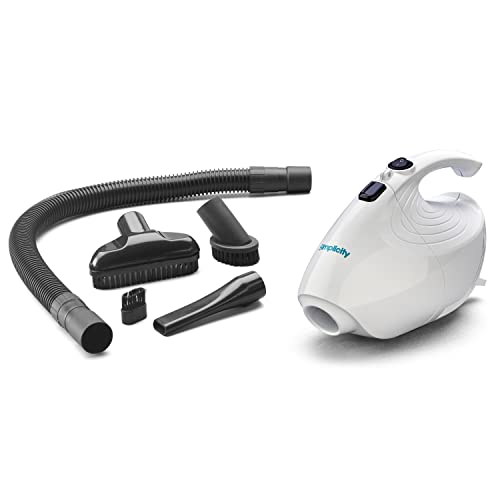
Handheld vacuums provide the greatest level of control when working across stepped surfaces because they eliminate long wands entirely. A dedicated handheld cleaner allows you to work at eye level, easily shifting angles around the curved nosing of each step without bumping against upper risers. Units like the Simplicity Vacuums Flash Mini Handheld Vacuum, F1 package this direct handling into a compact body that maneuvers effortlessly into tight stair corners. The absence of a floorhead wand also prevents accidental tripping over extended poles while moving up or down the staircase.
Convertible stick vacuums provide valuable flexibility by functioning as both upright floor sweepers and compact handhelds. The Bissell® Featherweight™ PowerBrush Vacuum, 2773A weighs less than four pounds, allowing users to carry the entire machine up steps with minimal physical effort. Operators can detach the floor wand and connect the motorized cleaning foot directly to the motor handle, turning the unit into a handheld stair brush. This modular versatility means you can vacuum landing hallways with the full stick setup and immediately switch to handheld mode when tackling the staircase itself.
Canister vacuums present a third viable configuration by separating the heavy motor canister from the lightweight cleaning wand. A canister body can rest steadily on the lower landing while an extended flexible hose reaches five to seven steps upward without moving the base. Once the hose reaches its limit, the canister can be placed on an intermediate landing rather than perched on individual steps. Pairing a canister hose with a specialized attachment like the SEBO 6179DA Hand Held Vacuum Turbo Brush provides the agitation of an upright with the safety of a lightweight handheld tool.
Power Delivery: Corded Consistency Versus Cordless Limitations
Power delivery strongly influences how thoroughly you can clean an entire staircase in a single session. Corded vacuums maintain constant electrical suction and consistent brush roll rotation from the first step to the top landing without losing strength. For instance, the 600.0-watt motor in the Bissell® Featherweight™ PowerBrush Vacuum, 2773A delivers sustained cleaning power across all carpeted surfaces. This continuous power supply prevents the gradual drop in suction that frequently occurs when battery-operated vacuums begin to drain under heavy carpet resistance.
Cord management requires careful attention when operating on stairways to avoid creating dangerous tripping hazards. The Simplicity Vacuums Flash Mini Handheld Vacuum, F1 includes a 14-foot power cord that allows users to clean several steps before needing to relocate the plug to another wall outlet. Keeping the power cord draped behind your working position prevents the cable from coiling around your feet while stepping backward up the staircase. Selecting an outlet on the upper landing or a central hallway provides the safest cord trajectory during a multi-level cleaning routine.
Essential Attachments for Corners, Risers, and Bullnose Edges
Standard wide nozzles cannot reach the narrow seams where stair carpets are tacked against stringers and baseboards. Crevice tools provide narrow, high-velocity airflow that pulls accumulated lint and dander out of these tight ninety-degree recesses. Both the Bissell® Featherweight™ PowerBrush Vacuum, 2773A and the Simplicity Vacuums Flash Mini Handheld Vacuum, F1 include dedicated crevice tools to address these neglected perimeter areas. Running a crevice tool along the back edge of each tread before vacuuming the center prevents dark soil lines from permanently staining carpet borders.
Upholstery brushes and flexible extension hoses expand cleaning capabilities across curved bullnose edges and vertical fabric risers. The Simplicity Vacuums Flash Mini Handheld Vacuum, F1 comes equipped with an upholstery brush featuring durable nylon bristles alongside a flexible vacuum hose and dusting tool. The nylon bristles scrub away scuff marks left by shoes on vertical risers while the flexible hose isolates vibration away from your wrist. Using dedicated fabric attachments also makes the machine suitable for other textile surfaces around the home, similar to how households utilize handheld cleaners for quick spot pickups across varied upholstery and soft furnishings.
Dust Cup Capacity, Filtration, and Maintenance Routines
Compact vacuums designed for stairs utilize smaller dirt collection containers to keep overall machine weight manageable. Smaller dust cups fill up rapidly when pulling dense carpet lint, pet dander, and tracked-in debris from high-traffic stair treads. Regularly emptying the collection chamber prevents airflow restriction, which is the leading cause of suction loss in compact cleaning systems. Checking the fill level after every few steps ensures that the motor maintains maximum pickup efficiency throughout your routine.
Filter maintenance directly impacts suction performance and exhaust air cleanliness in enclosed stairwells. The Simplicity Vacuums Flash Mini Handheld Vacuum, F1 features a washable dust cup and a secondary filter that can be tapped clean between uses or rinsed with water when heavily soiled. Allowing washable filters to dry completely for at least twenty-four hours before reinstallation prevents mold development and protects the vacuum motor from moisture damage. Following the manufacturer guidelines in your product manual guarantees that filtration materials retain their integrity without restricting motor airflow.
Step-by-Step Stair Vacuuming Technique for Optimal Dirt Extraction
Adopting a methodical top-to-bottom cleaning sequence ensures that dislodged debris does not resettle onto freshly vacuumed steps. When you work from the top of the staircase downward, any dust knocked loose by the vacuum head or hose naturally falls onto steps that have not yet been cleaned. This direction also keeps your body positioned on the lower, more stable step while working on the surface directly in front of you. Working upward, by contrast, forces you to twist awkwardly over clean steps and risks dragging the machine cord across freshly vacuumed carpet pile.
Begin each step by cleaning the edges and the vertical riser before addressing the flat tread surface. Use your crevice tool or nylon upholstery brush to clear the crevice where the tread meets the riser, followed by the bullnose curvature. Once the perimeter dust is cleared, switch to your motorized head or turbo tool to sweep the main tread area. Overlapping your vacuum passes across the carpet fibers ensures complete mechanical extraction of embedded soil.
Executing cross-directional strokes helps release stubborn pet hair woven into dense carpet loops. Pushing the brush roll forward and backward aligns the carpet nap in one direction, while a perpendicular sweep across the tread extracts hairs pinned beneath the fibers. The compact width of specialized stair tools makes this multi-directional brushing simple to execute even on narrow spiral staircases. Taking slow, deliberate passes allows the brush bristles sufficient dwell time to agitate the carpet backing effectively.
Comparing Compact Solutions: Dedicated Tools Versus Standalone Vacuums
Deciding between a specialized attachment tool and a standalone secondary vacuum depends largely on your existing cleaning equipment. The SEBO 6179DA Hand Held Vacuum Turbo Brush represents an ideal solution for homes that already own a high-performance canister vacuum. By adding a purpose-built air-driven turbo brush to an existing hose, you gain deep stair cleaning agitation without storing a separate motor appliance. The lightweight construction of this handheld tool minimizes arm fatigue during extensive stair cleaning sessions.
Standalone compact vacuums offer grab-and-go convenience for households that prefer not to maneuver full-size canister units near staircases. The Simplicity Vacuums Flash Mini Handheld Vacuum, F1 functions as a self-contained cleaning system with its comprehensive attachment kit, flexible hose, and long cord. Meanwhile, the Bissell® Featherweight™ PowerBrush Vacuum, 2773A provides motorized floor sweeping alongside handheld versatility, bridging the gap between stick cleaners and stair vacuums. These multi-purpose designs share characteristics with specialized handheld vacuums designed for mattresses and upholstery, where targeted suction and focused agitation are required on dense fabric surfaces.
Evaluating your available storage space and physical lifting capability helps narrow down the most sensible approach. Dedicated tools like turbo nozzles occupy minimal closet space and require virtually no mechanical maintenance beyond removing tangled hair from the brush roller. Standalone handheld or convertible stick units provide immediate utility for quick spot cleaning without assembling hoses or wands. Balancing storage footprint against daily operational convenience ensures you choose a cleaning tool you will actually use on a regular schedule.
Common Stair Vacuuming Mistakes That Damage Carpets or Cause Hazards
Resting a running vacuum on an intermediate stair tread remains one of the most hazardous habits during staircase cleaning. Motor vibration and hose tension can easily shift an unattended vacuum off balance, sending it crashing down the flight of stairs. If you must pause your cleaning routine, always set the machine flat on a landing or turn off the power switch before stepping away. Securing the vacuum base prevents physical injury and protects delicate baseboards and banisters from impact damage.
Neglecting the brush roll mechanism can degrade cleaning performance and cause premature wear to carpet fibers. Tangled pet hair, carpet threads, and lint wrap tightly around spinning roller bearings, creating friction that slows down rotation speeds. In air-driven turbine tools, heavy hair buildup can stall the turbine wheel entirely, reducing the tool to passive suction. Inspecting the brush roller after every few uses and trimming away wrapped fibers keeps the mechanism spinning freely and safely.
Long-Term Carpet Fiber Care and Stair Hygiene
Carpeted stairs endure more localized pressure per square inch than almost any other carpeted zone in a residential home. The constant impact of foot strikes crushes carpet pile along the center of each tread, creating visible wear patterns over time. Regular vacuuming with high-agitation brush tools fluffs compressed fibers back up while extracting gritty soil before it cuts into carpet yarns. Maintaining a consistent weekly vacuuming schedule preserves the structural resilience of stair carpeting and extends the life of the backing.
Understanding when dry vacuuming needs supplementation preserves stair carpet appearance across years of heavy household traffic. While vacuuming removes loose dry soil, oily residues and spilled liquids bind to synthetic fibers and require periodic wet extraction. Addressing liquid spills promptly prevents staining agents from setting into stair carpet padding where dry vacuums cannot reach. Combining weekly high-agitation dry vacuuming with occasional deep cleaning maintains sanitary, resilient carpet pile across your entire staircase.
Selecting the best vacuum setup for carpeted stairs ultimately hinges on matching mechanical agitation to safe, manageable equipment weight. Whether you add an air-driven turbo tool to an existing canister hose, rely on a dedicated multi-tool handheld, or employ a lightweight convertible stick with a motorized brush, the right choice keeps your footing secure. Prioritizing thorough edge cleaning, steady cord placement, and regular brush maintenance ensures your carpeted stairs remain clean, attractive, and safe for years to come.








Write Your Review
No reviews yet. Be the first to share your experience!