


Running a robotic floor cleaner while on telephone calls, watching a movie, or putting children down for a nap can quickly reveal how intrusive automated cleaning sounds can become. When homeowners ask which robot vacuum is the quietest, the answer involves balancing motor decibels against practical floor-cleaning performance. Some robotic vacuums glide across rooms at a gentle hum below 60 decibels, while others produce noticeable motor whine or loud mechanical clatter across hard flooring surfaces.
Quiet operation depends heavily on the machine motor calibration, brush assembly, and overall airflow pathway. While heavy upright units or dedicated hard floor cleaners and vacuum mop combos generate significant airflow noise to pull up stubborn debris, robotic units rely on compact electric turbines and insulated air channels to keep acoustic output low. Understanding how motor settings and floor textures interact will help you choose an option that keeps your home clean without constant acoustic disturbance.

Pros
- Self-maintaining dock automates dust bin emptying, 167°F hot-water mop washing, and heated air drying
- Strong 18,500 Pa suction easily handles fine dust, pet hair, and coarse debris like cat litter
- Automatic 10 mm mop lifting keeps carpets and rugs dry during combined vacuum and mopping runs
- All-rubber roller and specialized side brush noticeably reduce routine hair tangle removal
Cons
- Only connects to 2.4 GHz Wi-Fi networks and does not support 5 GHz frequencies
- All-in-one docking station requires dedicated physical floor space and clearance near an outlet
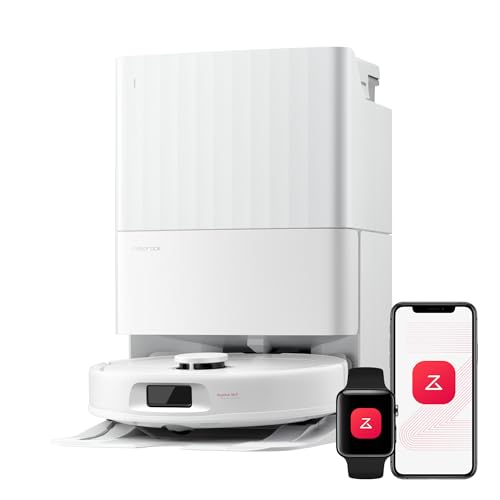
The Roborock Qrevo S Pro is an automated floor-care system engineered for busy households, parents, and pet owners who need consistent vacuuming and mopping across mixed flooring. Combining dry vacuuming with dual rotating mopping pads, this robot cleaner targets routine messes such as tracked-in dust, pet dander, and food crumbs. Its primary appeal lies in its high degree of automation, allowing users to offload daily floor maintenance to a machine that manages its own dust disposal and mop pad maintenance.
Cleaning capability is centered around a manufacturer-specified 18,500 Pa suction motor that pulls debris from hard floor seams, edges, and carpet pile. When transitioning to carpeted areas, the robot applies an automatic carpet strategy that boosts suction for embedded grit while lifting the mopping assembly 10 mm above the floor surface to protect fibers from moisture. For hard floor areas, the dual spinning mops maintain steady contact to wipe down kitchen spills, dried paw prints, and light surface stains using adjustable water flow rates.
Brush maintenance is often a pain point in pet-friendly homes, but the Qrevo S Pro addresses this with a specialized anti-tangle architecture. It features an all-rubber main brush roll, a zero-tangle side brush, and a guarded omnidirectional wheel, all designed to channel hair directly into the suction inlet rather than wrapping tightly around spinning components. At the all-in-one docking base, collected debris is automatically transferred into a sealed 2.7L dust bag capable of storing between 7 and 9 weeks of dry material under typical household conditions.
Navigation and spatial awareness are powered by smart obstacle detection that helps the vacuum identify and steer clear of everyday floor hazards such as shoes, power cords, toys, and chair legs. Measuring 3.8 inches in height, the low-profile robot slides under raised couches, dressers, and beds where dust clusters tend to hide. The integrated Roborock SmartPlan 2.0 AI adjusts cleaning power and route selection according to the specific floor layout and past cleaning history, maintaining an unobtrusive sound profile of approximately 55 dB during standard operation.
Initial setup is straightforward through the companion app, though it strictly requires a 2.4 GHz Wi-Fi network connection. While the dock manages self-emptying, 167°F mop pad washing, and 113°F warm air drying, owners must still periodically handle basic dock upkeep, such as replacing the 2.7L dust bag, filling clean water, and emptying dirty wastewater containers. The physical size of the docking station also demands thoughtful placement with sufficient wall and clearance space in a central room or laundry area.
For homeowners and renters looking to maintain spotless hard floors and fresh carpets without daily intervention, the Roborock Qrevo S Pro represents a dependable, high-convenience investment. Its strong suction, intelligent mop lifting, and self-cleaning dock features provide practical, time-saving value for busy multi-surface homes managing the steady mess of kids and pets.
The all-in-one docking station on the Roborock Qrevo S Pro acts as a comprehensive base designed to reduce manual floor-care chores. Following each cleaning cycle, the dock automatically pulls debris from the robot dustbin into an internal 2.7L sealed bag. This bag design locks in dust and debris while offering enough storage volume to last between 7 and 9 weeks under normal cleaning frequencies, minimizing contact with loose dirt.
Beyond debris containment, the dock actively manages mop hygiene through heated self-cleaning. It washes the dual rotating pads with 167°F hot water to loosen sticky spills and grime gathered from hard floors, followed by 113°F warm air drying. This controlled drying phase prevents persistent dampness and helps eliminate stale odors, ensuring the cleaning pads are dry, fresh, and ready for the next scheduled floor run.
Managing mixed flooring is straightforward thanks to the adaptive carpet handling built into the Roborock Qrevo S Pro. When sensors detect area rugs or wall-to-wall carpeting, the robot automatically engages a 10 mm mop lifting mechanism. This lifts the damp pads clear of low- to medium-pile carpet surfaces, preventing accidental water transfer while simultaneously ramping up suction to extract embedded particles and pet hair from deep within the fibers.
On hard surfaces, the dual spinning mop system works in tandem with the vacuum function to deliver thorough daily maintenance. By distributing a controlled, adjustable flow of water, the pads provide steady friction to tackle dried beverage splashes, pet footprints, and grease near cooking areas. This dual-action approach allows the robot to leave floors refreshed in a single cleaning pass without requiring manual tool swaps.
Pros
- Brushless suction port prevents pet hair tangles, reducing maintenance headaches
- Compact 2.99-inch low-profile body easily navigates underneath low-clearance furniture
- Lithium iron phosphate battery provides up to 120 minutes of runtime in low suction mode
- Smart control flexibility with the companion Lefant App plus Alexa and Google Assistant voice integration
- Equipped with 6D anti-collision infrared sensors to help detect obstacles and prevent jamming
Cons
- Lacks a motorized roller brush, which limits deep agitation on medium and high-pile carpets
- Manufacturer explicitly advises against using the zigzag cleaning mode on carpet
- Maximum 120-minute battery life applies specifically to the low suction running mode
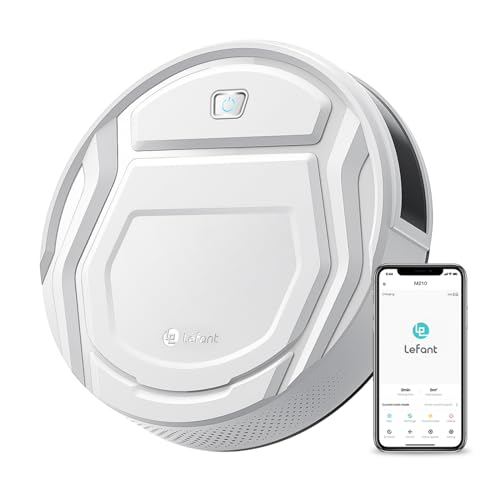
The Lefant M210 is an entry-level robotic vacuum designed primarily for routine dry debris removal across hard floors and low-profile living areas. Standing out with its compact frame and roller-free pickup design, this cleaner is well-suited for pet owners, apartment dwellers, and busy households looking for automated daily maintenance without the chore of untangling hair from a traditional motorized brush roll.
Floor cleaning is handled through a brushless suction port paired with a digital motor. Because there is no rotating brush roll underneath, pet hair, dirt, and dust travel straight into the collection bin, significantly lowering hair wrap issues. The cleaner supports six distinct operating modes, including zigzag, random, spot, edge, scheduled timed cleaning, and manual control via the Lefant App. While the unit handles daily debris on hard surfaces effectively, the manufacturer explicitly notes that zigzag mode should not be used on carpets, making it primarily a hard-floor specialist with light area-rug utility.
Measuring approximately 11 inches in diameter and 2.99 inches in height, the Lefant M210 features a notably slim build that allows it to glide under low-clearance bed frames, couches, and entertainment centers where upright vacuums cannot reach. Navigation is guided by upgraded FreeMove Technology 3.0, which utilizes 6D built-in anti-collision infrared sensors to detect potential trapping points and adjust travel paths before the vacuum becomes wedged.
Daily operation and scheduling are managed through Wi-Fi pairing with the dedicated Lefant App, which also lets users adjust suction levels, direct manual movement, and integrate voice commands through Amazon Alexa or Google Assistant. Power is supplied by a lithium iron phosphate battery that delivers up to 120 minutes of runtime when operated in low suction mode. When cleaning cycles end or battery power dwindles, the vacuum automatically returns to its base for self-charging. Routine maintenance centers on sliding out and emptying the internal dustbin and keeping sensor windows clean.
Buyers should be aware of practical operational boundaries before purchasing. Because this model relies exclusively on pure suction without brush-roll bristles, it will not provide deep mechanical agitation on thick carpets or dense area rugs. In addition, reaching the full 120-minute battery benchmark requires operating in low suction mode, meaning higher power settings will yield shorter run times.
For pet owners and households with primarily hard floors seeking an affordable, low-profile robotic vacuum that reduces hair-clearing maintenance, the Lefant M210 offers dependable practical value. Its balance of smart scheduling, voice compatibility, and anti-tangle suction makes it an appealing everyday helper for keeping dust bunnies and shed fur under control.
The key feature of the Lefant M210 for pet households is its brushless suction inlet. Traditional robot vacuums rely on bristle or rubber roller brushes that inevitably collect tangled pet hair, requiring scissors or specialized tools to cut free after every cleaning session. By eliminating the roller brush entirely, this robot pulls loose fur, whiskers, and dander straight into the dustbin.
This brushless layout makes the machine especially effective along hard surfaces such as tile, vinyl, and sealed wood floors where pet hair floats and gathers in room corners. However, without rotating bristles to agitate carpet fibers, pet owners with deep carpet piles should view this vacuum as a hard-floor surface maintainer rather than a deep carpet extractor.
Setup and daily controls run through the companion Lefant App, which allows users to schedule automated floor cleaning, switch power modes, and guide the cleaner manually. Compatibility with Amazon Alexa and Google Assistant adds hands-free voice convenience for starting or stopping cycles.
To navigate living spaces without constant manual rescue, the cleaner relies on FreeMove Technology 3.0. A series of 6D anti-collision infrared sensors monitor the vacuum's surroundings, detecting low furniture skirts, table legs, and tight spaces. The system adjusts trajectory automatically to reduce collisions and prevent the robot from getting stuck beneath household items.


Pros
- Brushless, tangle-free suction design eliminates hair wrapping and reduces maintenance for pet owners
- Impressive manufacturer-stated 5200Pa suction across three adjustable power settings
- Slim 2.99-inch height fits easily under low coffee tables, dressers, and couches
- Smart control options include companion smartphone app scheduling plus Alexa and Google Assistant voice commands
- Four-stage electronic water control allows tailored mopping moisture on hard floors
Cons
- Not suitable for medium- or high-pile carpeting; performance is restricted to hard floors, wood, and low-pile rugs
- Relies on bump-and-sensor navigation rather than advanced LiDAR room mapping or designated virtual no-go zones
- Specific dust bin and water tank capacities are not listed in fluid or volume metrics by the manufacturer
The ROPVACNIC Robot Vacuum and Mop Combo (Model S1) is an automated 2-in-1 floor-care machine designed for routine multi-surface upkeep in busy American households. Engineered primarily for apartment dwellers, pet owners, and homeowners managing wood and hard surfaces alongside low-pile rugs, this unit tackles everyday dust, pet shedding, and minor floor spots without requiring manual push-vacuuming. Its combination of wet mopping and vacuuming makes it an appealing option for budget-conscious buyers seeking an entry-level robotic helper for daily maintenance.
In real-world cleaning situations, this robot addresses daily debris using a 3-point cleaning system and a manufacturer-rated 5200Pa of suction across three selectable power stages. Instead of relying on a traditional bristled roller, the machine uses a direct, no-entanglement suction inlet flanked by dual rotating electric side brushes. This direct-suction approach is specifically intended to channel dog and cat hair, crumbs, and tracked-in grit directly into the suction path without wrapping around an agitator bar. Simultaneously, the electronically controlled water tank offers a four-stage personalized water adjustment system, allowing users to dial in light dampness for dust removal or slightly heavier moisture for minor sticky spots on wood and tile-like hard surfaces.
From a structural standpoint, the robot features a remarkably low-profile build measuring 12 by 12 inches with a height of only 2.99 inches, weighing approximately 7.28 pounds in a light black housing. This compact chassis allows it to clear low-hanging furniture, including bed frames, sideboards, and living room couches, where dust bunnies and pet fur often accumulate out of reach. The underside houses dual motorized side brushes designed to reach along baseboards, while the mopping plate attaches smoothly to the base. It comes paired with a compact charging dock to which the robot autonomously returns whenever cleaning concludes or battery replenishment is needed.
Setting up the unit is straightforward, involving app pairing for smartphone scheduling and connecting to voice platforms such as Amazon Alexa or Google Assistant. Maintenance is noticeably lower on the vacuuming side because the absence of a brush roll eliminates the tedious task of cutting away wound-up pet hair with scissors. Users simply empty the internal dry debris container, wipe the drop and bumper sensors periodically, and clear occasional threads from the twin side sweepers. When utilizing the mopping function, routine maintenance involves filling the onboard water reservoir with clean tap water, dampening and securing the mop pad, and washing the cloth pad thoroughly after each cleaning run to avoid stale odors.
Despite its practical advantages, this model has natural operational boundaries. Because it relies on high-coverage sensor algorithms and directional obstacle detection rather than overhead laser LiDAR or optical camera mapping, it cleans in semi-random or reactive patterns and lacks customized virtual boundary lines or selective room targeting. Furthermore, surface compatibility is strictly limited to wood, hard floors, and low-pile carpets; it is not suited for medium- or high-pile carpeting, shag rugs, or unlevel thresholds. The lack of an auto-lifting mop plate also means users should remove the mopping bracket before sending the machine across area rugs to prevent wetting carpet fibers.
For homeowners, renters, and pet owners looking for a budget-friendly automated floor cleaner that tackles daily pet hair without brush-roll tangles, the ROPVACNIC Robot S1 offers reliable utility. While it does not replace a heavy-duty upright extractor or a laser-guided premium robot for deep restorative carpet cleaning, its solid 5200Pa suction rating, slim clearance, and adjustable electronic mopping deliver sensible, hands-free cleanliness across daily hard-surface living areas.
The ROPVACNIC S1 addresses pet hair challenges through a specialized roller-free suction opening rather than a standard spinning brush roll. Traditional vacuum agitator bars tend to collect tightly bound fur, requiring frequent manual intervention and cutting. By pairing a direct suction throat with dual rotating electric side brushes, this cleaner channels stray hairs, dander, and food crumbs straight toward the collection bin, minimizing maintenance hassles for dog and cat households.
Backed by a manufacturer-rated 5200Pa suction profile across three adjustable levels, the unit supplies substantial lift for hard floors, wood surfaces, and low-pile area rugs. Users can select higher suction stages for high-traffic entryways or pet resting zones, ensuring small debris and dry spills are swept clean from perimeter baseboards and tight floor corners.
Equipped with a 2-in-1 mopping module, the ROPVACNIC Robot S1 actively manages floor hydration via an electronically controlled high-capacity water reservoir. Unlike passive gravity-fed drip mops, the electronic system features four personalized water-flow adjustment stages. This granular control allows users to match moisture dispersion to their specific hard-floor conditions, avoiding puddling on sealed wood while delivering sufficient wetness to lift fresh footprints and light dirt.
To maintain optimal results on hard surfaces, the mopping pad should be laundered after every cleaning session, and water should be emptied between cycles. Because the vacuum does not automatically detect carpets to lift its mop plate, damp mopping is best restricted to entirely hard-surface areas like kitchens, hallways, and living rooms with wood flooring.


Pros
- Bagless 60-day self-empty base eliminates the need to buy disposable replacement bags.
- Sonic mopping scrubs at 100 passes per minute to agitate stuck-on surface grime on hard floors.
- True HEPA base filtration captures 99.97% of microscopic particles down to 0.3 microns.
- 360-degree LiDAR navigation provides quick mapping, room customization, and reliable night or day operation.
- CleanEdge Detect system actively blows dust out of baseboards and wall corners into the vacuum path.
Cons
- Requires manual intervention to install, remove, and wash the mopping pads between wet and dry cycles.
- Dumping the bagless dock bin into an indoor trash can may release a small cloud of dust.
- Includes only a 12-ounce starter bottle of cleaning solution, requiring future purchases of compatible formula.
The Shark Matrix Plus Robot Vacuum & Mop Combo (AV2610WA) is designed for busy households, pet owners, and multi-surface homes that need an automated solution for both dry debris and surface grime. Combining strong vacuum suction for carpets with active sonic mopping for hard floors, this robotic cleaner aims to reduce daily maintenance by handling routine floor care on a scheduled grid. With an XL self-emptying base that stores up to 60 days of dust without requiring disposable replacement bags, it offers particular appeal to budget-conscious families who dislike ongoing consumable costs.
Cleaning capability centers around two distinct technologies: Matrix Clean and high-speed sonic mopping. On carpets and hard floors, the robot operates in a cross-directional matrix pattern to make multiple passes over stubborn dirt, providing up to 30% better carpet pickup than standard single-pass cleaning based on manufacturer tests. When wet mopping hard floors, the integrated sonic pad scrubs at 100 vibrations per minute to lift dried-on spills. Through the companion smartphone app, users can initiate targeted Matrix Mop cycles on specific high-traffic zones, delivering up to 50% improved stain cleaning compared to prior base models.
For households with shedding pets and allergy concerns, the robot is equipped with a self-cleaning brushroll designed to actively prevent pet hair wrap while digging deep into carpet fibers. Fine particles and dander pulled into the base are sealed with True HEPA filtration, which captures 99.97% of dust and allergens down to 0.3 microns. Along perimeter baseboards, the CleanEdge Detect system deploys focused air blasts alongside corner recognition to blow trapped dust directly into the vacuum intake path, delivering up to 50% better edge pickup than Shark robots without this feature active.
Navigation is driven by 360-degree LiDAR vision, enabling the robot to create accurate floor plans of your home quickly and operate reliably in bright daylight or pitch darkness. The mobile app allows homeowners to designate specific cleaning zones, adjust passes, and adapt to room rearrangements over time. When the battery runs low during extensive cleaning runs, the unit automatically recharges at the dock and resumes cleaning at the exact point it paused. The base itself is bagless, meaning dirt bins are simply unlatched and emptied into the trash, while the included microfiber mopping pads can be washed and reused.
While the Shark AV2610WA offers automated floor care, it does have practical limitations that buyers should keep in mind. Because the self-emptying base is bagless, opening and dumping the canister into an indoor trash can may create a slight plume of dust, which sensitive individuals may prefer to do outside. Additionally, while the robot vacuums and sonic-mops hard floors, users must still monitor the water and solution levels in the tank and routinely swap or wash the reusable mopping pads between damp cycles. The package also only includes a 12-ounce starter bottle of Shark VACMOP solution, meaning specialized solution must eventually be replenished.
Overall, the Shark Matrix Plus AV2610WA represents a balanced, highly capable floor-care appliance for homes with a mix of carpeting and hard flooring. Its combination of 360-degree LiDAR mapping, bagless 60-day dirt capacity, True HEPA dock filtration, and active scrubbing pads makes it well suited for pet owners, parents, and apartment or single-family dwellers who want hands-off daily floor maintenance without expensive ongoing bag subscriptions.
The Shark Matrix Plus utilizes 360-degree LiDAR vision technology to scan and map living spaces with high precision. This laser-guided system functions independently of ambient light, allowing the robot to map floor plans accurately and avoid obstacles during both daytime and nighttime cleanings. Homeowners can use the interactive smartphone app to view rooms, set specific cleaning zones, and execute targeted Matrix Clean or Matrix Mop cycles.
In addition to mapping precision, the robot incorporates intelligent recharge-and-resume logic. If a cleaning session exceeds the robot's single-charge capacity, it automatically navigates back to the XL dock, replenishes its battery, and returns directly to the spot where it paused to finish the job. This ensures thorough multi-room coverage without missing entire sections of large floor plans.
Managing pet hair and fine allergens is a primary strength of the Shark AV2610WA cleaning system. The robot is fitted with a specialized self-cleaning brushroll engineered to extract hair and dander from carpets and hard floors while continuously clearing itself to minimize annoying hair wraps around the core mechanism.
Once debris is vacuumed, the self-empty base evacuates the robot's internal dust cup into an XL bagless holding canister equipped with True HEPA filtration. This filtration standard captures and traps 99.97% of airborne particles, dust, and pet allergens down to 0.3 microns, preventing fine dirt from blowing back into household air during dock evacuation cycles.

Evaluating Robot Vacuum Sound Levels and Quiet Performance
Selecting a genuinely quiet robot vacuum requires looking past headline marketing claims to understand how sound is produced, measured, and perceived in a home. Operational volume originates from several distinct mechanical systems, including the internal suction turbine, rotating roller brushes, drive wheels, and active mopping plates. Exploring how these components perform across various floor coverings allows you to find a model that delivers consistent dust pickup without filling your living space with an irritating drone.
Decibel Ratings and How Robot Vacuums Produce Sound
Sound volume in household appliances is measured in decibels, which follow a logarithmic scale rather than a linear progression. On this scale, an increase of just 10 decibels represents a sound that the human ear perceives as roughly twice as loud. Normal conversational speech in a living room typically measures around 60 decibels, while traditional corded upright vacuums routinely operate between 75 and 80 decibels. Robot vacuums run in a substantially lower acoustic range, typically between 55 and 68 decibels during standard vacuuming tasks.
Among manufacturer specifications, the roborock Qrevo S Pro highlights an operational noise level of 55 decibels in its low-noise cleaning mode. At 55 decibels, the acoustic output resembles a quiet refrigerator hum or steady rainfall against a closed window pane. This modest volume permits working from home, conversing on the phone, or watching television without needing to raise your voice. However, manufacturer decibel figures are typically captured under controlled laboratory settings in minimal suction modes, meaning real-world noise may rise when higher suction levels are activated.
Headline decibel numbers do not tell the whole story because acoustic frequency also dictates how noticeable a sound feels in daily life. High-pitched mechanical whining from unshielded micro-motors is generally far more grating to human ears and household pets than a low, steady whoosh of passing air. Vacuums equipped with internal acoustic baffling and sound-dampening insulation around the motor turbine absorb high-frequency harmonics effectively. Selecting a machine that suppresses sharp motor pitch is just as valuable as picking one with a low decibel rating.
Suction Power Settings and Their Impact on Motor Volume
Motor suction strength is a primary factor influencing robotic vacuum sound, with suction output measured in Pascals across technical specifications. Compact models such as the ROPVACNIC Robot Vacuum with its 5,200 Pa rating generate lower airflow velocity that keeps motor pitch relatively quiet during everyday dust pickup. In contrast, advanced systems like the roborock Qrevo S Pro with 18,500 Pa or the Roomba 415X with 20,000 Pa employ high-velocity turbines capable of extracting deep debris from thick rugs. When operating at their upper power thresholds, the sheer rush of displaced air naturally increases operating sound.
Most modern automated cleaners address this volume trade-off by offering adjustable power levels within their mobile companion software. The iRobot Roomba 115X series, for instance, provides four selectable suction levels so users can match motor speed to current floor conditions. Selecting eco or quiet mode reduces turbine revolutions, significantly lowering noise during routine passes over hard surfaces. Higher power tiers can then be scheduled for moments when family members are away from home, ensuring deep cleaning without noise disruption.
Automatic carpet detection features also alter how uniform a vacuum sounds as it travels between rooms. Models like the LVKANGDA D17S MAX automatically ramp up motor suction when internal sensors detect carpet fibers deeper than 10 millimeters. This sudden surge in motor speed is helpful for lifting embedded pet fur, but it creates noticeable volume shifts in homes with alternating hard floors and area rugs. If maintaining a flat, predictable sound profile is important for work calls or sleeping children, turning off automated boost within the app maintains a steady background hum.
Brush Roll Architecture and Mechanical Flooring Clatter
Exhaust airflow is only one component of the sound created by a robotic vacuum during its cleaning rounds. Mechanical contact between the brush assembly and hard flooring often produces a steady tapping or rattling sound across open living spaces. Traditional nylon bristle brushes can slap against ceramic tile, slate, or hardwood planks at high rotational speeds, generating continuous friction clatter. All-rubber roller designs, like those found on Roomba and roborock models, roll more smoothly against flat surfaces, dampening physical impact while gathering dirt effectively.
Certain robotic designs eliminate brush roll clatter completely by using direct suction ports without a spinning agitator. The Lefant M210 utilizes a unique brushless suction structure that pulls surface dust and pet hair directly into the dustbin. Because there is no rotating roller bar spinning against floorboards, mechanical vibration and gear noise are almost entirely absent. This brushless approach also prevents tangled pet hair from jamming moving components, keeping the internal drive gears spinning freely without motor strain.
The flooring materials installed in your home also play a major role in either amplifying or muting cleaning sound. Plush carpet and dense area rugs act as natural sound baffles, absorbing motor vibration and wheel noise as the robot moves across the room. Conversely, wide expanses of polished hardwood or porcelain tile reflect acoustic waves, making a modest 60-decibel cleaner sound substantially louder due to room echo. Placing rugs in echoing hallways or selecting rubber-roller machines helps keep overall perceived volume down.
Self-Emptying Docks and Docking Station Acoustic Spikes
When searching for a quiet automated cleaning system, the docking station is frequently overlooked despite being the loudest part of the setup. Auto-empty bases, such as the docks paired with the Roomba 115X or the LVKANGDA D17S MAX, empty the robot internal bin using a powerful secondary motor in the base. This transfer cycle generates intense suction to pull packed dust and pet hair into a sealed collection bag within seconds. The process typically spikes acoustic output to between 75 and 82 decibels for roughly fifteen to thirty seconds.
Although an evacuation cycle lasts only half a minute, the sudden noise can easily startle resting pets or awaken sleeping household members. Comprehensive multifunctional docks, like the AutoWash station on the Roomba 415X and the all-in-one dock on the roborock Qrevo S Pro, add further sound through automated washing and drying routines. These docks wash dirty mop pads and engage warm-air drying fans at 113 degrees Fahrenheit to prevent mildew, creating a steady, low-volume fan hum that can run for several hours.
Managing docking station volume is simple when utilizing the scheduling features built into companion mobile applications. Most intelligent docking stations allow owners to configure do-not-disturb time blocks that prevent automatic dust evacuation during evening or morning hours. If the vacuum finishes an evening cleaning session while residents are asleep, it recharges silently on the dock and delays its loud bin emptying until daytime. Situating the dock in a utility room or back hallway further insulates living spaces from temporary evacuation noise.
Mopping Systems and Scrubbing Noise
Combination vacuum and mop units introduce additional acoustic considerations related to water pumping and mechanical scrubbing. Basic mop attachments feature passive microfiber cloths that glide silently across the floor with negligible sound addition. Advanced hybrid cleaners, however, use motorized scrubbing assemblies to break down sticky kitchen messes and dried footprints. The Shark Matrix Plus incorporates sonic mopping technology that vibrates hard floors at 100 oscillations per minute, producing a rapid, low-pitched scrubbing vibration.
Spinning mop mechanisms, such as the dual rotating pads on the roborock Qrevo S Pro and Roomba 415X, apply continuous downward pressure against hard floors while metering water flow. Small electronic water pumps deliver controlled moisture to the pads, emitting faint clicking or soft buzzing sounds during operation. When transitioning from hard flooring onto an area rug, automated lift mechanisms raise the wet pads up to 10 millimeters off the carpet. The micro-actuators that raise and lower these mopping plates create brief mechanical whirs during floor transitions.
Balancing mopping cleanliness with quiet operation involves tailoring scrubbing settings to actual floor conditions. Light damp mopping across sealed hardwood requires minimal mechanical effort and keeps noise levels low. When stubborn stains or heavy pet accidents demand intensive cleaning, using dedicated extraction tools like pet stain vacuums allows you to tackle localized spots without needing your robot cleaner to run aggressive, noisy scrubbing passes across entire living spaces.
Navigation Sensors and Impact Noise Reduction
An underappreciated source of robotic vacuum noise is physical impact caused by older navigation technology. Basic budget robots rely on spring-loaded mechanical bumpers and basic infrared sensors, detecting room boundaries by lightly bumping into baseboards and furniture legs. In rooms with dining tables, chairs, and dropped belongings, this constant bump-and-turn movement creates repetitive tapping that can feel far more disruptive than smooth motor hum. Over a ninety-minute cleaning run, dozens of physical taps create ongoing acoustic distraction.
Modern automated vacuums avoid physical impact noise by using optical and laser mapping technology. Systems like ClearView LiDAR on the Roomba 115X and dToF laser navigation on the LVKANGDA D17S MAX map room perimeters in a complete 360-degree sweep. Because the robot senses furniture legs, doorways, and obstacles well in advance, it slows down gently before reaching them or routes around them entirely. This precise movement prevents jarring bumper collisions, allowing the unit to navigate rooms quietly and smoothly.
Chassis suspension and drive wheel construction also influence transit noise as the machine travels over textured flooring. Quality cleaners incorporate soft rubber tread on their drive wheels along with independent spring suspension arms that absorb the impact of crossing door thresholds or recessed tile grout lines. Thin plastic wheels, by comparison, rattle loudly across textured flooring surfaces, transferring vibration directly into the subfloor. Ensuring the machine uses rubberized drive wheels keeps rolling noise to an absolute minimum.
Smart App Scheduling and Acoustic Optimization
Selecting a quiet robot vacuum is only half the battle; establishing thoughtful cleaning schedules maximizes daily comfort in your home. Companion apps for models from brands like Shark, roborock, and iRobot allow users to configure customized cleaning parameters for individual rooms. You can program the robot to vacuum home offices or bedrooms on low-noise eco settings during work hours, reserving high-suction turbo passes for kitchen spaces when nobody is present. Tailoring cleaning intensity room by room prevents unwanted noise where quiet focus is required.
Companion software also allows homeowners to set digital boundary zones around areas where cleaning noise could disrupt daily activities. Setting virtual walls around nurseries, pet resting areas, or television setups keeps the vacuum at a distance during cleaning routines. For quick dry spills or scattered crumbs beneath dining chairs, utilizing compact handheld vacuums for kitchen mess offers immediate cleanup without dispatching a robot across the entire room while family members are gathered.
Coordinating automated cleanings around household schedules ensures that operational sounds rarely interfere with family life. Most robotic cleaners can be scheduled to run shortly after household members depart for the workday. When cleaning cycles take place in an empty home, even high-suction modes and self-empty base cycles finish without causing disturbance. Remote app monitoring keeps you informed of cleaning completion, allowing you to return to clean floors without hearing the robot run.
Maintenance Habits That Keep Robot Vacuums Running Quietly
A vacuum cleaner that runs with a peaceful hum when brand new can gradually become louder if routine maintenance is neglected. The most frequent reason for increased operating noise is hair and thread wrapped tightly around brush roll ends and side brush spindles. As hair wraps around the axle bearings, it generates friction that forces drive motors to work under mechanical resistance. This resistance produces an audible, high-pitched gear whine that steadily increases until the hair is cleared away.
Clogged dustbin filters represent another common cause of elevated motor volume over months of use. When fine dust cakes into the pleated filter material, the suction turbine struggles to pull air through the restricted passage, creating turbulent airflow. This restriction forces the motor to spin at abnormal, strained speeds, changing the pitch and volume of exhaust air. Regularly tapping out dust or replacing pleated filters according to manufacturer guidelines maintains unobstructed airflow and keeps turbine sounds at their baseline levels.
Trapped debris inside the front omnidirectional caster wheel can also produce annoying clicking or scraping sounds across hard floors. Popping the caster wheel out of its bracket periodically allows you to wipe away grit and remove hair wound around the steel pin. Before cleaning internal assemblies or rinsing components, always consult the manufacturer manual to confirm which parts are washable and ensure filters dry completely before reassembly. Routine care keeps drive motors running smoothly and preserves quiet cleaning performance over the lifespan of the machine.
Maintaining a clean, quiet home environment does not require compromising on floor-cleaning capability. By choosing a robotic vacuum with a proven low decibel rating, versatile power controls, and intelligent laser mapping, you can achieve spotless floors without intrusive sound. Combining these engineering features with thoughtful scheduling and regular maintenance guarantees your automated cleaner operates quietly in the background, keeping daily floor care simple and peaceful.


Write Your Review
No reviews yet. Be the first to share your experience!