


Automating Daily Floor Cleaning with Dual-Action Robots
Keeping hard floors free of grit and sticky residue often demands running two appliances or scrubbing tiles by hand. Selecting the best robot vacuum mop combo with self washing dock streamlines daily floor care by collecting dry debris and washing pad surfaces automatically. Many homeowners rely on the best self-emptying robot vacuums for dry debris, but hybrid models maintain wet pads between cycles. This guide evaluates manufacturer specifications, suction ratings, and dock features across top models to help you identify the right model.
Multi-surface homes require balanced cleaning that tackles tile and hardwood without leaving damp marks on carpet fibers. Models with hands-free mopping docks rinse dirty pads and heat-dry fabrics, preventing odors while handling tough spills and muddy prints. When comparing options against robot vacuums for high-pile carpets, consider pad-lifting clearance, dust bag capacities, and obstacle avoidance sensors. Reviewing listed airflow metrics and automated dock routines helps you select a system tailored to your floor plan.


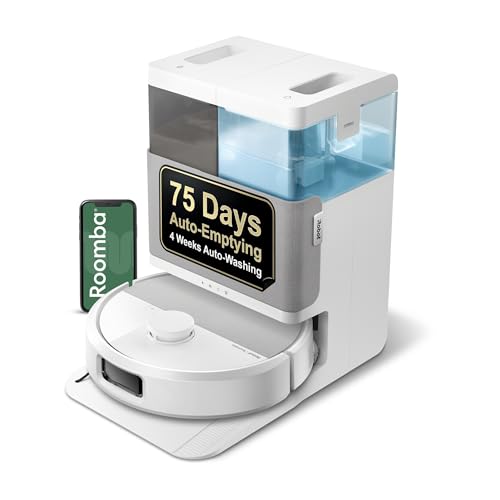

Pros
- AutoEmpty dock manages dry dust and debris for up to 75 days without creating dust clouds during disposal
- Automatic carpet avoidance prevents the wet microfiber mopping pad from dampening area rugs or carpeted rooms
- ClearView LiDAR mapping supports precise room navigation, custom cleaning schedules, and app-based keep-out zones
- Multiple cleaning modes allow customized suction levels and adjustable liquid output for different floor care tasks
- SmartScrub mode provides enhanced back-and-forth agitation for sticky messes on hard floors
Cons
- Setup requires a dedicated 2.4 GHz Wi-Fi network connection and does not support initial configuration on 5 GHz bands
- At 4.09 inches tall, the top-mounted LiDAR sensor may restrict access under low-profile couches and cabinets
- The manufacturer does not publish exact liquid tank capacities or runtime figures per battery charge
The iRobot Roomba 105 Combo Robot Vacuum and Mop with AutoEmpty Dock is a versatile 2-in-1 automated floor-care machine designed for busy homes, pet owners, and multi-surface spaces. Operating as both a dry vacuum and an active damp mop, this robotic cleaner handles daily floor maintenance by pairing automated dirt disposal with intelligent path planning. For households balancing area rugs and hard floors, its standout operational feature is automatic carpet avoidance during mopping cycles, which ensures that wet microfiber pads never drag across delicate rugs.
Dry debris pickup is driven by a multi-surface brush roll, a dedicated edge-sweeping brush, and an intense suction system that the manufacturer lists at 70 times baseline power-lifting capability. Crumbs, pet hair, and tracked-in entrance dirt are swept into the internal dustbin before the robot returns to the dock to automatically evacuate the debris. The dock uses sealed replacement bags designed to trap 99% of particles down to 0.7 microns, preventing the messy dust plumes commonly associated with emptying bagless robot vacuum bins.
Hard-floor care is handled via an integrated microfiber mopping pad fed by an internal micro-pump that dispenses clean water or compatible cleaning solutions. For kitchens and entryways dealing with dried spills or sticky messes, the Roomba Home App includes a SmartScrub mode that commands the robot to perform 2X deeper scrubbing compared to standard single-pass mopping. Because the unit actively recognizes carpets and steers clear during wet cycles, you do not need to install physical barriers or program complex no-mop boundaries just to protect your rugs.
Navigation is powered by ClearView LiDAR technology that rapidly scans and maps your layout. Measuring 13.35 by 13.19 inches with an overall height of 4.09 inches, the robot maneuvers smoothly between chair legs, navigates along baseboards, and uses built-in drop sensors to prevent falls down stairs. Through the Roomba Home App, you can view estimated cleaning times, schedule specific rooms, adjust the number of cleaning passes, set keep-out zones, and track consumable filter status.
There are practical limitations to keep in mind before purchasing. The 4.09-inch profile is slightly taller than camera-only or sensor-less robot vacuums, meaning it may not fit beneath furniture with very low ground clearance. Furthermore, setup strictly requires a 2.4 GHz Wi-Fi connection, and the manufacturer does not provide exact runtimes or fluid tank capacities, meaning very large floor plans may require the robot to clean in stages or pause for tank refills.
For homeowners, apartment dwellers, and pet-friendly households wanting hands-off floor care without manual dustbin dumping, the Roomba 105 Combo provides strong practical value. Its balance of reliable LiDAR mapping, up to 75 days of sealed debris collection in the AutoEmpty dock, and dependable carpet detection while mopping makes it a well-rounded maintenance cleaner for everyday living.
The Roomba 105 Combo features a controlled wet-cleaning system powered by an internal micro-pump that keeps the microfiber mopping pad evenly damp throughout the cycle. Users can fill the fluid reservoir with plain water or a compatible cleaning solution to help lift dried footprints, light grease, and surface grime from hard flooring surfaces.
When deeper agitation is needed for sticky kitchen spills or high-traffic entryways, users can activate the SmartScrub mode in the app. This feature directs the robot to scrub back and forth over the floor surface, providing double the scrubbing action of standard mopping passes. Because the robot automatically detects carpeting, it discontinues mopping paths over soft flooring, ensuring rugs remain completely dry without manual intervention.
Using ClearView LiDAR mapping, the Roomba 105 Combo scans your home layout quickly upon initial setup, creating an accurate digital floor plan inside the Roomba Home App. The onboard LiDAR allows the robot to clean in structured, efficient rows rather than random bounce patterns, minimizing missed spots across open floor plans.
The navigation array also includes integrated cliff sensors to prevent tumbling down stairwells or off raised thresholds. Inside the companion app, users can leverage the generated map to assign room names, establish customized keep-out zones around pet bowls or clutter, and view estimated cleaning times before starting a cycle.
Routine dry maintenance is heavily reduced by the included AutoEmpty dock, which pulls debris out of the robot's bin and into an enclosed disposal bag capable of holding up to 75 days of collected dust and pet hair. When the bag reaches capacity, it can be lifted out and thrown away without exposing the user to loose dust particles.
Wet cleaning components require regular manual attention to maintain hygiene and performance. The microfiber mopping pad should be removed, laundered, and dried between cleaning runs, and the robot comes packaged with an extra pad to simplify laundering rotations. Additionally, users can monitor the operational lifespan of the onboard filter directly through the Roomba Home App to ensure optimal airflow over time.


Frequently Asked Questions
How does a self-washing dock clean the mop pads?
A self-washing dock pumps fresh water through scrubbing mechanisms to rinse pads and extracts dirty water into a separate storage tank. High-end stations wash the pads or roller mop automatically and use heated air to dry the fabric thoroughly. This automated cycle prevents sour odors and bacterial buildup without daily hand-washing.
Will a robot vacuum and mop combo wet my carpets while cleaning?
Hybrid robots protect carpets by lifting their mopping modules or routing around soft surfaces during wet runs. Models like the Roomba 415X lift pads by 10mm when detecting rugs, while others avoid carpet using sensors. In rooms with large area rugs for living rooms, setting digital keep-out zones in the mobile app offers added peace of mind.
How often do the dock dust bag and water tanks require attention?
Dust bags typically require replacement every 75 to 90 days depending on pet shedding and debris volume. Clean water tanks need refilling every one to two weeks depending on cleaning frequency and home size. Emptying the dirty water reservoir after heavy cleaning cycles keeps the dock fresh and prevents stale standing water.
Can a robot mop handle sticky kitchen spills and pet messes?
Robot mops handle everyday spills, dried paw prints, and light food messes using vibrating or spinning pads with downward pressure. Dedicated modes like SmartScrub allow robots to make multiple passes over stubborn kitchen splatter. For deep pet accidents on carpets, specialized tools like Bissell carpet cleaners for pet stains remain best suited for fabric extraction.
What is the main benefit of a multifunction dock over standard charging bases?
A multifunction dock manages dust disposal, pad washing, water refilling, and hot-air drying in a single automated hub. Standard bases only charge the battery or empty dry dirt into a collection bag. Automating pad laundering ensures the robot always cleans hard floors with fresh water rather than spreading grime.




Write Your Review
No reviews yet. Be the first to share your experience!