


Managing Clean Floors Across Multiple Levels
Carrying a heavy vacuum up and down stairs is an exhausting chore, especially when different levels feature hardwood, tile, and rugs. Robotic cleaners offer automation, but multi-story homes require smart software that can save separate floor layouts without erasing previous maps. Selecting the best robot vacuum for multi floor mapping involves checking for laser sensors, memory capacity, and reliable virtual boundaries. Many options also pair with self-emptying robot vacuums to minimize manual dustbin upkeep after cleaning an entire level.
To help you evaluate models for your layout, our guide analyzes manufacturer specifications, sensor capabilities, and app features across leading brands. Hardware like LiDAR navigation allows robots to scan layouts quickly and memorize room boundaries across separate stories. Listed suction ratings up to 15,000 Pa, combined with multi-floor map storage, help the vacuum adapt to different floor surfaces. Comparing listed battery runtimes and dock styles lets you pick a unit that matches your daily routine.

Pros
- 3L self-emptying dock significantly reduces daily bin-clearing chores for multi-week hands-free operation
- 6000Pa peak suction with automatic carpet boost provides dependable pull on heavy crumbs and pet hair
- LiDAR smart mapping stores up to 5 separate floor maps, making it well-suited for two-story or split-level homes
- Dual-band Wi-Fi support (both 2.4GHz and 5GHz) avoids common smart home router setup headaches
Cons
- Mopping plate does not auto-lift on carpets, requiring manual removal of the mop bracket or establishing app-based no-mop zones
- The advertised 150-minute runtime is restricted to gentle suction mode and decreases when running at higher suction levels
The Tikom L8000 Plus is an automated robot vacuum and mop designed for households seeking routine floor maintenance without constant hands-on effort. Built with an included self-emptying base station, it suits busy families, apartment renters, and pet owners who need consistent crumb and pet-hair pickup across mixed flooring. By pairing active vacuum suction with a damp-wiping mop module, this compact machine handles everyday dust and floor debris across both carpeted areas and hard-floor surfaces.
Cleaning performance centers on an adjustable vacuuming system that offers three distinct power stages, reaching up to 6000Pa of suction. When the robot transitions onto carpeted areas, the built-in carpet-boost sensor automatically increases suction to the maximum 6000Pa level to pull deeper debris and hair from carpet pile. For hard floors, the 2-in-1 design allows damp mopping using three adjustable water flow settings, matching liquid output to your floor type. Once cleaning concludes, the robot navigates back to its docking station where a 3L sealed dust bag collects debris, offering up to 90 days of hands-free operation before the bag requires disposal.
Navigation is driven by a top-mounted 360-degree LiDAR sensor that scans room layouts in real time. Rather than bouncing randomly off baseboards, the robot maps the home systematically to avoid repetitive passes, stairs, and stationary walls. The accompanying mobile app allows storage of up to five individual floor plans, making it practical for multi-story layouts. Through the app, users can define virtual walls, set specific no-go areas, designate no-mop zones, and select individual rooms for targeted spot cleaning. The unit also pairs with Amazon Alexa and supports both 2.4GHz and 5GHz Wi-Fi bands, simplifying smart home integration.
Routine operation is assisted by an operating runtime of up to 150 minutes when running in gentle suction mode. If the battery depletes midway through a larger floor plan, the robot automatically returns to the self-emptying base to recharge before resuming cleaning exactly where it stopped. Daily upkeep remains relatively low thanks to the auto-empty dock, though standard maintenance still involves periodically checking the brush roll for wrapped hair, rinsing the washable mop pad, and wiping down cliff and optical sensors to preserve navigational accuracy.
There are practical operational limits to keep in mind before purchase. Because the mopping module does not automatically lift when crossing rugs or carpets, users must physically remove the mop bracket or establish digital no-mop zones in the mobile app to keep carpets dry. Additionally, the mopping functionality operates as a passive damp wipe rather than an aggressive oscillating scrubber, making it best suited for light dust removal rather than heavy, dried spills. The maximum 150-minute runtime also applies strictly to the lowest gentle power setting. For households seeking reliable LiDAR mapping, multi-floor flexibility, strong carpet suction, and an auto-empty dust station, the Tikom L8000 Plus provides a well-balanced, practical cleaning package.
The 360-degree LiDAR turret on the Tikom L8000 Plus scans interior rooms quickly to generate accurate digital floor maps within the companion app. This laser-guided system plans orderly cleaning paths rather than wandering, helping the robot clean efficiently along walls and avoid tumbling down staircases. Because the system can store up to five separate maps, homeowners with multiple levels can easily transport the robot between floors without erasing previous room layouts.
Within the mobile application, users can actively manage their cleaning paths using digital boundaries. Setting virtual walls and custom no-go zones keeps the vacuum away from cluttered corners, cables, and pet feeding stations. When the mop pad is attached, creating no-mop zones ensures the damp pad avoids area rugs and wall-to-wall carpeting. The inclusion of dual-band Wi-Fi connectivity supporting both 2.4GHz and 5GHz networks also ensures a reliable connection to home routers during map updates.
The Tikom L8000 Plus incorporates a 2-in-1 sweeping and mopping module that allows the robot to vacuum debris while damp-wiping hard surfaces in a single run. The onboard water reservoir features three electronically controlled water flow levels, giving users direct control over how much moisture is released onto floors such as tile, vinyl, and sealed hard surfaces.
Because the unit relies on a drag-style microfiber mop pad rather than vibrating or spinning scrubbers, it is intended primarily for collecting fine dust, paw prints, and light daily grime rather than heavy, caked-on grease. To avoid dampening carpet fibers, users should set no-mop zones via the mobile app or detach the mop cloth bracket entirely before running a carpet-only cleaning cycle.

Pros
- Self-emptying station with two 2.5L dust bags significantly minimizes daily dustbin maintenance
- Listed 6000Pa suction delivers strong pickup power for pet hair and debris on tile, hardwood, and carpet
- Compact 2.99-inch low-profile chassis easily navigates underneath low couches and clearance furniture
- Precise LiDAR navigation supports multi-floor mapping, no-go zones, and custom room schedules
- Dual-band Wi-Fi connection maintains steady communication across both 2.4G and 5G household networks
Cons
- Requires manual removal of the mop bracket to switch between hard-floor mopping and carpet deep cleaning
- The 250ml internal dustbin and 300ml water tank are relatively compact and require frequent attention during extended mopping runs
- The auto-empty dock handles dry debris extraction but does not wash or dry the mopping pad
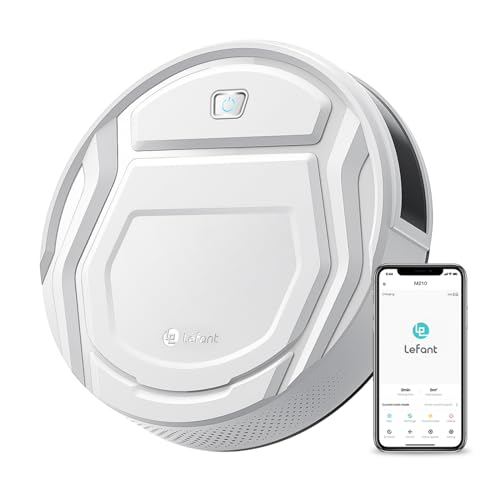
The Lefant M2 Plus is an automated robot vacuum and mop combo built for homeowners, apartment renters, and pet owners looking to reduce manual floor-care chores. Operating as a hybrid system, it is designed to sweep, vacuum, and damp-mop hard surfaces such as hardwood and tile, while also handling debris on low-to-medium pile carpets. For multi-surface households dealing with daily pet shedding, crumbs, and entrance dirt, this unit offers an accessible way to keep common living areas clean without requiring constant manual oversight.
Cleaning capability centers on a listed 6000Pa hyper suction motor paired with three adjustable power settings. The robot utilizes an onboard 250ml dustbin alongside a 300ml electronically controlled water tank featuring three flow levels. When working on hard floors, it sweeps loose dirt into the intake while trailing a damp pad to pick up fine residual dust. When encountering carpets, built-in detection technology serves two distinct purposes: it actively avoids area rugs when the mop holder is connected to prevent wet fabrics, and automatically boosts suction to maximum power once the mop holder is removed to lift embedded pet hair from carpet fibers.
Hardware design sets the M2 Plus apart from many standard LiDAR machines. At 11 inches in diameter and just 2.99 inches tall, it features a lower profile than traditional turret-topped robot vacuums, allowing it to navigate beneath low-clearance sofas, coffee tables, and bed frames where pet hair frequently gathers. Navigation is driven by a 360-degree LiDAR system that quickly maps rooms and supports multi-floor layouts. This is paired with a 190-degree PSD sensor array capable of identifying household obstacles as close as 1.6 inches away, reducing rough collisions with baseboards and furniture legs even in dim lighting.
Everyday maintenance is streamlined by the included auto-empty station. After completing a cleaning cycle, the robot docks and evacuates dry debris into a 2.5L dust bag, which the manufacturer states can hold up to 75 days of waste depending on household shedding and usage frequency. The package includes two bags to start. Connected controls run through the Lefant mobile app, with support for both 2.4GHz and 5GHz Wi-Fi bands to prevent connection drops. Users can set up virtual no-go zones, merge or split rooms, trigger spot cleaning, or run basic operations via Amazon Alexa and Apple Watch integrations.
Prospective buyers should keep practical limitations in mind before purchasing. While the dock manages dry dustbin evacuation, it does not clean or dry the mop pad, meaning users must manually detach, rinse, and air-dry the cleaning cloth after mopping runs. Furthermore, transitioning from mopping hard floors to vacuuming carpets requires manually snapping off the mop module so the robot can safely climb onto rugs. The onboard 140-minute stated runtime provides ample coverage for small-to-midsize layouts, but very large homes may require recharge cycles during extensive deep-cleaning sessions.
For households seeking strong vacuum suction, dependable mapping, and low-profile clearance without the high cost of all-in-one washing stations, the Lefant M2 Plus presents a very practical package. Its 6000Pa motor, intelligent carpet detection, dual-band Wi-Fi reliability, and hands-free self-emptying base make it an efficient daily maintenance partner for busy families and pet-friendly homes.
The Lefant M2 Plus delivers thorough routine floor care through a multi-stage cleaning mechanism. Its listed 6000Pa suction motor provides substantial lifting power across three selectable speeds, allowing users to dial down the power for quiet daytime sweeping or crank it up for high-traffic entryways. The 3-in-1 system uses sweeping side brushes to pull edge debris into the direct suction pathway, effectively gathering dog hair, kitchen crumbs, and tracked-in litter on both hardwood and tile floors.
Mopping operations are supported by a 300ml water tank that feeds water evenly across the dampening pad. With three adjustable flow rates in the app, users can match the moisture output to their specific floor type, preventing excessive wetness on sealed wood surfaces while providing enough dampness to lift light surface footprints on ceramic tile. When the mopping attachment is detached, the carpet sensor activates an automatic suction boost to maximize agitation and lift hair lodged within carpet fibers.
Mapping and spatial awareness on the M2 Plus rely on an advanced 360-degree LiDAR setup integrated into a compact 2.99-inch chassis. The robot quickly scans rooms upon its first departure, generating accurate multi-floor floorplans that allow homeowners to customize cleaning routines level by level. Through the companion app, users can define specific rooms, create custom cleaning schedules, split or merge zones, and set restricted no-go zones to keep the machine away from pet bowls or cable clusters.
Obstacle avoidance is augmented by PSD technology featuring a 190-degree forward detection angle. This sensor system detects nearby items down to 1.6 inches away, allowing the robot to skirt around chair legs, shoes, and dropped toys without harsh bumper impacts. Because LiDAR and PSD sensors do not rely exclusively on ambient light, the M2 Plus can map and clean efficiently in fully dark rooms or during overnight cleaning schedules.
Routine upkeep on the Lefant M2 Plus is centered on its bag-compatible auto-empty station. After finishing its route, the robot aligns with the base, which uses strong suction to pull debris from the 250ml onboard bin into a 2.5L sealed dust bag. The manufacturer estimates each bag can hold up to 75 days of debris, keeping airborne dust safely contained and making it especially convenient for allergy-conscious households. Two disposal bags are provided in the box.
Long-term maintenance still requires periodic hands-on care for the wet components and moving parts. The reusable mopping pad should be removed and hand-washed or machine-washed after every damp mopping cycle to prevent mildew and sour odors. Owners should also periodically check the side brushes for tangled hair, rinse the internal washable dustbin filter, and ensure the 300ml water tank is emptied when not in active use to maintain reliable pump operation.

Pros
- Bagless self-emptying base avoids the recurring cost of proprietary disposal bags
- True HEPA dock filtration captures fine dust, dander, and allergens down to 0.3 microns
- 360-degree LiDAR navigation operates reliably in both daylight and dark rooms
- Matrix Clean multi-pass pattern delivers thorough coverage on high-traffic floor areas
- Up to 120-minute runtime with automated Recharge and Resume for whole-home coverage
Cons
- Bagless canister dumping can disperse airborne dust if emptied quickly indoors
- Operates as a dry-only robot vacuum without wet mopping or liquid scrubbing features
- At 4.1 inches tall, the top LiDAR dome may restrict clearance under low couches or cabinets
The Shark AV2501S AI Ultra Robot Vacuum is an automated dry-floor cleaner designed for busy households, active pet owners, and multi-surface homes requiring hands-off daily maintenance. Equipped with a self-emptying base that stores debris for up to 30 days, this model addresses the common chore of constantly dumping miniature on-board robot bins. For homeowners with shedding pets or high-traffic entryways, having an automated machine that docks and self-clears debris brings meaningful convenience to standard cleaning routines.
Under the hood, Shark utilizes a multi-surface cleaning system engineered to pick up dirt and debris across all floor types. Rather than relying on a single straight-line pass, the manufacturer integrates Matrix Clean Navigation, which commands the robot to vacuum in a precise grid pattern, passing over messes multiple times. Coupled with Shark suction and a self-cleaning brushroll designed to actively shed pet hair, the vacuum is configured to manage fine dust, dander, and tracked-in grit without requiring immediate manual intervention after every run.
A primary highlight of this system is the bagless, self-emptying base station. Unlike competing designs that rely on recurring purchases of disposable dock bags, this station uses an easy-dump collection bin paired with true HEPA filtration. Shark claims the base filter captures and seals 99.97% of dust and allergens down to 0.3 microns, which makes it particularly attractive for allergy-conscious households. Measuring 13.7 inches wide by 4.1 inches tall and weighing 14.42 pounds as a total package, the hardware feels solid, though the 4.1-inch clearance requires some planning around low couches and bed frames.
Day-to-day operation is coordinated by 360-degree LiDAR vision, which quickly maps the home and navigates around everyday obstacles in bright daylight or total darkness. Through Wi-Fi pairing with Amazon Alexa or Google Assistant, users can initiate on-demand sessions or schedule daily cycles. The onboard battery supports up to 120 minutes of runtime, and when the battery depletes mid-cycle, the Recharge and Resume protocol sends the unit back to the dock before returning to complete the unfinished zones. Maintenance involves periodically washing the bagless canister, checking the side brushes, and servicing the washable base filters.
While the automated emptying dock saves considerable time, the bagless mechanism means dumping the collection canister can occasionally disperse a small puff of dust, which might bother sensitive users. In addition, this model is purely a dry robot vacuum; it does not support wet mopping, liquid extraction, or scrubbing. Homeowners with exceptionally low furniture should also verify vertical clearance, as the top-mounted LiDAR dome increases total robot height compared to non-mapping or camera-only alternatives.
For households seeking reliable automated vacuuming without ongoing consumable bag costs, the Shark AV2501S AI Ultra represents a strong balance of navigation intelligence and debris management. Its combination of methodical matrix grid cleaning, pet-hair-focused brush design, and HEPA-filtered self-emptying makes it a dependable choice for keeping both carpet and hard floors consistently tidy between deeper cleaning sessions.
The Shark AV2501S utilizes 360-degree LiDAR vision to scan and map floor plans accurately upon its initial cleaning runs. Because LiDAR relies on light detection and ranging rather than optical cameras, the vacuum navigates effectively in both well-lit rooms and total darkness without losing its spatial coordinates.
In addition to basic pathing, Shark equips this model with Matrix Clean Navigation. Instead of a single back-and-forth track, the robot can execute overlapping passes in a grid pattern. This methodical coverage helps ensure that high-traffic corridors, entryways, and pet resting zones receive focused vacuum agitation rather than quick, single sweeps.
Pet hair management is a core design focus for the Shark AI Ultra system. The robot features a self-cleaning brushroll engineered to clear hair wrap during operation, minimizing the chore of cutting tangled pet fur off the roller bar between cleaning cycles.
Complementing the brushroll is the self-empty base station equipped with true HEPA filtration. The manufacturer states that this filtration setup captures 99.97% of dust and allergens down to 0.3 microns, trapping fine dander and tracked-in outdoor particles inside the sealed dock rather than recirculating them into living spaces.


Pros
- Self-emptying base minimizes frequent bin dumping with up to 60 days of bag capacity.
- LiDAR smart mapping supports up to 5 saved floor plans with custom no-go zones and room selection.
- Strong 8000Pa suction rating handles stubborn pet hair, dust, and crumbs across carpets and hard surfaces.
- Generous runtime of up to 180 minutes easily covers larger living areas on a single charge.
Cons
- Mopping combo setup lacks automated mop pad washing or drying at the dock, requiring manual pad care.
- Multi-surface homes must set manual no-go zones to prevent the damp mop pad from tracking over carpets.
- Requires ongoing replenishment of proprietary self-emptying dust bags over time.
The VONKO Robot Vacuum and Mop is a multi-floor automated cleaning system designed for busy households, pet owners, and homeowners seeking hands-off floor maintenance. Combining vacuuming and wet mopping into a single pass, this unit targets multi-surface layouts consisting of hard floors and carpets. For anyone managing pet hair tumbleweeds, kitchen crumbs, or everyday tracked-in dirt, the combination of LiDAR mapping and an auto-emptying base offers dependable daily upkeep without constant manual dustbin emptying.
Everyday cleaning centers on the manufacturer-listed 8000Pa suction power, which is designed to lift stubborn pet hair, dust, and dry debris out of carpet fibers and along hard floor seams. The vacuum and mop combo functions simultaneously, allowing the robot to sweep up loose particles while wiping hard surfaces in one cleaning run. With an operational runtime rated up to 180 minutes, the robot can tackle spacious rooms or multi-room layouts before automatically navigating back to its station.
Measuring 12.05 inches wide and 3.86 inches tall with a total weight around 9.15 pounds, the black circular chassis houses a top-mounted LiDAR turret alongside standard drive wheels and bumper sensors. The included self-emptying base is the functional centerpiece: whenever the robot concludes a cleaning cycle, the dock evacuates collected debris into a large-capacity dust bag designed to hold up to 60 days of refuse. This sealed bag system keeps dust contained, which is particularly beneficial for allergy-conscious households looking to avoid dust plumes during bin emptying.
System setup involves connecting the robot to the companion mobile app and placing the auto-empty dock against an unobstructed wall. The advanced LiDAR navigation rapidly scans surroundings to generate precise floor plans, offering support for up to 5 distinct floor maps - a major advantage for multi-story American homes. Through the app, users can define specific cleaning areas, designate custom no-go zones, adjust suction levels, and establish automated schedules, with added convenience via Amazon Alexa voice commands.
Despite its high utility, prospective buyers should account for a few practical limitations. Because this hybrid cleaner uses a basic mop attachment without automatic pad lifting or automated dock washing, users must manually wash the mop pad and create app-based no-go zones to keep the damp cloth off carpeted areas. Additionally, like all auto-empty robots, long-term operation requires purchasing replacement dock dust bags, and the 3.86-inch turret height requires checking clearance under low-slung couches and cabinets.
For households balancing hard flooring, rugs, and multi-level floor plans, the VONKO Robot Vacuum and Mop provides a strong balance of high suction power, intelligent navigation, and hands-free emptying convenience. It serves best as a daily maintenance machine that keeps pet hair and surface dust under control, freeing homeowners from daily push-vacuuming while keeping hard surfaces tidy between deeper weekend cleanings.
Advanced LiDAR navigation allows the VONKO robot vacuum to scan rooms with high spatial precision rather than relying on erratic bounce patterns. The sensor system actively maps walls, doorways, and major obstacles to plot systematic, row-by-row cleaning paths that ensure thorough floor coverage across hard floors and carpets.
For multi-level households, the app supports saving up to 5 independent floor plans. This allows users to move the robot between different floors without resetting map data. Within the mobile app, homeowners can easily divide rooms, schedule targeted area cleanings, and establish virtual no-go zones to steer the unit away from pet feeding bowls, fragile decor, or carpeted zones during mopping.
Daily upkeep is substantially reduced thanks to the integrated self-emptying station, which automatically transfers debris from the robot into a large-capacity disposable dust bag holding up to 60 days of dirt. This sealed containment system minimizes direct contact with dust and pet dander during disposal.
Routine user maintenance remains necessary for wet cleaning components and running gear. The reusable mop pad must be removed, washed, and dried between mopping sessions to maintain clean hard floors, while the main brush roll, side brushes, and sensors should be checked periodically to clear tangled hair and dust accumulation.


Pros
- Robust 8,000 Pa manufacturer-rated suction pulls embedded dirt from carpets and hard-floor crevices.
- Dual anti-tangle brush design significantly cuts down on pet hair maintenance around the roller ends.
- 360-degree LiDAR sensor provides fast, systematic room mapping with multi-floor storage in the app.
- Proactive obstacle identification prompts helpful virtual boundaries around wires and furniture legs.
Cons
- Requires a dedicated 2.4 GHz Wi-Fi frequency and does not support 5 GHz network bands.
- Water tank and dustbin are integrated into a single combo part, requiring joint handling when emptying or refilling.
- Mop pad is a standard static cloth that must be manually removed, washed, and detached before heavy carpet runs.
The Roborock Q7 L5 robot vacuum and mop combo is built for homeowners, apartment renters, and pet owners seeking automated daily floor upkeep. Combining strong dry debris suction with simultaneous light mopping, this unit addresses common floor-care pain points like pet shedding, crumbs, and tracked-in dust across multi-surface layouts. Measuring 13.8 inches wide by 3.89 inches tall, it fits beneath many low-profile couches, beds, and kickboards while maintaining full coverage.
Cleaning performance is driven by Roborock's listed 8,000 Pa HyperForce suction system, which is engineered to lift deeply embedded dirt from carpet fibers and fine dust from cracks between floorboards. Simultaneously, the onboard mopping setup utilizes a 270 ml water tank paired with a removable mop pad to wipe away surface dust and light stains. Users can toggle between three adjustable water flow levels directly within the app, allowing moisture control to suit different hard-floor cleaning needs without over-saturating surfaces.
For households dealing with frequent pet hair, the Q7 L5 incorporates a dual anti-tangle brush mechanism. A specially designed main brush roll works in tandem with a zero-tangle side brush to channel loose fur and hair directly into the suction inlet without tight wraps around the roller ends. Navigational duties are handled by a 360-degree LiDAR turret that scans living spaces in real time. This system generates accurate floor plans, saves multiple maps for multi-level houses, and calculates structured cleaning paths rather than bouncing randomly between walls.
Setup and daily management center on the Roborock mobile app and smart home voice integrations with Amazon Alexa or Google Assistant. The software allows users to tailor suction levels, establish cleaning schedules for individual rooms, and engage a child lock feature to prevent accidental button presses by kids or pets. Additionally, the system proactively detects potential hang-ups like clustered table legs or stray electrical cords and suggests no-go zones to prevent the unit from getting trapped mid-cycle.
While the robot brings high suction and smart navigation, buyers should account for a few practical trade-offs. The device connects solely to 2.4 GHz Wi-Fi frequencies, meaning dual-band home routers must have a separate 2.4 GHz network active. Furthermore, the 270 ml water tank and the dustbin are manufactured as an integrated combo module, requiring users to handle both sections simultaneously during routine maintenance. Because it features a standard damp mop cloth rather than a motorized scrubbing pad or an auto-lifting mop head, carpeted areas may require setting virtual no-mop boundaries in the app during wet cycles.
The Roborock Q7 L5 offers an impressive balance of high listed suction, anti-tangle hardware, and precise LiDAR navigation for busy households. It is especially suitable for pet owners and multi-room spaces that need reliable automated vacuuming with basic damp mopping on hard floors. For shoppers who want dependable app-driven map control without paying the premium for complex self-washing dock stations, this model represents a practical and capable floor-care solution.
Precision LiDAR navigation sets the Roborock Q7 L5 apart from basic bump-and-turn robots. Its 360-degree laser sensor continuously scans the perimeter of your rooms in real time, drafting structured cleaning grids that systematically cover open floor space and room perimeters without repeated passes.
Through the companion Roborock application, users can save multiple floor maps, making the robot convenient for multi-story homes. The app also allows fine-tuned perimeter adjustments, room labeling, and custom no-go zones. When the robot detects complex zones such as cable clusters or intricate chair legs, it proactively prompts users to set no-go boundaries to prevent snags.
The mopping module on the Roborock Q7 L5 uses a 270 ml fluid reservoir integrated directly into the dustbin housing. It feeds water to a detachable mop pad across three selectable flow rates, making it easy to regulate wetness based on floor soil levels.
Maintenance is straightforward thanks to the anti-tangle brush design. The zero-tangle side brush sweeps edge debris into the path of the main brush roll, both of which are engineered to minimize hair wrapping for easier cleanup in pet-friendly homes. The mop pad detaches for routine hand washing or rinsing between cleaning runs.
Frequently Asked Questions
How does a robot vacuum recognize different floors?
Most LiDAR-equipped robot vacuums scan surrounding walls upon starting to locate matching landmarks on a saved map. Once identified, the robot loads the correct boundaries and no-go zones automatically. If levels share very similar layouts, companion apps let you select the right floor manually before cleaning.
How many floor maps can the Best Robot Vacuum For Multi Floor Mapping store in 2026?
Map storage depends on the model, but many LiDAR units store between three and five distinct maps. For example, brands like Tikom and VONKO explicitly list saving up to five separate floor plans. Basic models with single-map memory will overwrite previous maps when moved to another story.
Do you need a second charging dock for every floor?
You do not need extra docks for each story. You can carry the vacuum upstairs, place it down, and start cleaning using the app or power button. After finishing, the cleaner returns to its starting spot so you can bring it back to its charging base.
How do robot vacuums manage rugs and hard floors on multiple levels?
Many units detect floor surfaces and boost suction automatically when moving onto carpet. For homes with plush rugs, comparing robot vacuums for high pile carpets can help ensure adequate cleaning depth. When mopping attachments are installed, several models avoid carpets or require custom no-mop zones to keep fabrics dry.
Can robot vacuums fall down open stairwells?
Integrated cliff sensors prevent robot vacuums from tumbling down stairs or open drop-offs. These downward sensors detect empty space and signal the robot to reverse direction safely. For added security along steep landings, users can also draw virtual boundaries and no-go lines in the app.




Write Your Review
No reviews yet. Be the first to share your experience!