


Preserving Fresh Groceries and Streamlining Kitchen Storage
Tackling weekly kitchen prep often highlights how quickly freezer burn and food waste can strain your budget. Just as keeping busy cooking areas tidy requires dependable floor maintenance, securing fresh groceries calls for airtight packaging. Comparing the best food vacuum sealers for home use allows you to preserve bulk meats, garden harvests, and leftovers without taking up excessive counter space. This guide reviews listed manufacturer specifications, suction ratings, and seal bar designs across leading countertop appliances. Matching pump strength with intuitive controls helps you maintain optimal food flavor throughout long-term storage.
Every household approaches kitchen storage with unique priorities, from rapid sous vide meal preparation to dividing family-sized packages of protein. Countertop appliances offer distinct options like specialized moist modes, pulse controls, and integrated roll cutters to streamline repetitive tasks. While running a cordless vacuum with 2 batteries quickly cleans dry kitchen spills during prep sessions, a quality food sealer prevents messy freezer leaks and oxidation. Evaluating listed heating bar dimensions and accessory compatibility ensures you find a unit suited to your cooking habits. Understanding these practical design differences makes managing grocery preservation both efficient and economical.
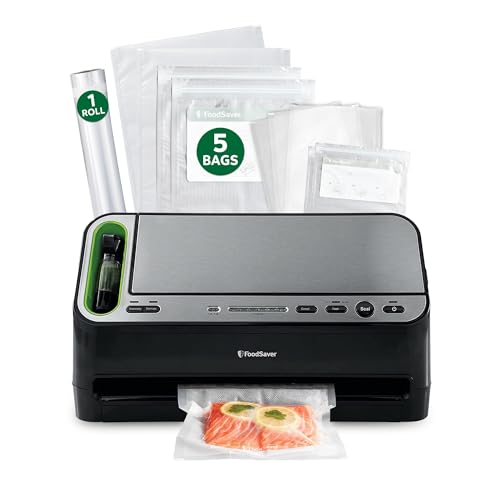


Frequently Asked Questions
How do vacuum sealers protect food from freezer burn?
Vacuum sealers remove oxygen from packaging to prevent moisture evaporation and lipid oxidation. Extracting ambient air prevents ice crystals from dehydrating food tissues, which protects texture and natural flavors over extended storage periods. Listed features like automatic moisture detection help guarantee an airtight closure when sealing meats. This keeps frozen ingredients fresh significantly longer than standard freezer bags.
What is the purpose of a moist food sealing mode?
Moist sealing modes adjust heat timing to maintain a secure bond when liquids are present. Juices drawn toward the sealing strip can cool the heating wire prematurely, leading to incomplete seals and air leaks. Units with dedicated moist settings apply extended sealing heat to ensure a tight barrier despite surrounding moisture. Sloped designs and removable drip trays also help capture excess liquids during extraction.
Can vacuum sealers package delicate foods without crushing them?
Sealers equipped with pulse vacuum controls allow you to safely package delicate ingredients. Standard automated vacuum cycles pull continuous suction, which can flatten soft pastries, crackers, or fresh berries. A manual pulse setting gives you precise control to stop air extraction before delicate foods compress. Engaging an immediate seal locks in freshness while preserving the original shape of your food.
Do home vacuum sealers require specific textured bags?
Most external clamp sealers require textured or embossed vacuum bags to remove air effectively. Smooth plastic pouches collapse flat when suction starts, trapping air bubbles around the food. Embossed patterns create micro-channels that allow the vacuum pump to extract air across the entire bag interior. Smooth bags are typically reserved for commercial chamber machines rather than external countertop appliances.
How does food sealer maintenance fit into kitchen cleaning routines?
Regularly cleaning appliance drip trays and gaskets prevents air leaks and maintains kitchen hygiene. Wiping down silicone seals prevents debris from breaking the airtight vacuum seal during future packaging sessions. Just as running self emptying robot vacuums keeps kitchen floors tidy, routine sealer care ensures reliable machine operation. Emptying removable liquid trays promptly also keeps your meal preparation space sanitary.






Write Your Review
No reviews yet. Be the first to share your experience!