


Targeted Suction Solutions for Tough Debris and Wet Spills
Dealing with fine sawdust, drywall powder, or wet upholstery quickly overwhelms a standard household machine. Standard filters clog rapidly, cutting airflow and exhausting fine dust back into your workspace. Selecting the best extractor vacuums provides the sealed tanks, specialized filtration, and consistent airflow needed for tough utility cleanups. While machines like robot vacuums for high pile carpets handle daily living room upkeep, workshop debris demands dedicated collection systems. This overview evaluates listed specifications, tank capacities, and motor ratings to help you find the right equipment.
Different cleanup tasks demand specific mechanical configurations, ranging from auto-pulsing dust extractors to carpet shampoo units. Power tool actuation automatically starts the vacuum alongside sanders or saws, capturing wood particles at the source. If your priority is washing vehicle seats or area rugs rather than sanding, dedicated carpet cleaners for pet stains and upholstery washers supply pressurized solution spraying with dirty water recovery. Comparing features like HEPA filtration, static water lift, and anti-static hose construction ensures your chosen unit matches your specific project.


Frequently Asked Questions
What distinguishes dust extractors from standard shop vacuums?
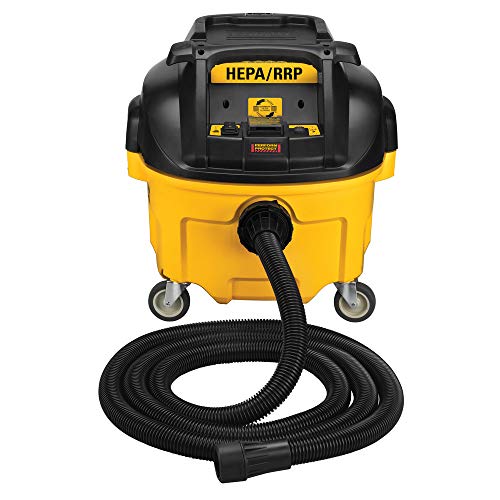
Dust extractors feature specialized filtration and automated cleaning mechanisms engineered for fine airborne dust. Units like the DEWALT DWV010 and Bosch VAC090AH include automatic pulse cleaning that clears filters at regular intervals to maintain suction. Standard shop vacuums generally lack automated filter cleaning and often lose airflow quickly when handling drywall or concrete dust.
How does power tool actuation work on an extractor?
Power tool actuation uses an integrated electrical outlet on the vacuum that senses when a connected tool turns on. Starting your sander, saw, or planer automatically powers up the vacuum to capture debris at the point of cut. The vacuum runs for a few seconds after the tool stops to clear the hose completely.
Can an extractor vacuum handle wet carpet cleaning?
An extractor can clean wet carpeting only if it includes a dedicated solution tank and spray nozzles, such as the Shop-Vac 5-Gallon 3-in-1 model. Dedicated dust extractors lack fluid injection systems and are restricted to dry or bulk liquid pickup. For standard dry floor maintenance, upright models like upright vacuums with lift away canisters serve general home needs better than specialized fluid shampooers.
Why is an anti-static hose important for woodworking?
An anti-static hose dissipates electrical charges that form as dry wood shavings and dust rub against the hose wall. Without conductive materials, friction can generate static shocks and cause fine debris to cling inside the tube. Models like the ECOMAX Dust Extractor include anti-static tubing to ensure smooth particulate collection and operator comfort.
How do you maintain HEPA filters on heavy-duty extractors?
Maintaining HEPA filters requires relying on onboard filter-pulse cycles and inspecting cartridges for damage or tears. Most commercial systems recommend fleece collection bags to capture coarse drywall dust before it reaches the main HEPA filter. Unlike compact home units or cordless vacuums with dual batteries that use washable cups, industrial HEPA filters must be replaced when clogged or compromised.




Write Your Review
No reviews yet. Be the first to share your experience!