


Keeping Above Ground Pool Liners Free of Silt and Debris
Fine sand, sunken leaves, and airborne pollen settle quickly onto pool liners, turning routine swimming into a tedious chore. Selecting the best vacuum cleaner for above ground pool setups depends heavily on the pool layout, water depth, and how much manual effort you want to spend skimming the floor. Robotic units navigate flat surfaces independently, while handheld pole cleaners let you focus on tight corners and steps. When comparing options, reviewing listed battery capacities, motor wattage, and filtration mesh ratings reveals how each model handles seasonal buildup without cluttering your shed with unwieldy hoses.
Our comparison examines verified product specifications, listed pump rates, runtimes, and debris basket capacities provided by manufacturers to help you identify practical pool care tools. Similar to how automated indoor appliances such as self-emptying robot vacuums reduce daily floor maintenance inside the house, cordless pool cleaners keep vinyl liners clean without requiring dedicated booster pumps. Evaluating whether a device uses motorized suction, rechargeable lithium cells, or a simple garden hose venturi effect ensures you pick the right balance of convenience and cleaning power for your backyard.


Frequently Asked Questions About Above Ground Pool Vacuums
How does a robotic pool cleaner differ from a handheld pool vacuum?
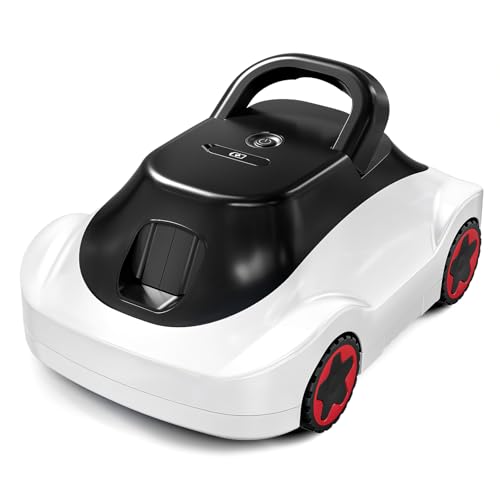
Robotic pool cleaners operate autonomously on the floor, while handheld models require manual guidance using a telescopic pole. Robotic units like the C5 or BOTLIFE use internal drive motors and pre-programmed navigation to sweep flat surfaces without your intervention. Handheld pole vacs, such as the Enhulk and Teguy units, provide targeted spot cleaning for steps, edges, and localized leaf piles where a robotic device might not reach.
What filter mesh size is needed to trap fine sand and algae?
A filter rating between 150 microns and 500 mesh is typical for capturing fine sediment and sand. Standard mesh bags catch large leaves and twigs, whereas ultra-fine 180-micrometer or 500-mesh bags trap silt and tiny insects before they circulate back into the pool. Choosing a cleaner that includes multi-stage or interchangeable filter bags allows you to adapt to heavy autumn leaves or springtime pollen.
How long can a cordless pool vacuum run on a single battery charge?
Listed runtimes generally range from 60 minutes on handheld models to 180 minutes on high-capacity robotic cleaners. Handheld models with 2000mAh packs typically offer about one hour of continuous suction, while larger robots carry 4500mAh to 5200mAh batteries. Much like comparing a cordless vacuum with 2 batteries for household cleaning, keeping recharge times around 1.5 to 2.5 hours prevents prolonged downtime between maintenance sessions.
How does a garden hose jet vacuum work without electricity?
A jet vacuum relies on the water pressure from an attached garden hose to create a venturi suction effect. Water flowing through the nozzle pushes debris upward directly into an attached mesh bag. This mechanism requires no batteries or electrical connection, making it an affordable, lightweight solution for small splash pools or spas, though it adds tap water to the pool during use.
Can a robotic cleaner scrub above ground pool walls?
Some robotic models feature wall-climbing tracks, but many are designed exclusively for flat pool floors. Models with high-grip tracks and multi-motor drives can climb walls and scrub along the waterline on compatible pool surfaces. However, standard flat-bottom cleaners stay on the floor and navigate inclines up to 10 degrees, parking automatically near the edge when the cycle finishes.







Write Your Review
No reviews yet. Be the first to share your experience!