


Targeting Fine Sediment and Algae Residue Underwater
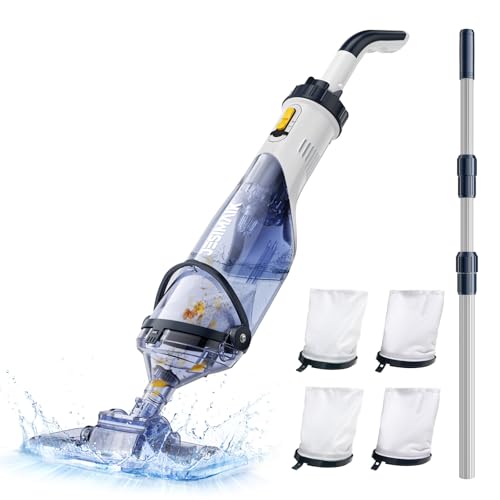
Tackling settled dust, organic residue, and fine silt on a pool floor often frustrates owners when standard skimmers let particles pass through. Choosing the best pool vacuum for dead algae requires close attention to filtration density, as microscopic organic matter easily escapes standard leaf bags. Handheld battery-operated cleaners eliminate cumbersome hoses and manual siphon lines, simplifying spot cleaning on pool steps and shallow ledges. Much like using a cordless vacuum with 2 batteries for quick cleanups, portable pool cleaners offer rapid spot care without demanding setup.
Our analysis reviews motor flow rates from 13.2 to 20 GPM, battery runtimes, and ultra-fine mesh filtration bags detailed in published manufacturer data. Handheld units deliver targeted suction, but models without high-density 500-mesh bags can stir up settled blooms instead of trapping them. We evaluate telescopic reach, recharge speeds, and dry-run safety switches to help you compare equipment for seasonal maintenance. Reviewing these specifications ensures you select a cleaner suited to your water depth and sediment load.


Frequently Asked Questions
Can a handheld pool vacuum collect dead algae?
Yes, provided the cleaner uses an ultra-fine mesh filter bag rated at 500 mesh. Standard leaf bags allow fine organic sediment to pass through and re-cloud the water. Handheld units equipped with 500-mesh bags capture sand and fine particles, while models like the TAKSOME cleaner explicitly state they are not designed for algae.
What filter density is needed to trap fine algae silt?
A filter density of 500 mesh or approximately 120 to 180 microns is recommended for fine residue. Coarser netting allows micro-particles to escape through the exhaust stream. Dense 3D mesh cartridges and multi-layer bags retain fine silt, though regular rinsing is required to prevent water flow restriction and motor strain.
How long do cordless pool vacuum batteries last per charge?
Most cordless handheld pool cleaners deliver between 60 and 90 minutes of runtime. Runtime depends on motor wattage and battery pack capacity, typically ranging from 2000mAh to 4500mAh. Just as with a Dyson cordless vacuum, proper battery maintenance and thorough drying around charging ports help protect internal electrical components.
Why do handheld pool vacuums feature automatic shutoff sensors?
Automatic shutoff systems protect the impeller motor from overheating when removed from water. Submersible pool cleaner motors rely on water for cooling and lubrication. Cleaners from Teguy and PoolMr automatically shut down after 60 seconds out of water, preventing dry-running motor damage and seal wear.
Can a handheld vacuum replace a robotic pool cleaner?
Handheld cleaners complement automated vacuums by addressing spots that robots frequently miss. While automated machines like self emptying robot vacuums sweep open floors, handheld pool vacuums focus on stairs, tight corners, and hot tub footwells. Handheld models allow precise manual control without stirring up delicate sediment beds.





Write Your Review
No reviews yet. Be the first to share your experience!