


Tackling Heavy Lawn Debris Across Expansive Outdoor Spaces
Managing fallen leaves and dense grass clippings quickly turns seasonal yard maintenance into an exhausting chore. Hand raking demands hours of labor, while standard blowers simply scatter debris without collecting it. Investing in the best leaf vacuums for large yards helps you clear and shred outdoor debris in a single step, cutting down on cleanup time. Matching airflow power to your property layout ensures you avoid frequent clogs and stalled maintenance.
Evaluating yard tools requires looking closely at verified specifications like CFM volume, air speeds exceeding 160 MPH, and stated reduction ratios. Similar to how indoor cleaning benefits from a cordless vacuum with 2 batteries for uninterrupted runtimes, large yards demand dependable power through long cords or dual-battery systems. Listed features like metal impellers, support wheels, and large collection bags determine how comfortably you can clean open spaces. This guide reviews published specs and capacity metrics to help you find the right model.




Frequently Asked Questions
What mulching ratio works best for large yards?
A reduction ratio between 15:1 and 18:1 is practical for expansive lawns. The supplied specifications show models like the WORX Trivac shredding 18 bags of whole leaves down to one bag. High mulching power minimizes trips to the compost pile and packs debris tightly.
Are cordless or corded leaf vacuums better for expansive properties?
Cordless models offer unrestricted mobility across wide lawns, while corded tools provide continuous power without battery recharging. Cordless units using dual 40V batteries allow complete freedom near fences and distant landscaping, though runtime typically caps around 30 to 90 minutes. Corded units suit properties where outdoor outlets are accessible. For indoor floor care, shoppers often compare corded setups like a vacuum for canister convenience when continuous power is needed.
How do CFM and air speed impact vacuum suction?
CFM measures overall air volume while MPH measures air velocity. High CFM ratings between 450 and 650 CFM pull in wide swaths of leaves efficiently. Wind speeds reaching 160 to 210 MPH help lift damp debris from grass and hard surfaces.
How do support wheels improve handling on long driveways?
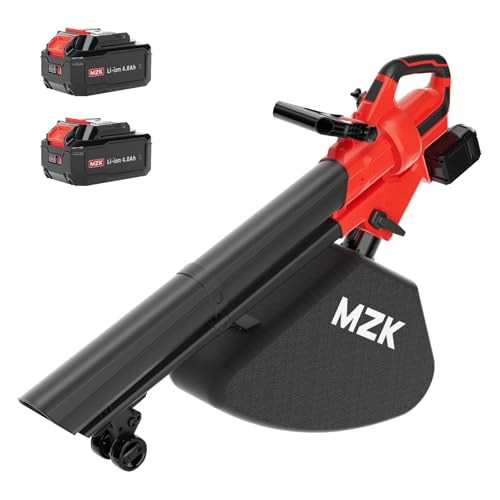
Support wheels carry the tool weight so your shoulders and arms do not endure unnecessary strain. Several models include front roller wheels that roll along flat lawns, sidewalks, and patios. This keeps the intake nozzle at a steady height to prevent ground scraping.
Can these vacuums process wet leaves without clogging?
Wet leaves can cause clogs if vacuumed too quickly into the chute. While models with metal impellers handle dense debris better than plastic fans, dry leaves mulch much more smoothly. Tackling wet outdoor debris requires patience, much like using specialized vacuums for pet hair removal on dense rugs.





Write Your Review
No reviews yet. Be the first to share your experience!