


Essential Suction Power for Clean Filtration and Distillation
Maintaining steady airflow across laboratory glassware requires reliable suction that operates without sudden motor drops. Unlike cleaning dust or tracked debris with a 3 in 1 vacuum, benchtop evaporation and solvent recovery demand airtight tubing connections and stable negative pressure. Selecting the best distillation vacuum pump comes down to matching pump flow rates with solvent compatibility. An improper unit risks vapor degradation, loud bench vibrations, or delayed recovery times during sensitive work.
This evaluation reviews listed manufacturer specifications, documented airflow capacities, and chemical resistance ratings without relying on simulated trials. Models featuring oil-free diaphragm mechanisms avoid messy oil changes, while units with PTFE contact parts resist aggressive chemical vapors. If your routine also includes keeping floor space tidy, pairing dedicated bench tools with a 2 in 1 vacuum cleaner maintains an orderly environment. Evaluating verified motor ratings, vibration-dampening feet, and supplied tubing adapters ensures you find the right balance for your filtration setup.




Frequently Asked Questions
Why choose an oil-free diaphragm pump for distillation?
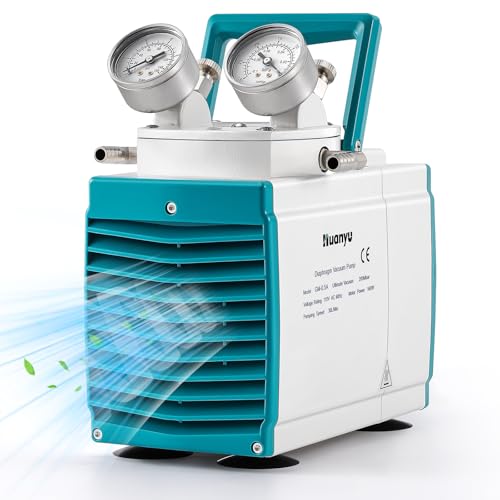
An oil-free diaphragm pump prevents oil mist from contaminating your process and eliminates frequent lubricant changes. Models like the Huanyu 30L/min pump operate completely dry, keeping the gas path clean. This design prevents exhaust residue in your workspace and simplifies routine upkeep.
Can these vacuum pumps handle corrosive chemical vapors?
Only pumps with chemical-resistant contact parts can safely transfer corrosive gases. The Huanyu models utilize PTFE contact components to resist strong acids and alkalis. Standard units like the Win 24L explicitly state they cannot be used with corrosive gases, so verify material compatibility beforehand.
How do rubber bases reduce benchtop noise during operation?
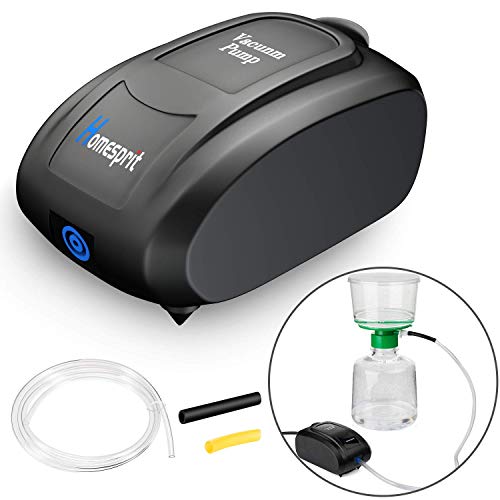
Rubber bases absorb motor vibrations to prevent rattling against hard bench surfaces. Models from Homesprit and YSJWAER feature shockproof rubber feet that isolate motion and dampen operational sound. Much like using a vacuum for wood floors to avoid surface scuffs, rubber mounts protect benches from vibration wear.
What tubing sizes connect these pumps to laboratory flasks?
Tubing sizes vary based on nozzle dimensions. Pumps from NestEcho and Homesprit include three tubing diameters ranging from 4mm to 6mm inner dimensions. These flexible adapters connect to various laboratory filter flasks, while kits like the Labfil 500ML require users to provide compatible tubing separately.
Can a distillation pump be used for standard floor cleaning?
Laboratory distillation pumps cannot pick up floor debris or household dirt. These sealed diaphragm units pull low-volume negative pressure for closed systems and lack collection bins. For cleaning steps or workshop dust, choose a specialized vacuum to clean stairs or bare floors instead.






Write Your Review
No reviews yet. Be the first to share your experience!