


Evaluating Pressure Diagnostics and Intake Balancing Tools
Tackling sawdust and tracked-in grit on garage floors requires a shop vacuum with dependable suction performance, but maintaining the vehicles parked on those surfaces calls for a completely different vacuum tool. When an engine idles roughly, hesitates during acceleration, or stalls unexpectedly, identifying the best carburetor vacuum gauge becomes an essential step in your diagnostic routine. Rather than removing physical dirt, these specialized gauges measure intake manifold suction, fuel delivery pressure, and multi-carburetor balance. Understanding how manifold pressure correlates with engine timing, sticky valves, or leaking seals ensures you select an instrument tailored to your engine layout.
This evaluation reviews listed fittings, dial clarity, and stated pressure ratings based on manufacturer details rather than hands-on garage trials. Just as homeowners look for the right attachments and hose reach when evaluating a versatile 3 in 1 vacuum for mixed spaces, mechanics need brass adapters that thread securely into engine ports. We compare a versatile single-gauge diagnostic tester from Hromee against a multi-gauge synchronizer balancer from Prokomon. Matching these specific features to your engine configuration helps you diagnose vacuum loss and balance fuel delivery effectively.

Frequently Asked Questions
What is the difference between a vacuum tester and a synchronizer?
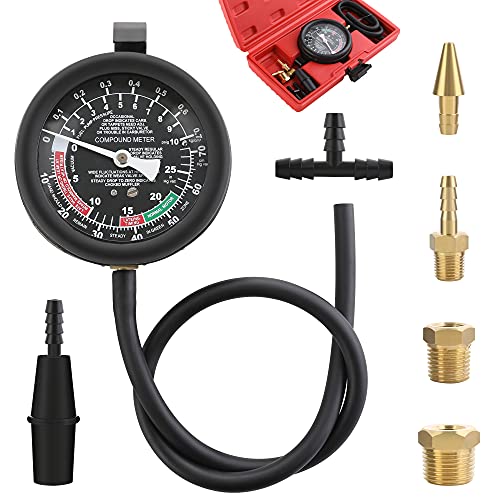
A single vacuum tester measures overall manifold pressure and fuel pump output, while a multi-gauge synchronizer balances airflow across multiple carburetors. The Hromee tester uses one dial to diagnose leaks and fuel pressure. Prokomon provides four individual gauges to balance multi-cylinder engines simultaneously.
Can a carburetor vacuum gauge detect intake manifold air leaks?
A carburetor vacuum gauge detects intake leaks by revealing abnormal or fluctuating vacuum levels at idle. Rapid needle oscillation or low steady readings often signal leaking gaskets or cracked vacuum lines. The Hromee gauge features a 0 to 28 in/Hg dial to help locate these pressure drops.
How do you adjust gauge needles if they do not point to zero?
You can adjust the gauge needles manually using the calibration screw beneath the dial face. Prokomon notes that transit vibrations can occasionally shift the needle off center. Simply pry off the cover by hand and turn the slotted screw until the needle aligns with zero.
What pressure range is required for testing mechanical fuel pumps?
Testing mechanical fuel pumps requires a gauge rated for low pressures below 10 PSI. The Hromee kit features a dedicated 0 to 10 psi dial specifically calibrated for mechanical fuel pumps on carbureted engines. This low-pressure scale provides precise readings without damaging delicate internal parts.
Why is intake vacuum balancing important for small engines in 2026?
Intake balancing ensures each cylinder receives an equal fuel mixture for smooth engine operation. Uneven draw leads to rough idling, misfires, and reduced power. Small carbureted engines, including equipment featured in our guide to the best lawn mower leaf vacuums, rely on synchronized intake flow to maintain reliable performance.







Write Your Review
No reviews yet. Be the first to share your experience!