


Drilling into solid clay brick or aged mortar joints requires hardware that expands uniformly without fracturing brittle masonry edges. Standard plastic plugs often slip or strip when exposed to uneven masonry holes, leaving wall decor loose and masonry faces vulnerable to spalling. Selecting the best brick wall anchors ensures fixtures hang flush while distributing outward tension evenly across dense masonry substrates. Homeowners mounting address plaques, planters, or interior wall art benefit from kits that balance fastener grip with clean hole preparation. Pairing sturdy hardware with a protective barrier like the best sealer for interior brick walls helps keep indoor masonry clean and free from crumbling dust around anchor points.
Proper installation hinges on matching the anchor sleeve material to the hardness of the masonry surface. Polyethylene anchors paired with corrosion-resistant carbon steel screws provide consistent holding power for light to medium-duty hangings without crushing delicate brick veneers. Reviewing specifications like included drill bit dimensions, screw thread quality, and storage organization simplifies mounting projects on exterior facades or indoor brick accent walls. Careful hardware selection prevents unnecessary wall damage, ensuring every picture frame, doorbell, or decorative lantern remains firmly anchored for years to come.

Pros
- Complete set with 90 anchors, 90 screws, and two correctly sized drill bits ready to use out of the box.
- Broad wall compatibility spanning drywall, brick, masonry, stucco, and wood.
- Corrosion-resistant galvanized carbon steel screws paired with durable PE expansion anchors.
- Clear plastic organizer box prevents mixed-up hardware and saves storage space.
Cons
- Not intended for heavy-duty structural hanging or high-load overhead mounting tasks.
- A hammer and drill driver are required for pilot hole preparation and anchor setting.
The KURUI 180-piece anchor and screw assortment kit is a dedicated wall-mounting hardware set designed for homeowners, apartment renters, and DIY enthusiasts looking to hang household items securely. Rather than hunting through mismatched spare parts, this set supplies 90 blue plastic anchors, 90 galvanized Phillips flat head screws, two matching drill bits, and a durable plastic storage case. It serves as an accessible mounting solution for securing lightweight to medium wall items such as picture frames, wall decor, mirrors, curtain rails, doorbells, and utility brackets.
Hardware durability is centered around high-strength carbon steel screws treated with galvanizing technology to guard against rust and corrosion. The complementary blue anchors are manufactured from polyethylene (PE) plastic, which is chosen for its balance of structural flexibility, abrasion resistance, and aging stability under tension. When a screw is driven into the anchor, the PE body expands firmly against the surrounding material, delivering a steady mechanical hold inside solid masonry, brick, or hollow drywall cavities.
Surface versatility is a primary advantage of this hardware kit, as it is engineered to function in drywall, brick, concrete, stucco, and wooden surfaces. Having two matched drill bits included in the package simplifies preparation, ensuring pilot holes match anchor diameters without testing multiple drill bit sizes. The installation sequence is straightforward: drill the pilot hole with the provided bit, insert the blue anchor until it sits flush against the wall surface, position your fixture, and tighten the screw until seated.
Organization is managed through a transparent compartmented case measuring roughly 8 by 4 inches, making it easy to store in a standard toolbox, utility drawer, or cleaning supply cabinet. However, prospective buyers should recognize the functional boundaries of standard plastic expansion anchors. While suitable for wall hangings, small brackets, and light utility mounts, these anchors are not rated for heavy structural loads, heavy shelving, or overhead ceiling applications, which require heavy-duty toggle bolts or specialty masonry anchors.
For general household maintenance, decorating projects, or hanging utility organizers around the home, the KURUI 180-piece wall anchor kit offers reliable everyday utility at an accessible price point. The inclusion of matching drill bits and a dedicated storage box eliminates common installation hurdles, making it a convenient starter kit for new homeowners, apartment dwellers, and anyone seeking dependable basic wall fasteners.
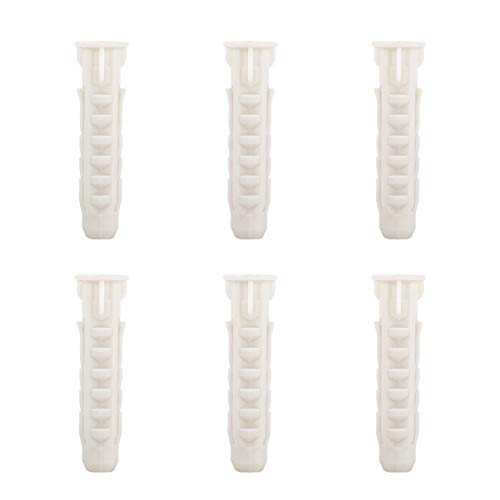
The package contains 90 blue PE wall anchors across two distinct sizes, paired with 90 galvanized carbon steel Phillips flat head screws measuring 1.5 inches in length. Additionally, two dedicated masonry drill bits are supplied to ensure clean, properly sized pilot holes during installation. A durable, clear plastic storage organizer keeps all 182 components organized and easily accessible in home toolboxes or utility cabinets.
This fastener assortment is suitable for use on interior and exterior structural surfaces including drywall, solid concrete, masonry, brick, stucco, and wooden walls. By using the provided drill bit to create a clean pilot hole, the anchor can be tapped flush before fastening screws for decor, doorbells, curtain rails, mirrors, or small utility brackets.
Frequently Asked Questions
Cracked mortar joints and brittle brick faces often cause installation headaches when mounting decorative fixtures to solid masonry. Dust clearance and matched fastener diameter play a critical role in how well the best brick wall anchors grip dense clay brick without loosening over time.
Should you install brick wall anchors into the brick or the mortar joint?
Installing anchors directly into the brick face generally provides significantly higher shear strength and holding power than mortar joints. Mortar is naturally softer and more porous, which can cause expansion sleeves to slip or crumble under load. But drilling into mortar is often preferred for lighter decorative items because mortar is much easier to patch if you ever decide to remove the fixture.
What type of drill bit is needed to install anchors in brick walls?
Masonry drill bits with carbide-tipped heads are required to bore clean holes into clay brick or concrete without cracking the substrate. Standard wood or metal bits will overheat and dull instantly against hard masonry surfaces. Many all-in-one anchor assortments include matched masonry bits to ensure the hole diameter matches the expansion plug precisely.
Can standard plastic expansion anchors support exterior brick fixtures?
Yes, high-density polyethylene anchors paired with galvanized carbon steel screws perform reliably on exterior brick for light to medium items. The galvanized coating prevents corrosion and rust runoff that could otherwise stain exterior brickwork. For heavier exterior installations, such as mounting heavy architectural features or large exterior shutters for brick house facades, specialized masonry sleeve anchors or heavy-duty lag shields are typically necessary.
How do you prevent brick from cracking when drilling for wall anchors?
Using a hammer drill with light, steady pressure and maintaining proper clearance from brick edges prevents spalling and corner fractures. Never set the drill to hammer mode right at the edge of a brick where brittle stress fractures easily form. Clearing brick dust from the hole before tapping in the anchor sleeve also prevents excessive hydraulic pressure from splitting the masonry.
How deep should a brick wall anchor penetrate for a secure hold?
Anchor holes should be drilled at least one-quarter inch deeper than the total length of the plastic anchor sleeve. This extra depth gives excess masonry dust a place to settle so the anchor can sit completely flush with the wall face. Screws should always be long enough to pass entirely through the anchor to ensure full radial expansion against the brick interior.




Write Your Review
No reviews yet. Be the first to share your experience!