


Stubborn efflorescence salts and soot deposits quickly ruin the appearance of hearths, chimneys, and exterior walls. Porous clay brick and mortar joints absorb smoke residue, grease, and mineral runoff, leaving dull stains that plain water cannot shift. Reviewing manufacturer chemical profiles, dilution rates, and user feedback makes selecting the best brick and mortar cleaner a straightforward task for any project. Knowing whether your wall demands an acidic compound or a surface-safe non-acid formula protects mortar from premature breakdown. For tough new-construction spills, reviewing the best acid for brick cleaning provides clear guidance on handling stubborn mineral deposits safely.
Proper masonry maintenance requires formulas that balance active cleaning agents with safe dwell times to preserve joint integrity. Harsh scrubbing with wire brushes can gouge soft mortar, so chemical dwell action must do the heavy lifting before you rinse. Concentrated formulas let you tailor dilution rates for light patio upkeep or heavy carbon restoration. Matching cleaner chemistry to your specific substrate ensures you lift grime without etching the clay face or degrading older mortar joints.
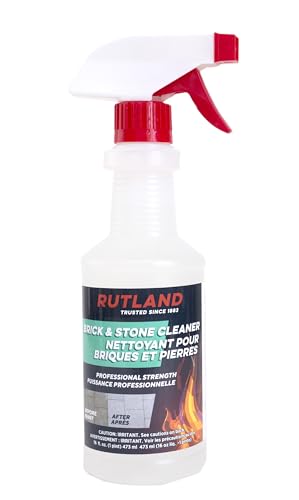
Pros
- Formulated without dangerous acids, reducing the risk of accidental burns or chemical etching on stone and mortar
- Effectively dissolves tough creosote, soot, and smoke residue on porous hearth brick
- Broad substrate compatibility covers fire brick, terracotta, marble, and general masonry
- Non-abrasive formula protects historic or soft brick surfaces during agitation
Cons
- Treated areas must not be allowed to dry prior to thorough rinsing, requiring careful indoor moisture control
- Compact 16 oz container is designed for localized hearth maintenance rather than large-scale exterior wall cleaning
- Manufacturer does not provide a square-foot coverage rating, requiring estimation for heavily soiled areas
Rutland Brick and Stone Cleaner is a targeted, non-abrasive cleaning solution designed specifically to remove soot, creosote, and smoke residue from fireplace surrounds. Manufactured in the USA and supplied in a 16-fluid-ounce container, this clear liquid emulsifier serves homeowners, DIY renovators, and property managers seeking an effective way to refresh blackened hearths without resorting to aggressive mineral acids.
Regarding surface compatibility, Rutland formulates this cleaner for hearth brick, fire brick, terracotta, marble, and general porous masonry. The cleaner relies on an industrial-strength solvent blend to dissolve greasy creosote and bonded carbon film. Because it contains no dangerous acids, it provides a safer chemical profile for interior living spaces and helps protect acid-sensitive substrates like marble and decorative masonry from chemical etching.
The product packaging provides a manageable 16 oz volume that suits localized fireplace maintenance and annual post-winter cleaning tasks. Its non-abrasive liquid consistency ensures that cleaning power comes from chemical emulsification rather than grit, helping prevent scratch marks on smooth stone faces or crumbly mortar joints during routine care.
Application is straightforward: spray the cleaner onto the soiled area and agitate with a wet, non-metallic brush. The manufacturer explicitly notes that the solution must not dry on the surface before being completely rinsed with clean water. For indoor hearth work, users should prepare the area with drop cloths or towels to manage rinse water and dissolved soot slurry as it comes off the masonry.
A primary limitation to keep in mind is the container size. At 16 fluid ounces, this product is structured for spot cleaning fireplace faces, mantels, and fireboxes rather than treating broad exterior walls. Additionally, because the manufacturer does not list exact square-foot coverage figures, users tackling deep, multi-season creosote accumulation may need extra product and repeated scrubbing passes.
For anyone managing fireplace or chimney masonry, Rutland Brick and Stone Cleaner delivers a practical, acid-free balance of solvent cutting power and surface safety. It is a dependable choice for seasonal hearth touch-ups, restoring clean stone and brick visuals while keeping indoor masonry free from harsh acidic fumes.
Rutland indicates compatibility across several common hearth substrates, including standard hearth brick, fire brick, terracotta, marble, and general porous masonry.
The absence of dangerous acids makes this solution significantly safer for stone types that are prone to acid etching, such as marble, though testing an inconspicuous corner before full application remains standard practice.
This cleaning solution is specifically engineered to target carbon deposits, creosote, and smoke film created by wood burning and fireplace use.
By utilizing an industrial solvent emulsifier, the solution dissolves greasy binder compounds within chimney soot so they can be agitated away with a wet, non-metallic scrub brush.
The formula relies on an industrial-strength solvent emulsifier designed to attack organic carbon deposits without using harsh, hazardous acids.
This non-acid design prevents chemical degradation of surrounding mortar joints and minimizes corrosive fumes when cleaning indoors.

Pros
- Twelve individual 32 oz containers allow controlled handling without the physical strain of large gallon jugs
- Sunnyside Corporation brand packaging is well suited for multi-site maintenance teams and commercial inventory
- Quart-sized bottles simplify measuring and dispensing chemical cleaner according to label directions
- Multi-bottle case format provides ample supply for scheduled property maintenance and staged masonry projects
Cons
- Listing does not state exact acid concentration or substrate compatibility, requiring bottle label verification
- Acid cleaning chemicals require strict safety precautions, proper ventilation, and personal protective equipment
- Bulk twelve-quart package may provide more volume than needed for small, one-off residential spot repairs
The Sunnyside 71032S Muriatic Acid package provides twelve 32-ounce bottles of muriatic acid from Sunnyside Corporation. This 12-pack configuration suits property managers, commercial maintenance teams, general contractors, and DIY renovators who require a steady supply of mineral acid cleaner in portioned containers rather than bulky carboys or heavy gallon jugs. Because chemical cleaners demand careful handling, having quart-sized bottles simplifies transport to different work areas across a property or jobsite.
Muriatic acid is widely recognized across building maintenance and masonry trades for heavy-duty cleaning, etching, and removing hardened mineral residues. However, exact chemical concentration levels, specific brick compatibility, and acceptable deposit targets are not detailed in the raw product listing. Before applying muriatic acid to clay brick, concrete masonry, pavers, or mortar joints, buyers must verify substrate compatibility against the container label and manufacturer technical sheets. Soft historic brick, specific colored pavers, or sensitive natural stone can react adversely to aggressive acid solutions, making label verification and small test spots essential steps before full application.
The primary practical benefit of the Sunnyside 71032S package lies in its physical container size. Handling a 32-ounce quart bottle offers greater physical control when dispensing chemical liquid compared to pouring from a full one-gallon container. This reduces the risk of accidental splashes or over-pouring during measurement. The 12-pack case also allows facilities crews to store inventory in a dedicated chemical storage locker while deploying only the necessary number of sealed bottles to an active work area.
Using muriatic acid requires strict adherence to manufacturer instructions regarding dilution, dwell times, and neutralization. Because the product data does not specify pre-mixed ratios, users must consult the bottle label and Safety Data Sheet (SDS) for exact water-to-acid dilution guidelines, remembering the fundamental chemical safety rule of always adding acid to water rather than water to acid when mixing is instructed. Adequate ventilation, personal protective equipment including chemical-resistant gloves and eye protection, and thorough rinsing or neutralization are mandatory components of responsible masonry cleaning workflows.
The listing presents realistic limitations that buyers should keep in mind before ordering. Most notably, the raw product specifications omit active acid percentage, dwell intervals, and coverage estimations, leaving those technical details to be determined directly from the physical label upon receipt. Additionally, purchasing twelve quarts represents an excess volume for a homeowner with only a tiny cosmetic spot to treat. Muriatic acid also poses inherent risks of chemical etching, surface discoloration, or mortar degradation if applied improperly or left unrinsed on sensitive substrates.
For maintenance professionals, property supervisors, and experienced renovators who regularly handle surface preparation and require a reliable inventory of muriatic acid, the Sunnyside 71032S 12-pack offers dependable value and manageable container ergonomics. Buyers should verify their specific substrate suitability, follow all manufacturer safety protocols, and conduct spot testing to ensure safe, effective results on exterior masonry.
Sunnyside 71032S Muriatic Acid requires consulting the manufacturer label on the 32-ounce bottle for specific dilution ratios, application procedures, and dwell times before starting any masonry task. Because acid concentrations and substrate sensitivities vary, users should never estimate mixing proportions without checking the printed product instructions.
When chemical dilution is directed by the label, users must always add acid to water slowly and carefully, never pouring water directly into acid to avoid dangerous splashing or thermal reactions. Full personal protective equipment, including chemical splash goggles, protective gloves, and vapor-rated protection or open outdoor ventilation, should be maintained throughout preparation and rinse cycles.
Masonry substrates exhibit varying levels of acid tolerance, meaning muriatic acid is not suitable for every brick or stone surface. Hard-fired standard clay brick may tolerate acid cleaning when properly diluted and rinsed, but soft historic brick, sand-faced face brick, lime-rich historic mortar, and certain decorative concrete pavers can suffer permanent etching or discoloration.
Property owners and contractors should always conduct an inconspicuous spot test on the intended masonry surface before widespread application. Checking manufacturer documentation ensures the product matches your specific cleaning or etching project without damaging adjacent architectural features.

Pros
- Includes a dedicated scrub brush matched to the nonabrasive gel for quick, out-of-the-box application
- Thick gel consistency clings effectively to vertical fireplace walls and textured bricks without dripping excessively
- Safe for polished and delicate hearth surfaces including marble, natural stone, rock, and tile
- Free from overwhelming chemical fumes, making indoor hearth cleanup much more comfortable
Cons
- Requires manual physical scrubbing to agitate deep creosote deposits out of heavily textured, porous brick
- A 16-ounce container may require multiple tubs for expansive, floor-to-ceiling stone fireplaces
- Indoor cleanup requires careful towel placement around the hearth to catch rinse water and lifted soot
The Quick 'n Brite Fireplace Gel Cleaner Kit provides a dedicated cleaning solution for homeowners, renters, and fireplace owners tackling stubborn soot, ash, and creosote buildup. Unlike general household degreasers that run down vertical masonry, this specialized 16 oz pink gel clings to porous surfaces to loosen embedded carbon residue. It is engineered specifically for hearths and fireplace surrounds, making it a reliable fit for seasonal maintenance after winter burning or spring cleaning routines.
Cleaning performance hinges on chemical dwell and mechanical agitation. The thick gel works by penetrating into carbon stains, lifting soot and creosote so they can be dislodged with the included scrub brush. Because the formulation is nonabrasive, it does not scour or scratch smooth materials like marble and ceramic tile, yet it possesses enough cutting action to clean rough brick, fieldstone, and natural rock. The included stiff-bristle brush fits comfortably in hand, providing the necessary mechanical force to work the gel into tiny pores and mortar lines.
One of the strongest practical benefits of this cleaner is its user-friendly profile. Traditional fireplace cleaning chemicals often rely on noxious fumes, acids, or caustic lye that necessitate heavy rubber gloves, respirators, and open windows. Quick 'n Brite manufactures this formula without harsh chemicals, parabens, or heavy chemical scents. The manufacturer notes that users do not need to wear masks or gloves, offering peace of mind for parents, pet owners, and indoor apartment dwellers cleaning wood-burning or decorative hearths in enclosed spaces.
Using the kit follows a simple, repeatable process. You wet the included scrub brush with water, scoop a portion of the pink gel onto the bristles, and work it directly into the soot-stained masonry. After agitating the area and allowing the gel to break down the grime, the residue is removed by misting the surface with clean water and wiping it away with a terry-cloth towel or microfiber cloth. Placing an old towel along the hearth floor helps catch any dirty water runoff during the wiping and rinsing phase.
Prospective buyers should keep realistic expectations regarding heavily neglected masonry. While the gel easily dissolves routine soot film, thick layers of baked-on creosote built up over several decades will require multiple applications, extended dwell time, and substantial manual scrubbing. Additionally, the 16 oz tub is compact; large floor-to-ceiling rock fireplaces or expansive double-sided hearths may require more than one jar to complete a thorough restoration.
For households seeking a dependable, American-made fireplace cleaner that prioritizes surface safety and indoor air quality, the Quick 'n Brite Fireplace Gel Cleaner Kit represents an excellent investment. It delivers targeted cleaning power for brick, stone, and delicate marble surrounds while eliminating the harsh odors and abrasive hazards common to conventional chimney and masonry cleaners.
Quick 'n Brite explicitly formulates this nonabrasive cleaner for brick, stone, rock, tile, and marble fireplace surrounds. Its non-scratch gel ensures that glossy marble mantels and glazed hearth tiles are cleaned without etching, dulling, or surface abrasions.
On rough masonry such as unsealed brick and natural rock, the gel penetrates deeply into mortar joints and textured crevices where soot settles. Always test a small, inconspicuous spot first on rare natural stones or unsealed masonry to verify colorfastness and ease of rinse removal.
Application is straightforward: wet the included scrub brush with water, apply the pink gel directly to the brush, and scrub the stained brick or stone surface in circular motions to work the formula into the soot. Let the gel sit briefly on tough spots to loosen set-in creosote.
To rinse, lightly mist the treated area with a spray bottle of clean water and wipe away the emulsified soot using a damp terry cloth or microfiber rag. Rinse the cleaning brush with warm tap water after use and let it air dry so it remains ready for future seasonal touch-ups.

Pros
- Formulated as a safer muriatic acid alternative with no harmful acids
- Ready-to-use clear liquid requires no dilution or mixing equipment
- Effectively dissolves mineral efflorescence and stubborn rust stains
- Suitable for multiple masonry surfaces including brick, concrete, and pavers
Cons
- Specific square-foot coverage rate is not listed and will vary by surface porosity
- Formulated for mineral and rust deposits rather than heavy oil or grease stains
- Dissolves surface efflorescence but cannot resolve underlying moisture infiltration issues
Akona Concrete and Masonry Restoration Cleaner is a specialized liquid wash engineered to clean unsealed mineral-bearing surfaces without relying on harsh traditional acids. Formulated as a ready-to-use muriatic acid alternative, this clear solution is designed to tackle mineral deposits on brick, concrete, pavers, and general masonry. It is particularly practical for homeowners, property managers, and DIY renovators who need to clean exterior walkways, patio pavers, or brick walls without handling volatile, fuming muriatic acid.
Based on the manufacturer specifications, the cleaner is designed specifically to dissolve and remove efflorescence, which appears as chalky white mineral salt deposits on porous masonry, as well as unsightly rust stains. The product profile highlights broad versatility across brick, concrete flatwork, interlocking pavers, and standard masonry substrates. Additionally, using this cleaner provides vital surface preparation before applying concrete sealers, ensuring that mineral barriers and surface stains do not compromise sealer adhesion or visual clarity.
The cleaner comes packaged in a standard one-gallon plastic container measuring 5.5 by 5.5 by 11.5 inches, containing 128 fluid ounces of clear cleaning solution. A notable advantage of the Akona formula is its ready-to-use design, which spares users from the potential hazards and inconsistencies of measuring and diluting concentrated chemical compounds. Because the formulation contains no harmful acids, it presents a significantly less corrosive handling profile than conventional muriatic acid while maintaining the chemical capability needed to break down mineral salts.
Applying this restoration cleaner typically involves treating the affected brick or paver surface according to the manufacturer label directions. Because it is positioned for surface restoration prior to sealing, thorough application across areas exhibiting efflorescence or iron staining allows the active chemistry to react with mineral build-up. As with any chemical masonry wash, users should perform a small test patch in an inconspicuous spot to confirm surface reaction, ensure adequate rinsing after application, and allow the substrate to dry completely before applying any subsequent sealers.
While Akona Concrete and Masonry Restoration Cleaner addresses mineral issues effectively, buyers should keep several practical limitations in mind. The product specifications do not provide an exact square-foot coverage rate per gallon, meaning coverage will naturally vary based on substrate porosity and stain severity. Furthermore, while the formula dissolves visible efflorescence salts on brick faces, it cannot correct the underlying moisture movement or flashing failures that drive mineral migration to the surface. Finally, users facing deep oil stains or organic growth will need specialized cleaners suited for those specific contaminants.
For DIY renovators, landlords, and homeowners looking to revive chalky brickwork or stained concrete pavers, this Akona cleaner provides a dependable, user-friendly solution. Its position as a ready-to-use muriatic acid alternative makes it an accessible choice for routine maintenance or pre-sealer washing without the severe risks associated with industrial-strength acids. Verifying that your project involves mineral salts or rust stains ensures you get the exact corrective performance this gallon jug is built to deliver.
Akona Concrete and Masonry Restoration Cleaner is formulated for use across multiple common hardscape and building substrates, including clay and concrete brick, concrete pavers, poured concrete surfaces, and general masonry. Its non-fuming formulation makes it suitable for both horizontal flatwork such as patios, driveways, and sidewalks, as well as vertical brick walls or masonry foundations.
Because porous masonry materials absorb moisture differently, conducting a small test application on an out-of-the-way section of brick or paver is recommended before treating large continuous areas. This confirms compatibility and verifies that the surface responds cleanly without unexpected color variations.
This restoration formula is specifically engineered to target two primary surface defects: efflorescence and rust stains. Efflorescence occurs when water carries soluble mineral salts through porous brick or concrete, leaving visible white powdery residue upon evaporation. Akona cleaner chemically dissolves these deposits to restore the original appearance of the masonry.
In addition to dissolving mineral efflorescence, the formula lifts oxidation and rust discoloration from masonry faces. Note that while the cleaner removes existing surface salt deposits, ongoing efflorescence management requires resolving any persistent groundwater, roof runoff, or wall moisture intrusion behind the brickwork.
A defining benefit of Akona Concrete and Masonry Restoration Cleaner is its designation as a muriatic acid alternative. Traditional muriatic acid poses severe handling hazards, noxious fumes, and the potential to burn masonry surfaces or corrode adjacent metal fixtures. Akona delivers restorative cleaning power without harmful acids, providing a safer working environment for residential and light commercial use.
Supplied as a ready-to-use clear liquid in a 1-gallon jug, the product requires no secondary mixing or water dilution prior to application. This eliminates measurement errors and ensures consistent strength throughout the entire cleaning project.

Pros
- Acid-free formula cleans thoroughly without etching surfaces or causing acid burns on brick and mortar
- High dilution ratio allows a single one-gallon jug to make up to 20 gallons of routine cleaning solution
- Safe for use on both indoor fireplace surrounds and outdoor paver driveways or walkways
- Formulated to be gentle on adjacent turfgrass and decorative landscape plants during exterior washdowns
- Works easily through standard pump sprayers, hand spray bottles, and pressure washer chemical systems
Cons
- Square-foot coverage rates are not specified by the manufacturer and vary based on user dilution
- Not formulated to remove mineral-based deposits such as efflorescence, lime scale, or cured mortar haze
- Specific recommended dwell times and agitation techniques are not detailed on the primary packaging
RadonSeal BrickTastic is a heavy-duty, concentrated brick and paver cleaner designed for both indoor and outdoor masonry maintenance. Formulated for homeowners, DIY renovators, and property managers, this clear liquid cleaner targets common organic, carbon, and petroleum-based soils without the hazards associated with traditional acid washes. Whether you need to clean soot off an indoor fireplace surround, refresh an exterior brick wall, or lift oil from a paver driveway, this formula offers a practical balance of chemical lifting action and substrate safety.
The chemistry relies on advanced butyl technology paired with proprietary surfactants rather than aggressive mineral acids or flammable solvents. Because it is non-abrasive and acid-free, it does not etch, pit, or discolor brick faces, mortar joints, or concrete pavers. The cleaner is specifically formulated to break down challenging stains, including fireplace creosote, exhaust soot, atmospheric carbon, leaf tannins, berry or acorn marks, vehicle tire tracks, and grease spots. It also features a free-rinsing profile designed to flush away thoroughly with water without leaving cloudy streaks or sticky residues.
Packaged in a 128 fluid ounce (one gallon) container, BrickTastic is supplied as a concentrate that can be adapted to projects of varying severity. For stubborn motor oil spills or thick creosote deposits, the manufacturer directs applying the cleaner straight from the jug. For seasonal upkeep, general dirt removal, and light maintenance, diluting the concentrate with clean water allows a single gallon to yield up to 20 gallons of ready-to-use cleaning solution. Application options are versatile, accommodating standard hand trigger sprayers, garden pump sprayers, airless spray systems, and downstream pressure washer chemical injectors.
Outdoor masonry maintenance frequently raises concerns about surrounding landscape damage, but this butyl-surfactant blend is gentle on turfgrass and plantings positioned along walkways, patios, and driveways. Inside the home, the absence of harsh acidic fumes makes it suitable for indoor brick backsplashes, living room fireplace mantels, tile, and decorative interior brick accent walls. General setup involves distributing the solution evenly across the masonry surface, allowing it to penetrate the soil, and rinsing it thoroughly with clean water.
While BrickTastic handles organic discoloration, chimney soils, and petroleum stains effectively, it is not engineered for every masonry problem. The manufacturer does not formulate this product for removing mineral-based issues such as soluble salt efflorescence, heavy lime deposits, or cured cement mortar haze, which generally require specialized mineral cleaners. Additionally, specific dwell times and coverage square footages are not published by the manufacturer, meaning users should gauge material consumption according to their selected dilution ratio and the porosity of the brick.
For buyers searching for an effective alternative to harsh muriatic acid washes or volatile solvent degreasers, RadonSeal BrickTastic represents a reliable, multipurpose cleaning choice. Its versatility across delicate indoor fireplace features and expansive outdoor paver driveways simplifies routine brick preservation. If your primary project involves removing carbon soot, seasonal leaf tannins, or automotive oils without endangering your lawn or masonry finish, this concentrated cleaner is well worth considering.
RadonSeal BrickTastic is formulated for safe use across all brick and paver surfaces in both interior and exterior environments. Supported outdoor substrates and structures include paver driveways, drive-through lanes, brick homes, building facades, paver patios, exterior chimneys, sidewalks, and landscape hardscaping. For indoor applications, the non-etching formula is safe on kitchen brick backsplashes, fireplace brick, mantels, indoor accent walls, and tile surfaces.
The cleaner is targeted toward organic and petroleum-based soils rather than mineral crusts. It breaks down leaf stains, tannins from acorns, berry juice, vehicle tire marks, and heavy oil spills. For hearth and chimney owners, the butyl and surfactant system dissolves carbon soot and chimney creosote without compromising the structural integrity or color of the underlying clay brick, concrete pavers, or surrounding mortar joints.
BrickTastic is shipped as a concentrated liquid that can be adjusted to match the severity of surface soil. For heavy-duty degreasing, deep oil spots, or heavy creosote accumulation, the manufacturer recommends using the formula full strength. For standard seasonal maintenance and light soot cleaning, diluting the product with water allows one gallon of concentrate to produce up to 20 gallons of active cleaning solution.
The product can be applied using a wide variety of tools depending on project scale. Small indoor fireplace tasks can be handled with a basic hand spray bottle, while larger exterior walls and patios are easily coated with a hand-pump garden sprayer, airless sprayer, or pressure washer chemical injection system. After application, surfaces should be rinsed thoroughly with water to leverage the product free-rinsing, streak-free characteristics.

Pros
- Non-acidic chemistry makes it safer for sensitive masonry and indoor hearth surfaces compared to harsh acid washes
- Formulated specifically to lift stubborn soot, smoke marks, and grime from fireplace surrounds and chimneys
- Convenient 25 fl oz spray bottle format allows for targeted application on vertical brick and hearth faces
- Suitable for both interior fireplace projects and exterior outdoor stone or patio maintenance
Cons
- The 25 fl oz bottle size is intended for localized spot cleaning and hearths rather than large-scale exterior wall restoration
- Manual agitation with a scrub brush and rinsing are required to lift deep-set soot deposits
- Specific chemical ingredients, square-foot coverage, and dwell times are not detailed by the manufacturer
The Chimney Shop AW Perkins Brick and Stone Cleaner is a specialized 25 fluid ounce cleaning spray formulated for cleaning brick, stone, hearths, and masonry surfaces. This cleaner is designed for homeowners, property managers, and DIY renovators seeking to remove soot, smoke residue, and dirt from fireplace surrounds, chimneys, patios, and outdoor stone without utilizing harsh acidic chemicals. Because acid cleaners can etch mortar and degrade soft masonry, an acid-free option appeals to buyers prioritizing safer indoor and outdoor masonry maintenance.
The primary purpose of this cleaning solution is to tackle carbon-based fireplace contamination and everyday environmental dirt. The manufacturer highlights that the solution lifts away tough soot, smoke stains, and surface grime across both interior and exterior environments. Supported substrates include traditional brick, natural stone, hearths, chimneys, and outdoor patio surfaces. By avoiding acidic compounds, the formula helps prevent the discoloration, chemical burns, or mortar degradation often associated with muriatic or phosphoric acid washes.
Packaged in a 25 fluid ounce bottle measuring 4 by 4 by 11 inches, this product offers manageable handling for vertical fireplace walls and horizontal hearths alike. The spray format enables targeted delivery directly onto stained brick faces or stone surfaces, reducing unnecessary chemical waste. Because it is pre-mixed and ready to apply, users can address seasonal fireplace maintenance without measuring concentrates or handling separate dilution buckets.
Application follows a three-step workflow: spray the solution directly onto the target masonry, scrub the surface to agitate stubborn deposits, and rinse away the loosened residue. For interior hearths and fireplace surrounds, users will want to protect nearby flooring and furnishings with drop cloths, as rinsing inside requires careful sponging or wiping with clean water. Outdoor patios and chimneys can be scrubbed and rinsed according to standard exterior wash practices. The manufacturer does not list specific dwell times, so working in manageable sections ensures the cleaner does not dry out before scrubbing and rinsing.
While this non-acidic cleaner offers clear convenience for soot and everyday dirt, it comes with practical limitations. The 25 fluid ounce volume is best suited for localized fireplace maintenance, spot treatments, or small patio sections rather than extensive whole-house exterior brick washes. In addition, the manufacturer does not specify active chemical ingredients, coverage square footage, or compatibility with efflorescence or rust stains. Tough or baked-on creosote and heavy carbon crusts may require repeated scrub applications to achieve the desired appearance.
For fireplace owners, chimney caretakers, and patio owners seeking a straightforward, acid-free soot cleaner, The Chimney Shop AW Perkins Brick and Stone Cleaner serves as a practical, easy-to-handle option. It delivers targeted cleaning power for seasonal hearth tune-ups without the risks of harsh acid solutions. Buyers should verify the scale of their project to ensure 25 ounces provides sufficient volume, and testing a small, inconspicuous masonry area before full application remains a sensible precaution.
According to the product specifications, this cleaner is formulated specifically for brick, natural stone, and general masonry surfaces. Its non-acidic chemistry makes it compatible with hearths, fireplace surrounds, chimney exteriors, and stone patio surfaces without the etching risks commonly posed by acidic alternatives.
Because exact stone varieties and brick porosities are not detailed by the manufacturer, performing a small spot test in an inconspicuous area before complete application helps confirm that no unexpected finish changes occur on specialized decorative surfaces.
The manufacturer outlines an easy three-step cleaning routine consisting of spraying the solution directly onto the surface, scrubbing with an appropriate brush to loosen bonded soot and smoke stains, and rinsing thoroughly with clean water.
The product is suitable for both indoor hearths and outdoor masonry. For indoor use, collecting rinse runoff with absorbent towels or sponges prevents water damage to surrounding mantels, woodwork, and flooring.

Pros
- High dilution ratio delivers up to 20 gallons of wash from a single 1-gallon jug.
- Dual-use formulation accommodates both pressure washer tanks and manual hand-application methods.
- Bleach-free, biodegradable chemistry cuts grease without harsh chlorine fumes.
- Broad exterior compatibility includes asphalt, brick, stone, and porous concrete.
Cons
- Formulated specifically for exterior masonry and utility concrete, making it unsuitable for indoor finished floors like hardwood or vinyl.
- Rinsing requires a water hose or pressure washer setup, which necessitates proper drainage when used in garages or basements.
- Older, deeply embedded motor oil spots may still require localized scrubbing or multiple applications.
Krud Kutter Concrete & Driveway Cleaner is a heavy-duty concentrated cleaning solution formulated specifically for exterior masonry, stone, and unsealed utility floors. Homeowners battling stubborn motor oil drips on driveways, weathered patio stones, or tracked-in grime on garage slabs will find this formula tailored directly toward heavy oil and grease breakdown. Packaged in a 1-gallon (128 fl oz) container, it serves as a specialized chemical solution designed to tackle exterior outdoor surfaces where general household detergents prove ineffective.
The cleaning chemistry focuses on degreasing and surface penetration rather than general disinfection. According to manufacturer specifications, the solution works by penetrating porous pavement when left to dwell for 3 to 5 minutes before rinsing. While the manufacturer states that no scrubbing is required when applied and rinsed with a pressure washer, the formula is equally functional for manual application using a garden sprayer, bucket, or stiff-bristle push broom. The concentrated fluid loosens oily residue so pressurized water can flush the contaminants away.
A notable benefit of this cleaner is its high dilution ratio and overall coverage efficiency. A single 1-gallon bottle of concentrate can yield up to 20 gallons of ready-to-use solution, capable of cleaning up to 5,800 square feet of ground surface. This high yield makes the product especially cost-effective for large residential properties, broad multi-car driveways, wrapping sidewalks, and spacious basement utility areas.
Surface compatibility is strictly geared toward durable exterior and utility substrates, including concrete, brick, masonry, asphalt, patios, sidewalks, driveways, and unfinished garage or basement floors. Krud Kutter utilizes a bleach-free, biodegradable formulation that avoids the harsh fumes and corrosive properties associated with chlorinated driveway washes. However, buyers should recognize that this product is not designed for finished indoor residential spaces such as hardwood, laminate, or luxury vinyl plank.
While the manufacturer highlights hands-free cleaning when paired with a pressure washer, real-world grease spots like ancient automotive fluid stains on porous concrete may still require light manual agitation with a deck brush. Additionally, because the cleaning process relies on a thorough water rinse, users treating enclosed garages or basement slabs must account for water management and drainage using a floor squeegee or wet-dry vacuum.
For homeowners, renters, and DIY property caretakers preparing outdoor surfaces for the season, Krud Kutter Concrete & Driveway Cleaner offers strong degreasing utility and generous coverage. Its balance of high dilution yield, multi-surface exterior safety, and bleach-free chemistry makes it a reliable asset for driveway and patio rejuvenation.
Krud Kutter Concrete & Driveway Cleaner is engineered to break the molecular bond between heavy petroleum soils and porous masonry. By targeting oil, grease, and ground-in roadway dirt, the solution works to lift dark staining from vehicle parking areas without relying on abrasive acids.
The recommended application requires a 3 to 5 minute dwell period, allowing the active agents to penetrate into the concrete pores before high-pressure rinsing. Pairing this concentrate with a pressure washer provides optimal results, as pressurized water flushes away the emulsified grease without demanding extensive manual scrubbing for routine seasonal grime.
This cleaning concentrate is formulated specifically for exterior and utility hard surfaces, including poured concrete, asphalt, pavers, brick, masonry, sidewalks, driveways, patios, and garage or basement floors. The bleach-free formula allows for use on asphalt and colored masonry without causing the discoloration sometimes associated with strong oxidizers.
It is not intended for use on indoor finished flooring, such as hardwood, laminate, vinyl tile, or glazed decorative tile. Users should stick to exterior stonework, driveways, and unsealed masonry floors as directed by the manufacturer instructions.
Frequently Asked Questions About Masonry Cleaning
Can muriatic acid damage brick mortar joints during cleaning?
Yes, unbuffered muriatic acid can dissolve cement binders and etch mortar joints if mixed too strong or left on too long. High acid concentrations strip away surface paste, leaving sandy joints that need repointing. Pre-wetting masonry with clean water keeps the acid working on the face rather than soaking into the mortar core. Comparing these risks against a specialized hydrochloric acid brick cleaner helps determine when milder restoration formulas are safer.
What is the difference between an acid-based cleaner and a non-acid restoration cleaner?
Acid-based cleaners chemically dissolve mineral salts and mortar haze, while non-acid cleaners use emulsifiers and surfactants to lift soot, grease, and organic dirt. Products with strong acids work fast on mineral buildup but risk etching brick surfaces and harming nearby vegetation. Non-acid formulas like fireplace gels rely on dwell time to break down creosote without damaging sensitive hearth materials. Matching cleaner chemistry to your stain type prevents accidental masonry damage.
How do you safely remove fireplace soot without staining surrounding hearth stones?
Gel-based cleaners or non-acid emulsifier sprays work best for hearth soot because their thick consistency prevents dirty runoff from soaking adjacent stone. Apply a generous layer across fire brick and allow adequate dwell time to loosen carbon residue. Agitate gently with a wet, non-metallic scrub brush to lift soot from textured crevices. Wipe away dissolved grime using damp microfiber towels rather than flooding indoor hearths with rinse water.
Does cleaning masonry remove efflorescence permanently?
No, cleaning dissolves existing surface salts but cannot prevent new efflorescence if moisture continues traveling through the masonry. Efflorescence occurs when water migrates through porous brick, dissolves internal salts, and evaporates on the surface. An efflorescence restoration cleaner clears current white stains, but resolving moisture sources like roof leaks or failing mortar joints is essential. Once dry, treating exterior brick with a breathable water repellent helps reduce moisture penetration.
When should you choose a concentrated cleaner over a ready-to-use formula?
Concentrated cleaners offer better value and coverage for large exterior walls, paver patios, and driveways where adjustable dilution rates matter. High dilution ratios let property owners tackle routine grime economically or spot-treat heavy grease at full strength. Ready-to-use sprays and gels suit spot cleaning, fireplaces, and small chimney jobs where mixing chemicals is inconvenient. Evaluating your project square footage ensures you choose the most practical packaging format.




Write Your Review
No reviews yet. Be the first to share your experience!