


Moisture trapped deep in carpet backing creates long drying times and frequently invites recurring dark spots after cleaning. Traditional liquid shampooing saturates floor padding, leaving fibers vulnerable to slow evaporation and musty household odors. Homeowners searching for Expert Recommended Wet Dry Carpet Cleaners Quick Drying often want effective spot lifting without turning living rooms into damp, unusable spaces for days. Exploring practical carpet cleaning options for renters and busy households helps prevent fiber saturation while maintaining crisp, clean walkways.
Modern carpet care relies on balanced cleaning chemistry and absorbent dry extraction methods that trap dirt at the fiber level. When cleaning delicate materials like wool or high-pile synthetic carpets, minimizing moisture protects underlying subfloors from swelling and adhesive degradation. Pairing low-moisture treatments with reliable upholstery and pet spill cleaning formulas allows families to treat spots quickly while carpets remain completely walkable. Understanding how absorbent cleaners capture residue makes choosing between wet and dry maintenance straightforward.
Pros
- Dry absorbent cleaning method eliminates liquid wicking and long drying times
- Explicitly formulated to be safe on delicate fibers including wool, silk, and Code S upholstery
- Requires no heavy shampoo machines, steam extractors, or messy wastewater disposal
- Made in the USA without bleach, aggressive solvents, or harsh chemical additives
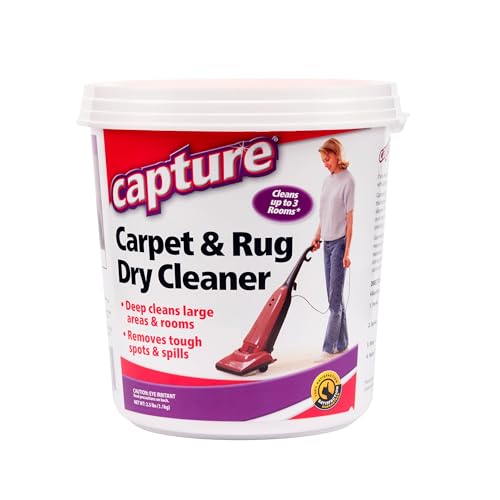
- Treats up to 250 square feet of floor space from a single compact 2.5-pound pail
Cons
- Requires a capable household vacuum cleaner to completely extract the settled powder from carpet pile
- Stubborn or heavily set-in stains may require the Capture Pre-Mist spray, which is sold separately
- Requires manual brushing or pile agitation to work the powder effectively into dense fibers
Capture Carpet and Rug Dry Cleaner is a specialized absorbent dry cleaning powder formulated to remove embedded grime, spots, and odors from household textiles without liquid saturation. Unlike traditional wet shampooing methods that soak carpet backing, this product is designed for homeowners, apartment renters, and pet owners who want targeted cleaning without the extended drying times associated with hot water extraction. Packaged in a compact 2.5-pound pail, it provides enough dry cleaning compound to treat up to 250 square feet of carpeting or upholstery.
The cleaning mechanism relies on an absorbent dry compound that behaves like microscopic sponges across carpet fibers. Traditional water-based spot cleaners often cause wicking, a frustrating issue where liquid pushes stains deeper into the pad only for them to resurface as the carpet dries. Capture avoids this problem entirely by absorbing spills, dirt, and pet odors directly into the powder particles. The manufacturer notes that it eliminates odors and tough spots without requiring steam equipment, hot water, or mechanical extraction tanks, making it a low-hassle alternative for everyday household spills.
Material safety is a significant advantage for this dry cleaner. The formula is certified safe for all carpet types, including delicate wool fibers, silk, and Code S upholstery fabrics that are strictly sensitive to water-based cleaners. It contains no bleach, harsh solvents, or aggressive chemicals, offering peace of mind for multi-surface households looking to freshen family room couches, stair treads, area rugs, or vehicle interiors. Because it is manufactured in the USA, buyers also benefit from reliable formulation standards.
Using the product follows a straightforward three-step process: distribute the powder evenly across the target area, brush it gently into the carpet pile to ensure contact with the fibers, and vacuum thoroughly using a standard household vacuum cleaner. While the manufacturer produces a Pre-Mist spray to help loosen especially stubborn or dried stains, this 2.5-pound pail functions as an effective standalone product for routine deodorizing and stain removal. Once vacuumed away, the powder carries trapped dirt and bad smells with it, leaving treated surfaces fresh and immediately ready for foot traffic.
A few practical limitations are worth keeping in mind before purchase. Because this is a dry powder, successful removal depends directly on the suction power and brush agitation of your existing vacuum cleaner; weak handheld vacuums may leave powder behind in dense or high-pile carpets. Additionally, heavily soiled areas with crusted, set-in pet stains may require the optional Pre-Mist spray or multiple applications to lift entirely, meaning this dry treatment may not replace deep professional wet extraction for severely neglected, wall-to-wall installations.
For households with water-sensitive area rugs, delicate wool flooring, or living room furniture bearing Code S cleaning tags, Capture Carpet and Rug Dry Cleaner offers an effective, low-risk cleaning solution. It is especially well suited for pet owners dealing with localized accidents and apartment dwellers who lack the storage space or budget for bulky carpet cleaning machinery.
Capture Carpet and Rug Dry Cleaner stands out for its extensive compatibility with delicate and water-sensitive textiles. Many commercial carpet shampoos and liquid spot treatments contain surfactants or high-moisture formulas that damage delicate fibers or cause fabric shrinkage. Capture is explicitly formulated to be safe on wool, silk, and Code S upholstery materials, which require dry cleaning solvents and strictly forbid water-based cleansers.
This broad safety profile allows homeowners to clean expensive oriental rugs, custom wool wall-to-wall carpeting, and upholstered couches that typical carpet machines could ruin. Because the formulation contains no bleach or aggressive solvents, it refreshes surfaces without stripping factory stain-resistant coatings or fading delicate dyes, providing safe maintenance across residential and vehicle fabrics alike.
Applying Capture Dry Cleaner requires no complicated mixing, dilution ratios, or machine setup. The user simply sprinkles the dry white powder across soiled carpet pathways, pet accident areas, or vehicle floor mats. A standard carpet brush or broom should be used to gently work the granules down toward the base of the carpet pile where dirt and pet dander settle.
After the powder has had time to absorb the soils and neutralize trapped odors, running an upright or canister vacuum cleaner over the area completes the process. Because the product works dry, there is zero moisture left behind, eliminating downtime and allowing children, guests, and pets to walk on the carpet immediately after vacuuming.
Complete Guide to Quick-Drying Carpet Cleaning and Moisture-Free Stain Removal
Carpet cleaning routines often come to a standstill when saturated pile requires hours or days of continuous air circulation to dry. Homeowners frequently balance the need for deep soil removal against the inconvenience of damp floors that disrupt daily routines. Selecting an effective quick-drying solution requires understanding how different cleaning chemistries interact with carpet fibers and moisture barriers. Absorbent dry cleaners offer a practical alternative to heavy liquid extraction by lifting embedded grit without soaking through to the primary backing.
The Science of Carpet Wicking and Why Wet Cleaning Often Fails
Recurring stains represent one of the most frustrating challenges in standard carpet maintenance. When a liquid spill penetrates deep into the primary backing or foam underlayment, standard liquid extraction shampoos often dissolve the residue without fully removing it. As the top fibers dry through natural evaporation, capillary action draws the dissolved soil upward from the damp backing to the fiber tips. This physical process, known as wicking, causes dark spots to reappear days after a thorough cleaning session.
Excess moisture also poses structural risks to the backing materials that hold carpet tufts in place. Heavy saturation can degrade latex adhesives used in residential broadloom carpets, leading to fiber shedding or edge delamination. Continued moisture exposure weakens the bond between secondary backings and floor padding, causing ripples across open rooms. Dry cleaning methods avoid this cycle entirely because they capture contaminants at the surface level before moisture can migrate downward.
How Absorbent Dry Cleaners Function on Carpeting and Area Rugs
Absorbent powder cleaners operate on an entirely different physical mechanism than conventional water-based shampoos. These specialized cleaning particles act like millions of microscopic sponges distributed across the pile surface. When brushed gently into the carpet, the absorbent material attracts dissolved oils, bound soil particles, and surface moisture directly into its porous structure. The trapped dirt remains suspended within the particles rather than soaking deeper into the underlying textile base.
Because the compound does not rely on puddling liquids, the floor remains completely usable during and immediately after application. Products like Capture Carpet and Rug Dry Cleaner deodorize and freshen textiles while absorbing dry and damp spills without heavy saturation. Manufacturer data indicates that a standard two-and-a-half-pound pail provides sufficient material to cover up to two hundred and fifty square feet of carpeted flooring. Once the particles hold the dislodged dirt, a standard household vacuum cleaner extracts the dry compound completely without leaving sticky detergent residues.
Wet Extraction Versus Dry Powder Cleaning Methods
Choosing between wet extraction machines and dry absorbent powders depends largely on room usage and available drying time. Traditional wet extraction relies on pressurized water injection followed by vacuum suction to pull dirty liquid into a recovery tank. While deep carpet extraction machines excel at flushing out severe seasonal mud and restorative jobs, they inevitably leave residual dampness behind. Saturated carpets often require high-velocity floor fans and restricted room access for twelve to twenty-four hours to dry thoroughly.
Dry powder cleaning eliminates this prolonged downtime by keeping moisture levels at an absolute minimum throughout the process. Family members, guests, and household pets can walk across the treated area immediately without transferring sticky residue or compressing damp pile. In addition, dry cleaning leaves no soap film behind, which prevents rapid resoiling in heavy footpaths. Combining periodic dry maintenance with occasional extraction creates a balanced floor-care routine that extends carpet longevity.
Fiber Safety and Delicate Material Suitability
Carpet fibers respond differently to moisture, heat, and alkalinity depending on whether they are synthetic or natural. Common synthetic fibers like nylon and polyester handle moisture relatively well, but delicate materials require much stricter chemical caution. Natural wool fibers absorb substantial amounts of water, causing shrinkage, fiber distortion, and prolonged drying periods if cleaned improperly. In addition, high heat or harsh alkaline cleaners can strip the protective natural lanolin from wool pile, leaving it brittle and prone to breakage.
Fabrics labeled with Code S cleaning codes require pure dry cleaning solvents or water-free methods to prevent permanent ring marks or fiber damage. Absorbent dry cleaners are formulated to safely clean Code S textiles, delicate wool rugs, and even silk blends without altering texture or color fastness. Capture dry cleaner contains no harsh solvents or chlorine bleach, making it compatible with sensitive fibers that liquid shampoos might destroy. Homeowners can treat delicate area rugs confidently without fear of fiber dye bleeding or irreversible shrinkage.
Protecting Subfloors, Padding, and Carpet Adhesives from Moisture
Subfloor protection is an essential factor that many homeowners overlook during routine spot cleaning and carpet washing. Plywood and oriented strand board subfloors can swell and warp when repeated liquid cleanings soak through carpet seams or edges. Moisture reaching the floor perimeter can also rust steel tack-strip nails and weaken perimeter carpet anchoring. Preventing liquid from reaching the subfloor level is the most reliable way to maintain structural integrity throughout the home.
Glued-down carpets and modular carpet tiles present unique vulnerabilities to aggressive wet cleaning methods. Excess water can emulsify pressure-sensitive adhesives, causing tile corners to curl upward or seams to separate visibly. Low-moisture dry powder cleaners protect adhesive bonds by confining the cleaning action strictly to the upper fiber column. This localized cleaning action preserves the original subfloor bond while ensuring seams remain flat and secure against heavy room foot traffic.
Step-by-Step Application for Dry Absorbent Powder Cleaning
Applying an absorbent powder cleaner requires minimal equipment and straightforward preparation to achieve optimal soil extraction. The process begins with a thorough preliminary vacuuming to eliminate loose surface dust, pet hair, and coarse debris from the pile. Once the dry surface is free of grit, any stubborn or greasy spots can be lightly treated with a specialized pre-mist spray. Manufacturer instructions note that while pre-mist sprays help dissolve set-in grease, the dry cleaning powder functions independently as a standalone product.
Sprinkling the absorbent powder evenly across the target area allows the micro-sponges to contact all exposed fiber surfaces. A clean, soft-bristled brush or clean broom should then be used to work the powder gently downward into the carpet pile. Gentle brush strokes distribute the compound around fiber bases where ground-in traffic soils tend to collect. Allowing the powder to rest for several minutes gives the absorbent matrix adequate time to bind odors and loosen stubborn stains.
The final step consists of vacuuming the treated section slowly and thoroughly to remove all spent cleaning particles. Vacuuming in overlapping perpendicular passes lifts the powder away along with the trapped soil and stale odors. Because the powder remains completely dry, it passes easily through standard vacuum filtration systems without clogging bags or filters. The carpet emerges immediately clean, dry, and ready for regular daily foot traffic without any waiting interval.
Vacuum Cleaner Compatibility and Residue Removal Best Practices
Extracting dry cleaning powders effectively relies on proper vacuum cleaner mechanics and filtration. Most standard upright and canister vacuum cleaners with rotating brush rolls provide adequate agitation to dislodge settled powder particles. Vacuums equipped with sealed HEPA filtration systems prevent microscopic cleaning particles from exhausting back into ambient indoor air. Checking vacuum collection bags or dust cups before starting ensures maximum suction airflow throughout the extraction process.
Adjusting the vacuum cleaner pile height prevents unnecessary friction while optimizing airflow through dense carpet yarns. Setting the brush roll too low can scatter loose powder across hard surfaces, whereas setting it too high fails to draw powder from fiber roots. Making multiple deliberate passes across high-traffic spots guarantees thorough compound removal along with encapsulated soils. Proper vacuuming leaves carpet pile upright, refreshed, and completely free of dusty residue.
Managing Tough Pet Stains and Embedded Odors Without Soaking
Pet accidents introduce biological proteins and moisture that quickly penetrate deep into carpet backings if left unaddressed. Traditional wet extraction can inadvertently spread pet urine outward, expanding the affected odor zone across the underlying padding. High-temperature steam cleaning can also set biological stains permanently by chemically bonding animal proteins to synthetic fibers. Utilizing handheld spot clean extraction tools works well for fresh liquid spills, but dry powders provide unmatched follow-up deodorizing power.
Absorbent dry powders neutralize stubborn pet odors by drawing volatile organic compounds directly out of damp fiber clusters. Rather than merely masking foul scents with heavy perfumes, the sponge-like particles physically encapsulate the odor source. This dual cleaning and deodorizing action prevents pets from returning to the same spot to remark their territory. Families achieve clean, fresh-smelling carpets while avoiding soggy patches that curious animals might track across nearby hard floors.
Routine Maintenance Strategies for High-Traffic Carpet Zones
Hallways, entryways, and living room pathways experience continuous abrasive wear from foot traffic that grinds outdoor grit against carpet fibers. As sharp dirt particles cut into fiber strands, the carpet pile loses its natural luster and develops dull traffic lanes. Implementing a structured maintenance routine that combines regular dry powder treatments with scheduled vacuuming prevents premature fiber degradation. Treating high-traffic zones monthly keeps soil levels low and stops dirt from compacting into immovable mats.
Low-moisture maintenance is especially advantageous for busy entryways because it allows continuous household movement without operational pauses. Placing durable walk-off mats near exterior doors catches coarse dirt before it migrates onto interior carpeting. When light tracking occurs, a quick sprinkle and gentle brush of dry powder lifts greasy outdoor residue in minutes. Adjusting vacuum cleaner height properly during routine sweeps ensures that lifted powder and dirt are fully extracted without fraying delicate fiber loops.
Key Selection Factors for Low-Moisture Carpet Care Products
Selecting an appropriate dry carpet cleaner involves examining ingredient safety, room coverage, and formula composition. Cleaners formulated without harsh chlorine bleach or toxic solvents protect both home indoor air quality and fiber coloration. Safe formulations help prevent skin irritation for crawling infants and resting household pets who spend significant time on floor surfaces. Verifying that a product is manufactured under strict quality standards ensures consistent particle size and reliable absorption capacity across every batch.
Package coverage efficiency represents another practical consideration for homeowners managing larger living spaces or multiple rooms. A compact container capable of treating hundreds of square feet provides cost-effective spot maintenance over months of regular use. Standalone functionality is equally vital, ensuring that users can achieve solid cleaning results without purchasing mandatory secondary chemical systems. Storing dry powder containers in tightly sealed pails protects the absorbent properties from ambient humidity between cleaning sessions.
Maintaining clean, odor-free carpets does not require enduring long drying periods or risking subfloor moisture damage from excessive water use. Absorbent dry cleaners bridge the gap between superficial vacuuming and intensive wet extraction, delivering fast spot removal while preserving delicate carpet fibers. By incorporating low-moisture cleaning methods into regular floor care, homeowners can protect their flooring investment, prevent recurring wick-back stains, and keep household walkways consistently fresh.


Write Your Review
No reviews yet. Be the first to share your experience!